LiminalArc

20K posts

LiminalArc banner
LiminalArc

LiminalArc

@liminalarcgroup

Business Focused. Technology Forward. Organizational Change.

Atlanta, GA เข้าร่วม Temmuz 2010
529 กำลังติดตาม7.6K ผู้ติดตาม
ทวีตที่ปักหมุด
LiminalArc
LiminalArc@liminalarcgroup·
A message from our CEO on why we changed our name and what you can expect in the future! See what's new 👉 go.liminalarc.co/lwo
English
0
0
1
411
LiminalArc
LiminalArc@liminalarcgroup·
Systems get the results they're designed to get. You can't just teach people new ways of working, or mandate a behavior change from on-high and expect your culture to improve. Not when the system is in opposition to the way people work. If you want to see the culture change, fix the system first.
English
0
0
0
35
LiminalArc
LiminalArc@liminalarcgroup·
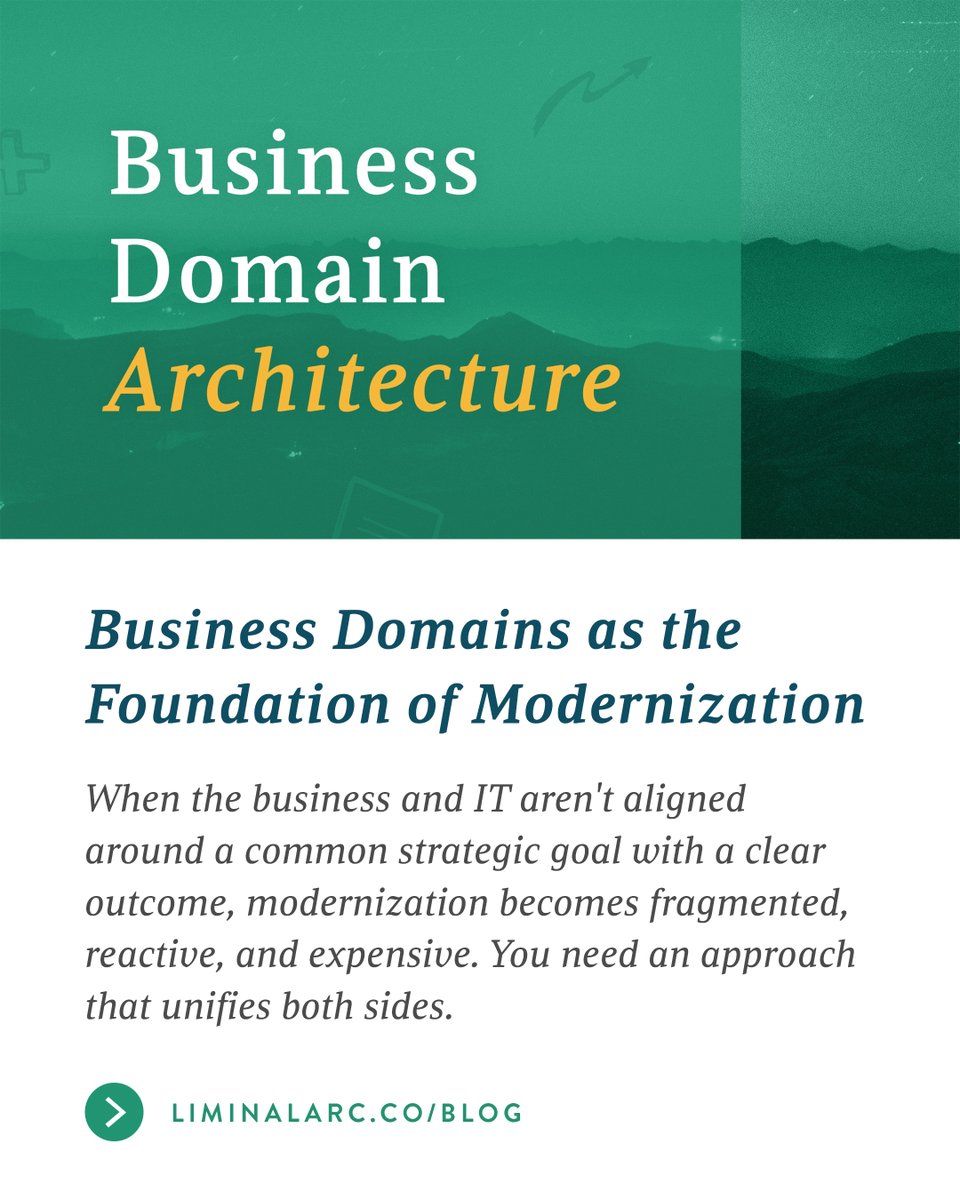
Without intentional modeling, software and business diverge over time. Changes get harder. Communication gets fuzzier. Costs compound. To overcome this, you want to ensure your software is structured around business concepts, bounded by business capabilities, and expressed in business language. Domain-Driven Design is good at this. It reduces the cost of change by making business rules locatable. It enables team autonomy by drawing boundaries that align with business capabilities. It reduces key-person risk by capturing understanding in the model, not in people’s heads. It keeps systems maintainable over time by providing a framework for intentional evolution rather than accidental accumulation. At the end of the day, your software is a model of your business whether you designed it that way or not. The question is whether it’s a model you can reason about, communicate clearly, and change confidently, or one that has become an obstacle to the very business it was meant to support. DDD is the discipline of making sure it’s the former. It's not a fad, or a buzzword, or something dev teams do. When done properly, it's truly a catalyst for driving business value. ----- This post comes from our software engineering practice, which specializes in refactoring application architecture and optimizing delivery to support modular teams, faster feedback, and continuous value delivery.
LiminalArc tweet media
English
0
0
1
39
LiminalArc
LiminalArc@liminalarcgroup·
Implementing new policy in the face of organizational complexity requires tight, iterative and incremental feedback loops to ensure a smooth adoption.
English
0
0
1
68
LiminalArc
LiminalArc@liminalarcgroup·
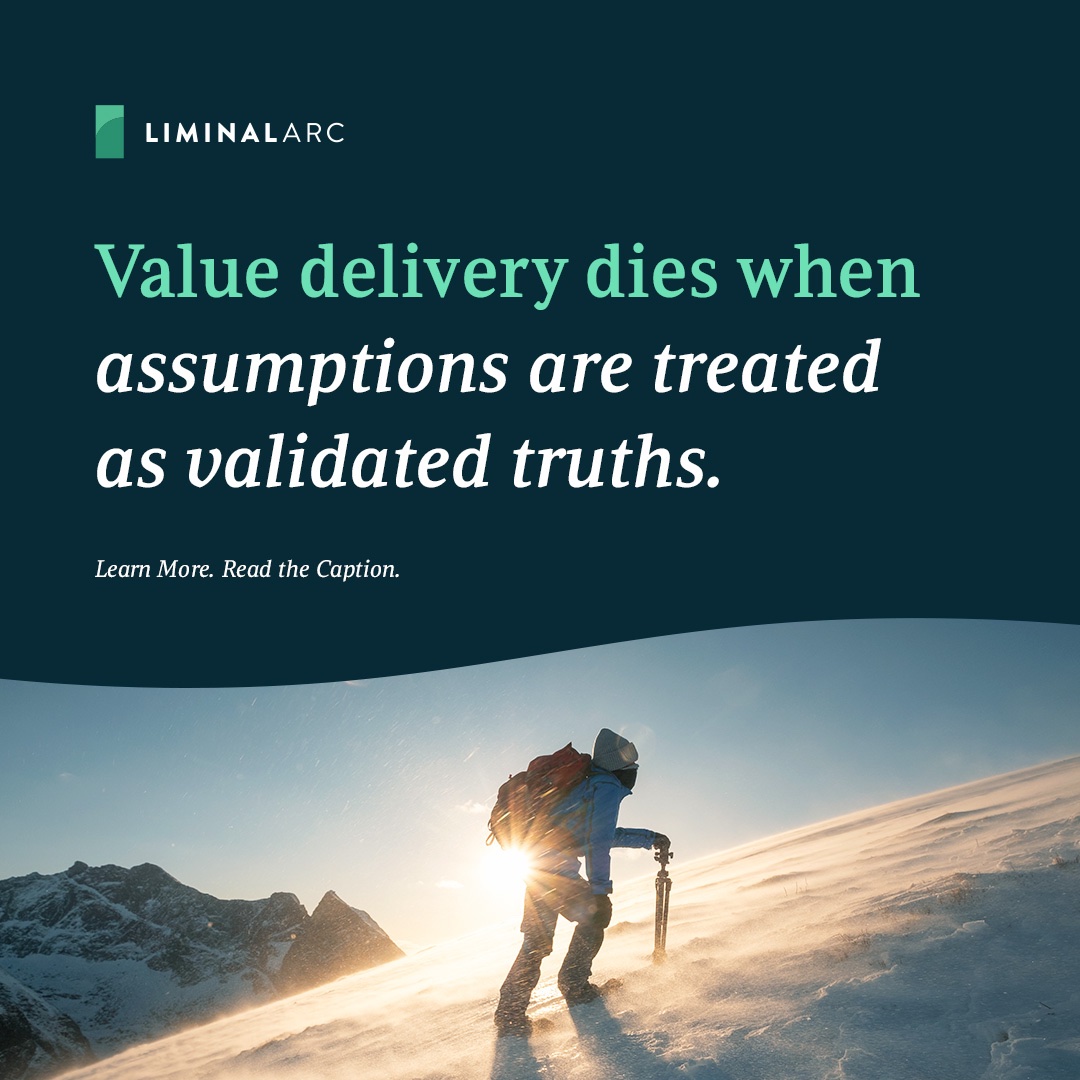
5 Ways to Reduce the Impact of Assumptions on Value Delivery Assumptions are often stated as facts. "We know what customers want." "This workflow will drive adoption." "Of course, this will increase revenue." None of these statements are automatically wrong. The problem is what happens next. Once an assumption hardens into "the truth," it slides into a roadmap, gets translated into epics and stories, and reaches a delivery team as if it’s already been validated, creating a sunk cost in untested beliefs. And quietly killing your ability to realize value. To overcome these challenges, you need a product operating model that enables you to do the following: 1️⃣ Treat roadmap statements as hypotheses until you have evidence 2️⃣ Use value propositions to make belief shared, explicit, and testable 3️⃣ Define outcomes that include a baseline, target, and decision date 4️⃣ Instrument delivery to learn early, not after the budget is gone 5️⃣ Make persist, pivot, or cease a normal, regular, and consistent portfolio decision, not a performance judgment Doing this puts an emphasis on early learning over being right, and allows you to allocate resources more effectively, change course with more agility, and ensures that you aren't wasting time on things that don't add value to your business and customers.
LiminalArc tweet media
English
0
0
0
60
LiminalArc
LiminalArc@liminalarcgroup·
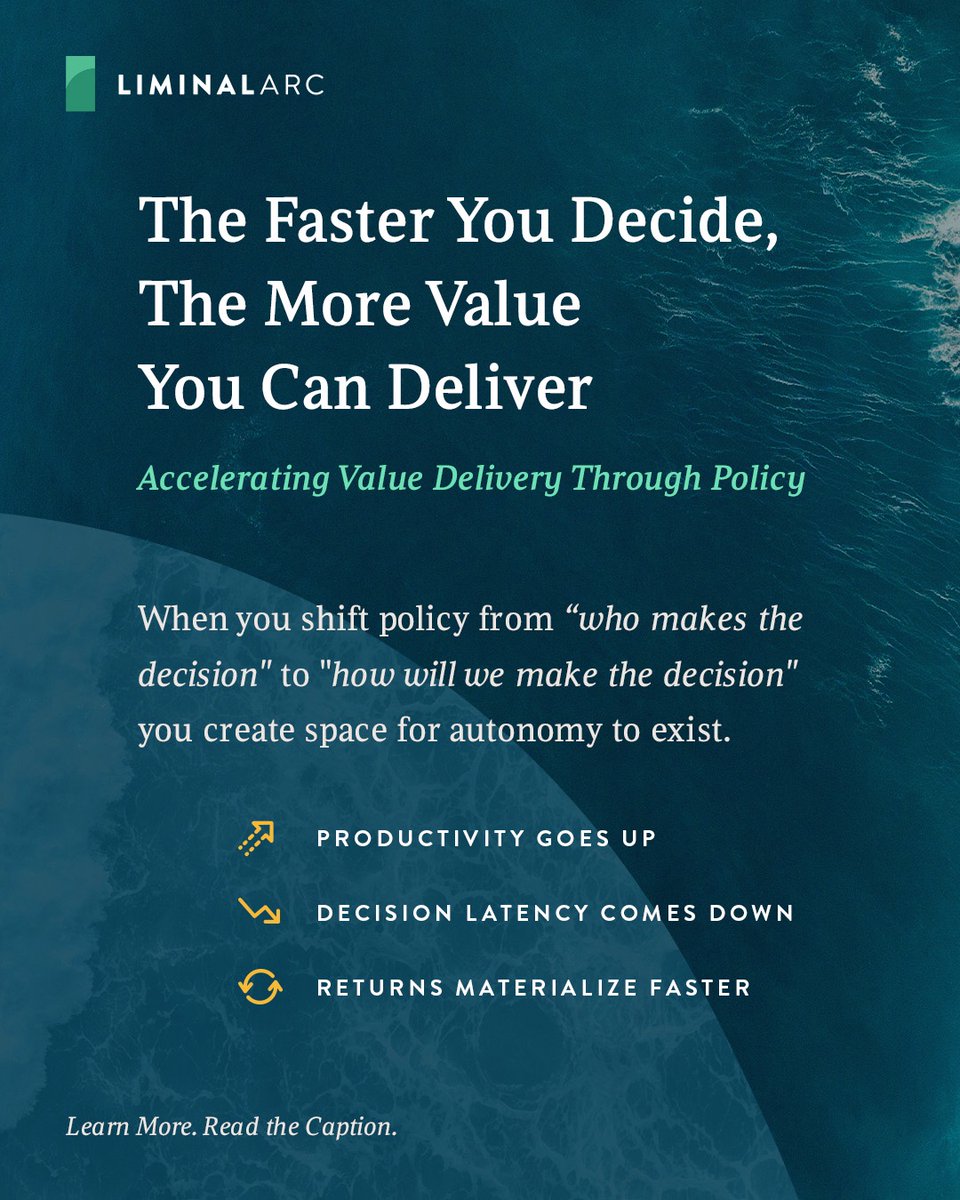
Policies aren't policing mechanisms, they're part of the fabric of how work gets done, and they should free up people to focus on value creation rather than stifling productivity through needless bureaucracy and red tape.
English
0
0
0
54
LiminalArc
LiminalArc@liminalarcgroup·
In complex enterprise environments, ad-hoc governance is one of greatest bottlenecks to value delivery. You've all seen or felt it. Two business units need to interact, a friction point arises, and value delivery grinds to a halt while a senior leader is pulled in to make the call. This creates: ❌ Decision Latency: Value is deferred every hour a decision waits. ❌ Team Friction: Teams lose autonomy when the rules feel arbitrary. ❌ Operational Noise: Inconsistent application of policy leads to local optimization. Resilient organizations need clear and consistent policies. Not more policy for policy's sake. But the right policy. At the right time. In the right place. Policy aimed at decision-making rather than at the individual or the teams. What if you could gain explicit agreement, before conflicts arise, on things like: 🔹 Who owns which decisions 🔹 What triggers cross-entity interaction 🔹 What data signals govern priority 🔹 How conflicts are resolved without escalation This would turn ad-hoc application of policy into a decision framework that reduces the need for human arbitration in the system, increases autonomy, and accelerates value creation and ROI. What do you think? Are you creating good policy, or are you overly reliant on leadership and trying to scale the unscalable?
LiminalArc tweet media
English
0
0
0
36
LiminalArc
LiminalArc@liminalarcgroup·
Most policies feel heavy-handed because they're aimed at people, and not the decisions that actually slow value down.
English
0
0
0
68
LiminalArc
LiminalArc@liminalarcgroup·
Transformations are too slow, too expensive and too ineffective. Why? Because most enterprises run on top of monolithic organizational and technical architectures that are too fragile and complicated to change. 🔹Transforming the tech without the business becomes an all-or-nothing effort that drives up risk and delays ROI. 🔹 Transforming the business without the tech creates strategies legacy systems can't support. Both options result in millions spent on AI, Cloud, ERP, and Security with minimal progress and vague return on investment. But what if there was a different option that led to a safe, repeatable transformation that paid for itself? What if you could use domain driven design and capability modeling to align the business and technology to a single economic outcome? That's what we do. We connect strategy to execution through a lightweight governance framework that provides measurable feedback toward your desired economic goal. This alignment allows you to make targeted business-value-driven people, process, and technology improvements that result in a program that funds itself and delivers ROI in weeks and months rather than years. Want to know more? Click here 👉 go.liminalarc.co/cip
LiminalArc tweet media
English
0
0
0
56
LiminalArc
LiminalArc@liminalarcgroup·
Guided by our approach, the organization embedded AI readiness into a domain-driven transformation, aligning teams, architecture, and governance to deliver real value at scale. 🔹 Instead of treating the business as a monolithic system, we broke it down into modular, business-critical domains, starting with lead matching and service fulfillment and created a transformation roadmap that allowed the company to modernize incrementally while staying operational. 🔹 We helped align delivery teams, architecture, and governance around product-oriented domains—giving teams clear ownership, real KPIs, and the autonomy to move work forward without cross-functional gridlock. Transformation was executed in iterative loops, where each domain was encapsulated, modernized, and scaled independently. 🔹 Rather than bolt AI onto legacy systems, we embedded it into modernization efforts from the start, ensuring it added real value instead of complexity. We worked directly with engineering, product, security and compliance leaders to establish conditions for AI to scale in specific areas of the business. 🔹 Transformation became a working system, not a project plan, with clear decision rights, real-time visibility, and the structure to keep improving without starting over. Interested in Learning More? 👉 go.liminalarc.co/gj1
LiminalArc tweet media
English
0
0
0
60
LiminalArc
LiminalArc@liminalarcgroup·
We helped this client modernize their technology in controlled increments, embed AI where it could deliver real value, and align delivery to business priorities without disrupting operations or growth. Check out our approach: 🔹 Rather than treating the company as a monolith, we broke key areas into decoupled, measurable units for efficient modernization aligned with strategic objectives. 🔹 Instead of bolting AI onto legacy systems, we natively embedded AI into modernization increments, ensuring real impact. 🔹 Using our PE Value Creation Model, we identified high-value modernization opportunities, like lead to appointment and service fulfillment, developing a controlled-increment roadmap that enhanced system reliability with minmal disruption to operations and aqcuisitions. 🔹 We aligned governance, team structures, and performance metrics with investment priorities, securing scalable implementation. Additionally, an interim CIO bridged strategy and execution, removing operational bottlenecks before they stalled progress. See the Case Study: go.liminalarc.co/duk
LiminalArc tweet media
English
0
0
0
44
LiminalArc
LiminalArc@liminalarcgroup·
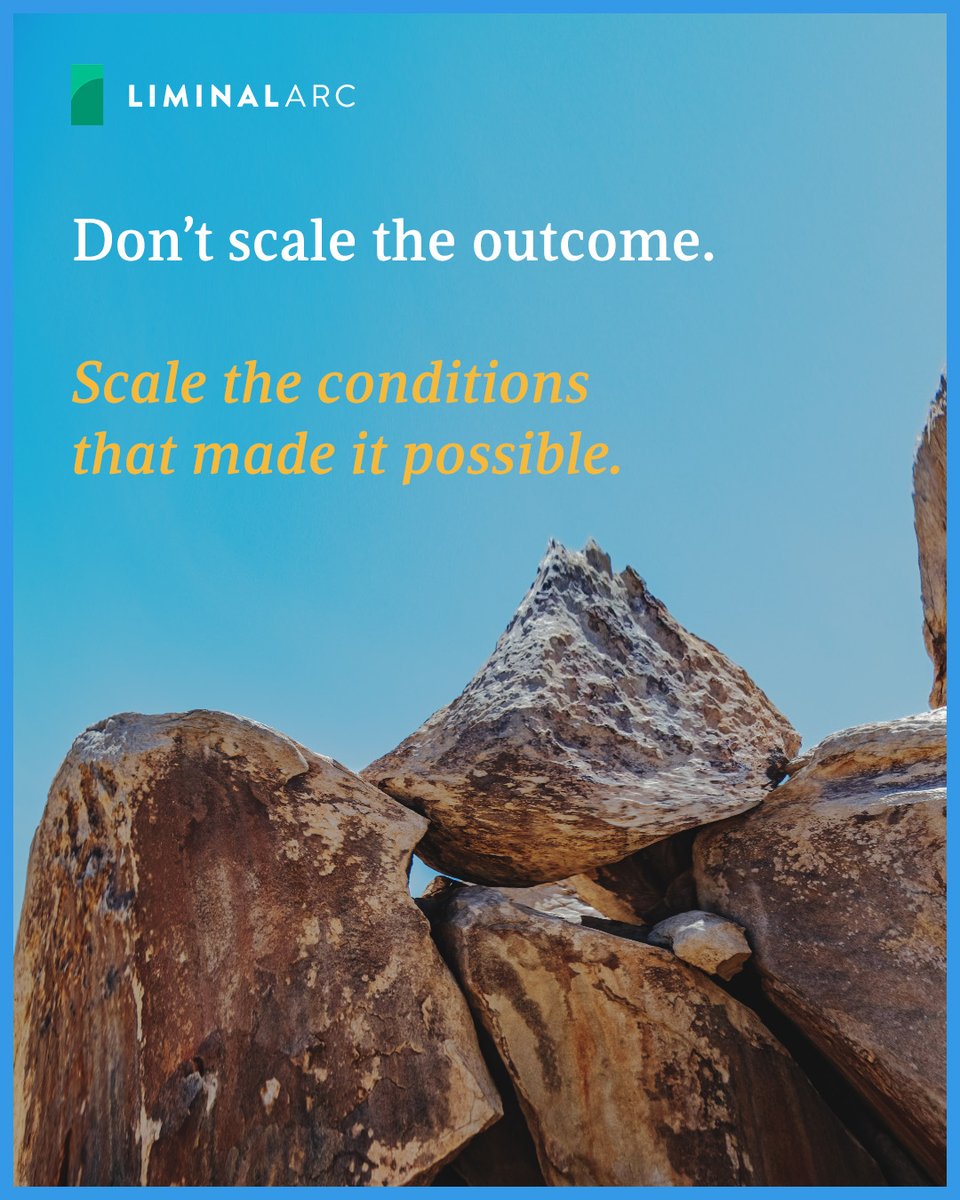
A high-performing team, product, or initiative isn’t a template. It’s an emergent result of conditions: team autonomy, architectural alignment, governance boundaries, and access to clean, relevant data. When executives try to replicate the output without understanding those conditions, they scale symptoms, not solutions. The key to repeatable success isn’t copying the process, it’s reproducing the enabling environment. Invest in the ecosystem, not the artifact. That’s the only way to create resilience instead of dependency.
LiminalArc tweet media
English
0
0
0
52
LiminalArc
LiminalArc@liminalarcgroup·
You can’t lead a transformation through consensus. Different functions will see different realities. Engineering sees complexity. Product sees opportunity. Leadership sees risk. True alignment doesn’t come from getting everyone on the same page, it comes from getting them to see the same problem through the same lens. Without that shared understanding, you’re just negotiating noise.
LiminalArc tweet media
English
0
0
0
50
LiminalArc
LiminalArc@liminalarcgroup·
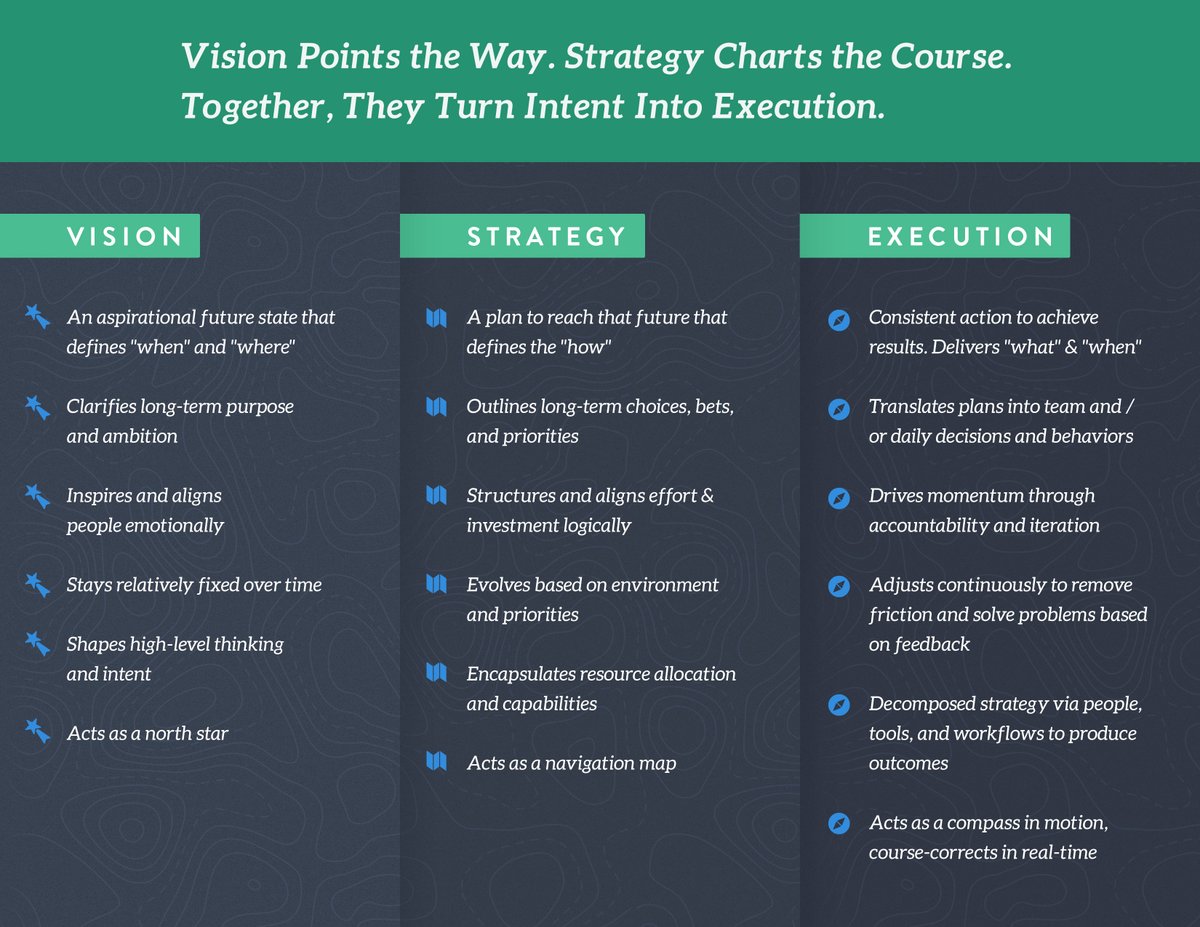
Executives often confuse vision with strategy. Understanding the difference changes everything.
LiminalArc tweet media
English
0
0
0
68