Li Song

2.5K posts

Li Song

Li Song

@mourisl

毛利元光. Assistant Prof.. Bioinfo, algorithms. @BioMedDataSci. PostDoc @XShirleyLiu @lh3lh3 @dfcidatascience. PhD @JHUCompSci. https://t.co/zRfJOaf6gD #hiring

Lebanon, NH, USA เข้าร่วม Ağustos 2009
2.9K กำลังติดตาม1.5K ผู้ติดตาม
Li Song รีทวีตแล้ว
Yan Gao
Yan Gao@Ryan07GY·
New preprint on longcallD: a unified framework for joint calling and phasing of small, structural and mosaic variants from long reads. Improved SV calling and competitive small variant calling. Supervised by @lh3lh3 , co-work with @QianAlvinQin1, @wwliao88 and @irahall9.
bioRxiv Genomics@biorxiv_genomic

LongcallD: joint calling and phasing of small, structural and mosaic variants from long reads biorxiv.org/content/10.648… #biorxiv_genomic

English
0
14
37
14.4K
Li Song รีทวีตแล้ว
Pall Melsted
Pall Melsted@pmelsted·
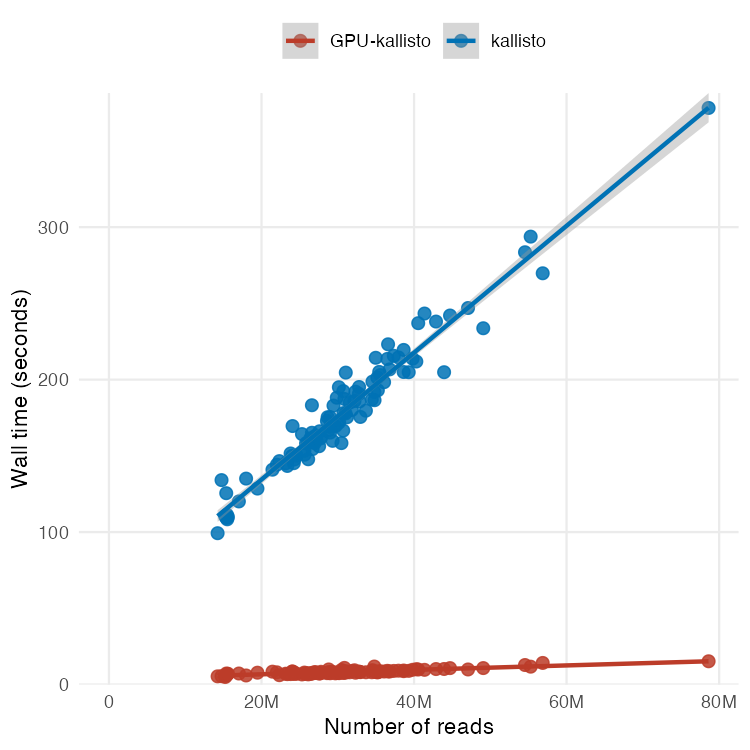
Excited to share this preprint that describes my latest work on using GPUs to accelerate processing of RNA-seq data. The title says it all: "RNA-seq analysis in seconds using GPUs" now on biorxiv biorxiv.org/content/10.648… Figure 1 shows they key result
Pall Melsted tweet media
English
15
122
482
88.7K
Li Song รีทวีตแล้ว
Steven Salzberg 💙💛
Steven Salzberg 💙💛@StevenSalzberg1·
Pleased to share this free link to our new review of genome annotation in @NatureRevGenet, which just appeared today. Co-authored with Hyunjoo (Hayden) Ji and Mihaela Pertea @elapertea. We focus particularly on human annotation: rdcu.be/e4mI1
English
0
24
70
7.8K
Li Song รีทวีตแล้ว
Jian Zhou
Jian Zhou@zhou_jian·
📢Abstract deadline extended to March 6, 2026 for the CSH Asia AI & Biology meeting. We welcome both short talk and poster submissions. Updated speaker list - check it out, and we look forward to seeing you at the meeting!
Jian Zhou tweet media
English
2
17
89
7.8K
Li Song รีทวีตแล้ว
Gang Fang
Gang Fang@gangfang_1·
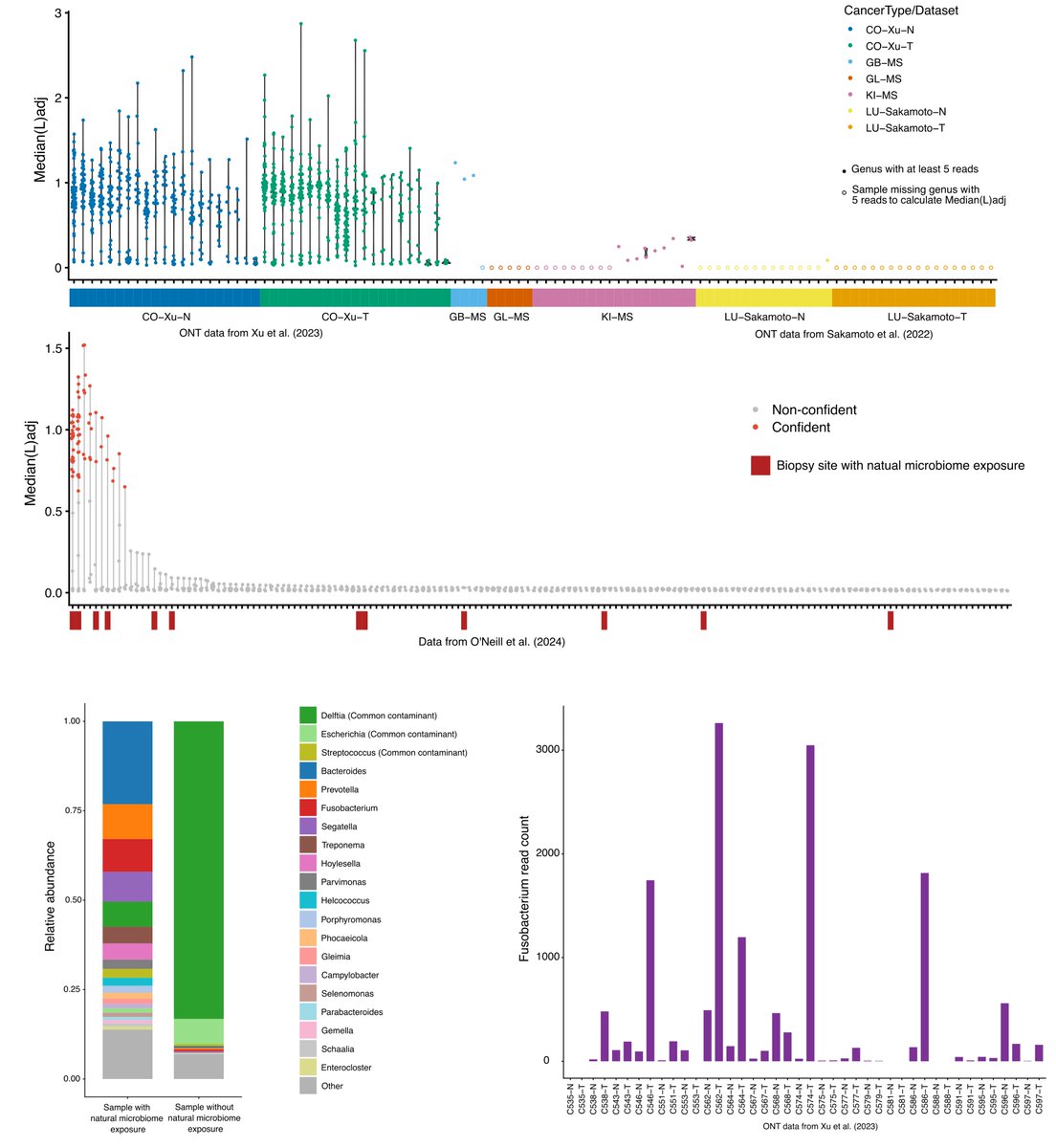
New Preprint 📢 from our team 🔎 Critical assessment of #intratumor and #low #biomass #microbiome using #longread sequencing Have you heard about #cancer microbiome or #intratumor microbiome? Some studies suggest bacteria 🦠 live inside tumors and influence cancer treatment. But there’s also been a major #debate: in these very​ low-microbe tissue samples, how much of the microbial signal is real ❓ and how much is background noise from the lab or the environment ❓ We tackle this with a simple idea: look at DNA fragment sizes using #longread sequencing. If microbes are truly present as intact cells, their DNA should show up as long, genome-like fragment distributions, not mostly short broken (degraded) pieces. Long-read data lets us distinguish those two cases! To make this more robust across datasets, we developed a #metric that normalizes microbial DNA fragment lengths to human DNA fragment lengths within the same sample. Negative #controls: germ-free mice and human cell culture datasets, where true resident microbes are not expected and any microbial signal is most likely introduced during workflows (i.e. contaminations). Positive #controls: bacteria spike-in, and importantly, GI tumors with well established bacteria: e.g. #Helicobacter #pylori in #gastric cancer, #Fusobacterium in #colorectal cancer. Across multiple tumor types and tissues (public + new data), we find that long microbial reads are mainly seen in tissues with natural microbial exposure (such as #gut, #stomach, #skin, #vagina and #cervix, etc). Outside those settings, most microbial signals look more like fragmented, and the occasional long fragments often match well-known #contaminant organisms. One finding that stood out to us was the #lung, which is constantly exposed to microbes we breathe in, yet in our analysis, the microbial signal appeared mostly as short, fragmented DNA, which is more consistent with transient exposure and rapid clearance than with stable resident microbes in deep lung tissue. The new metric also helps #unify earlier debates about microbiomes reported in #placenta and #blood. When we reanalyzed long-read data from those settings using the same read length-based approach, we found no evidence for a stable resident microbiome under normal conditions, consistent with the current consensus that most signals reflect background contamination, with true positives mainly expected during active infection. Long story short, but this was a 4+ years effort led by Yanchun Zhang and Andy Mead. Grateful to all collaborators who contributed valuable samples and feedback: Mi Ni, @MagdalenaKsi, @clannabel7, @LauraZuluagaJim, Gintaras Deikus, Robert Sebra, Rachel Brody, Raymund Yong, @NYCRoboticTeam, @Xue_Song__Zhang. @SinaiGenetics @IcahnInstitute Link: biorxiv.org/content/10.648… We’d love your thoughts! #longread @PacBio @nanopore #metagenomics #pacbio #nanopore
Gang Fang tweet media
English
1
19
40
5.7K
Li Song รีทวีตแล้ว
Peter Koo
Peter Koo@pkoo562·
Excited to share a new Review: "Toward Interpretable and Generalizable AI in Regulatory Genomics" with @msyk_nagai @Al_Murphy_ @kae_rizzo We lay out the landscape of AI x Genomics and offer an opinionated perspective on where the field should go! arxiv.org/abs/2602.01230
English
1
35
159
26.6K
Li Song รีทวีตแล้ว
ImmunoInformatics
ImmunoInformatics@immuno_inform·
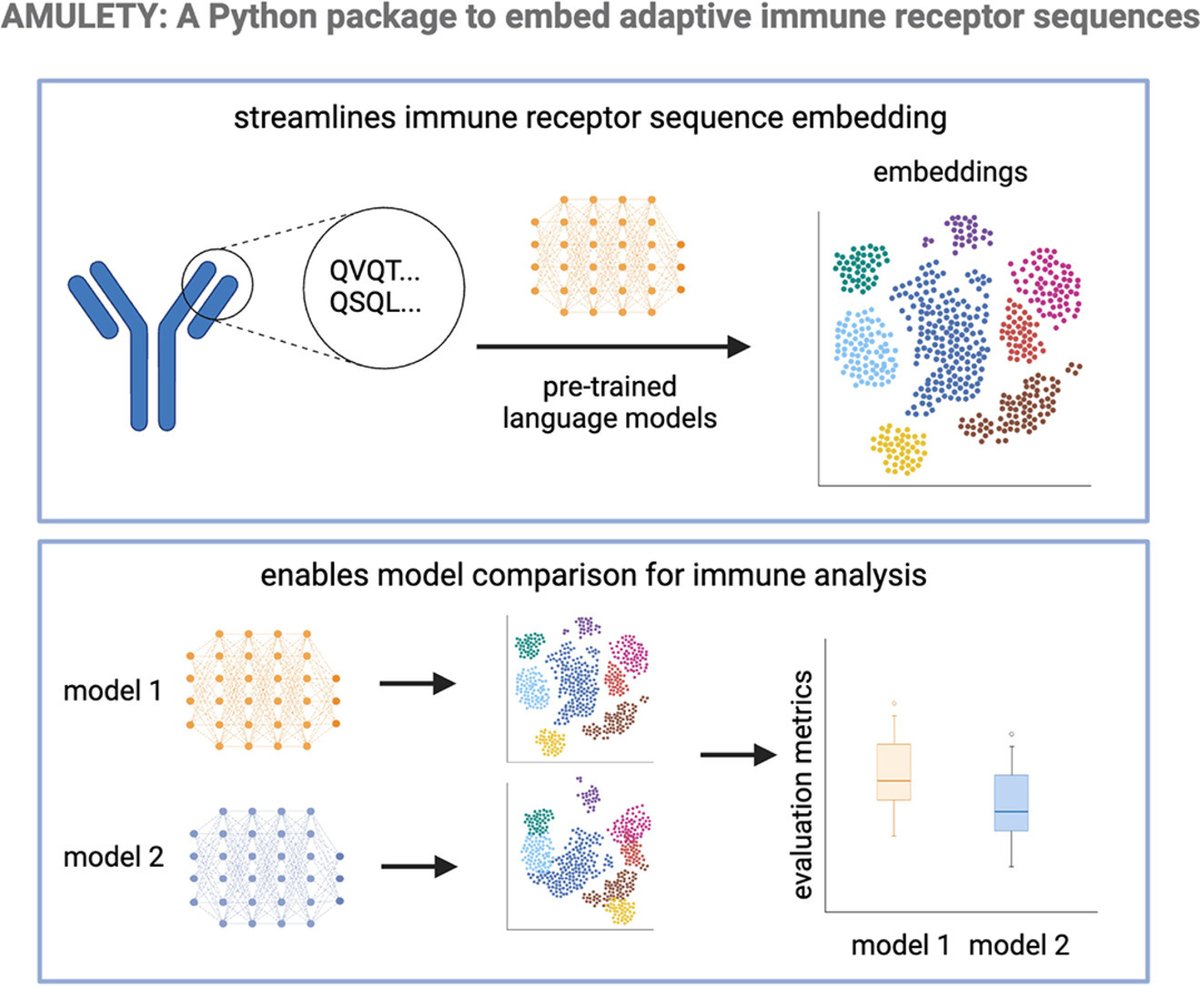
A new research article was published in ImmunoInformatics 👇 AMULETY: A Python package to embed adaptive immune receptor sequences sciencedirect.com/science/articl…
ImmunoInformatics tweet media
English
0
3
6
549
Li Song รีทวีตแล้ว
Heng Li
Heng Li@lh3lh3·
I am looking for a postdoc to develop high-performance algorithms in computational genomics. Email or DM me if interested. For more information, see hlilab.github.io/vacancies. RTs appreciated!
English
0
109
195
21.1K
Li Song รีทวีตแล้ว
Heng Li
Heng Li@lh3lh3·
Now published in Algorithms for Molecular Biology: link.springer.com/article/10.118…. Key message: a tiny CNN model with 7k parameters can capture main splice signals across vertebrates+insect and halves the minimap2 & miniprot junction error rate. I always use this new feature now.
Heng Li@lh3lh3

Preprint on "Improving spliced alignment by modeling splice sites with deep learning". It describes minisplice for modeling splice signals. Minimap2 and miniprot now optionally use the predicted scores to improve spliced alignment. arxiv.org/abs/2506.12986

English
9
39
149
13.8K
Li Song รีทวีตแล้ว
Heng Li
Heng Li@lh3lh3·
Now published in gigascience: academic.oup.com/gigascience/ar…. Key messages: SVs are highly enriched in low-complexity/tandem-repeat regions and are harder to call. They behave differently from transposon insertions. Always stratify if you study SVs.
Heng Li@lh3lh3

Do you know ~60% of human SVs fall in ~1% of GRCh38? See our new preprint: arxiv.org/abs/2509.23057 and the companion blog post on how we started this project and longdust: lh3.github.io/2025/09/29/on-…. Work with @QianAlvinQin1

English
0
40
130
12.1K
Li Song
Li Song@mourisl·
@nomad421 Wow...this is the dumbest tweet I've seen...the frog is very good at making bait posts.
English
0
0
1
119
𝕐
𝕐@nomad421·
Literally, he cut a ton of funding for cancer research and causes clinical trials to halt in the middle of treatment. He is the most pro-cancer president in American history.
• Angry Frog ™ •@angrifrog

Literally

English
1
0
2
431
Li Song รีทวีตแล้ว
Heng Li
Heng Li@lh3lh3·
Thanks to the AWS Open Data program, this dataset along some derived data is also openly accessible via @AWSCloud at openhgl.s3.us-east-1.amazonaws.com/index.html
Heng Li@lh3lh3

579 high-quality human genomes from @HumanPangenome, Arab Pangenome and individual papers (CHM13, CN1, KSA001, I002C, YAO and KOREF1). Sequences available in the AGC format (3.7GB) and FM-index in the ropebwt3 format (20.3GB). For details, see github.com/lh3/human-asm

English
0
14
56
6.2K
Li Song
Li Song@mourisl·
Excited to release Centrifuger v1.0.12 (github.com/mourisl/centri…). Centrifuger can now losslessly index the core_nt database (212G index for ~850G nt in the pre-built index). This allows efficient taxonomic classification of metagenomic data against the database behind BLAST!
Li Song tweet media
English
0
1
7
704
Li Song รีทวีตแล้ว
Li Song รีทวีตแล้ว
Chengxiang Qiu
Chengxiang Qiu@CXchengxiangQIU·
Thrilled to share I’ve started my lab at Dartmouth’s Geisel School of Medicine! We focus on mapping cellular trajectories & TF networks in development and Mendelian disorders, exploring new therapies. Join us—postdocs, grads, and scientists welcome! sites.dartmouth.edu/qiulab/
Chengxiang Qiu tweet media
English
13
26
199
25.3K