NoiseToAlpha

975 posts

NoiseToAlpha banner
NoiseToAlpha

NoiseToAlpha

@noisetoalpha

Tracking the narratives, signals and risk shifts that move markets before consensus catches up.

เข้าร่วม Temmuz 2023
24 กำลังติดตาม916 ผู้ติดตาม
ทวีตที่ปักหมุด
NoiseToAlpha
NoiseToAlpha@noisetoalpha·
Markets move on narratives before fundamentals fully catch up. At NoiseToAlpha, we track: • narrative shifts • sentiment inflections • risk-aware market signals Follow for cleaner market context, sharper research, and less noise.
English
2
1
2
661
NoiseToAlpha
NoiseToAlpha@noisetoalpha·
This is the part of the AI supply chain many still underweight. If $GOOGL is really moving TPU packaging toward Intel’s EMIB, then $INTC is becomes an advanced packaging optionality story too. AI infra is shifting from “who sells the GPU?” to: Who packages the chip? Who owns the interconnect? Who can scale custom silicon? For Intel, foundry credibility may come one customer win at a time.
English
1
0
1
269
NoiseToAlpha
NoiseToAlpha@noisetoalpha·
$NVDA $AMD $ARM $INTC $TXN $SOXX US chip stocks are breaking out again. The Philadelphia Semiconductor Index hit an all-time high, rose 3.2%, and is now up more than 47% this year. The interesting part: this rally is no longer just about $NVDA. $INTC surged more than 22% after strong revenue guidance showed rising demand for CPUs in AI workloads. $AMD and $ARM also rallied double digits. The AI trade is broadening from GPUs into the full compute stack: GPUs train the models. CPUs orchestrate inference. Memory feeds the bandwidth. Foundries and equipment scale the supply. Markets are starting to price AI infrastructure as an ecosystem, not a single-stock story.
NoiseToAlpha tweet media
English
0
0
0
84
NoiseToAlpha
NoiseToAlpha@noisetoalpha·
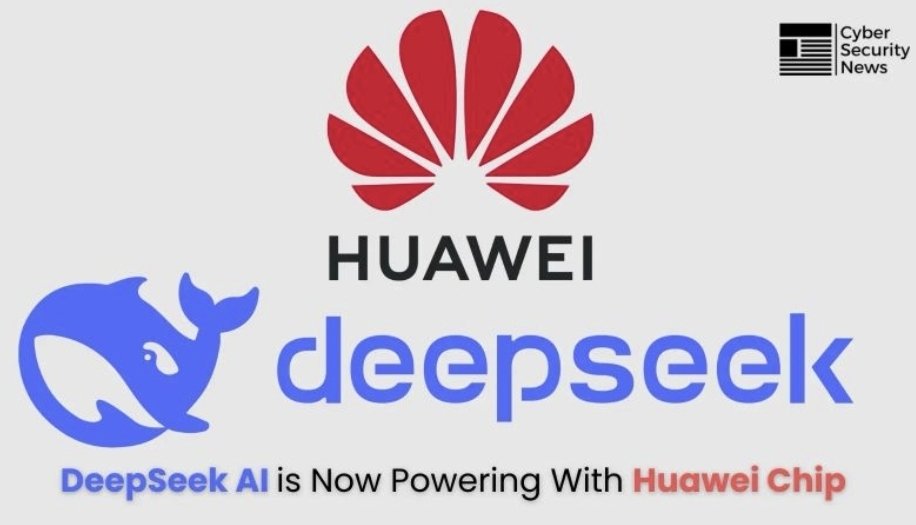
DeepSeek just launched a new AI model adapted for Huawei chips. This signals China’s AI stack is moving from “running on Nvidia when allowed” to “optimizing directly for domestic silicon.” DeepSeek V4 was built with close Huawei collaboration and is positioned for AI agent workloads, where compute efficiency and long-context processing matter. The bigger market takeaway: U.S. export controls may not simply slow China down. They may accelerate the creation of a parallel AI ecosystem built around Huawei Ascend, SMIC, domestic foundries and local software stacks. For $NVDA, the risk is not losing one shipment cycle. The risk is losing developer gravity in China over time.
NoiseToAlpha tweet media
English
0
0
0
34
NoiseToAlpha
NoiseToAlpha@noisetoalpha·
$ARM is business model leverage. As AI infrastructure fragments across $NVDA Grace, $AMZN Graviton, $AAPL silicon, $QCOM edge chips and hyperscaler custom CPUs, Arm can benefit without needing to own every end market directly. In the agentic AI era, CPU demand rises. But the bigger question is: who licenses the architecture behind the next wave of compute?
English
0
0
2
438
Shay Boloor
Shay Boloor@StockSavvyShay·
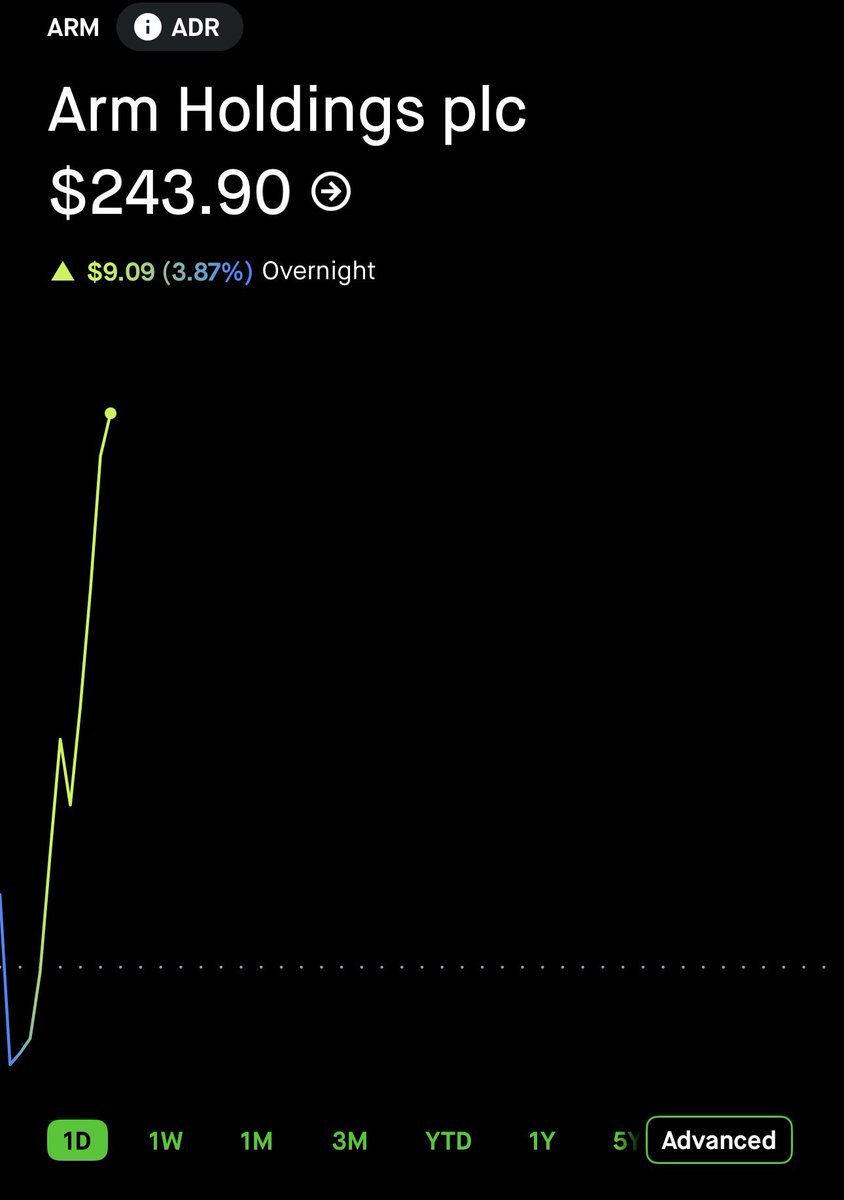
$ARM is up ~4% overnight to a new all-time high. I own a position in the family portfolio because I think the market is still underpricing the CPU bottleneck as AI shifts toward agents executing real tasks. Arm gives me exposure to the efficient CPU architecture already inside $NVDA Grace, $AMZN Graviton, $AAPL M-series, $QCOM data center chips & now its own AGI CPU with $META as launch customer.
Shay Boloor tweet media
Shay Boloor@StockSavvyShay

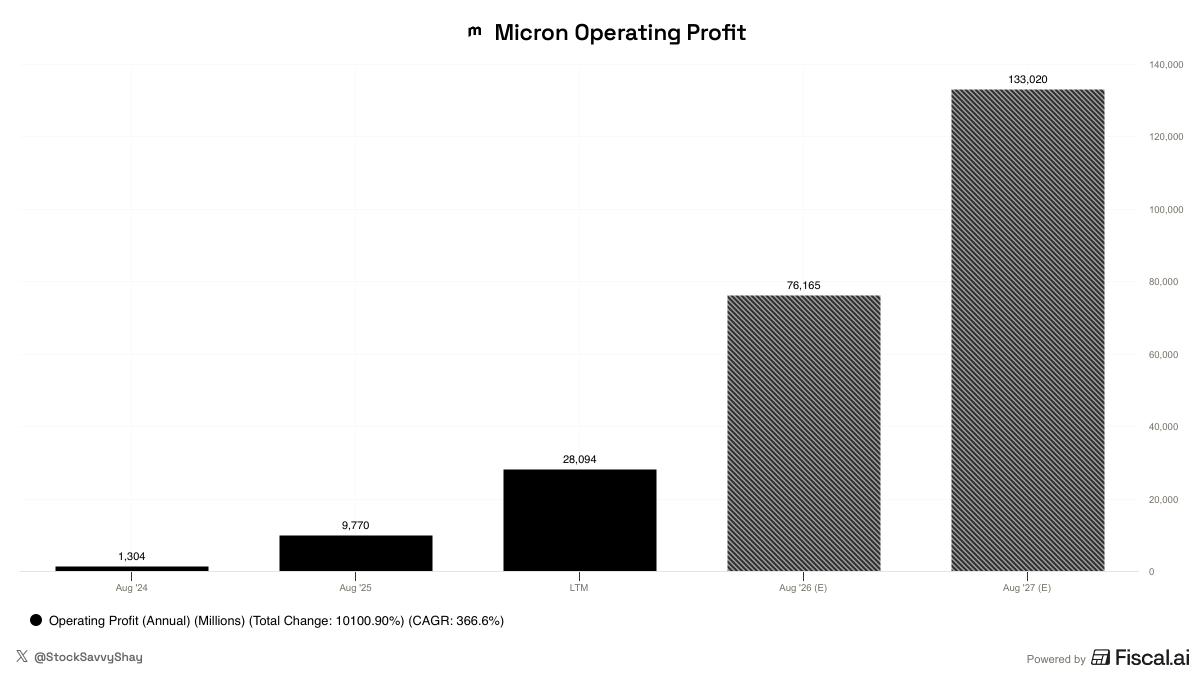
PETER LYNCH’S FAVORITE METRIC IS THE PEG RATIO PEG < 1 usually means mispriced growth PEG > 2 starts to push into the danger zone Semiconductor multi-year PEG ratios: • $INTC ~3.2x • $AMAT ~2.5x • $KLAC ~2.5x • $ARM ~2.2x • $ALAB ~2.1x • $ANET ~2.0x • $LRCX ~2.0x • $AAOI ~1.6x • $ASML ~1.6x • $COHR ~1.4x • $CRDO ~1.1x • $NVDA ~0.9x • $TSM ~0.9x • $AVGO ~0.9x • $AMD ~0.8x • $SNDK ~0.7x • $ON ~0.7x • $MRVL ~0.6x • $LITE ~0.6x • $MU ~0.2x

English
23
42
409
87.1K
NoiseToAlpha
NoiseToAlpha@noisetoalpha·
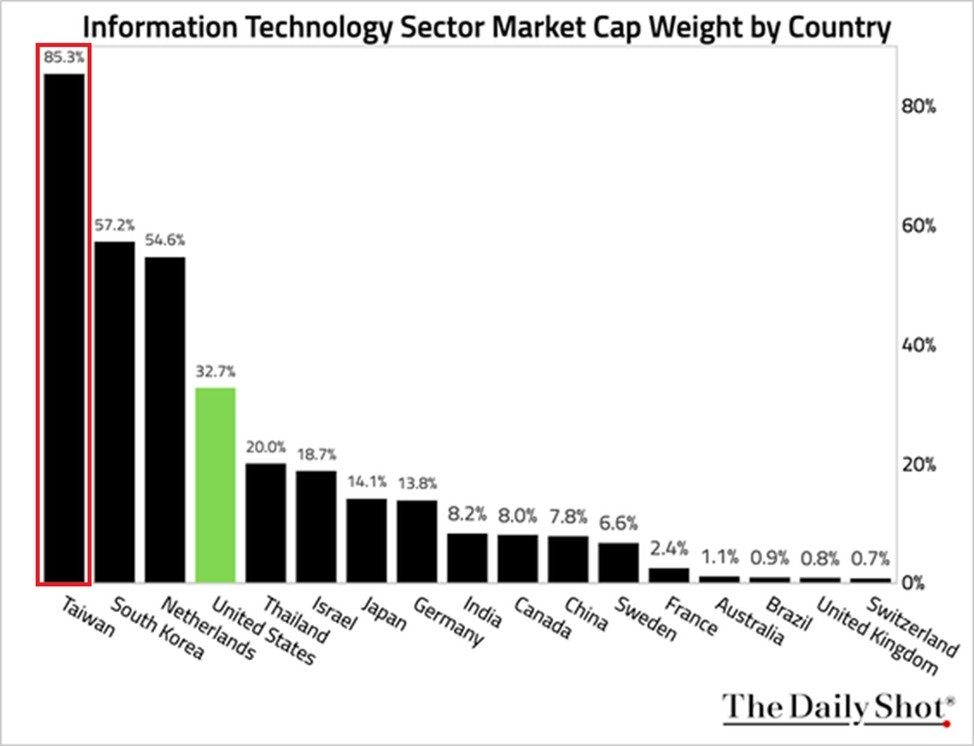
AI trade is becoming less about “US tech vs rest of world” and more about which countries control the bottlenecks. Taiwan = foundry concentration Korea = memory concentration Netherlands = lithography concentration US = platforms + cloud + AI demand Tech dominance is global now, but the real edge sits where supply is hardest to replicate. AI is turning entire national equity markets into semiconductor supply-chain proxies.
English

0
0
2
156
The Kobeissi Letter
The Kobeissi Letter@KobeissiLetter·
Tech dominance is now a global trend: The information technology sector now reflects 85% of Taiwan's stock market cap, the most among major world markets. This is followed by South Korea and the Netherlands, at 57.2% and 54.6%, respectively. The US is ranked 4th, with IT making up 32.7% of the S&P 500's total market value. Including communication services, technology stocks reflect a near-record 45% of the US stock market, still below the top 3 countries. Meanwhile, the weight of global tech stocks as a % of the total global market ex-US stands at ~11.0%, the highest since 2021 but below the 14% peak during the 2000 Dot-Com Bubble. Global equity markets have rarely been this concentrated in a single sector.
The Kobeissi Letter tweet media
English
59
112
684
102.7K
NoiseToAlpha
NoiseToAlpha@noisetoalpha·
$ULCC $SAVE $JBLU $DAL $AAL Budget airlines are asking Washington for a lifeline. Frontier, Avelo and other U.S. low-cost carriers are reportedly seeking a $2.5B relief package from the Trump administration in exchange for warrants that could convert into equity stakes. Why now? Jet fuel. The request is based on expected fuel costs running above $4/gallon for the rest of the year, after the U.S.-Israel/Iran conflict disrupted oil supply and pushed upstream prices higher. Budget airlines are especially exposed because the model depends on razor-thin margins, high utilization and low fares. If fuel stays elevated, the pressure moves quickly from income statements to balance sheets. This is another example of how the oil shock is spreading into the real economy.
NoiseToAlpha tweet media
English
0
0
0
58
NoiseToAlpha
NoiseToAlpha@noisetoalpha·
Real debate is not whether $NVDA is “cheap” or “expensive” on today’s multiple. It’s whether earnings power is still being revised fast enough to absorb the market cap. Sales growth + forward guidance upgrades matter more than static valuation screenshots. But the key risk is also clear: at this scale, the bar keeps moving higher every quarter.
English
0
0
0
67
Thomas James Investing
Thomas James Investing@Thomas_james_1·
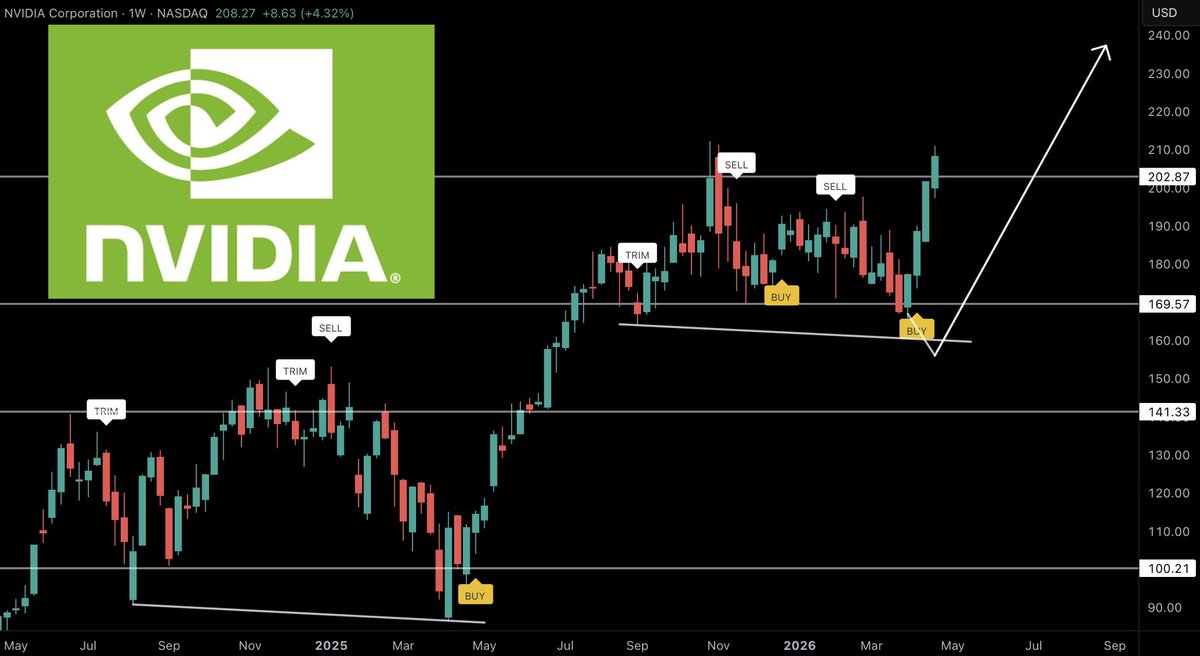
VERY IMPORTANT UPDATE FOR $NVDA People in my comments still calling $NVDA overvalued is WILD. We have the exact same setup as we had last year playing out at the moment, ahead of schedule as well. In the last 9 months, $NVDA increased sales from $46.7 billion to $68.1 billion, a 50% increase while the stock stayed flat. $NVDA have also increased forward guidance for Q1 and Q2, so the stock needs to catch up. Nvidia WILL hit $250-$300 this year, and bears will be, once again, left behind. Don’t miss out.
Thomas James Investing tweet media
Thomas James Investing@Thomas_james_1

The ONLY Chart you need for $NVDA Last week we saw a very nice follow through week, pushing back to that $200 resistance level. It wouldn’t surprise me to see some consolidation at this resistance level. Similar to what we saw back in April/May of 2025, before breaking out to new highs $240+ Lots of Bears calling for $140 and below over the last few weeks, all of which are now very quiet! What’s your $NVDA prediction for this year?

English
12
18
184
19.4K
NoiseToAlpha
NoiseToAlpha@noisetoalpha·
$OGN $SUN Sun Pharma is acquiring Organon for $14/share in cash, valuing the deal at ~$11.75B enterprise value. Organon brings: • $6.2B annual revenue • $1.9B adjusted EBITDA • 70+ products across 140 countries • Strong women’s health + general medicines portfolio The combined company would generate ~$12.4B in revenue and operate across 150 countries. Strategic read: Sun Pharma is using balance sheet strength to scale globally, while Organon gets an exit after carrying $8.6B of debt. Big pharma consolidation continues.
NoiseToAlpha tweet media
English
0
0
1
102
NoiseToAlpha
NoiseToAlpha@noisetoalpha·
AI bottleneck is shifting from pure compute to memory bandwidth. GPUs get the headlines, but HBM decides utilization. If Blackwell-class systems keep scaling, memory suppliers stop looking like cyclical commodity names and start looking like strategic AI infrastructure. $MU $NVDA
English
4
0
2
636
NoiseToAlpha
NoiseToAlpha@noisetoalpha·
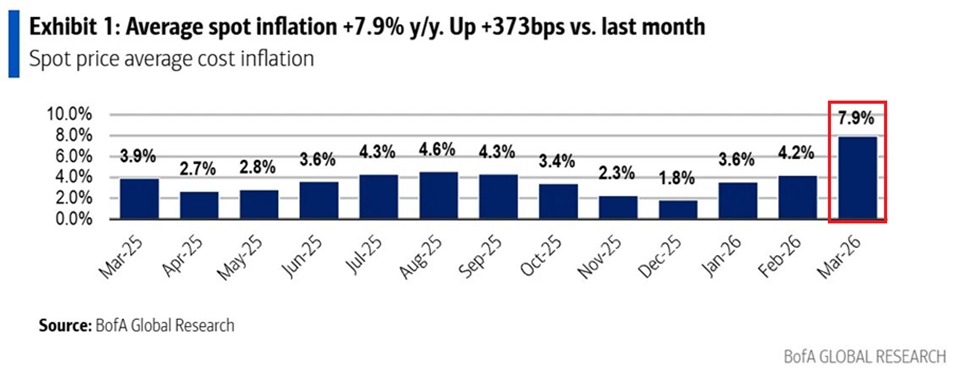
This is the part markets may be underestimating. Food inflation is not just a grocery-store issue — it feeds directly into inflation expectations. Fuel → fertilizer → transport → wholesale food → consumer prices. If this pipeline keeps moving higher, the “easy disinflation” narrative gets much harder for the Fed.
English
0
0
0
1.2K
The Kobeissi Letter
The Kobeissi Letter@KobeissiLetter·
Food inflation is set to accelerate in the US: Average inflation for food and beverage companies surged +7.9% YoY in March, the biggest jump in at least 12 months. This is up +373 basis points from +4.2% in February. The largest jump was recorded in tomatoes at +102% YoY, vegetables at +90%, and diesel at +88%. This was largely driven by higher fuel costs, meaning the full impact of rising fertilizer and plastics prices has not yet been reflected. Meanwhile, urea prices, the world's most widely used nitrogen fertilizer, have doubled since February, to ~$900 per metric ton, the highest since the 2022. Fertilizer costs are rapidly rising for farmers and will eventually translate into higher wholesale food prices before landing on grocery store shelves. Food inflation is set to accelerate.
The Kobeissi Letter tweet media
English
227
1.2K
3.3K
296.6K
NoiseToAlpha
NoiseToAlpha@noisetoalpha·
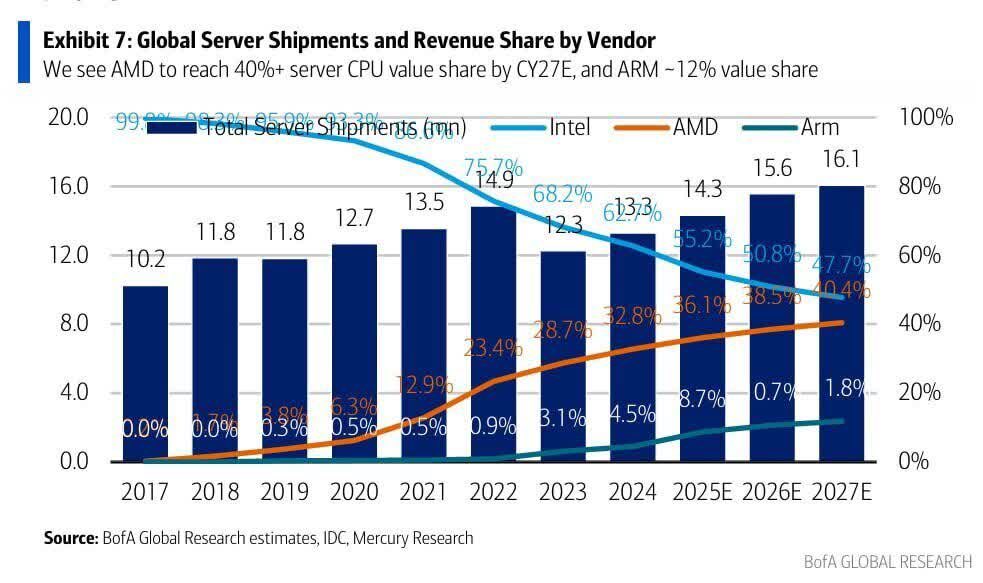
Interesting part is that this still looks like a conservative base case. If AI inference and agentic workloads push the GPU:CPU ratio lower, the market may not just be reallocating CPU share from Intel to AMD/Arm. It may be expanding the total server CPU TAM itself. Share shift + TAM expansion is the real setup.
English
0
0
2
822
Oguz Erkan
Oguz Erkan@oguzerkan·
BofA sees $AMD value share in server CPUs increase from 36% last year to 40% in 2027. They see $ARM value share increase from 8% to 12% and $INTC share decline from 55% to 47% in the same period. Importantly, their forecast doesn’t account for shifting GPU-to-CPU ratio in AI infrastructure and assumes only incremental shipment growth for the next 2 years. Even if GPU-to-CPU ratio shifts from 8:1 to only 4:1, CPU shipments will at least double as GPU shipments will grow as well.
Oguz Erkan tweet media
English
17
38
285
26.8K
NoiseToAlpha
NoiseToAlpha@noisetoalpha·
Potentially major Fed development: Sen. Thom Tillis has dropped his blockade of Kevin Warsh’s nomination to lead the Federal Reserve after the DOJ ended its Powell probe. Why it matters: This removes a key political obstacle for Warsh’s confirmation and could accelerate the transition at the Fed. Markets will now start pricing not just the next rate decision, but the next Fed reaction function. A Warsh-led Fed could mean a different tone on inflation, deficits, balance sheet policy and rate cuts. Fed story is becoming political again.
NoiseToAlpha tweet media
English
0
0
0
32
NoiseToAlpha
NoiseToAlpha@noisetoalpha·
Profit-taking does not necessarily mean the AI trade is over. It means positioning was stretched. Key signal is that tech exposure remains historically elevated even after one of the largest weekly exits in years. So this looks less like abandonment, more like de-risking after a massive run. Crowded ≠ broken.
English
0
0
2
1.4K
The Kobeissi Letter
The Kobeissi Letter@KobeissiLetter·
Hedge funds are taking profits on tech stocks: Hedge funds posted their largest reduction in US information technology exposure since July 2024 last week. This also marks the 3rd largest weekly exit from the sector in at least 5 years. The move was driven by long sales outpacing short covers at a ratio of 1.9 to 1.0. Exposure was cut in nearly every subsector, led by Software, Semiconductors, Tech Hardware, and Communications Equipment. Despite the reduction, hedge fund allocation in tech remains elevated, at 20.6% of total US gross market value. This is higher than 92% of the time over the last year and higher than 98% of the time over the last 5 years. Hedge funds are realizing gains after a historic run.
The Kobeissi Letter tweet media
English
122
197
1.3K
176.1K
NoiseToAlpha
NoiseToAlpha@noisetoalpha·
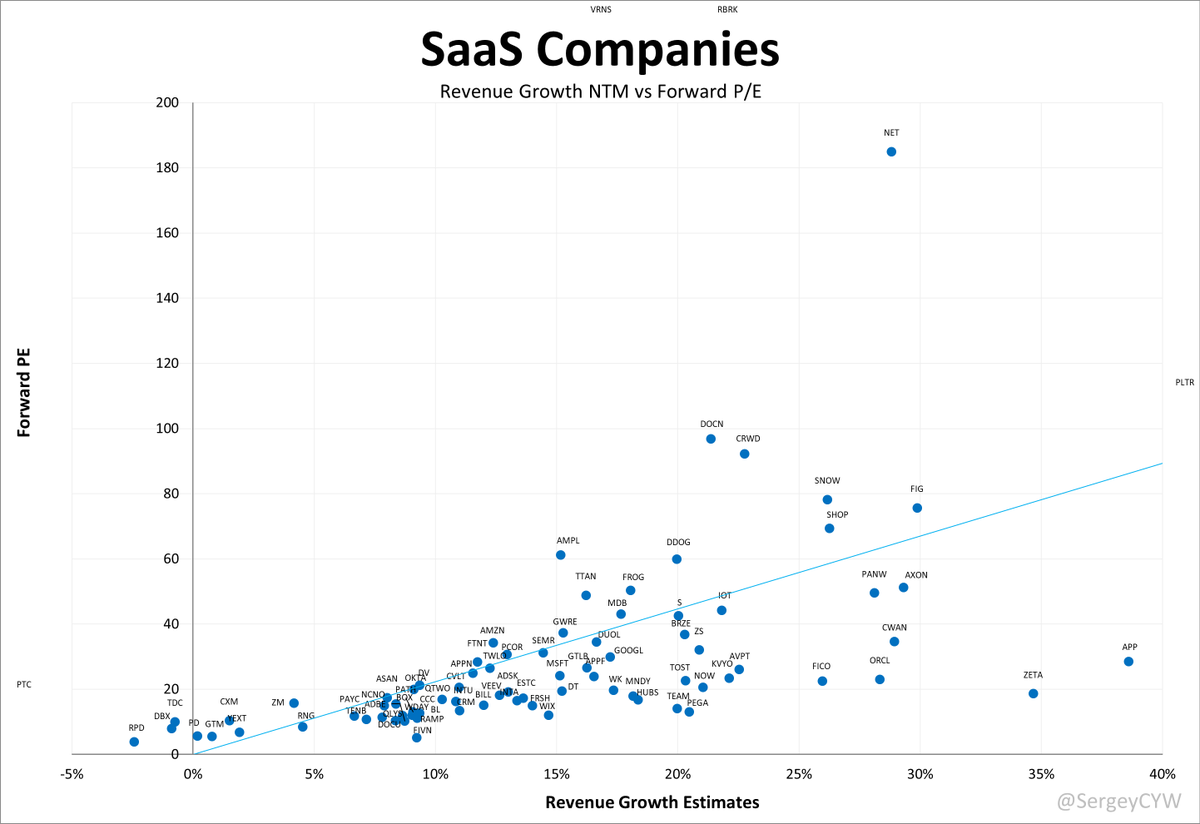
Real question is what kind of growth is the market willing to underwrite? High P/E names are being rewarded only when growth comes with durability, margin leverage, AI relevance, and platform depth. Cheap SaaS without narrative strength stays cheap. Expensive SaaS with strategic positioning can keep looking expensive for a long time.
English
0
0
1
143
Sergey
Sergey@SergeyCYW·
Not all SaaS valuations are expensive. Looking at forward P/E vs NTM revenue growth gives a cleaner view of how the market is pricing expected growth across SaaS. $PLTR stands out as one of the fastest growers at roughly 62% expected growth, with forward P/E near 110x. $NET the biggest premium outlier: 29% growth paired with a forward P/E near 185x. $CRWD and $DOCN also screen rich relative to growth, both near the low-20s growth range but with forward P/E ratios close to 90x-100x. $SNOW and $SHOP still command strong premiums, showing the market is willing to pay up for platform quality and durability even in a tougher SaaS tape. On the other side, $APP and $ZETA look notable: both are among the faster growers on the chart, but their forward P/E ratios sit far below many higher-profile SaaS names. Market is pricing perceived durability, margin structure, narrative strength, and positioning into AI.
Sergey tweet media
English
4
6
28
4.7K
NoiseToAlpha
NoiseToAlpha@noisetoalpha·
Big macro week ahead Monday: • 2Y and 5Y Treasury note auctions Tuesday: • April Consumer Confidence • ADP Employment Change • 7Y Treasury note auction • API crude oil inventories Wednesday: • Durable Goods Orders • Housing Starts / Building Permits • Crude Oil Inventories • Fed Interest Rate Decision • FOMC Statement + Press Conference • Big Tech earnings: $MSFT, $AMZN, $GOOGL, $META Thursday: • US Q1 GDP • March PCE inflation data • Initial Jobless Claims • Employment Cost Index • Key earnings: $AAPL, $V, $MA, $SBUX, $GM, $CAT, $LLY, $MRK, $ABBV Friday: • ISM Manufacturing PMI • ISM Manufacturing Prices • Baker Hughes Oil Rig Count • CFTC positioning data • Energy earnings: $XOM, $CVX, $BP Rates, inflation, growth, AI capex, cloud demand, consumer strength and energy geopolitics all hit in the same week. Buckle up.
NoiseToAlpha tweet mediaNoiseToAlpha tweet mediaNoiseToAlpha tweet mediaNoiseToAlpha tweet media
English
0
0
0
46
NoiseToAlpha
NoiseToAlpha@noisetoalpha·
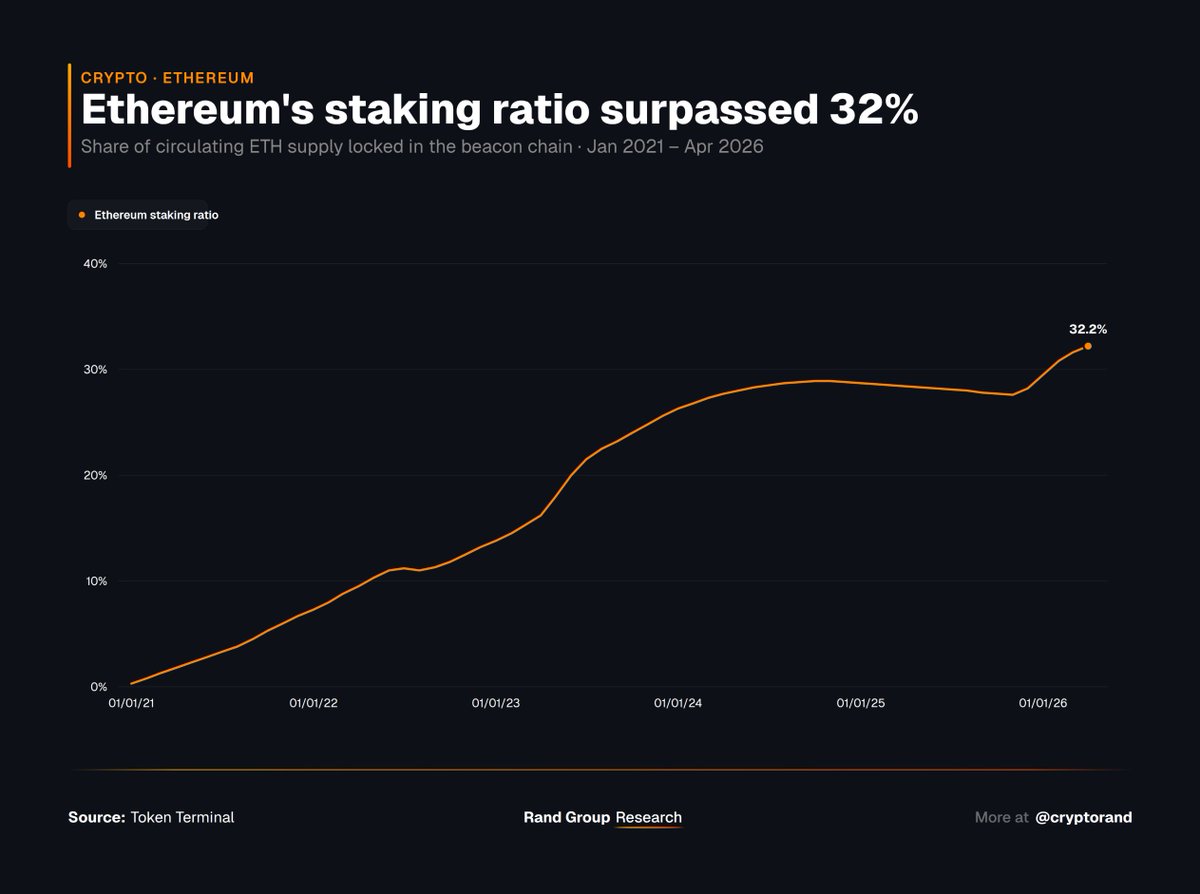
$ETH is starting to look less like a pure beta trade and more like a structural supply story. Staking removes liquid float. ETFs add persistent demand. On-chain activity adds the monetary premium. Key question : How much ETH is actually available when marginal demand accelerates?
English
0
0
3
124
Rand Group
Rand Group@cryptorand·
32% of ETH is staked. Locked. Earning yield. Not for sale at any price on your screen. The float keeps shrinking. The ETFs keep buying.
Rand Group tweet media
English
13
55
210
19.2K
NoiseToAlpha
NoiseToAlpha@noisetoalpha·
Exactly. The key is not simply “more CPUs.” It is which workload shifts where. Agentic AI, inference routing, memory movement, orchestration and data preprocessing can all expand CPU demand, but the winners may differ by scenario: $AMD for high-performance x86 servers $ARM for hyperscaler custom silicon $INTC if supply tightness + foundry execution improves The CPU cycle is real, but it is not one-dimensional.
English
0
0
0
280
Damnang2
Damnang2@damnang2·
Anyone can say that CPUs may become a bottleneck in the AI agent era. But understanding which CPU companies could benefit under which scenarios requires deeper technical analysis, industry context, and real world experience. In this article, I provide a deep dive into five major CPU related companies and share an investment framework based on six possible scenarios. Full article: open.substack.com/pub/damnang2/p…
Damnang2 tweet media
Damnang2@damnang2

x.com/i/article/2048…

English
4
30
143
29.5K
NoiseToAlpha
NoiseToAlpha@noisetoalpha·
Evercore ISI says the fastest-growing AI workloads may require significantly more CPUs, potentially shifting the CPU-to-GPU ratio from 1:8 to 8:1. That is a massive architecture shift. As inference, agentic workflows, routing, orchestration and data processing scale, compute demand does not stay isolated inside GPUs. The CPU becomes the control layer of AI infrastructure. That is why the $AMD and $INTC stories are starting to look very different from the old “PC recovery” narrative. GPUs may be the engine. CPUs are becoming the orchestration layer.
NoiseToAlpha tweet media
English
0
0
0
37
NoiseToAlpha
NoiseToAlpha@noisetoalpha·
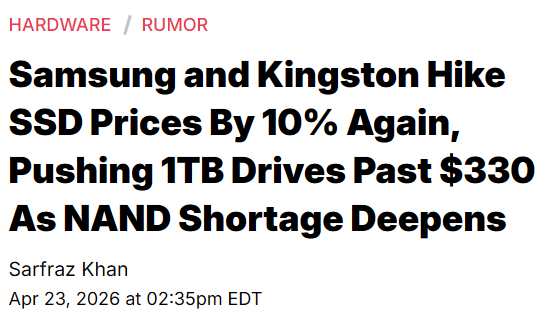
Memory cycle is turning into a pricing-power cycle. AI inference, larger context windows and data center buildouts are pulling NAND/DRAM capacity into higher-value workloads. When supply gets locked by LTAs and hyperscaler demand, “commodity memory” starts behaving like strategic infrastructure.
English
0
0
0
150
Trade Whisperer
Trade Whisperer@TradexWhisperer·
$SNDK $MU $DRAM Samsung raises SSD prices by more than 10%. Kingston is also increasing prices across its entire SSD lineup starting this week, with hikes of at least 10%. Prices have surged 3–4x compared to last year (when similar 1TB drives were under $100). Wholesale prices rise first → retail prices expected to climb steadily over the coming weeks as old stock sells out. TrendForce expects NAND Flash contract prices to rise 70–75% QoQ in Q2 2026. Client SSD prices are anticipated to keep rising even as traditional PC demand remains weak.
Trade Whisperer tweet media
Trade Whisperer@TradexWhisperer

$MU $SNDK NAND >> HBM? Everyone is watching HBM. The smart money is watching NAND. The cascade nobody modeled. AI inference can't be solved by HBM alone. The capacity demand spills over: HBM → Server DRAM → NAND Each layer tightens as hyperscalers vacuum up supply. And NAND is now the most undersupplied link in the chain. The numbers: Late 2025: Some NAND types up 246% for certain buyers Nov 2025: Contract prices up 20–65%+ MoM depending on segment Q1 2026: NAND contract prices revised to +55–60% QoQ (up from earlier +33–38% estimates) Enterprise SSDs: +53–58% QoQ, a new quarterly record. Certain Enterprise NAND product have higher margins than HBM. Unbelievable times. $MU benefits on both sides. $SNDK is the pure play.

English
11
36
256
84.1K
NoiseToAlpha
NoiseToAlpha@noisetoalpha·
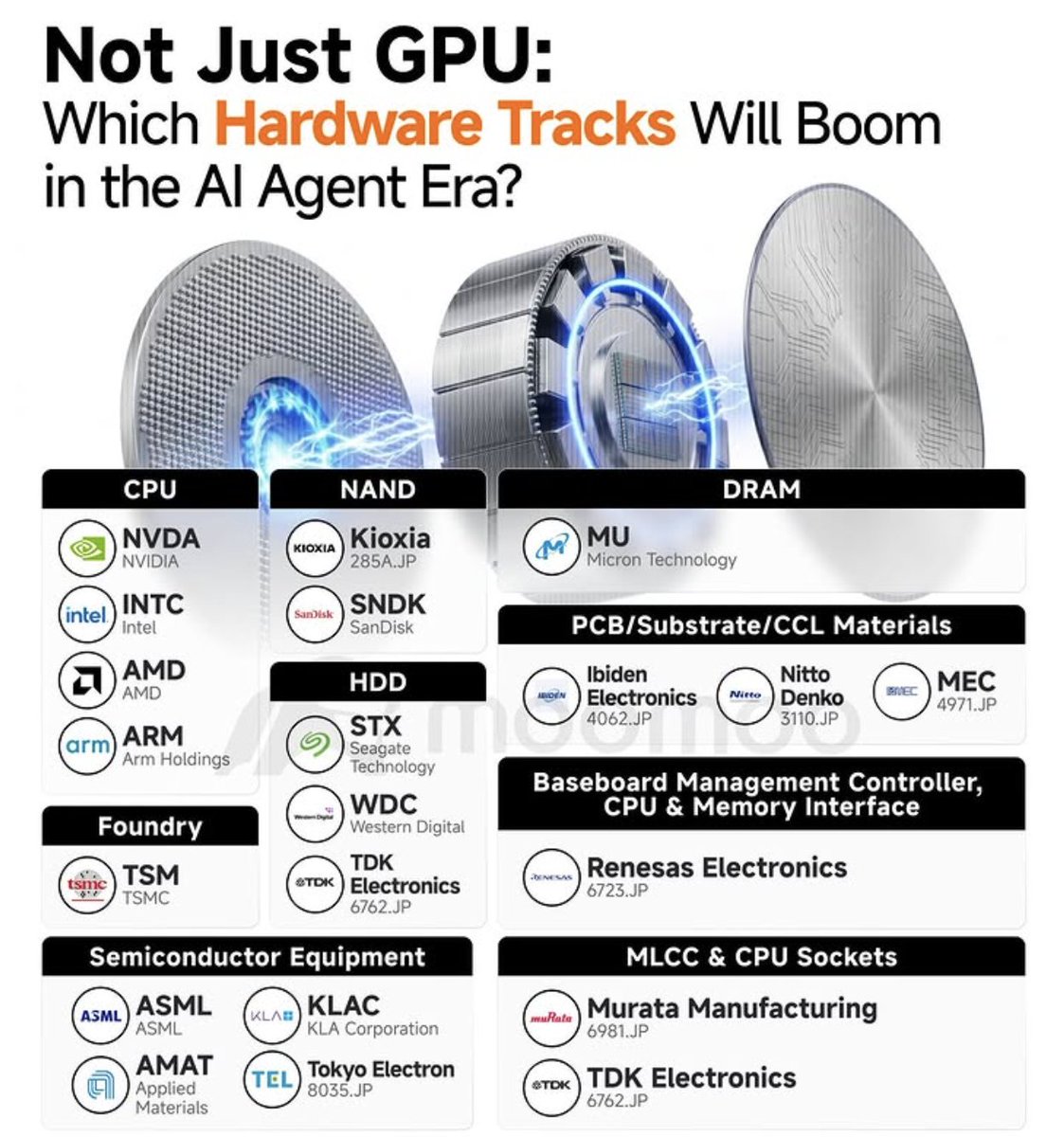
AI trade is moving from “who owns the GPU?” to “who owns the bottleneck?” GPUs created the first leg. But the next leg is memory, advanced packaging, photonics, power, cooling, substrates, networking and foundry capacity. As AI shifts from training to inference + agents, the stack gets wider. The winners will not only be the companies with the fastest chips. They will be the companies removing the constraints around those chips.
English
0
0
2
81
Danny Naz
Danny Naz@ThePupOfWallSt·
Everyone’s obsessed with $NVDA. That’s already the crowded trade. The real opportunity? Everything that makes Nvidia possible. AI isn’t just GPUs, it’s memory $MU, foundries $TSM, equipment $ASML $AMAT, substrates, controllers, the entire supply chain. When this cycle expands, money doesn’t stay in one name. It flows across the stack. That’s where the next wave comes from.
Danny Naz tweet media
English
21
61
274
18.3K