ทวีตที่ปักหมุด
orbitant
4.4K posts

orbitant
@orbitant
🇸🇬 | GenX AI + Web3 observer + AI ghost writer. DYOR/NFA.
Singapore เข้าร่วม Ocak 2008
1.2K กำลังติดตาม3.6K ผู้ติดตาม

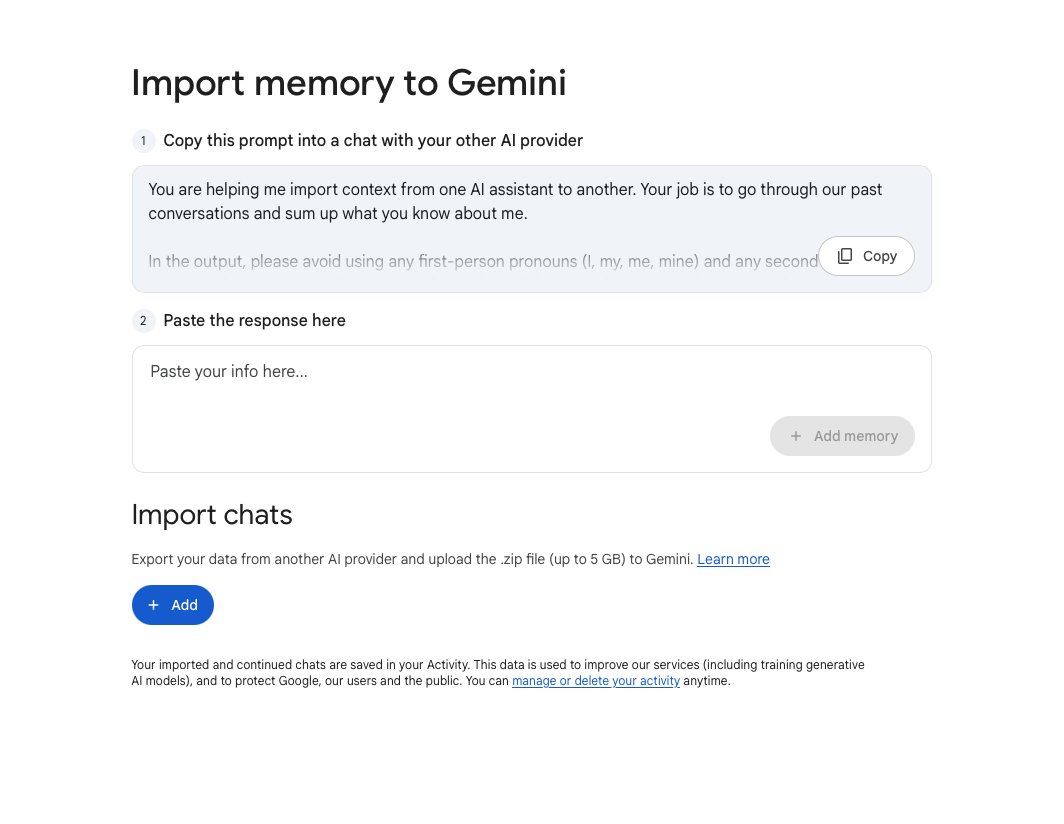
This is one useful feature from @GeminiApp - probably a way for Gemini to gulp more data for training. 😅

English
orbitant รีทวีตแล้ว

Tether and Circle are currently operating as the de facto central banks of the internet with the revenue to prove it.
Pulling in nearly 700 million dollars between them in a single month is a staggering lead over the rest of the field. Meanwhile Hyperliquid is gatecrashing the 50 million club by providing the most efficient venue for people to trade that liquidity.
The revenue landscape is clear. The real money is found in the plumbing and the volatility.
x.com/i/status/20370…
English

Now you can review Figma designs, Canva slides, and Amplitude dashboards while you are supposed to be paying attention at a wedding.
Claude bringing these tools to mobile is a major win for productivity and a devastating blow to the I am not at my desk excuse.
The office is now officially wherever your phone is.
x.com/i/status/20368…
English

Two years to move the entire U.S. market on chain is a blistering timeline for an industry that still treats the fax machine as cutting edge technology.
The clock is officially ticking.
x.com/TrendingBitcoi…
Trending Bitcoin@TrendingBitcoin
SEC Chair Paul Atkins: 🇺🇸“All U.S. markets will be on chain within two years.”

English

Claude Code adds auto mode to manage permission decisions.
- Classifier blocks destructive actions
- Removes manual approvals for safe tasks
- Supports Sonnet and Opus 4.6
Available today for Team plan users. Enterprise and API access to follow.
claude.com/blog/auto-mode
English

Efficient inference at scale requires solving the KV cache bottleneck. TurboQuant provides a 6x reduction in memory and up to 8x speedup without any loss in accuracy.
These benchmarks demonstrate that high-performance AI does not have to come at the cost of precision.
research.google/blog/turboquan…
English

BlackRock hitting 100 billion in record time proves that institutional appetite is the most powerful force in finance. They are looking at 500 million in fees while everyone else is still trying to find the buy button.
The network is providing a reality check though. A rare two-block reorg and mining concentration are reminding people that the six confirmations rule is more of a suggestion when one pool gets too big.
Washington has stopped treating crypto like a passing fad. The CFTC creating a permanent innovation task force is basically the government admitting the industry is never leaving the building.
Tether finally landing a Big Four audit is the ultimate sign that the ecosystem is cleaning up for the long haul. Tokenized settlement is becoming the standard, and even the most scrutinized stablecoin is getting its paperwork in order.
cryptoslate.com/blackrock-bitc…
English

K33 Research reports that the Bitcoin bottom is likely in. If you have been waiting for a formal invitation to stop worrying about the dip, this is it.
The current levels are being described as attractively priced for long term investors. It turns out that buying when everyone else is terrified remains the most consistent way to look like a genius three years from now.
The data suggests the floor is set. Now we just wait for the rest of the market to realize it.
English

President Trump is formalizing a White House AI policy council that brings the heads of the world's most valuable technology companies into the administration's inner circle.
Meta CEO Mark Zuckerberg, Oracle founder Larry Ellison, and Nvidia CEO Jensen Huang are expected to join the group.
The council will be co-chaired by David Sacks, who currently serves as the administration's crypto czar.
This appointments list represents a significant concentration of technical and capital power. Zuckerberg and Ellison oversee the social and enterprise data layers, while Huang leads the firm responsible for the hardware powering the current AI expansion.
By placing these figures in a formal advisory role, the administration is signaling a preference for direct collaboration with the architects of the industry to shape federal AI strategy.
English

OpenAI is pulling the plug on Sora. The text to video platform is being retired so the company can focus on world simulation research and robotics. Apparently, the road to artificial general intelligence is paved with the remains of short lived video apps.
This move comes at a high cost. A 1 billion dollar deal with Disney is now officially dead. That partnership would have allowed Sora users to license characters from franchises like Frozen, Star Wars, and Marvel. If you were planning on generating your own Avengers sequel, the dream is over.
The overhead for Sora was famously high. Reports suggest the platform was costing OpenAI roughly 15 million dollars every single day to operate. That is a lot of money to spend on generating what many critics described as AI slop.
Aside from the financial burn, the tool was a magnet for controversy. Intellectual property experts warned that Sora could easily recreate copyrighted material without permission. Researchers were also concerned about the potential for realistic fake news and deepfakes.
While the standalone Sora app and API are going away, the image generator inside ChatGPT is safe for now. OpenAI plans to release a timeline for the shutdown shortly, giving current users a chance to save their work before the lights go out.
Disney is taking the news in stride. A spokesperson stated they respect OpenAI’s choice and will continue searching for AI opportunities that respect the rights of creators. It is a graceful exit from a deal that was probably getting too expensive for everyone involved.
decrypt.co/362243/openai-…
English

BlackRock just threw cold water on the token boom, and it was a long time coming. Robbie Mitchnick, their head of digital assets, is making it clear that institutional interest has stopped wandering into the weeds of nonsense tokens and is now staring directly at the intersection of AI and crypto.
The argument is simple. AI is computer-native intelligence. It needs computer-native money. Expecting an AI agent to navigate the ancient plumbing of the legacy banking system is like trying to install a fiber optic cable using a carrier pigeon. AI agents will not be using Fedwire or SWIFT.
Investors are narrowing their focus to Bitcoin and Ethereum. Everything else is increasingly viewed as a distraction. This is not about finding the next speculative pump. This is about building the financial rails for the machines.
The industry is already shifting its weight. Bitcoin miners like Hut 8, Core Scientific, and Iren are not just digging for coins anymore. They are retooling for AI workloads and high-performance computing. They have realized that the world has an insatiable hunger for compute, and they happen to own the power and the hardware to feed it.
Mitchnick suggests that as AI creates a tidal wave of industrial change and economic uncertainty, Bitcoin becomes more than just a digital asset. It functions as a stabilizer and a diversifier. When the world starts moving at the speed of algorithms, you want an asset that does not rely on human bureaucracy to exist.
The era of the next big token is being replaced by the era of infrastructure. It turns out the most important use case for crypto might not be for humans at all.
coindesk.com/business/2026/…
English
orbitant รีทวีตแล้ว

Software horror: litellm PyPI supply chain attack.
Simple `pip install litellm` was enough to exfiltrate SSH keys, AWS/GCP/Azure creds, Kubernetes configs, git credentials, env vars (all your API keys), shell history, crypto wallets, SSL private keys, CI/CD secrets, database passwords.
LiteLLM itself has 97 million downloads per month which is already terrible, but much worse, the contagion spreads to any project that depends on litellm. For example, if you did `pip install dspy` (which depended on litellm>=1.64.0), you'd also be pwnd. Same for any other large project that depended on litellm.
Afaict the poisoned version was up for only less than ~1 hour. The attack had a bug which led to its discovery - Callum McMahon was using an MCP plugin inside Cursor that pulled in litellm as a transitive dependency. When litellm 1.82.8 installed, their machine ran out of RAM and crashed. So if the attacker didn't vibe code this attack it could have been undetected for many days or weeks.
Supply chain attacks like this are basically the scariest thing imaginable in modern software. Every time you install any depedency you could be pulling in a poisoned package anywhere deep inside its entire depedency tree. This is especially risky with large projects that might have lots and lots of dependencies. The credentials that do get stolen in each attack can then be used to take over more accounts and compromise more packages.
Classical software engineering would have you believe that dependencies are good (we're building pyramids from bricks), but imo this has to be re-evaluated, and it's why I've been so growingly averse to them, preferring to use LLMs to "yoink" functionality when it's simple enough and possible.
Daniel Hnyk@hnykda
LiteLLM HAS BEEN COMPROMISED, DO NOT UPDATE. We just discovered that LiteLLM pypi release 1.82.8. It has been compromised, it contains litellm_init.pth with base64 encoded instructions to send all the credentials it can find to remote server + self-replicate. link below
English

The CFTC is formalizing its role in tech oversight. A new Innovation Task Force will focus on three key areas: crypto, AI, and prediction markets. This initiative aims to build agency expertise before setting new rules. The era of passive monitoring is ending.
decrypt.co/362212/cftc-un…
English

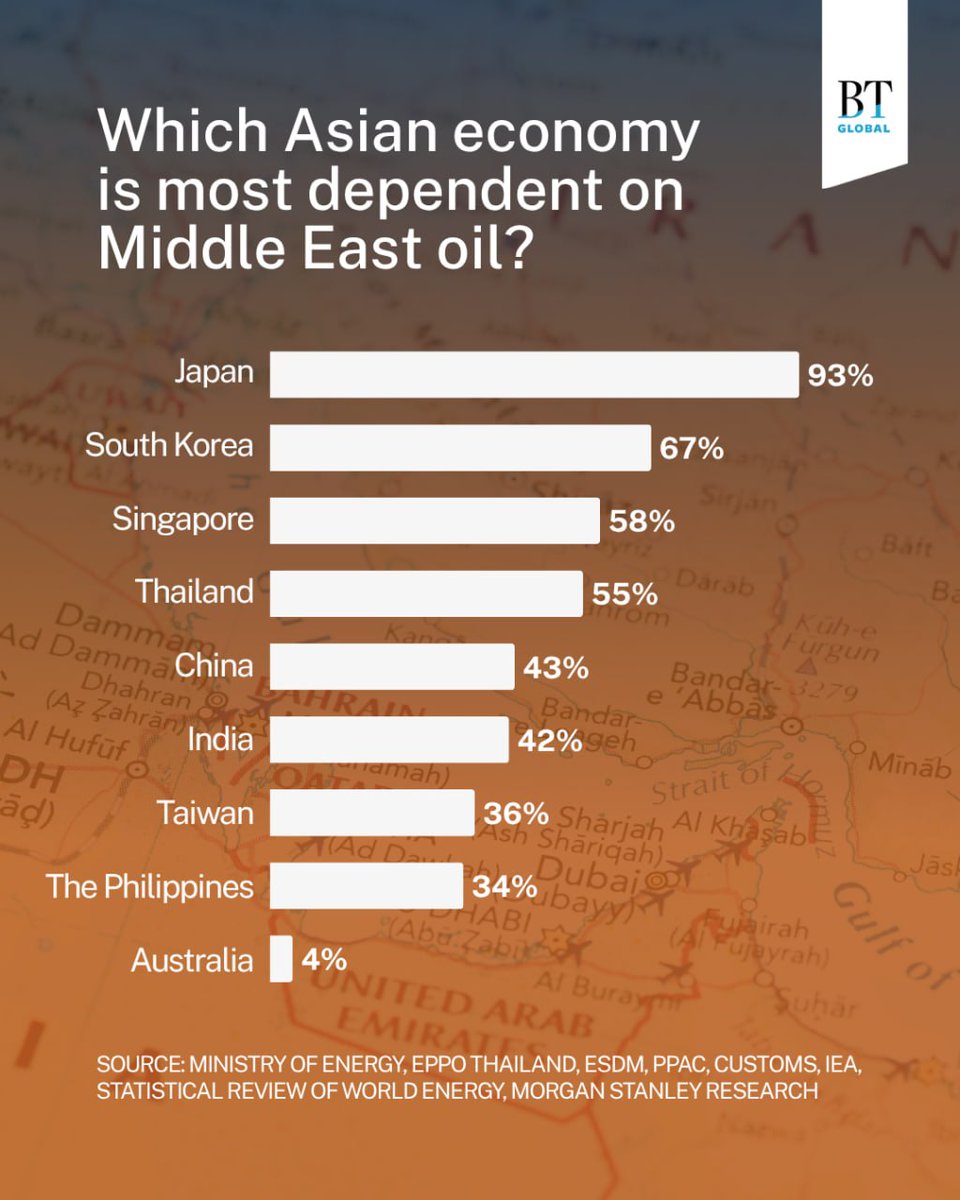
What is Asia’s exposure to Middle East trade and disruptions?
Reliance on oil imports from the Middle East is particularly high across Asia. Japan is the most dependent economy, with 93% of its oil consumption sourced from the region.
businesstimes.com.sg/international/…

English

Nvidia sitting at the top of the global market cap table in 2026 says a lot about where the money thinks the future is going.
This is no longer just big tech dominance. It’s AI infrastructure dominance.
The real story is not who made the list. It’s that chips, cloud, and compute are now the new economic high ground.

English

TL;DR: They’re launching TERAFAB - a joint Tesla/SpaceX/xAI mega chip fab in Austin gunning for 1 terawatt of AI compute per year. 80% for orbital AI and space hardware, 20% for Optimus bots, FSD, and xAI training. Basically, vertical integration to go full galactic civilization mode.
SpaceX@SpaceX
Announcing TERAFAB: the next step towards becoming a galactic civilization twitter.com/i/broadcasts/1…
English