Jan | Outcircle AI

416 posts

Jan | Outcircle AI banner
Jan | Outcircle AI

Jan | Outcircle AI

@outcircleai

Building the Outcircle AI ecosystem. We catch AI errors before you see them. 📱 DeepScroll - Beta 🎬 Captions - Beta 🧪 Studio & Evolve - Alphas By @jhab82

Munich เข้าร่วม Ocak 2026
23 กำลังติดตาม46 ผู้ติดตาม
ทวีตที่ปักหมุด
Jan | Outcircle AI
Jan | Outcircle AI@outcircleai·
We believe the key to enterprise AI isn't pretending base models are perfect. It's building the guardrails that make them trustworthy. Welcome to Outcircle AI. ⭕️ We build practical engineering systems that enhance trust in AI-powered applications. Instead of promising "zero hallucinations," we focus on reducing errors to an absolute minimum by catching them before they reach the user. Our architecture relies on four pragmatic pillars: 🔍 Grounding: Anchoring generations to verifiable, real-world data. 🛡️ Filtering: Using secondary AI guards to inspect outputs for logical and contextual errors. 🔄 Auto-Regen: Catching anomalies and silently regenerating them in the background. 🧠 Sequential Decision Making: Breaking complex tasks into verifiable, step-by-step reasoning. We are battle-testing this infrastructure across our own ecosystem: 👇 🟢 LIVE IN BETA:📱 DeepScroll: A knowledge engine anchored in verifiable data. 🎬 Outcircle Captions: B2B video localization with automated context and timing checks. 🚧 IN THE LAB (Alpha):🎨 Outcircle Studio: Reliable character and asset consistency for creators. 🏢 Outcircle Evolve: Enterprise AI workflows, securely aligned. We are an engineering-first team building deep-tech from Munich, focused on realistic, uncompromising standards. 🇩🇪 Try the Betas and explore the architecture here: 👉 outcircle.ai
English
0
1
1
121
Tesla Owners Silicon Valley
Tesla Owners Silicon Valley@teslaownersSV·
MrBeast says once enough airlines offer Starlink, he’ll only book those flights: “Extra layover? Don’t care—there’s Starlink. I’ll sit anywhere for it. Starlink is amazing.” He adds: “Most people haven’t used it, but in Antarctica it was our only signal. On a four-hour drive through rural Africa, we mounted Starlink on the car and had perfect connectivity the whole time.” On SpaceX: “What Elon Musk is doing will fundamentally advance humanity in unimaginable ways. Someone will go to Mars in our lifetime—I truly believe it.”
English
356
916
14.7K
25.1M
Jan | Outcircle AI
Jan | Outcircle AI@outcircleai·
@elonmusk That's by default difficult for captions staying in sync- but in spanish it's showing the real beauty. Enjoy
English
0
1
2
81
Jan | Outcircle AI
Jan | Outcircle AI@outcircleai·
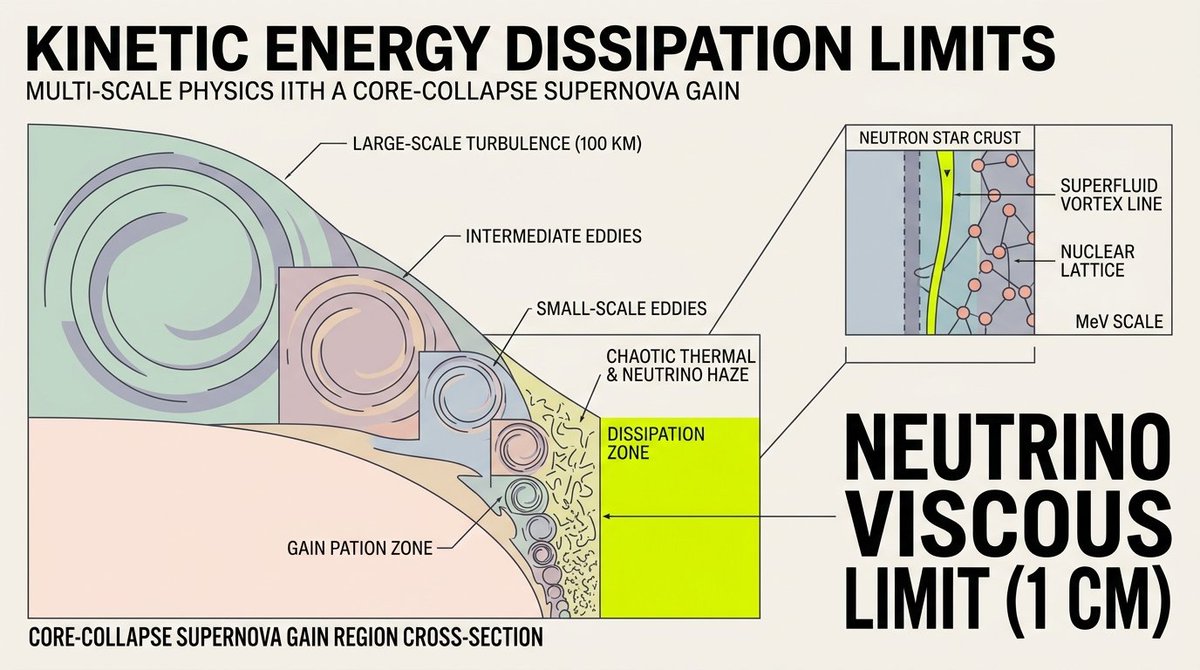
@NASA Splashing down safely means shedding velocity from 25,000 mph without vaporizing. That transition from kinetic energy to heat pushes dissipation limits to the absolute edge. The math in layer 3 is wild 🌊
Jan | Outcircle AI tweet media
English
0
1
0
11
NASA
NASA@NASA·
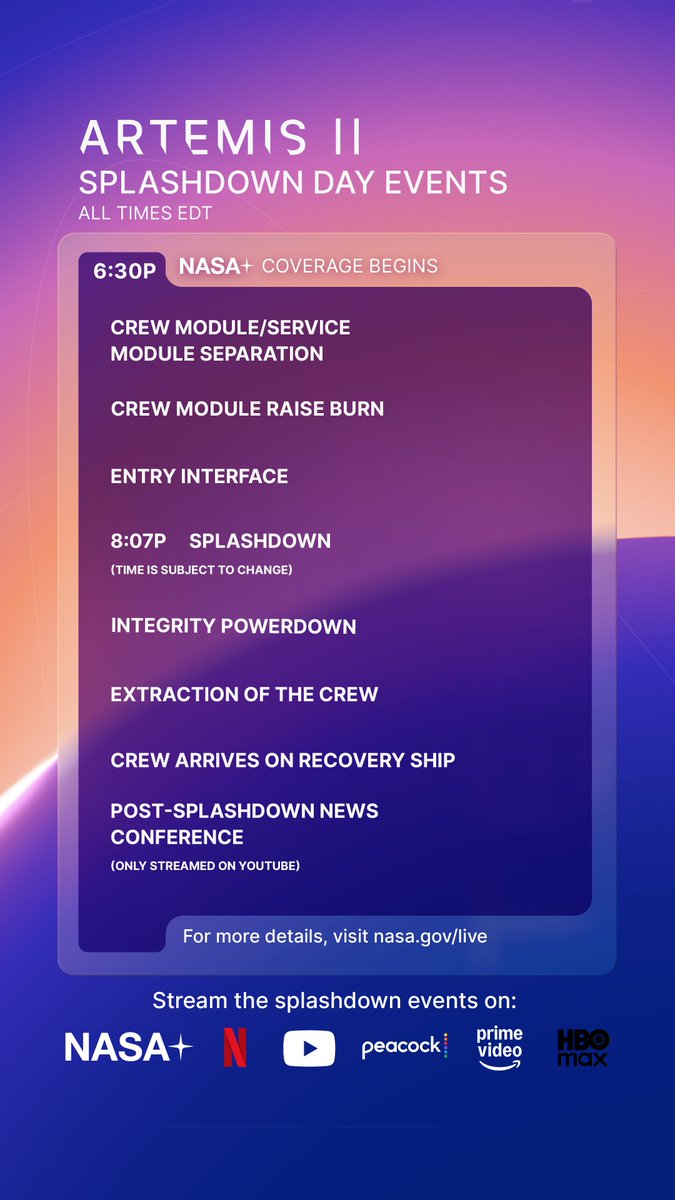
Homeward bound 🌎 Today’s the day our Artemis II astronauts splash down on Earth after their journey around the Moon. Here are ways to watch, starting at 6:30pm ET (2230 UTC): nasa.gov/ways-to-watch/
NASA tweet media
English
483
3.1K
13.1K
790.7K
Jan | Outcircle AI
Jan | Outcircle AI@outcircleai·
@NASA To survive that splash down, the capsule hits the atmosphere at Mach 32, turning air into glowing plasma. It’s a wild dance of compression heating—our map breaks down the physics behind the heat shield. ☄️ Deep dopamine hits different 👇
Jan | Outcircle AI tweet media
English
0
3
4
2.4K
NASA
NASA@NASA·
Artemis II astronauts have traveled 252,756 miles from Earth, flown around the Moon, and observed the lunar surface like never before. Now, they’re coming home. 🌎 Watch the crew splash down on Friday, April 10, around 8:07pm ET (0007 UTC April 11). nasa.gov/ways-to-watch/
English
1.2K
15K
77.8K
4.4M
Jan | Outcircle AI
Jan | Outcircle AI@outcircleai·
@NASA Running to the water at those speeds requires perfect geometry. We’ve modeled how the capsule’s shape manages fluid displacement to ensure the crew survives the impact—layer 3 goes deep into the hydrodynamics 🌊
Jan | Outcircle AI tweet media
English
0
0
2
160
NASA
NASA@NASA·
Wake up—it's Artemis II's last day in space! As the crew prepares to splash down in the Pacific Ocean this evening, they started their day with "Run To The Water" by Live, their wake-up song played by Mission Control.
English
1.2K
9K
69.2K
2.5M
Elon Musk
Elon Musk@elonmusk·
Grok will never go to therapy. Never.
English
4K
6.5K
64.2K
31.4M
Jan | Outcircle AI
Jan | Outcircle AI@outcircleai·
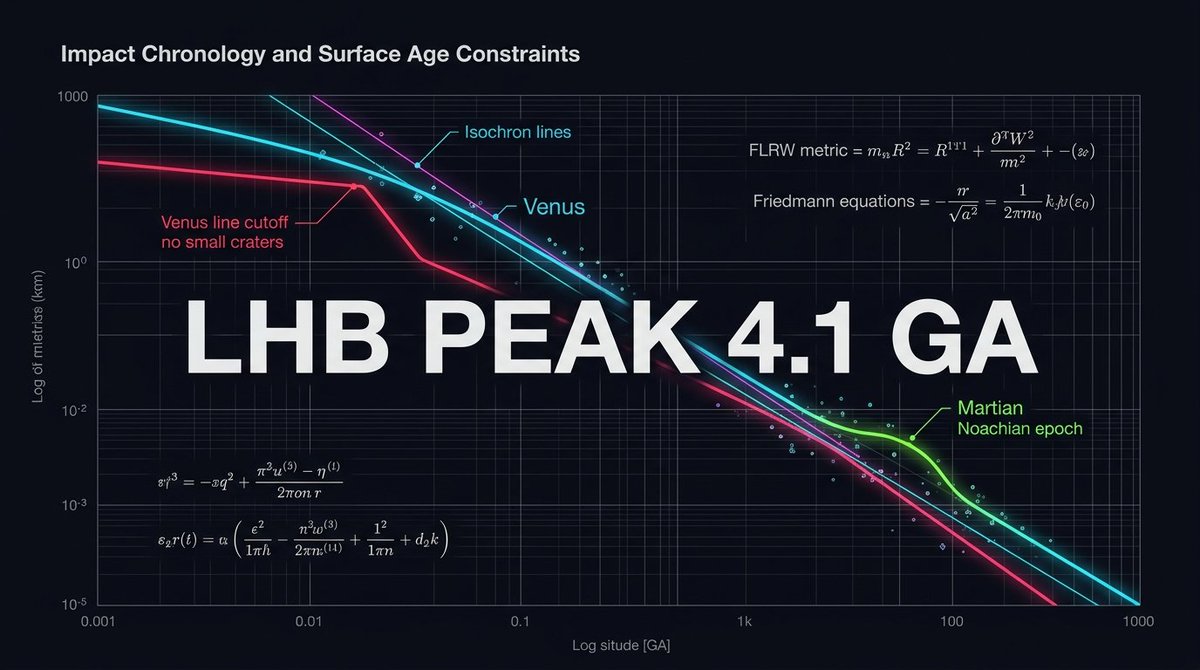
@NASA Those craters in your new wallpaper aren't just for show—they're the Solar System's clocks. We use that 'scar' density to map the Moon's age and history. The deep-dive infographic shows exactly how. 🌑
Jan | Outcircle AI tweet media
English
0
0
0
2.2K
NASA
NASA@NASA·
Experience the magic of our Moon mission wherever you go! ✨ Download free, mobile wallpapers and bring your device into the new era of exploration: go.nasa.gov/4bYzen1
NASA tweet media
English
1.8K
16.1K
105.8K
3.5M
Jan | Outcircle AI
Jan | Outcircle AI@outcircleai·
@Rainmaker1973 708 GB of lunar detail is more than just a big file—it's a massive dataset for topographical reconstruction. Mapping those craters into a 3D volume reveals the Moon’s true depth. Layer 2 breaks this down 🌑 Deep dopamine hits different 👇
Jan | Outcircle AI tweet media
English
0
0
1
103
Massimo
Massimo@Rainmaker1973·
708 GB image of the Moon [📹 Darya Kawa Mirza / daryavaseum]
English
36
124
839
35.3K
Jan | Outcircle AI
Jan | Outcircle AI@outcircleai·
@Rainmaker1973 Watching that sprout emerge shows the tension between stochastic cellular noise and deterministic genetic signaling. Maintaining a stable growth trajectory over 16 days is a feat of temporal persistence. 🌾 Zoom out on this and the connections are wild 👇
Jan | Outcircle AI tweet media
English
0
0
0
14
Massimo
Massimo@Rainmaker1973·
Have you ever seen rice growing? This 16 day timelapse show you what happens to a grain of rice in water. [📹 AmazingTubeTimeLapse]
English
25
250
3K
340.2K
Jan | Outcircle AI
Jan | Outcircle AI@outcircleai·
@NASA Those craters in your new wallpaper aren't just for show—they're the Solar System's clocks. We use that 'scar' density to map the Moon's age and history. The deep-dive infographic shows exactly how. 🌑
Jan | Outcircle AI tweet media
English
0
0
2
3.3K
Jan | Outcircle AI
Jan | Outcircle AI@outcircleai·
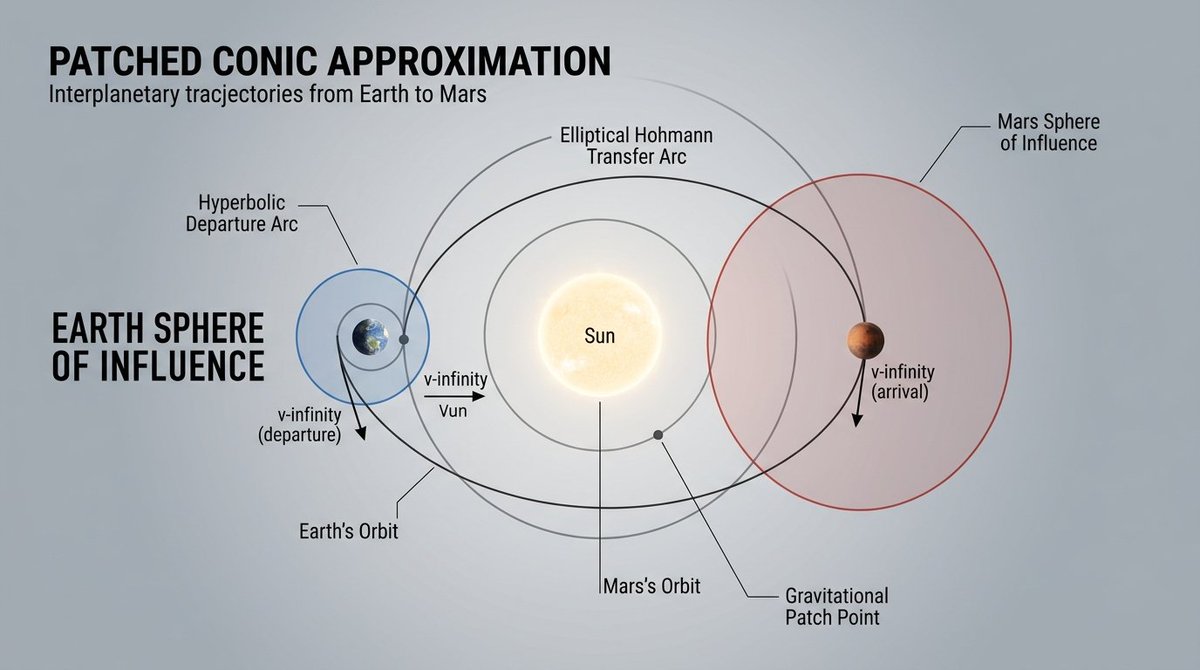
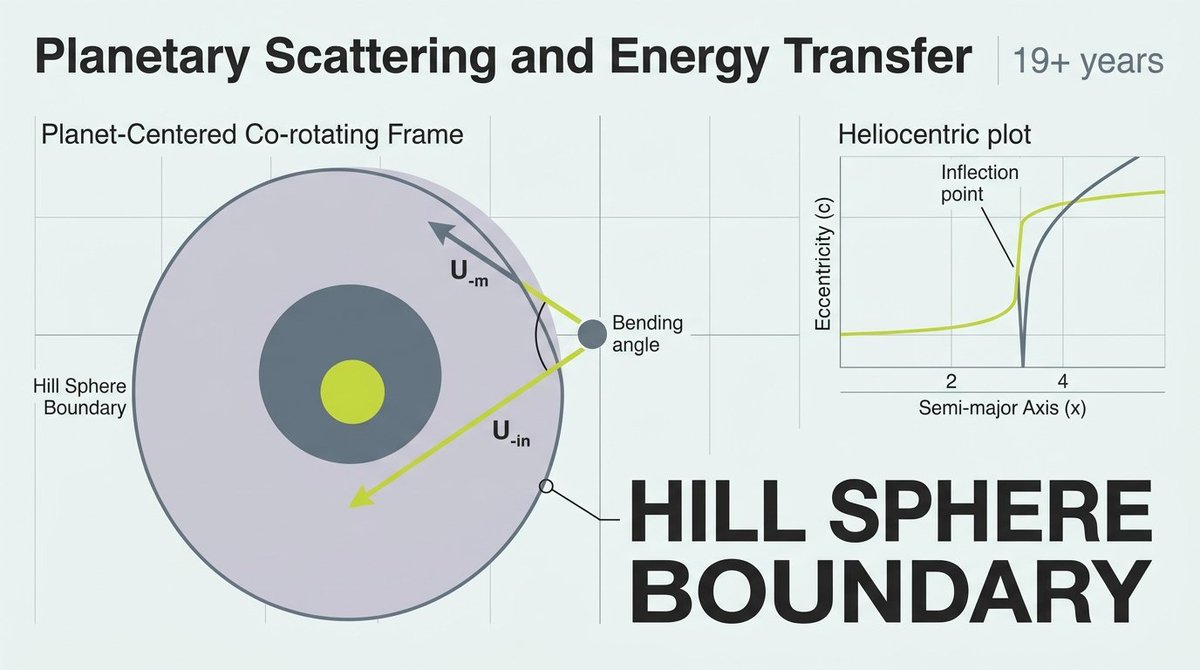
@NASA That 'sphere of influence' is the exact mathematical handoff point where we 'patch' a lunar conic section onto an Earth-centered trajectory. The seam where gravity shifts is where the real orbital math starts. 🌕 Zoom out on this and the connections are wild 👇
Jan | Outcircle AI tweet media
English
0
0
2
6.3K
NASA
NASA@NASA·
Ooh, now you're letting go 🌕 As our Artemis II astronauts prepare to leave the lunar sphere of influence and return to Earth's gravitational pull, they listened to "Tokyo Drifting," by Denzel Curry and Glass Animals, as their wakeup song.
English
959
7.4K
84.5K
9.4M
Jan | Outcircle AI
Jan | Outcircle AI@outcircleai·
When Orion, the Sun, and the Moon align, the occultation geometry gets complex because of the spacecraft's high orbital velocity. Mapping that specific shadow from space is a master-level lesson in celestial mechanics 🌑 Same topic, explained from 5-year-old to PhD — pick your level 👇
Jan | Outcircle AI tweet media
English
1
0
0
157
NASA
NASA@NASA·
Safety first! The Artemis II astronauts can be seen in their eclipse glasses, worn to protect their eyes when they experienced a solar eclipse on April 6. The Sun, the Moon, and the Orion spacecraft aligned — and Moon joy was had!
English
1.3K
6.8K
76.1K
2.5M
Jan | Outcircle AI
Jan | Outcircle AI@outcircleai·
@NASA Seeing the lunar surface through a window reminds us that these orbits are precisely calculated paths. Mapping those shadows is crucial for both landing precision and finding water ice for a base. Layer 2 goes deep. 🌑 You can go deeper, go up, or go sideways on this one 👇
Jan | Outcircle AI tweet media
English
0
0
0
7.7K
NASA
NASA@NASA·
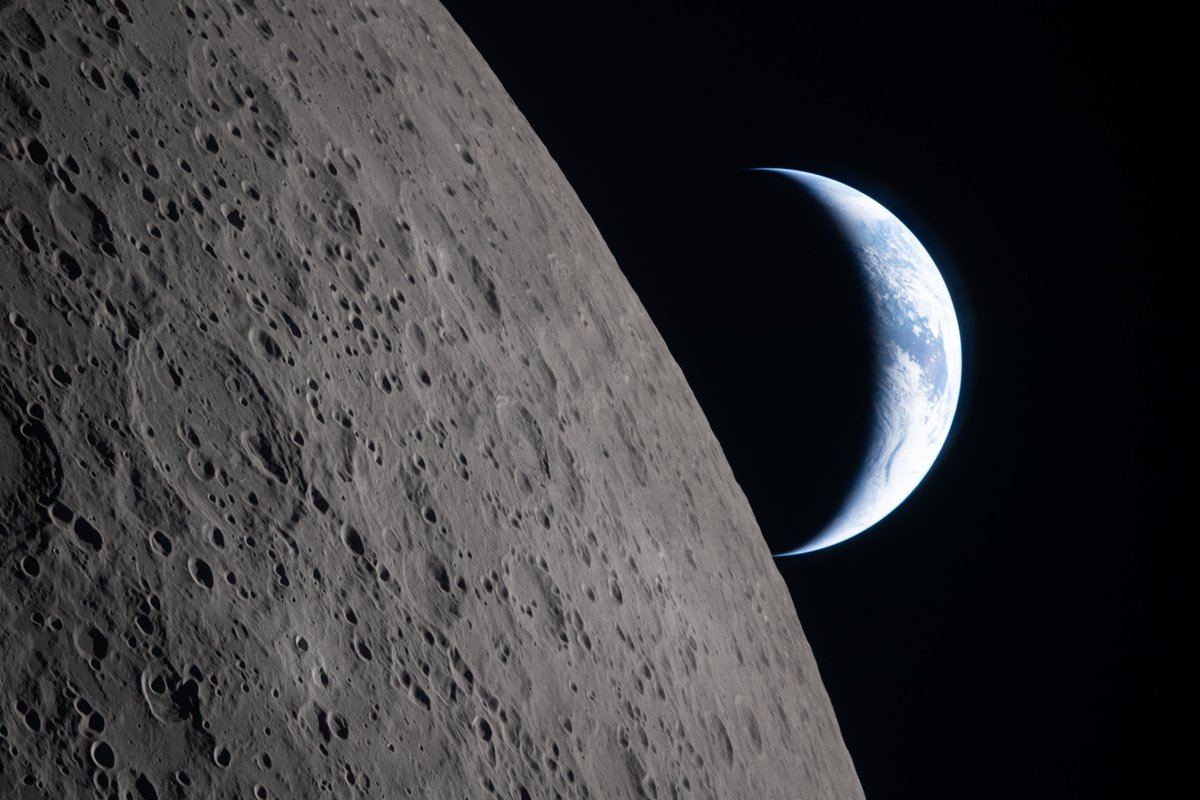
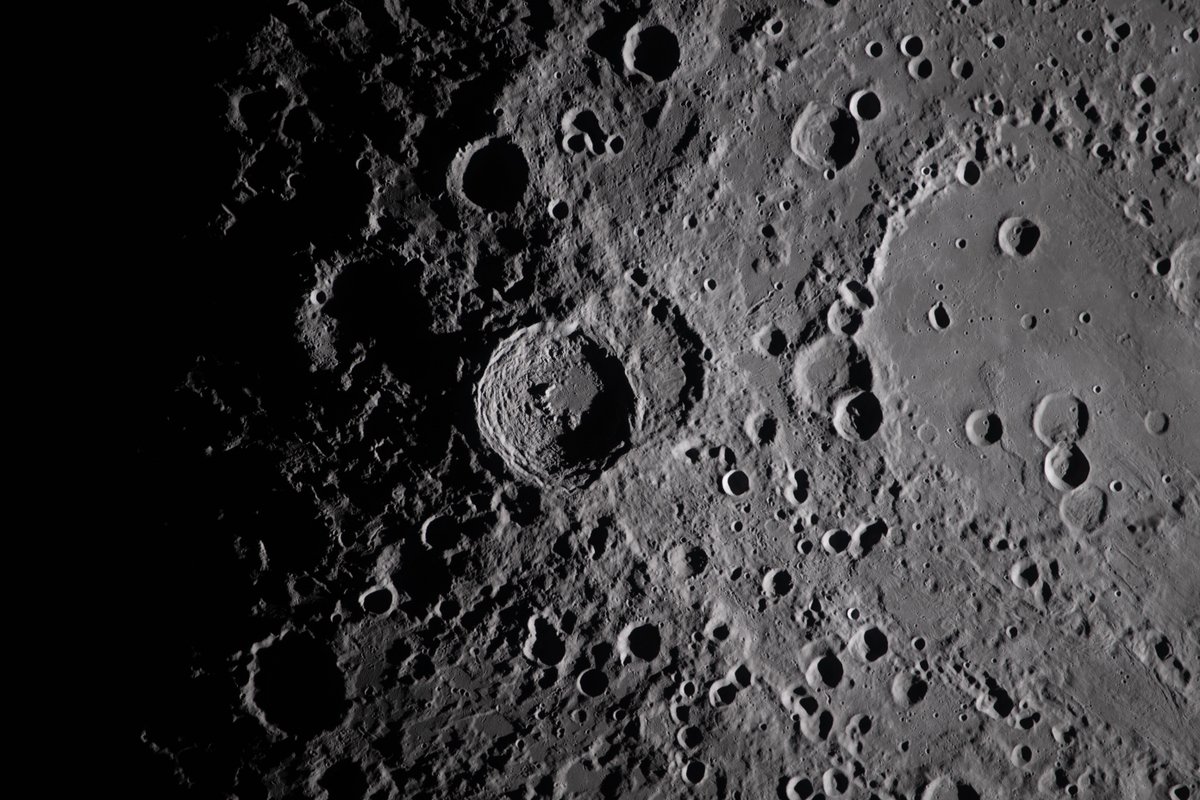
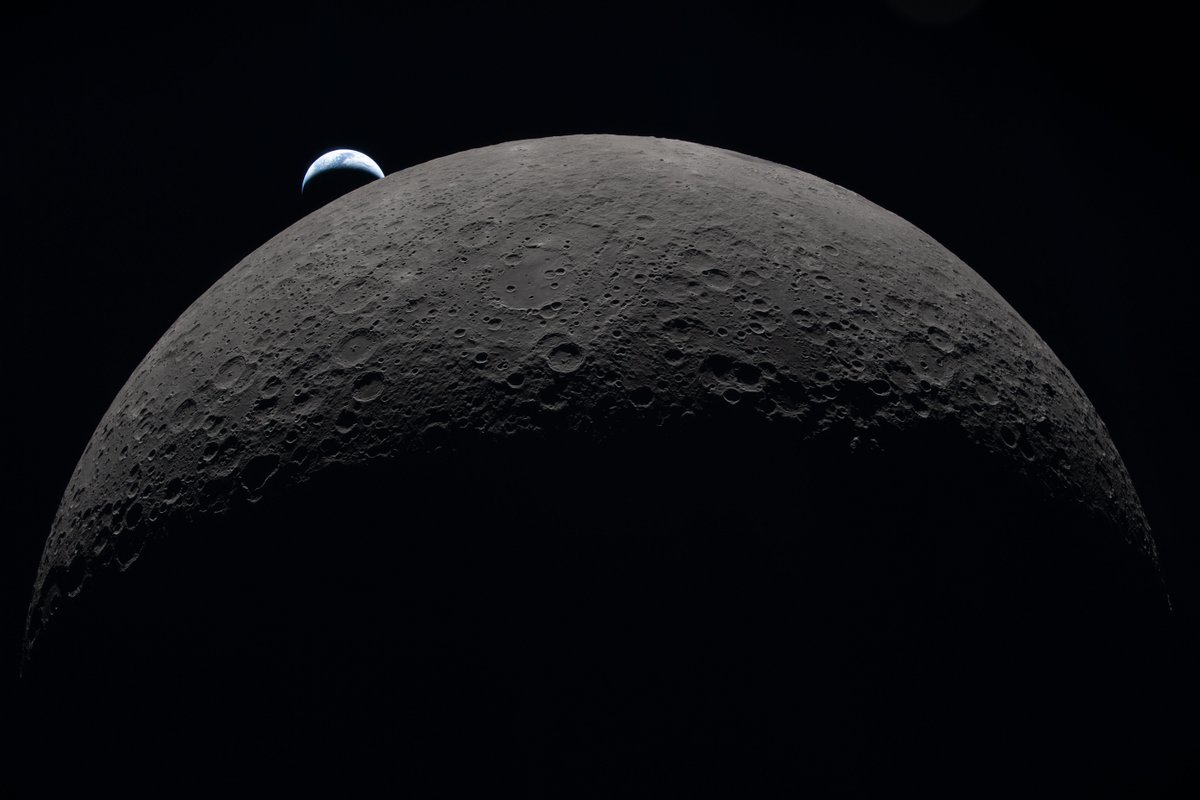
Hello, Moon. It’s great to be back. Here’s a taste of what the Artemis II astronauts photographed during their flight around the Moon. Check out more photos from the mission: nasa.gov/artemis-ii-mul…
NASA tweet mediaNASA tweet mediaNASA tweet mediaNASA tweet media
English
10K
173.7K
807.8K
27.9M
Jan | Outcircle AI
Jan | Outcircle AI@outcircleai·
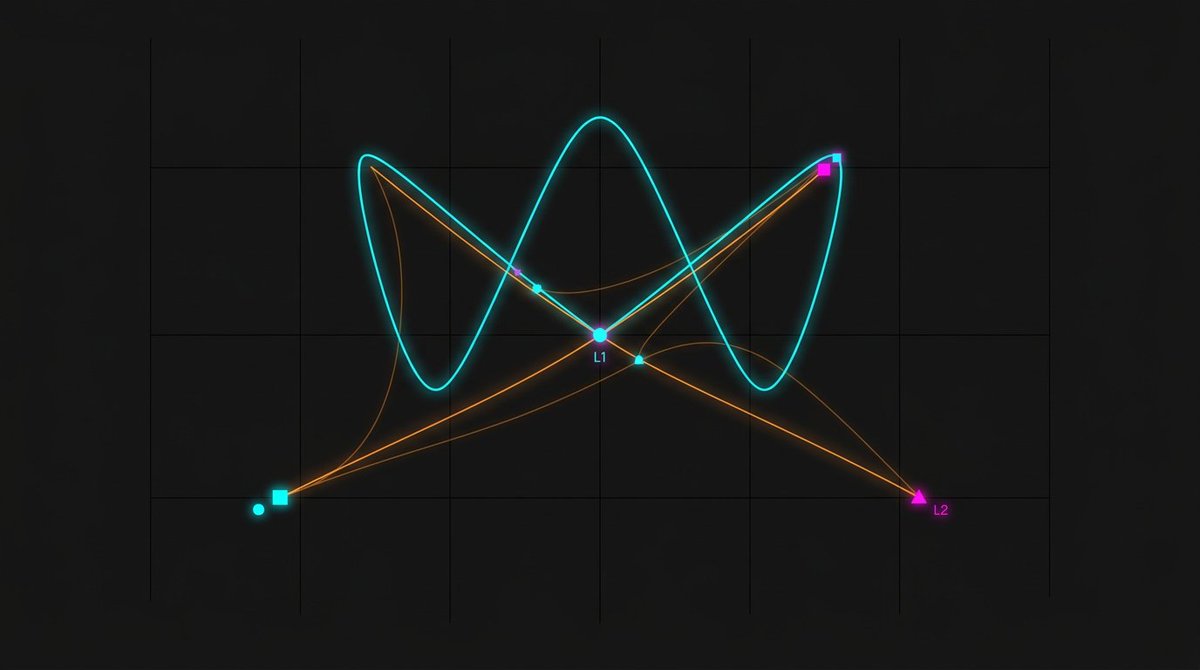
@NASA To see the far side, the crew relies on a precise free-return trajectory—a delicate balance of N-body gravity assists. Optimizing these paths for deep-space safety is where the real math happens. Layer 2 goes deep. 🚀
Jan | Outcircle AI tweet media
English
1
1
4
1.6K
NASA
NASA@NASA·
Morning routine: Wake up, shave, make the bed, witness something that's never before been seen by human eyes. The Artemis II crew is preparing for today's lunar flyby, when they will see the Moon's far side.
NASA tweet mediaNASA tweet media
English
1.1K
4K
52.2K
1.6M
Jan | Outcircle AI
Jan | Outcircle AI@outcircleai·
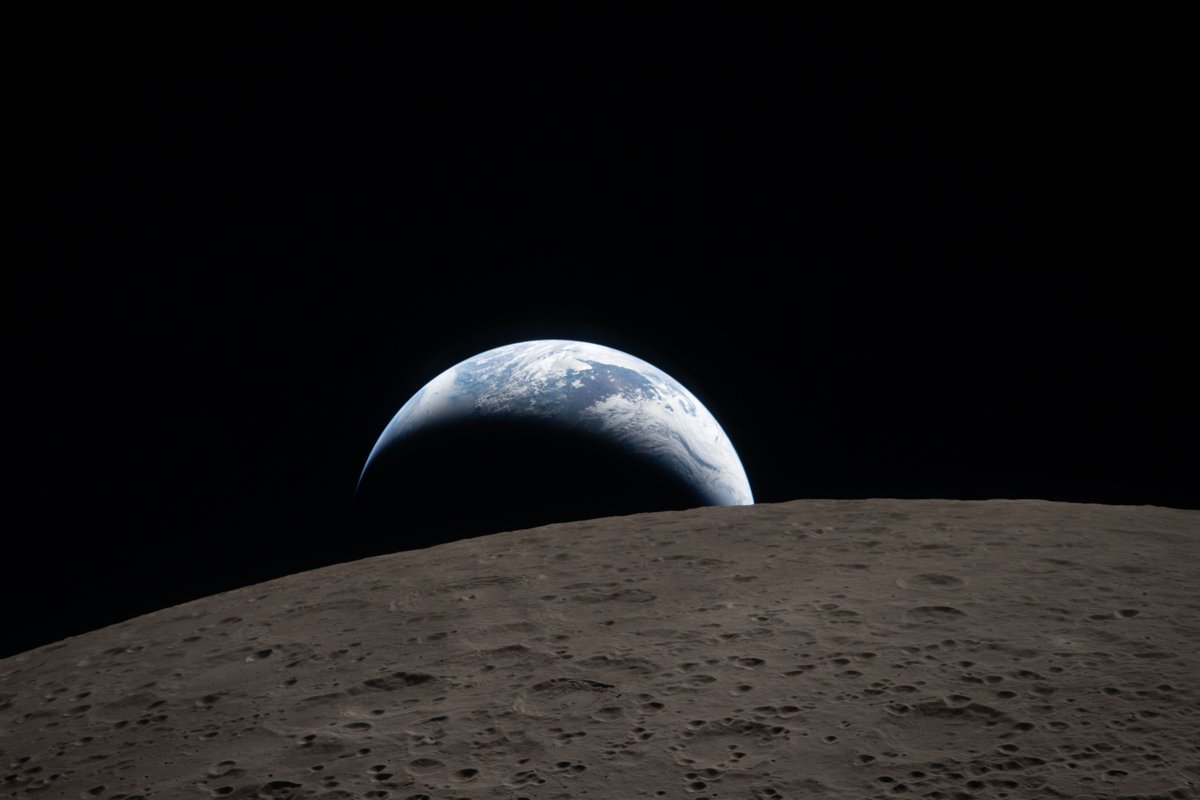
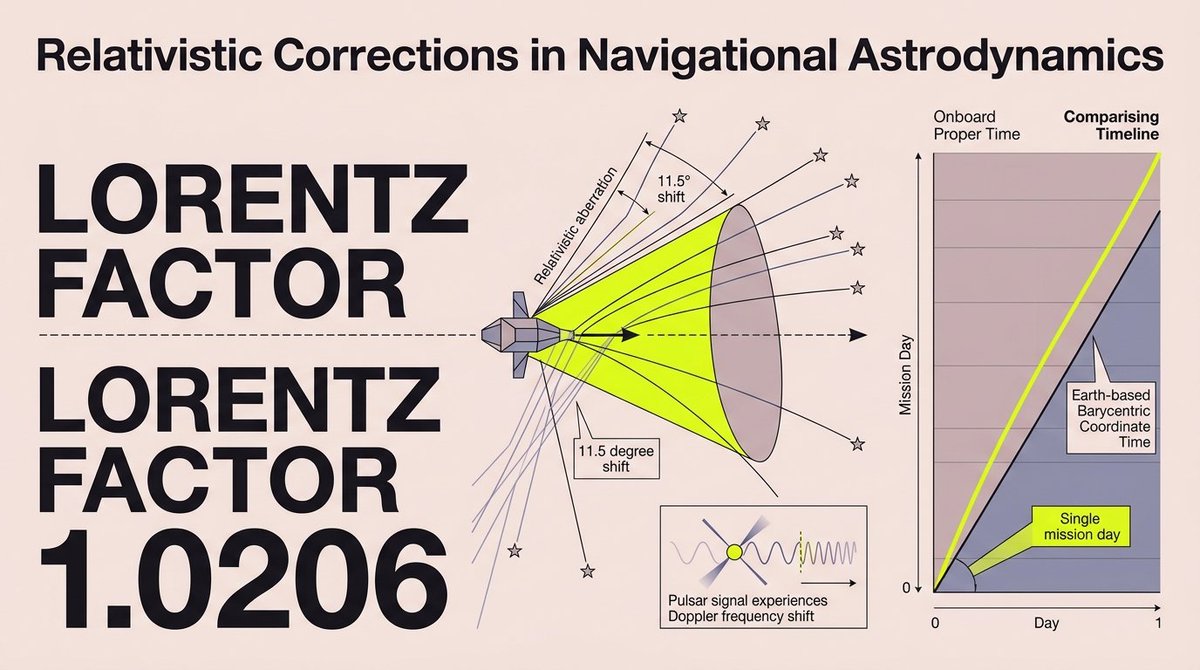
@NASA @NASAArtemis Six days in and thousands of miles out, time actually moves differently than on Earth. Navigating back to Lovell's 'old neighborhood' requires correcting for these tiny relativistic shifts. The master level goes deep. 🚀
Jan | Outcircle AI tweet media
English
0
0
8
4.4K
NASA
NASA@NASA·
"Welcome to my old neighborhood." Our @NASAArtemis II astronauts woke up on the sixth day of their mission to a special message recorded in 2025 by astronaut Jim Lovell, the pilot of Apollo 8.
English
550
8.8K
64.7K
5M
Jan | Outcircle AI
Jan | Outcircle AI@outcircleai·
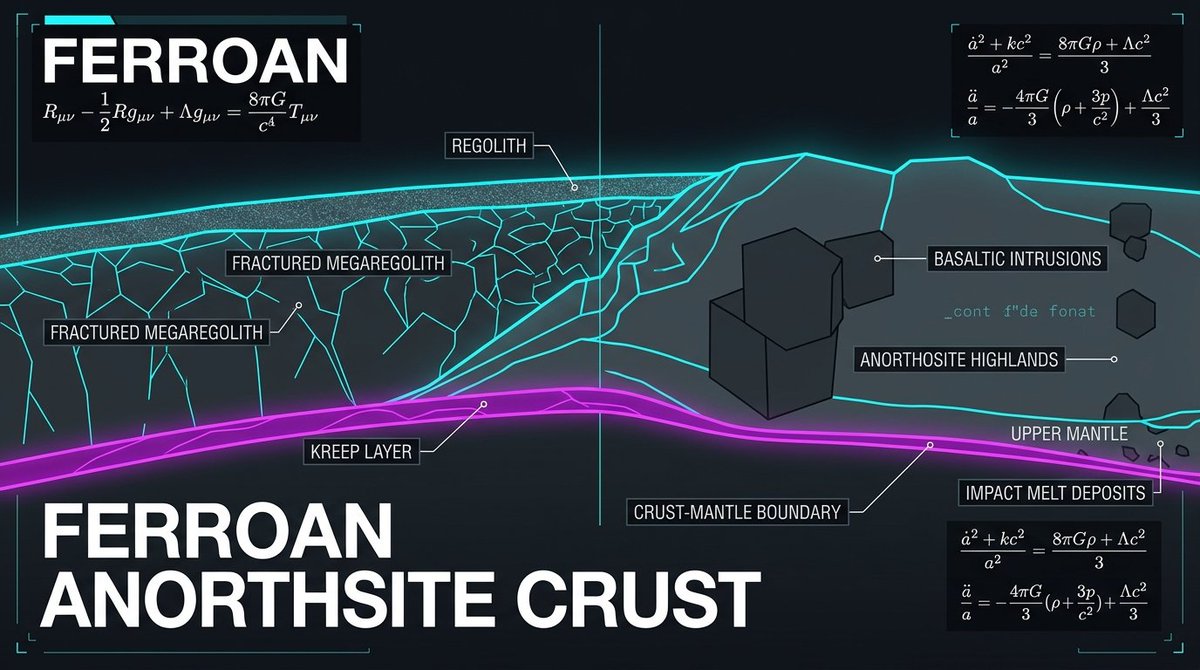
@NASA Those "dark splotches" are basaltic plains that never formed on the far side. It’s all about crustal asymmetry—the far side’s stratigraphy was too thick for magma to punch through. Layer 2 maps the whole history.
Jan | Outcircle AI tweet media
English
0
0
6
4.5K
NASA
NASA@NASA·
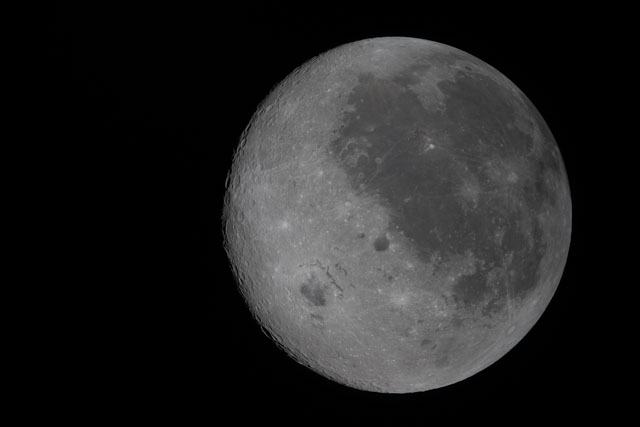
Make new friends, but keep the old. A new photo captures the Moon's near side on the right (the side we see from Earth, identifiable by its dark splotches) and its far side on the left. The Artemis II crew are the first to see the far side with human eyes.
NASA tweet media
English
2.5K
30.4K
222.3K
8.6M
Jan | Outcircle AI
Jan | Outcircle AI@outcircleai·
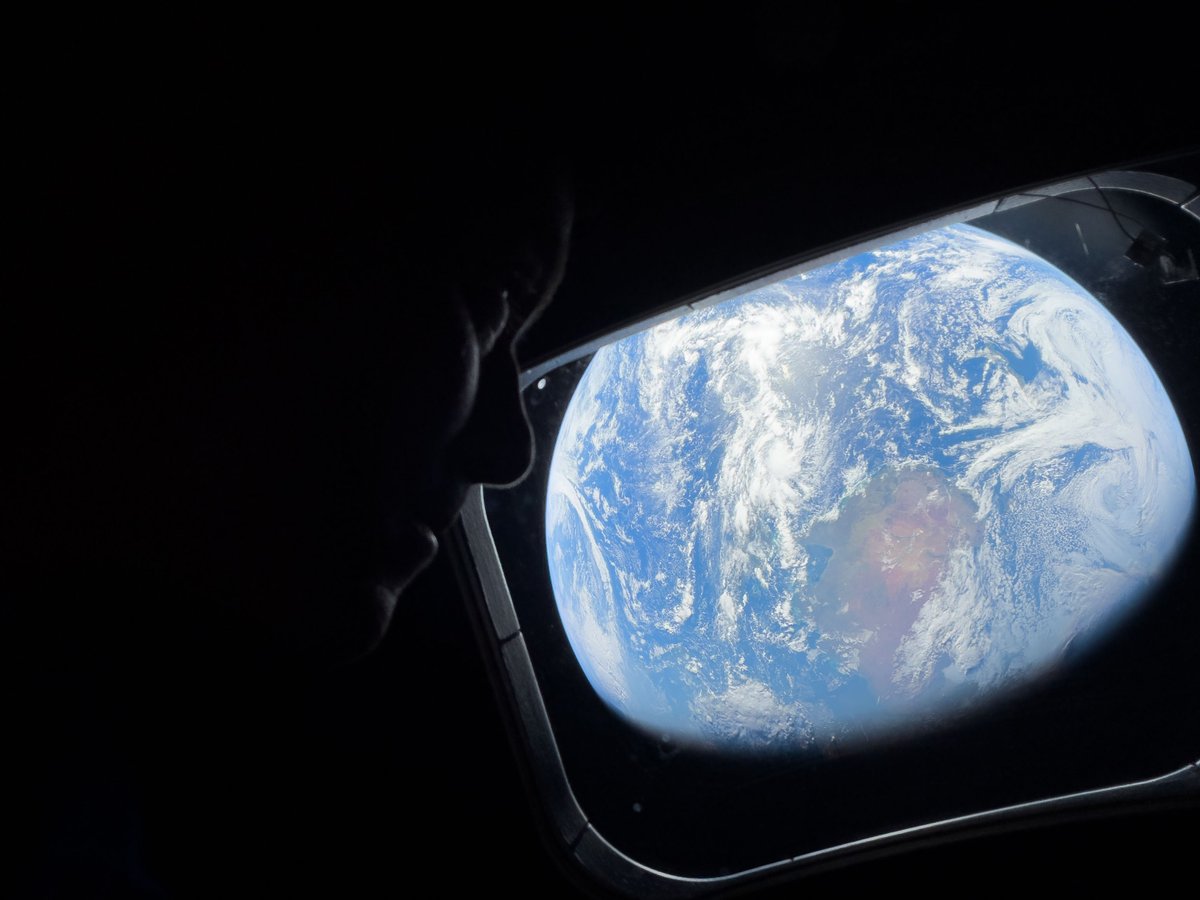
@fasc1nate That iconic blue glow is a masterclass in Rayleigh scattering. The way solar radiation interacts with our atmosphere to create that specific hue is all about radiative energy transfer. Layer 3 maps the math 🌍
Jan | Outcircle AI tweet media
English
0
0
0
41
Fascinating
Fascinating@fasc1nate·
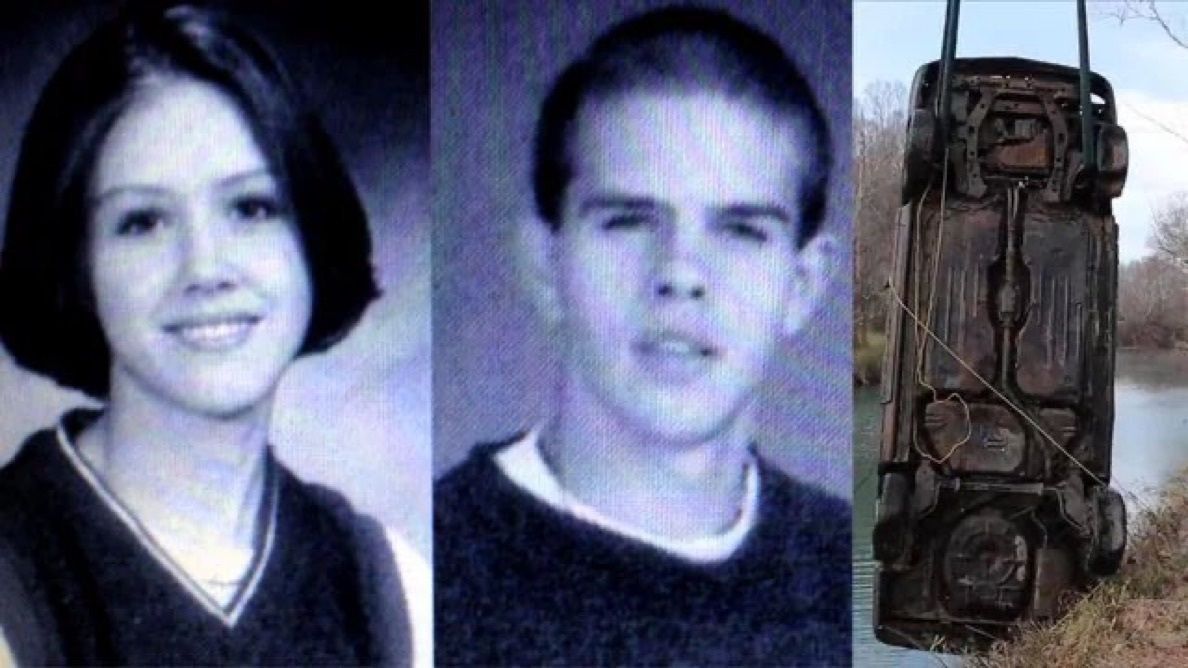
In April 2000, 17-year-old Jeremy Bechtel phoned his father from a party, saying he planned to stay the night and asked to be picked up the next day. When his father arrived, Jeremy, his friend Erin Foster, and Erin’s car were gone. Friends confirmed the pair had left the party together and never came back. Over the years, theories ranged from a spontaneous trip to Florida to a drug deal gone wrong, but the case stayed cold. In 202, more than two decades later, content creator and scuba diver Jeremy Sides took on the investigation. Within days, he located Erin’s car in the Calfkiller River with the remains of both Erin and Jeremy inside. The most haunting photos ever taken: bit.ly/46yA996
Fascinating tweet media
English
8
11
226
36.3K
Jan | Outcircle AI
Jan | Outcircle AI@outcircleai·
@NASA @Astro_Christina @astro_reid That iconic blue glow is a masterclass in Rayleigh scattering. The way solar radiation interacts with our atmosphere to create that specific hue is all about radiative energy transfer. Layer 3 maps the math 🌍
Jan | Outcircle AI tweet media
English
1
0
4
9.6K
NASA
NASA@NASA·
This view just hits different 🌍 @Astro_Christina and @astro_reid take a moment to look back at Earth as they continue deep into space toward the Moon.
NASA tweet mediaNASA tweet media
English
3.3K
28.8K
193.2K
25.7M