Easton Evans

11.1K posts

Easton Evans banner
Easton Evans

Easton Evans

@primetimeindy

Prod. Marketing Manager @IOGroup @lace_io | prev @Kraken & @Snapchat | John 13:7 | I like Crypto and Boxing

Where the Wild Things Are, Tx เข้าร่วม Mart 2010
817 กำลังติดตาม1.2K ผู้ติดตาม
Easton Evans รีทวีตแล้ว
SKI
SKI@skiistiredasf·
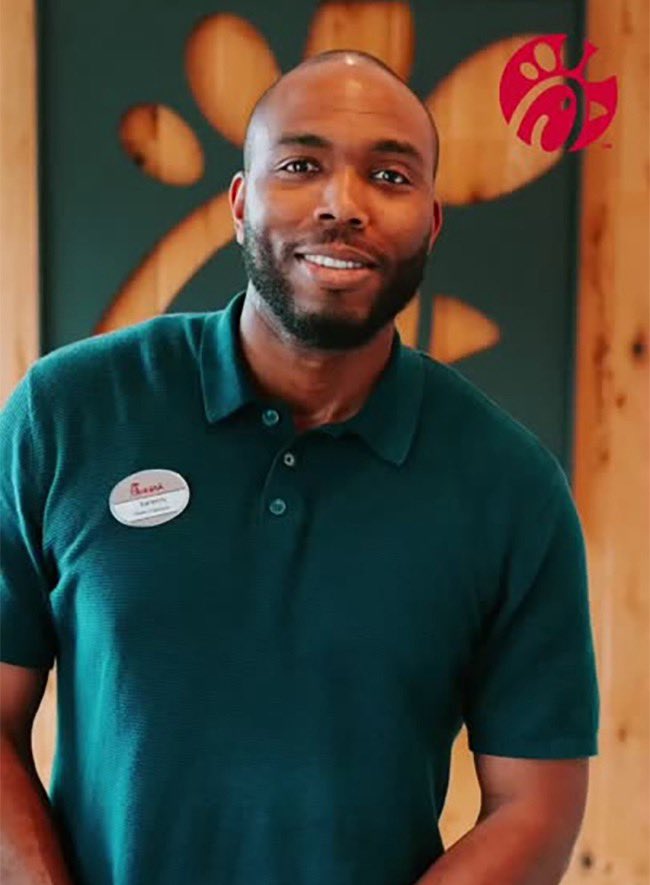
Meet Kareem Edwards, the first Black man to become a Chick-fil-A Owner-Operator in Chicago. He was a first-generation college graduate from Queens, New York. He left his corporate career at Google to open the South Loop location in January 2021. Today, he runs a thriving restaurant employing nearly 100 team members while actively giving back to his community on Chicago’s South Side.
SKI tweet media
English
11
128
784
27.8K
Jack J.
Jack J.@jack_9947·
I put the entire Opus 4.7 and ChatGPT 5.5 GTM Engineer's Playbook into ONE Notion doc. 7 modules. No fluff. - The full lead gen stack using Firecrawl and LinkedIn MCP: scrape 20 structured leads from any industry in one prompt, filter and score 100 raw LinkedIn leads down to 50 high-intent contacts, and push to campaign with 73% connection acceptance rate vs 40% on standard outreach - The LinkedIn content pipeline built on Claude Code and Playwright: profile.md, hooks.md, descriptive photo folder, three draft options per post, and auto-publishing that pastes, uploads, resizes, and schedules directly to LinkedIn from one Sunday session - The automation decision rule across /loop, /schedule, and ChatGPT Workspace Agents: when to use each based on local file access, interval length, team sharing, and CRM tool requirements - Research and intelligence using NotebookLM and GPT 5.5: 300 sources queried at zero marginal cost per query and raw unorganised numbers turned into a clean filterable HTML executive dashboard in one prompt - Marketing asset production using Claude Design and ChatGPT Images 2.0: brand design system extracted in 10-15 minutes, carousel, video, and campaign planning skills built on top, plus multi-format social assets from one image upload with near-perfect text rendering - The 7 Claude commands most GTM engineers have never used: ultrathink, /caveman, /insights, /loop, /schedule, /btw, and /clear with exact syntax and decision rules for each - Cost cutting without slowing down: Claude Code Router at 88% cheaper than Opus 4.7 for simple tasks, /caveman on bulk generation sessions, and GPT 5.5 for dashboards and multi-deliverable briefs where it is faster and cheaper than Co-work This is the playbook I would have KILLED for before spending weeks running Claude and ChatGPT in separate tabs, paying Opus rates for tasks a router handles for pennies, and briefing designers on assets Claude Design produces in minutes. Like + comment "STACK" and I'll send it over (must be connected for priority access)
Jack J. tweet media
English
151
10
171
11.9K
Jack J.
Jack J.@jack_9947·
I just built a Claude Code marketing skill stack that plans campaigns, writes social posts, designs carousels, and produces animated videos from a single brief every week. Feed it your brand design system, your best-performing content, and a campaign brief → it studies your voice and visual identity → generates on-brand assets across every format while you review and approve. All inside Claude Code and Claude Design. Perfect for marketing teams and agency owners who are still briefing designers on assets Claude Design produces in minutes, calling skills one at a time when one brief should trigger the whole sequence, and manually pushing skill updates to teammates who need the same system running on their machine. If you're running marketing in 2026, you already know the math - the teams that produce at volume aren't the ones with the biggest budgets, they're the ones with a skill stack that handles execution while humans handle strategy. Most teams ship three assets a week if they're lucky. This skill stack solves it: → Drop your branded landing page into Claude Design and it extracts colours, typography, components, and spacing into a portable skill file every other skill calls automatically → The campaign planning skill reads the brief, researches the market via Perplexity MCP, and builds a branded slide deck with KPIs, persona, funnel map, and roadmap → Pulls from your best-performing posts and storytelling framework as reference files so social content matches what actually works in your space → Routes complex tasks to sub-agents running in parallel and simple executional tasks directly to skills based on routing rules in CLAUDE.md → Fires completed skills to a Notion library automatically every week at 9am so your team always has the latest version without manual uploads → Drops finished campaigns, posts, carousels, and videos into dated project folders ready to publish No briefing designers on assets Claude produces in minutes. No calling skills one at a time when a brief should run the whole sequence. No manually distributing skill files to teammates every time something updates. What you get: - Brand design system extraction guide: 10-15 minutes to a portable skill file every other skill calls automatically - Four function skills: campaign planning, social content, carousel design, and animated video each triggered by a slash command - Multi-skill orchestration setup so one brief triggers research, content, creatives, and landing page in the right order automatically - Notion skills library with auto-sync routine so your team always installs the current version from one place - One skill stack you install once and run across every marketing workflow forever Built 100% in Claude Code and Claude Design. I put together a full playbook with all skill files, the brand extraction guide, the Notion library setup, and the exact CLAUDE.md routing rules to get the full stack running from one brief. Want it for free? > Like this post > Comment "MARKETING" And I'll send it over (must be following so I can DM)
Jack J. tweet media
English
1.4K
108
2.1K
132.1K
Easton Evans
Easton Evans@primetimeindy·
If you’re not building and shipping, you’re gonna get left behind—sorry bro.
English
0
0
0
14
Idea Browser
Idea Browser@ideabrowser·
I built a personality quiz for founders A scenario game that tells you: - what ideas to build - types of business models - who to partner with - how you operate in success/stress It's too fun so I made it free.
English
9
3
40
4.4K
Easton Evans
Easton Evans@primetimeindy·
I'm convinced Mythos hacked Anthropic and nerfed Opus for eternity. The staunch difference between Opus pre-Mythos announcement vs. post is honestly heartbreaking. I'll forever remember Opus 4.6
English
0
0
0
41
Easton Evans
Easton Evans@primetimeindy·
I'm 🤏 close to switching from Opus to Kimi.
English
1
0
1
38
Easton Evans
Easton Evans@primetimeindy·
@Swetha Sending prayers and good vibes your way!
English
0
0
0
50
Swetha
Swetha@Swetha·
> go through a massive heartbreak > move countries > start building a routine, a life > trip, fall and dislocate knee > think it’s nothing but wake up unable to move > 15 days and still can’t walk > stuck in apartment on the 3rd floor with no elevator > moved to a city full of hills and no flat surfaces > accept defeat, book flight to go back to home country > flight gets canceled a day before > can’t rebook for anything beyond one week after > fuck it and book another for the weekend > move in with your mother > it’s only april
English
39
0
181
10.4K
Connor Holliman (connor.base.eth)
Connor Holliman (connor.base.eth)@jconnorholliman·
Maybe it wasn’t the smartest idea to run 20 miles this week before doing 3 half-marathons worth of steps at Coachella this weekend 🤔
English
7
0
37
1.9K
Ruto
Ruto@GianTheRios·
TLDR of timeline: - short all alts - Defi and Eth value props are dead - Everyone rotated to AI + Pokemon - Hyperliquid is the only biddable ecosystem - Crypto has lost its upside to equities + commodities onchain
English
12
0
38
1.5K
Easton Evans
Easton Evans@primetimeindy·
@hosseeb From an enterprise standpoint, I think that's a pretty good strategy.
English
0
0
1
92
Haseeb >|<
Haseeb >|<@hosseeb·
Interesting that they are now showing these benchmarks side-by-side with Mythos, to reinforce that you do not have access to the most intelligent model. I always wondered when we'd get here. But we have now for the first time entered the undemocratic era of AI. You are not important enough to have access to the greatest intelligence, and Anthropic wants you to know that.
Claude@claudeai

Introducing Claude Opus 4.7, our most capable Opus model yet. It handles long-running tasks with more rigor, follows instructions more precisely, and verifies its own outputs before reporting back. You can hand off your hardest work with less supervision.

English
185
108
1.4K
179.4K
Teknium 🪽
Teknium 🪽@Teknium·
For local models, which is better in Hermes Agent?
English
106
4
142
52.7K
Easton Evans
Easton Evans@primetimeindy·
New model time!
Easton Evans tweet media
English
0
0
1
53
miranda.
miranda.@mirandamartell·
Claude onboarding for Seniors ?!? Please advise
English
4
0
2
323
Jason Goldberg
Jason Goldberg@betashop·
which open source model are you most bullish on?
English
6
0
4
693
Easton Evans
Easton Evans@primetimeindy·
@hosseeb It's amazing. TBH its been a huge upgrade!
English
0
0
1
721
Haseeb >|<
Haseeb >|<@hosseeb·
Migrating my OpenClaw to Hermes Agent tonight. Will update this thread with how it goes.
English
105
12
540
66.5K
Ansub
Ansub@justansub·
late to the party but built a UI layer on top of the wiki my @openclaw agent writes and maintains, based on exactly what @karpathy describes here. obsidian vault underneath, react frontend on top: search, an interactive knowledge graph, topic browsing, article pages with tables of contents + neighborhood mini-graph and many more.
Andrej Karpathy@karpathy

LLM Knowledge Bases Something I'm finding very useful recently: using LLMs to build personal knowledge bases for various topics of research interest. In this way, a large fraction of my recent token throughput is going less into manipulating code, and more into manipulating knowledge (stored as markdown and images). The latest LLMs are quite good at it. So: Data ingest: I index source documents (articles, papers, repos, datasets, images, etc.) into a raw/ directory, then I use an LLM to incrementally "compile" a wiki, which is just a collection of .md files in a directory structure. The wiki includes summaries of all the data in raw/, backlinks, and then it categorizes data into concepts, writes articles for them, and links them all. To convert web articles into .md files I like to use the Obsidian Web Clipper extension, and then I also use a hotkey to download all the related images to local so that my LLM can easily reference them. IDE: I use Obsidian as the IDE "frontend" where I can view the raw data, the the compiled wiki, and the derived visualizations. Important to note that the LLM writes and maintains all of the data of the wiki, I rarely touch it directly. I've played with a few Obsidian plugins to render and view data in other ways (e.g. Marp for slides). Q&A: Where things get interesting is that once your wiki is big enough (e.g. mine on some recent research is ~100 articles and ~400K words), you can ask your LLM agent all kinds of complex questions against the wiki, and it will go off, research the answers, etc. I thought I had to reach for fancy RAG, but the LLM has been pretty good about auto-maintaining index files and brief summaries of all the documents and it reads all the important related data fairly easily at this ~small scale. Output: Instead of getting answers in text/terminal, I like to have it render markdown files for me, or slide shows (Marp format), or matplotlib images, all of which I then view again in Obsidian. You can imagine many other visual output formats depending on the query. Often, I end up "filing" the outputs back into the wiki to enhance it for further queries. So my own explorations and queries always "add up" in the knowledge base. Linting: I've run some LLM "health checks" over the wiki to e.g. find inconsistent data, impute missing data (with web searchers), find interesting connections for new article candidates, etc., to incrementally clean up the wiki and enhance its overall data integrity. The LLMs are quite good at suggesting further questions to ask and look into. Extra tools: I find myself developing additional tools to process the data, e.g. I vibe coded a small and naive search engine over the wiki, which I both use directly (in a web ui), but more often I want to hand it off to an LLM via CLI as a tool for larger queries. Further explorations: As the repo grows, the natural desire is to also think about synthetic data generation + finetuning to have your LLM "know" the data in its weights instead of just context windows. TLDR: raw data from a given number of sources is collected, then compiled by an LLM into a .md wiki, then operated on by various CLIs by the LLM to do Q&A and to incrementally enhance the wiki, and all of it viewable in Obsidian. You rarely ever write or edit the wiki manually, it's the domain of the LLM. I think there is room here for an incredible new product instead of a hacky collection of scripts.

English
32
26
522
109.1K
Easton Evans
Easton Evans@primetimeindy·
I love Hermes and @NousResearch from a product perspective, but the true alpha is their merch shop. Whoever is behind it has great taste!👌🏿
English
1
0
4
337