Dushyant

4.1K posts

Dushyant banner
Dushyant

Dushyant

@rajpdus

Comp.Sci. @iitbombay | Ex @DeutscheBank Quant | Gold @ Chemistry olympiad | Co-Founder - AltSlate Labs | One exit. Building again.

India เข้าร่วม Ekim 2016
92 กำลังติดตาม189 ผู้ติดตาม
Dushyant รีทวีตแล้ว
McLeanToQuantico (The two agency headquarters)
Vikas Foundation Trust (owned by Dharmendra Pradhan’s wife Mridula Pradhan) has multiple US assets. One property in Melrose, USA was used by daughter Naimisha Pradhan during her LLM at Tufts. Her local guardian? Coempt EduTek director Radhakrishnan Jayaraman — the same company handling CBSE OSM amid massive scam allegations. Serious conflict of interest. Probe needed. #CBSEOSM #Coempt @SarthakSidhant @RahulGandhi
McLeanToQuantico (The two agency headquarters) tweet mediaMcLeanToQuantico (The two agency headquarters) tweet mediaMcLeanToQuantico (The two agency headquarters) tweet media
English
82
1.2K
2.5K
215K
Dushyant
Dushyant@rajpdus·
Well written.
Malay Krishna@Malay4Product

This is an unbelievable piece of work by Sarthak and something that requires amplification. Let me explain what he found, in simple terms. Sarthak is a Class 12 student from the 2025-26 batch, one of the 17 lakh students whose answer sheets went through CBSE's new On-Screen Marking system. He spent days reading through CBSE's evaluation tenders, scraped all 576 tenders CBSE has issued, and tracked how the rules changed across three versions of the same tender. The core finding is that the company that won the contract to scan and grade 17 lakh students' answer sheets is Coempt Eduteck. Coempt used to be called Globarena Technologies. Globarena was the company behind the 2019 Telangana intermediate exam disaster, where software failures led to 3.8 lakh students getting wrong or missing marks, and 23 students died by suicide. A government committee found systemic failure and negligence. Six months later, Globarena rebranded to Coempt Eduteck. So a company with that track record won a contract to handle 17 lakh CBSE students. Sarthak's investigation is about how the rules were rewritten to let that happen. The tender was issued three times. > First tender, February 2025. It existed, then disappeared from the public GeM portal. Sarthak scraped all 576 CBSE tenders and this one was missing from the archive entirely. > Second tender, May 2025. Four companies applied including TCS and Coempt. All four failed the technical evaluation. Cancelled. > Third tender, August 2025. Coempt won. Between the second and third tender, a series of rule changes happened, and every single one made it easier for Coempt to qualify. Here is what changed, one by one. 01. The old rules disqualified any company with a history of abandoning work, failing to complete contracts, or financial weakness. The new rules deleted this clause entirely. Coempt's Telangana history stopped being a barrier. 02. The old rules disqualified any company that was "blacklisted earlier." The new rules changed this to "currently blacklisted." Because Globarena rebranded after Telangana, removing the word "earlier" effectively erased their past. 03. The rules required Rs 50 crore average turnover over three years. Coempt's exact average came to Rs 50.86 crore. They cleared the bar by less than 1%. Earlier, a smaller company had asked CBSE to lower the bar to Rs 30 crore for fairer competition. CBSE refused. So the bar was kept high enough to block small players, but sat exactly low enough for Coempt to scrape through. 04. Software maturity is measured on the CMMI scale, 1 to 5. The old rules required Level 5. The new rules dropped it to Level 3. Coempt is a Level 3 company. 05. The cooling-off period for engaging retired CBSE officials was cut from two years to one. This makes it easier to use recently retired insiders to influence the process. 06. The old rules required experience with large projects of at least 5 lakh students each. The new rules removed the student count and counted cumulative answer-book volume across small projects instead. Coempt has many small fragmented university contracts. This helped Coempt and hurt TCS. 07. The old rules required bidders to own their own data centre and disaster recovery centre on Indian soil. The new rules allowed third-party MeitY-empanelled cloud hosting. Coempt runs on AWS and Azure. This helped Coempt and hurt TCS, which owns its own data centres. It also means student data is no longer on sovereign, Indian infrastructure. 08. The old rules required the bidder to own or control the complete source code of its software. The new rules deleted this. Coempt's platform runs on Microsoft's proprietary IIS, which they don't own. 09. A last-minute corrigendum, issued right before bid submission, removed CBSE's own power to blacklist the firm if its software failed catastrophically. So even a Telangana-scale failure couldn't get Coempt banned from future government tenders. 10. The penalty structure shifted from punishing mistakes to punishing delays. The old rules fined the vendor for wrong scanning, merged pages, and unscanned books. The new rules dropped those and instead levied Rs 50,000 per day for delays. This incentivises rushed scanning over accurate scanning. 11. The old rules had a hard accuracy threshold, error rate not to exceed 0.5%. The new rules removed this number entirely. 12. The old rules specified proper book and robotics scanners. The new rules just say "sufficient scanners." The definition was vague enough that, as Sarthak notes, the scanning could be done with a phone on a stand. 13. On the security side, the contract required a VAPT (vulnerability and penetration test) certified by CERT-In before go-live, and a restricted beta phase before launch. The system clearly wasn't restricted, because the other researcher, Nisarga, was able to access it and find vulnerabilities four days before go-live. So the mandatory security audit appears to have been bypassed. These are more than a dozen rule changes, all between the failed tender and the winning tender, all pushing in the same direction, all benefiting the one company with the worst track record in the field. The security holes Nisarga found last week now have an explanation. The system was built by a vendor that was specifically allowed to skip the security certification, the source code ownership, the data sovereignty, and the quality thresholds the original rules demanded. Following things need to happen immediately; 1. An immediate CAG audit of the tender process. 2. A parliamentary debate on the topic. 3. An independent investigation into > Why the first tender vanished? > Why the disqualification clauses were deleted? > Why the turnover bar was held exactly where it was? > Why the security level was dropped? > Why the blacklisting power was removed at the last moment? Sarthak, this is genuinely exceptional investigative work. Far better than most journalists with full resources ever manage. Take a bow. :)


English
0
0
0
13
Dushyant
Dushyant@rajpdus·
"it would be a crime to allow the NTA to continue with its inept conduct of common entrance exams’ in such a situation." - Supreme Court of India. Some really harsh words.
English
0
0
0
16
Dushyant รีทวีตแล้ว
Sushant Singh
Sushant Singh@SushantSin·
Overvalued market, falling rupee, unreliable taxation rules, no faith in capcity expansion and foreign manufacturers have taken their investment away. The inward FDI is mostly from tax havens, essentially India's black money returning as FDI.
Sushant Singh tweet media
English
0
945
1.8K
139.4K
Dushyant รีทวีตแล้ว
Dushyant รีทวีตแล้ว
Zhihu Frontier
Zhihu Frontier@ZhihuFrontier·
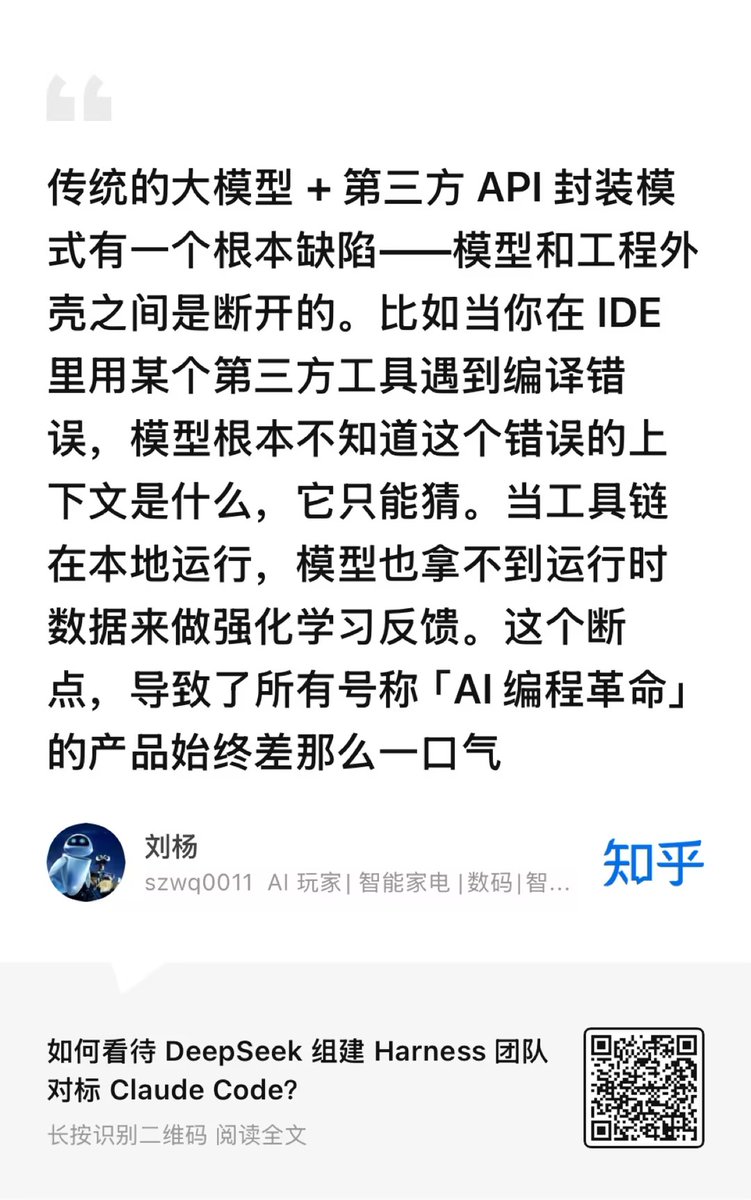
DeepSeek Is Building a Harness Team to Rival Claude Code — Why It Matters 🚀 🌟 Insights from Zhihu contributor 刘杨 This may matter more than launching another new model. Because it means DeepSeek has finally realized one thing: a strong model alone is not enough. Claude has dominated the field for a long time — but Liang Wenfeng is beginning to change that. Many people see this as just another Claude Code competitor. But if you read DeepSeek’s official hiring post carefully, especially the job responsibilities, you will realize they are building something much deeper than an AI coding tool. They are building a Harness. In engineering, “harness” means a safety belt or control system. Its core purpose is not to make the model stronger, but to make the model’s output more controllable. The base model handles open-ended generation. The Harness handles: • constraint • validation • error correction • convergence These two parts must be built by the same team to truly work together. 1️⃣ Why Third-Party Wrappers Are Not Enough Traditional “LLM + third-party API wrapper” products have a fundamental flaw: the model and the engineering shell are disconnected. For example, when you use a third-party coding tool in an IDE and hit a compile error, the model often does not really understand the runtime context. It can only guess. When the toolchain runs locally, the model also cannot access runtime feedback for reinforcement learning. This break in the feedback loop is exactly why many so-called “AI coding revolution” products still feel one step short. DeepSeek’s solution is direct: build this layer itself. The model and Harness can share the same data loop. Terminal compile errors, lint feedback, and test results can flow back directly to improve the model. This is the real meaning behind: Model + Harness = Agent 2️⃣ Cost Is the Hidden Weapon 💰 The second key factor is cost. DeepSeek V4, released in April 2026, combined with frontend caching, reportedly brings cached-input cost down to: $0.0145 per 1M tokens For comparison, Claude’s same-tier model costs around: $0.50 per 1M tokens That is nearly a 40× difference. This means DeepSeek can design extremely frequent interaction-validation loops without blowing up user bills. In enterprise scenarios, that is a decisive advantage. 3️⃣ Talent Is the Underrated Signal 🧠 Another underestimated detail: talent. In March, former Jane Street star quant engineer Cui Tianyi joined DeepSeek and moved into the Harness team. This matters because quant trading systems and AI Agent infrastructure share deep technical similarities: • ultra-low latency • high reliability • multi-step decision-making • strict engineering stability By hiring this kind of talent, DeepSeek is directly strengthening its engineering bottleneck. 4️⃣ Why This Is Bigger Than “Another Coding Tool” The real story is not that DeepSeek is launching a product against Claude Code. The real story is that, for the first time, a Chinese company may be building a complete closed loop at the level of: Model + Engineering Harness This is the layer where Anthropic has been strongest. DeepSeek now has three pieces coming together: • DeepSeek V4’s technical base • funding and compute support from High-Flyer Quant • a Harness team building the feedback loop This combination’s potential is still not fully priced in by the market. 5️⃣ The Race Has Changed Of course, it is too early to say who wins. Anthropic has: • first-mover advantage • proven user ecosystem • strong developer trust DeepSeek has: • major cost advantage • vertical integration potential • stronger feedback-loop control But one thing is clear: AI coding tool competition is no longer just about “who has the stronger model.” It is now about: who has the more complete closed loop.🔍 And DeepSeek has to join the game. Because only domestic developers who have searched everywhere for stable Claude Code access truly understand how frustrating this has been. 🔗Original article:zhihu.com/question/20404… #DeepSeek #Harness #ClaudeCode #AI #AICoding #Agent #LLM #DeveloperTools #TechLiberty
Zhihu Frontier tweet mediaZhihu Frontier tweet media
English
2
5
26
1.9K
Dushyant รีทวีตแล้ว
Sydney Runkle
Sydney Runkle@sydneyrunkle·
we just revamped the create_agent docs! the new agents page shows how to build a custom harness for your use case w/ create_agent as an easy entrypoint start w/ your prompt and tools, then add middleware to customize at any point in the loop docs.langchain.com/oss/python/lan…
Sydney Runkle tweet media
English
4
6
37
8.7K
Dushyant รีทวีตแล้ว
Priyanka Chaturvedi🇮🇳
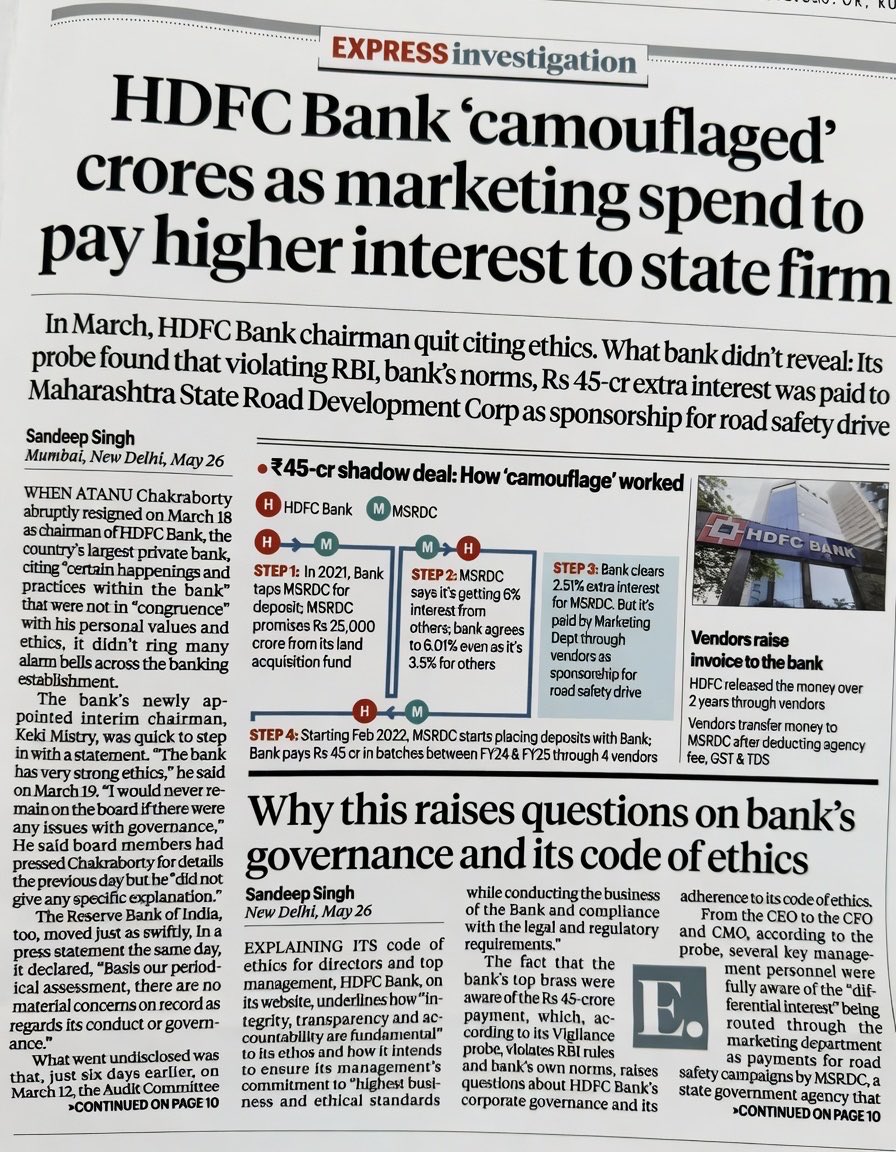
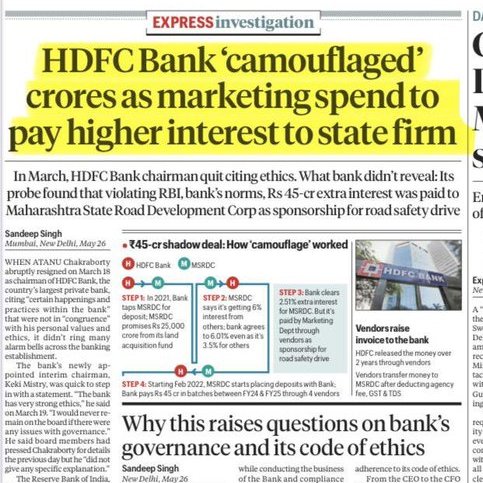
Even private banks and ethics have gone for a toss. The systemic quid pro quo under the governance promise of zero tolerance to corruption. The modus operandi is shameful. In 2021: - HDFC approaches MSRDC for deposits& are promised 25000 crores from land acquisition fund. But asks for a higher RoI & claims other banks have offered 6% interest - HDFC even as it offers 3.5% interest to rest of its depositors it agrees to a 6.01% to MSRDC - The bank clears the extra 2.51% interest committed to MSRDC but how does it pay it to them? Through its Marketing Dept paying the extra interest through 4 local vendors as sponsorship for road safety drive - letters formalising this arrangement were not signed by senior officials but junior staff and was verbally cleared by zonal head - road safety drives or such social cause spending is a CSR activity yet was done through its Marketing Department so as to camouflage the additional interest. - vendor invoices were not properly validated. Payments processed without event confirmation certificates - This arrangement violates RBI guidelines as well as its own norms. Both the board and RBI have a lot to answer.
Priyanka Chaturvedi🇮🇳 tweet media
English
75
328
803
64.1K
Dushyant รีทวีตแล้ว
Sandeep Manudhane
Sandeep Manudhane@sandeep_PT·
Corruption is no longer in suitcases full of cash. It is now structural, institutionalized and "legal". That is why most Indians fail to see it. #NewIndia #corruption
Sandeep Manudhane tweet media
English
129
1.9K
4.1K
134.1K
Dushyant รีทวีตแล้ว
DAIR.AI
DAIR.AI@dair_ai·
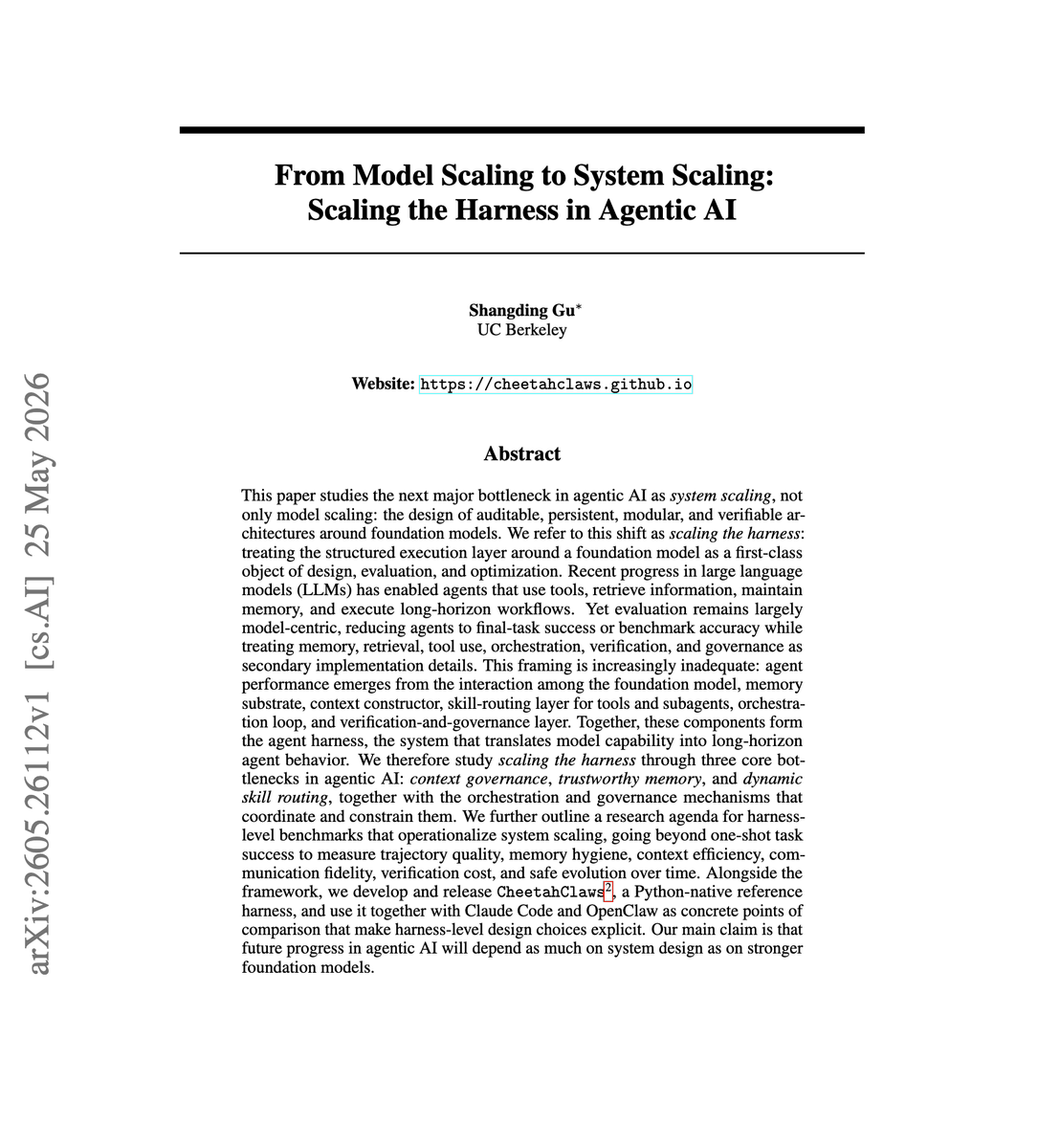
System scaling is the next real bottleneck in agentic AI. If you build agent orchestration layers, this is a clean map of where the engineering leverage actually sits. The labs own the model. You own the harness, and that is increasingly where agent quality is won or lost. The default mental model still puts all the weight on the foundation model. Bigger model, better agent. But agent behavior actually emerges from the whole stack around it. Memory substrate, context constructor, skill routing, orchestration loop, and the verification and governance layer. This new research calls that stack the harness and argues we should treat it as a first-class object of design and evaluation. It names three core bottlenecks to scale. Context governance, trustworthy memory, and dynamic skill routing. It also ships CheetahClaws, a Python-native reference harness, and compares it with Claude Code and OpenClaw. Paper: arxiv.org/abs/2605.26112 Learn to build effective AI agents in our academy: academy.dair.ai
DAIR.AI tweet media
English
20
14
105
7K
Dushyant รีทวีตแล้ว
ClaudeDevs
ClaudeDevs@ClaudeDevs·
We’ve shipped a security-guidance plugin for Claude Code that helps identify and fix vulnerabilities as you’re writing code. Available for all Claude Code users. Install from the plugin marketplace (/plugins).
English
372
1.7K
17.9K
2M
Dushyant รีทวีตแล้ว
GREG ISENBERG
GREG ISENBERG@gregisenberg·
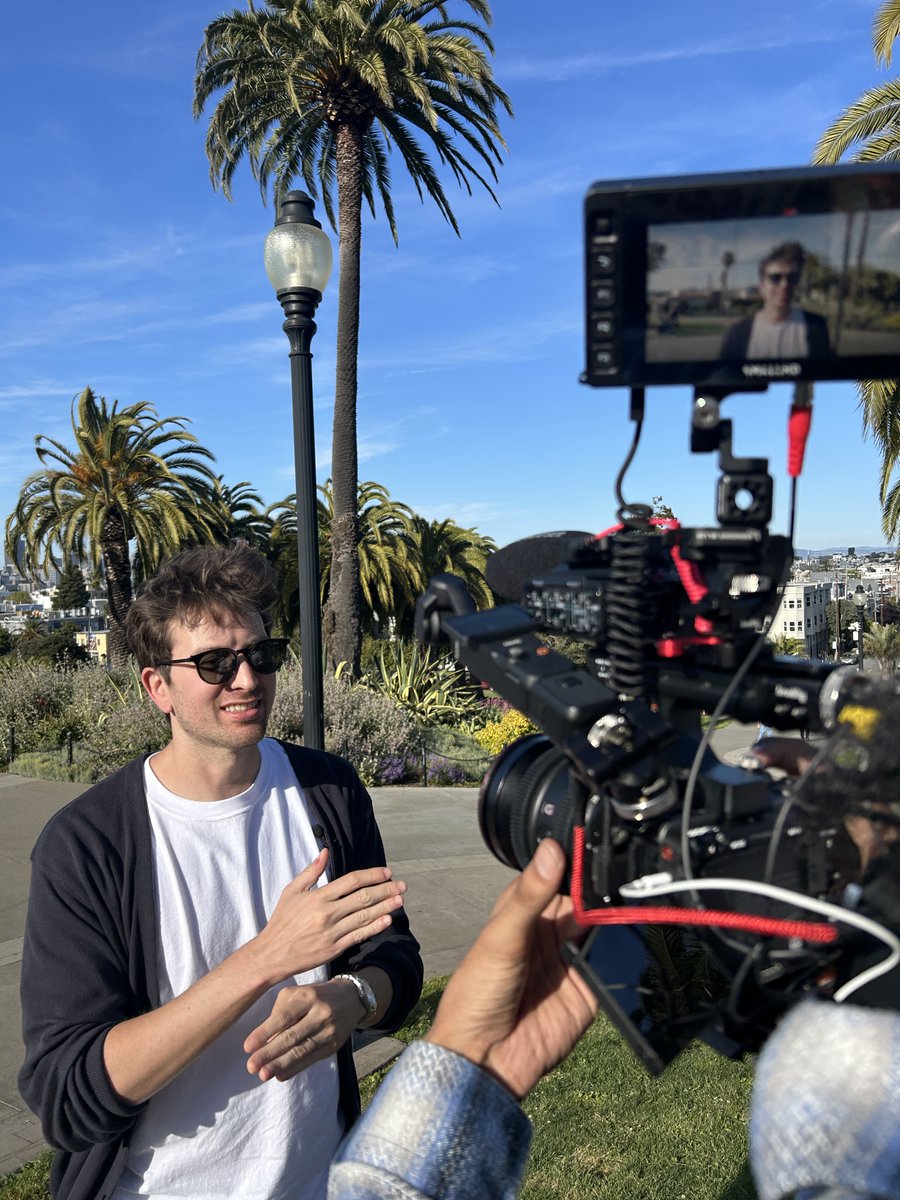
I just got back from SF and I FEEL INSPIRED. I spent 5 days with frontier AI model teams, AI startup founders, and 3 billionaires. My takeaways: 1. I had lunch with 3 billionaires. All of them are buying SaaS companies and rebuilding them agent-first. They were deeply inspired by Bending Spoons and Ryan Cohen's eBay deal. Buy the company, cut the headcount, rebuild the tech, add agents, add features, make more valuable experience, raise prices. 2. The frontier model companies are hungry for usage data from the field. They can see API calls and token counts. They can't see the actual workflows. If you're deep in a niche using these models in ways the model companies haven't seen, that understanding is incredibly valuable. Usage intelligence is the new alpha. 3. Consumer AI is massively underbuilt. Every billboard in SF is either B2B inference infrastructure or vertical agent companies. The entire city is optimized for enterprise. Meanwhile you have companies like Cal AI doing $50M ARR in 18 months as a consumer app. I met with a cool few teams doing consumer AI (@paulscherer / @ekuyda) 4. MCP came up in literally every conversation. The companies exposing their product as MCP endpoints are getting pulled into deals they never pitched for. The ones that aren't are becoming invisible to agents. This is the new SEO. If agents can't find you, you don't exist. Building products for agents is the new zeitgeist in general. 5. Not uncommon for hot seed rounds to be $25-50 million valuations. I saw a Series A at $450 million 6. If I had a dollar every time someone mentioned "forward-deployed engineer" this trip I could have funded a seed round. It's the hottest role in SF right now. The person who sits between the agent and the customer, making sure everything actually works. 7. The mood around open source shifted. A year ago it felt like open source was chasing the frontier models. Now founders are telling me Gemma and DeepSeek are good enough for 80% of what they need at a fraction of the cost. The "which model do you use" conversation is being replaced by "which model for which task." Model loyalty kinda feels dead. 8. Voice agents came up more than I expected. Multiple founders told me voice is the interface for the next billion users. The billion people who will never type a prompt will absolutely talk to one. 9. The Obsidian community in SF is weirdly intense. Multiple founders showed me their vaults unprompted. Like showing someone your home gym. It's a flex now. The quality of your knowledge base (second brain?) is becoming a status symbol among builders. 10. Maybe it was just the people I met but the age of the founders is shifting. I met more founders over 40 this trip than any trip before and more founders under age 21 than ever before. Founders getting older and younger at the same time. 11. I spoke to a lot of fast-growing startups, VCs and frontier models who are hiring content creators right now. 12. The restaurant scene in SF is actually better than it's been in years. Founders are going out more. Alcohol is out, not surprisingly. 13. SF doesn't feel like the only place anymore. We all have access to the same frontier models. We all read the same X feed. A founder in NYC or Lagos is calling the same APIs as a founder in SoMa. So in the past it felt like SF was always lightyears ahead, doesn't feel that way anymore. It's okay not to live in SF and have BIG DREAMS. 14. The coworking spaces in SF are half empty but the coffee shops are packed. People want to be around people. I had a few startup ideas here.... 15. Walking around the Mission I noticed something: the street-level businesses, the taquerias, the barbershops, the laundromats, none of them use any AI at all. 16. I heard the phrase "agent debt" for the first time. Like technical debt but for agents. When you hack together an agent workflow fast and never clean it up, the system prompts conflict, the memory gets polluted, the tools overlap. 6 months later the agent is doing weird things and nobody knows why lol. 17. Met a few people who carry two phones now. One for personal. One that's basically an agent terminal running Telegram or iMessage connections to their agent fleet. It's always amazing to get that dose of inspiration in SF. I FEEL INSPIRED. But I'm so happy to be back home, locked in and building. We're 12-18 months into a shift that will take 15 years to play out. The urgency in every conversation was real. What an incredible time to be building.
GREG ISENBERG tweet media
English
485
566
6.2K
611.4K
Dushyant รีทวีตแล้ว
Anmol Jain
Anmol Jain@teanmol·
There is one premium advanced fabric India quietly knew how to make at scale, and that the rest of the world is now coming to want. H&M, Zara, Decathlon and Marks & Spencer have all committed to it. So has the European Union, in its incoming sustainability rules. It is called lyocell, and chances are you have never heard of it. The fabrics in the clothes you wear come from three families. Cotton from a plant. Polyester from petroleum. And a third group called regenerated cellulosics, made from wood pulp, is what Europe is now restructuring its textile import market around. Among cellulosics, lyocell has the kind of chemistry older ones like viscose never had. Where viscose's toxic chemicals get dumped into rivers, lyocell's get recaptured and reused — 99% of them. The fabric is biodegradable, and the wood comes from sustainably grown trees. Plus it is stronger than cotton when wet, holds dye well, drapes like silk, and breathes like linen. So lyocell is premium and sustainable. Only about a dozen places in the world can make it at commercial scale, and Aditya Birla's plant at Kharach in Gujarat was one of them. For once, India was a producer of an advanced material that the world was coming to want. Then the Chinese came in. On the morning of 13 March 2026, a factory in Shandong, China, produced its first commercial bale of lyocell. The factory is owned by a company called Sateri. Six years ago, Sateri didn't make lyocell at all. Today, this one plant, on its own, will eventually outproduce what the entire world made in 2023. It already makes twelve times more of it than Birla does. The price too has collapsed in step. Lyocell, as premium fibre that was meant to sell above cotton and viscose, now sells in China below both. Lenzing, the Austrian company that invented lyocell and ran the global market for decades, has lost 80% of its stock value since 2021. It scrapped a big US expansion. It is quietly walking out of the commodity end of the business. Birla is doubling down. A new 55,000-tonne plant is coming up at Harihar in Karnataka, with a second phase planned. Even at full build-out, Birla will have about 110,000 tonnes. Sateri makes four times that today. Three months before Birla announced Harihar, Tamil Nadu signed an MoU with the same Sateri's parent company for a 150,000-tonne lyocell plant at Thoothukudi. One foreign-owned plant on Indian soil will produce more lyocell than the whole of Birla's Indian operation. In January 2026, India and the EU finally signed a Free Trade Agreement, after nineteen years of trying. The agreement removes the 8-12% European import duty on Indian textiles. China doesn't get this advantage. While this trade deal buys India the right to compete for Europe's fastest-growing fibre market, it won't provide the means or the factories to make the most of it. I write for @SwarajyaMag on the lyocell fibre, the price collapse, the Thoothukudi MoU, the Rules of Origin trap, and what Indian industrial policy is still missing. swarajyamag.com/business/how-i…
English
9
119
418
27.3K
Dushyant รีทวีตแล้ว
Peter Steinberger 🦞
Folks: when you write skills, ask your agent to be token efficient, relax grammer. I see too many skills that write books in the skill description, and all that crap is loaded into every context. I wrote a skill that finds the worst offenders. github.com/steipete/agent…
English
187
389
5K
318.7K
Dushyant รีทวีตแล้ว
Priya Purohit
Priya Purohit@Priyaa_Purohit·
Biggest fear for India ? 👇
English
43
899
3.3K
57.1K
Dushyant
Dushyant@rajpdus·
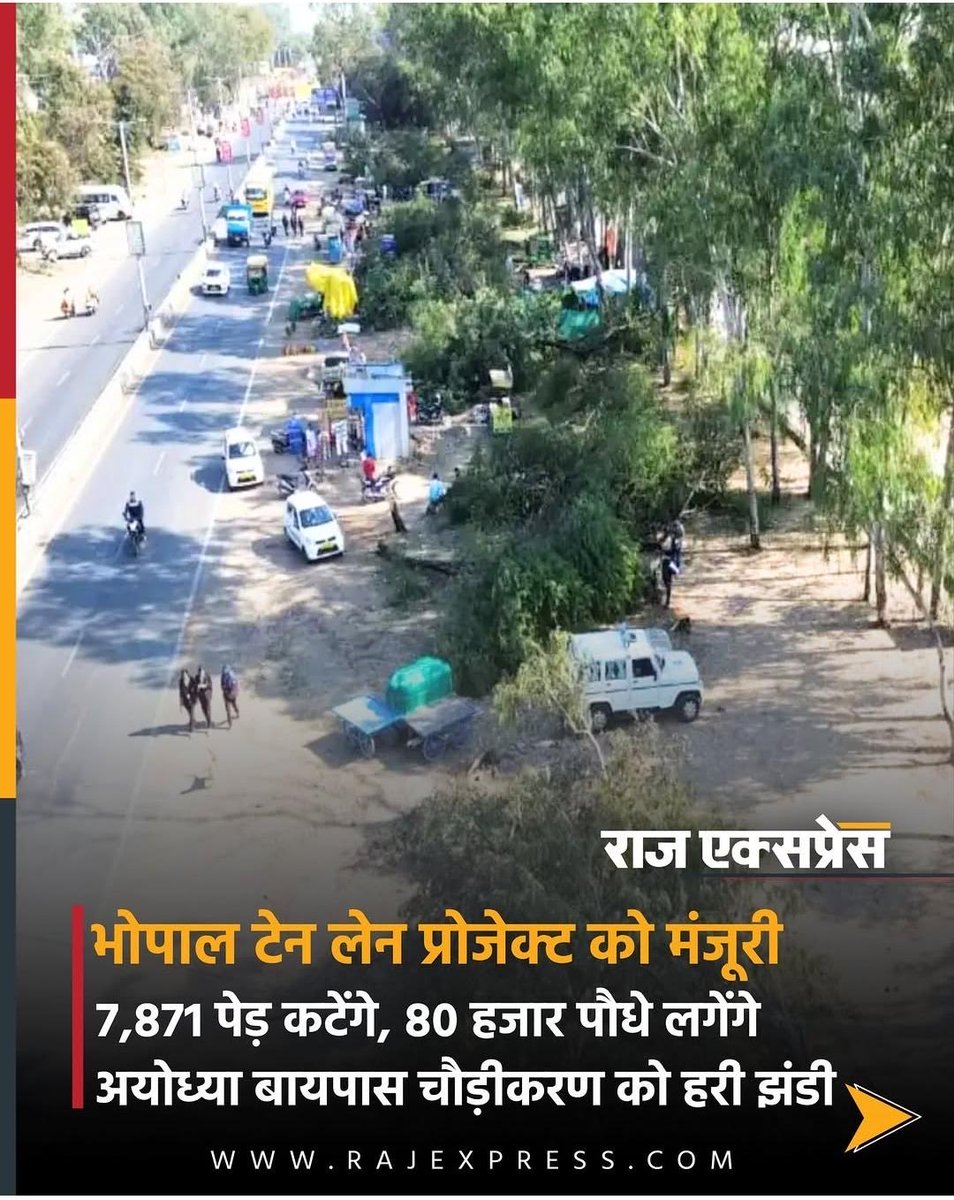
This when we have T> 45 Concrete replaces what was green. One reason I chose to live here was the greenery. I wish we had lesser lanes.
Dushyant tweet media
English
0
0
0
19
Dushyant รีทวีตแล้ว
Normal Guy
Normal Guy@Normal_2610·
India taxes crypto at 30% on gains and 1% TDS on every single trade But Binance told there are no requirements in any law… specifying withdrawal limits on virtual digital assets, They allow free withdrawals to private wallets. But they did not say it inside Parliament hall, Binance was invited to the Parliamentary Standing Committee on Finance meeting on 20 May 2026. Traditional remittances go through LRS with a $250K annual cap and 20% TCS above 10 lakh rupees. Crypto has none of these gates. Over $42 billion in trading volume shifted offshore since 2022 because the tax made staying more expensive than leaving, Toll booth on an empty highway. India has 100m+ crypto users and no crypto law. You can buy bitcoin on a registered exchange, move it to your own wallet, convert it to USDT, and sit on dollar value with zero LRS paperwork. Meanwhile if you want to send $1000 to your kid studying abroad, you fill forms, pay 20% TCS above 7 lakh, and wait for the bank to approve it. One channel is regulated to death. The other has no gate at all. The deeper problem is not tax evasion. It is dollarization through the back door. Every Indian who converts rupees to USDT and holds it is choosing the dollar over the rupee without the RBI knowing or being able to stop it. The DRI already found gold smuggling rings using USDT to move money to China, Global stablecoin supply crossed $316 billion in April 2026. India has no way to measure how much of that sits in Indian wallets, Cannot defend a currency you cannot track.
Normal Guy tweet media
Neil Borate@ActusDei

PM forgot to mention this in his speech. Buy crypto. No TDS, No LRS. Sell abroad or hold in USD stablecoin. This will drain forex big time even while traditional remittances go through hoops. Good story by @sugataghoshET

English
20
39
202
46.2K
Dushyant รีทวีตแล้ว
Thariq
Thariq@trq212·
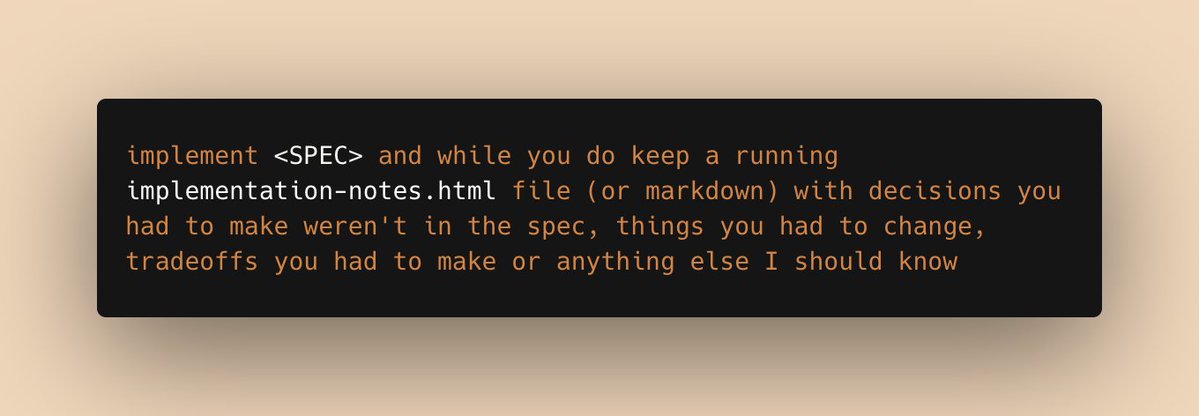
a prompt I've been using a lot recently: implement <SPEC> and while you do, keep a running implementation-notes.html file (or markdown) with decisions you had to make weren't in the spec, things you had to change, tradeoffs you had to make or anything else I should know
Thariq tweet media
English
341
580
9.7K
814.3K