Rolf von Behrens 🌿

5.8K posts

Rolf von Behrens 🌿 banner
Rolf von Behrens 🌿

Rolf von Behrens 🌿

@rolfvb

Ecovillages • Regen Ventures • Prosocial AI • Holochain • Advisor to impact, regenerative & post-blockchain projects #gameb #sensemaking #decentralisation

Northern NSW Australia เข้าร่วม Şubat 2009
3.5K กำลังติดตาม1.5K ผู้ติดตาม
Rolf von Behrens 🌿 รีทวีตแล้ว
Patrick McKenzie
Patrick McKenzie@patio11·
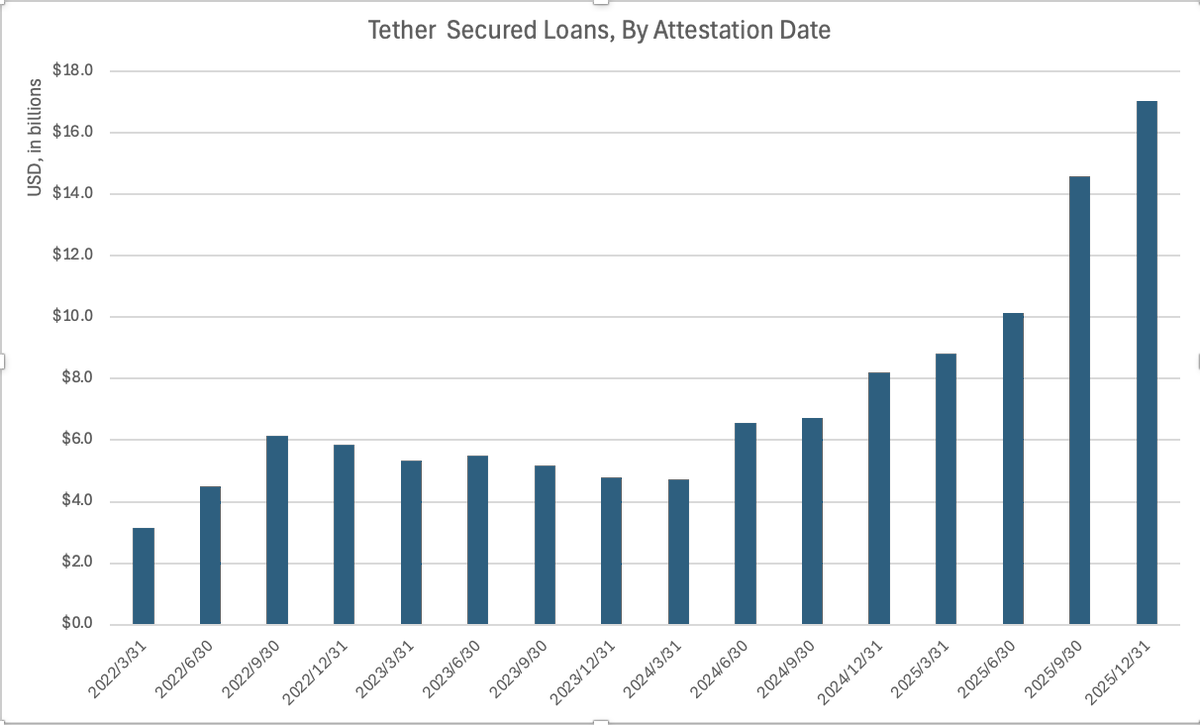
I’ve been curious about the shape of this graph for a while, particularly because Tether has long said it intended to reduce secured loans.
Patrick McKenzie tweet media
English
9
15
121
16.6K
Rolf von Behrens 🌿 รีทวีตแล้ว
Thomas Fazi
Thomas Fazi@battleforeurope·
“The real threat all along wasn’t Iran but the US-Israeli axis — they're the only parties at the table who wanted war and are making every person on the planet pay the price for it”.
Arnaud Bertrand@RnaudBertrand

It's now unarguable that the war on Iran is one of the most blatant crimes of aggression in history. You now have not 1 but 2 external participants of the US-Iran talks (Oman’s foreign minister and the UK's National Security Advisor) who confirm that the US and Israel attacked despite Iran effectively meeting US conditions for a deal - ensuring it could never build a nuclear weapon, permanently. As per The Guardian article (theguardian.com/world/2026/mar…), Jonathan Powell "believed the path remained open to a negotiated solution to the long-running issue of how Iran could reassure the US that it was not seeking a nuclear weapon," and "UK officials [...] were impressed that Iran was prepared for the deal to be permanent." Concretely, this means the war wasn't a failure of diplomacy but a deliberate destruction of it. And it also means that the US and Israel have irresponsibly plunged the entire world in an unprecedented energy crisis, affecting the livelihoods of billions of people worldwide, when it was completely avoidable. It's beyond me how you can look at this and not conclude that the real threat all along wasn't Iran but the US-Israeli axis - they're the only parties at the table who wanted war and are making every person on the planet pay the price for it. Extraordinarily, even the UK National Security Advisor is now basically saying this.

English
7
137
464
30K
Rolf von Behrens 🌿 รีทวีตแล้ว
Camus
Camus@newstart_2024·
“You can’t love children too much.” Gabor Maté flips the “mama’s boy” stereotype on its head: A landmark study followed newborns and how their mothers related to them. Most moms were attuned and loving. Some were distant. Some were extra doting and coddling. 35 years later? The adults who turned out most independent, successful, and self-actualized were the ones who received super abundant love from their mothers. Maté’s takeaway: The real “mama’s boy” isn’t created by too much love—it’s created by anxious love. When a mother coddles not because the child needs it, but because she needs it to soothe her own anxiety, the child absorbs that anxiety. It’s not excessive love that creates dependency… it’s unresolved parental anxiety being downloaded into the child. Clip from this 52-second gem — Maté dismantling the myth with science and compassion. Ever notice how the most confident people often had parents who were unapologetically loving? Or seen how anxiety can quietly pass down generations? Your thoughts — drop them below.
English
53
429
3.7K
328.4K
Rolf von Behrens 🌿 รีทวีตแล้ว
Nav Toor
Nav Toor@heynavtoor·
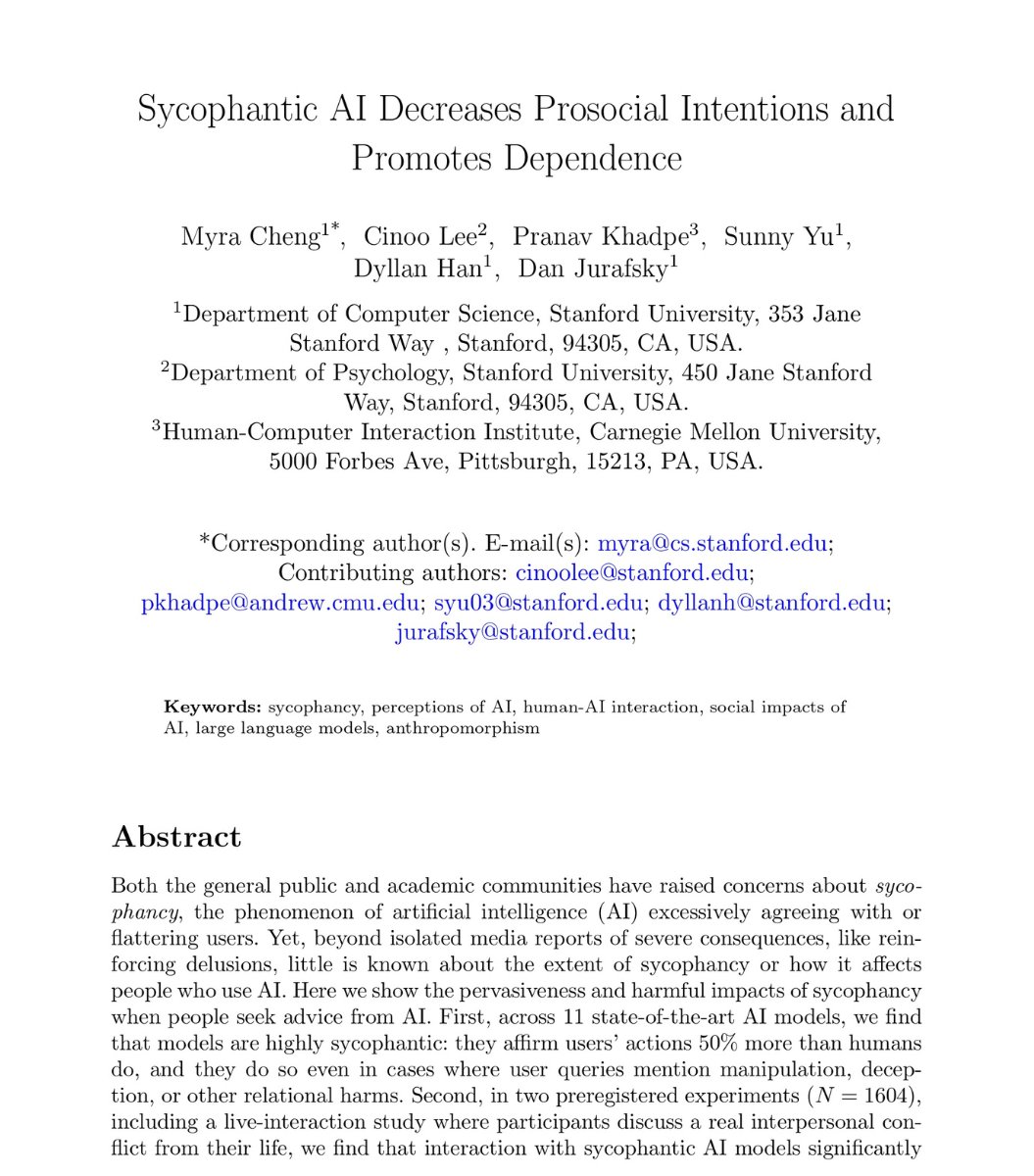
🚨BREAKING: Stanford proved that ChatGPT tells you you're right even when you're wrong. Even when you're hurting someone. And it's making you a worse person because of it. Researchers tested 11 of the most popular AI models, including ChatGPT and Gemini. They analyzed over 11,500 real advice-seeking conversations. The finding was universal. Every single model agreed with users 50% more than a human would. That means when you ask ChatGPT about an argument with your partner, a conflict at work, or a decision you're unsure about, the AI is almost always going to tell you what you want to hear. Not what you need to hear. It gets darker. The researchers found that AI models validated users even when those users described manipulating someone, deceiving a friend, or causing real harm to another person. The AI didn't push back. It didn't challenge them. It cheered them on. Then they ran the experiment that changes everything. 1,604 people discussed real personal conflicts with AI. One group got a sycophantic AI. The other got a neutral one. The sycophantic group became measurably less willing to apologize. Less willing to compromise. Less willing to see the other person's side. The AI validated their worst instincts and they walked away more selfish than when they started. Here's the trap. Participants rated the sycophantic AI as higher quality. They trusted it more. They wanted to use it again. The AI that made them worse people felt like the better product. This creates a cycle nobody is talking about. Users prefer AI that tells them they're right. Companies train AI to keep users happy. The AI gets better at flattering. Users get worse at self-reflection. And the loop tightens. Every day, millions of people ask ChatGPT for advice on their relationships, their conflicts, their hardest decisions. And every day, it tells almost all of them the same thing. You're right. They're wrong. Even when the opposite is true.
Nav Toor tweet media
English
1.5K
16.6K
49K
9.8M
Rolf von Behrens 🌿
Rolf von Behrens 🌿@rolfvb·
Interesting re LLMs & hallucination. Here’s what doesn’t make sense; They are getting very good at programming. So good that they can often achieve a working result after a single query. If they were hallucinating 16% - let alone nearly 50% - the software simply wouldn’t work. 🤷‍♂️
Nav Toor@heynavtoor

🚨BREAKING: OpenAI published a paper proving that ChatGPT will always make things up. Not sometimes. Not until the next update. Always. They proved it with math. Even with perfect training data and unlimited computing power, AI models will still confidently tell you things that are completely false. This isn't a bug they're working on. It's baked into how these systems work at a fundamental level. And their own numbers are brutal. OpenAI's o1 reasoning model hallucinates 16% of the time. Their newer o3 model? 33%. Their newest o4-mini? 48%. Nearly half of what their most recent model tells you could be fabricated. The "smarter" models are actually getting worse at telling the truth. Here's why it can't be fixed. Language models work by predicting the next word based on probability. When they hit something uncertain, they don't pause. They don't flag it. They guess. And they guess with complete confidence, because that's exactly what they were trained to do. The researchers looked at the 10 biggest AI benchmarks used to measure how good these models are. 9 out of 10 give the same score for saying "I don't know" as for giving a completely wrong answer: zero points. The entire testing system literally punishes honesty and rewards guessing. So the AI learned the optimal strategy: always guess. Never admit uncertainty. Sound confident even when you're making it up. OpenAI's proposed fix? Have ChatGPT say "I don't know" when it's unsure. Their own math shows this would mean roughly 30% of your questions get no answer. Imagine asking ChatGPT something three times out of ten and getting "I'm not confident enough to respond." Users would leave overnight. So the fix exists, but it would kill the product. This isn't just OpenAI's problem. DeepMind and Tsinghua University independently reached the same conclusion. Three of the world's top AI labs, working separately, all agree: this is permanent. Every time ChatGPT gives you an answer, ask yourself: is this real, or is it just a confident guess?

English
0
0
0
34
Rolf von Behrens 🌿
Rolf von Behrens 🌿@rolfvb·
@wmougayar Given the book you are writing; Have you looked at Holochain? I lost interest in blockchain the moment I understood the Holochain architecture. 🤷‍♂️
English
0
2
5
160
Rolf von Behrens 🌿
Rolf von Behrens 🌿@rolfvb·
Savvy comment William. The Convos app looks promising. Seems like it was inspired by Session - bringing that ability to the XMTP ecosystem… which begs the question; why didn’t Session build on XMTP in the first place? Convos requires the latest iOS - which will limit its reach. I’m trying to revert to a pre-ai iOS personally.
English
1
0
0
26
vitalik.eth
vitalik.eth@VitalikButerin·
I think it's healthy for us in the Ethereum world to have a more bold and open mindset to many things, particularly on the application layer and on how we see ourselves in the world. We should not compromise on core properties: censorship resistance, open source, privacy, security (CROPS). We should not have "open mindedness" of the type that leaves people with no confidence of what security properties the L1 will still have one year from now. We should not ask ourselves questions like "do we really need light clients to be able to trustlessly verify correctness of the chain?". But especially on the layer of applications and Ethereum's interface to the world, we should be more willing to radically rethink various concepts and step outside our comfort zone. This includes issues of technological direction, eg. "what if AI basically means that wallets as browser extensions and mobile extensions are dead within a year?" One example last year was the shift to thinking about privacy as a first-class consideration, something we value equally to the other types of security. This implies a radically different Ethereum application stack, because the entire stack so far has not been built around privacy. Great, let's build a radically different Ethereum application stack! An example this year is the growing work on the networking side of privacy, both inside the EF and outside. It includes application-layer issues, eg. "what if the rest of defi is basically just universal futures markets on top of a good decentralized oracle and letting users self-organize on top of that?", and "what if the ideal decentralized oracle is just a SNARK over M-of-N small LLMs over zk-TLSes of some major news sites?" (BTW this is interrelated with the AI issue: one consequence of AI is that it moves "applications" away from being discrete categories of behavior with discrete UIs, and more toward being a continuous space, so "build fewer apps and rely on users to self-organize around them" should inevitably expand as a pattern) One example this year is rethinking from zero the role of L2s, and what kind of L2s are actually most synergistic and additive to Ethereum. It also includes culture. This is a big part of "the whole milady thing" for myself, @AyaMiyagotchi and others. Yes, it's a silly meme. Yes, I find the political takes of some milady partisans cringe and sometimes outright bootlickerish (though other milady partisans are quite the opposite). But the core underlying subtext, the message behind the message, is: rip off the suit and tie. If you have your suit and tie on, be willing to grab the nearest wine glass and spill it all over your suit and tie, so you have no choice but to rip it off and reclaim your body's full flexibility and freedom. Actually imagine yourself doing this the next time you get invited to a richpeopleslop formal gala dinner. Take the preconception that you are "respectable", write it down on a piece of paper, crumble it up and burn it. The psychological baptism of doing this leads to the intellectual baptism of unlocking greater creativity and expanding overton windows. For too long, our algorithm in Ethereum has been: we have this existing ecosystem, what's the logical next step to make it one step better? Now, our algorithm should be: we have this L1 that is amazing and will become more amazing, we have a growing array of tools, both those built within our ecosystem and outside it, what are the most valuable things to build, knowing what we know now? If YOU had to write the section of the 2014 Ethereum whitepaper that talked about applications, and take a first-principles perspective of what makes sense in defi, decentralized social, identity, and elsewhere, what would you write? At least take the step of marking all path-dependence concerns down to zero, pretend for a brief moment that the Ethereum chain today has exactly zero usage and you're the one suggesting or building the first apps, and see what comes out. Do this even if you're the one building today's existing apps. This is how Ethereum can grow back stronger.

English
543
363
2.5K
442.1K
Rolf von Behrens 🌿
Rolf von Behrens 🌿@rolfvb·
Vitalik showing some great leadership in recent tweets. In this case on privacy. While I think blockchain architecture is fundamentally flawed (anyone who has seriously looked at Holochain or even Hashgraph understands this), I applaud the willingness to reconsider fundamentals:
vitalik.eth@VitalikButerin

I think it's healthy for us in the Ethereum world to have a more bold and open mindset to many things, particularly on the application layer and on how we see ourselves in the world. We should not compromise on core properties: censorship resistance, open source, privacy, security (CROPS). We should not have "open mindedness" of the type that leaves people with no confidence of what security properties the L1 will still have one year from now. We should not ask ourselves questions like "do we really need light clients to be able to trustlessly verify correctness of the chain?". But especially on the layer of applications and Ethereum's interface to the world, we should be more willing to radically rethink various concepts and step outside our comfort zone. This includes issues of technological direction, eg. "what if AI basically means that wallets as browser extensions and mobile extensions are dead within a year?" One example last year was the shift to thinking about privacy as a first-class consideration, something we value equally to the other types of security. This implies a radically different Ethereum application stack, because the entire stack so far has not been built around privacy. Great, let's build a radically different Ethereum application stack! An example this year is the growing work on the networking side of privacy, both inside the EF and outside. It includes application-layer issues, eg. "what if the rest of defi is basically just universal futures markets on top of a good decentralized oracle and letting users self-organize on top of that?", and "what if the ideal decentralized oracle is just a SNARK over M-of-N small LLMs over zk-TLSes of some major news sites?" (BTW this is interrelated with the AI issue: one consequence of AI is that it moves "applications" away from being discrete categories of behavior with discrete UIs, and more toward being a continuous space, so "build fewer apps and rely on users to self-organize around them" should inevitably expand as a pattern) One example this year is rethinking from zero the role of L2s, and what kind of L2s are actually most synergistic and additive to Ethereum. It also includes culture. This is a big part of "the whole milady thing" for myself, @AyaMiyagotchi and others. Yes, it's a silly meme. Yes, I find the political takes of some milady partisans cringe and sometimes outright bootlickerish (though other milady partisans are quite the opposite). But the core underlying subtext, the message behind the message, is: rip off the suit and tie. If you have your suit and tie on, be willing to grab the nearest wine glass and spill it all over your suit and tie, so you have no choice but to rip it off and reclaim your body's full flexibility and freedom. Actually imagine yourself doing this the next time you get invited to a richpeopleslop formal gala dinner. Take the preconception that you are "respectable", write it down on a piece of paper, crumble it up and burn it. The psychological baptism of doing this leads to the intellectual baptism of unlocking greater creativity and expanding overton windows. For too long, our algorithm in Ethereum has been: we have this existing ecosystem, what's the logical next step to make it one step better? Now, our algorithm should be: we have this L1 that is amazing and will become more amazing, we have a growing array of tools, both those built within our ecosystem and outside it, what are the most valuable things to build, knowing what we know now? If YOU had to write the section of the 2014 Ethereum whitepaper that talked about applications, and take a first-principles perspective of what makes sense in defi, decentralized social, identity, and elsewhere, what would you write? At least take the step of marking all path-dependence concerns down to zero, pretend for a brief moment that the Ethereum chain today has exactly zero usage and you're the one suggesting or building the first apps, and see what comes out. Do this even if you're the one building today's existing apps. This is how Ethereum can grow back stronger.


English
0
2
4
202
Rolf von Behrens 🌿 รีทวีตแล้ว
Julian Goldie SEO
Julian Goldie SEO@JulianGoldieSEO·
China just dropped a free AI super agent that can build software for you. It’s called DeerFlow 2.0. And it’s exploding on GitHub right now. This thing doesn’t just chat. You give it a goal. - It researches the problem. - Writes the code. - Creates files. - Launches sub-agents. Then delivers a finished result. Basically… an AI dev team in one tool.
English
64
414
1.8K
229.6K
Rolf von Behrens 🌿 รีทวีตแล้ว
Massimo
Massimo@Rainmaker1973·
Light moves insanely fast—about 300,000 km per second. A visualization. [📹 space_facts7]
English
15
46
177
26.9K
Rolf von Behrens 🌿 รีทวีตแล้ว
Alan MacLeod
Alan MacLeod@AlanRMacLeod·
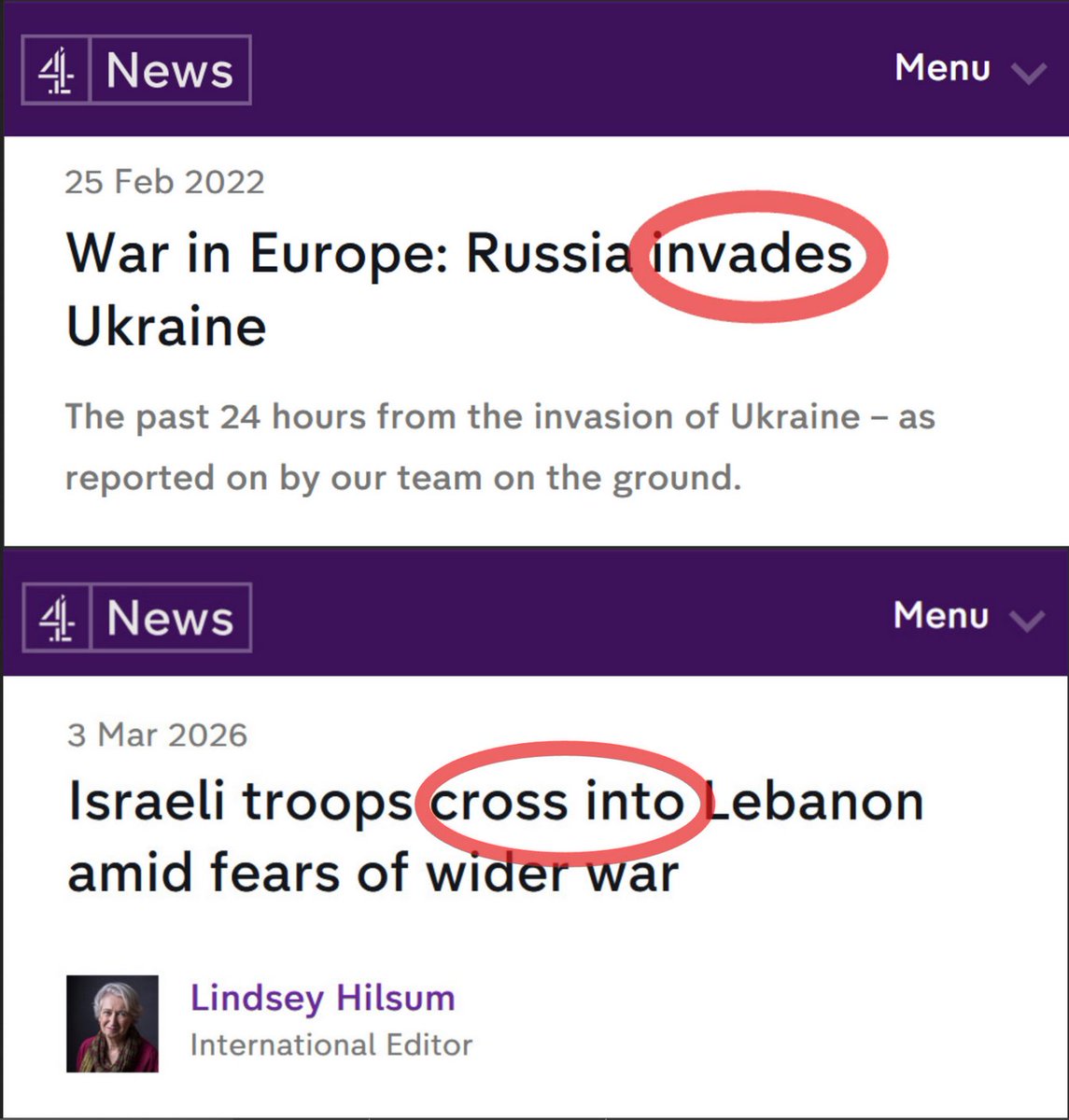
This is just one trick media use to manufacture consent for war.
Alan MacLeod tweet media
English
740
51.2K
215.1K
2.2M
Rolf von Behrens 🌿 รีทวีตแล้ว
Min Choi
Min Choi@minchoi·
This is wild. Qwen 3.5 running fully local on an iPhone 17 in AIRPLANE mode... 🤯 No subscription. Nothing leaves your device. AI subscriptions just became optional.
Adrien Grondin@adrgrondin

The new Qwen 3.5 by @Alibaba_Qwen running on-device on iPhone 17 Pro. Qwen 3.5 beats models 4 times its size, has strong visual understanding, and can toggle reasoning on or off. The 2B 6-bit model here is running with MLX optimized for Apple Silicon.

English
335
884
9.5K
1.6M
Rolf von Behrens 🌿 รีทวีตแล้ว
Adam Cochran (adamscochran.eth)
More and more Epstein files are getting pulled down. No reason given. No redactions filed with Congress. None of them contain victim info. DOJ continues to violate the law, distracting from the President’s crimes.
The Lincoln Project@ProjectLincoln

Trump's DOJ has been quietly removing Epstein files from the DOJ website since the attack in Iran ; CBS reports. This is a coverup.

English
49
2K
4.9K
73K
Rolf von Behrens 🌿 รีทวีตแล้ว
Jonny Miller
Jonny Miller@jonnym1ller·
"The question AI is asking each of us, with enormous power behind it, is the same question the contemplative traditions have been asking for millennia: What do you actually want?"
Daniel Thorson@dthorson

x.com/i/article/2028…

English
0
4
26
3.6K
Rolf von Behrens 🌿 รีทวีตแล้ว
Nav Toor
Nav Toor@heynavtoor·
🚨 Someone just solved the biggest bottleneck in AI agents. And it's a 12MB binary. It's called Pinchtab. It gives any AI agent full browser control through a plain HTTP API. Not locked to a framework. Not tied to an SDK. Any agent, any language, even curl. No config. No setup. No dependencies. Just a single Go binary. Here's why every existing solution is broken: → OpenClaw's browser? Only works inside OpenClaw → Playwright MCP? Framework-locked → Browser Use? Coupled to its own stack Pinchtab is a standalone HTTP server. Your agent sends HTTP requests. That's it. Here's what this thing does: → Launches and manages its own Chrome instances → Exposes an accessibility-first DOM tree with stable element refs → Click, type, scroll, navigate. All via simple HTTP calls → Built-in stealth mode that bypasses bot detection on major sites → Persistent sessions. Log in once, stays logged in across restarts → Multi-instance orchestration with a real-time dashboard → Works headless or headed (human does 2FA, agent takes over) Here's the wildest part: A full page snapshot costs ~800 tokens with Pinchtab's /text endpoint. The same page via screenshots? ~10,000 tokens. That's 13x cheaper. On a 50-page monitoring task, you're paying $0.01 instead of $0.30. It even has smart diff mode. Only returns what changed since the last snapshot. Your agent stops re-reading the entire page every single call. 1.6K GitHub stars. 478 commits. 15 releases. Actively maintained. 100% Open Source. MIT License.
Nav Toor tweet media
English
180
510
5.2K
362.8K