@roncham44@canyonmoongal I hard what happened. I’m overwhelmed and heartbroken. Hope you’ll read this from heaven. 🤍
For Ron wife: be strong and take care of yourself. Ask the community if you need anything. 🤍
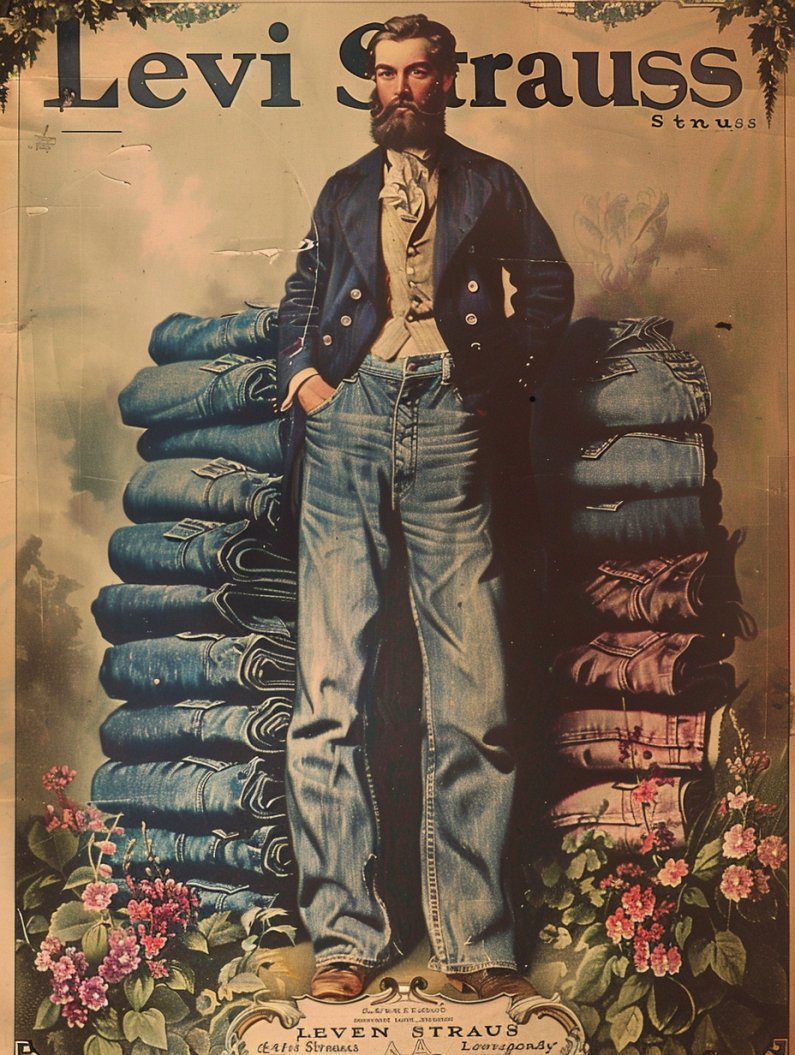
On This Day May 20, 1873 a humble yet revolutionary invention that would forever change the fashion landscape was born on this day, as San Francisco businessman Levi Strauss and Reno, Nevada, tailor Jacob Davis were granted a patent for work pants reinforced with metal rivets, giving birth to the iconic blue jeans.
The idea for this practical and durable garment emerged from the need for sturdy clothing that could withstand the rigors of manual labor and the rugged lifestyles of the American West. Strauss, a dry goods merchant, had been supplying canvas pants to miners and laborers, but they often tore at the seams and pockets, leading to frequent replacements.
Enter Jacob Davis, a tailor who had conceived the brilliant idea of using metal rivets to reinforce the strain points of the pants, ensuring their longevity and strength. Recognizing the potential of this innovation, Davis approached Strauss, and together they secured the patent that would lay the foundation for one of the world's most enduring fashion statements.
From its humble beginnings as workwear for miners and cowboys, the blue jean transcended its utilitarian roots to become a cultural phenomenon. Its appeal crossed boundaries of class, age, and geography, evolving into a versatile and iconic garment that embodied the spirit of individuality, rebellion, and self-expression.
Over the decades, blue jeans have been embraced by countercultures, celebrities, and everyday people alike, cementing their place as a timeless and ubiquitous part of the global fashion landscape. Today, the simple yet ingenious invention of Strauss and Davis stands as a testament to the power of innovation, reminding us that even the most ordinary of ideas can spawn extraordinary legacies.
AI generated which may not be 100% accurate.
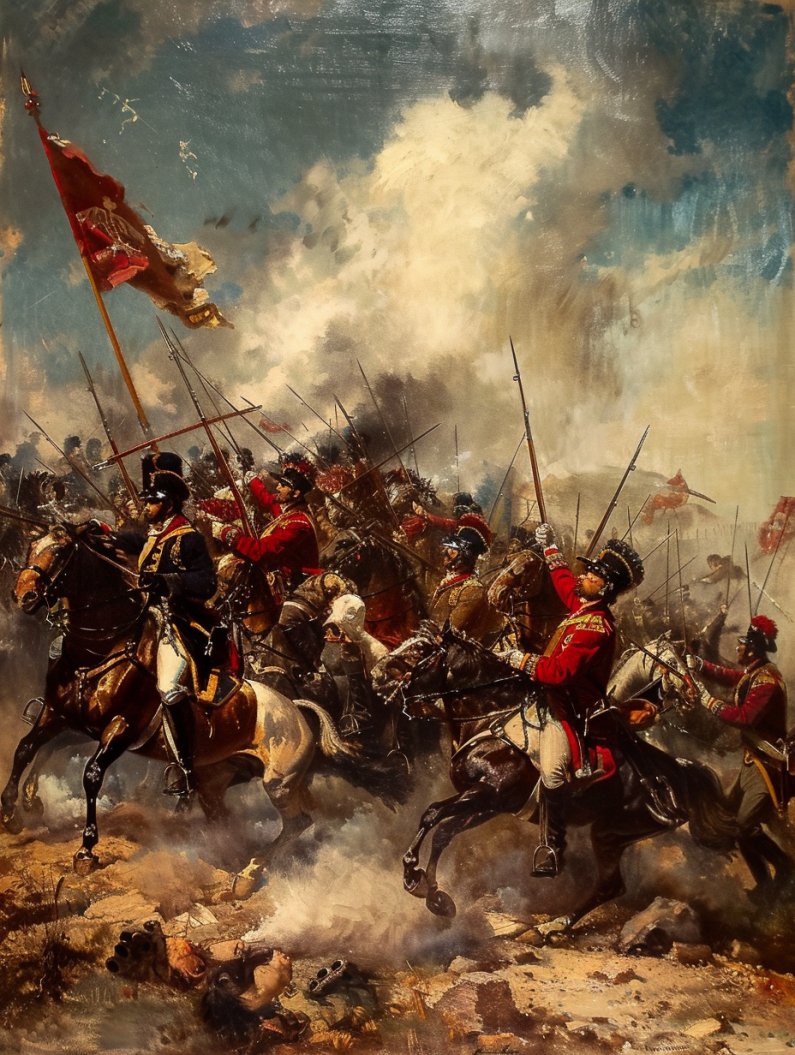
On This Day May 19, 1536 a dark and tragic chapter unfolded in the tumultuous reign of King Henry VIII as Anne Boleyn, his second wife and once the object of his ardent desire, faced her final moments on this fateful day. Convicted of treason and adultery in a trial shrouded in controversy and political machinations, Anne ascended the scaffold at the Tower of Green, her life cut short by the swing of the executioner's blade.
Anne Boleyn's rise to power had been meteoric, captivating the heart of the King and fueling his determination to annul his marriage to Catherine of Aragon in order to make Anne his wife. Her refusal to become his mistress only inflamed Henry's passion, and their eventual union ushered in the turbulent years of the English Reformation, forever altering the religious landscape of the realm.
Yet, Anne's time as Queen was marked by intrigue, betrayal, and the cruel twists of fate. Failing to produce a male heir and falling out of the King's favor, she found herself ensnared in a web of accusations and political rivalries that culminated in her tragic downfall. Charged with allegations of incest and adultery, her trial was a mere formality, and her sentence a foregone conclusion.
As she mounted the scaffold, draped in a robe of gray damask and clutching a book of prayers, Anne displayed a dignity and grace that belied the injustice of her fate. Her final words, uttered with unwavering composure, echoed through the ages: "Good Christian people, I am come hither to die, for according to the law, and by the law I am judged to die, and therefore I will speak nothing against it."
Anne Boleyn's execution marked a pivotal moment in English history, a stark reminder of the fragility of power and the brutal consequences of political ambition. Her legacy, however, endures as a symbol of strength, resilience, and the enduring fascination with the Tudor court and its complex web of intrigue and tragedy.
AI generated which may not be 100% accurate.
On This Day May 18, 1980 Nature's fury was unleashed in a spectacular and devastating display as Mount St. Helens, a towering stratovolcano in the scenic Cascade Range of Washington state, erupted with catastrophic force after simmering for months.
What began as a series of minor earthquakes and steam venting escalated rapidly, culminating in a powerful lateral blast that ripped through the mountain's northern flank. In a matter of seconds, the eruption obliterated hundreds of square miles of pristine wilderness, flattening forests, and generating pyroclastic flows that raced across the landscape at blistering speeds.
The sheer force of the eruption was matched only by its destructive power, as a colossal plume of ash and volcanic debris rose over 80,000 feet into the atmosphere, effectively blocking out the sun and casting an eerie darkness over the region. The eruption claimed the lives of 57 people, including volcanologist David A. Johnston, whose final words, "Vancouver, Vancouver, this is it!" became a haunting reminder of nature's unpredictable might.
In the aftermath, the once-majestic peak lay scarred and reshaped, its summit reduced by over 1,300 feet, and the surrounding landscape transformed into a desolate, ash-covered expanse. Yet, even in the face of such devastation, the resilience of nature prevailed, with new life slowly emerging from the ruins, serving as a powerful testament to the cyclical nature of volcanic activity and the regenerative power of the earth.
The eruption of Mount St. Helens became an iconic moment in modern history, etching itself into the collective memory of a generation and sparking renewed scientific interest in the study of volcanoes. It served as a sobering reminder of the awe-inspiring forces that shape our planet and the humbling reality that, despite our technological advancements, we remain mere spectators to the grand and sometimes violent theater of nature.
AI generated which may not be 100% accurate.
On This Day May 16, 1973 Stevie Wonder released the infectious and soulful single "You Are the Sunshine of My Life." This joyous love song would go on to become an anthem of affection and one of the most beloved tunes in the celebrated artist's extensive repertoire.
Emerging from the creative genius of Wonder's iconic album "Talking Book," the single showcased the multitalented musician's mastery of melody, composition, and lyrical poignancy. With its upbeat rhythm, effervescent harmonies, and Wonder's signature vocal prowess, "You Are the Sunshine of My Life" was an instant hit, resonating deeply with listeners across generations and cultural divides.
The song's heartfelt lyrics, penned by Wonder himself, captured the essence of unconditional love and gratitude, expressing the profound impact a special someone can have on one's life. The infectious chorus, with its catchy repetition of "You are the sunshine of my life," became an instant hit, etching itself into the collective consciousness of music enthusiasts worldwide.
Beyond its commercial success, which included winning three Grammy Awards and topping charts globally, "You Are the Sunshine of My Life" held a deeper significance. It represented Stevie Wonder's artistic evolution and his ability to transcend genres, seamlessly blending elements of soul, R&B, and pop into a timeless musical tapestry.
AI generated which may not be 100% accurate.
🎨 Story Illustration Series - #12 🤖
------- 𝐓𝐡𝐞 𝐒𝐨𝐮𝐩 -------
[This is based on a short story from book : 365 Bed Time Stories -
Publisher : Om Books International]
Story in the thread 🧵⤵️
On This Day May 16, 1918 a blow was struck against the fundamental principles of free speech and dissent in the United States as Congress passed the controversial Sedition Act, a wartime measure that would have far-reaching and troubling implications for civil liberties.
Enacted during the fervor of World War I, the Sedition Act aimed to silence opposition to the war effort by criminalizing any speech or writings that cast the government or the military in an unfavorable light. It imposed harsh penalties, including fines and imprisonment, for those who uttered or published anything deemed disloyal, profane, or intended to incite resistance to the war.
The passage of this draconian legislation represented a stark departure from the cherished ideals of free expression enshrined in the First Amendment of the Constitution. Critics argued that the Act's vague language and broad scope opened the door for abuse, allowing the government to suppress legitimate dissent and stifle public discourse under the guise of ensuring national security.
In the years that followed, the Sedition Act became a potent tool for the suppression of dissenting voices, particularly those of political radicals, labor organizers, and anti-war activists. Hundreds of individuals, including prominent figures like Eugene V. Debs and Emma Goldman, were prosecuted and imprisoned for voicing their opposition to American involvement in the war.
The legacy of the Sedition Act serves as a cautionary tale about the fragility of civil liberties in times of crisis and the ever-present tension between national security and the preservation of fundamental freedoms. While the Act was ultimately repealed in 1920, its impact on the nation's psyche and the ongoing debates surrounding the boundaries of free speech continue to resonate to this day.
AI generated which may not be 100% accurate.
On This Day May 15, 1940 a humble beginning that would eventually transform the American dining experience took place on this day, as brothers Richard and Maurice McDonald opened the doors to their small drive-in restaurant in San Bernardino, California, little knowing that they were planting the seeds of a global fast-food empire.
Inspired by the efficiency of the assembly line and a desire to provide speedy service, the McDonald brothers streamlined their menu, focusing on a limited selection of high-quality burgers, fries, drinks, and milkshakes. This innovative concept, known as the "Speedee Service System," was a radical departure from the traditional sit-down dining experience of the time.
With its distinctive white-tiled building, the first McDonald's restaurant quickly gained a reputation for its tasty and affordable fare, drawing in customers from near and far. The brothers' meticulous attention to detail, from the precise cooking methods to the uniform presentation of each order, set a new standard for consistency and quality in the burgeoning fast-food industry.
Little did the McDonald brothers know that their modest drive-in would become the launching pad for one of the most recognizable and influential brands in the world. As the years passed, their innovative concept captured the imagination of entrepreneur Ray Kroc, who acquired the rights to franchise the restaurants and propelled McDonald's onto the national and eventually global stage.
Today, McDonald's stands as a cultural icon, with thousands of locations spanning the globe, serving millions of customers each day. While the brand has evolved and adapted over the decades, its roots can be traced back to that modest drive-in restaurant in Arcadia, where a simple idea of efficient, quality service forever changed the way we dine.
AI generated which may not be 100% accurate.
⚡️My Birthday Party - You're All Invited!⚡️
It's my birthday today, and it's been over a year since I joined the AI community, and what a wild ride it has been. I went from literally 10 followers in March last year to over 11k, I couldn't do it without you 💜
I wanted to take a moment to thank you all for the incredible support - it means the world to me, and I appreciate every interaction we share here on X and in other virtual spaces.
It feels so nice to be a part of this community and share cool stuff with you daily - thanks so much! 💜
On This Day May 14, 1804 the renowned Lewis and Clark Expedition embarked from St. Louis, Missouri, on a mission to explore the uncharted territories of the newly acquired Louisiana Purchase.
Commissioned by President Thomas Jefferson and led by Meriwether Lewis and William Clark, this ambitious undertaking aimed to chart a navigable water route across the vast expanse of the North American continent and investigate the natural resources and indigenous peoples along the way.
As the expedition's flotilla set sail on the mighty Missouri River, anticipation and uncertainty hung in the air. The men were venturing into an unknown realm, where danger and hardship awaited at every turn. Over the next two and a half years, they would encounter breathtaking landscapes, formidable obstacles, and numerous Native American tribes.
The Lewis and Clark Expedition not only laid the foundation for the westward expansion of the United States but also ushered in a new era of scientific exploration and cross-cultural understanding. Their extraordinary achievements captured the imagination of a nation and inspired generations of adventurers and explorers to follow in their footsteps, forever shaping the course of American history.
AI generated which may not be 100% accurate.
On This Day May 13, 1846 the United States Congress officially declared war on Mexico, igniting a conflict that would have far-reaching consequences for both nations.
The origins of the war lay in the long-simmering territorial dispute over Texas, which had recently gained its independence from Mexico. Tensions escalated further when the United States annexed Texas in 1845, a move that Mexico viewed as an act of aggression against its sovereignty.
Amidst this volatile climate, President James K. Polk, driven by a desire for territorial expansion and the concept of "Manifest Destiny," sought congressional approval for military action. The declaration of war passed narrowly, setting the stage for a bloody and contentious campaign that would last nearly two years.
The ensuing conflict was marked by fierce battles and controversial tactics, as American forces under Generals Zachary Taylor and Winfield Scott eventually emerged victorious, capturing Mexico City and forcing the Mexican government to sue for peace. The Treaty of Guadalupe Hidalgo, signed in 1848, ceded vast territories to the United States, including California, Nevada, Utah, and portions of Colorado, Arizona, New Mexico, and Wyoming.
While the war secured the United States' expansion to the Pacific and fueled the nation's sense of destiny, it also left a lasting legacy of bitterness and resentment in Mexico. The conflict highlighted the complex interplay of nationalism, territorial ambition, and the quest for power that would continue to shape the relationship between the two neighboring nations for decades to come.
AI generated which may not be 100% accurate.
On This Day May 12, 1941 German engineer Konrad Zuse presented the Z3, the world's first working programmable, fully automatic computer. This remarkable feat of innovation and ingenuity marked a pivotal moment in the history of technology, paving the way for the digital revolution that would transform our world in ways that were once unimaginable.
Constructed entirely from electromechanical relays and metal components, the Z3 stood as a testament to Zuse's unwavering determination and visionary thinking. Unlike its predecessors, which required manual intervention for each step of a calculation, the Z3 could execute a sequence of instructions automatically, storing and retrieving data from its memory as needed.
The implications of this breakthrough were profound, as it opened the door to more complex calculations and data processing capabilities. Zuse's pioneering work laid the foundation for the development of modern computers, ushering in a new era where computational power would become an indispensable tool for scientific research, business operations, and countless other aspects of human endeavor.
Although the Z3's development was hindered by the tumultuous events of World War II, its legacy endured. Zuse's creation inspired a generation of computer scientists and engineers, fueling the rapid advancement of digital technology in the decades that followed. From the room-sized mainframes of the 1950s to the sleek and powerful devices we carry in our pockets today, the Z3 stands as a testament to the transformative power of human ingenuity and the relentless pursuit of innovation.
As we reflect on this historic day, we are reminded of the profound impact that a single invention can have on the course of human history, and the incredible potential that lies within the minds of visionaries who dare to challenge the boundaries of what is possible.
AI generated which may not be 100% accurate.
Image source: en.wikipedia.org/wiki/File:Z3_D…
🎨CHEMICAL FLAMES🎨
Base prompt :
[COLOR] flames and [COLOR] smoke envelop a SUBJECT] , a visual metaphor for combustion chemistry, digital art illustrating the fierce beauty and transient nature of chemical reactions
Check ALTs
On This Day May 11, 1997 a watershed moment in the history of artificial intelligence unfolded as chess grandmaster Garry Kasparov, long hailed as one of the greatest players of all time, made the unprecedented move of resigning against his opponent – the IBM supercomputer Deep Blue.
For years, the battle between human intellect and machine intelligence had captivated the world, with Kasparov and Deep Blue engaging in a highly anticipated rematch after their first encounter in 1996. The stakes were high, as Kasparov sought to defend the supremacy of human cognition against the relentless computational prowess of Deep Blue.
As the match progressed, the tension mounted with each calculated move, Kasparov employing his vast experience and strategic brilliance against Deep Blue's unparalleled ability to analyze millions of potential outcomes. However, on this fateful day, the grandmaster found himself outmaneuvered, facing an impending checkmate that he deemed inescapable.
With a resigned sigh, Kasparov made the bold decision to resign, acknowledging the superiority of Deep Blue's play in that moment. His concession reverberated across the globe, signaling a profound shift in the balance of power between human and machine intelligence.
While Kasparov's resignation did not mark the end of human supremacy in chess, it served as a powerful reminder of the rapid advancements in artificial intelligence and the potential for machines to surpass human capabilities in specific domains. The match ignited a broader discussion about the implications of AI, prompting both excitement and trepidation about the future coexistence of humans and increasingly intelligent machines.
AI generated which may not be 100% accurate.
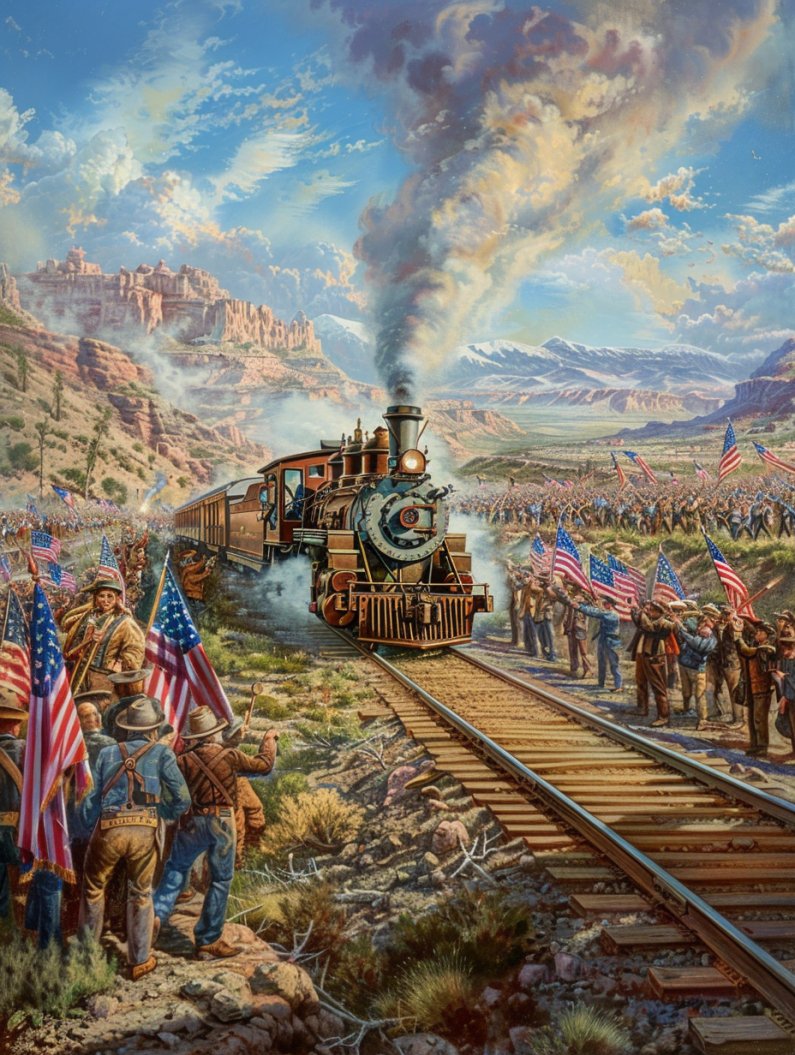
On This Day May 10, 1869 a momentous occasion unfolded in the remote town of Promontory, Utah, as the presidents of the Union Pacific and Central Pacific railroads came together to witness the realization of a dream – the completion of the first transcontinental railroad.
For years, the idea of a coast-to-coast rail line had been the subject of ambitious plans and heated debates, but on this day, the final golden spike was driven into the ground, symbolically uniting the two railway companies and ushering in a new era of transportation and progress.
Amidst the cheers of laborers and dignitaries alike, Union Pacific's Thomas C. Durant and Central Pacific's Leland Stanford took turns striking the ceremonial spike, marking the culmination of an incredible feat of engineering and human perseverance. The completion of the transcontinental railroad was not just a technological marvel but a testament to the resilience of the thousands of workers who had toiled tirelessly.
The impact of this achievement was profound, revolutionizing the movement of goods, people, and ideas across the vast expanse of the United States. The transcontinental railroad became a symbol of American ingenuity, perseverance, and the indomitable spirit that would continue to shape the country's destiny for generations to come.
AI generated which may not be 100% accurate.