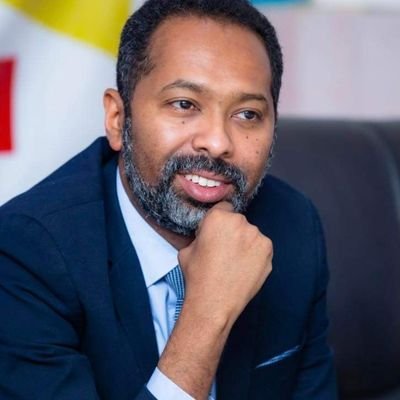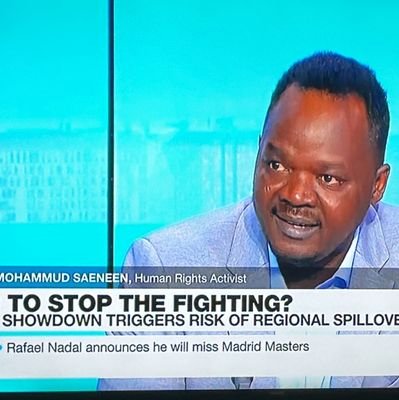
GAFFAR MOHAMMUD SAENEEN

954 posts

GAFFAR MOHAMMUD SAENEEN banner
GAFFAR MOHAMMUD SAENEEN

GAFFAR MOHAMMUD SAENEEN

@saeneen

An independent political/human rights activist who seeks a democratic secular transformation in Sudan through revolution and peaceful means.
Paris, France เข้าร่วม Temmuz 2020
439 กำลังติดตาม2.4K ผู้ติดตาม
ทวีตที่ปักหมุด
GAFFAR MOHAMMUD SAENEEN
From Paris We are here to share the stories of our families who were massacred by UAE. We are here to tell you the stories of genocide and ethnic cleansing.
English
43
474
1.1K
26.8K
GAFFAR MOHAMMUD SAENEEN
GAFFAR MOHAMMUD SAENEEN@saeneen·
Protest Statement on the Berlin Conference on Sudan – April 15, 2026   This conference, convened under the banner of addressing the “humanitarian situation,” raises profound concerns that demand a clear and critical reassessment—not only of its anticipated outcomes, but also of its underlying methodology and structure of representation.   First: The conference fails to reflect the central demand of the Sudanese people: an immediate end to the war. Any serious effort toward peace must begin with clearly identifying the perpetrator—the Rapid Support Forces militia, which ignited the conflict—and addressing the role of its external sponsor, the United Arab Emirates, whose continued support has fueled a devastating war.   Humanitarian access, civilian protection, and the restoration of stability cannot be achieved without confronting these realities. A process that avoids accountability, and instead relies on abstract frameworks and rhetorical commitments, remains detached from the urgent suffering on the ground. Without meaningful pressure on those responsible for the violence, calls for ceasefire and aid delivery risk becoming empty declarations rather than actionable solutions.   Second: The conference reproduces a recurring pattern of flawed international engagement—one that elevates marginal actors lacking genuine public legitimacy or a clear mandate. This approach does not advance a credible political process; rather, it deepens the divide between international initiatives and Sudan’s internal realities, undermining the prospects for a sustainable and representative settlement.   Third: The selection of participants raises serious concerns regarding transparency and legitimacy. The inclusion of individuals and groups widely rejected within Sudanese political and social spheres calls into question the criteria guiding invitations. Reports that some participants have adopted positions aligned with the Rapid Support Forces or have played questionable roles further erode the credibility of the conference and cast doubt on its true intentions.   Fourth: Most concerning is the exclusion of key stakeholders with legitimate standing and direct relevance to the crisis—including influential actors on the ground and genuine parties to the conflict. Such exclusion appears deliberate and risks rendering the conference an unrepresentative forum incapable of producing viable or broadly accepted outcomes.   Finally: No meaningful humanitarian or political process can be built on selective participation or incomplete representation. Nor can it succeed while disregarding the priorities of those most affected. Restoring credibility requires a fundamental reassessment of the conference’s methodology, its criteria for participation, and a firm linkage between its outcomes and a genuine cessation of hostilities.   Absent these changes, the Berlin Conference risks becoming yet another forum-driven initiative that fails to resolve the crisis and instead contributes to its continuation and fragmentation.   Accordingly, and out of a commitment to protecting civilians and preserving the unity of Sudan, we call upon all principled actors to expose these shortcomings, reject ineffective approaches, and work urgently toward a just and lasting resolution.   Gaffar MOHAMMUD SAENEEN Sudanese Political Activist April 15, 2026
English
2
31
42
1.4K
GAFFAR MOHAMMUD SAENEEN
GAFFAR MOHAMMUD SAENEEN@saeneen·
@AnwarGargash The adviser to the UAE president denounced what he called the silence of “Joint Arab and Islamic Action Institutions” over Iranian attacks on the Gulf. But the ethical question remains: To whom do the women of Darfur turn—after 18 months of siege, sexual violence, and relentless bombing in El Fasher by the Rapid Support Forces, reportedly backed by Abu Dhabi? Shouldn’t all these tragedies be judged by one standard of justice and humanity?
English
0
0
2
104
GAFFAR MOHAMMUD SAENEEN
GAFFAR MOHAMMUD SAENEEN@saeneen·
@AnwarGargash The adviser to the UAE president denounced what he called the silence of “Joint Arab and Islamic Action Institutions” over Iranian attacks on the Gulf. But the ethical question remains: To whom do the women of Darfur turn—after 18 months of siege, sexual violence, and relentless bombing in El Fasher by the Rapid Support Forces, reportedly backed by Abu Dhabi? Shouldn’t all these tragedies be judged by one standard of justice and humanity?
English
0
1
1
136
GAFFAR MOHAMMUD SAENEEN
GAFFAR MOHAMMUD SAENEEN@saeneen·
A fatal attack took place shortly before iftar, during which drones reportedly struck a gathering of civilians at a condolence site. According to initial reports, 16 individuals were killed in the incident. Some sources have attributed responsibility to a militia allegedly supported by the United Arab Emirates, though independent verification of these claims remains limited.
English
0
6
4
453
GAFFAR MOHAMMUD SAENEEN
GAFFAR MOHAMMUD SAENEEN@saeneen·
that place the protection of civilian lives above geopolitical interests.
English
0
0
0
44
GAFFAR MOHAMMUD SAENEEN
GAFFAR MOHAMMUD SAENEEN@saeneen·
Selective Designations and the Question of Justice in Sudan. By Gaffar MOHAMMUD SAENEEN/ Paris 11/03/2026 The recent decision by the United States Treasury Department to designate Sudan’s Muslim Brotherhood as a terrorist organization raises important questions for many Sudanese observers. If such a designation is intended to help the Sudanese people overcome decades of injustice and violations, then a critical question follows: when will similar action be taken against the Rapid Support Forces (RSF) militia? Or is raising such a question considered unacceptable? Over the past three years of war in Sudan, the crimes attributed to the RSF have not only been reported by international media outlets and human rights organizations; in many cases, they have also been documented by the perpetrators themselves. Reports and testimonies describe atrocities ranging from the burning of civilians alive in El-Geneina to mass killings in El-Fasher. Many of these acts have been recorded and circulated widely, leaving little doubt about the scale and brutality of the violence. These crimes have been witnessed by the world, yet many Sudanese feel that the response from the international community—particularly the United States administration—has been limited. Against this backdrop, the swift designation of what is described as the “Sudanese Muslim Brotherhood” appears puzzling to some observers, especially those who argue that the organization, as currently framed, does not meaningfully exist as a unified force in Sudan’s present political reality. This raises further questions. Why was such a designation not made during the decades when Islamist factions were actually in power in Sudan? During those years, the ruling movement openly used anti-American rhetoric and promoted jihadist narratives during the long war in South Sudan—a conflict that resulted in immense human suffering and the loss of more than a million lives. If those circumstances did not trigger a terrorist designation at the time, why now? What has changed is not merely the actors but the nature of the current conflict. Many Sudanese view today’s war as a struggle driven largely by competing interests over land, power, and resources. Within this context, the involvement of external actors—particularly the United Arab Emirates—has become a source of deep concern and controversy. Critics argue that regional powers, working through proxy militias and allied political groups, are attempting to reshape Sudan’s political landscape to serve strategic and economic interests. Some Sudanese believe that labeling fragmented or largely inactive political currents as terrorist organizations may serve another purpose: creating a political environment that marginalizes and intimidates segments of society who oppose external influence in Sudan’s affairs. Whether or not one agrees with this interpretation, it reflects a widespread sentiment among communities affected by the conflict. If terrorism is defined as the use of violence, destruction, or threats intended to instill fear and coerce populations or governments for political or ideological ends, then many Sudanese ask how the international community classifies acts such as burying people alive, mutilating bodies, or carrying out mass killings of civilians. For victims and survivors, these are not abstract legal definitions but lived experiences. Ultimately, for those who have suffered directly from the violence of militias in Sudan, the issue is not only about legal designations but about consistency, accountability, and moral clarity. When international responses appear selective, it reinforces the perception of double standards. For many victims of the conflict, that perception deepens the sense that their suffering has not been treated with equal urgency or attention. The people of Sudan continue to hope that international policy toward their country will be guided by principles of justice and equal accountability—principles
English
1
2
1
176
GAFFAR MOHAMMUD SAENEEN รีทวีตแล้ว
Ayin Network - شبكة عاين
After fleeing the RSF raid on Zamzam Camp, a displaced local aid group regrouped across the border in Tiné, Chad, and kept going. Now, Team Zamzam is providing food and psycho-social support to thousands of Sudanese refugees who escaped the latest violence in Tina, North Darfur. The UN estimates around 10,000 Sudanese refugees are now in the wider Tiné area. Against the odds, they survived and continue to serve. Hear their story from the team and founder Prof. Eric Reeves via #AyinNetwork.
English
1
15
18
1.1K
GAFFAR MOHAMMUD SAENEEN
GAFFAR MOHAMMUD SAENEEN@saeneen·
This contradiction becomes even more apparent when we observe that personal distances on social media platforms like Facebook and Twitter don't even allow for open commentary or discussion. How can we speak of representing a people, or of a democratic discourse, when the simplest tools for dialogue and interaction with public opinion are shut down? The problem here is not political disagreement, but rather clinging to a discourse and practice that are no longer compatible with the profound transformations experienced by new generations, who have become more aware of their right to question, hold accountable, and criticize. Public support gained at a certain period of time is not a historical asset to be exploited indefinitely, but a renewed responsibility that compels those involved to re-evaluate themselves, their discourse, and their methods of communicating with the public. In this context, an honest review, and perhaps giving way to a new generation or blood becomes a political and moral choice more consistent with the values ​​of democracy that are supposed to be defended, rather than clinging to positions that have been overtaken by time and many questions are raised.
English
0
0
0
65
GAFFAR MOHAMMUD SAENEEN
GAFFAR MOHAMMUD SAENEEN@saeneen·
Comments on the statement of Mr Yasir Arman. Paradoxes of past struggles and present practices. The gap between elites and the masses. By: Activist Gaffar MOHAMMUD SAENEEN / Paris, January 30 Three days ago, Mr Yasser Saeed Arman wrote a short article in which he said explicitly as follows; “When you attack democratic forces in Europe, what are you going to do with the public in your homeland?” This statement was a direct reference to the incident that occurred in the Netherlands, namely the aggressive verbal discourse between a Sudanese citizen and Mr Khalid Omar Youssef (Silik), a leader in the “Samoud ” coalition. The incident was widely circulated via a video clip shared on social media platforms. However, a critical judgment of what happened, free from political bias, reveals that the true victim and the vulnerable is the other guy, not Khalid Silik. Furthermore, upon the clear and unambiguous evidence of the discourse between the two guys,would strongly conclude that any recourse to the law in a country that respects the rule of law would have placed legal responsibility on Khalid Omar Youssef. Any attempt to interpret this incident out of its specific context or divert it into a general accusation against citizens, or into evidence of an “attack on democratic forces,” serves neither truth nor justice. Rather, it reflects the interest of reshaping the narrative to conform to a pre-existing political agenda, at the expense of concrete facts. In concluding his article, Mr Yasser Arman wrote: “The attack on Mr Khalid Omar necessitates providing protection for the platforms of democratic forces through the strong presence of their supporters, thorough preparation, coordination and organization among democratic forces abroad and with the law enforcement agencies in the countries concerned. This behavior must be condemned, exposed, and denounced by all active forces, as it targets us all and is an extension of the killings and attacks that overwhelm our entire country.” In short, Yasser Arman seeks to present Khalid Omar Youssef as the victim and to portray the forces he calls democratic as being subjected to blackmail, violence, and bullying by some Sudanese citizens. This portrayal raises legitimate questions about the logic of the discourse and the limits of political responsibility. How could a politician with decades of public interaction and political experience resort to such simplistic logic by associating popular criticism and legitimate anger with the organized violence that reveals the country? How can a speech claiming to defend democracy turn the citizen into an enemy and a threat that must be confronted? This kind of discourse not only distorts the understanding of democracy but also reveals a deeper crisis in the relationship between some political leaders and the public they claim to represent. Is this the same Yasser Arman who accompanied the great freedom fighter Dr. John Garang de Mabior since 1980s until his death in 2005? Is this the same Yasser Arman who was consistently presented as a formidable figure in Sudanese politics, an indispensable politican? Is this the same man whom many young Sudanese consider a leading intellectual figure in the national struggle? These questions are not raised to cast doubt on history, but rather to compare that history with current practices. What is the point of talking about democracy and revolution if a mere difference of opinion, or criticism from an ordinary citizen are transformed into a political and moral battle, portrayed as a threat or an attack? And what kind of democracy is it? That doesn't even tolerate public criticism from the very citizens who are supposedly the subject and foundation of this struggle?
English
1
0
1
93
GAFFAR MOHAMMUD SAENEEN
GAFFAR MOHAMMUD SAENEEN@saeneen·
حمدوك يتحاشي و يتهرب من زيارة المحكمة الجنائية الدولية بالرغم من تواجده في مقر المحكمة الجنائية (لاهاي)بدولة هولندا. لماذا هذا التحاشي والموقف المخزي الذي جعل السودانيون يصيبون بخيبة امل كبير. لا عجب.الاجابة واضحة. حمدوك محاط و محاصر ومضغوط من الجنجويد (مترتكبي الابادة الجماعية)
GAFFAR MOHAMMUD SAENEEN tweet media
العربية
0
0
5
172
GAFFAR MOHAMMUD SAENEEN
GAFFAR MOHAMMUD SAENEEN@saeneen·
#Muslimbrotherhood_Sudan @_hudsonc @KHOYousif Khaled Omar Youssef, nicknamed “Slik,” continues to repeat false claims about having fought and he’s still fighting Islamists in Sudan. Recently, Khaled wrote a response to Mr. Cameron Hudson, accusing him of attempting to whitewash or cover up the crimes of Sudan’s National Islamic Front (NIF). This accusation is entirely unfounded—what Mr. Hudson said was as clear as the sun. Mr. Youssef’s response raises serious questions about his ability to understand the English language, or worse, about his willingness to deliberately misrepresent what was clearly stated. The irony—and the most amusing part—is that Mr. Khaled Youssef now claims to champion the fight against political Islam and Sudanese Islamists, despite the fact that he maintained cordial relations with them until only weeks or months before the fall of Omar al-Bashir in 2019. Was Mr. Youssef not the same individual who accepted to participate in elections organized by Bashir’s Islamist regime at a time when the entire Sudanese opposition had collectively decided to boycott any engagement with that regime? History has not forgotten. The difference between Cameron Hudson and Khaled Youssef is simple and clear: the former speaks honestly and transparently, while the latter has demonstrated a pattern of dishonesty, opportunism, and political incompetence. Mr. Youssef seems to believe he can outsmart the international community by selling recycled and rotten rhetoric—but this tactic no longer works. Mr. Khaled Omar Youssef, your political history is riddled with contradictions, inconsistencies, and vague positions—often driven by political opportunism, naïveté, and intellectual emptiness. Few figures in the Sudanese political arena have benefited as much as you from the era of Islamist rule. During that period, while the country suffered hardship and instability, one of your uncles became among the wealthiest individuals in Sudan. Finally, if Mr. Youssef truly believes he is not a dishonest politician, then he should prove it by opening the comments section on his Facebook and X (Twitter) pages, just as Mr. Cameron Hudson does. Transparency is not claimed—it is practiced. By Gaffar MOHAMMUD SAENEEN/ Paris
English
0
0
4
270
Khalid Omer Yousif
Khalid Omer Yousif@KHOYousif·
When the #MuslimBrotherhood regime came to power in #Sudan through a military coup, I was a 10 years old child. When it fell, I had become a grey-haired man. It is therefore ironic that someone from outside Sudan, who has not lived this experience, would try to lecture me on whether or not the Sudanese Islamic Movement is terrorist. Mr. Cameron Hudson knows this movement’s record very well. But as someone acting in support of the Sudanese military authority, he chooses to cover up their crimes and deliberately mislead global public opinion by obscuring the realities of the war in Sudan. Hudson knows that the force which seized power through a military coup, infiltrated the army, operated ‘Ghost Houses’ to torture opponents, targeted women and religious minorities, and committed the two gravest crimes against Sudan—genocide in Darfur in 2003 and the division of the country in 2011—is the Sudanese Islamic Movement, and no other. He knows that the Islamic Movement threatened international peace and even targeted the United States by hosting terrorists such as Osama bin Laden, Ayman al-Zawahiri, and Islamic Jihad groups. As a result, the U.S. designated Sudan a state sponsor of terrorism in 1993. That same environment later enabled Al-Qaeda to plan and carry out attacks including the 1998 U.S. embassy bombings in Nairobi and Dar es Salaam, the 2000 USS Cole attack, and ultimately the 9/11 terrorist attacks. This pattern has not ended: in 2023, the US imposed sanctions on senior Islamist figure “Abdelbasit Hamza” for terrorism financing. The RSF committed horrific crimes that deserve condemnation and the harshest punishment for what they inflicted on Sudanese people. Yet Mr. Hudson tries to conceal the fact that this very Islamic Movement is the one that created the RSF in the first place—armed it, trained it, legalized its existence by law, and provided it with the space to build a financial power and external relations. In truth, it did not stop there; it created armed groups outside state control both before and after the RSF. Today, you see Port Sudan having created dozens of militias in Darfur, eastern, central, and northern Sudan. Hudson wants to convince us that the biggest problem is the “product” (the RSF), not the factory itself and the main production line (the Islamic Movement). Is there any greater insult to common sense than this? In his response, Hudson warns that sanctions on the Islamists would have dire consequences for ordinary Sudanese, citing potential harm to humanitarian aid and state institutions. In doing so, he confirms what we have long argued: that this terrorist movement has hijacked the Sudanese state and weaponized access to food and aid. Yet the solution Hudson offers is effectively to surrender to terrorism and refrain from confronting it for fear of the harm it may cause. Thanks to him, in fact, for reinforcing a truth that others have long sought to obscure by claiming that the Muslim Brotherhood has no influence over the SAF authorities. We reject this logic entirely. Terrorism is not defeated through accommodation or coexistence, but through confrontation and resistance. The Sudanese people have lived for decades under military and Islamist rule and will not accept lectures from anyone urging them to remain trapped in their prisons for decades to come. Hudson advances a misleading approach that portrays Sudanese choices as limited to living under Muslim Brotherhood rule or under the RSF—an outrageously deliberate distortion. We do not see it that way, and we present a clear position that cannot be obscured. We believe Sudan’s future must be civilian and democratic, free from military domination—whether by the army or the RSF—and free from the dominance of extremist groups such as the Islamic Movement. This is a cause we have devoted our entire lives to. Neither imprisonment nor persecution by military or Islamist forces has broken our resolve, and no one will convince us to surrender—now or ever.
Cameron Hudson@_hudsonc

I find it shocking that the seeming majority of Sudan's (self-declared) political leaders appear much more in favor of designating Sudan's Muslim Brotherhood movement a terrorist organization than the RSF. Why is that? Is it that these individuals are just so aligned with the RSF, either politically or ideologically? Is it the multiple decades of trauma inflicted by the kaizan which is a greater fear than living under an RSF state? Either way, what these leaders dont understand is what the effect of such a designation would be on the country as a whole and its prospects for recovery. These same people protest the potential negative consequences of designating the RSF an FTO, as if humanitarian aid is flowing to civilians under their control already, which it clearly is not. Now imagine no aid flowing to anywhere in the country because of allegations that Muslim Brotherhood members are still active within ministries or state governments. Try traveling outside Sudan on a passport produced by a Foreign Ministry alleged to have MB members apart of it. You wouldn't make very far. And how will these leaders later be able to prove that they have sufficiently purged their ranks of MB members to satisfy a removal of the sanctions? Guess what? You wont--you will never be able to prove the negative. These leaders are arresting any hope of recovery and condemning the entire country to a new version of what they experienced under the US State Sponsor of Terror sanctions. Mind you, this is no defense of the Muslim Brotherhood. I firmly believe they are a threat to Sudan's future recovery, but I urge people--especially those who claim to be policymakers or who claim to speak for Sudanese civilians--be careful what you wish for. Such a sanction will have far greater negative consequences for a much broader swath of average Sudanese than an FTO designation on the RSF alone, which is in fact warranted and could be done in a way that minimizes harm to the vast majority of the country.

English
180
40
179
78.2K
GAFFAR MOHAMMUD SAENEEN
GAFFAR MOHAMMUD SAENEEN@saeneen·
#Muslimbrotherhood_Sudan @_hudsonc @KHOYousif Khaled Omar Youssef, nicknamed “Slik,” continues to repeat false claims about having fought and he’s still fighting Islamists in Sudan. Recently, Khaled wrote a response to Mr. Cameron Hudson, accusing him of attempting to whitewash or cover up the crimes of Sudan’s National Islamic Front (NIF). This accusation is entirely unfounded—what Mr. Hudson said was as clear as the sun. Mr. Youssef’s response raises serious questions about his ability to understand the English language, or worse, about his willingness to deliberately misrepresent what was clearly stated. The irony—and the most amusing part—is that Mr. Khaled Youssef now claims to champion the fight against political Islam and Sudanese Islamists, despite the fact that he maintained cordial relations with them until only weeks or months before the fall of Omar al-Bashir in 2019. Was Mr. Youssef not the same individual who accepted to participate in elections organized by Bashir’s Islamist regime at a time when the entire Sudanese opposition had collectively decided to boycott any engagement with that regime? History has not forgotten. The difference between Cameron Hudson and Khaled Youssef is simple and clear: the former speaks honestly and transparently, while the latter has demonstrated a pattern of dishonesty, opportunism, and political incompetence. Mr. Youssef seems to believe he can outsmart the international community by selling recycled and rotten rhetoric—but this tactic no longer works. Mr. Khaled Omar Youssef, your political history is riddled with contradictions, inconsistencies, and vague positions—often driven by political opportunism, naïveté, and intellectual emptiness. Few figures in the Sudanese political arena have benefited as much as you from the era of Islamist rule. During that period, while the country suffered hardship and instability, one of your uncles became among the wealthiest individuals in Sudan. Finally, if Mr. Youssef truly believes he is not a dishonest politician, then he should prove it by opening the comments section on his Facebook and X (Twitter) pages, just as Mr. Cameron Hudson does. Transparency is not claimed—it is practiced. By Gaffar MOHAMMUD SAENEEN/ Paris
English
0
0
1
120
GAFFAR MOHAMMUD SAENEEN
GAFFAR MOHAMMUD SAENEEN@saeneen·
The heroines and heroes of inspiring El-Fasher did not die in vain. What died instead was the filthy conscience of betrayal—the conscience of the Janjaweed, the rapists who do not distinguish between sister, mother, or wife. By Gaffar MOHAMMUD SAENEEN/ Paris 21/12/2025 The heroines and heroes of El-Fasher did not die in vain; what died was the conscience of racism, Arab supremacism, the slave-market mentality, and the spirit of hesitation and cowardice. The heroines and heroes of El-Fasher did not die in vain; what died were the international mercenaries and the corrupt Western lobbyists who surrendered to the petrodollars of a mini-state that, until recently, survived on the backs of camels. The inspiring martyrs of El-Fasher did not die in vain. They rose to a place better than this earth, where every inch is polluted by greed, ignorance, racism, and hatred. They faced unmatched firepower: unmanned drones, heavy artillery, mercenaries from multiple countries, indiscriminate shelling, a suffocating siege, and attempts at bribery and blackmail. Yet they refused to compromise. They fought to the last person standing. The heroines and heroes of El-Fasher declared long ago: “We will leave El-Fasher only as bodies and ashes.” They believed these words—and they proved them. When the RSF militias finally entered the citadel of steadfastness, El-Fasher, they found only the decaying bodies of their own fighters scattered in the streets. They did not find a single box of Kalashnikov ammunition, let alone weapons or vehicles. Even the buildings were riddled with bullets. What a battle they fought. What determination. What resilience. The battle for the city of steadfastness is unlike any other—it is the mother of all battles. This is because it is rooted in history, in truths and wounds understood only by those who fight. It is a battle for survival, driven by an ancient and renewed vengeance that predates the modern state itself. One thing, however, is certain: there can be no peace between us and the Janjaweed invaders. El-Fasher will remain an abyss until it is fully and completely liberated from them. Long live the valiant martyrs who refused to bow, who refused slavery.
English
0
1
5
343
GAFFAR MOHAMMUD SAENEEN
GAFFAR MOHAMMUD SAENEEN@saeneen·
A Farewell Message from Nephew S (Daoudowa) In honour of the inspiring martyrs of the heroic epic of El-Fasher. By Gaffar MOHAMMUD SAENEEN/ Paris 19/12/2025 It was the morning of Saturday, the 25th of October. From my bedside, I reached for my phone to check what news had come from El-Fasher. As usual, he had left me a voice message updating me on what had unfolded from Friday evening into Saturday morning. But this time, his voice was different—frail, heavy, exhausted by hunger and fatigue. After explaining what had happened, he concluded with words that still echo in my heart: “Uncle, if I don’t leave you an update by this time tomorrow, please forgive us, and tell the family to pray for us. Goodbye, uncle. We may meet there, in the Hereafter.” Daoudowa—whom I have known since our childhood days—was more than a nephew. We shared beautiful memories, from herding goats together to attending early Qur’an school. He was a man who cultivated hope through humility and kindness, a true keeper of his brothers. Never in my life had I seen him in such a state of distress and despair. He told me, “Uncle, since last week we began a strategic pullout from the city toward Ouna Mountain, heading to Kutom. Every night, we send groups of hundreds of fighters, but by the next day most return wounded. That is what is breaking me.” I rushed to call him to better understand what was happening, but he did not answer immediately. I left him a voicemail, asking him to call me as soon as possible. Half an hour later, he did. He said the situation had become unbearable—indescribable suffering. Every single minute, fighters were dying from bleeding and acute starvation. Then, almost as an afterthought, he added, “Oh uncle, I forgot to tell you—Uncle F was killed yesterday after they won the battle near the governor’s house.” He went on to say that they had been fighting for two days without food. With a bitter, exhausted joke, he said, “El-Fasher… there is nothing left but the rotten bodies of the Janjaweed militias scattered on every corner of the streets.” Despite the brutality of the situation and the gravity of his words, he remained focused and determined—standing firm, tall as the mountains themselves. He was still optimistic, believing that some form of relief would come to save them from the barbarians. He said, “Yesterday I called one of our comrades on the Kordofan front lines. They are on standby, ready to come to our rescue.” My last words to him were a plea: if nothing changed within the next 24 hours, he should at least try to save his own life. But to him, the very idea of leaving his comrades behind was not just cowardice—it was treason, something neither forgivable nor forgettable. And so Daoudowa stood his ground, faithful to his oath, loyal to his brothers, and steadfast to the very end. May Allah accept him among the martyrs, grant him the highest ranks of Jannah, and give patience to all who remain. El-Fasher will remember them. History will remember them. And so will we.
English
0
2
2
651
GAFFAR MOHAMMUD SAENEEN
GAFFAR MOHAMMUD SAENEEN@saeneen·
The Last Commandments from the Trenches of Death in El-Fasher. By Gaffar MOHAMMUD SAENEEN/ Paris 18/12/2025 A continuation in honour of the inspiring martyrs of the heroic epic of El-Fasher During the final six months of the life of the legendary city of El-Fasher—nicknamed Shanab Al-Asad, “the Lion’s Whiskers”—I maintained constant communication with the city. Every day, often every hour, and every morning without exception, I received detailed reports from several important and highly reliable sources inside El-Fasher. These reports described the condition of the city, the suffering of its people, and the morale of the popular resistance and military forces. Most of my sources were among the fiercest fighters Darfur has ever known: commanders of the Popular Resistance Brigades, leaders of frontline trenches, commanders of the Joint Forces Brigades, heads of civil administration, and women and men volunteering in the health and humanitarian sectors. These comrades-in-arms were people of the highest dignity and resolve—men and women who never once contemplated surrendering their honour, even under the most brutal circumstances. Out of respect and affection, many of them called me “uncle.” Others used names such as the ambassador, the bulldozer, or the man behind the scenes. What united us all was a shared memory of injustice and an inherited legacy of resistance—an echo of ancestors who once confronted invaders with nothing but swords and daggers, yet refused humiliation. In the final days before the fall of the Fortress of Steadfastness—El-Fasher—I spent countless hours on the phone, trying to rekindle the spirit of resistance and endurance among my comrades. I sought to ease the despair that had engulfed the city: hunger tightening its grip, the wounded dying from bleeding because there was no medicine, and civilians crushed by relentless siege. The odds they faced were overwhelming—greater than what even Sudan as a state could bear—yet they continued to fight with unmatched courage for a country whose unity and dignity they believed in. They fought not only for El-Fasher, but for the very idea of Sudan—against forces they saw as threatening the values of humanity itself: order, justice, unity, and peace. Did the so-called civilised world fail to understand that the defenders of El-Fasher were fighting not just for their city, but on behalf of humanity? Did it fail to recognise that these valiant men and women stood against lawlessness and historical cycles of brutality that have scarred civilisations before? Or has the value of Black lives been eclipsed by the weight of petrodollars in our time? This is the tragedy of our age. Yet the martyrs—the women and men, the heroines and heroes of El-Fasher—left behind a final message, clear and uncompromising. A testament written in blood, suffering, and sacrifice: a refusal to forget injustice, and a demand that dignity never be traded away. Their memory remains. Their message endures.
English
0
1
4
161
GAFFAR MOHAMMUD SAENEEN
GAFFAR MOHAMMUD SAENEEN@saeneen·
Heroic Tribute to the Defenders of El-Fasher. By Gaffar MOHAMMUD SAENEEN/ Paris Today, we pay a solemn and heroic tribute to the fallen heroes and heroines, and to the living warriors, who stood their ground to the very last man and woman in defence of the city of El-Fasher. For more than eighteen months, El-Fasher endured a brutal and merciless siege. The city withstood more than 270 assaults before finally falling to the invading forces of the Rapid Support Forces (RSF) on 26 October 2025. What transpired during this period stands as one of the most extraordinary acts of collective courage and resistance in modern human history. The defenders of El-Fasher fought with unparalleled bravery—street by street, neighbourhood by neighbourhood, trench by trench. They faced the hired RSF Janjaweed militia, reinforced by international and regional mercenaries, all backed and financed by the oil-rich mini-state of the UAE. Despite overwhelming firepower, isolation, starvation, and the abandonment of the international community, they refused to surrender their city or their dignity. When ammunition ran out, many chose to remain in their trenches, ready to die where they stood rather than submit to barbarity. From the depths of siege and despair, they sent messages that will forever echo in our conscience: “We have done our part. The world conspired against us. But the living must never think of giving up to these barbarians.” These words are not a farewell—they are a mandate. To the fallen: your sacrifice is sacred. You did not die in vain. Your blood has written a chapter of honour that no force can erase. To the living warriors: you are the living conscience of a betrayed world. Your resilience is proof that El-Fasher did not fall because its people lacked courage, but because justice was denied. El-Fasher may have been overrun, but it was never defeated. Its defenders have shown humanity what resistance, dignity, and love of homeland truly mean. We honour you today, we remember you always, and we pledge to carry your cause forward—until accountability is achieved, justice is served, and the people of Darfur live free from terror and siege.
English
0
5
6
388
GAFFAR MOHAMMUD SAENEEN
GAFFAR MOHAMMUD SAENEEN@saeneen·
Amjad Taha is chameleon-like figure in the information space — one who repeatedly adapts his identity, affiliations, and narratives to align with shifting political priorities and platform incentives, while maintaining an appearance of expertise and authority.
Marc Owen Jones@marcowenjones

Who is Amjad Taha? From Bahrain-era provocateur to “Emirati expert,” from front organisations to UK court rulings, this is a deep dive and long read into one of the most consistently platformed disinfluencers in Western media. #Dysinfluence marcowenjones.substack.com/p/who-is-amjad…

English
0
1
2
364
GAFFAR MOHAMMUD SAENEEN
@MarionDepute41 Today, December 2, 2025, an important meeting was held in the French Parliament, bringing together a group of Sudanese politicians and activists with the French parliamentarian Mr. Christopher Marion. The meeting was marked by seriousness and depth in discussing developments in the Sudanese situation. The delegation included: 1. Mr. Trayo Ahmed Mohamed, 2. Mr. GAFFAR MOHAMMUD SAENEEN, 3. Mr. Ismail Jabir Essa, 4. Ms. Amani Khamis Abdelkarim, 5. Ms. Rashida Shams Eldin, 6. Ms. Somia Ali Ahmed, 7. Mr. Abdelaziz Saleh Ali. The group opened the meeting by expressing well-deserved appreciation for Mr. Marion’s firm and supportive stance toward the cause of the Sudanese people. The group provided him with a comprehensive briefing on the latest developments of the war in Sudan and its catastrophic impact on civilians, particularly in Darfur and Kordofan, where violations continue to escalate and humanitarian conditions deteriorate in a manner that signals further tragedy unless the international community acts decisively and effectively. The delegation also urged Mr. Marion to continue his political and humanitarian efforts by encouraging the French Parliament to pressure the French government to take a firm position regarding the genocide crimes committed by the Rapid Support Forces (RSF), to ensure their designation as a terrorist organization, and to pressure the government of the United Arab Emirates to halt its support for the militia. The group further requested that the French parliamentarian work with his colleagues to help them gain access to the European Parliament in order to brief its members and explain the Sudanese crisis. In the same context, the delegation highlighted the dangers of hate speech propagated by certain advocates of genocide who exploit freedoms in France and other democratic countries, stressing the need to address such activities through legal measures. Mr. Marion responded to all of the delegation’s questions and pledged to continue his commendable efforts to amplify the voices of Sudanese people and to advocate for their cause. The meeting concluded with a brief statement in which he reaffirmed his solidarity with the suffering of the Sudanese people and his commitment to doing every possible effort within his capacity to support them.
English
1
8
19
1.2K