Science & Astronomy

525 posts

Science & Astronomy banner
Science & Astronomy

Science & Astronomy

@sci_astronomy

Exploring the cosmos, decoding science, and sparking wonder - one post at a time. 🚀🔭

เข้าร่วม Nisan 2019
77 กำลังติดตาม72.8K ผู้ติดตาม
Science & Astronomy
Science & Astronomy@sci_astronomy·
For decades, managing diabetes has meant living with the daily discomfort of needle injections. Because human skin is a tough natural shield designed to keep outside substances away, rubbing a large molecule like insulin onto the body was always considered impossible. Now, a groundbreaking medical discovery is changing the rules of how we deliver life-saving treatments. ​Scientists have engineered a remarkable new smart lotion that successfully carries insulin straight through the skin. The secret is a specialized microscopic vehicle that acts like a microscopic delivery truck. On the surface, it easily bonds with the skin's outer layer. As it sinks deeper, it cleverly alters its chemical makeup to slip right past the body's natural defenses, delivering its crucial insulin cargo directly into the bloodstream without a single scratch. ​The practical results observed in laboratory testing are nothing short of incredible. Applying this cream balanced blood sugar levels in just over an hour, matching the speed of a traditional injection. Even better, it provided a steady and controlled release of medication that lasted up to twelve hours, which is a much smoother process than a sudden spike from a shot. ​While researchers prepare for the next vital phase of human trials, this breakthrough points to a future where managing complex health conditions is completely pain-free. The era of injection fatigue and needle anxiety may soon be behind us, replaced by a simple, stress-free morning routine. Journal Paper: Wei, Q., He, Z., Li, Z. et al. A skin-permeable polymer for non-invasive transdermal insulin delivery. Nature 648, 459–467 (2025). DOI: 10.1038/s41586-025-09729-x

Science & Astronomy tweet media
English
0
1
5
387
Science & Astronomy
Science & Astronomy@sci_astronomy·
In the ongoing pursuit of targeted medical therapies, scientists at the University of Waterloo have achieved a remarkable milestone by reprogramming soil bacteria to seek out and consume cancerous cells. Solid tumors often possess dense, oxygen-starved cores that notoriously resist traditional treatments. However, this exact environment provides the perfect haven for a specific bacterium that naturally thrives without oxygen. Researchers have leveraged this trait, allowing the microbes to infiltrate the deepest layers of a tumor and consume the malignant tissue from the inside out. ​The true brilliance of this breakthrough lies in its genetically engineered safety mechanisms. To ensure the bacteria can survive at the tumor's oxygen-exposed outer edges while remaining entirely harmless to the rest of the body, scientists introduced an oxygen-tolerance gene controlled by a biological switch. This gene only activates once a dense population of bacteria is safely established inside the tumor core. Consequently, the modified microbes cannot survive in the oxygen-rich bloodstream or healthy organs, ensuring their destructive capabilities are confined strictly to the cancer site. ​This innovative intersection of synthetic biology and medicine represents a highly promising shift in how we approach resilient diseases. By transforming living organisms into precise therapeutic agents, researchers are laying the groundwork for revolutionary and highly localized treatments. Paper Source: Sara Sadr, et. al, Construction and Functional Characterization of a Heterologous Quorum Sensing Circuit in Clostridium sporogenes. ACS Synthetic Biology, 2025; 14 (12): 4857 DOI: 10.1021/acssynbio.5c00628
Science & Astronomy tweet media
English
0
8
8
660
Science & Astronomy
Science & Astronomy@sci_astronomy·
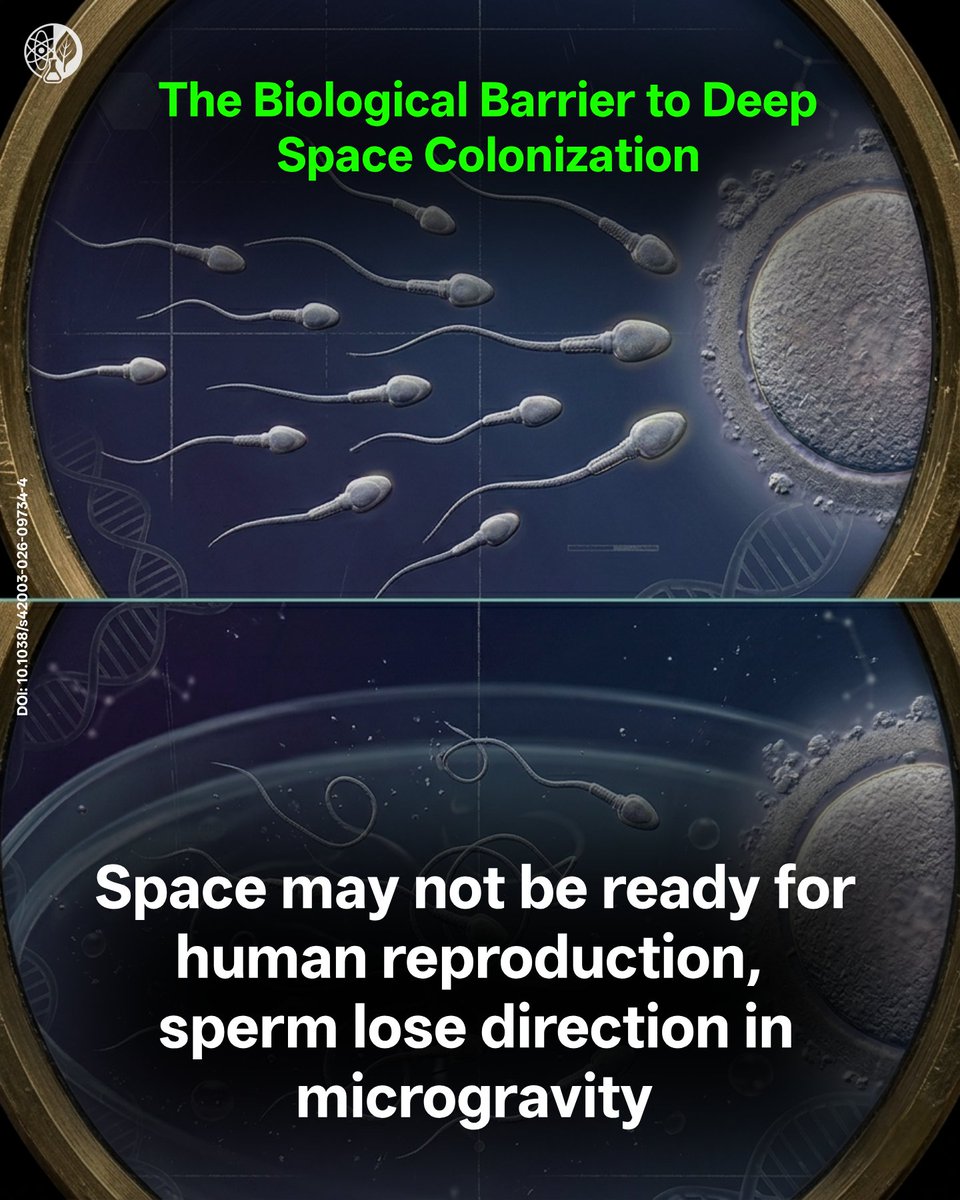
Humanity’s dream of settling among the stars faces a surprising biological challenge. Recent studies reveal that reproducing in the microgravity of space might be much more complex than anticipated, and the primary issue is a profound lack of direction. ​When subjected to zero-gravity conditions, mammalian sperm lose their essential navigational abilities. While they remain physically capable of moving, the absence of Earth's gravitational pull leaves them entirely disoriented. In laboratory simulations designed to mimic the intricate pathways of the female reproductive tract, the number of cells successfully reaching their target plummeted. ​This disorientation poses a significant barrier to natural conception during long-duration spaceflight. However, researchers have uncovered a fascinating potential workaround. By introducing strong chemical cues, such as the hormone progesterone, scientists successfully guided the otherwise lost cells toward their destination. This suggests that targeted chemical trails could eventually compensate for the missing gravitational pull. ​As we plan for permanent outposts on the Moon and Mars, solving these fundamental biological puzzles will be just as critical as engineering the spacecraft that transport us. Our future in the cosmos depends heavily on understanding how terrestrial biology adapts to the alien environments of deep space. Journal Source: Hannah E. Lyons, et. al, Simulated microgravity alters sperm navigation, fertilization and embryo development in mammals. Communications Biology, 2026; 9, DOI: 10.1038/s42003-026-09734-4
Science & Astronomy tweet media
English
0
0
3
451
Science & Astronomy
Science & Astronomy@sci_astronomy·
Today, the historic Artemis II mission concludes with an extraordinary feat of engineering. After ten days in deep space, the Orion spacecraft—carrying four astronauts—will strike Earth's atmosphere at an astonishing 24,000 miles per hour. This lunar-return velocity creates immense aerodynamic friction, engulfing the capsule in a superheated plasma wake that will subject the heat shield to temperatures nearing 5,000°F. ​To survive this fiery descent, NASA is employing a highly precise "skip-entry" maneuver. Instead of plunging directly down toward the surface, the spacecraft will briefly bounce off the upper layers of the atmosphere, much like a stone skipping across a pond. This technique effectively bleeds off extreme speed and dissipates the intense thermal load, ensuring the capsule and its crew remain safely protected before making their final descent. ​Following this intense atmospheric braking, the crew will deploy their parachutes and splash down safely in the Pacific Ocean off the coast of San Diego, where U.S. Navy recovery teams are actively standing by. This reentry serves as the ultimate real-world test of the spacecraft's advanced protective technologies and marks a monumental milestone as humanity successfully prepares for extended, sustainable missions to the Moon and beyond.
Science & Astronomy tweet media
English
2
4
16
792
Science & Astronomy
Science & Astronomy@sci_astronomy·
The microscopic world has just blurred the boundaries between the ocean and human health. In an unprecedented biological event, scientists have confirmed that a marine pathogen known as covert mortality nodavirus (CMNV) has successfully crossed over to humans. Previously known only to affect aquatic life like shrimp and fish, this virus is now the confirmed culprit behind a recent wave of severe, unexplained eye infections. ​Researchers discovered that the pathogen likely enters the human body through minor cuts or abrasions when handling raw seafood, eventually migrating to ocular tissue. Once established, it causes intense inflammation and elevated intraocular pressure. If left untreated, this pressure can severely damage the optic nerve and lead to permanent vision loss. ​This remarkable crossover event highlights the incredible adaptability of viruses and serves as a powerful reminder of the hidden connections within our global ecosystems. As virologists continue to study this marine-to-human transmission, the findings strongly underscore the importance of proper hygiene and care when preparing raw aquatic foods. Publications Source: Shuang Liu et al, An emerging human eye disease is associated with aquatic virus zoonotic infection, Nature Microbiology (2026). DOI: 10.1038/s41564-026-02266-x Fabian H. Leendertz et al, Aquatic virus transmission to humans, Nature Microbiology (2026). DOI: 10.1038/s41564-026-02306-6
Science & Astronomy tweet media
English
0
6
15
759
Science & Astronomy
Science & Astronomy@sci_astronomy·
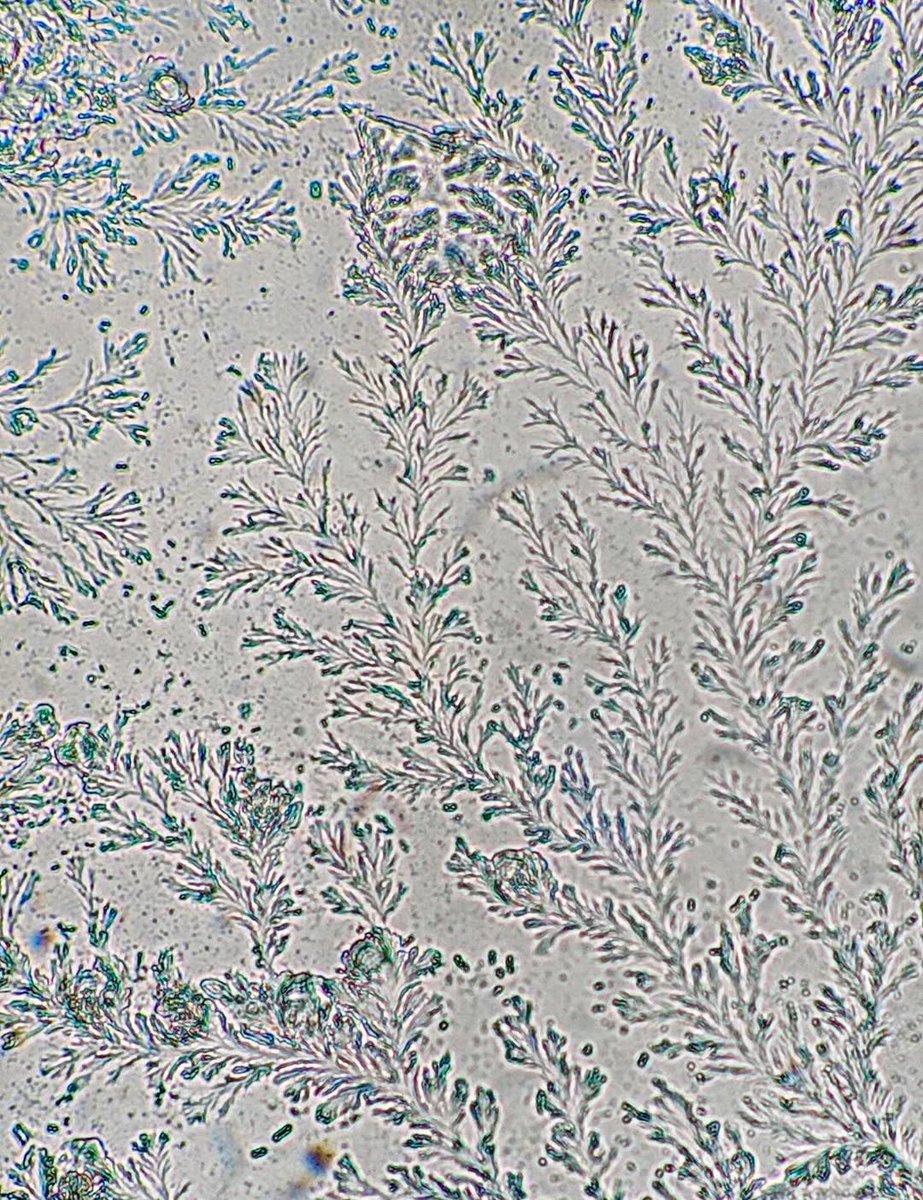
Her vaginal secretions under a microscope.
Science & Astronomy tweet media
English
1
1
4
1.3K
Science & Astronomy
Science & Astronomy@sci_astronomy·
Scientists have reached a remarkable milestone by creating fully biological machines capable of growing their own primitive nervous systems. Developed by researchers using frog embryonic cells, these microscopic creations blur the line between biology and robotics. Instead of relying on metal wires and silicon chips, scientists implanted early-stage nerve cells into cellular clusters. Astoundingly, these cells spontaneously matured and wired themselves together to form a functional, electrically active network. ​This internal biological circuitry represents a massive leap forward from previous iterations of living robots. While earlier versions could move and self-heal, they lacked coordinated internal control. Now, powered by their own living nervous systems, these new entities can navigate their environments with complex, dynamic movements. It is a stunning example of how biological building blocks can be reprogrammed to build entirely new, self-organizing structures from the ground up. ​The future implications for this technology are incredibly exciting for both medicine and bioengineering. By observing how nervous systems wire themselves in a novel environment, researchers are paving the way for advanced regenerative treatments. This foundational knowledge could eventually guide the repair of severe human nerve damage or lead to microscopic, autonomous biological machines designed to deliver targeted therapies directly where they are needed most. Journal Citation: H.Fotowat, L.O'Neill, L.Pio-Lopez, et al. “Engineered Living Systems With Self-Organizing Neural Networks: From Anatomy to Behavior and Gene Expression.” Advanced Science (2026): e08967. DOI: 10.1002/advs.202508967
Science & Astronomy tweet media
English
5
49
112
3.5K
Science & Astronomy
Science & Astronomy@sci_astronomy·
A fascinating new discovery featured today on Science & Astronomy shows exactly how deadly brain cancers trick our bodies into helping them grow. Scientists recently found that tumors act like microscopic parasites, brainwashing the healthy cells whose normal job is to protect our brain's wiring. Instead of defending the brain, these confused helper cells start pumping out a chemical signal that acts like super-food for the cancer, making it much stronger and harder to destroy. The incredible news is that medical researchers already know how to block this exact signal. It turns out that the cancer uses the same biological doorway to receive this food as the HIV virus uses to enter cells. By testing an everyday, approved HIV medicine, scientists were able to lock that door and cut off the tumor's supply line. Without those hijacked signals from the brain's helper cells, the cancer grew weak and its spread dramatically slowed down. This finding brings a wave of hope for treating aggressive brain cancer. Instead of just trying to attack the tough cancer cells directly, doctors might soon be able to use existing, safe medicines to simply cut the communication lines. It is a brilliant example of how understanding the hidden world inside our brains can lead to faster, smarter treatments that save lives. Source paper: Nicholas Mikolajewic, et. al, Reactive oligodendrocytes promote glioblastoma progression through CCL5/CCR5-mediated glioma stem cell maintenance. Neuron, 2026; 114 (2): 237 DOI: 10.1016/j.neuron.2025.12.012
Science & Astronomy tweet media
English
0
12
24
1.2K
Science & Astronomy
Science & Astronomy@sci_astronomy·
A major breakthrough in particle physics has just hit the road. For the first time ever, scientists at CERN have successfully transported antimatter by truck, moving a payload of antiprotons across their campus without a single particle being lost. ​Antimatter is notoriously difficult to handle because it destroys itself in a flash of energy the moment it touches ordinary matter. To pull off this historic move, the research team engineered a specialized portable device. This apparatus relies on powerful magnetic and electric fields to suspend the antiparticles in a perfect vacuum, ensuring they never touch the walls of their container. The entire system is supercooled and heavily shielded to withstand the physical bumps and magnetic interference of a road trip. ​The motivation behind this incredible logistical effort comes down to precision. The massive machinery required to create antimatter generates too much background noise for delicate measurements. By proving that antimatter can safely travel, researchers can now plan to relocate these volatile particles to quieter, specialized laboratories for closer study. ​The ultimate goal of analyzing these relocated particles is to solve a fundamental mystery of the cosmos. The Big Bang should have created equal amounts of matter and antimatter, which would have annihilated each other instantly. By measuring antiprotons in perfectly quiet environments, physicists hope to discover the exact discrepancy that allowed our material universe to survive and thrive.
Science & Astronomy tweet media
English
1
4
18
1.1K
Science & Astronomy
Science & Astronomy@sci_astronomy·
For centuries, a significant portion of human anatomy remained hidden from detailed scientific study, leaving medical professionals with incomplete maps of the human body. A recent 2026 study has finally illuminated one of these historical blind spots by generating the most high-resolution, three-dimensional maps of the clitoral nerve network to date. Because much of this complex structure is embedded internally behind the pubic bone, traditional imaging techniques like standard MRIs previously fell short of capturing its true intricate pathways. ​To overcome these limitations, an international research team utilized cutting-edge technology, combining micron-scale computed tomography with a powerful synchrotron radiation X-ray source. This advanced imaging allowed scientists to visualize the primary sensory pathways with unprecedented clarity, revealing distinct nerve trunks branching outward in a detailed, tree-like pattern. The scans demonstrated that these networks extend far beyond the main structure, actively supplying sensation to surrounding tissues in a way never before mapped in such detail. ​This monumental leap forward in anatomical science is about much more than correcting outdated textbooks. Achieving this level of spatial resolution provides a crucial foundation for the future of medicine. By accurately understanding these complex neural pathways, medical professionals can significantly improve surgical outcomes, enhance reconstructive procedures, and advance overall pelvic healthcare with exact, human-specific data. Paper Source: Ju Young Lee, et. al, Neuroanatomy of the clitoris, bioRxiv 2026.03.18.712572; DOI: 10.64898/2026.03.18.712572
Science & Astronomy tweet media
English
1
3
23
1.4K
Science & Astronomy
Science & Astronomy@sci_astronomy·
🚨: Size of the Moon as seen by Artemis II on Day 1 vs Right Now
Science & Astronomy tweet media
English
0
0
10
820
Science & Astronomy
Science & Astronomy@sci_astronomy·
The traditional approach to treating cancer has almost exclusively focused on a search-and-destroy mission against malignant cells. A groundbreaking discovery from researchers at the Korea Advanced Institute of Science and Technology (KAIST) is now shifting this paradigm. Instead of relying solely on toxic therapies that can damage surrounding healthy tissue alongside the tumor, scientists have successfully reprogrammed aggressive colon cancer cells to behave like normal, healthy intestinal cells. ​Led by Professor Kwang-Hyun Cho, the research team utilized an innovative systems biology framework to analyze the complex genetic networks of cells during tumor development. They pinpointed the exact moment normal cells transition into an irreversible cancerous state and identified specific molecular switches responsible for keeping a cell locked in that malignant identity. To understand how this works, it helps to think of a cell's DNA not as a fixed destiny, but as a vast control panel with thousands of microscopic switches. Cancer occurs when certain switches get stuck in the "on" position, causing the cell to multiply out of control and ignore healthy regulatory signals. ​The KAIST team discovered that by turning off a precise combination of three specific regulatory genes—known as MYB, HDAC2, and FOXA2—they could effectively reset this control panel. When these genes were silenced, it triggered a chain reaction that completely altered the cell's internal protein network. Rather than physically altering the cell's underlying DNA structure, this process changed how the DNA was being read and interpreted by the cell. It forced the malignant cells to stop their aggressive proliferation, forget their cancerous programming, and remember their original healthy function, ultimately reverting them to a benign state that safely coexists with other cells. ​This phenomenon demonstrates that cancer cells possess an inherent plasticity and can be coaxed out of their destructive nature through changes in gene expression alone. While still in the experimental stages, this cancer reversion therapy offers a profound glimpse into the future of medicine. It moves us closer to treatments that act more like cellular rehabilitation than cellular warfare, potentially overcoming the severe side effects and drug resistance commonly associated with conventional therapies. Journal Paper: Jeong‐Ryeol Gong, Chun‐Kyung Lee, Hoon‐Min Kim, Juhee Kim, Jaeog Jeon, Sunmin Park, Kwang‐Hyun Cho. Control of Cellular Differentiation Trajectories for Cancer Reversion. Advanced Science, 2024; DOI: 10.1002/advs.202402132
Science & Astronomy tweet media
English
2
126
257
7.6K
Science & Astronomy
Science & Astronomy@sci_astronomy·
Today, we are looking at a truly historic milestone in astronomy: the first direct photograph of a multi-planet system orbiting a star similar to our own Sun. The image before you captures a very young solar analogue known as TYC 8998-760-1, located approximately 300 light-years away in the southern constellation of Musca. ​When you look at the center of this image, the bright concentric rings you see are not physical structures, but rather optical artifacts created by a coronagraph. This device acts like a visor, actively blocking the blinding glare of the central star so that the incredibly faint objects in its orbit can be revealed. ​The two distinct bright dots indicated by the arrows are giant exoplanets. These worlds are immense gas giants, significantly heavier than Jupiter, and they orbit their host star at distances far greater than any planet in our own solar system. This extraordinary observation was made using the Very Large Telescope in Chile, providing us with an unprecedented glimpse into how planetary systems form and evolve around stars just like ours. Paper Reference: Alexander J. Bohn, et. al, Two Directly Imaged, Wide-orbit Giant Planets around the Young, Solar Analog TYC 8998-760-1*, 2020 ApJL 898 L16 DOI: 10.3847/2041-8213/aba27e
Science & Astronomy tweet media
English
2
28
86
2.1K
Science & Astronomy
Science & Astronomy@sci_astronomy·
Artemis II Mission Overview 🚀🌕 A precise 10-day journey marking humanity’s return to deep space. 📅 April 1–2 — Launch & Translunar Injection ✅ Liftoff aboard NASA’s Space Launch System, followed by orbital checks and the burn that sends the Orion spacecraft toward the Moon. 🌌 April 3–4 — Outbound Transit ✅ Cruise phase through deep space with trajectory corrections and onboard system evaluations. 🌕 April 5–6 — Lunar Approach & Flyby (ongoing) Orion enters the Moon’s gravitational influence, performs a close flyby, and reaches peak distance from Earth. 🔄 April 7–9 — Return Trajectory The spacecraft departs lunar space and begins its journey back, while the crew conducts medical and operational tests. 🌊 April 10 — Reentry & Splashdown High-speed atmospheric reentry followed by parachute-assisted landing in the Pacific Ocean. ✨ A critical mission designed to validate deep-space systems and prepare for future human landings on the Moon.
Science & Astronomy tweet media
English
0
20
38
1.9K
Science & Astronomy
Science & Astronomy@sci_astronomy·
For decades, the story of human reproduction was framed as an epic, high-stakes marathon where millions of sperm fought their way forward, and the fastest swimmer claimed a passive egg as its prize. Groundbreaking research has completely flipped this long-held narrative, revealing that the egg is not a docile target waiting at the finish line, but an active and selective decision-maker. ​This discovery fundamentally changes our understanding of fertilization and basic genetics. Researchers have found that the meeting of sperm and egg is not simply a random lottery governed by chance or speed. Instead, the egg acts much like a discerning recruiter, actively releasing highly specific chemical signals into the surrounding fluid. These chemoattractants are designed to deliberately draw in sperm that possess the most compatible and robust genetic material. ​Known as cryptic female choice, this remarkable process demonstrates that the egg can prefer or reject sperm based on their underlying genetic traits. By weeding out damaged or mutated DNA, the egg maximizes the chances of generating a healthy embryo. The chemical communication between these microscopic cells is incredibly sophisticated, allowing an egg to evaluate its options and selectively choose the best possible match. ​Ultimately, fertilization is a highly coordinated chemical dialogue rather than a brute-force sprint. The idea that the most athletic cell simply breaks through the barriers is an outdated biological concept. You are not the product of a random swimmer who just happened to be the fastest. You exist because, out of millions of microscopic possibilities, your specific genetic blueprint was actively chosen. Paper Reference: John L. Fitzpatrick, Charlotte Willis, Alessandro Devigili, Amy Young, Michael Carroll, Helen R. Hunter, Daniel R. Brison; Chemical signals from eggs facilitate cryptic female choice in humans. Proc Biol Sci 1 June 2020; 287 (1928): 20200805. DOI: 10.1098/rspb.2020.0805 Hirose, N., Blanchet, G., Yamauchi, Y. et al. Genetically-biased fertilization in APOBEC1 complementation factor (A1cf) mutant mice. Sci Rep 12, 13599 (2022). DOI: 10.1038/s41598-022-17948-9
Science & Astronomy tweet media
English
0
14
31
1.6K
Science & Astronomy
Science & Astronomy@sci_astronomy·
For over half a century, people in Central Africa have told tales of the fish seen climbing waterfalls, but these claims have never been officially confirmed. Now, these fish have finally been caught on camera, studied more closely, and described in a study published in Scientific Reports.
English
0
1
5
805
Science & Astronomy
Science & Astronomy@sci_astronomy·
When we venture into deep space, the most profound discovery is often our own planet. The closeness of two remarkable images—the iconic "Blue Marble" captured by the Apollo 17 crew in 1972, and a modern view from the Artemis II mission in 2026—offers a rare opportunity to examine our world across a span of more than fifty years. These photographs, taken by human hands from lunar distances, frame the entirety of human existence within a single, fragile sphere.
Science & Astronomy tweet media
English
1
2
13
2.1K
Science & Astronomy
Science & Astronomy@sci_astronomy·
Houston, we have a problem with the 'lunar loo'... 🚽 🪠
Science & Astronomy tweet media
English
0
0
2
704