
Shaun
145 posts


Shaun
@shaunislearning
I enjoy leadership, technology, and raising my kids. I build software products working in optimization modeling, machine learning, and LLMs. I love books.
Honolulu, HI เข้าร่วม Nisan 2023
257 กำลังติดตาม71 ผู้ติดตาม

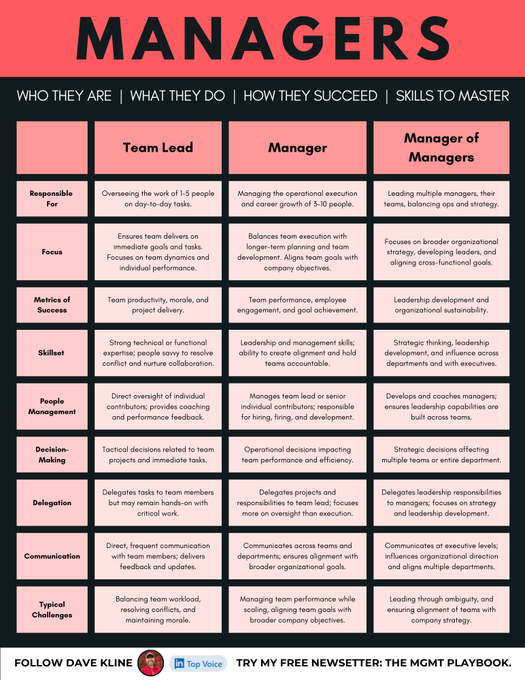
60% of managers fail in 18 months.
Here's why it's not your fault:
English
Typing speed matters for programming
So does reading speed and reading comprehension.
So does your writing ability and ability to communicate & express ideas clearly and effectively
Whether it's to the computer through your code, to a colleague, employee or boss, or to an AI.
English
Jet lagged, 5:30am in Seattle after flying back with the family from Tokyo yesterday.
Kids woke up early, sitting on the couch with my daughters reading books.
Most pleasant morning I’ve ever had after not sleeping all night.
I can’t imagine a greater joy than being a father.
English
@markpdx724 @Dave_DotNet Exactly this. We've been reorganizing our product from #2 towards #1 for exactly this reason.
English

@Dave_DotNet #1 also works alot better with LLM assistants if you give them a custom instruction file explaining it. It's hard for AI to track across layers. Everything in one folder works best for it tracking context.
English

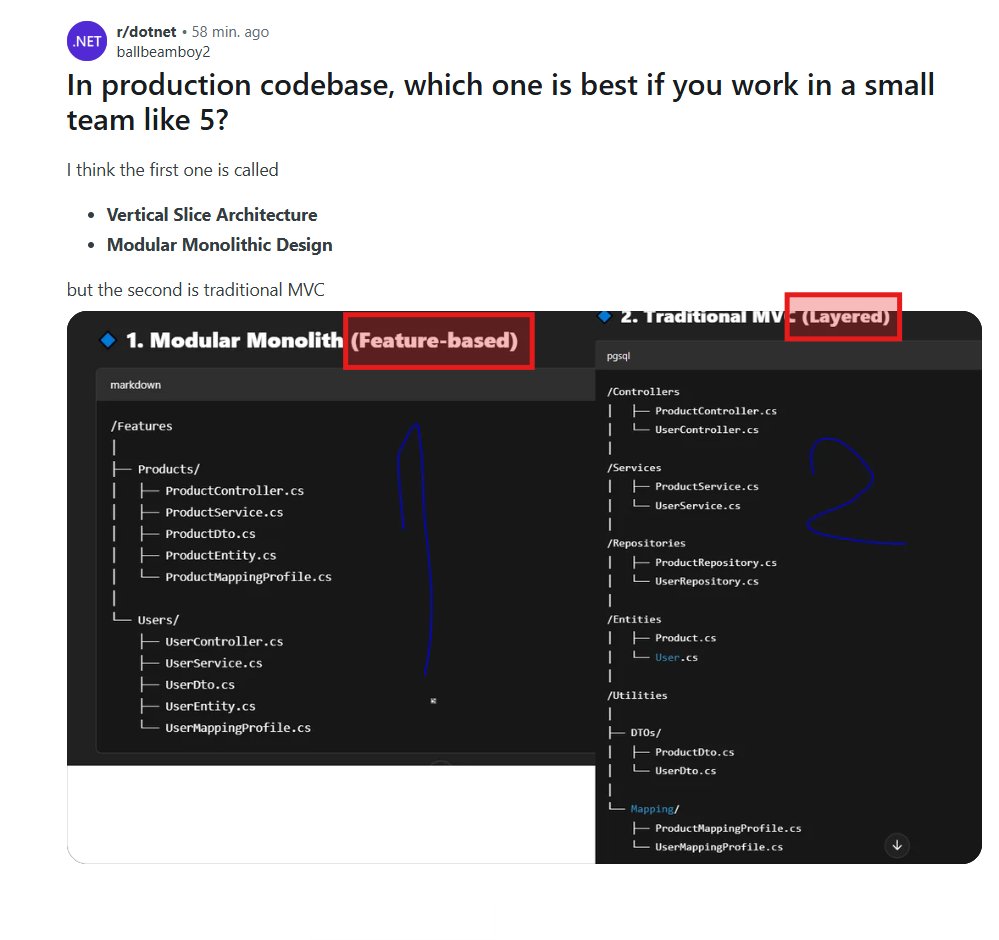
In production codebase, which one of the two structures below is best if you work in a small team like 5?
This question was posted on r/#dotnet earlier today.
For me functional cohesion is one of the most underrated software design principles so I'm choosing number 1 below. What about you?
English
Has anyone else noticed that the quality of their thinking throughout the day mirrors what they read?
Long-form, quality prose improves self-reflection and sharpens my thinking for the rest of the day.
Scrolling social media, web novels, or comics blur reflection and cloud my mind. They're fun, but don't feel all that different from consuming sugar.
English
@Dave_DotNet @rizaanjappie VSA is easier to feed the context into working with an LLM as well, slice at a time cleanly bounded.
English
@rizaanjappie Other structures can be test equally as well. I like VSA.
English
How many files and projects would I need to modify to do something simple, like capture an additional text field on the UI, with this architecture and structure?
#dotnet

English
@mjovanovictech Love CQRS, fantastic pattern!
We use it in our system (C#). Don't use MediatR though, our approach aligns more closely with the vanilla example you shared in your blog post, but driven off queues instead of controllers
Great read, thanks!
English

You don’t need MediatR to do CQRS.
And using MediatR doesn’t mean you're doing CQRS.
This confusion is so common, it’s turned into dogma.
Let’s clear it up.
What CQRS actually involves:
- Separate models for reads and writes
- Read-side optimized for querying
- Write-side enforcing business rules
- *Optional: async event propagation
- *Optional: separate databases
Still confused?
MediatR gives you message dispatch.
CQRS gives you model separation.
One is about code flow.
The other is about system design.
You can learn more here: milanjovanovic.tech/blog/stop-conf…
What do you think about CQRS?

English
Grinding LeetCode problems is not a critical skill for developers. At best, it gets your foot in the door.
If you want to be senior, hirable, and most importantly useful, then your ability to efficiently organize and manage a codebase while commercializing it is what matters.
Clean, modular, well-structured, and maintainable code is the foundation of project success and career growth.
Great programmers create intuitive, easy-to-understand code that reduces cognitive load and improves collaboration.
Much of effective architecture revolves around managing the cognitive load of your team, rather than just solving for the problem domain. Addressing the problem domain is inherent; it's the obvious constraint. The subtle and often overlooked constraint is the level of thinking and clarity among your team members, which your architecture must facilitate.
Elegant code feels natural to read. It causes the reader to experience a small revelation; they feel a window has opened where they see the problem more clearly because your thinking is insightful and so well expressed.
Naming things with precision and meaning, determining when concepts should be split or unified, understanding the relationships between elements, and crafting an accurate representation of the problem domain's core nature - these are the critical skills.
Your aim is to build a precise and meaningful perception of reality.
And this skill is far more valuable than solving a few extra algorithm puzzles.
This is a creative skill that demands you see deeply and understand the way others think, especially the ones collaborating with you.
Insight is your greatest asset.
And it's much more valuable than how quickly you can write a memorized algorithm.
English
My 6 year old reads a chapter book every 1-2 days.
My 4 year old also loves books, reading every day for many hours a week.
How?
We don't have a TV. We don't use devices.
When I'm bored, I read. When I'm stressed, I meditate.
And I do it front of my kids, to role model.
English