
Siddharth Khullar

433 posts

Siddharth Khullar banner
Siddharth Khullar

Siddharth Khullar

@sidk_

Batteries & Machine Learning @northvolt. Loop - read. cook. eat. code. golf. repeat. 🇮🇳 🇺🇸 🇸🇪

Stockholm, Sweden เข้าร่วม Ağustos 2009
1.1K กำลังติดตาม688 ผู้ติดตาม
ทวีตที่ปักหมุด
Siddharth Khullar
Siddharth Khullar@sidk_·
Hardware R&D is broken by a coordination tax. Ideas in one engineer's head. Simulations on another's laptop. Test data in a third system. Today we're launching Protos — the workspace for frontier R&D. Design. Simulate. Test. Iterate. With an AI co-engineer. 15 day trial -> arismachina.com/protos
Aris Machina@ArisMachina

Today, we launch Protos — an AI-native R&D workspace built on our Agentic OS, and now available for a free trial and subscription plans for students, professionals and enterprise customers. Visit arismachina.com/protos to learn more, explore and sign up for a free 15-day trial.

English

0
1
2
237
Siddharth Khullar รีทวีตแล้ว
Zeb Evans
Zeb Evans@DJ_CURFEW·
Today we reduced headcount by 22%. The business is the strongest it's ever been. So I think it's important to be direct about what I'm seeing and why. First, I made this decision and I own it. I did it because the way to operate at the highest level of productivity is changing, and to win the future, ClickUp needs to change with it. Second, this wasn't about cutting costs. Most savings from this change will flow directly back into the people who stay. We'll be introducing million-dollar salary bands. If you create outsized impact using AI, you'll be paid outside of traditional bands. Most importantly, I have the deepest gratitude for those affected. We're doing this from a position of strength specifically so we can take care of people properly. Everyone affected receives a package aimed at honoring their contributions and easing the transition. I only see two options: wait for this to play out gradually in the market or be honest about what I'm seeing and act proactively. THE 100X ORGANIZATION The primary change is that we're restructuring around what I call 100x org. The goal is 100x output. The roles required to build at the highest level are fundamentally different than they were a year ago. Incremental improvements to existing systems won't get us there. We need new ones. That means creating enough disruption to rebuild rather than iterate on what's already broken. The common narrative is that AI makes everyone more productive. It doesn't. Many of the workflows of today, if left unchanged, create bottlenecks in AI systems. These roles will evolve. But waiting for that to happen naturally means falling behind now. The 100x org is actually heavily dependent on people - infinitely more than today. This is only possible with 10x people that have embraced and adopted new ways of working. THE BUILDERS, AGENT MANAGERS, AND FRONT-LINERS — THE BUILDERS: 10X ENGINEERS I don't think most companies have internalized what's actually happening with AI in engineering. The common narrative is that AI makes all engineers more productive. That may be true in isolation, but at an organization level - that is the farthest thing from reality. Here's what we've validated recently at ClickUp: the great engineers, the ones who can orchestrate, architect, and review, are becoming 100x engineers. They're not writing code. They're directing agents that write code. The skill is judgment. AI makes the best engineers wildly more productive, and everyone else using AI slows these engineers down. Think about it - the bottlenecks are (1) orchestration - telling AI what to do, and (2) reviewing - what AI did. Everything is leapfrogged and no longer needed. So who do you want orchestrating and reviewing code? And how do you want your best engineers to spend their time? If your best engineers are spending time reviewing other people's code, then this is inherently an inefficient bottleneck. These engineers can review their agent's code much faster than reviewing human code. The new world is about enabling your 10x engineers to become 100x. The wrong strategy is to push every engineer to use infinite tokens. Companies doing this are celebrating 500% more pull requests. But customer outcomes don't match the volume of code being generated. I call this the great reckoning of AI coding, and every company will face this soon if not already. More code is just another bottleneck to the best engineers, and ultimately to your company's impact as well. — THE BUILDERS: 10X PRODUCT MANAGERS Product management and design roles are merging. Designers that have customer focus, become more like product managers. And product managers that have intuition for UX become more like designers. The bottleneck of user research is gone. It takes us just one mention of an agent to kickoff research and analyze results. The bottleneck of product <> design iteration is also gone. The product builder iterates on their own, along with agents and skills that ensure alignment with quality and strategy. Also controversial today - I believe that the wrong strategy is to have your PMs shipping code - that just introduces another bottleneck that the best engineers will waste their time on. To be clear, PMs should be coding but they should do this in a playground to iterate, validate, and scope. That code should not go to production. Everything outside of managing systems, orchestrating AI, and reviewing output becomes a bottleneck. That's why the other roles that are critical along with these are the systems managers (to reduce bottlenecks) along with a bottleneck you can't replace - customer meeting time. — THE SYSTEM MANAGERS Ironically, the people that automate their jobs with AI will always have a job. They become owners of the AI systems - agent managers. We have many examples of these people at ClickUp. The underlying systems in which we operate are absolutely critical to get right. I think most companies are delusional to think they can iterate on existing systems and compete in this new world. You must create enough disruption so that old systems are deprecated entirely. If there's any definition for 'AI native' that's what it is. — THE FRONT-LINERS In a world that will become saturated with AI communication, the human touch will matter more than anything to customers. This is a bottleneck that you shouldn't replace - even when agents are high enough quality to do video meetings. One-on-one meeting time with customers is something that shouldn't be automated. The systems around the meetings should be - so that front-liners spend nearly 100% of their time with customers. REWARDING 100X IMPACT In a world where companies are able to do so much more with less, where does that excess money go? In our case, much of the savings in this new operating model will flow directly back to those that enabled it. We must reward people that create productivity accordingly. This aligns incentives on both sides. Plus, in a world where your best people create 100x impact, you can't afford to lose them. You should aim to retain these employees for decades. The context they have and their ability to efficiently orchestrate and review will be nearly impossible to replace. Compensation bands of today should be thrown out the door. We're introducing $1 million cash/year salary bands with a path available to nearly everyone in the company if they produce 100x impact by creating or managing AI systems. THE FUTURE Nearly every company will make changes like these. The ones that do it proactively will define what comes next. The future is not fewer people. It's different work, new roles, and better rewards for those who embrace it. We're already seeing entirely new roles emerge, like Agent Managers, that didn't exist a year ago. ClickUp is positioning to lead this shift, not just internally, but for our customers too. I've never been more certain about where we're headed.
English
1.7K
3.6K
7.6K
9.1M
Siddharth Khullar รีทวีตแล้ว
Jon Yongfook
Jon Yongfook@yongfook·
The idea of "one shotting" an app using AI is a fugazi. If you had to describe my app and all the edge cases I have solved over the years, it would be a prompt the size of a small book, and my app isn't even that complicated. The people promoting creating a business overnight with AI are just selling a get rich quick pipedream. Those grifters are present in every cycle. AI has completely transformed how I work, but you can't push a button and make money. Doesn't work like that.
Ronan Berder@hunvreus

Talking to smarter folks than me, I'm convinced many of the AI folks in my timeline are full of shit. Nobody is "running 20 agents over night" and building stuff for actual users. Maybe some are building internal tools or disposable software. Maybe. But building software people like using? That doesn't get hacked on day one or blow up after the 3rd user? Nope. I don't even understand what that's supposed to look like. Do you work out a 57 pages document that perfectly describes what you want to build and then summon 14 agents and have them run wild for 6 hours? And what comes out on the other end isn't a broken pile of shit? Nope. Not buying it. PS: it may also be that I have an IQ of 82 and can't figure it out.

English
261
309
3.8K
401.7K
Siddharth Khullar รีทวีตแล้ว
elvis
elvis@omarsar0·
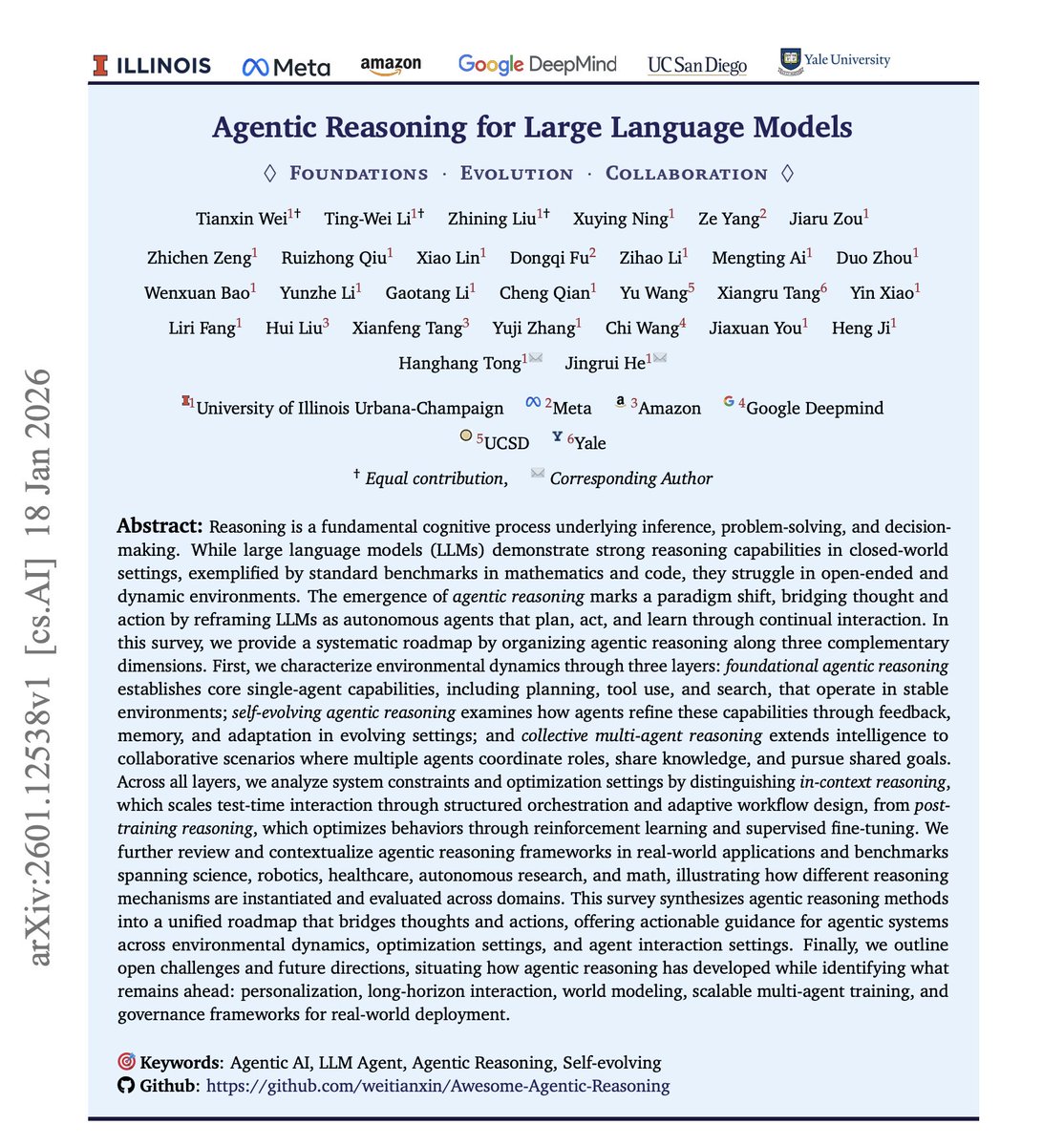
Impressive survey on agentic reasoning for LLMs. (bookmarks this one) 135+ pages! Why does it matter? LLMs reason well in closed-world settings, but they struggle in open-ended, dynamic environments where information evolves. The missing piece is action. This is because static reasoning without interaction cannot adapt, learn, or improve from feedback. This new survey systematizes the paradigm of Agentic Reasoning, where LLMs are reframed as autonomous agents that plan, act, and learn through continual interaction with their environment. It provides a unified roadmap that bridges thoughts and actions, offering actionable guidance for building agentic systems across environmental dynamics and optimization settings. The framework organizes agentic reasoning along three complementary dimensions: 1. Foundational Agentic Reasoning: Core single-agent capabilities including planning, tool use, and search. Agents decompose goals, invoke external tools, and verify results through executable actions. This is the bedrock. 2. Self-Evolving Agentic Reasoning: How agents improve through feedback, memory, and adaptation. Rather than following fixed reasoning paths, agents develop mechanisms for reflection, critique, and memory-driven learning. Reflexion, RL-for-memory, and continual adaptation link reasoning with learning. 3. Collective Multi-Agent Reasoning: Scaling intelligence from isolated solvers to collaborative ecosystems. Multiple agents coordinate through role assignment, communication protocols, and shared memory. Debate, disagreement resolution, and consistency through multi-turn interactions. Across all layers, the survey distinguishes two optimization modes: in-context reasoning (scaling inference-time compute through orchestration and search without parameter updates) and post-training reasoning (internalizing strategies via RL and fine-tuning). The survey covers applications spanning math exploration, scientific discovery, embodied robotics, healthcare, and autonomous web research. It also reviews the benchmark landscape for evaluating agentic capabilities. I have been looking closely at this area of research, and here are some of the open challenges that remain: personalization, long-horizon interaction, world modeling, scalable multi-agent training, and governance frameworks for real-world deployment. Paper: arxiv.org/abs/2601.12538 Learn to build effective AI agents in our academy: dair-ai.thinkific.com
elvis tweet media
English
16
118
554
43.7K
Siddharth Khullar รีทวีตแล้ว
Dwarkesh Patel
Dwarkesh Patel@dwarkesh_sp·
I’ve seen a lot of people misunderstand what we’re saying. Our claim is that in a world of full automation, inequality will skyrocket (in favor of capital holders). People aren't thinking about the galaxies. The relative wealth differences in a thousand years—or a million—will be downstream of who owns the first dyson swarms and space ships. And space colonization isn't bottlenecked by people’s preference for human nannies and waiters. So even if you can make 10 million dollars a year as a nanny in the post-abundance future, or get a 10 million dollar charity handout, Larry Page’s million cyborg heirs can own a galaxy each. You might think this is fine! Why is inequality intrinsically bad, especially if absolute prosperity for everyone goes up? Fair enough, but to me quadrillion fold differences in wealth between humans seem hard to justify in a world where AIs are doing all the work anyways - these disparities in wealth are not incentivizing hard work or entrepreneurship or creativity, which is what we use to justify inequality today. Just to recap, full automation kills the corrective mechanism on runaway capital accumulation - which is that you need labor to actually make productive use of your capital, thus driving up wages. Some people asked: why assume AGI leads to full automation? Maybe people will still prefer human nannies and waiters. Even if true, we think labor's share of GDP—which has been roughly 2/3 for centuries—would still likely collapse toward zero, massively increasing inequality. Here's why. It sometimes happens that when machines are only slightly better than humans, people sometimes pay a premium for the human version. But once machines become much better, that preference disappears. When carriages were not much faster than being carried on a litter, the rich sometimes preferred the litter. Now they prefer the car. They might still have a chauffeur—but once self-driving vehicles are allowed to move far faster, human-driven cars may be relegated to a slow lane. If the economy grows 100x, wages must also grow 100x for labor's share to stay at 2/3. But prices are relative—so this means human labor becomes 100x more expensive compared to AI-produced goods. A human-cooked meal costs 100x what the robot version does. For labor share to hold steady as that ratio grows to 1,000x, then 10,000x, the preference for human-made goods would have to become increasingly fanatical. And there's a second problem: the higher wages rise, the greater the incentive to develop machine substitutes for whatever services humans still provide. The premium on human labor is precisely what incentivizes its own replacement. Just to clarify a few other things: - “Piketty’s long run series are disputed.” We spend a long chunk of the essay explaining why Piketty is wrong about the past! But we’re arguing that the assumption he makes (specifically that labor and capital are substitutes) would be true of a world with advanced enough automation. We spend so much time rebutting his claims about the past because the wronger you think he was about the past, the more you think will change once his assumption comes true. - “A capital tax would lower growth.” Yes, as we point out, capital taxes incentivize consumption now instead of saving and investing for the future, at the margin. But if capital is the only factor of production, then it’s hard to come up with an inequality-capping tax that doesn’t lower growth. - “Capital can escape, both across time and space. This makes a wealth tax impractical.” We agree! As we say in the essay and in the tweet summary below, it would be really hard to implement Pikkety’s flagship solution (a high and progressive global wealth tax). You could go Georgist and try to tax land, but the natural resource share of income is only 5% and is likely to stay low until we hit “technological maturity” for reasons we explain in the essay. We don’t see any easy ways to avoid (literally) skyrocketing inequality - in fact, that’s what inspired us to write the essay and explain this problem in the first place. Also, to address a subtext: I think the currently proposed California wealth tax is a very bad idea for many reasons. This essay is about inequality under full automation, not about how California can make its healthcare expenditures more sustainable.
Dwarkesh Patel@dwarkesh_sp

New blog post w @pawtrammell: Capital in the 22nd Century Where we argue that while Piketty was wrong about the past, he’s probably right about the future. Piketty argued that without strong redistribution of wealth, inequality will indefinitely increase. Historically, however, income inequality from capital accumulation has actually been self-correcting. Labor and capital are complements, so if you build up lots of capital, you’ll lower its returns and raise wages (since labor now becomes the bottleneck). But once AI/robotics fully substitute for labor, this correction mechanism breaks. For centuries, the share of GDP that goes to paying wages has been 2/3, and the share of GDP that’s been income from owning stuff has been 1/3. With full automation, capital’s share of GDP goes to 100% (since datacenters and solar panels and the robot factories that build all the above plus more robot factories are all “capital”). And inequality among capital holders will also skyrocket - in favor of larger and more sophisticated investors. A lot of AI wealth is being generated in private markets. You can’t get direct exposure to xAI from your 401k, but the Sultan of Oman can. A cheap house (the main form of wealth for many Americans) is a form of capital almost uniquely ill-suited to taking advantage of a leap in automation: it plays no part in the production, operation, or transportation of computers, robots, data, or energy. Also, international catch-up growth may end. Poor countries historically grew faster by combining their cheap labor with imported capital/know-how. Without labor as a bottleneck, their main value-add disappears. Inequality seems especially hard to justify in this world. So if we don’t want inequality to just keep increasing forever - with the descendants of the most patient and sophisticated of today’s AI investors controlling all the galaxies - what can we do? The obvious place to start is with Piketty’s headline recommendation: highly and progressively tax wealth. This might discourage saving, but it would no longer penalize those who have earned a lot by their hard work and creativity. The wealth - even the investment decisions - will be made by the robots, and they will work just as hard and smart however much we tax their owners. But taxing capital is pointless if people can just shift their future investment to lower tax countries. And since capital stocks could grow really fast (robots building robots and all that), pretty soon tax havens go from marginal outposts to the majority of global GDP. But how do you get global coordination on taxing capital, when the benefits to defecting are so high and so accessible? Full automation will probably lead to ever-increasing inequality. We don’t see an obvious solution to this problem. And we think it’s weird how little thought has gone into what to do about it. Many more thoughts from re-reading Piketty with our AGI hats on at the post in the link below.

English
279
216
3K
1.2M
Siddharth Khullar รีทวีตแล้ว
Nathan Benaich
Nathan Benaich@nathanbenaich·
🪩The one and only @stateofai 2025 is live! 🪩 It’s been a monumental 12 months for AI. Our 8th annual report is the most comprehensive it's ever been, covering what you *need* to know about research, industry, politics, safety and our new usage data. My highlight reel:
English
61
320
1K
506.9K
Siddharth Khullar
Siddharth Khullar@sidk_·
@AravSrinivas Better translation (language coverage including selected text) and translation of PDFs opened in a browser tab.. big deal for expats living in EU dealing with govt and legal docs (immi, banks, taxes) etc.
English
0
0
1
17
Aravind Srinivas
Aravind Srinivas@AravSrinivas·
Browse like a Billionaire. What do you want to see in Comet ? Apart from all the usual suspect AI features like smarter Deep Research and basic agent workflows. Just the core browsing improvements that Chrome hasn’t shipped for ages. Please reply here!
English
538
79
2.5K
215.1K
Nathan Benaich
Nathan Benaich@nathanbenaich·
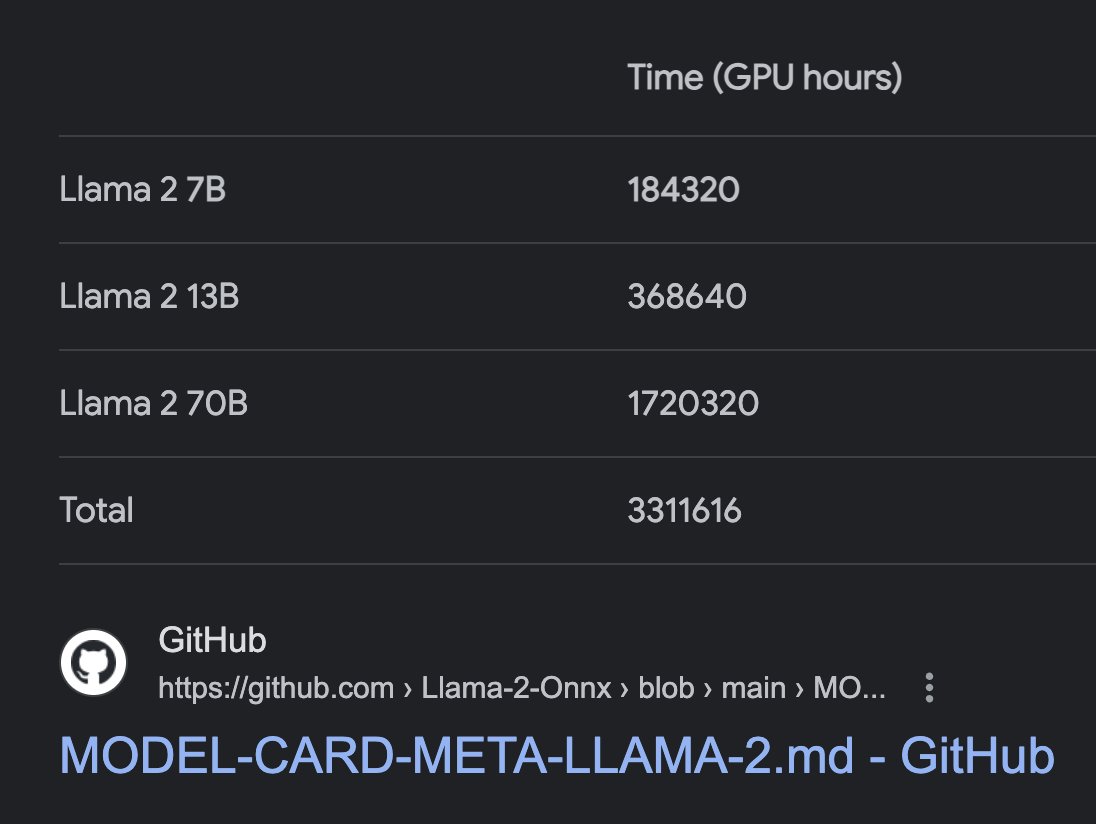
EU announces supercomputer access to companies developing AI and will run a competition to select 4 companies to provide 4 million hours of supercomputer time to train large-scale AI. So that's llama-2 in 3 flavors, trained once, for the EU. I want to cry.
Nathan Benaich tweet mediaNathan Benaich tweet mediaNathan Benaich tweet media
English
29
33
303
73.2K
Nathan Benaich
Nathan Benaich@nathanbenaich·
what an awesome product experience all i want is to watch kanye talk to elon, ok
Nathan Benaich tweet media
English
3
0
5
2.7K
Siddharth Khullar
Siddharth Khullar@sidk_·
I never waste a chance to say (it’s rare) - “I told you so”.. GPTs and GPT-builder are here.
Siddharth Khullar@sidk_

When will @OpenAI launch a marketplace of prompts and generated content and let users turn in to creators and influencers. Seems like they have all the pieces to do so (including #worldcoin) and start a revenue share model to reach that $100B goal and break free of Microsoft.

English
0
0
1
386
Siddharth Khullar
Siddharth Khullar@sidk_·
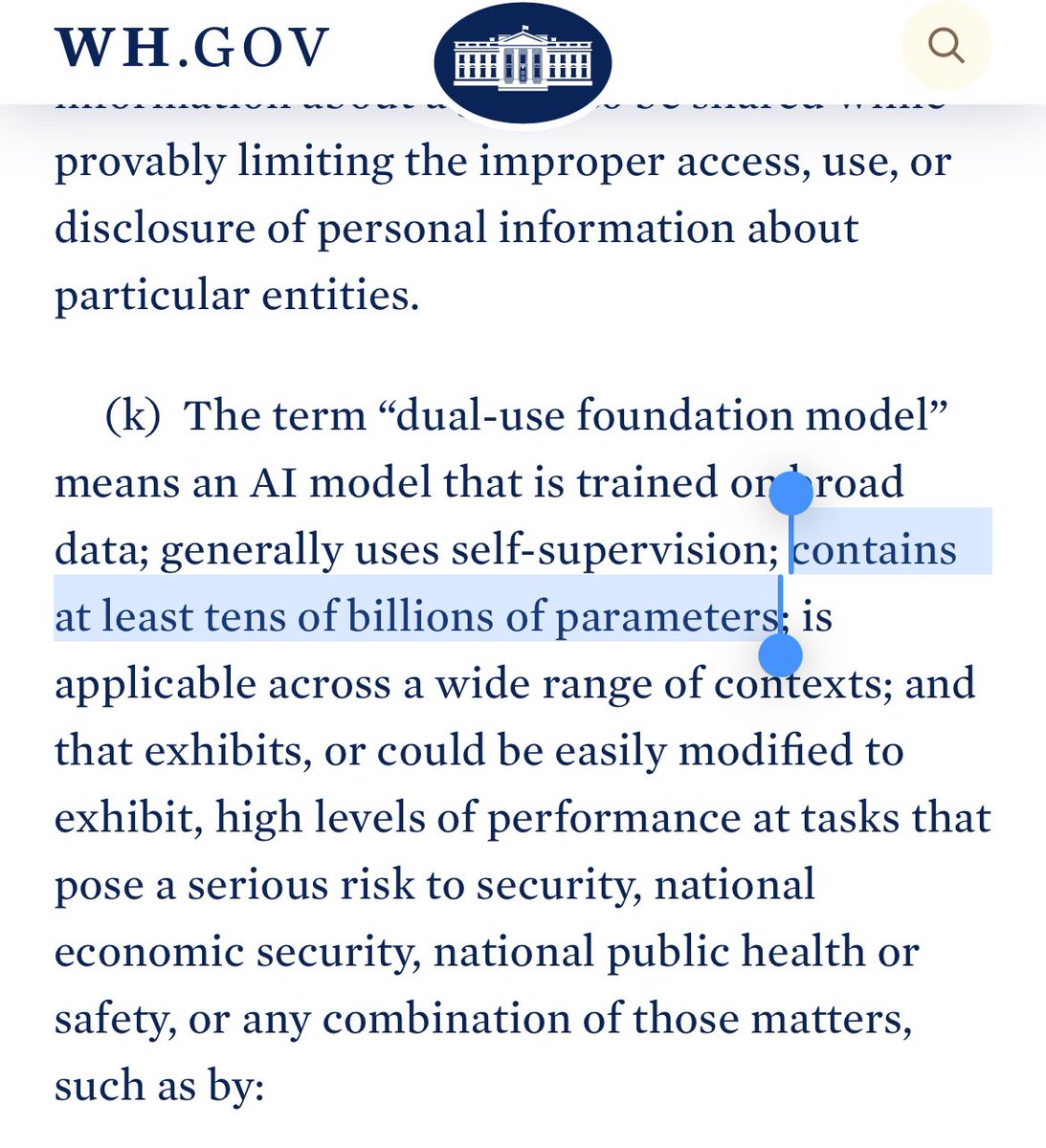
So Llama-7B is safe!? Thank you Mr. President! Let the model-pruning games begin. ⚔️
Siddharth Khullar tweet media
English
0
1
2
218
Siddharth Khullar
Siddharth Khullar@sidk_·
I can’t wait for context aware LLMs to disrupt the Big-4 Consultancies. Especially the immigration consultants and employee tax services. #AI
English
0
0
1
156
Siddharth Khullar
Siddharth Khullar@sidk_·
When will @OpenAI launch a marketplace of prompts and generated content and let users turn in to creators and influencers. Seems like they have all the pieces to do so (including #worldcoin) and start a revenue share model to reach that $100B goal and break free of Microsoft.
English
3
0
0
607
Siddharth Khullar
Siddharth Khullar@sidk_·
If you’re wondering how to understand the massive impact (minus the hype) about the field - read this report. Thanks @nathanbenaich and team to keep at it, year after year!
Nathan Benaich@nathanbenaich

🪩The @stateofai 2023 is now here. Our 6th installment is one of the most exciting years I can remember. The #stateofai report covers everything you *need* to know, covering research, industry, safety and politics. There’s lots in there, so here’s my director’s cut 🧵

English
1
0
3
571
Siddharth Khullar รีทวีตแล้ว
Greg Brockman
Greg Brockman@gdb·
With some exceptions, the biggest impacts in AI come from people who are experts at both software and machine learning. Though most people expect the opposite, it’s generally much faster to learn ML than software. So great software engineers tend to have outsize potential in AI
English
79
274
2.2K
437.2K