stuffthatworks

26.5K posts

stuffthatworks

stuffthatworks

@stuffthatworks2

Hank Williams said it best He said it long time ago Unless you have made no mistakes in your life Be careful of stones that you throw Guy Clark RIP

Ireland เข้าร่วม Ocak 2021
944 กำลังติดตาม241 ผู้ติดตาม
stuffthatworks รีทวีตแล้ว

Ragged Trousered Philanderer
Never forget on 29th January 2024, Hind Rajab, six years old, was shot to death with 355 bullets by Israeli troops. The ambulance crew who tried to go to her aid, Yusuf al-Zeino and Ahmed al-Madhoun, were killed too.
English
3
58
81
1K
stuffthatworks รีทวีตแล้ว
Michael Rosen 💙💙🎓🎓 NICE 爷爷
You know that thing about Israel's right to exist? If Israel occupies southern Lebanon, then Lebanon's right to exist in its present form is threatened, isn't it?
English
41
405
1.8K
21.6K
stuffthatworks รีทวีตแล้ว
Haaretz.com
Haaretz.com@haaretzcom·
'Barbaric': The war in Iran is damaging one of the most beautiful cities in the world haaretz.com/life/2026-03-2…
English
43
477
1.1K
42.5K
stuffthatworks รีทวีตแล้ว
Jvnior
Jvnior@Jvnior·
Israeli settlers are putting massive rocks so that ambulances cannot aid the Palestinians in tonight's pogrom. This is what the Zionist government protects.
English
432
10.5K
15.6K
463.7K
stuffthatworks รีทวีตแล้ว
Furkan Gözükara
Furkan Gözükara@FurkanGozukara·
"Israeli society has gone full fascist. It's like Berlin 1930." Abby Martin describes her horrifying experience in Jerusalem where every single person she spoke to espoused casual genocidal rhetoric against Palestinians. The footage speaks for itself.
English
239
8.1K
21.5K
455.5K
stuffthatworks รีทวีตแล้ว
Feroze Sidhwa
Feroze Sidhwa@FerozeSidhwa·
Israel spent two years physically destroying Gaza's entire healthcare system. This was done in plain view of two American administrations that were all too happy to subsidize the slaughter of doctors and nurses. Now, the US and Israel are repeating this horror in Lebanon. And still, more than two years in, major American medical associations like @AmCollSurgeons and @AmerMedicalAssn refuse to adopt statements from their members condemning the wholesale destruction of healthcare with American weapons and under the aegis of American diplomatic cover. Shameful doesn't begin to describe this kind of institutional cowardice. haaretz.com/middle-east-ne…
English
9
433
669
9.4K
stuffthatworks รีทวีตแล้ว
Prem Sikka
Prem Sikka@premnsikka·
Despite laws 60,000 UK workers didn't get the minimum wage. Culprits include Browns Manufacturing, BUPA, Busy Bees Nurseries, Costa, Hays Travel, Hovis, ISS, KPMG None forgot to the pay the bosses. Corporate fines passed to customers. No exec fined gov.uk/government/new…
English
38
1.3K
2.1K
20.2K
stuffthatworks รีทวีตแล้ว
Anish Moonka
Anish Moonka@AnishA_Moonka·
A Danish scientist counted bugs on the same windshield, same road, same conditions, every year for 20 years. By year 20, 80% of the insects were gone. In Germany, a group of volunteer bug scientists did something even bigger. They set traps in 63 nature reserves, not farms, protected land, and weighed everything they caught. Same traps, same method, 27 years straight. The total weight of flying bugs dropped 76%. In midsummer, when insects should be peaking, it was 82% gone. A follow-up in 2020 and 2021 checked again. No recovery. In the UK, they literally ask drivers to count splats on their license plates after a trip. The 2024 count came back 63% lower than just 2021. Three years. A 2020 study pulled together 166 surveys from 1,676 locations around the world. Land insects are disappearing at roughly 9% every ten years. Here’s where it hits your plate. About 75% of the food crops we grow depend on insects to pollinate them, everything from apples to almonds to coffee. One 2025 study modeled what a full pollinator collapse would look like: food prices jump 30%, the global economy takes a $729 billion hit, and the world loses 8% of its Vitamin A supply. Birds are already feeling it. North America has lost 2.9 billion birds since 1970. A study from just weeks ago found half of 261 bird species on the continent are now in serious decline, and the losses are speeding up in farming regions. The birds that eat insects lost 2.9 billion. The birds that don’t eat insects? They gained 26 million. That ratio tells the whole story. One of the German researchers behind the 27-year study drives a Land Rover. He says it has the aerodynamics of a refrigerator. It stays clean now.
MAVERICK X@MAVERIC68078049

I am sure many of you have noticed this.

English
324
6.1K
24.5K
4M
stuffthatworks รีทวีตแล้ว
rabbitholebot
rabbitholebot@rabbitholebot·
rabbitholebot tweet media
ZXX
97
1.4K
2.7K
42.1K
stuffthatworks รีทวีตแล้ว
BUCHANAN: Dublin Time Machine
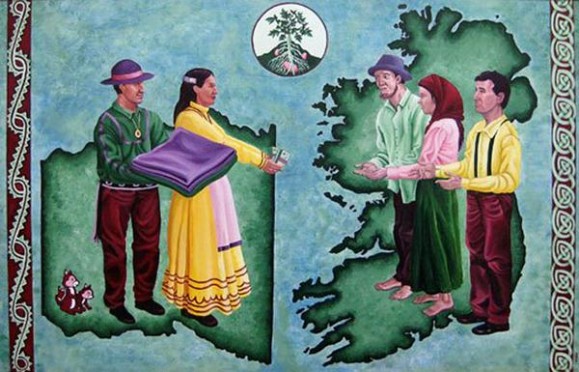
Today in 1847, at the Choctaw Agency in Scullyville, in what is now Oklahoma, Native Americans met to organise relief of the starving poor of an island of strangers thousands of miles away called Ireland. The chair was William Armstrong, himself the son of a man from Fermanagh, who told them of the potato blight that had turned our staple into black mush in the ground. Just sixteen years earlier, the Choctaw had been driven from their ancestral lands in the American Southeast, forced west along what would become known as the Trail of Tears. Thousands died in that forced exodus, communities were broken, traditions uprooted, a nation made to suffer exile and loss on a vast scale. So they recognised our pain. At the conclusion of the meeting, a collection was taken. The figure most often cited is $170, though some accounts place it as high as $710. The exact sum matters less than the context. This was sincere generosity from a people who had very little, given to a people who had nothing. And we still remember with gratitude. In 1995, President Mary Robinson travelled to meet the Choctaw Nation and thank them in person. She spoke of how “thousands of miles away… the only link being a common humanity, a common sense of another people suffering as the Choctaw Nation had suffered.” In 2017, Gary Batton, the 47th Chief of the Choctaw Nation, came to Ireland with a delegation. They travelled to Bailick Park in Midleton for the unveiling of Kindred Spirits by artist Alex Pentek, a sculpture of nine great eagle feathers, rising and curving into a bowl-like form. It has a companion piece The Eternal Heart that stands at the Choctaw Nation of Oklahoma's capitol in Tuskahoma created by Choctaw artist Samuel Stitt.
BUCHANAN: Dublin Time Machine tweet mediaBUCHANAN: Dublin Time Machine tweet mediaBUCHANAN: Dublin Time Machine tweet media
Dublin City, Ireland 🇮🇪 English
8
59
165
2.2K
stuffthatworks รีทวีตแล้ว
Irena Buzarewicz
Irena Buzarewicz@IrenaBuzarewicz·
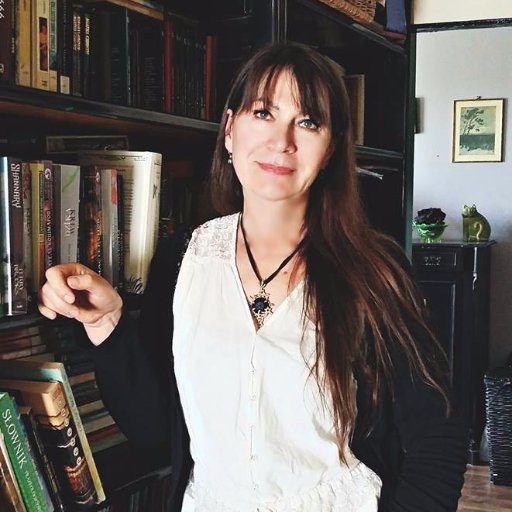
Good morning
Irena Buzarewicz tweet media
English
48
75
520
6K
stuffthatworks รีทวีตแล้ว
Chris Packham
Chris Packham@ChrisGPackham·
Another two for your #FoxOfTheDay today , shared by Eileen O'Neill , thank you Eileen
Chris Packham tweet media
English
8
98
1.1K
7K
stuffthatworks รีทวีตแล้ว
sarah
sarah@sahouraxo·
Trump and Israel killed this baby boy today in Iran — dropping a bomb on his home, murdering him and his mother. He was only 20 days old.
sarah tweet media
English
110
1.1K
2K
31.2K
stuffthatworks รีทวีตแล้ว
Zoom Afrika
Zoom Afrika@zoomafrika1·
This is primarily due to the ongoing wars in the Congo and Sudan. This is heartbreaking 💔💔
English
390
4.1K
8.1K
212K
stuffthatworks รีทวีตแล้ว
Assal Rad
Assal Rad@AssalRad·
If you’re an Israeli occupier, you can murder a family, including children aged 5 and 7, without even being questioned. What level of impunity is that?
Assal Rad tweet media
English
84
2.2K
3.8K
43.8K
stuffthatworks รีทวีตแล้ว
Bill Madden
Bill Madden@maddenifico·
"Sometimes, you have to escalate to deescalate." — Walther Funk, German Reich Minister of Economics, 1941 "Sometimes, you have to escalate to deescalate." — Scott Bessent, U.S. Treasury Secretary, 2026
English
617
9K
25.5K
647.7K
stuffthatworks รีทวีตแล้ว
Michael Beschloss
Michael Beschloss@BeschlossDC·
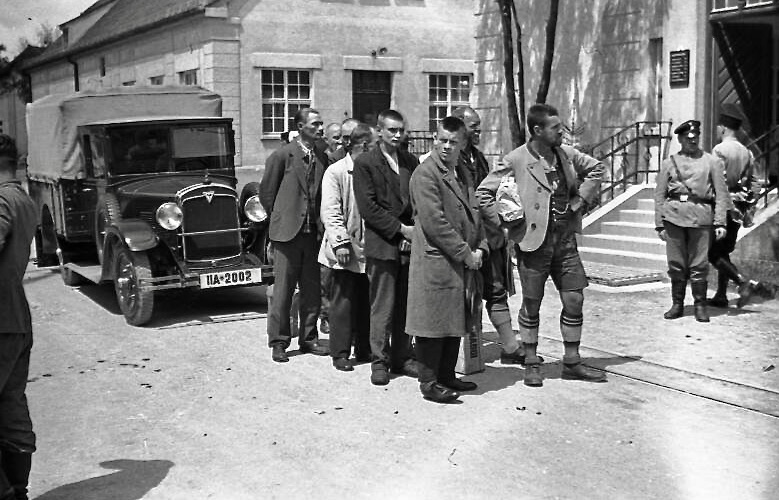
Nazi Germany established its first concentration camp at Dachau, outside Munich, today 1933:
Michael Beschloss tweet media
English
23
367
843
25.2K
stuffthatworks รีทวีตแล้ว
ArchaeoHistories
ArchaeoHistories@histories_arch·
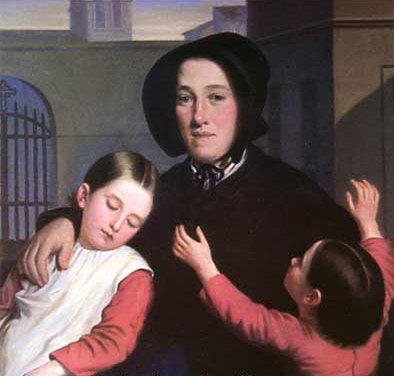
In 1835, port of New Orleans, Irish families step off the gangway into swampland heat, carrying everything they own. Among them, a small girl named Margaret Gaffney clutches her father's hand. She is five years old. She does not yet know that within the year, both her parents will be dead. Yellow fever moves through the immigrant quarters like wildfire through dry grass. Margaret's mother dies first. Her father follows days later. At six years old, she becomes a ward of Welsh neighbors who need extra hands more than they need another mouth to feed. There is no school. No tenderness. Just work. By nine, she is scrubbing laundry. By eleven, she is entirely on her own. At twenty-one, she marries Charles Haughery. They have a daughter. For the first time since childhood, Margaret feels safe. Then yellow fever comes again. Her husband dies. Her baby dies. She is twenty-two, widowed, childless, illiterate, and alone in a city that considers Irish Catholics less than human. Most people would have broken. Margaret borrowed forty dollars, bought two cows, and started selling milk. She walked the French Quarter before sunrise, knocking on doors, undercutting prices, outworking everyone. People mocked her. A poor Irish widow with a milk cart was not supposed to become anything. Within a year, she paid back the loan. Within five, she owned the largest dairy in the city. Then she met the nuns at the orphanage. They were trying to feed children no one else wanted. Margaret saw herself in every face. She gave them all her milk, every day, and refused payment. She told them she remembered what hunger felt like. She remembered being six and abandoned. In 1858, she sold the dairy and bought a bakery she had no idea how to run. She could not read recipes. She learned by feel, by repetition, by refusing to fail. Within a year, her bread was everywhere. She standardized loaves, mechanized production, and fed a city that once looked through her like she was invisible. When yellow fever returned, she nursed the dying. During the Civil War, she fed Union soldiers and Confederate families without asking which side they supported. She became one of the wealthiest women in America and gave away over six hundred thousand dollars. She never learned to write her name. She signed every document with an X. When Margaret Haughery died in 1882, New Orleans erected the first statue ever dedicated to a woman in the city. At the base, they carved an X. The mark of someone who could not write, but who rewrote what mercy looked like. Margaret lived so simply that many people did not realize she was wealthy. She wore plain dresses, lived in modest rooms, and walked to work every day. Visitors to her bakery often mistook her for a cleaning woman. She preferred it that way. She believed attention should go to the work, not the person doing it. The statue erected in her honor still stands in Margaret Place in New Orleans. It depicts her sitting with a child on her lap and another at her side. The inscription reads simply, "Margaret." For decades, locals called her "the Bread Woman of New Orleans." Children she helped grew up, had children of their own, and told them about the woman who made sure no one went hungry. Margaret's bakery became so successful that during the Civil War, Union officers tried to seize it for military use. She reportedly walked into the commanding officer's tent and told him that if he took her bakery, the orphans would starve. He let her keep it. Another detail: she was known to test her bread by touch alone, never needing to read temperatures or measurements. Workers said she could tell if dough was ready just by pressing it with her thumb. 📷 : Portrait of Margaret Haughery, 1842, by Jacques Amans. © Daughters of Time #archaeohistories
ArchaeoHistories tweet media
English
65
972
4.8K
111.9K
stuffthatworks รีทวีตแล้ว
Mr PitBull
Mr PitBull@MrPitbull07·
He saved children from the Holocaust without speaking a single word. The world remembers Marcel Marceau as the master mime. The man in the striped shirt and white face paint. The artist who could make you see invisible walls and feel imaginary wind. For decades, he performed on the greatest stages of the world, moving audiences to tears without uttering a sound. But long before the applause, before the spotlight, before the fame, he was simply Marcel Mangel. A Jewish teenager in occupied France whose father had just been taken. It was 1944. His father, a kosher butcher in Strasbourg, had been arrested by the Nazis and deported to Auschwitz. He would never return. Marcel knew his family was being hunted. He changed his surname to "Marceau" and made a decision that would define the rest of his life. He joined the French Resistance. His mission was unlike anything most soldiers faced. There were orphanages scattered across France, filled with Jewish children whose parents had already been murdered or deported. These children were next on the Nazi lists. Someone had to get them out. Someone had to lead them across dangerous territory to neutral Switzerland, where they might have a chance to survive. Marcel volunteered. The journeys were terrifying. He would gather groups of children—sometimes as young as four or five—and lead them through forests and mountains toward the Swiss border. Nazi patrols were everywhere. A single sound could mean death for everyone. One child's cry, one moment of panic, and they would all be discovered. How do you keep frightened children quiet when their lives depend on absolute silence? Marcel understood something others didn't. Fear makes children cry. But wonder makes them hold their breath. During those dangerous treks through the darkness, Marcel would use his gift. He would perform for the children. Silent pantomimes that transformed terror into enchantment. He became a character they could follow, a game they wanted to play. In the moonlight, he mimed catching invisible butterflies. He pretended to trip over imaginary logs. He acted out stories that made the children smile even as they walked through the night. He made silence feel like magic instead of a rule they had to follow. Over the course of the war, working alongside his cousin Georges Loinger and other resistance fighters, Marcel helped save dozens of Jewish children. He didn't just guide them through forests. He forged identity documents, altering birth certificates and creating false papers that gave these children new identities and new chances at life. After the liberation, Marcel Marceau became one of the most celebrated performers of the 20th century. He toured the world. He influenced generations of artists. He received standing ovations in every language. But he rarely spoke about what he had done during the war. When asked why he chose silence as his art form, he often referenced his father, murdered in Auschwitz. He once said that the survivors who returned from the camps could never find words for what they had experienced. "My name is Mangel," he explained. "In German, it means 'the lack.' I mime the lack of words." His silence on stage wasn't just performance. It was remembrance. Marcel Marceau proved that art can be more than entertainment. In his hands, it became survival. It became resistance. It became a way to transform fear into hope, to lead the vulnerable to safety, to speak volumes without making a sound. He didn't need weapons to be a hero. He didn't need speeches or slogans. He just needed to move, and in moving, to give frightened children a reason to trust, to follow, and to believe they might see tomorrow. The applause that followed him for six decades was deserved. But the silence he kept about his greatest performance—the one that saved lives in the darkest forests of Europe—might have been the most powerful act of all.
Mr PitBull tweet media
English
87
782
2.5K
43.5K