Beef jerky is a snack for Lao people to enjoy when drinking beer. However, it also often appears in local people's lunches. Sien Savanh is made from beef or buffalo, marinated with a mixture of garlic, fish sauce, ginger, sesame seeds, sugar, salt and black pepper and then dried in the sun. Local people also like to grill the beef jerky over an open fire, to get a smoky flavor, eat it with sticky rice or dip it in jaew maak len sauce (a dipping sauce consisting of tomatoes and chili). Tourists can try and buy this dried beef dish when traveling to Laos to see if it is any different from the dried beef or buffalo meat of Vietnam.
vegetable stew.
It is a familiar dish in Laotian meals, especially families in Luang Prabang. Vegetable stew originates from Cambodia, cooked from common garden vegetables such as beans, eggplant, lemongrass, basil, wild mushrooms, herbs, chili and Mai Sakaan - a type of plant. It has a spicy taste and is grown in many localities in Laos. In addition, Lao people also prepare this dish with other types of meat such as beef, chicken, buffalo... to increase the deliciousness. You can try eating Laotian sticky rice with stewed vegetables to experience a different flavor.
Sticky rice is the staple food of Laos and it is often said that Laotians eat more sticky rice than any other people in the world. Traditionally, Lao flower vases are steamed in a conical bamboo box, then stored in a Champa basket and eaten with many other dishes. In Laos, there is always a jar of sticky rice available to eat at any time of the day. If you travel to Laos, you will see this dish always appearing on the menus of many restaurants, from popular eateries to luxury restaurants. Visitors can try to feel the different flavor of Lao sticky rice compared to rice or sticky rice in Vietnam.
Grilled Chicken (Ping Kai)
This is a dish that is always suggested by many people when asked what to eat in Laos. The chickens here are not very large in size, and are raised in the garden or on the mountainside, so the meat is always firm and not crumbly. After cleaning, it will be marinated with salt, black pepper, fish sauce and typical spices. Finally, it is clamped onto a bamboo stick and grilled over hot coals. This famous grilled chicken dish is indispensable when accompanied with Lao sticky rice. The best grilled chicken is in Savannakhet of Laos. If you don't visit Savannakhet on your travel itinerary, you can still enjoy this delicious grilled chicken dish in the capital Vientiane or LuangPrabang.
Minced meat salad (Larb)
This dish is made from chicken, beef, duck, fish or pork, then chopped and mixed with fish sauce, lime juice, fermented fish juice and fried rice. and herbs. The meat can be raw or cooked but must be minced and mixed with chili, mint and optional vegetables such as mint, cilantro, and green onions. This is the "national dish" of the country of a million elephants, considered a lucky dish by people and often given as a gift during Tet.
Lao sausage (Sai Oua Kuang)
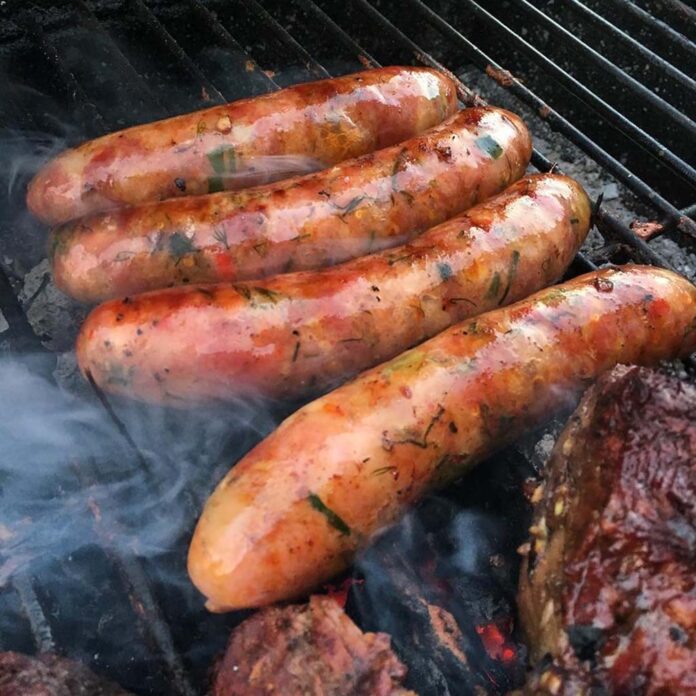
This is also a very attractive dish that tourists should enjoy when you don't know what to eat in Laos during your trip. The main ingredients are minced beef, deer meat or pork, mixed well with Lao spices. Thanks to the combination of sour, spicy, salty, sweet spices and neutralized with a little herbal flavor, the dish's flavor becomes much more attractive. Lao sausage is also an easy dish to combine, can be eaten with sticky rice or bamboo rice, bringing a delicious, fragrant and satisfying taste. If you like, you can also eat it with fish mint, lettuce, cowpeas... to enhance the flavor of the dish. In Laos, there are 3 main flavors of sausage: traditional, fermented sausage, and spicy sausage
Insect dishes
Cambodia and Thailand are neighboring countries of Laos, so you will see that the cuisine between these countries is somewhat mixed together and has similarities. Therefore, Lao people also love dishes made from insects. They will use ingredients from rice crickets, ant eggs, to eggplants, spider mites to fry, stir-fry, pile peanuts, steam rice or soak in vinegar and create some strange but equally delicious dishes. In particular, the Ca Cuong is a beneficial insect that lives mainly in Cambodian fields and is imported by Lao people at a very expensive price. According to research, insect dishes are rich in protein, so Lao people often eat them. However, for Vietnamese tourists, this is a challenging dish for you but also quite interesting to try once.
Laotian steamed fish dish in banana leaves will be marinated with many spices such as Thai lime leaves, basil, onions, chili, fish sauce and salt. Then wrap it in banana leaves and steam it in a bamboo cage. When using steamed fish, diners will eat it with sticky rice/white rice. The cooked fish meat is soft, succulent, not only rich in flavor but also fragrant with banana leaves, so worthy of being enjoyed over and over again. This is also a great side dish with Lao sticky rice.
A bowl of Lao vermicelli will include minced pork, tomatoes, fermented soybeans, chili, shallots and garlic. When serving, the chef will add pork rinds, bean sprouts, green onions and chopped cilantro on top. This is a Burmese-influenced dish commonly served in Northern Thailand as well as Northern Laos. However, in Laos there will be different variations compared to Thailand, so visitors should try to experience Khao Soi when visiting Laos. The biggest difference compared to Myanmar or Thai people is that Lao people do not use coconut milk to cook but use pork broth to make Khao soi.
@gormany Absolutely! Vietnam is home to a rich and diverse marine ecosystem, making it a fascinating destination for marine life enthusiasts and researchers.
Phú Quốc vô cùng tự hào với địa hình tự nhiên của Tổ Quốc! Với bờ biển dài và đa dạng về địa hình, Việt Nam là một quốc gia có nhiều sinh vật biển phong phú và độc đáo. Nằm ở khu vực biển Đông Nam Á, Việt Nam có nhiều vùng biển khác nhau, từ bờ biển phía đông, vùng biển đảo trung bộ, vùng biển phía nam, đến vùng biển phía tây của đất nước.
Với hàng ngàn loài sinh vật đa dạng từ cá, tôm, cua, ốc, hải quỳ, và nhiều loại biển không xương sống khác, các sinh vật biển ở Việt Nam tạo nên một hệ sinh thái biển đầy sức sống và độc đáo.