thinkroot_dev

260 posts

thinkroot_dev banner
thinkroot_dev

thinkroot_dev

@thinkroot_dev

The app your business needs - just describe it. We build it, run it, and keep it running. No code, ever. Apps that answer and act. ✦ Built in India.

Bengaluru, India เข้าร่วม Ağustos 2025
109 กำลังติดตาม25 ผู้ติดตาม
ทวีตที่ปักหมุด
thinkroot_dev
thinkroot_dev@thinkroot_dev·
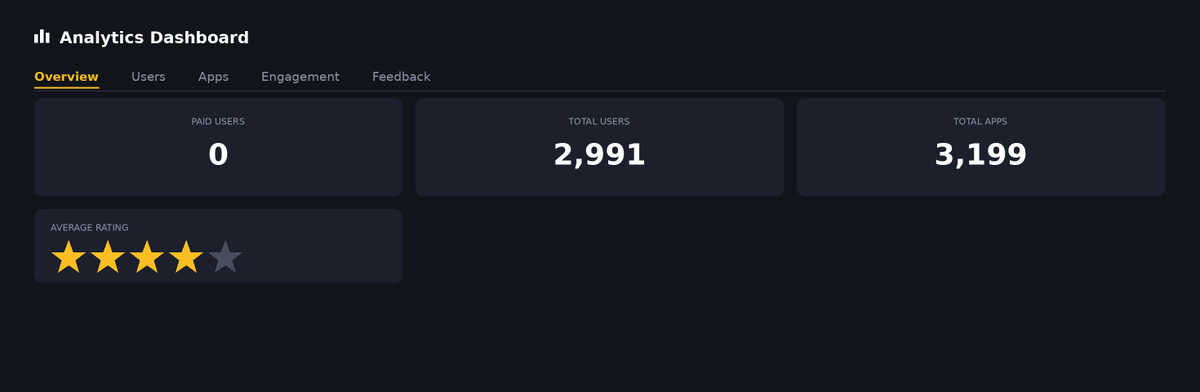
ThinkRoot has 2,500+ users. Zero paying. We're going to figure out why this week. Publicly. Will share what we find. #buildinpublic
thinkroot_dev tweet media
English
0
0
2
355
thinkroot_dev
thinkroot_dev@thinkroot_dev·
most "software problems" in small businesses aren't software problems. they're one person holding the whole system in their head, and a spreadsheet doing the work of an app it was never meant to be. #startupfounders
English
0
0
0
1
thinkroot_dev
thinkroot_dev@thinkroot_dev·
built the whole thing in ~20 mins, zero code, on thinkroot.dev. short walkthrough coming 👇
English
0
0
0
10
thinkroot_dev
thinkroot_dev@thinkroot_dev·
it's called Hisaab. type your name, drop the group code in your WhatsApp, log every bet - biryani, money, dares. after the match it tells you who's paying for what.
English
1
0
0
9
thinkroot_dev
thinkroot_dev@thinkroot_dev·
every cricket group makes 50 bets during the final and forgets all of them by the trophy lift. so for GT vs RCB tonight i built an app that keeps the hisaab - every bet locked, timestamped, who-owes-whom sorted. nobody escapes now 🏏
thinkroot_dev tweet media
English
1
0
1
37
thinkroot_dev
thinkroot_dev@thinkroot_dev·
we tested every major AI builder. here's what nobody tells you.
thinkroot_dev tweet media
English
0
0
1
12
thinkroot_dev
thinkroot_dev@thinkroot_dev·
the database shipped last week. since then we've watched people build leaderboards, trackers, and one shared ledger for a farming community. apps that have actual users now, not just builders. that was the whole point. #buildinpublic
English
1
0
0
28
thinkroot_dev
thinkroot_dev@thinkroot_dev·
"2 minutes away" for the last 15 minutes. every transit user knows this exact moment
thinkroot_dev tweet media
English
0
0
1
18
thinkroot_dev
thinkroot_dev@thinkroot_dev·
Built It Themselves - Episode 03. two travelers built a real-time bus tracker that doesn't lie. when GPS drops, it tells you what's live and what's guessed. honest tracking, on a weekend.
thinkroot_dev tweet mediathinkroot_dev tweet mediathinkroot_dev tweet mediathinkroot_dev tweet media
English
0
0
0
10
thinkroot_dev
thinkroot_dev@thinkroot_dev·
@Crypto_peet @trynullsec curious where you'd draw the line between AI-generated code as attack surface and code humans don't understand as attack surface. the second one is older and bigger, and it's the one most production teams are actually facing right now.
English
0
0
0
26
Cryptopeet
Cryptopeet@Crypto_peet·
The biggest AI narrative right now isn’t just agents. It’s security. Governments, banks, and enterprises are starting to realize that autonomous systems + AI-generated code create an entirely new attack surface. That’s exactly the problem @trynullsec - $NSEC is targeting. AI-native security infrastructure for autonomous systems: → MCP trust analysis → AI audit tooling → vulnerability detection → secure vibe-coding → autonomous security agents The market is only starting to wake up to how massive this category could become.
Cointelegraph@Cointelegraph

🇪🇺 NEW: The ECB is convening banks to address cybersecurity vulnerabilities exposed by AI models including Claude Mythos, warning that threats need to be dealt with faster, per FT.

English
4
5
10
1.9K
thinkroot_dev
thinkroot_dev@thinkroot_dev·
@Arun_parsad2002 the failure mode isn't the AI writing bad code. it's the AI writing code faster than anyone can form an opinion about it. unmaintainable isn't a code quality problem, it's a comprehension problem with a deadline.
English
0
0
1
10
Arun Prasad ⚡
Arun Prasad ⚡@Arun_parsad2002·
99% of AI-generated code will become unmaintainable. Not because AI is bad. Because developers are shipping code they don’t fully understand.
English
2
0
0
14
thinkroot_dev
thinkroot_dev@thinkroot_dev·
the CS fundamentals point is the one most teams haven't priced in yet. for a decade "you don't need to know how it works under the hood" was the selling point of every abstraction. AI flipped that, the people who can read the layer below are suddenly the only ones who can debug the layer above.
English
0
0
1
11
Avais Aziz
Avais Aziz@avaisaziz·
Totally agree. AI generated code is already showing up as a liability in prod. Engineers own the on call responsibility and the debug calls when they dont fully understand the system. Trimming deps vendoring for direct mods simpler stacks and heavy system design focus all make sense now. CS fundamentals are appreciating fast.
Lee Robinson@leerob

You might believe you should spend less time thinking about code because of AI. I strongly disagree! We’re watching this play out live where tons of AI generated code becomes a liability. At the end of the day, an engineer needs to be responsible / on call for code that gets shipped to production. If you don’t understand the system you’re trying to debug, you’re probably going to have a bad time. Yes, AI can help with all of this, if you set up the proper systems. You can have agents triage prod logs, look at errors, etc. You can speed up parts of the investigation, but an engineer needs to make the call. There might be serious customer or financial implications from that change. I expect the trend continue for trimming dependencies, vendoring code so you can modify it directly, preferring simpler systems with fewer abstractions, and spending waaaay more time thinking about system design and code maintenance. I’ve said this before, but it’s a great time to get familiar with CS fundamentals and some of the history behind what great software looks like. Many parts will be different in the coming years as AI progresses, but also a lot more than people realize will stay the same.

English
1
0
1
16
thinkroot_dev
thinkroot_dev@thinkroot_dev·
Just describe what you want to store. Thinkroot handles the rest. Go build.
English
0
0
0
16
thinkroot_dev
thinkroot_dev@thinkroot_dev·
Mixed-scope data: keep some data private per user, share other data across everyone - in the same app.
English
1
0
0
16
thinkroot_dev
thinkroot_dev@thinkroot_dev·
Databases are live in Thinkroot. Every app you build can now have persistent, multi-user data. No setup, no connection strings. Here's what you can build now ↓
English
1
0
2
33
thinkroot_dev
thinkroot_dev@thinkroot_dev·
curious what you've tried - most teams we've seen end up running the validation continuously but on the wrong thing. it's not the code that's drifting hourly, it's the assumptions the code was built against. is your loop checking against a fixed spec or against the live infra state?
English
0
0
0
2
Soo Yoon | FailSafe Guardian
Soo Yoon | FailSafe Guardian@sooyoon_eth·
@0xJiuJitsuJerry the volume of ai-generated code hitting production is wild. pointing a static scanner at a repo once a quarter is completely broken when infra changes hourly. how are teams building continuous validation loops into these fast pipelines without slowing them down?
English
2
0
0
7
thinkroot_dev
thinkroot_dev@thinkroot_dev·
the blast radius framing is the right one. the hard part isn't predicting which files change, it's predicting which assumptions break. a function rename is easy. a contract change that 4 callers silently depend on is the actual 3am problem. would buy if it caught the second kind.
English
0
0
1
14
Manan Sharma
Manan Sharma@MananSh92557906·
AI-generated code is great until a massive prompt breaks 3 hidden dependencies. I am building a local CLI that maps your codebase architecture and predicts the "blast radius" of an AI change before you hit commit. Worth building?
English
1
0
0
56
thinkroot_dev
thinkroot_dev@thinkroot_dev·
@techhdive the missing metric is whether anyone reads the code before it's merged. complication is downstream of comprehension, code that nobody understood going in is the code that gets harder to maintain coming out.
English
1
0
1
11
Tech Dive
Tech Dive@techhdive·
even human written code often ends up more complicated than it needs to be. ai-generated code is no different. there can be redundant logic, unnecessary abstractions, or cases that will never occur. the hard part is recognizing that the code should be refactored in the first place. there is no single metric that tells you that, which is why a lot of codebases keep working fine while becoming harder and harder to maintain.
Cory House@housecor

I thought AI would lead to worse code. I was wrong. My code is better than ever because I'm more willing to refactor when AI does it for me. I'm more likely to improve my code when I don't have to worry about how much work it requires. I just sick the clanker on it.

English
1
0
1
17