Toby Norfolk-Thompson

39 posts

Toby Norfolk-Thompson

Toby Norfolk-Thompson

@toby__nt

Digital Assets / Tree Surgery / Credit Derivatives / 100yr War

เข้าร่วม Haziran 2022
266 กำลังติดตาม97 ผู้ติดตาม
Toby Norfolk-Thompson รีทวีตแล้ว

CyHro - CEO of Sentora
CyHro - CEO of Sentora@admff492·
Be careful when tokenizing credit this late in the cycle, especially if you are using the tokens to leverage higher yields.
CyHro - CEO of Sentora tweet media
English
3
5
26
2.4K
Toby Norfolk-Thompson รีทวีตแล้ว
Sentora
Sentora@SentoraHQ·
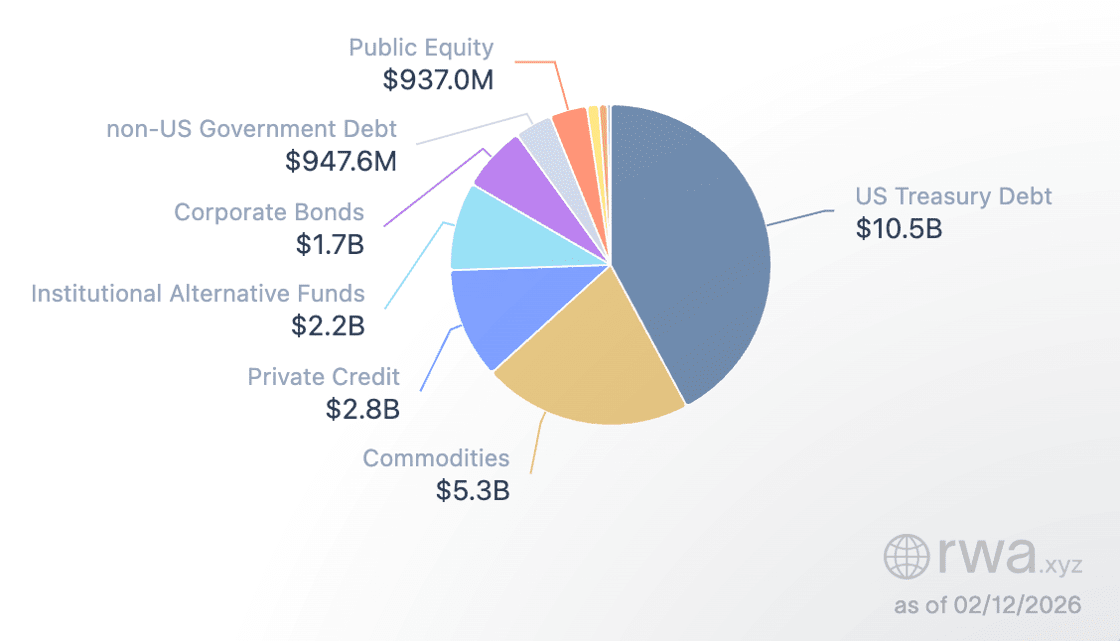
While tokenized U.S. Treasuries still dominate RWA market cap, equities are the fastest-growing vertical. Combined with the rising DeFi utility of tokenized stocks, this is a clear signal that 2026 is the year of real-world asset utility.
Sentora tweet media
English
4
6
47
2.4K
Toby Norfolk-Thompson รีทวีตแล้ว
Jesus Rodriguez
Jesus Rodriguez@jrdothoughts·
At @Firelightfi , we are trying to build a world class team that combines many skillsets: DeFi, blockchain, tradfi, insurance and others. Makes it fun and full of intellectually intensive debates. Recently, I had a fascinating discussion with one of our team members about the "refresh rate" of risk in traditional finance versus DeFi. And the need of what we call algorithmic actuaries. In TradFi, the "Actuary" is a batch processor. They take a static dataset of historical failures—car accidents, floods—and compile a probability table. This table updates maybe once a year. In DeFi, the solvency state of the world changes every 12 seconds. A protocol that is "safe" in Block N can become critically insolvent in Block N+1 because a whale pulled $50M of liquidity or a lending parameter was tweaked via governance. The root of it: We are trying to insure a high-frequency economy with a low-frequency tool. You cannot underwrite a 12-second block time with a 365-day feedback loop. The latency is fatal. Enter the Algorithmic Actuary This is the architectural shift we are building at @Firelightfi . We are deprecating the human actuary in favor of the Algorithmic Actuary. We don’t view risk assessment as a "consulting job." We view it as a computational primitive running in an infinite loop. Here is the difference in the stack: 1. From Static Tables to Dynamic OraclesThe traditional model asks: "What is the historical probability of a hack?"Firelight’s Sentora Stack asks: "What is the current state of the pool? Has the utilization rate spiked? Is the collateral factor drifting?"We are moving from looking at the rear-view mirror to looking at the radar. 2. Streaming Risk Premiums (The Price Signal)Because the risk assessment is continuous, the pricing is continuous. If a protocol becomes riskier—say, its TVL drops below a safety threshold—the Firelight premium creates a gradient. The cost of cover rises in real-time. This is the ultimate DeFi signal. It tells LPs to exit before the crash. It is "Risk Discovery" acting as a leading indicator. 3. Deterministic Settlement (No Voting)Most DeFi insurance today relies on DAO voting ("The Wisdom of the Crowd") to decide if a hack occurred. In finance, this is called a conflict of interest. The Algorithmic Actuary doesn't vote. It verifies. It runs a deterministic simulation on the chain state: Did the vault violate its invariant?If True, the Uncorrelated Vaults (XRP/XLM) pay out automatically. Zero governance drama. Just execution. The "Programmable Solvency" Moment We are effectively turning the "Insurance Company" into a smart contract primitive. The inputs are on-chain vectors (transactions, liquidity depth, volatility). The output is a price. The loss function is solvency. We cannot scale DeFi to trillions of dollars if we rely on committees to price risk. We need to push risk assessment down the stack, into the protocol layer itself. The Actuary of the future isn't a person. It's a daemon.
English
26
44
210
29.5K
Toby Norfolk-Thompson รีทวีตแล้ว
Sentora
Sentora@SentoraHQ·
$31 trillion in retail equities is sitting idle. What happens when those assets are tokenized? 👇
English
2
13
40
3.1K
Toby Norfolk-Thompson รีทวีตแล้ว
Sentora
Sentora@SentoraHQ·
What if DeFi finally had the safety net it needs to go mainstream? @admff492 & @Ronnoc_12 are talking DeFi cover, why it’s critical for adoption, and what it unlocks next. Today • 1PM UTC Set your reminder below👇
Sentora tweet media
English
5
20
51
10.6K
Toby Norfolk-Thompson รีทวีตแล้ว
Sentora
Sentora@SentoraHQ·
Retail owns stocks, but brokers monetize the collateral. Tokenized equities are about to change this by making stocks usable as DeFi collateral. Want to learn more on why this is a key trend to watch? Sign up for our next webinar👇 us02web.zoom.us/webinar/regist…
English
1
6
14
906
Toby Norfolk-Thompson รีทวีตแล้ว
Sentora
Sentora@SentoraHQ·
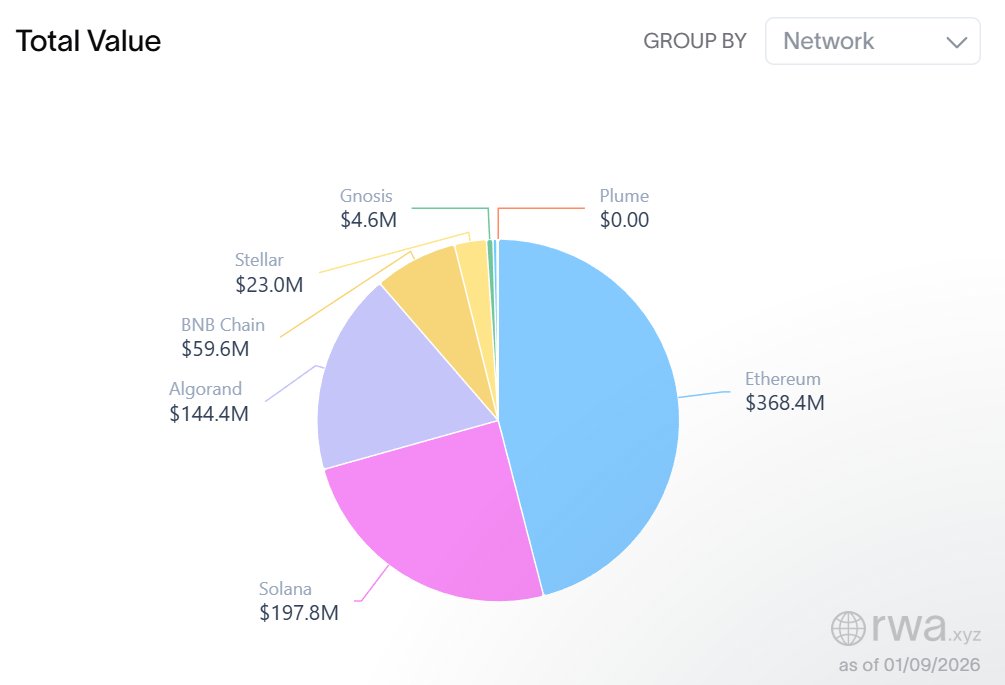
This chart shows the distribution of RWA value across chains. Ethereum remains the largest, followed by Solana and Algorand
Sentora tweet media
English
9
23
94
8.1K
Toby Norfolk-Thompson รีทวีตแล้ว
Emily Norfolk-Thomps
Emily Norfolk-Thomps@RosemontEmily·
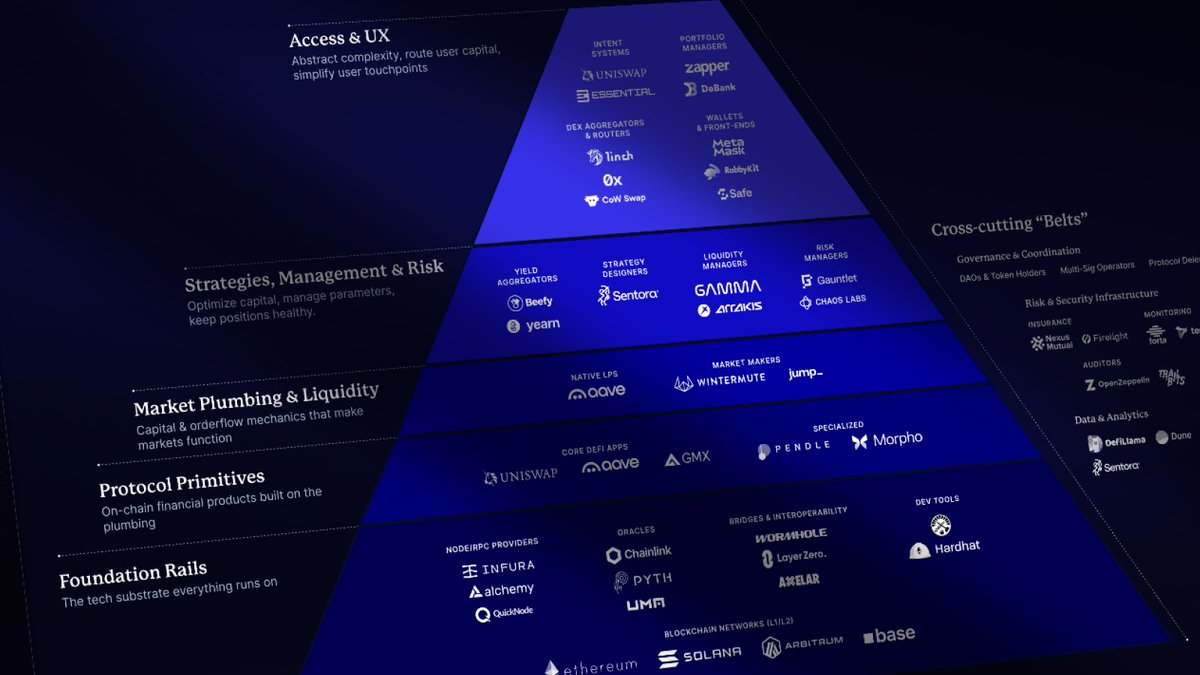
If America is going to have an acknowledged empire now, will it learn any of my nation’s lessons from having had an extensive one? (Asking this more as an intellectual exercise rather than supporting or opposing morally the existence of an American Empire btw.)
Spencer Hakimian@SpencerHakimian

Trump: "I think Cuba is gonna be something we'll end up talking about, because Cuba is a failing nation. It's very similar" Venezuela, Mexico, Colombia, Cuba. Dick Cheney is rock hard.
English
0
1
1
95
Toby Norfolk-Thompson รีทวีตแล้ว
Sentora
Sentora@SentoraHQ·
DeFi is not a set of silos. It is an interconnected value stack. If the rails, liquidity, risk and security, or governance layers weaken, everything above them becomes fragile. Our DeFi Value Pyramid model maps this system. Download the full PDF here: sentora.com/research/artic…
Sentora tweet media
English
0
2
10
925
Toby Norfolk-Thompson รีทวีตแล้ว
Sentora
Sentora@SentoraHQ·
The majority of DeFi capital is institutional, here's why that is an issue👇
English
4
9
38
3.1K
Toby Norfolk-Thompson รีทวีตแล้ว
Sentora
Sentora@SentoraHQ·
Is DeFi insurable? We dive into the key issues and potential solutions in this article👇 sentora.com/research/artic…
English
2
7
27
3.1K
Toby Norfolk-Thompson รีทวีตแล้ว
Sentora
Sentora@SentoraHQ·
Across 368 entities, crypto treasury holdings now exceed $185 billion. Companies hold the clear majority at 73%, while governments still account for more than a quarter of total crypto treasury reserves.
Sentora tweet media
English
0
2
18
1.5K
Toby Norfolk-Thompson รีทวีตแล้ว
Firelight
Firelight@Firelightfi·
The protocol has built-in economic mechanisms designed to keep the price of $stXRP stable and closely aligned with its fair value. The stXRP oracle will track its backed value and the price of FXRP via Flare's Time Series Oracle (FTSO) to ensure accurate pricing of stXRP.
Firelight tweet media
English
14
52
254
27.9K
Toby Norfolk-Thompson รีทวีตแล้ว
Sentora
Sentora@SentoraHQ·
Over $2.5 billion in TVL was affected by exploits this year, suggesting that despite market maturation, risk remains a key consideration when deploying capital
Sentora tweet media
English
0
2
12
1.3K
Toby Norfolk-Thompson รีทวีตแล้ว
Sentora
Sentora@SentoraHQ·
~$24 billion in options is set to expire on Dec 26th, but this is far from the only bullish trigger that could change BTC's trajectory toward next year. Sentora CEO @admff492 breaks it down in this article sentora.com/research/artic…
English
0
2
7
1.1K
Toby Norfolk-Thompson รีทวีตแล้ว
Sentora
Sentora@SentoraHQ·
In a span of six days, JPMorgan  executed two landmark transactions on public blockchains, effectively ending the “private chain only” era for Wall Street. We dive into the details in our latest newsletter👇 sentora.com/research/artic…
English
0
3
6
1.2K
Toby Norfolk-Thompson รีทวีตแล้ว
Jesus Rodriguez
Jesus Rodriguez@jrdothoughts·
Yesterday's podcast with @admff492 about @Firelightfi was amazing. We ran over 20 mins answering questions. Amazing crowd. Here is the link to the recording: youtu.be/uh1cXaSmsAA
YouTube video
YouTube
English
6
36
140
18.9K
Toby Norfolk-Thompson รีทวีตแล้ว
Sentora
Sentora@SentoraHQ·
Risk in DeFi involves many layers, and risk cover solutions should be designed to reflect this complexity. Join our webinar on Wednesday to learn more. ▶️us02web.zoom.us/webinar/regist…
Jesus Rodriguez@jrdothoughts

When comes to insurance in project @Firelight, one of the main questions is the "unit of risk" that we look to insure. This excercise is monumentally difficult so wanted to take a few mins to illustrate it ;) DeFi still talks about “risk” like it’s a single scalar you can slap onto an asset. But in practice, risk isn’t a token attribute — it’s a surface that lives across contracts, integrations, governance, and time. If @Firelightfi is going to price and backstop DeFi at scale, we need to be crisp about the unit of risk we’re actually underwriting. Start with the naive unit: the asset. “Insure ETH.” Sounds simple, until you realize ETH doesn’t break — paths break. ETH inside a lending market is liquidation logic + oracle plumbing + collateral factors. ETH on an L2 is also sequencer liveness and censorship assumptions. ETH in a bridge is message verification + validator sets + fraud proofs + upgrade keys. Same ticker, totally different failure modes. Then the obvious upgrade: the protocol. “Insure Aave.” Better, but still leaky. Protocol risk is really an aggregation of markets, modules, and shared dependencies. Oracles are the classic example: an otherwise “safe” lending market can become explosive if the price feed goes stale, can be manipulated via thin liquidity, or diverges across chains. In stress, the oracle doesn’t just report reality — it defines reality for liquidation engines. Bridges amplify this: they introduce a separate trust domain (relayers, light clients, committee signatures), plus a nasty correlation vector. One compromised bridge can instantly propagate bad assets, broken accounting, or governance capture into multiple protocols. It’s not “bridge risk” in isolation — it’s “bridge risk as a contagion bus.” So the real unit of risk is closer to: (contract + configuration + dependency graph + change window). A “market” is a configured system: parameters, caps, rate curves, oracle feeds, admin keys, timelocks, keepers, and cross-chain hooks. Risk spikes during upgrades. It spikes when sequencers halt, when bridges pause, when oracles desync, when liquidations become a race. This is where @Firelightfi framing matters: you don’t “insure tokens,” you underwrite risk surfaces and allocate reserve capital where the loss would actually materialize. The pricing engine should look less like “asset volatility” and more like “exposure topology”: shared oracles, shared bridges, shared sequencer assumptions, and how quickly those surfaces change. In DeFi insurance, precision wins. Not because it’s academically satisfying — but because it’s how reserves stay solvent when the world gets weird.
English
0
4
10
2.1K