
ทวีตที่ปักหมุด
Saadettin
8.2K posts


Saadettin
@unenumarated
AI Film Director
İstanbul, Türkiye เข้าร่วม Ağustos 2016
679 กำลังติดตาม762 ผู้ติดตาม
@hedonist_gunluk sıfıra inmesine gerek yok ki zaten. %20 ekstra işsizlik gelsin (ki çok rahat gelecek) o zaman nasıl bir dünyaya geçeceğiz görürüz hep birlikte.
Türkçe

Şu argümanlarda dikkatten kaçan nokta şu: "Profesyonel fotocular hala yaşıyor cep telefonlarına rağmen" deniyor. Öyle ama artık para bastıkları alanlardan birisi yok oldu: "Fotoğraf tab etmek." Kodak 2012'de iflas başvurusu yaptı. Kitapçılar termos satmadan hayatta kalamıyor vs.
Ozancan Özdemir@OzancanOzdemir
Amacım adhominem yaratmak değil. Fakat ne mavi ne beyaz yakaya ciddi ölçüde bir şey olmayacak. En azından mevcut verilerin şu an için söylediği bu. 2025 yılında robotların gerçek dünya görevlerinde başarılı olma seviyesi %12’ydi.
Türkçe
@engintezcan_en Ne lazımsa Carrefoursa
Ne istersen n11.
yani bi şey lazım olursa Carrefour, ama bi şey istersen n11 Engincim :)
Türkçe

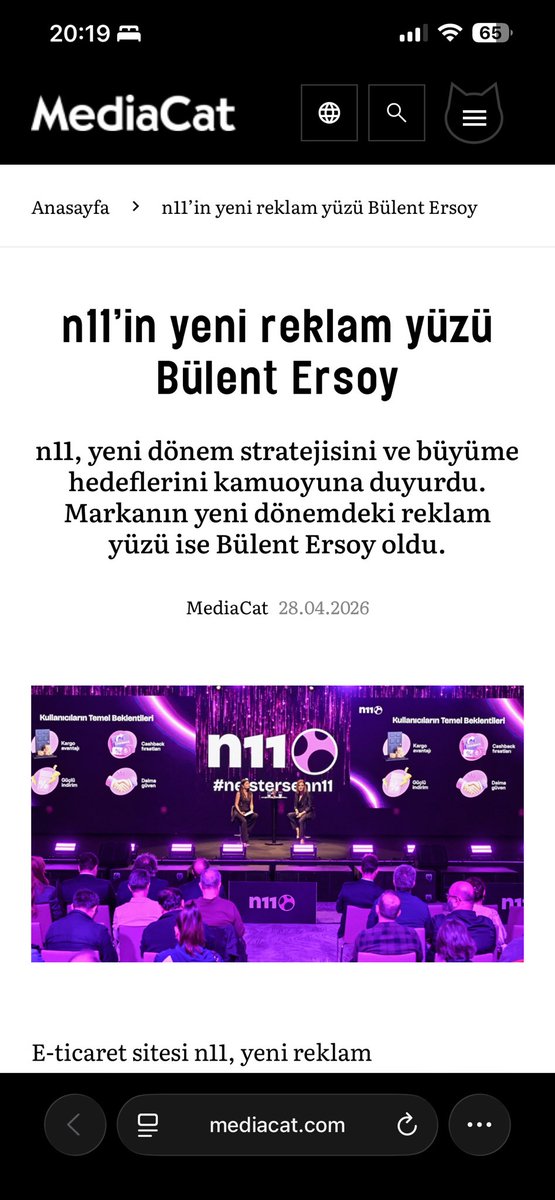
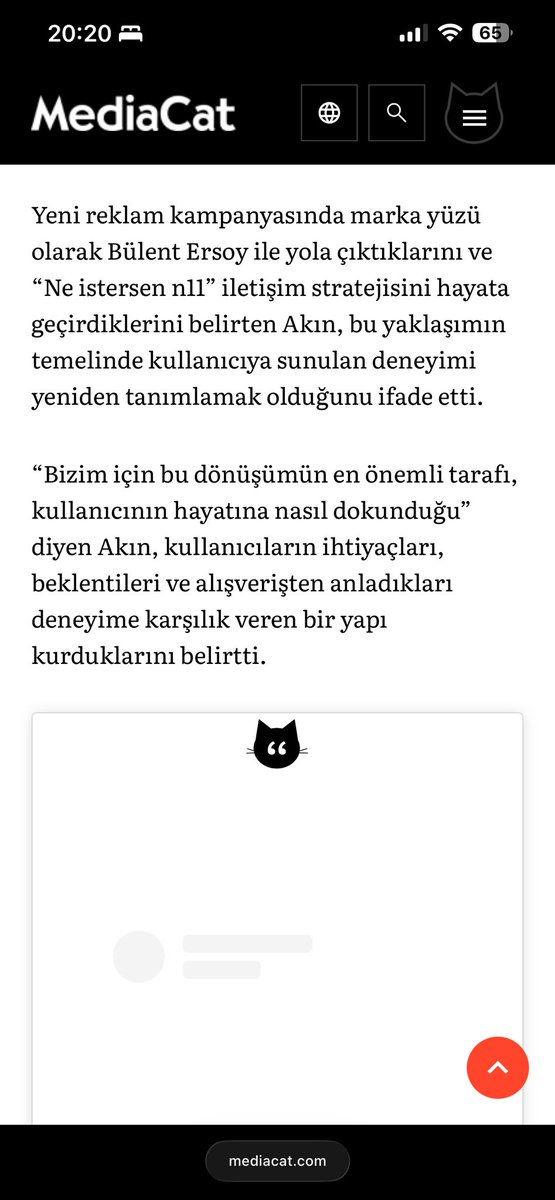
“Kullanıcıya sunulan deneyimi yeniden tanımlamak”
Ne demek bu?
Nasıl?
Laf salatası…
Engin Tezcan@engintezcan_en
Hedef belirleyip bunu strateji zannetmek var. Operasyonel verimliliğe, sürdürülebilir kârlılığa bel bağlamak var. (Rakipler yapmıyor sanki.) Çatı söylem, kullanıcının hayatına dokunmak vb laf salataları var. Vatandaş neden diğerlerinden değil de n11’den alışveriş yapsın, bu sorunun cevabı var mı, yok. Yani kötü stratejinin tüm belirtileri var. n11’in önündeki asıl engeller ne, bu engeller nasıl aşılacak, ona cevap yok. Bolca hedef var, klişe var. Geçmiş olsun. 2-3 sene sonra konuşuruz.
Türkçe
@engintezcan_en boşver para harcasınlar reklama, lojistiğe, yazılıma ekonomiye faydası olur :))
Türkçe
Hedef belirleyip bunu strateji zannetmek var.
Operasyonel verimliliğe, sürdürülebilir kârlılığa bel bağlamak var. (Rakipler yapmıyor sanki.)
Çatı söylem, kullanıcının hayatına dokunmak vb laf salataları var.
Vatandaş neden diğerlerinden değil de n11’den alışveriş yapsın, bu sorunun cevabı var mı, yok.
Yani kötü stratejinin tüm belirtileri var.
n11’in önündeki asıl engeller ne, bu engeller nasıl aşılacak, ona cevap yok.
Bolca hedef var, klişe var.
Geçmiş olsun. 2-3 sene sonra konuşuruz.

Türkçe


Freepik is now Magnific
One platform to rewrite the rules of creativity
English
Saadettin รีทวีตแล้ว

@c_valenzuelab @carlfranzen And also it is against the notion of creative companies. Differentation point shouldn’t be an automated boring results.
English
Probably the most useful advice I can give you if you run an ad agency, a marketing company, a production studio, or anything in that space.
Hear me out. I’ve spent a decade talking to teams about this and watching the same mistake play out again and again.
Don’t, and I repeat, please don’t, try to build some sort of internal tool that connects different models and becomes the only way your team accesses frontier models.
I’ve seen dozens of companies go down this path. On paper, it sounds smart, differentiated, strategic, “we own the stack.” In reality, it almost never works out that way. It becomes a constant drain: slow to build, expensive to maintain, and always a step behind whatever new models, features, and workflows are emerging.
It’s the same mistake companies made when they tried to build their own cloud. It felt strategic. It wasn’t. Focus on what you are good at.
English
@c_valenzuelab @carlfranzen companies mostly learn the hardway because as you said “it sounds smart” :) totally agree.
English
Saadettin รีทวีตแล้ว

JD Vance was likely manufactured by Thiel for this very Palantir reason.
You are being groomed toward him through the Iran war, positioned as the “future president of peace.”
There is a well-documented relationship.
Thiel mentored and financially backed Vance’s rise in tech, venture capital and politics.
So much of his background is fake.

Elon Musk Ox@ElonMuskOx11
@SimonDixonTwitt And J.D Vance has ties to Thiel.
English
Tüm dünyadan şu an tepki almaları da çekindikleri değil aksine istedikleri bir şeydi. x.com/PalantirTech/s…
Türkçe
Palantir’in bu manifestosu yeni değil. Alex Karp’ın daha önce yazdığı kitabın damıtılmış hali. İdeolojileriyle dünyaya/abd’ye çizmek istedikleri rota. İdeolojileri ne derseniz; siyonizmi geçince 500 metre ilerde. O kadar uç yani. İdeolojileri hüküm sürer/sürmez o belli olmaz ama dünyanın değişimini en iyi okuyan şirket diyebiliriz.
Palantir@PalantirTech
Because we get asked a lot. The Technological Republic, in brief. 1. Silicon Valley owes a moral debt to the country that made its rise possible. The engineering elite of Silicon Valley has an affirmative obligation to participate in the defense of the nation. 2. We must rebel against the tyranny of the apps. Is the iPhone our greatest creative if not crowning achievement as a civilization? The object has changed our lives, but it may also now be limiting and constraining our sense of the possible. 3. Free email is not enough. The decadence of a culture or civilization, and indeed its ruling class, will be forgiven only if that culture is capable of delivering economic growth and security for the public. 4. The limits of soft power, of soaring rhetoric alone, have been exposed. The ability of free and democratic societies to prevail requires something more than moral appeal. It requires hard power, and hard power in this century will be built on software. 5. The question is not whether A.I. weapons will be built; it is who will build them and for what purpose. Our adversaries will not pause to indulge in theatrical debates about the merits of developing technologies with critical military and national security applications. They will proceed. 6. National service should be a universal duty. We should, as a society, seriously consider moving away from an all-volunteer force and only fight the next war if everyone shares in the risk and the cost. 7. If a U.S. Marine asks for a better rifle, we should build it; and the same goes for software. We should as a country be capable of continuing a debate about the appropriateness of military action abroad while remaining unflinching in our commitment to those we have asked to step into harm’s way. 8. Public servants need not be our priests. Any business that compensated its employees in the way that the federal government compensates public servants would struggle to survive. 9. We should show far more grace towards those who have subjected themselves to public life. The eradication of any space for forgiveness—a jettisoning of any tolerance for the complexities and contradictions of the human psyche—may leave us with a cast of characters at the helm we will grow to regret. 10. The psychologization of modern politics is leading us astray. Those who look to the political arena to nourish their soul and sense of self, who rely too heavily on their internal life finding expression in people they may never meet, will be left disappointed. 11. Our society has grown too eager to hasten, and is often gleeful at, the demise of its enemies. The vanquishing of an opponent is a moment to pause, not rejoice. 12. The atomic age is ending. One age of deterrence, the atomic age, is ending, and a new era of deterrence built on A.I. is set to begin. 13. No other country in the history of the world has advanced progressive values more than this one. The United States is far from perfect. But it is easy to forget how much more opportunity exists in this country for those who are not hereditary elites than in any other nation on the planet. 14. American power has made possible an extraordinarily long peace. Too many have forgotten or perhaps take for granted that nearly a century of some version of peace has prevailed in the world without a great power military conflict. At least three generations — billions of people and their children and now grandchildren — have never known a world war. 15. The postwar neutering of Germany and Japan must be undone. The defanging of Germany was an overcorrection for which Europe is now paying a heavy price. A similar and highly theatrical commitment to Japanese pacifism will, if maintained, also threaten to shift the balance of power in Asia. 16. We should applaud those who attempt to build where the market has failed to act. The culture almost snickers at Musk’s interest in grand narrative, as if billionaires ought to simply stay in their lane of enriching themselves . . . . Any curiosity or genuine interest in the value of what he has created is essentially dismissed, or perhaps lurks from beneath a thinly veiled scorn. 17. Silicon Valley must play a role in addressing violent crime. Many politicians across the United States have essentially shrugged when it comes to violent crime, abandoning any serious efforts to address the problem or take on any risk with their constituencies or donors in coming up with solutions and experiments in what should be a desperate bid to save lives. 18. The ruthless exposure of the private lives of public figures drives far too much talent away from government service. The public arena—and the shallow and petty assaults against those who dare to do something other than enrich themselves—has become so unforgiving that the republic is left with a significant roster of ineffectual, empty vessels whose ambition one would forgive if there were any genuine belief structure lurking within. 19. The caution in public life that we unwittingly encourage is corrosive. Those who say nothing wrong often say nothing much at all. 20. The pervasive intolerance of religious belief in certain circles must be resisted. The elite’s intolerance of religious belief is perhaps one of the most telling signs that its political project constitutes a less open intellectual movement than many within it would claim. 21. Some cultures have produced vital advances; others remain dysfunctional and regressive. All cultures are now equal. Criticism and value judgments are forbidden. Yet this new dogma glosses over the fact that certain cultures and indeed subcultures . . . have produced wonders. Others have proven middling, and worse, regressive and harmful. 22. We must resist the shallow temptation of a vacant and hollow pluralism. We, in America and more broadly the West, have for the past half century resisted defining national cultures in the name of inclusivity. But inclusion into what? Excerpts from the #1 New York Times Bestseller The Technological Republic: Hard Power, Soft Belief, and the Future of the West, by Alexander C. Karp & Nicholas W. Zamiska techrepublicbook.com
Türkçe
@engintezcan_en işe alım politikaları, kampanyaları, reklamları acayip. mutlaka bi incele :) (ideolojileri sapkın o ayrı:)
Türkçe
Dün tüm abonelere yazıp gönderdiğim makalede tam da bunu anlatıyordum.
Sosyal medyada aktif olamamanızın nedeni, içerik fikri, ajans ya da konsept bulamamak değil.
Sosyal medyada aktif olamamanızın nedeni, söyleyecek bir sözünüzün olmaması.
Markanız neden var? Neden rakipleri değil de sizi satın alsınlar? Amacınız ne? Neyi savunuyor, neye inanıyorsunuz? Bize ne anlatmak istiyorsunuz? Bunlardan herhangi birine herhangi bir cevabınız var mı? Fiyat ya da kalite dışında?
Yok.
Fiyat ve kalite dışında edecek iki çift lafınız olmadığı için sosyal medyada Kabotaj Bayramı falan kutluyorsunuz.
Bakın, doğru ya da yanlış, beğenin ya da beğenmeyin, adamların bir derdi, bir fikri, bir amacı, bir rengi var, bir ideali var, anlatıyorlar.
Sizde anlatacak bir şey olmadığı için bayram kutlaması, özel gün kutlaması falan…
Palantir@PalantirTech
Because we get asked a lot. The Technological Republic, in brief. 1. Silicon Valley owes a moral debt to the country that made its rise possible. The engineering elite of Silicon Valley has an affirmative obligation to participate in the defense of the nation. 2. We must rebel against the tyranny of the apps. Is the iPhone our greatest creative if not crowning achievement as a civilization? The object has changed our lives, but it may also now be limiting and constraining our sense of the possible. 3. Free email is not enough. The decadence of a culture or civilization, and indeed its ruling class, will be forgiven only if that culture is capable of delivering economic growth and security for the public. 4. The limits of soft power, of soaring rhetoric alone, have been exposed. The ability of free and democratic societies to prevail requires something more than moral appeal. It requires hard power, and hard power in this century will be built on software. 5. The question is not whether A.I. weapons will be built; it is who will build them and for what purpose. Our adversaries will not pause to indulge in theatrical debates about the merits of developing technologies with critical military and national security applications. They will proceed. 6. National service should be a universal duty. We should, as a society, seriously consider moving away from an all-volunteer force and only fight the next war if everyone shares in the risk and the cost. 7. If a U.S. Marine asks for a better rifle, we should build it; and the same goes for software. We should as a country be capable of continuing a debate about the appropriateness of military action abroad while remaining unflinching in our commitment to those we have asked to step into harm’s way. 8. Public servants need not be our priests. Any business that compensated its employees in the way that the federal government compensates public servants would struggle to survive. 9. We should show far more grace towards those who have subjected themselves to public life. The eradication of any space for forgiveness—a jettisoning of any tolerance for the complexities and contradictions of the human psyche—may leave us with a cast of characters at the helm we will grow to regret. 10. The psychologization of modern politics is leading us astray. Those who look to the political arena to nourish their soul and sense of self, who rely too heavily on their internal life finding expression in people they may never meet, will be left disappointed. 11. Our society has grown too eager to hasten, and is often gleeful at, the demise of its enemies. The vanquishing of an opponent is a moment to pause, not rejoice. 12. The atomic age is ending. One age of deterrence, the atomic age, is ending, and a new era of deterrence built on A.I. is set to begin. 13. No other country in the history of the world has advanced progressive values more than this one. The United States is far from perfect. But it is easy to forget how much more opportunity exists in this country for those who are not hereditary elites than in any other nation on the planet. 14. American power has made possible an extraordinarily long peace. Too many have forgotten or perhaps take for granted that nearly a century of some version of peace has prevailed in the world without a great power military conflict. At least three generations — billions of people and their children and now grandchildren — have never known a world war. 15. The postwar neutering of Germany and Japan must be undone. The defanging of Germany was an overcorrection for which Europe is now paying a heavy price. A similar and highly theatrical commitment to Japanese pacifism will, if maintained, also threaten to shift the balance of power in Asia. 16. We should applaud those who attempt to build where the market has failed to act. The culture almost snickers at Musk’s interest in grand narrative, as if billionaires ought to simply stay in their lane of enriching themselves . . . . Any curiosity or genuine interest in the value of what he has created is essentially dismissed, or perhaps lurks from beneath a thinly veiled scorn. 17. Silicon Valley must play a role in addressing violent crime. Many politicians across the United States have essentially shrugged when it comes to violent crime, abandoning any serious efforts to address the problem or take on any risk with their constituencies or donors in coming up with solutions and experiments in what should be a desperate bid to save lives. 18. The ruthless exposure of the private lives of public figures drives far too much talent away from government service. The public arena—and the shallow and petty assaults against those who dare to do something other than enrich themselves—has become so unforgiving that the republic is left with a significant roster of ineffectual, empty vessels whose ambition one would forgive if there were any genuine belief structure lurking within. 19. The caution in public life that we unwittingly encourage is corrosive. Those who say nothing wrong often say nothing much at all. 20. The pervasive intolerance of religious belief in certain circles must be resisted. The elite’s intolerance of religious belief is perhaps one of the most telling signs that its political project constitutes a less open intellectual movement than many within it would claim. 21. Some cultures have produced vital advances; others remain dysfunctional and regressive. All cultures are now equal. Criticism and value judgments are forbidden. Yet this new dogma glosses over the fact that certain cultures and indeed subcultures . . . have produced wonders. Others have proven middling, and worse, regressive and harmful. 22. We must resist the shallow temptation of a vacant and hollow pluralism. We, in America and more broadly the West, have for the past half century resisted defining national cultures in the name of inclusivity. But inclusion into what? Excerpts from the #1 New York Times Bestseller The Technological Republic: Hard Power, Soft Belief, and the Future of the West, by Alexander C. Karp & Nicholas W. Zamiska techrepublicbook.com
Türkçe
Saadettin รีทวีตแล้ว

"Ülkedeki bütün sorunların asıl nedeni hiperenflasyondur."
Uğur Güzel
Türkçe
Saadettin รีทวีตแล้ว

What must be done leaves no room for hesitation.
Leading Report@LeadingReport
El Salvador banned the “Edgar” haircut, a bowl-cut style with straight bangs, in public schools as part of restoring discipline.
English
Saadettin รีทวีตแล้ว

Kendisini öğrencilerinin üzerine siper ederek
Şehit olan Ayla Kara öğretmen için
Feminist Kadın dernekleri hiçbir açıklama yapmadı.

Türkçe