Matt Cole@ColeMacro
Following up on yesterday's post with some additional context and data that may help explain what we saw on Friday.
A few people asked why I believe the selloff was driven primarily by a leverage liquidation event.
No issuer has perfect visibility into every investor's financing arrangements, so no one can know with certainty exactly what happened across every account.
That said, three things stand out.
First, we knew leveraged strategies had developed around Digital Credit securities. We had seen examples of trades that involved meaningful leverage and had publicly discussed the risks associated with some of those approaches.
Second, we received anecdotal reports from market participants indicating that liquidations were occurring during the selloff.
Third, the trading data itself is consistent with what is often observed during forced selling events.
The STRC chart shows volume remained relatively modest through much of the decline, then exploded as the security moved from roughly $89 toward its intraday low of $82.50. After the low was established, volume quickly subsided and the price recovered materially into the close.
That pattern is often associated with a liquidation cascade. Forced selling drives volume sharply higher, prices overshoot fundamentals, and then buyers step in once the selling pressure has been exhausted.
The SATA chart also shows a price decline, but a very different volume profile. Volume remained much more consistent throughout the session (and the entire week) and did not exhibit the same relative spike around the lows that was observed in STRC.
That distinction is important.
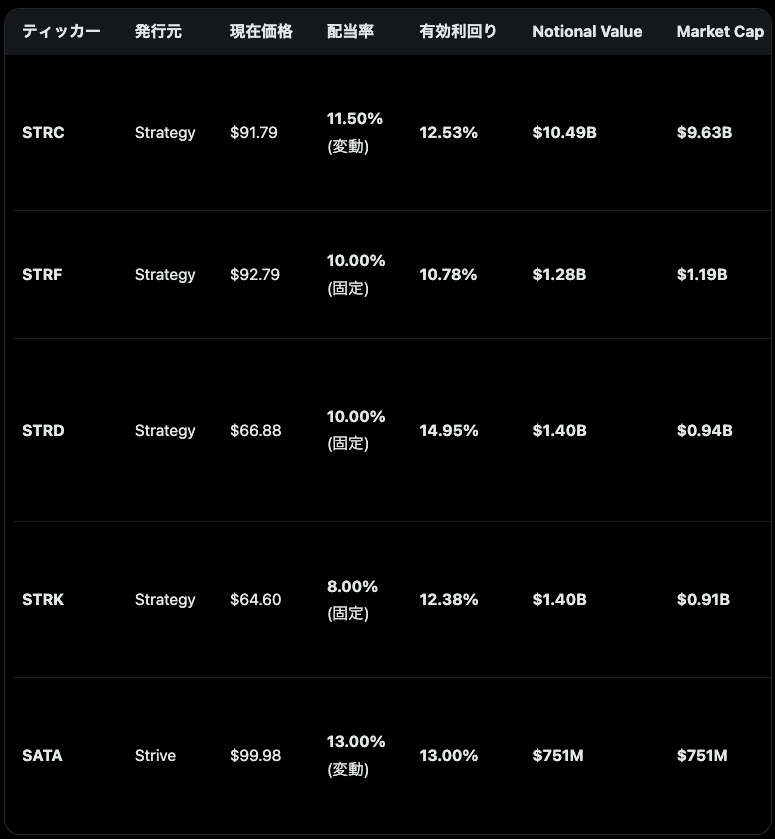
To me, the data suggests that the primary stress event occurred in STRC, while weakness elsewhere in Digital Credit was more likely a spillover effect from the broader selloff than a similar wave of liquidations occurring across every security.
This is not a statement that one credit is stronger than another. In my view, both STRC and SATA remain strong credits, and neither issuer experienced a sudden deterioration in credit quality during Friday's trading session.
Digital Credit is a new asset class. As it grows, there will be periods where market structure, liquidity, leverage, and investor behavior create volatility that has little to do with underlying credit fundamentals.
Understanding those dynamics is part of the maturation process.
Friday was the most significant stress test Digital Credit has faced so far.
The market absorbed it, buyers emerged, and both securities recovered substantially from their lows.
That is a constructive outcome and an important data point for the future of the asset class.