Yeghia Tashjian /يغيا/ Եղիա Թաշճեան 🇱🇧🇦🇲

33.3K posts

Yeghia Tashjian /يغيا/ Եղիա Թաշճեան 🇱🇧🇦🇲 banner
Yeghia Tashjian /يغيا/ Եղիա Թաշճեան 🇱🇧🇦🇲

Yeghia Tashjian /يغيا/ Եղիա Թաշճեան 🇱🇧🇦🇲

@yeghig

Regional analyst. PPIA graduate @AUB_lebanon /SLGSS grad @Forsvarshogsk RIA CC @IFI_AUB co @ArmenianWeekly/ Instructor PSC #AUB #MiddleEast #SouthCaucasus

Beirut/Yerevan เข้าร่วม Mart 2011
5.9K กำลังติดตาม6.4K ผู้ติดตาม
ทวีตที่ปักหมุด
Yeghia Tashjian /يغيا/ Եղիա Թաշճեան 🇱🇧🇦🇲
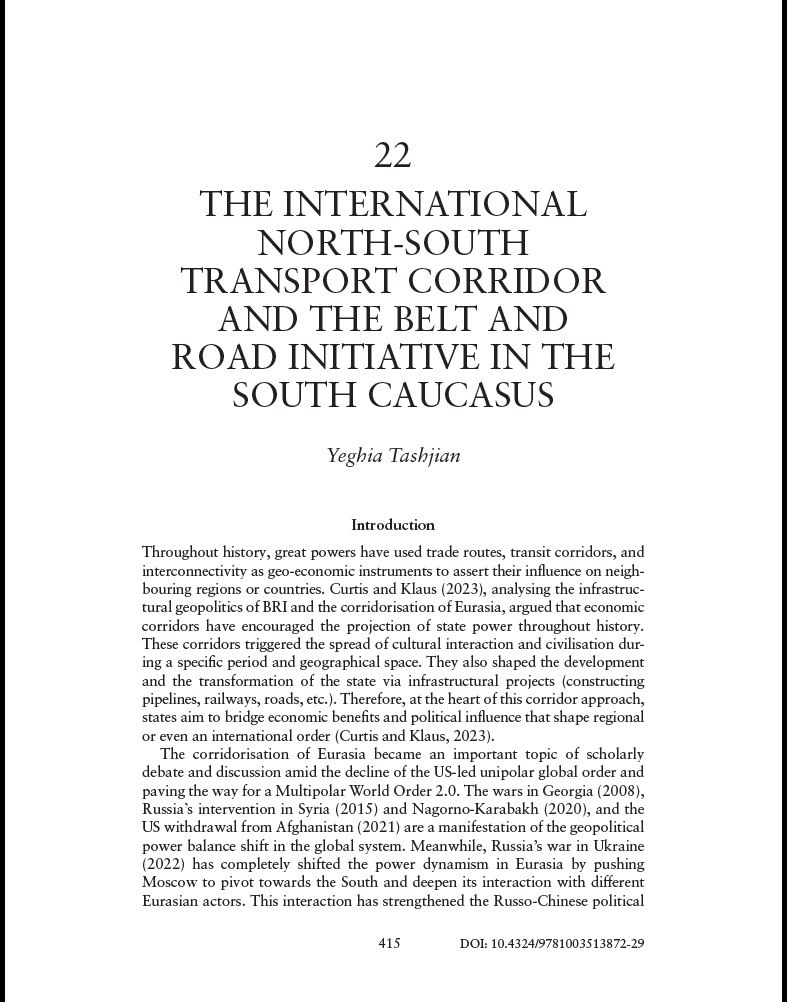
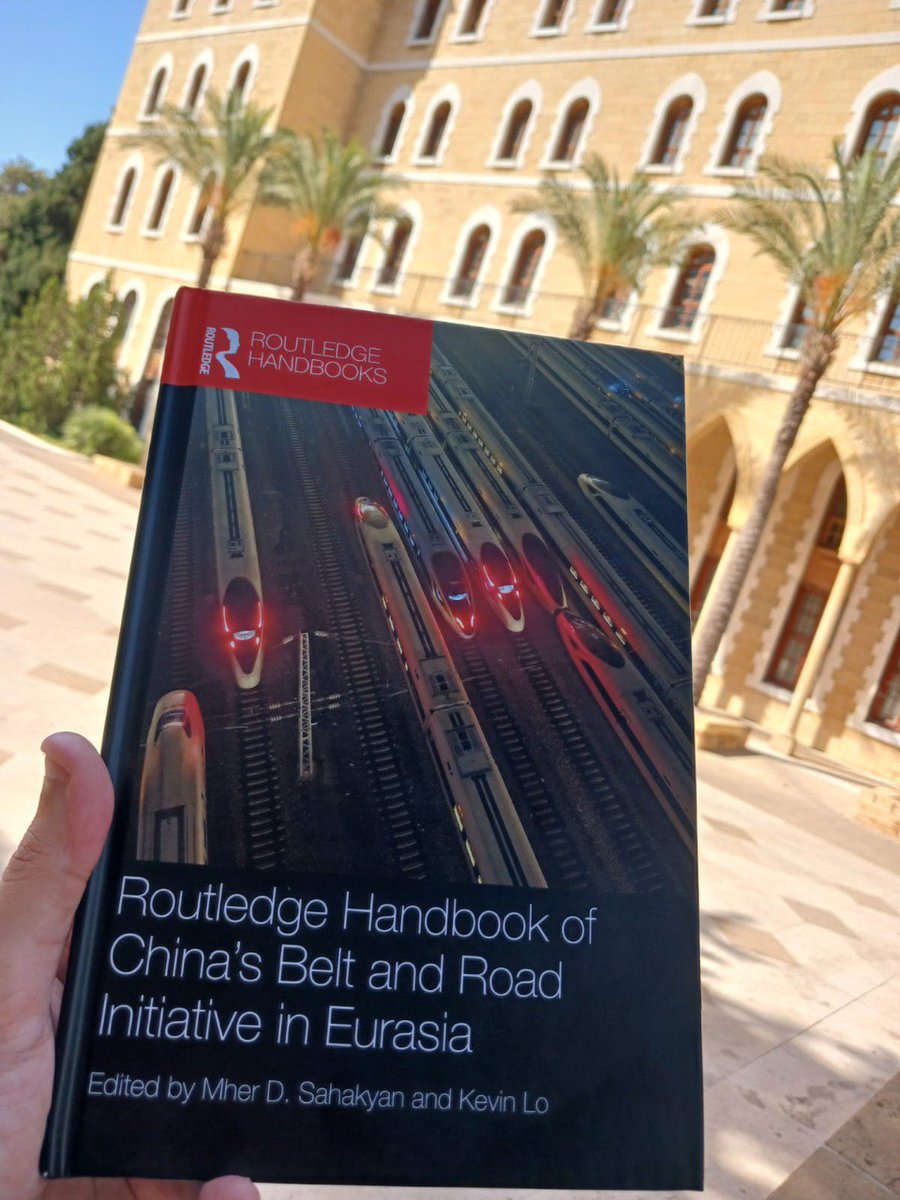
Dear friends and colleagues, I am thrilled to announce that a few days ago, my book chapter “The International North-South Transport Corridor and the Belt and Road Initiative in the South Caucasus” for the edited volume of “Routledge Handbook of China's Belt and Road Initiative in Eurasia” was published, and today I received the hard copy. The highly scholarly handbook brought together 32 scholars and experts and has been edited by Dr. Mher D. Sahakyan and Kevin Lo. The handbook critically analyses and examines the impact of China’s Belt and Road Initiative (BRI) geostrategy in Eurasia. Over the last decade, the BRI contributed to China becoming an economic and political superpower, but the Russo–Ukrainian War brought seismic geopolitical and geo-economic impacts and a new struggle between great powers. Covering the impact of the BRI and the positions of other great, middle, and small powers, the ten parts explain the geopolitical and geo-economic dynamics along the Silk Road Economic Belt’s six major economic corridors, implementing case studies on Europe, South Caucasus, Central Asia, Russian Far East, Middle East, South Asia, Southeast Asia, and East Asia. Last year, alongside dozens of scholars, I had the honor to participate in the 5th Eurasian Research on Modern China and Eurasia Conference in Yerevan organized by Dr. Sahakyan and his team where we presented our papers and offered a platform to establish an academic network, exchange research ideas, compare perspectives and methodologies, and promote interdisciplinary dialogue which led to the publication of this handbook. My chapter examines how multipolarity triggered by ‘corridorisation’ impacts the behavior of the local actors in the South Caucasus as they strive for positioning in the regional system. Taking into consideration the Russo-Ukrainian and Nagorno-Karabakh wars and the geopolitical and geo-economic shifts in the region, the chapter aims to explain the impact of INSTC (International North-South Transport Corridor) and BRI on the South Caucasus and Eurasian interconnectivity in the era of Multipolar World Order 2.0. #bookchapter #academia #China #BRI #INSTC #Eurasia #SouthCaucasus #economiccorridors #corridorization #geopolitics #geoeconomics #Turkey #Iran #India #Armenia #Georgia #Azerbaijan #Routledge #TaylorandFrancisGroup
Yeghia Tashjian /يغيا/ Եղիա Թաշճեան 🇱🇧🇦🇲 tweet mediaYeghia Tashjian /يغيا/ Եղիա Թաշճեան 🇱🇧🇦🇲 tweet media
English
3
1
22
3.8K
Yeghia Tashjian /يغيا/ Եղիա Թաշճեան 🇱🇧🇦🇲 รีทวีตแล้ว
Nadia Bilbassy Charters ناديا البلبيسي
The second round of Lebanon /Israel talk will take place on Thursday at State Department. I was told that Trump might call President Aoun again . #Lebanon .
English
0
15
55
4.4K
Yeghia Tashjian /يغيا/ Եղիա Թաշճեան 🇱🇧🇦🇲
The proposed network would run from Europe through #Türkiye, cross into #Syria, and continue south into #Jordan, forming a continuous land bridge between Mediterranean markets and the Arabian Peninsula. The initiative builds on a trilateral memorandum of understanding signed earlier this month to upgrade and reconnect rail infrastructure across the three countries. If realised, the corridor would establish a direct overland route linking European transport networks with Gulf markets, with Syria acting as the critical geographic hinge between north and south. The plan reflects a broader Turkish push to position itself as a central transit hub at a time of growing disruption to traditional trade routes. Ongoing instability linked to the war in Ukraine has complicated overland routes through Russia, while political and security constraints continue to affect corridors passing through Iran. At the same time, maritime chokepoints such as the Suez Canal and the Strait of Hormuz have faced repeated disruptions, increasing interest in alternative routes. source: radiofreesyria.com/syria-at-the-c…
Yeghia Tashjian /يغيا/ Եղիա Թաշճեան 🇱🇧🇦🇲 tweet media
Yeghia Tashjian /يغيا/ Եղիա Թաշճեան 🇱🇧🇦🇲@yeghig

#Turkey, #Syria, and #Jordan are advancing a joint plan to develop a regional rail corridor linking Europe to the Gulf, part of a broader Turkish push to establish alternative trade routes amid global disruptions. jpost.com/middle-east/ar…

English
0
0
2
261
Yeghia Tashjian /يغيا/ Եղիա Թաշճեան 🇱🇧🇦🇲 รีทวีตแล้ว
Hiba Nasr
Hiba Nasr@HibaNasr·
‼️ Asharq Sources: U.S. side will ask the Lebanese to repeal the law criminalizing contact with Israel. @AsharqNews
English
16
73
333
124.7K
Yeghia Tashjian /يغيا/ Եղիա Թաշճեան 🇱🇧🇦🇲 รีทวีตแล้ว
Bayern & Germany
Bayern & Germany@iMiaSanMia·
Vincent Kompany has approved the transfer of Anthony Gordon. The coach supports a potential move for the Englishman. Talks are ongoing with the player's camp, but not yet with Newcastle [@Plettigoal]
Bayern & Germany tweet media
English
49
53
2.4K
75.3K
Yeghia Tashjian /يغيا/ Եղիա Թաշճեան 🇱🇧🇦🇲
It took him to much to realize the truth.
CIVILNET@CivilNetTV

Azerbaijan is hindering the normalization process between Armenia and Turkey by using its political influence, Armenian parliamentary speaker Alen Simonyan said in an interview with the Istanbul-based newspaper Agos published today. Simonyan, who visited Istanbul for an Inter-Parliamentary Union assembly last week, said Armenia had done its part in the efforts to restore ties with Ankara and is waiting for Turkey to take further steps. “Azerbaijan is currently obstructing the process by using its lobbying and influence,” Simonyan said, according to the report. Armenia and Turkey have no diplomatic relations, and the shared land border has remained closed since 1993 after Ankara shut it during the First Karabakh war. The two countries launched a normalization process in 2021, including talks between special envoys, but progress has been slow. Simonyan said there were no urgent bilateral disputes requiring resolution and that the opening of the land border had been promised several times but repeatedly delayed. “Everything has been done on both sides,” he said. “When I speak with my Turkish colleagues, I realize they do not have much to say either.” Simonyan added that Armenia should not be isolated from the region and must be prepared to negotiate directly with its neighbors. During the visit, Simonyan also met Patriarch Sahak Mashalyan at the Armenian Patriarchate of Turkey and held talks with representatives of the Armenian community media, including Agos.

English
0
0
4
453
Yeghia Tashjian /يغيا/ Եղիա Թաշճեան 🇱🇧🇦🇲 รีทวีตแล้ว
IFI at AUB
IFI at AUB@ifi_aub·
👉In the midst of the Israel-Lebanon war and before the ceasefire on April 17, @yeghig spoke to @expresso on March 24 about why Israel aims to create a 'buffer zone' or limited occupation in southern Lebanon, and how this war has differed from the 2006 invasion. Read the full article below: expresso.pt/medio-oriente/…
English
1
1
2
99
Yeghia Tashjian /يغيا/ Եղիա Թաշճեան 🇱🇧🇦🇲 รีทวีตแล้ว
Financial Times
How Iran has been studying lessons from the war in Ukraine ft.trib.al/yxnmhL5
English
14
262
905
129.4K
Yeghia Tashjian /يغيا/ Եղիա Թաշճեան 🇱🇧🇦🇲 รีทวีตแล้ว
Mohamad Bazzi
Mohamad Bazzi@BazziNYU·
This is what Israel has done to Bint Jbeil, my hometown in southern Lebanon
Mohamad Bazzi tweet media
English
39
2.8K
6.1K
202.3K
Yeghia Tashjian /يغيا/ Եղիա Թաշճեան 🇱🇧🇦🇲 รีทวีตแล้ว
Hamidreza Azizi
Hamidreza Azizi@HamidRezaAz·
Iran reopens Hormuz: Are Tehran and Washington getting closer to a deal? 🔹 Since yesterday, multiple developments suggest Tehran and Washington may be inching toward a deal. But rather than a breakthrough moment, what we may be seeing is a carefully staged, incremental process. 🔹 Starting with Lebanon, Israel’s agreement to a ceasefire there aligns with a key Iranian demand that any U.S.-Iran arrangement extend across the region, including the Hezbollah front. 🔹 This linkage was initially rejected by Israel, which escalated operations in Lebanon to preserve freedom of action. The shift toward a ceasefire likely reflects external pressure from the U.S., involving mediation by Pakistan and others. 🔸 One interpretation is that Donald Trump ultimately pushed Benjamin Netanyahu to accept the ceasefire to remove a major Iranian red line and enabling diplomatic movement. 🔸Iranian sources suggest Tehran made it explicit that no second round of talks with the U.S. while Lebanon remained active. Some accounts go further, saying that Iran had warned it would resume strikes, including against Israel, if no ceasefire emerged. 🔸Publicly, Trump denies any linkage between Lebanon and Iran talks. But it is difficult to see the ceasefire as entirely disconnected from progress on the diplomatic track. 🔹 A second signal is that Iran has reopened the Strait of Hormuz to shipping. 🔹 Trump frames this as proof that his pressure campaign is working, insisting the naval blockade will remain until a comprehensive deal is reached. 🔹 But a different reading is more plausible: both sides may be constructing a sequence that allows for de-escalation without visible concession. Step 1: ceasefire in Lebanon. Step 2: Iran reopens Hormuz. Step 3: gradual rollback of U.S. naval pressure. 🔹 Crucially, the “blockade” itself may never have been fully enforced. Shipping data suggests Iranian vessels continued transiting the Strait, pointing to a signaling tool rather than a total economic cutoff. 🔹 In that sense, the blockade functions less as a coercive end-state and more as diplomatic leverage, allowing Washington to claim success while moving toward compromise. 🔸At the same time, Iran’s move appears to be highly conditional. Iranian FM says shipping is allowed, but only along routes designated by Tehran, close to its shores. 🔸This is significant, as it preserves Iran’s operational control and its ability to quickly reimpose restrictions if conditions change. 🔸Iranian state media outline three conditions: • Only commercial shipping permitted • No U.S./Israeli-linked vessels or cargo • Full coordination with Iranian forces 🔸In other words, what they say is that the Strait is open, but on Iran’s terms. 🔸Tehran is also signaling that the arrangement is reversible. If the U.S. maintains or intensifies its naval pressure, Iran could shut the Strait again. 🔹 Another key point is that Iranian sources reject Trump’s claim that Tehran agreed to hand over highly enriched uranium, saying that the issue remains unresolved. 🔹 This suggests that what we are seeing is not a finalized agreement, but partial implementation of a previously negotiated framework, i.e., the initial ceasefire mediated by Pakistan. 🔹 According to Iranian accounts, the delay was due to Lebanon. Once that front was included, the framework could move forward. 🔸But not everyone in Iran is on board. The reopening of Hormuz appears to have surprised parts of the political elites, triggering criticism from hardliners. 🔸Their concern is that restoring shipping too quickly reduces economic pressure on adversaries, undermining Iran’s leverage. 🔸Others focus on messaging, arguing that even if the move is conditional, inconsistencies in public communication have allowed Washington to dominate the narrative. 🔸This is a key point in their view, as the U.S. can now portray developments as evidence that its pressure campaign worked, even if the outcome reflects mutual compromise. ➡️Overall, it seems that what’s unfolding is not so much of a decisive breakthrough but a managed de-escalation, structured to let both sides claim success while keeping options open.
English
2
186
521
83.2K
Yeghia Tashjian /يغيا/ Եղիա Թաշճեան 🇱🇧🇦🇲
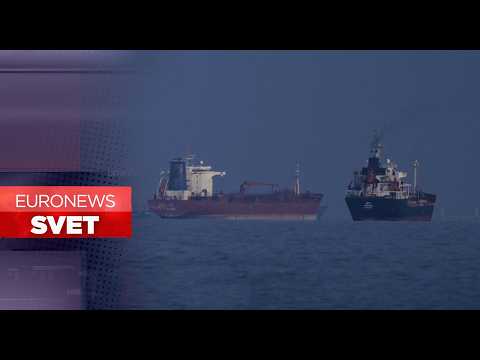
My live interview today on @EuronewsSerbia , where I argued that the 10-day #Israel#Lebanon ceasefire is less a peace deal and more a temporary conflict-management tool designed to open space for negotiations. It halts major operations but allows Israel to act in “self-defense,” while Lebanon is tasked with restraining #Hezbollah - without resolving core issues like disarmament or territorial disputes. I also concluded that the U.S. deliberately decoupled Lebanon from the Iran track to contain escalation with Tehran while isolating Hezbollah as a separate actor—simplifying diplomacy and reinforcing the Lebanese state as the primary negotiating authority. youtube.com/watch?v=XfXlfe…
YouTube video
YouTube
English
0
0
5
310
Yeghia Tashjian /يغيا/ Եղիա Թաշճեան 🇱🇧🇦🇲 รีทวีตแล้ว
ToniMrad
ToniMrad@murat_toni·
🚨 Lebanese President Joseph Aoun: I am ready to go wherever necessary to liberate my land, protect my people, and save my country.
ToniMrad tweet media
English
0
1
12
348
Yeghia Tashjian /يغيا/ Եղիա Թաշճեան 🇱🇧🇦🇲 รีทวีตแล้ว
L'Orient Today
L'Orient Today@lorienttoday·
🔴 #Live | Lebanese citizen removes Israeli flag, attached to a surveillance camera, left by invading Israeli soldiers on Beaufort Castle (Qalaat Shaqif) in Arnoun, Nabatieh (Credit: video sent to our correspondent)
English
11
152
460
52.8K
Yeghia Tashjian /يغيا/ Եղիա Թաշճեան 🇱🇧🇦🇲 รีทวีตแล้ว
Maya Gebeily
Maya Gebeily@GebeilyM·
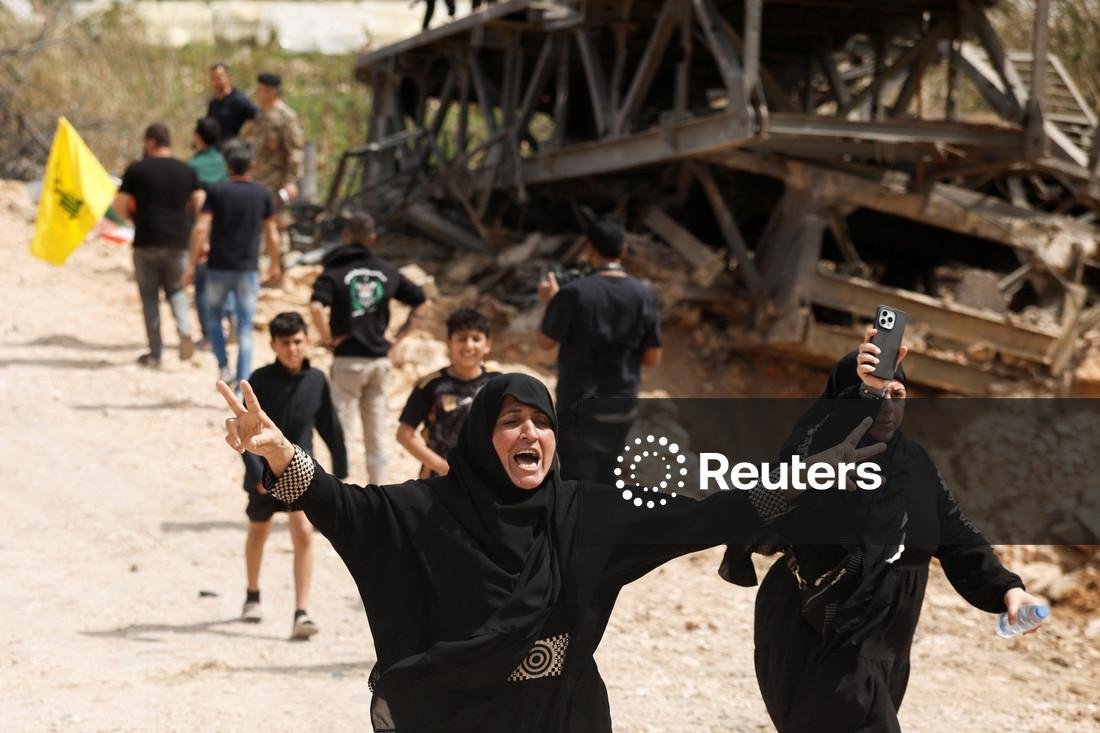
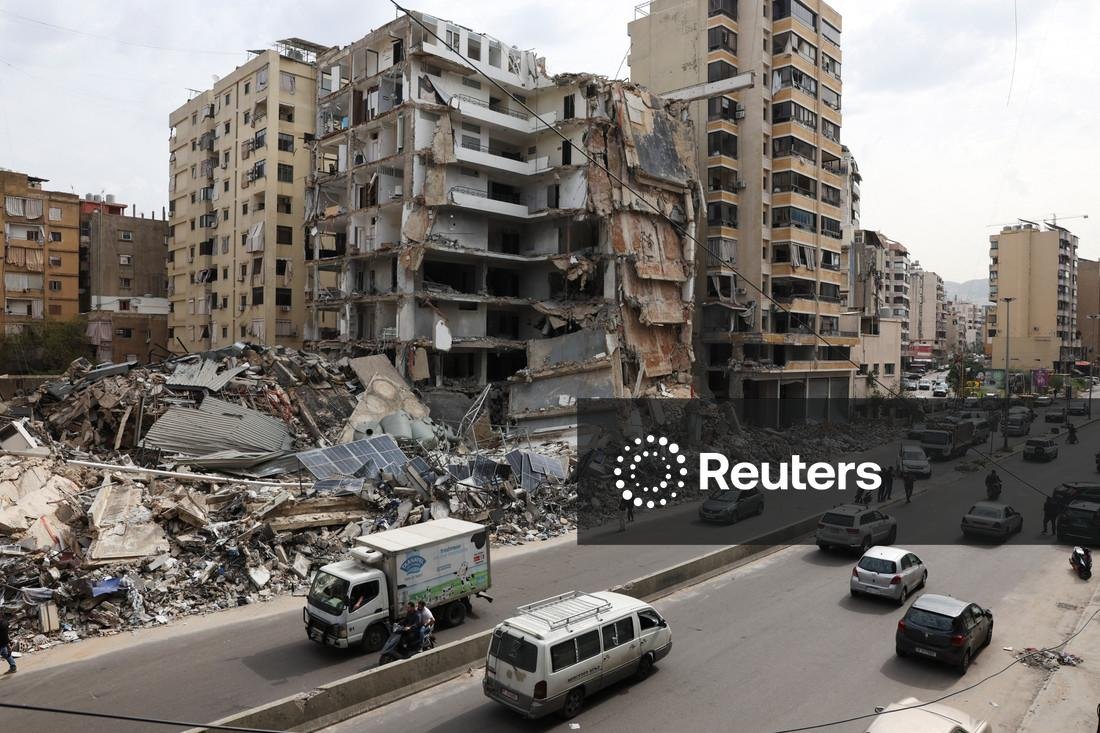
On the first full day of a ceasefire in Lebanon. Images by @lgouliam, @adnanabidi & Mohamed Azakir
Maya Gebeily tweet mediaMaya Gebeily tweet mediaMaya Gebeily tweet mediaMaya Gebeily tweet media
English
2
48
90
6.3K
Yeghia Tashjian /يغيا/ Եղիա Թաշճեան 🇱🇧🇦🇲 รีทวีตแล้ว
Megaphone News English
Megaphone News English@MegaphoneNewsEN·
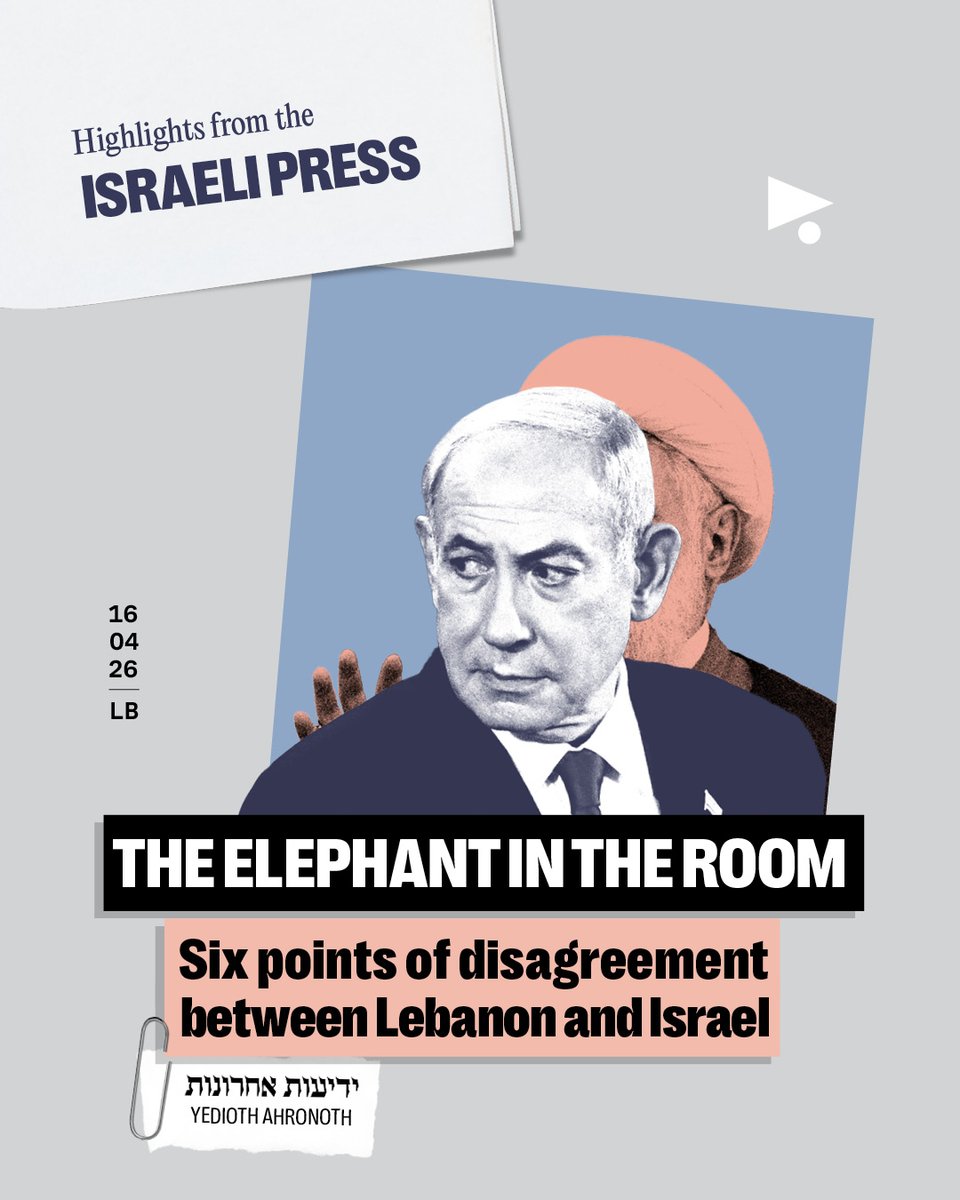
📰 The elephant in the room Six points of disagreement between Lebanon and Israel ▶️ Following US President Donald Trump's announcement of talks to be held today, Thursday, between “the leaders” of Lebanon and Israel, the Israeli newspaper Yedioth Ahronoth listed six points of contention between the two sides, the most prominent being Hezbollah, or what it called “the elephant in the room.” What are these points? 1⃣ The border line or “the conflict over meters.” All experts agree there is no fundamental territorial dispute between Lebanon and Israel. Rather, there are 13 points of contention along the border, involving small areas, sometimes no larger than a football field. 2⃣ The Shebaa Farms or the Syrian dilemma. This area is widely regarded as a symbolic rather than substantive point of friction. Israel considers it Syrian territory occupied in 1967, while Lebanon claims sovereignty over it. Resolution hinges on Syria: if Damascus recognizes the area as its own, the issue is settled; if not, Israel and Lebanon will need to find another solution. 3⃣ Security dilemmas or the "demilitarized zone" model. One proposed solution is to establish a framework similar to those agreed upon with Egypt and Syria: a demilitarized zone in southern Lebanon extending to the Litani River, then a zone with no military presence but only police from the Litani to the Awali River, and finally Beirut and its northern environs under Lebanese army control. On paper, this appears feasible. The question, the newspaper notes, is: Who would enforce it on the ground? 4⃣ Hezbollah or the elephant in the room. If there is one issue that will determine the course of negotiations, it is this. The pessimistic view holds that Hezbollah is too strong to be disarmed without violent internal confrontation or extensive foreign intervention. The optimistic view argues that the group has been weakened by the war and faces growing criticism within Lebanon, which could enable gradual change. In any case, no progress toward a peace agreement is possible without addressing this question. 5⃣ Can the new Lebanon be trusted? The current Lebanese government is adopting a relatively aggressive stance toward Hezbollah, something not seen in years. However, this remains a fragile arrangement: Hezbollah's influence runs deep within the Lebanese army, and fears of an internal coup or political purges severely limit the government's ability to implement its decisions. 6⃣ Is peace a viable scenario? In the short term, the answer is almost certainly no. In the long term, three possible scenarios can be outlined: - A more stable status quo and ceasefire, with monitoring mechanisms; - A transitional security arrangement, along the lines of military settlements and demilitarized zone models; - A comprehensive peace, contingent on a dramatic weakening of Hezbollah or a broader regional shift, such as regime change in Iran. ▶️ The report quotes a political source saying that no decision has been made regarding a ceasefire with Hezbollah. According to the source, the US administration is pushing for a cessation of hostilities in Lebanon or some form of truce, but this appears out of step with events on the ground as long as Hezbollah continues firing.
Megaphone News English tweet media
English
0
1
2
327
Yeghia Tashjian /يغيا/ Եղիա Թաշճեան 🇱🇧🇦🇲 รีทวีตแล้ว
Will Christou
Will Christou@will_christou·
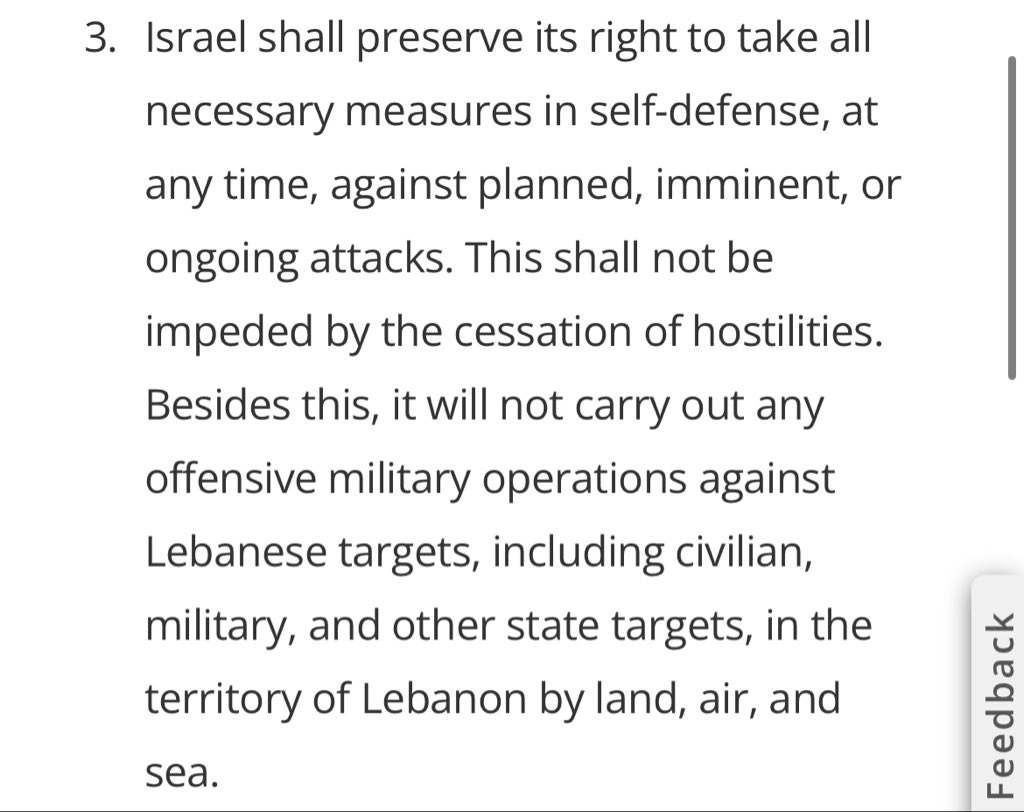
The text of the temporary ceasefire between Lebanon and Israel has just been published. As always, devil is in the details. First impression is that this returns Lebanon to the post-2024 ceasefire status where Israel is allowed to strike where it wants to in Lebanon, if it deems it in self defence, as per article three of the ceasefire text. This will probably spare Beirut at the least. But it is a unique ceasefire where one side of the ‘truce’ is allowed to fire on the other if it deems fit. The second point is that the talks between Israel & Lebanon are meant to lead to: Disarming of Hezbollah, demarcating the border btwn Lebanon and Israel. Both issues have been at the heart of Israel-Leb conflicts since 2006 and despite successive efforts, have never found a solution. We’re unlikely to see a real solution to either of those issues in the ten day ceasefire period. What happens next, if not? A return to war? Extension of the ceasefire ? state.gov/releases/offic…
Will Christou tweet media
English
4
101
174
25K