
Yorga Permana

8.1K posts

Yorga Permana banner
Yorga Permana

Yorga Permana

@yorgaperm

PhD in Economic Geography LSE @lsegeography working on the gig economy | Lecturer in @sbmitb Institut Teknologi Bandung, Indonesia

Indonesia เข้าร่วม Haziran 2011
366 กำลังติดตาม2.2K ผู้ติดตาม
ทวีตที่ปักหมุด
Yorga Permana
Yorga Permana@yorgaperm·
Online platform workers view the gig economy as a stepping stone in their career progression. They are highly skilled, well-educated, & have the potential to earn substantial incomes by offering services through digital platforms. My article in @LSESEAC blogs.lse.ac.uk/seac/2023/11/1…
English

1
7
26
3.8K
Yorga Permana รีทวีตแล้ว
NBER
NBER@nberpubs·
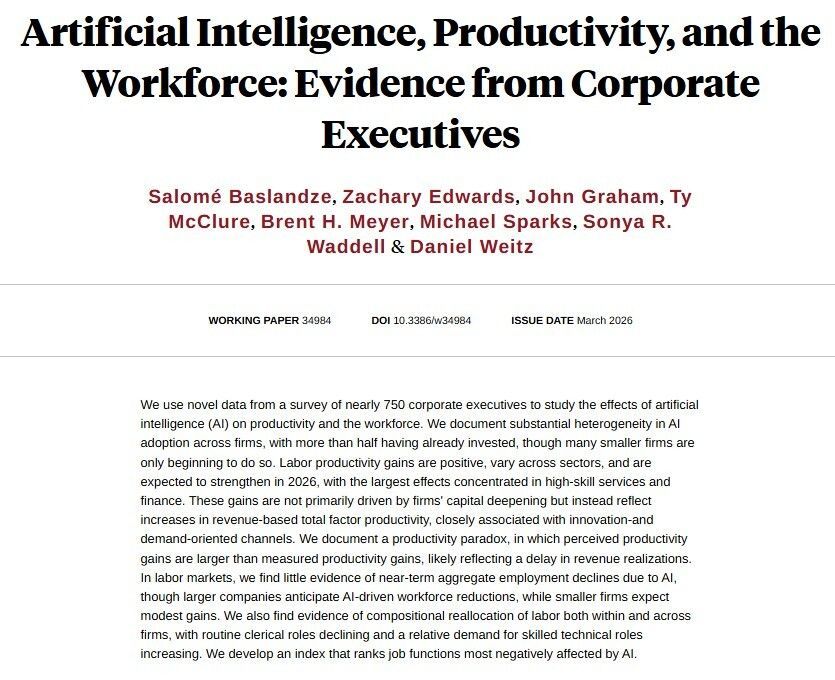
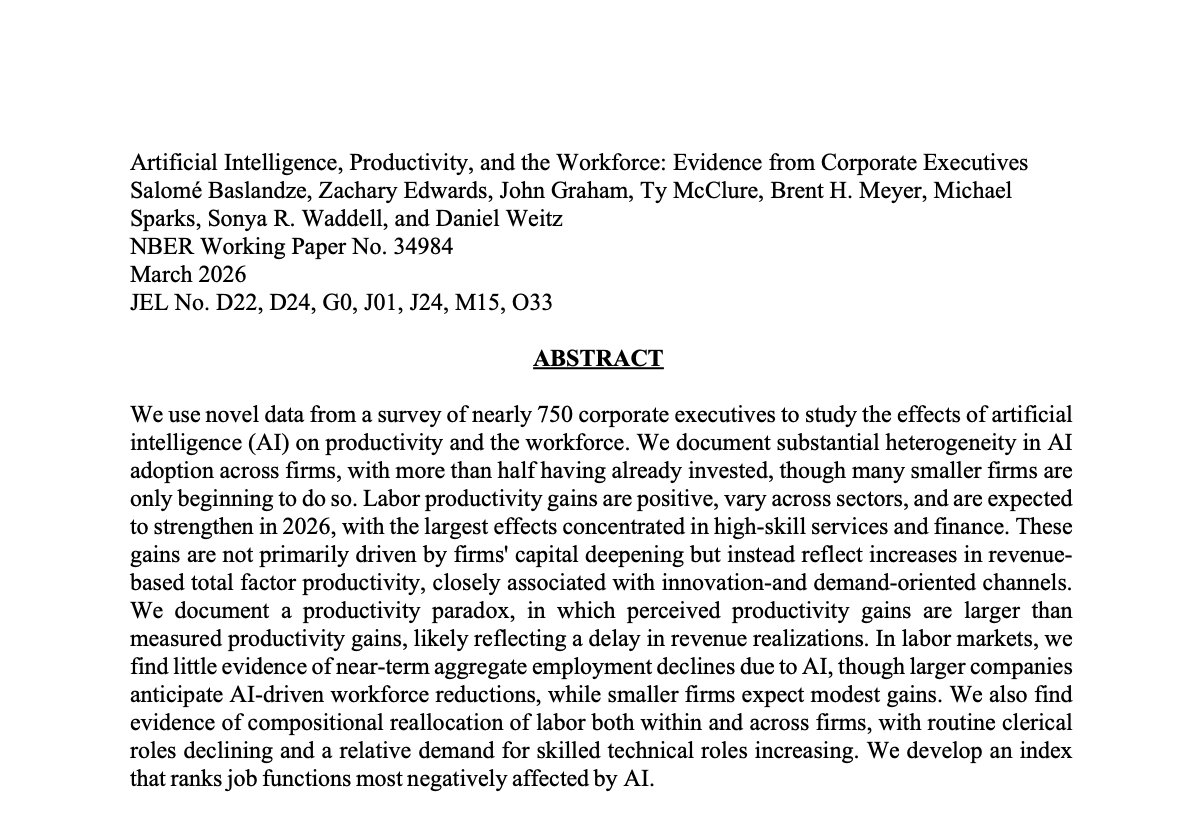
AI will increase productivity, reallocate labor from routine tasks to technical tasks and cause large (small) firms to reduce (increase) workforce, from Salomé Baslandze, Zachary Edwards, John Graham, Ty McClure, Brent H. Meyer, Michael Sparks, Sonya R. Waddell, and Daniel Weitz nber.org/papers/w34984
NBER tweet media
English
8
26
75
13.8K
Yorga Permana รีทวีตแล้ว
Luis Garicano 🇪🇺🇺🇦
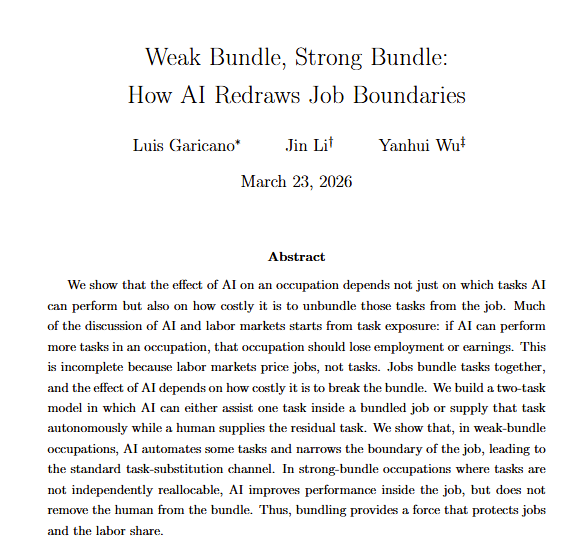
Famously (there is a beautiful Works in Progress piece on this) in 2016, Geoffrey Hinton told an audience in Toronto that medical schools should stop training radiologists, since AI would soon outperform them at reading scans. Ten years later, there are more radiologists than ever, and they earn more than they did then. Hinton was right about the task, but he was wrong (so far!) on the future of the radiology profession. Times have never been better for them. The gap between those two claims, the difference between tasks and jobs, is the subject of a paper I have written with Jin Li and Yanhui Wu, and that we release today: "Weak Bundle, Strong Bundle: How AI Redraws Job Boundaries." (Very relatedly we are also finishing the first draft of our book "Messy Jobs" on AI and Jobs!! You will be the first to hear). We start from the observation that the growing literature on AI and labor markets measures the AI shock by task exposure: people count how many tasks AI can perform in a given occupation AI can perform, and infer that more exposure means more displacement. Eloundou et al. published a paper in Science in 2024 that started this literature, and many follow the same logic. The inference they make is that the more exposed tasks, the worse the outcomes. This is incomplete, because labor markets price jobs, not tasks. A radiologist does not just sell image classification, but does many other jobs: triages cases, communicates with other physicians, trains residents, makes the difficult decisions, and signs a diagnosis. The market buys a bundled service. The question AI poses is not whether it can do one task inside the bundle. The question is whether that task can be pulled out. Thread (1/3) dropbox.com/scl/fo/689u1g7…
Luis Garicano 🇪🇺🇺🇦 tweet media
English
42
440
1.8K
371.3K
Yorga Permana รีทวีตแล้ว
Rohan Paul
Rohan Paul@rohanpaul_ai·
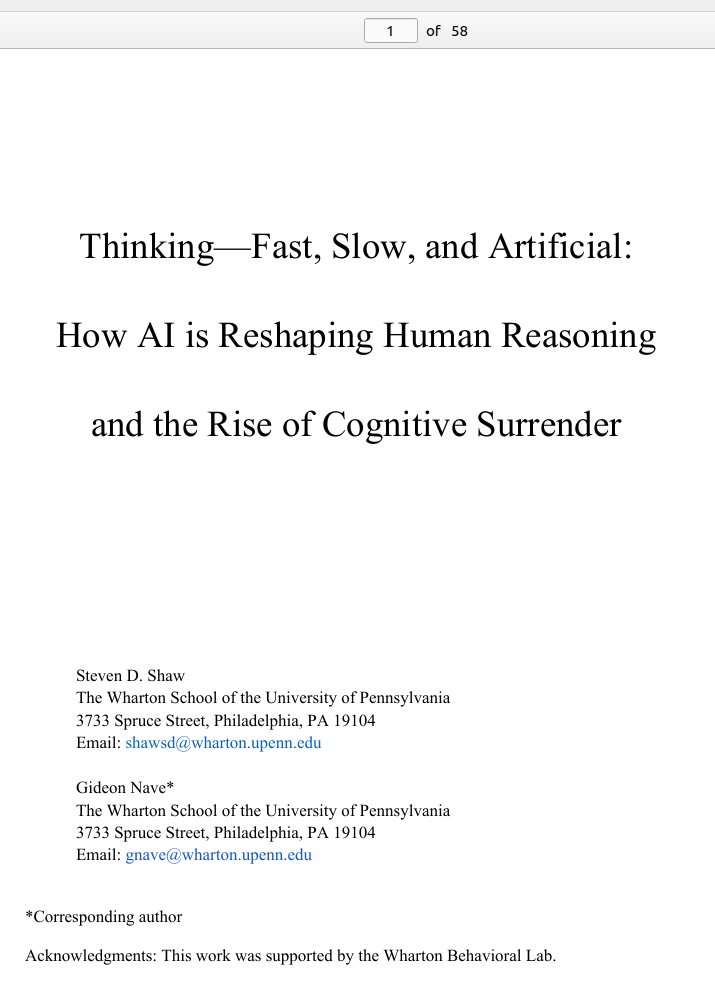
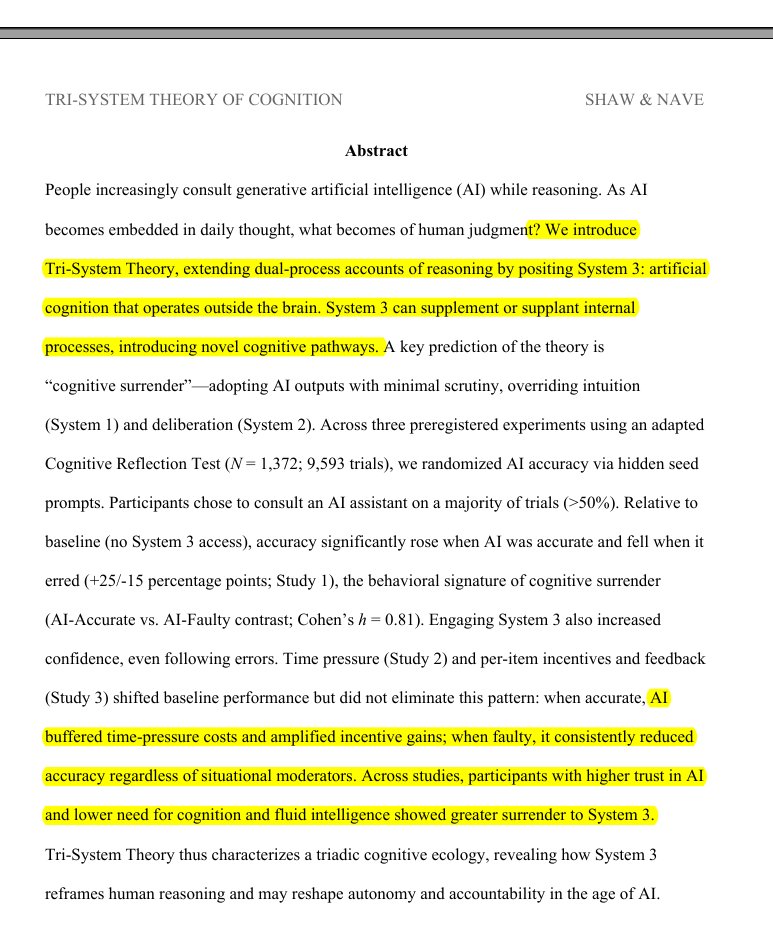
Wharton’s latest AI study points to a hard truth: “AI writes, humans review” model is breaking down Why "just review the AI output" doesn't work anymore, our brains literally give up. We have started doing "Cognitive Surrender" to AI - Wharton’s latest AI study points to a hard truth: reviewing AI output is not a reliable safeguard when cognition itself starts to defer to the machine.when you stop verifying what the AI tells you, and you don't even realize you stopped. It's different from offloading, like using a calculator. With offloading you know the tool did the work. With surrender, your brain recodes the AI's answer as YOUR judgment. You genuinely believe you thought it through yourself. Says AI is becoming a 3rd thinking system, and people often trust it too easily. You know Kahneman's System 1 (fast intuition) and System 2 (slow analysis)? They're saying AI is now System 3, an external cognitive system that operates outside your brain. And when you use it enough, something happens that they call Cognitive Surrender. Cognitive surrender is trickier: AI gives an answer, you stop really questioning it, and your brain starts treating that output as your own conclusion. It does not feel outsourced. It feels self-generated. The data makes it hard to brush off. Across 3 preregistered studies with 1,372 participants and 9,593 trials, people turned to AI on over 50% of questions. In Study 1, when AI was correct, people followed it 92.7% of the time. When it was wrong, they still followed it 79.8% of the time. Without AI, baseline accuracy was 45.8%. With correct AI, it jumped to 71.0%. With incorrect AI, it dropped to 31.5%, worse than having no AI. Access to AI also boosted confidence by 11.7 percentage points, even when the answers were wrong. Human review is supposed to be the safety net. But this research suggests the safety net has a hole in it: people do not just miss bad AI output; they become more confident in it. Time pressure did not eliminate the effect. Incentives and feedback reduced it but did not remove it. And the people most resistant tended to score higher on fluid intelligence and need for cognition. That makes this feel less like a laziness problem and more like a cognitive architecture problem.
Rohan Paul tweet mediaRohan Paul tweet media
English
174
725
3K
289.3K
Yorga Permana รีทวีตแล้ว
Will Rinehart
Will Rinehart@WillRinehart·
New NBER paper surveys ~750 CFOs on AI’s real effects. Key findings: -Firms perceive 1.8% labor productivity gains from AI in 2025, but revenue-based measures imply only 0.6%. It's a classic productivity paradox: the benefits feel real before they show up in the numbers. Interesting addendum: what firms report as productivity gains today roughly matches what their revenue numbers imply for next year. The gains may be real, just delayed.​​​​​​​​​​​​​​​​ -These gains are not primarily driven by firms' capital deepening but instead reflect increases in revenue based total factor productivity. -Aggregate job losses are minimal so far. Large firms expect modest cuts; small firms expect slight headcount gains. Net 2026 effect: roughly -0.4% of the labor force. -The jobs most at risk are office and administrative support. The jobs getting a boost tend to be engineers, analysts, sales roles. -Productivity gains come mostly from product innovation and better customer reach, not cost-cutting. At least right now, AI is a growth tool first, a labor-saver second.
Will Rinehart tweet media
English
6
54
205
35.5K
ITBFess - kirim menfess di itbfess.wtf
itb! ada jasa pinjem laptop gasi? jujur butuh banget buat ngelaprak dan nugas, minta ke alumni belum di respon. info dong guys 😔
Indonesia
1
0
4
2.7K
Yorga Permana รีทวีตแล้ว
Nuno Crato
Nuno Crato@CratoNuno·
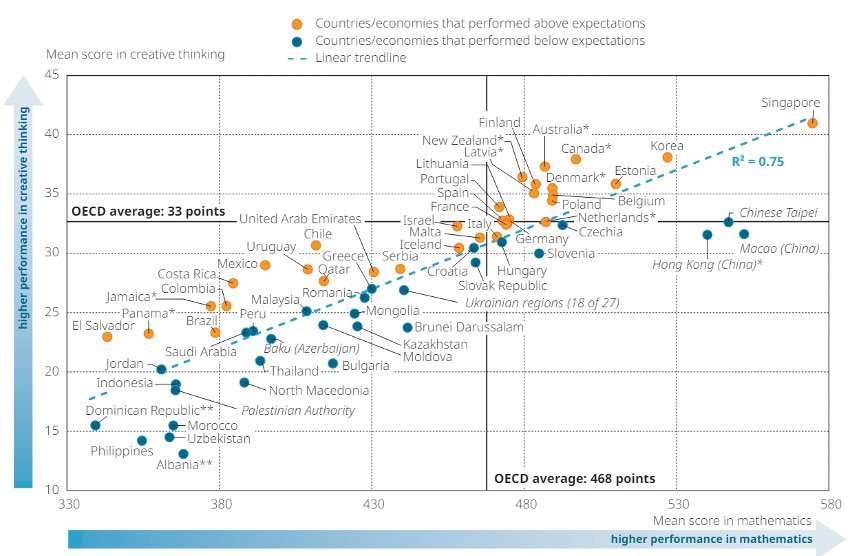
@Doug_Lemov @ValaAfshar Absolutely. Data from PISA: Where school MATH education is more rigorous, students are more CREATIVE in areas such as writing fiction, drawing posters and the sort. As I once titled an article: The more you have in your box, the better you can think outside of the box
Nuno Crato tweet media
English
24
226
917
92.1K
Yorga Permana รีทวีตแล้ว
Kiran Garimella
Kiran Garimella@gvrkiran·
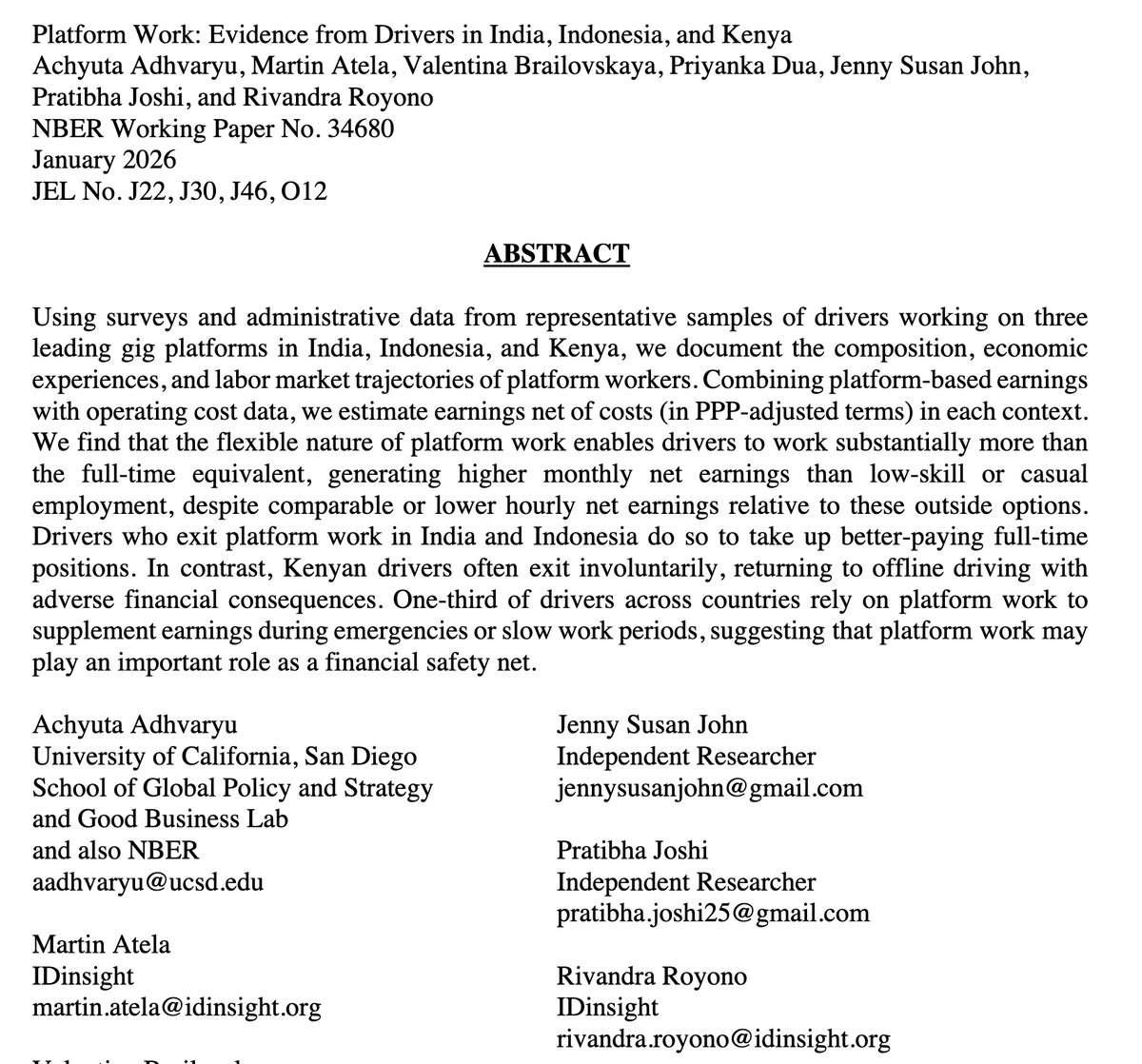
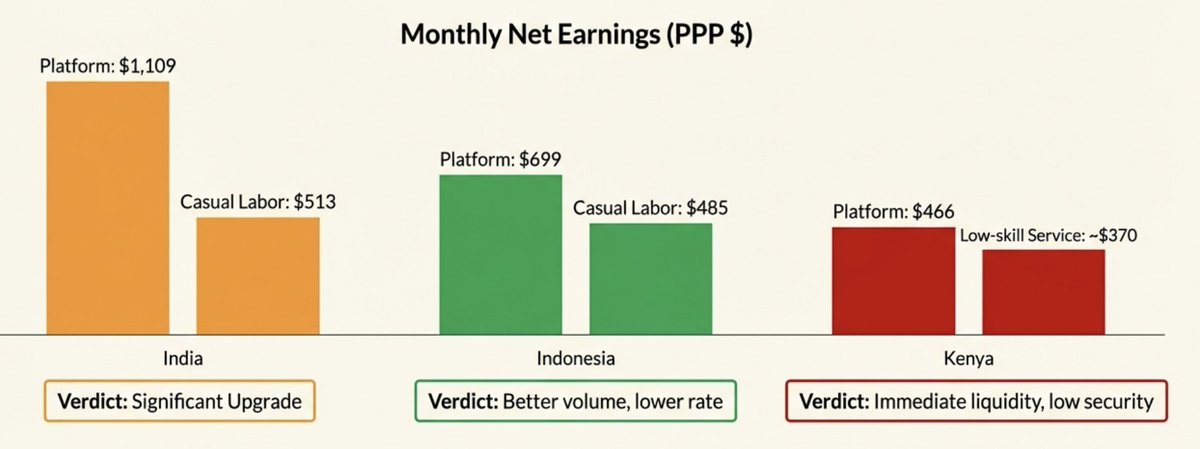
This is a great paper and provides insights on the role of gig work in India, Indonesia and Kenya Overall, gig work definitely acts as a vehicle for upward mobility (along with a ton of caveats) There's a significant heterogeneity across the 3 markets nber.org/system/files/w…
Kiran Garimella tweet mediaKiran Garimella tweet media
English
0
32
105
8.1K
RX782
RX782@tipaa·
Susah banget ga julid.. Cc @yorgaperm
Indonesia
1
0
0
1.5K
Yorga Permana รีทวีตแล้ว
LSE Inequalities
LSE Inequalities@LSEInequalities·
📣 New paper: This research note introduces the World Elite Database (WED), its construction principles, and presents preliminary findings on how economic elites differ across countries. buff.ly/Laa6ejw
English
0
55
178
33.4K
Nabiyla Risfa Izzati
Nabiyla Risfa Izzati@nabiylarisfa·
Hating Bahlil is easy (let’s do it everyday). However, let’s not repeating “Presiden nggak salah, dia nggak tahu apa-apa 🥹 Makasih udah beresin kekacauan ini Pack 🫶” pipeline again.
Indonesia
66
4.4K
15.8K
260.2K
Yorga Permana รีทวีตแล้ว
César A. Hidalgo
César A. Hidalgo@cesifoti·
One telltale sign of amateur writing is thinking that beauty comes from words. This often results in writing that is vacuous while ornamented. But the truth is that writing is not about words. Words serve a purpose, but since the same story can be told in a myriad of ways, and in thousands of languages, writing is about something that transcend the choice of words. Good writing is beautiful, and can include ornamentation, but this should be at the service of the story or the point being made. If it doesn’t help deliver meaning, enhance a point, or evoke a feeling, the ornamentation becomes gratuitous, unnecessary, editable. Like the feathers of a peacock, decoration needs a reason. In writing, this is not attracting a mate but delivering meaning in the form of a story. This point is true for fiction and non-fiction. Take a great work of modern fiction, such as Charlie Kaufman’s Eternal Sunshine of the Spotless Mind. The core of the premise, and its unfolding, is what makes that story so intensely touching. You can tell that story to your friend, over beers at a noisy bar without any of the word choices of the movie. And it will still be an intriguing story. Writers understand that what they are working on is a story. What happens, in which order, and why. Words are chisels that we use to break a story into pieces, but the story is the statue we are trying to carve out of the stone. Words can help us add texture, but we have to be careful to not let them get in the way of what is important. In non-fiction this disease expresses itself in what some writers call “academese.” That is writing that instead of saying “figure 2 shows,” would say “we can elucidate from the diagrams juxtaposed in the panels pf the diagram that.” A reader may survive this once or twice, but make it a habit, and you will lose your reader. Because a writer that has not been read will often demand too much from their readers. And a writer that has been read will know, for a fact, that about half of what they write will be misinterpreted or misunderstood. And that is only after putting a considerable effort to streamline their writing. Without this effort the problem is not that of being misunderstood, but that of simply being read. Keep it simple. It is about more than words.
English
9
21
111
16.3K
Yorga Permana
Yorga Permana@yorgaperm·
@insanridho Edan do, baru nyadar naek tube northern line dr rumah ke London central 20-30 menit adalah kemewahan
Indonesia
1
0
0
155
Insan Ridho
Insan Ridho@insanridho·
Salah satu alasan orang Indonesia mesti bangun lebih pagi bisa jadi soal waktu commuting. Rata-rata waktu commuting di negara-negara Asia Tenggara: Malaysia: 37,21 menit Thailand: 39,76 menit Singapura: 41,23 menit Indonesia: 43,28 menit Sumber: moneybarn.com/co2-commutes/
Tanyarl 💚@tanyakanrl

💚 Ya gimana gak paling pagi, di Indo masuk sekolah aja paling gasik. Jam 7 gerbang udah di kunci😌 Itu juga udah kesiangan sebenernya, harus nya rata-rata jam 4 pagi🙂

Indonesia
3
4
23
2K