ทวีตที่ปักหมุด

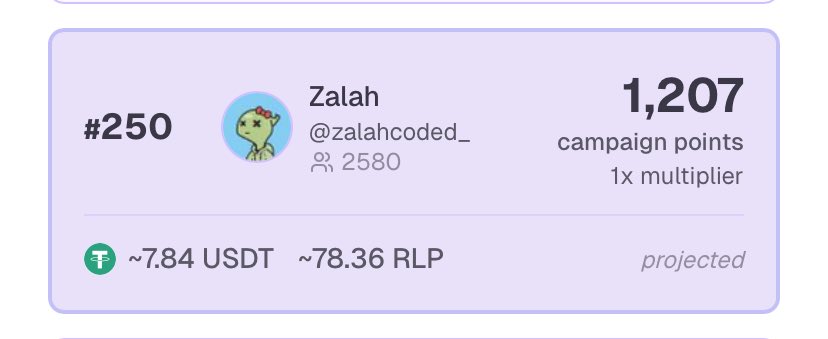
Thanks @RallyOnChain spent $3.6 for submission….should get like $2 In return be for the campaign ends
English
Zalah
25.8K posts

@zalahcoded_
Exploring Web3 & InfoFi || Threads on DeFi |crypto insights || blockchain tech || @LongLostNFT








Most AI systems fail quietly in one critical area: memory. They can generate answers, but they cannot remember context in a way that compounds intelligence over time. That limitation turns every interaction into a reset, not progress. @dgrid_ai challenges that directly. It treats memory not as storage, but as an active layer of intelligence. This matters because intelligence without memory is just reaction. Intelligence with memory becomes strategy. Think about how humans operate. We don’t just respond to information. We build on past experiences, refine decisions, and recognize patterns over time. That is where real value comes from. Dgrid_AI brings that same principle into decentralized AI systems. • Memory is structured, not scattered • Context is preserved, not lost • Intelligence evolves, not resets The deeper implication is not technical, it’s economic. When AI can retain and reuse meaningful context, it reduces redundancy. It cuts computational waste. It creates systems that get cheaper and smarter the longer they run. That flips the current model. Today, most AI interactions are expensive and stateless. Tomorrow, with systems like Dgrid_AI, interactions become cumulative assets. A simple example: Two AI agents solving the same problem repeatedly will normally start from scratch every time. With persistent memory, the second attempt is faster. The third is optimized. By the tenth, the system isn’t solving anymore, it’s executing learned intelligence. That transition from “compute-heavy” to “memory-efficient” is where scale happens. Dgrid_AI is not just improving AI performance. It is redefining how intelligence compounds in decentralized environments. The real shift is this: Memory is no longer a byproduct of intelligence. It becomes the foundation of it.permawebDAO Governance in most DAOs suffers from one invisible flaw: decisions are made, but context disappears. Votes are recorded, outcomes are visible, but the reasoning behind them fades over time. This creates a cycle where communities repeat debates instead of building on past clarity. @permacastapp approaches governance differently. It treats memory as infrastructure, not history. This distinction matters more than it seems. If governance data is permanent, searchable, and structured, then every decision becomes a reference point, not just a record. That changes how communities evolve. • Proposals are not isolated events • Discussions become long-term assets • Decisions gain continuity and accountability The result is governance that learns. Consider the difference: A traditional DAO debates treasury allocation today with no structured link to past outcomes. A memory-based DAO can instantly surface: • What similar proposals achieved • Where assumptions failed • Which contributors consistently made accurate calls This reduces noise and increases signal. It also shifts power dynamics. When information is persistent and transparent, influence moves away from loud voices and toward proven insight. Over time, credibility becomes measurable, not performative. That is a fundamental upgrade. Another key implication is onboarding. New members usually struggle because they lack historical context. They rely on summaries, which are often biased or incomplete. With permanent, accessible governance memory, new participants can understand the “why” behind decisions, not just the “what.” That shortens the learning curve and strengthens alignment. permawebDAO is not just preserving data. It is turning governance into a system that compounds knowledge instead of losing it. The long-term effect is simple but powerful: Communities stop repeating themselves. They start evolving with intention.



Sorry everyone for not replying on comments but my day is really busy. Decent results yesterday on @wallchain but I will take this day off. Keep pushing guys and climb the Wallchain LB. I will reply on everything tomorrow. How many did you get?