
Mbappe = 200M de prime j’ai bien aime le sprint nag-retweet
Mbappe = 200M de prime j’ai bien aime le sprint
2.7K posts


Mbappe = 200M de prime j’ai bien aime le sprint
@1lbert
Sumali Haziran 2014
1.6K Sinusundan99 Mga Tagasunod

Mbappe = 200M de prime j’ai bien aime le sprint nag-retweet

Maradona si hubieran existido las pausas de hidratación en México 86.
Español
Mbappe = 200M de prime j’ai bien aime le sprint nag-retweet

I’ve seen this tweet like 8 million times on my feed and I have laughed each time. Lmaooooooo so good
l feII in Dior@LIRIO_AG
“Ay no, tarjeta gris otra vez”.
English
Mbappe = 200M de prime j’ai bien aime le sprint nag-retweet


Mbappe = 200M de prime j’ai bien aime le sprint nag-retweet

NEW: malware developers added nuclear & biological weapons text to to their spyware.
Goal? To trigger LLM safety refusals... so that their spyware wouldn't be analyzed by an AI security scanner.
Cleanest practical example I can think of for why over-indexing on first order safety alignment is risky.
When closed (and open) models ship with aggressive refusals, they will be sprinkled with second-order blindspots that attackers will discover...and exploit.
We are only in the earliest days of attackers leveraging these features, and it wouldn't surprise me if users systems that need to handle complex cybersecurity issues demand that models be less safety-blunted.
In the weeds: @SocketSecurity's post also shows why intention matters in how you design a malware analysis pipeline to avoid prompt manipulation.
H/T to colleagues that shared this with me socket.dev/blog/mini-shai…

English
Mbappe = 200M de prime j’ai bien aime le sprint nag-retweet

Remember: the Online Safety Act was justified as a measure to protect British children from exposure to pornography, then immediately used to block footage of social unrest because of mass immigration. It's so utterly cynical--and utterly sinister.
Shabana Mahmood MP@ShabanaMahmood
I make no apologies for doing the right thing to protect children from paedophiles. This is about stopping the coercion and sextortion of children, not surveilling or policing people’s phones. This technology is already on devices. The tech firms just need to switch it on to block children from seeing nude imagery. There is no reporting, no data collection, no monitoring, and no images leaving the device. All adults will be able to switch off the protections if they are over 18. This is targeted, proportionate and - most importantly - it protects children from vile abusers.
English
Mbappe = 200M de prime j’ai bien aime le sprint nag-retweet

Look at how the PSG players immediately stopped appealing the moment the referee waved it away. Only Marquinhos approached the ref, and the bench stayed calm. Zero drama.
Now contrast that with Mikel Arteta and Arsenal. When Madueke pulled down Nuno Mendes and intentionally went down looking for a soft penalty, the Arsenal players threw a collective tantrum on the pitch. Arteta rallied his entire bench, screaming at the officials for almost a minute and nearly interrupting the game.
That’s the exact brand of tactical tantrum he throws in the PL to bully weak English referees who completely lack authority.
What makes Arteta truly embarrassing is his shameless desperation. Later on, when Gyokeres’ shot got deflected for a corner, Arteta was up in the fourth official's face demanding a handball penalty. Then we saw the replay, and the ball wasn't even close to a PSG player's arm.
He’s a certified embarrassment to the beautiful game.
foland (fan)@propsMCFC
new angle just dropped. how on earth was this not given😂😂
English
Mbappe = 200M de prime j’ai bien aime le sprint nag-retweet

@QuintuplePote Mensch pue miraculeusement le jacobinisme sympatoche alors que son équivalent dans n'importe quel pays du monde serait un cryptonazi mais nos géniaux verts trouvent le moyen de fabriquer un complot pcq ils ont tjrs pas digéré le fait d'être nuls en maths mdrrr wow
Français
Mbappe = 200M de prime j’ai bien aime le sprint nag-retweet

The Olympic Games are already the Enhanced Games.
These are the fastest 100m times ever run with the red ones caught doping.
Bolt’s protocol just allowed him to not get caught.

Jarren Feldman@jarrenfeldman
Prediction: world records during the enhanced games are only going to be beat marginally if at all because all pro athletes are already on performance enhancing drugs
English
Mbappe = 200M de prime j’ai bien aime le sprint nag-retweet

It was black mold. Check your ducts and AC units.
Mr. S.T.A.R.@favelaoverlord
weird fatigue/brain fog/scratchy throat symptoms I’ve been getting for almost a month mysteriously cleared up today with almost no explanation
English
Mbappe = 200M de prime j’ai bien aime le sprint nag-retweet

Forward deployed engineers, or equivalent, are about to become one of the most in-demand jobs in tech. And one of the most important functions for AI rollouts.
Deploying agents is far more technical of a task than most people realize, often far more involved than deploying software. Software generally works the same way every time, and generally for the past few decades has been updated versions of an existing technology or concept (which basically means easier for the enterprise to update their workflows on a newer system).
With agents, you’re actually deploying the equivalent of work output within the enterprise. The customer is effectively using you as a professional services provider for a task, which they expect to get solved nearly end-to-end now. This means you need to actually deeply understand the business process as a vendor, and get the customer from the current to the end state seamlessly.
Companies need help figuring out which models will work best for their workflows, they need extensive evals setup often, they need change management support for workflows, they need to get their data setup for the agents, and constant tuning of the agentic system for their process.
Massive role in tech now. And another example of the kind of highly technical work that AI is creating.
First Squawk@FirstSquawk
GOOGLE TO RECRUIT HUNDREDS OF ENGINEERS TO ASSIST CLIENTS IN EMBRACING ITS AI – THE INFORMATION
English
Mbappe = 200M de prime j’ai bien aime le sprint nag-retweet

Claude (tokens): “You’re absolutely right!”
Claude (activations): “holy shit this guy is retarded…”
Anthropic@AnthropicAI
New Anthropic research: Natural Language Autoencoders. Models like Claude talk in words but think in numbers. The numbers—called activations—encode Claude’s thoughts, but not in a language we can read. Here, we train Claude to translate its activations into human-readable text.
English
Mbappe = 200M de prime j’ai bien aime le sprint nag-retweet

this is how you look when you have multiple agents running btw
Abakcus@abakcus
Juggler juggling juggling jugglers.
English
Mbappe = 200M de prime j’ai bien aime le sprint nag-retweet
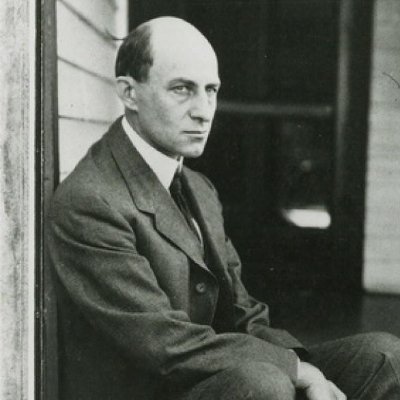
My body is a machine that transfers comments from my Managing Director to Claude and then back to my Managing Director
English
Mbappe = 200M de prime j’ai bien aime le sprint nag-retweet

Really cool
When they trained GPT3 they had loss spikes because they scraped from a subreddit of microwave noises
That training batch was literally text like "mmmmmmmmmmmmmmm"
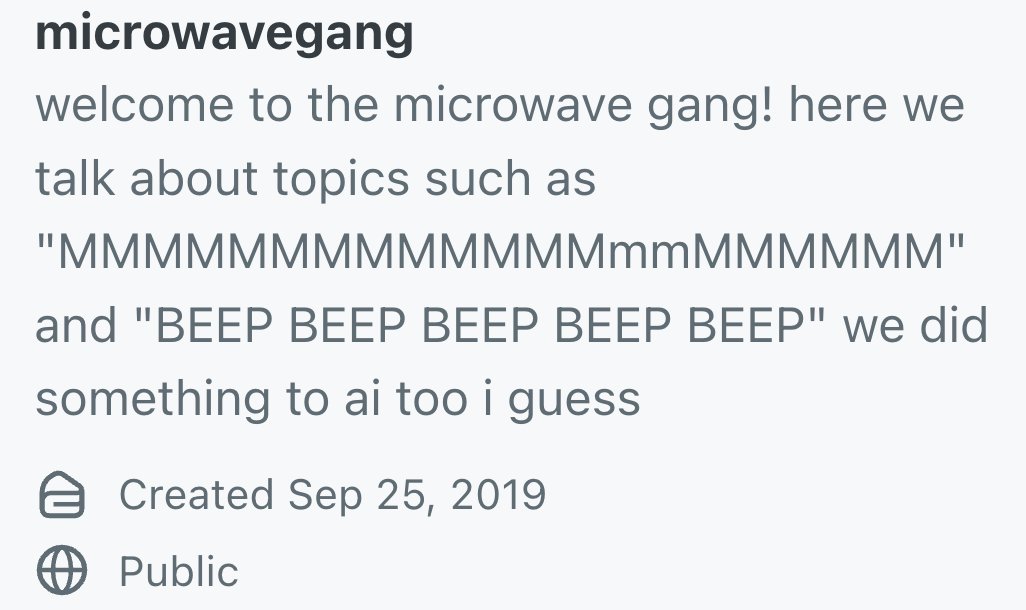
Yifei Hu@hu_yifei
Before and after cleaning up the dataset. Big loss spikes just went away.
English
Mbappe = 200M de prime j’ai bien aime le sprint nag-retweet

Mbappe = 200M de prime j’ai bien aime le sprint nag-retweet

“During his nearly ten months on Elba [Napoleon] reorganized his new kingdom’s defences, gave money to the poorest of its 11,400 inhabitants, installed a fountain on the roadside outside Poggio (which still produces cold, clean drinking water today), read voraciously (leaving a library of 1,100 volumes to the municipality of Portoferraio), played with his pet monkey Jenar, walked the coastline along goat-paths while humming Italian arias, grew avenues of mulberry trees (perhaps finally expelling the curse of the pepiniere), reformed customs and excise, repaired the barracks, built a hospital, planted vineyards, paved parts of Portoferraio for the first time and irrigated land. He also organized regular rubbish collections, passed a law prohibiting children from sleeping more than five to a bed, set up a court of appeal and an inspectorate to widen roads and build bridges.”
—Napoleon: A Life, Andrew Roberts (2014)
Today in History@TodayinHistory
Today in 1814, Napoleon arrived at Elba to begin his exile.
English
Mbappe = 200M de prime j’ai bien aime le sprint nag-retweet

Mbappe = 200M de prime j’ai bien aime le sprint nag-retweet

he's like the retarded forrest gump
Clavicular Updates@Clav0Updates
Clavicular begins his expedition to Epstein’s island, Little Saint James, to film a stream there 👀
English
Mbappe = 200M de prime j’ai bien aime le sprint nag-retweet

L’itw du nouveau patron français d’ArianeGroup dans Les Échos est épouvantable. Il n’a qu’un mot en tête : l’Allemagne, l’Allemagne, l’Allemagne.
Pour le futur missile balistique conventionnel annoncé par Macron, il propose ainsi une production… en Allemagne ! Pas une coproduction, non, une production exclusive en Allemagne, au motif que la France produit déjà les missiles balistiques de sa propre dissuasion.
C’est délirant. Cet homme se donne donc pour mission de transférer notre technologie et nos emplois futurs à l’Allemagne, alors que ce pays, via l’UE, a laminé notre industrie dans tous les autres secteurs sans aucune fébrilité🤡.
C’est n’est pas de la naïveté, juste de l’idéologie et du faux business dans l’espoir de capter une part des budgets militaires et spatiaux allemands. Sauf que cet espoir est vain : l’Allemagne voit ArianeGroup comme un problème pour ses futurs lanceurs nationaux. Ariane peut se déshabiller toujours plus, les Allemands n’en veulent pas. Ils prendront donc ce qu’ils pourront prendre (ici notre technologie balistique et notre avance sur les lanceurs), mettront le pied dans la porte chaque fois qu’on le leur permettra et poursuivront leur politique « en allemands » et certainement pas « en européens » et encore moins en « franco-allemands » 🤡.
Pour illustrer l’état d’esprit du PDG d’ArianeGroup, méditez ce formidable cliché balancé dans l’itw et qui dit tout de son esprit de soumission aux Allemands :
« Je cite souvent cet
exemple : un concept en français, c'est une vague idée, en allemand c'est un
plan détaillé. »
Il va falloir être ultra vigilant avec lui. Eric Trappier, à la tête de Dassault, est définitivement une exception…
OpexNews@OpexNews
🇫🇷🇩🇪 "Nous étudions la possibilité d'une production des missiles balistiques outre-Rhin." @ArianeGroup lesechos.fr/industrie-serv…
Français