Besample

186 posts

Besample banner
Besample

Besample

@Besample_app

Besample is a new data collection platform for researchers that provides access to thousands of respondents in 42 countries worldwide ✨ Backed by Techstars

New York Sumali Mart 2023
119 Sinusundan653 Mga Tagasunod
Besample
Besample@Besample_app·
When someone we love is in pain, we can worry, feel sad, or even scared for them. But instead of showing those emotions, we may try to stay “strong,” hiding our feelings so we don’t burden them. This may seem helpful or caring. But what if hiding those negative emotions actually makes their pain worse? Psychological research shows that social support usually helps people cope with pain (Roberts et al., 2015). Yet growing evidence suggests that even well-intended support can sometimes backfire (Che et al., 2018). One possible reason is emotional suppression — when people hide their feelings while trying to be supportive. Interacting with someone who suppresses their emotions can be stressful (Peters et al., 2016). People often perceive suppressors as less responsive, less authentic, and harder to connect with (e.g., Butler et al., 2003; Impett et al., 2014). Consistent with this, research in the UK shows that when people feel their partner hides emotions, they report greater relationship strain and — quite fascinatingly — more frequent physical pain (Ses & Lamarche, in preparation). But here’s the twist: most research on emotional suppression comes from WEIRD societies, where expressing emotions is seen as authentic (Markus & Kitayama, 1991), and suppression can signal distance (Butler et al., 2007). Beyond the West, emotional restraint can mean something very different—respect, maturity, and social harmony (Matsumoto et al., 2008). What looks distant in one culture may look caring in another. So what happens to relationships and physical health when suppression is culturally normative? Ovgun Ses (@OvgunSs), a PhD student at the University of Essex (@Uni_of_Essex) working with Dr. Veronica Lamarche (@v_lamarche), is exploring exactly this question. She examines whether the UK pattern holds in cultures that value emotional restraint. When a close other is suppressive, do people feel poorer support and more frequent pain? Ovgun focuses on Türkiye and India to represent the collectivistic end of the global cultural continuum. For Ovgun, this topic is also personal. “I’ve been fascinated by how close relationships shape something as physical as pain,” she says. “People genuinely want to help each other, but sometimes the very things we do to protect others have unintended consequences.” Ovgun uses survey methods to measure perceived emotional suppression and test whether it relates to pain through reduced authenticity, lower support quality, and greater relational strain. Around one in five adults worldwide lives with ongoing pain, many relying on close others to cope (Goldberg & McGee, 2011; Gong et al., 2024). Understanding when support helps and when it harms could improve how we make people's lives better across cultures. We are proud to support this important work! #PhDResearch #PhDGrant #CrossCulturalResearch #GlobalResearch #BesampleDissertationGrant
Besample tweet media
English
1
0
1
32
Besample
Besample@Besample_app·
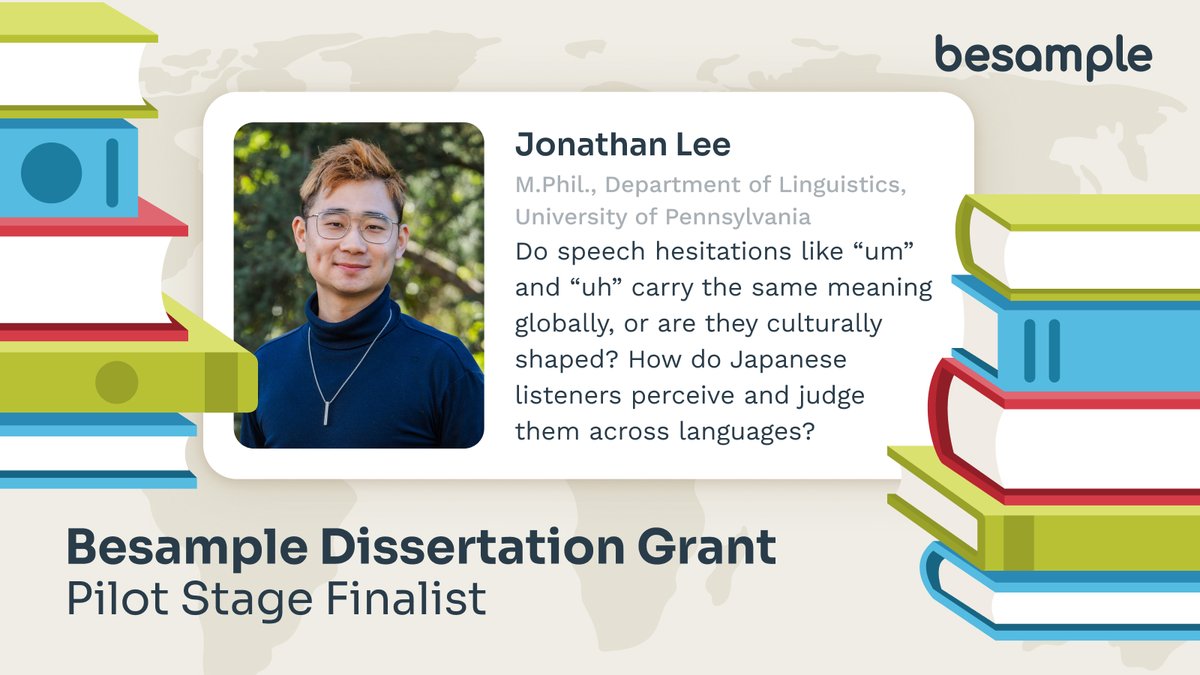
When you hear someone speak with a lot of "um", "uh", or pauses, do you think they’re a poor speaker? If you answered yes, you’re not alone. Research shows that speakers who hesitate are often judged as less confident, less competent, and even less trustworthy (Charoenruk & Olson, 2018; Fox Tree, 2007; King et al., 2018; Loy et al., 2017). But — as is so often the case in behavioral science — most of this research has been conducted on Western samples. So the natural question is: is this effect actually universal? Beyond the West, the meaning of hesitation can look very different. In Japan, for example, silent pauses or saying "eto" (えっと, a common hesitation marker equivalent to "well...") can signal politeness and sincerity rather than incompetence (Cook, 1993; Nakane, 2006; Wang, 2011). Japanese speakers may even carry these norms into English, using longer pauses than native English speakers (Yamada, 2002). Jonathan Lee, a Besample dissertation grant finalist and graduate researcher at @Penn's Department of Linguistics, noticed these contrasts firsthand: “At syntax classes, I noticed that the professor, a leading scholar and editor of one of the most important journals in the field, paused a lot before answering. Did I think she did not know the answer? Of course not. Rather than lowering my trust, those pauses made me feel that she was carefully choosing the most precise and accessible way to explain complex ideas. At the same time, I noticed that politicians like Barack Obama and Joe Biden often produce pauses, while Donald Trump speaks a lot more fluently. Yet people interpret these speaking styles very differently depending on their own beliefs and expectations.” Jonathan, together with his supervisor, Dr. Anna Papafragou, studies whether the meaning of speech hesitations is globally universal by testing how Japanese listeners interpret hesitation. He combines experimental methods from psychology and linguistics in large-scale online studies, where participants listen to speech recordings and evaluate the speakers. For his dissertation, he will examine how Japanese listeners judge fluent vs. hesitant English speakers. Then, he will test whether they can detect hesitation in French, a language they don’t know. He will also measure various cognitive profiles to understand why some people are more sensitive to speech cues than others. This research challenges one-size-fits-all notions of "good communication" and shows that speech must be understood in a way that is globally informed yet locally grounded. Proud to support this work! #PhDResearch #PhDGrant #CrossCulturalResearch #GlobalResearch #BesampleDissertationGrant
Besample tweet media
English
0
0
0
42
Besample
Besample@Besample_app·
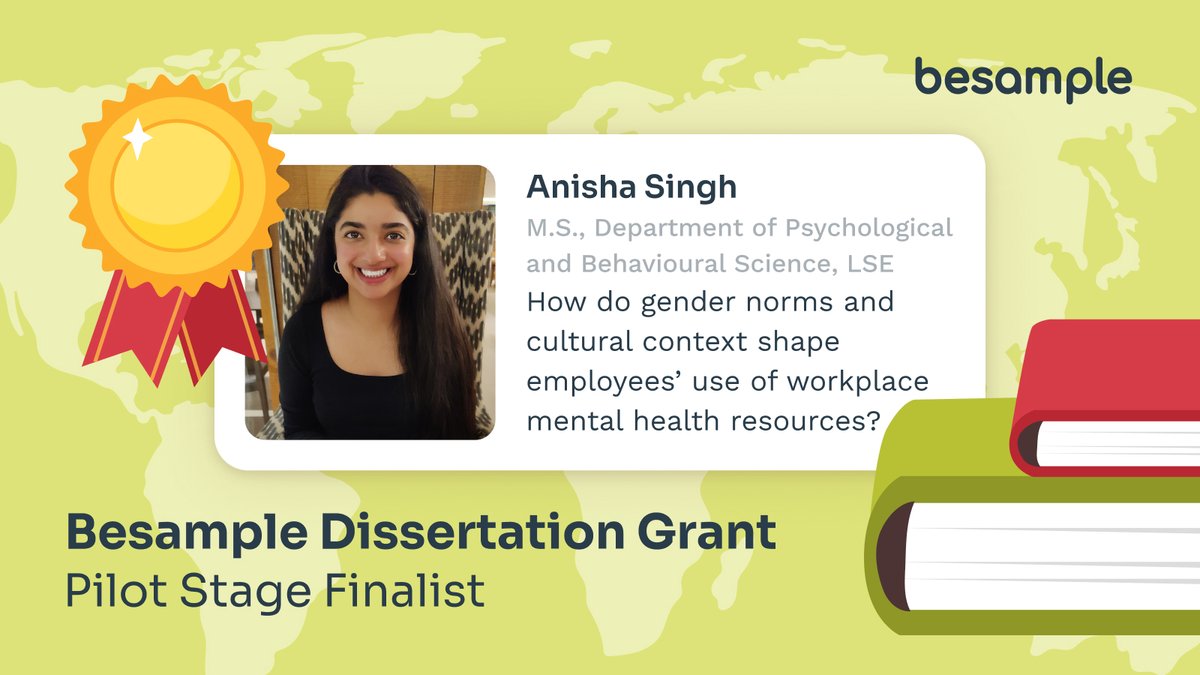
Let us take an educated guess about you. If we ask: Have you ever used mental health support offered in your workplace? We predict that you'll say no. Then, we ask: But does such support exist in your organization? Now, we give it a 50-50 chance that, if you're in a corporate job or were there recently, you'll say yes. If we were right, you’re part of a puzzling statistic: corporate mental health resources are widely available, yet they remain dramatically underused. Employee assistance programs across organizations see annual utilization rates of only about 4–7% of employees (EAPA, 2023). Why? One major reason is stigma. Even in countries where awareness of mental health has improved and open conversations exist, many employees still hesitate to seek help. Research shows that social norms and concerns about appearing weak or unprofessional discourage people from accessing support (Cialdini et al., 1991; Addis & Mahalik, 2003). And that’s in the progressive West! What's happening in the rest of the world, we don’t even know — literally. This is the question explored by one of the Besample Dissertation Grant finalists, Anisha Singh (@anisha0singh), a graduate researcher in Psychological and Behavioural Science at the London School of Economics and Political Science (@LSE_PBS), working with Dr. Laura Giurge. Anisha studies how gender norms and cultural context shape employees’ use of workplace mental health resources. In earlier work, Dr. Giurge and colleagues found that peer testimonials — short stories where people you work with describe their own experiences with mental health support — can increase the uptake of such resources. Simply put, when employees saw that someone like them had used support, sign-ups increased (Giurge et al., 2024). But does the impact of such testimonials depend on who tells the story, how vulnerable they are, and the broader cultural context? To answer this, Anisha and her collaborators are running a randomized experiment across India, Kenya, and Indonesia. Participants read workplace testimonials that vary along two dimensions: the gender of the messenger and the severity of the mental health experience described. The researchers then measure whether the stories shift people’s beliefs about 1) what their peers do, 2) what they approve of, 3) how interested participants become in workplace mental health resources. Anisha’s motivation comes from a small personal moment. Before her Ph.D., she worked in a consultancy, and once rescheduled a meeting because of a therapy appointment. A colleague later messaged her: “You’re setting such a great example by normalizing therapy.” Anisha's research is, in many ways, about exactly that: how small signals from colleagues can shift what feels acceptable at work. Another fascinating project from this year’s Dissertation Grant cohort — and another reminder that culture should not be a footnote in behavioral science, but a starting point. #PhDResearch #PhDGrant #CrossCulturalResearch #GlobalResearch #BesampleDissertationGrant #Besample
Besample tweet media
English
1
0
0
47
Besample
Besample@Besample_app·
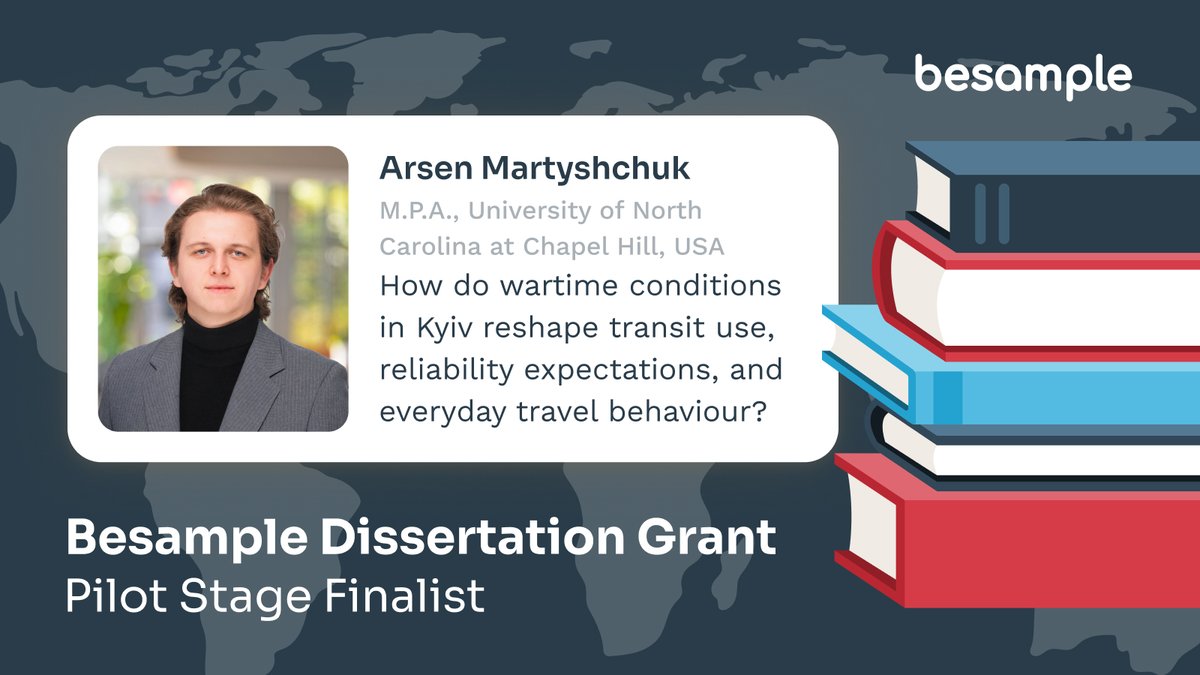
What happens to public transportation when a city is at war? To this day, most Besample users are psychologists, so it’s particularly exciting to see how behavioral questions are being asked in the adjacent fields. Today’s spotlight is one of those exciting ones: it's coming from the field of urban planning. Turns out, most research in urban planning treats transportation disruption as temporary. Say, a hurricane hits, or an earthquake damages infrastructure, or a pandemic changes commuting patterns. It is believed that the system absorbs the shock and eventually returns to normal. Much of the existing literature on transportation resilience (or course largely based in Western contexts) focuses on reliability, backup routes, institutional preparedness, and recovery after short-term events (Iliopoulou et al., 2025; Wang et al., 2022). But what if the disruption is long-term, like a war lasting for several years? Arsen Martyshchuk, a Ph.D. student in City and Regional Planning at The University of North Carolina at Chapel Hill, working with Dr. Matthew Palm, asks a deceivingly simple question: how do people continue using public transportation when war becomes part of everyday life? And, unlike conventional research focusing on stable Western cities, he chooses Kyiv as the starting point. In Kyiv, the public transit system is living through more than isolated short-term shocks. For example, ground transport may stop during air-raid alerts. Infrastructure damage and energy shortages undermine reliability. Plus, nightly curfews affect mobility patterns. Policies change, too, adding new layers of instability. Unlike Western resilience models that pretty much always assume a return to equilibrium, Kyiv presents a case where “normal” itself has shifted: disruption is chronic. In that context, Arsen says, mobility becomes a negotiation between safety, necessity, and trust in institutions. Growing up in Ukraine, Arsen witnessed firsthand what life looks like when public transit systems are unstable, even without a war. He saw people continue commuting, helping each other, preserving routines despite constant risk. Trained as an urban planner, he began to see transportation not merely as infrastructure, but as a system through which people maintain dignity and continuity when formal protections falter. Methodologically, Arsen combines quantitative transit data (including GTFS feeds and accessibility mapping) with qualitative interviews of riders, drivers, planners, and officials. He analyzes how air-raid alerts and curfews reshape service frequency and reliability, while also examining policy documents, public communication, and lived experiences. His theoretical framework draws from transit resilience, travel behavior theory, and research on risk perception and adaptation. Arsen is a Besample Dissertation Grant finalist, and we're excited that this kind of work is part of the “new wave” we are seeing and supporting. #PhDResearch #PhDGrant #CrossCulturalResearch #GlobalResearch #BesampleDissertationGrant #Besample
Besample tweet media
English
1
0
1
44
Besample
Besample@Besample_app·
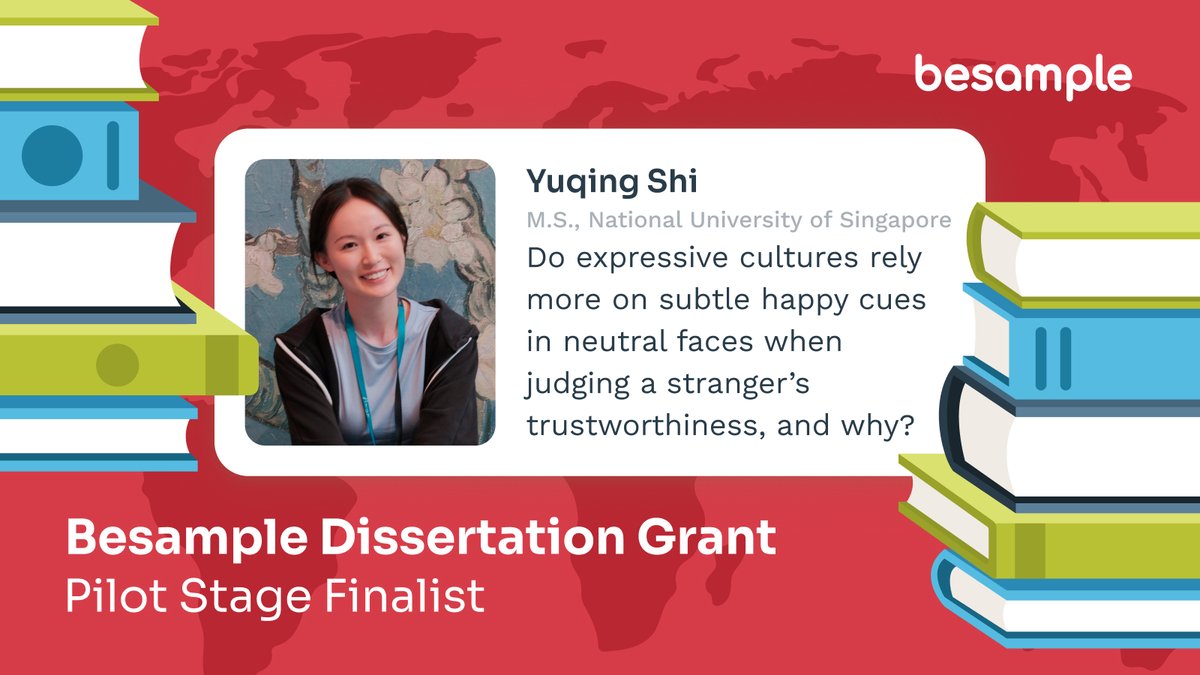
“Don’t judge a book by its cover,” the saying goes, and, being rational people, we like to believe we follow it. But in reality, we make snap judgments (quite literally, face-value ones) all the time. A single glance at someone’s face can affect whether we trust them, approach them, or keep our distance. These rapid first impressions influence everyday decisions and social interactions (Olivola et al., 2014). One mechanism behind this is known as "emotion overgeneralization:" people unconsciously extend subtle emotional cues into stable personality judgments. For example, faces that structurally resemble happy expressions are seen as more trustworthy, even when no emotion is explicitly displayed (Zebrowitz, 2017). In fact, among various facial cues, this resemblance to happiness is a particularly strong predictor of perceived trustworthiness (Jaeger & Jones, 2022). But how universal is this effect? Most of the existing evidence comes from Western samples, where emotional expression is frequent, encouraged, and socially informative. Emotional norms, however, differ across cultures. While a smile may signal friendliness or intelligence in some countries, in others, it can be interpreted as foolishness or misplaced informality (Krys et al., 2014). In East Asian societies such as China and Japan, emotional restraint is much more common than emotional expression (Heine et al., 1999; Rychlowska et al., 2015). What if emotion overgeneralization depends on how frequently and consistently emotional cues co-occur with relevant social outcomes? If so, can its strength vary systematically across cultures? This is the question Yuqing Shi (@syuuqing), a Ph.D. student at the National University of Singapore working with Dr. DongWon Oh (@dongwon_oh), is addressing in her dissertation. Growing up in China, Yuqing observed how differently smiles are interpreted depending on context. In Chinese culture, there is a saying, “喜怒不形于色”— do not display joy or anger on one’s face. These cultural scripts emphasizing emotional restraint contrast sharply with contemporary U.S. norms that equate smiling with warmth and trustworthiness. Yuqing combines large-scale surveys with computational facial analysis. Participants from multiple countries rate the trustworthiness of neutral faces, while deep-learning algorithms quantify how closely those faces resemble happiness-related expressions. She then examines how individual and societal norms around emotional expressivity relate to the tendency to overgeneralize emotion cues into trust judgments. If first impressions are indeed culturally learned rather than universal, this has broad implications — not only for everyday social interaction, but for global collaboration, hiring, diplomacy, and even AI systems trained on culturally biased facial data. Yuqing is a Besample Dissertation Grant finalist, and we are excited to support research that asks whether something as automatic as face perception is universal or culturally constructed. #PhDResearch #PhDGrant #CrossCulturalResearch #GlobalResearch #BesampleDissertationGrant #Besample
Besample tweet media
English
0
1
3
412
Besample
Besample@Besample_app·
Family violence has a long-lasting impact on children — no secret, right? Decades of research have shown that children disciplined with physical force face higher risks of physical and mental health problems later in life; they are also less likely to form healthy close relationships as adults (Felitti et al., 1998; Colman & Widom, 2004). But did you know that what is considered violence in the WEIRD world is viewed differently beyond the West? Consider this: roughly 13–16% of children in North America and Europe experience physical domestic violence (Whitten et al., 2024). This already feels like a lot. But in India, these estimates rise to 66% — or possibly even higher, because using physical force is often framed as acceptable discipline rather than abuse (Behere et al., 2013; Roy & Madiki, 2020). Not only is the line between "violence" and "parenting" drawn differently, but the family power dynamics differ as well: unlike the Western nuclear family, Indian households often include grandparents, uncles, and aunts, all of whom may exercise physical discipline over children. This broader set of authority figures increases children’s exposure to punishment, which, not surprisingly, has been linked to higher rates of child abuse (Segal, 1999; Charak & Koot, 2014). Senna Singh, a Ph.D. student at Ashoka University, working with Dr. Simantini Ghosh, has chosen a brave research question for her dissertation: she studies chronic childhood family violence and its effects on subsequent adult well-being in the South Asian cultural context. Growing up in India, Senna saw firsthand how experiences that would elsewhere be labeled as violence were often normalized or minimized. Drawing on both lived experience and academic training, she became interested in how growing up in such environments shapes young adults’ sense of self — and, through that, their well-being and relational functioning. “I’ve always been fascinated by the development of the human mind in the formative years,” Senna says. “I strongly believe that early influences can set the course for an individual’s future.” Senna uses quantitative survey methods to measure how disturbances in self-organization, emotion regulation, relationships, and trauma-related reflection mediate the risk of adult victimization or perpetration among people exposed to childhood family violence. The research question Senna has chosen is especially important because these experiences remain largely unspoken and under-recognized as harmful. Senna is a Besample Dissertation Grant finalist, and we’re excited to follow her work and see the contribution her research will make to understanding the cultural patterns of physical violence. #PhDResearch #PhDGrant #CrossCulturalResearch #GlobalResearch #BesampleDissertationGrant #Besample
Besample tweet media
English
0
0
1
91
Besample
Besample@Besample_app·
🎉 Announcing the Pilot Stage Winners of the Besample Dissertation Grant! Today, we’re excited to announce the 25 finalists (+5 special awardees) of the Besample Dissertation Grant. Meet this incredible group of young researchers here: besample.app/dissertationgr… We received over 100 applications from Ph.D. students at leading universities worldwide. Selecting the winners was hard — the quality, rigor, and ambition of the proposals were impressive. What stood out most was not just the diversity of disciplines, but the determination to treat cross-cultural research as the new default. Here’s a small glimpse into the kinds of questions these finalists are tackling across countries and contexts: • Do speech disfluencies like “um” and “uh” function as universal social signals, or rather as culturally shaped cues? • How do people living under wartime conditions adapt their daily mobility, expectations, and routines? • How do residents in fragmented-authority cities decide when and how to make political claims? • How do people across cultures experience and interpret silent treatment in close relationships? • How do light exposure constraints shape sleep, mood, and health? • Do global life satisfaction measures truly capture well-being gaps across domains and societies? ... and many more! These projects span psychology, political science, linguistics, planning, public health, and more — and they reflect a new generation of researchers asking bigger, more global questions. See all projects at the finalists page which has links to students' personal pages: besample.app/dissertationgr… Over the coming months, these finalists will collect pilot data across dozens of countries. Later this year, three projects will receive full dissertation funding. 👏 Huge congratulations to all finalists — and deep thanks to everyone who applied. You’re the new wave, and we’re proud to support you. @anisha0singh | @syuuqing | @AmandaRoyka | Arsen Martyshchuk | @i_montini | Senna Singh | Olena Vitkovska | Jonathan Lee | @rodriguezNina_ | Dan-Mircea Mirea | @fealingc| Wicia Fang | Carla Garcia | @OvgunSs | @brkzmyilmaz | @DanaKulz | Manali Pathare | @FaustineCo76701 | AnnaLise Hoopes | @IreinThomas | Zahrah Alwi Alkaff | @MarcusTrenfield | @ReismanSamantha | @NiveditaJhunjh2 | Tyler Salley | Kristopher Nichols | @TeulingsIrene | Paul McKee | Kara Findlay | Krystina Boyd-Frenkel
Besample tweet media
English
0
1
6
310
Besample
Besample@Besample_app·
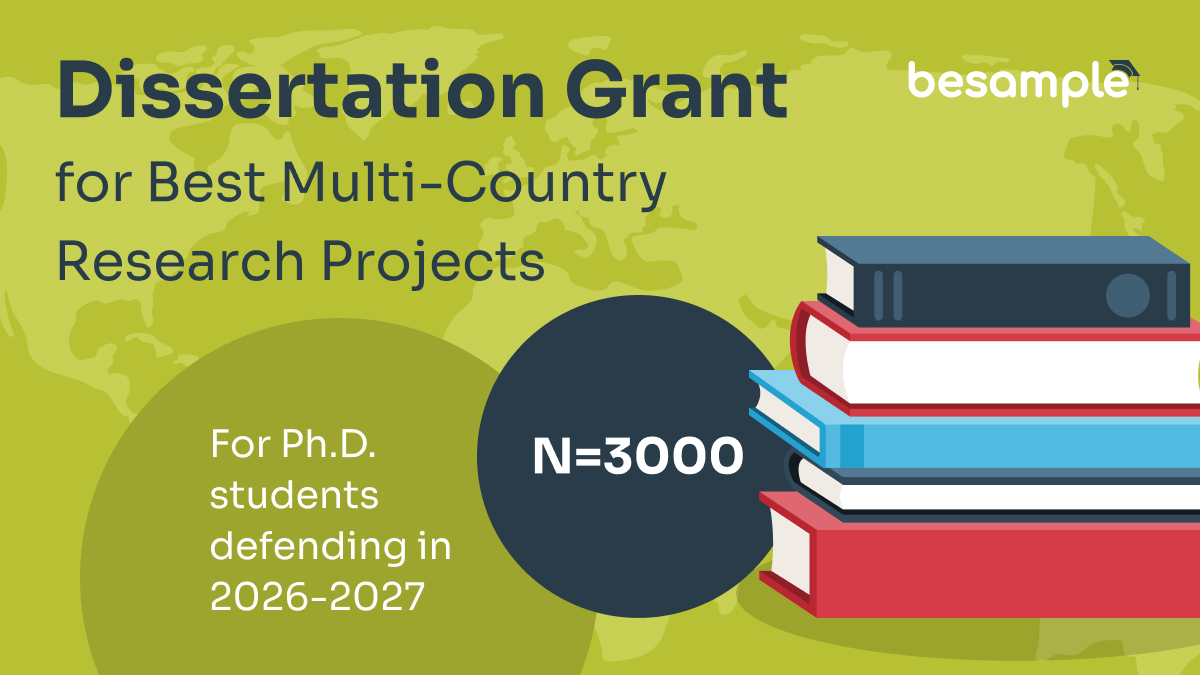
⏰ FINAL CALL: The Besample Dissertation Grant (N=3,000) for Best Multi-Country Research Projects Three ultimate winners will receive full funding to collect cross-cultural datasets of 3,000 research participants, including translation and localization of studies — all supported by Besample’s infrastructure. The program has two stages: ▫️Stage 1: Pilot Studies (N=500) We will select the 25 strongest applications and fund their pilot studies (500 research participants each) to collect preliminary data across non-Western countries available on Besample. ▫️ Stage 2: Main Studies (N=3,000) After completing the pilots, grantees will be invited to present their results at an online pitch contest. The three final winners will receive full funding for their dissertation studies (3000 research participants each). 📅 Deadline: January 15 🚀 Apply here: study.besample.app/jfe/form/SV_3F… If you know Ph.D. students in the behavioral sciences preparing for their dissertation, please encourage them to submit a research idea! #PhDResearch #PhDGrant #DissertationGrant #PhDOpportunities #ResearchGrant #PhDLife #CrossCulturalResearch #GlobalResearch #AcademicChatter #AcademicTwitter #Besample
Besample tweet media
English
1
1
1
376
Besample
Besample@Besample_app·
🎄✨ Besample’s Advent Calendar: The Final Insight from Beyond the West December 24: Christmas You may imagine that Christmas is a Western holiday, with Coca-Cola–style Santa Claus and candy canes all around. But globally, Christmas, just like Christianity, is far more widespread and far less WEIRD than we may think. By some widely cited estimates, about 31% of the world’s population is Christian, making it the largest religious group worldwide [1]. One popular source suggests that each year, more than 2 billion people participate in Christmas celebrations in some form, e.g., religiously, culturally, or socially [3]. That's almost 1/3 of our planet! Some examples that may surprise you: • Nigeria is home to one of the largest Christian populations in the world, larger than any European country. • The Philippines is the largest Christian nation in Asia. • Ethiopia has one of the oldest continuous Christian traditions in the world, dating back to the 4th century. • Brazil has the largest Christian population globally, larger than the United States! Christmas is not always celebrated on December 25. In countries of Eastern Orthodox traditions, like Russia, it's on January 7. It often includes local rituals, calendars, and meanings, but the holiday universally marks the birth of Christ and, for many, the symbolic beginning of a new moral or personal year. You may wonder why Christian population is so large globally. Colonial history is part of the story: Christianity spread through European colonial expansion, missionary activity, and state institutions, especially in Latin America and parts of Africa. But long before modern colonialism, in places like Ethiopia, Armenia, and parts of the Middle East, Christian traditions date back to the first centuries CE. Then, in many regions, Christianity persisted and grew after colonial rule ended and became embedded in local rituals and identities [2]. So, long story short, Christmas is one thing that is far from WEIRD. It’s global, deeply diverse, and embedded in histories and communities beyond Europe and North America. Thank you for joining us for Besample’s Advent Calendar: Daily Insights from Beyond the West. Our mission was to remind behavioral researchers (and everyone else who is curious) that the world is bigger, more complex, and less WEIRD than our default assumptions suggest — and that’s exactly why we’re building Besample. Merry Christmas! We hope in the New Year, you'll join us to take your research beyond the West: researcher.besample.app/?utm_source=ba… Sources: (1) Pew Research Center (2011). Global Christianity: A Report on the Size and Distribution of the World’s Christian Population. (2) Sanneh, L. (2009). Translating the Message: The Missionary Impact on Culture Growth Projections, 2010–2050. (3) Christmas Day around the world. (2025, December 23). tinyurl.com/yek6srda #BehavioralScience #GlobalResearch #CrossCulturalResearch #AcademicChatter #AcademicTwitter #Besample
Besample tweet media
English
0
0
1
172
Besample nag-retweet
Elena Brandt
Elena Brandt@lenajbrandt·
We’re halfway through the application window for the Besample Dissertation Grant (N=3,000). The applications have been amazing, and we can still take a few more. There’s time to apply before the final deadline on January 15. We’re awarding over $10,000 in research funding to support ambitious behavioral science projects designed to break out of the familiar “WEIRD” bubble. If you know Ph.D. students in the behavioral sciences preparing for their dissertation, please encourage them to submit a research idea: lnkd.in/eDU4mD_6 So far, we’ve received 91 applications from students at leading universities worldwide. The range of questions they’re exploring is genuinely fascinating, including: • how light exposure relates to sleep, mood, and well-being • how capitalism shapes the self across cultures • how people infer social status in everyday life • why some individuals turn to AI rather than humans for emotional support • whether empathy and self-compassion training can reduce ethnocentrism • how mind-wandering helps regulate emotion What’s most exciting is not just the diversity of topics, but the ambition to test these ideas across cultures, beyond the familiar “WEIRD” context. Please consider sharing this opportunity with your network — early-career researchers especially need support in today’s funding environment. 📅 Final deadline: January 15 🚀 Apply here: lnkd.in/eDU4mD_6 Let’s make behavioral science truly global — one dissertation at a time 🎓
Elena Brandt tweet media
English
0
1
3
277
Besample
Besample@Besample_app·
December 22: Parent-child attachment Today's insight from beyond the West is about whether attachment theory holds globally. It has always been assumed that it does, but let's look at the evidence. In Western psychology, parent–child attachment has a clear ideal: a secure relationship formed through sensitive, responsive caregiving. It supports early autonomy and emotional expression (Bowlby, 1969; Ainsworth et al., 1978). By some estimates, about 60% of the population is securely attached. Attachment predicts a range of important life outcomes, from emotional regulation to healthy romantic relationships in adulthood (Mikulincer & Shaver, 2012; Hazan & Shaver, 1987). What does research beyond the West suggest? Spoiler: attachment seems to be a phenomenon that does hold globally, although not without nuance. A seminal cross-cultural review by van Ijzendoorn & Sagi-Schwartz (2008) shows that while attachment itself is a universal human phenomenon (simply speaking, all babies attach to caregivers), the behaviors of “secure attachment” are culturally specific: the expression, distribution, and meaning of attachment behaviors vary. For example, the relative prevalence of insecure subtypes differs: there are more "avoidant" classifications in Germany and more "resistant" ones in Japan. Canonical infant behaviors — proximity-seeking, distress, exploration — carry different meanings depending on caregiving norms, which is mostly about independence vs. interdependence. Moreover, measurement tools, like the famous Strange Situation, are built around Western middle-class assumptions about what's important in child-rearing, like autonomy, separation, and emotional regulation. Those do not map cleanly onto all cultural contexts. Finally, cross-cultural work shows that attachment types derived from Western norms do not always predict well-being elsewhere. Children can thrive in caregiving systems that diverge from Western ideals (Keller et al., 2005; Keller, 2013). A recent paper by Alannah Shelby Rivers et al. (2024) analyzed data collected on Besample from Brazil, India, and Nigeria. Researchers found that the associations between attachment to parental figures and adult anxiety / depressive symptoms vary across cultures — challenging the assumption that attachment functions uniformly worldwide. So to sum up, attachment is universal to humans; but “secure attachment,” as defined by Western behavioral markers, is not. Understanding parent–child attachment globally requires studying families within their social, economic, and cultural contexts, and not simply exporting Western standards abroad. Join us to unlearn WEIRD assumptions and take your research beyond the West: researcher.besample.app/?utm_source=ba… Stay tuned for more insights from beyond the West! #BehavioralScience #GlobalResearch #CrossCulturalResearch #AcademicChatter #AcademicTwitter #Besample
Besample tweet media
English
0
0
0
93
Besample
Besample@Besample_app·
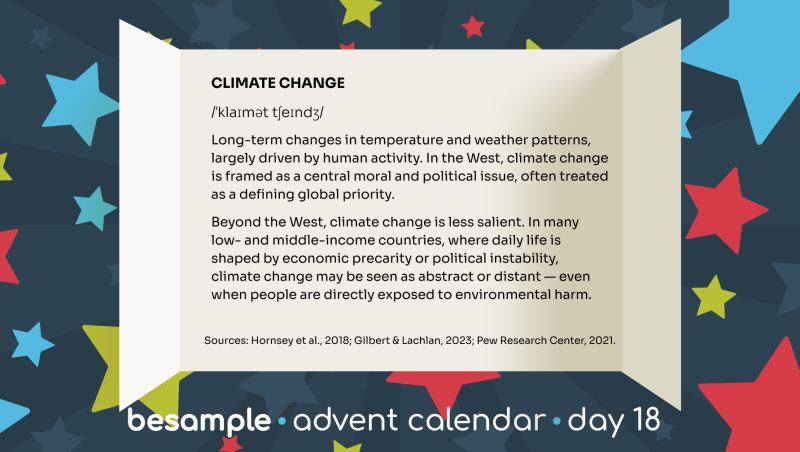
December 18: Climate Change Today’s insight from beyond the West is about climate change — an issue that, in the West, is often framed as a defining moral, political, and generational priority. As always, it gets quite different once you step outside the WEIRD bubble. A recent paper by Iyer & Jose, 2025 (by the way, powered by data collected on Besample), examines climate change and health risk perception in India, explicitly testing whether dominant Western models of climate-risk perception replicate in a non-Western context. Western models assume that climate concern is driven primarily by abstract beliefs, ideology, and moral identity, but the Indian data tell a different story. In India, climate-related health risks are interpreted through the lens of immediate material concerns, everyday exposure, and competing priorities such as income security, healthcare access, and local environmental stressors. This aligns with broader cross-national research showing that concern about climate change varies across countries and is shaped by politicization, economic precarity, and institutional context, rather than simple awareness or knowledge (Hornsey et al., 2018; Gilbert & Lachlan, 2023; Pew Research Center, 2021). Climate change is not necessarily denied, but it is less salient than in Western countries, even among people who are directly exposed to heat waves, pollution, and environmental degradation. For behavioral science, this matters deeply: when we export Western assumptions about what's important without validating them, we risk mistaking Western moral narratives for universal human psychology. We are proud that this work was conducted using Besample and excited to support more research that takes global context seriously from the start. Join us to unlearn WEIRD assumptions and take your research beyond the West: researcher.besample.app/?utm_source=ba… #BehavioralScience #GlobalResearch #CrossCulturalResearch #AcademicChatter #AcademicTwitter #Besample
Besample tweet media
English
0
0
0
93
Besample
Besample@Besample_app·
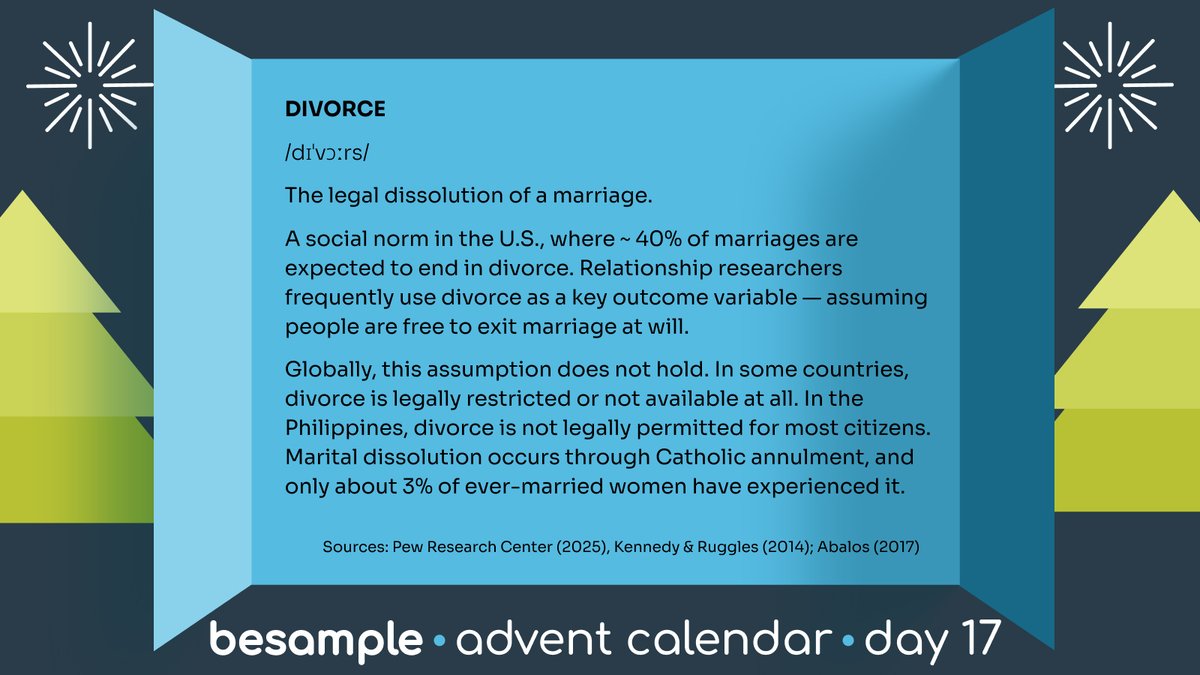
December 17: Divorce Today’s insight from beyond the West is about divorce — the legal dissolution of a marriage. In the U.S., divorce is often treated as a social norm: nearly 40% of marriages are expected to end in divorce (Pew Research Center, 2025), and behavioral researchers frequently use divorce as a key outcome variable when studying close relationships. That framing carries a strong implicit assumption: that people are free to exit marriage at will. But globally, that assumption often doesn’t hold! In many countries, divorce is legally restricted, socially stigmatized, or practically inaccessible — which makes it a poor proxy for relationship quality or stability. The most striking example is the Philippines, where divorce is not legally available for most citizens. Instead, marital dissolution occurs through Catholic annulment, a costly and rare process. As a result, only about 3% of ever-married women in the Philippines have experienced a dissolved union (Abalos, 2017). Why this matters for behavioral science: when divorce is unavailable or unthinkable, relationship distress does not translate into relationship dissolution. Using divorce as a universal outcome variable quietly embeds Western legal and cultural assumptions into research design — and can distort cross-cultural comparisons. This is another reminder that many of our “obvious” dependent variables are culturally specific. To understand relationships globally, we need measures that travel — not ones that assume Western exit options. Join us to unlearn WEIRD assumptions and take your research into the wider world: researcher.besample.app/?utm_source=ba… #BehavioralScience #GlobalResearch #CrossCulturalResearch #AcademicChatter #AcademicTwitter #Besample
Besample tweet media
English
0
0
1
98
Besample
Besample@Besample_app·
✨ Besample’s Advent Calendar: Daily Insights from Beyond the West December 16: Phubbing Today’s insight from beyond the West is about phubbing — the act of ignoring someone you’re physically with by focusing on your phone instead. It feels like a universally rude behavior… but it turns out that’s not quite true. In their recent paper, Christiane Büttner (@ChrBuettner), Elianne Albath, & Rainer Greifeneder (@R_Greifeneder) show that how people interpret co-present phone use varies systematically across cultures. Using data from 6 countries, they find that in more collectivistic contexts (e.g., India, Kenya, Venezuela), using a phone during live interaction is more likely to be perceived as exclusionary or disrespectful. In more individualistic contexts (e.g., Austria, Belgium, the UK), people are more likely to assume situational or practical reasons for phone use — and hence judge it less harshly. This matters for behavioral science because many of our measures, vignettes, and theories assume that social norms travel unchanged across borders — but they don’t. We're proud that this research was conducted using Besample — and excited to support more work that takes cultural context seriously from the start. If you're a behavioral researcher, see how we can support your work this year: study.besample.app/jfe/form/SV_3F… Join Besample to unlearn WEIRD assumptions and take your research beyond the West! #BehavioralScience #GlobalResearch #CrossCulturalResearch #AcademicChatter #AcademicTwitter #Besample
Besample tweet media
English
0
0
0
93
Besample
Besample@Besample_app·
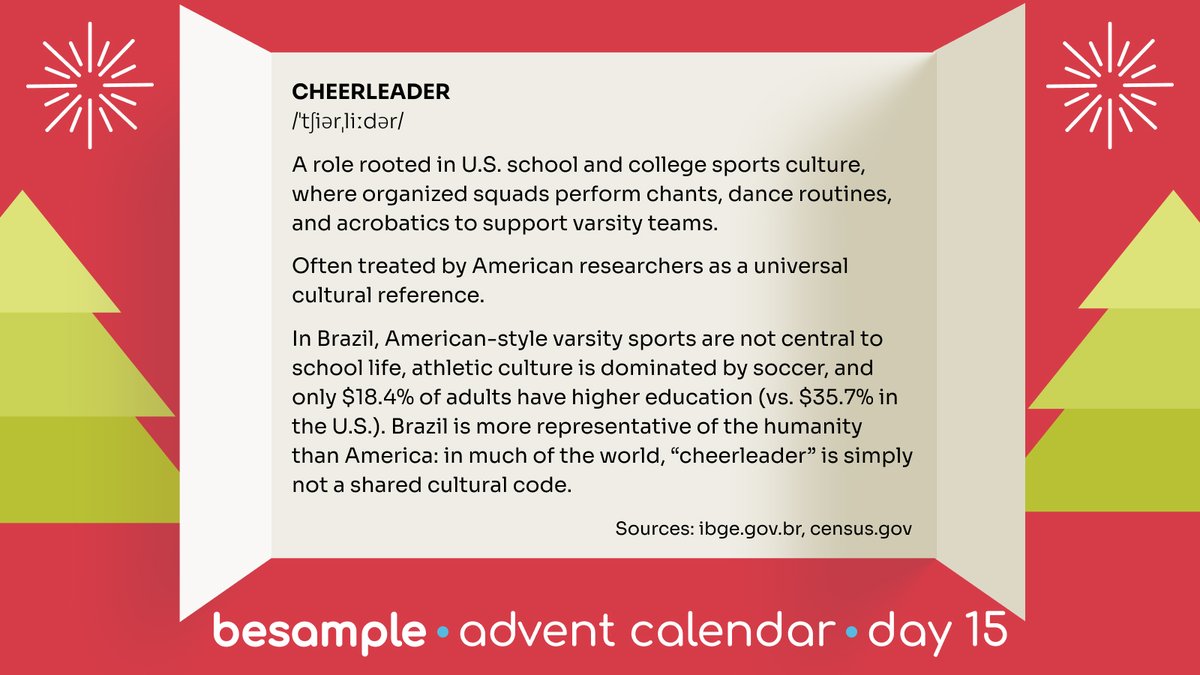
December 15: Cheerleader Besample's academic advisor Dr. Walter Sinnott-Armstrong once told our founder Elena Brandt a story about an invisible error resulting from Western assumptions in behavioral research. He and his team were running an international study on moral foundations, and one of their many moral vignettes read: “You see a girl saying another girl is too ugly to be a varsity cheerleader.” This was straightforward enough... to the U.S. collaborators and participants. But a Portuguese translator flagged it as nonsensical. There are no varsity teams in Brazil. Athletic identity centers on soccer, not American football, and only 18.4% of Brazilian adults have higher education (vs. 35.7% in the U.S.). Globally, Brazil is far more typical than the United States — in much of the world, higher education remains accessible to a minority, and campus-based sports cultures are limited or organized very differently. American football, in particular, is not a global reference point. As a result, “cheerleader” is often not a meaningful cultural cue at all. What sounded like a neutral, everyday scenario to an American audience was culturally opaque elsewhere. The team ended up replacing the line with: “too ugly to get into a party.” As Dr. Sinnott-Armstrong put it, they were lucky a human translator caught the issue before data collection began — because the original vignette would have quietly corrupted an entire experimental condition. This is the kind of mistake that’s easy to miss if a researcher assumes their cultural reference points are universal. It’s another reminder that good translation isn’t just about language — it’s about culture, institutions, and lived experience. At Besample, we’re proud to help behavioral researchers go beyond simple translation (and back-translation) by consulting native speakers and local experts on the nuances of cultural fit. Join us to unlearn WEIRD assumptions and take your research beyond the West: researcher.besample.app/?utm_source=ba… __________ * Part of Besample’s Advent Calendar — 24 daily insights from beyond the West. #BehavioralScience #GlobalResearch #CrossCulturalResearch #AcademicChatter #AcademicTwitter #Besample
Besample tweet media
English
0
0
1
82