
Naka-pin na Tweet
Heidi Ko
450 posts

Heidi Ko
@CancerDocKo
Director of Medical Affairs @Labcorp Oncology. Breast Medical Oncologist. Former Hem/Onc Fellow @MontefioreNYC. Former resident @UTHimres. Alum @UNC. #BCSM
San Antonio, TX Sumali Temmuz 2020
249 Sinusundan233 Mga Tagasunod
Heidi Ko nag-retweet

This is a paradigm shift - future neoadjuvant ( post neaoadjuvant ) clinical trials should consider ctDNA instead of pCR !
Kazuki Nozawa, MD@kazuki_nozawa
pCR after neoadjuvant chemotherapy has long been considered a strong prognostic marker. But adding ultra-sensitive ctDNA changes the picture. In the PREDICT-DNA trial (NeXT Personal @PersonalisInc ), ctDNA-negative patients among non-pCR cases showed outcomes comparable to pCR. @JCO_ASCO Small sample size—but a highly impactful finding. ascopubs.org/doi/10.1200/JC…
English
Heidi Ko nag-retweet
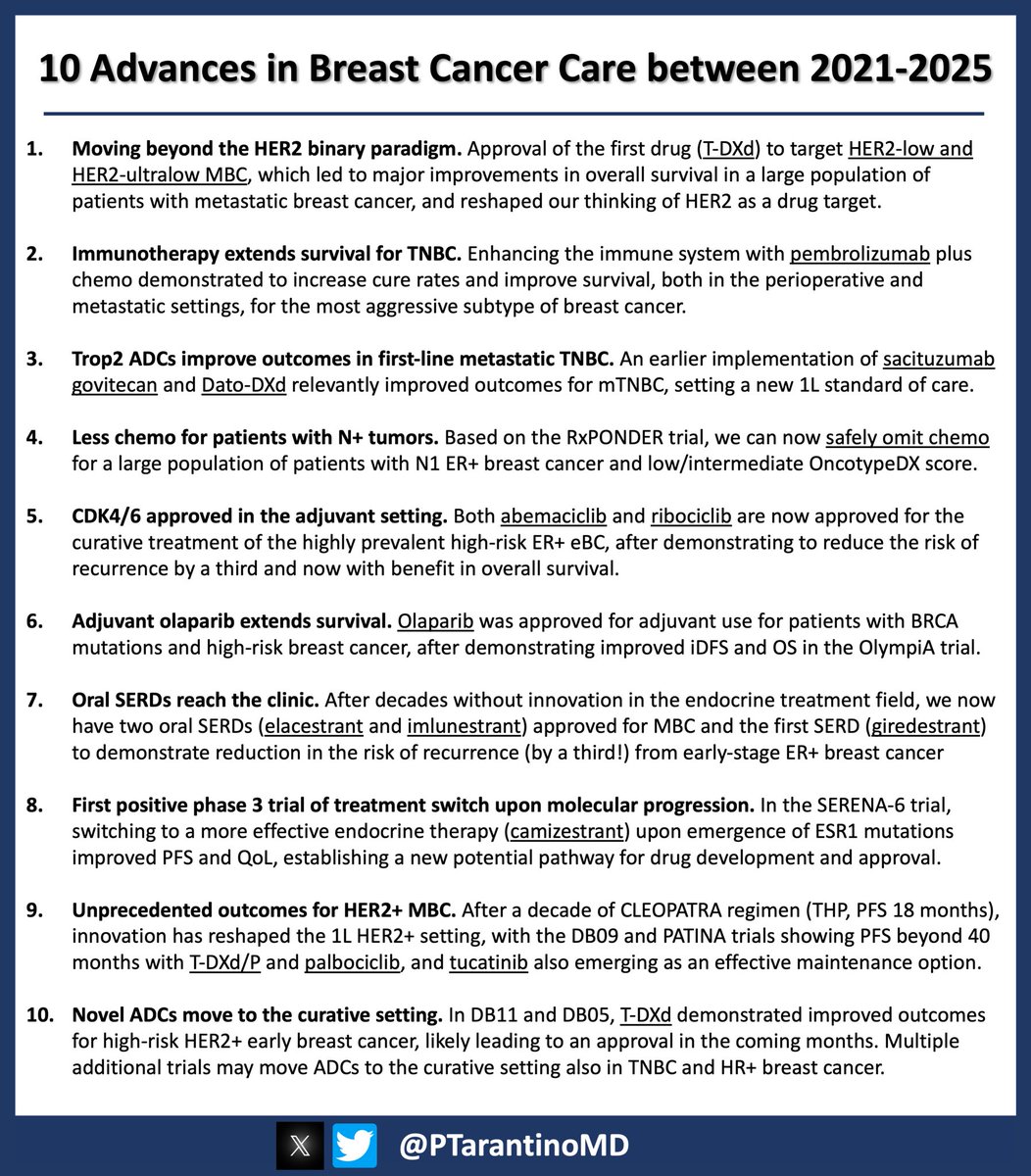
When I moved to the US in 2021, breast oncology was very different. With 2025 coming to an end, I decided to look back and review 10 major milestones in BC medical oncology care we saw over the past 5 years. With hope and expectation to see so much more unfolding over the next 5!
English
Heidi Ko nag-retweet

ASCO GI is upon us.
The data leakage has begun 👀🔥
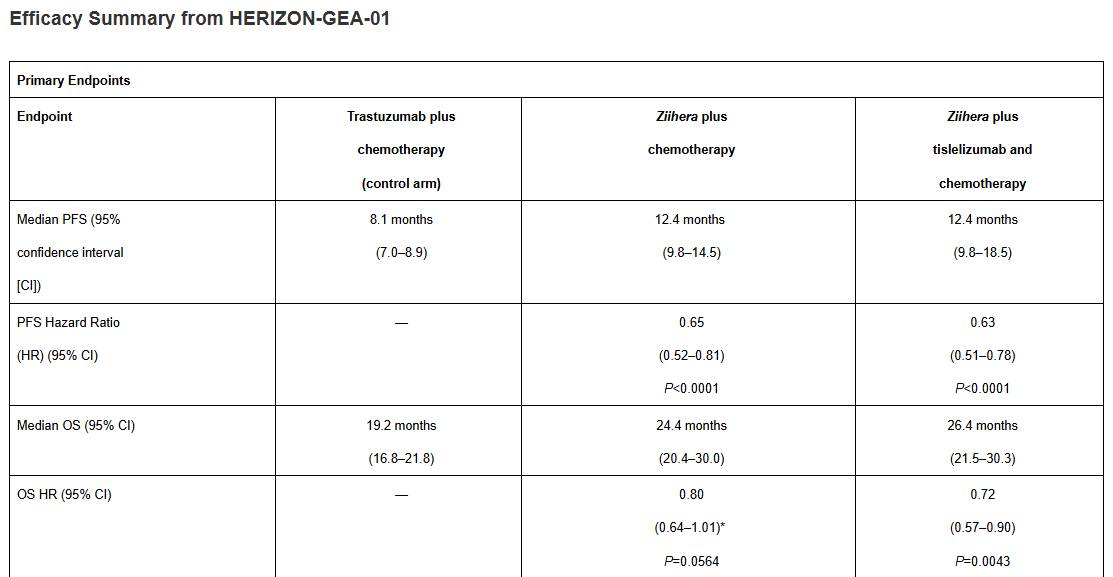
Late-breaking press release ahead of ASCO GI for HERIZON-GEA-01, testing zanidatamab + chemo, with or without tislelizumab, vs trastuzumab + chemo in first-line HER2+ locally advanced or metastatic GEA.
Important caveat up front: this is a press release, not a paper. But the signal is hard to ignore.
🧬 PFS improved in both zanidatamab arms
Median PFS 12.4 months for both doublet and triplet vs 8.1 months with trastuzumab
Roughly a 35% reduction in risk of progression
🧠 The real interest lies in OS
Triplet median OS 26.4 months vs 19.2 months with trastuzumab
That’s more than two years median OS in metastatic GEA
The doublet also crossed 24 months with a strong trend (is tisle necessary?)
🧐 Key nuance:
PFS is essentially identical between doublet and triplet
OS clearly separates
This looks like depth and durability rather than early disease control
📊 ORR is similar across arms, but duration of response is dramatically longer
DoR 20.7 months with the triplet vs 8.3 months with trastuzumab
💧 Toxicity note
Diarrhea is the standout issue and will need proactive management
Grade 3 or higher diarrhea occurred in roughly 20 to 25 percent, with overall diarrhea rates around 40 percent
Open question
I would love to see this compared head-to-head against current SoC chemo + trastuzumab + pembrolizumab. That said, it’s hard to argue with a two-year median OS and a clear survival tail.
Takeaway:
If confirmed on full presentation, zanidatamab looks poised to replace trastuzumab in first-line HER2+ GEA. The next step may not be whether it works, but how much intensity each patient really needs.
#GI26 @OncoAlert @TheGutOncLab
investor.jazzpharma.com/news-releases/…
English
Heidi Ko nag-retweet

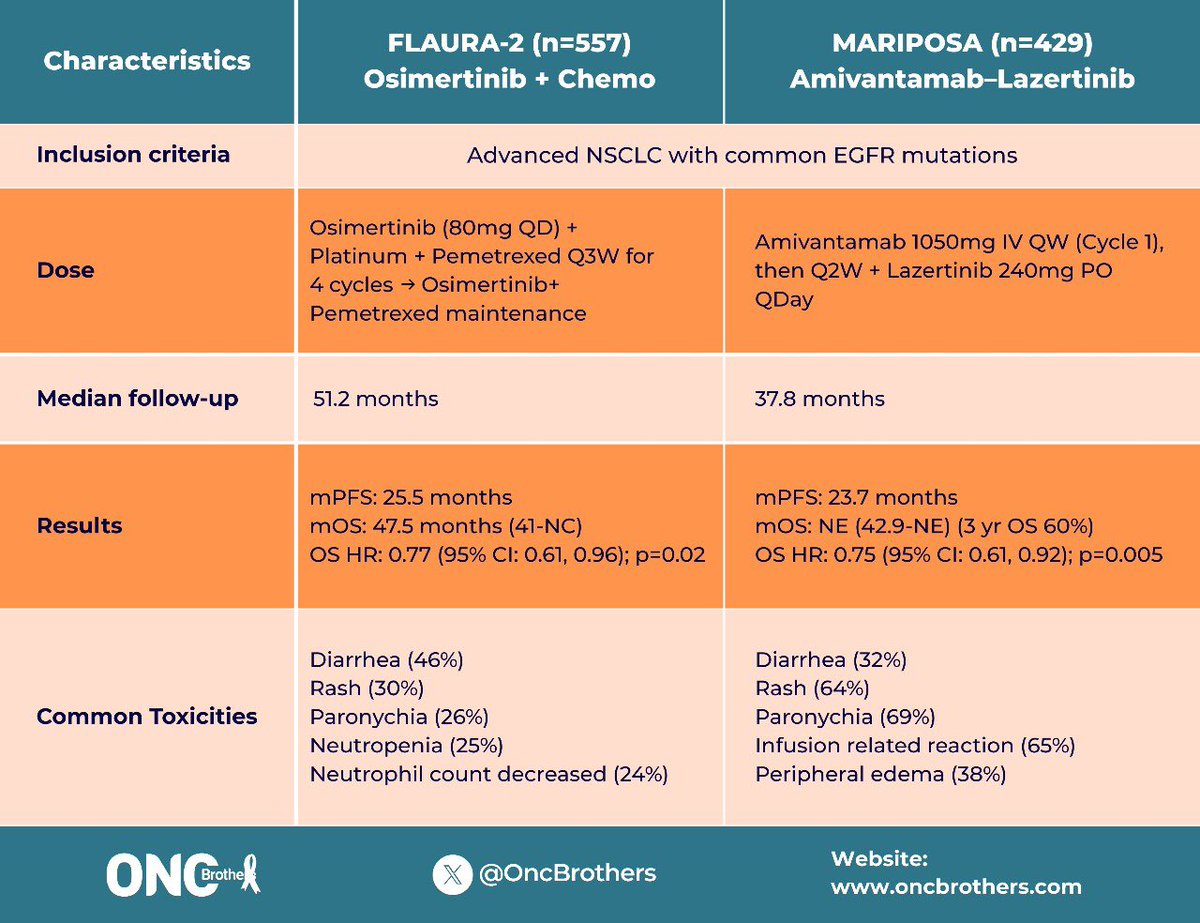
We all will be having this conversation and cross trial comparison for every EGFR mNSCLC pt we see in the clinic. Take a minute to get a real pt perspective by @jillfeldman4 👇👇 #FLAURA2 & #MARIPOSA data!
#WCLC25 #OncTwitter #lcsm
Jill Feldman@jillfeldman4
The new FLAURA2 OS data presented at #WCLC25 is exciting - nearly four years of median OS with osimertinib + chemotherapy is remarkable progress for our community! Alongside the MARIPOSA data, it's essential to remember -- this isn't about competition. There is no one-size-fits-all "best" treatment for #EGFR #NSCLC. It's about patients and families. Clinicians need the right tools to match the right treatment with the right patient. That is why I implore companies to invest in research that helps us understand who benefits most from each approach, through biomarkers, disease characteristics, AND A REAL understanding of #QOL from #PROs (Safety/AE grades are endpoints for trials, not tolerability) - THAT is personalized medicine and how progress becomes meaningful. As the discussant @danieltanmd said, we need GPS maps to help guide patient treatment pathways. Options are hope, but only if we know how to navigate them. #LCSM #LungCancer @EGFRResisters #OptionsAreHope
English
Heidi Ko nag-retweet


Heidi Ko nag-retweet

Excited to Share @Labcorp's Oncology Testing Solutions at @ASCO 2025 - Heidi Ko (@CancerDocKo)
oncodaily.com/blog/heidi-ko-…
#OncoDaily #Oncology #Cancer #Health #Medicine #MedTwitter #MedEd #MedOnc #MedNews #ASCO2025 #Labcorp @CancerWorldmag
English
Heidi Ko nag-retweet
There’s no Level 1 evidence that our current frequency of post-treatment surveillance imaging & labs reduces the risk of death.
(From NEJM piece on pros/cons of routine surveillance protocols, especially relevant in current ctDNA era) – worth a read!
nejm.org/doi/full/10.10…

English
Heidi Ko nag-retweet
Online now for the #AACR25 session on Advances in #KRAS Biology in PDAC by session speaker @andrewaguirremd: Response and Resistance to RAS inhibition in Cancer brnw.ch/21wSgTw

English
Heidi Ko nag-retweet
Evolution of HER2 testing over 40 yrs.
IHC lacks the dynamic range to predict outcomes with T-DXd, yet novel quantitative assays are emerging.
We presented data with HS-HER2 to predict T-DXd activity at #ESMO24. More data coming at #ASCO25.
Stay tuned.
nature.com/articles/s4157…

English
Heidi Ko nag-retweet

PSA to cancer patients out there. Putting the word integrative in front of their name does not make a non-oncologist an oncologist. Cancer biology is incredibly complicated and takes decades to learn. If someone did not do medical oncology fellowship they are not med onc. #bcsm
English
Heidi Ko nag-retweet
HER2 is no longer just a breast/Upper GI cancer story. ADCs are changing the landscape, making HER2 a tissue-agnostic target across multiple tumor types. Our mini-review article in @FrontOncology on the subject. @OncoAlert
frontiersin.org/journals/oncol…
English
Heidi Ko nag-retweet
ctDNA in CRC is prognostic, but there is no data showing that treatment initiated earlier based upon ctDNA positivity confers improved survival (or QOL).
Earlier detection alone does not equal benefit.
Great job @KristenCiombor 👏👏 #GI25

English
Heidi Ko nag-retweet
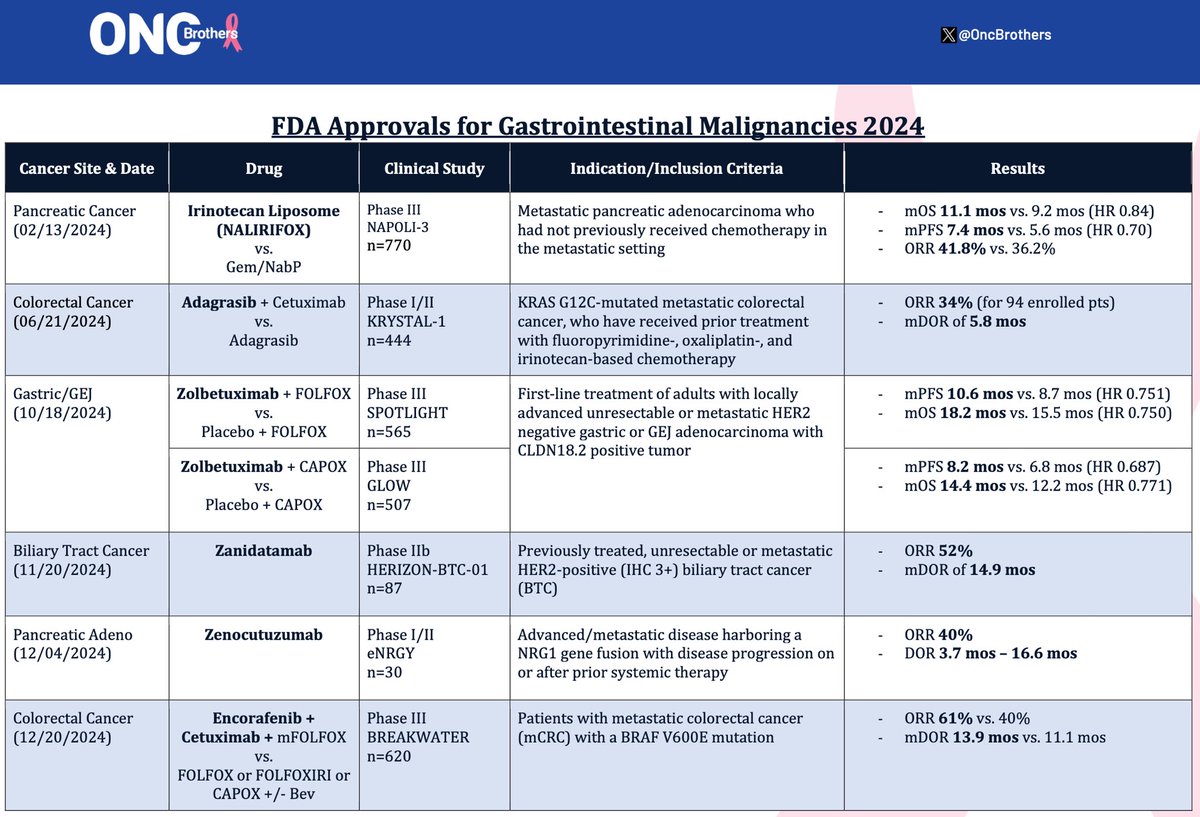
2024 approvals: Summary of 6 new drugs/indications in GI Malignancies by @US_FDA
1. #LiposomalIrinotecan
2. #Adagrasib
3. #Zolbetuximab
4. #Zanidatamab
5. #Zenocutuzumab
6. #Encorafenib
#gism #OncTwitter #MedTwitter #PancChat
Oncology Brothers@OncBrothers
Summary of 5 new drugs/indications in GI malignancies that were @FDAOncology @US_FDA approved in 2023: - #Tucatinib - Mountaineer - #TAS102 + #Bevacizumab - Sunlight - #Pembro + Cis/Gem - KN966 - #Fruquintinib - FRESCO2 - #Pembro + Chemo - KN859 #OncTwitter #gism #crcsm
English
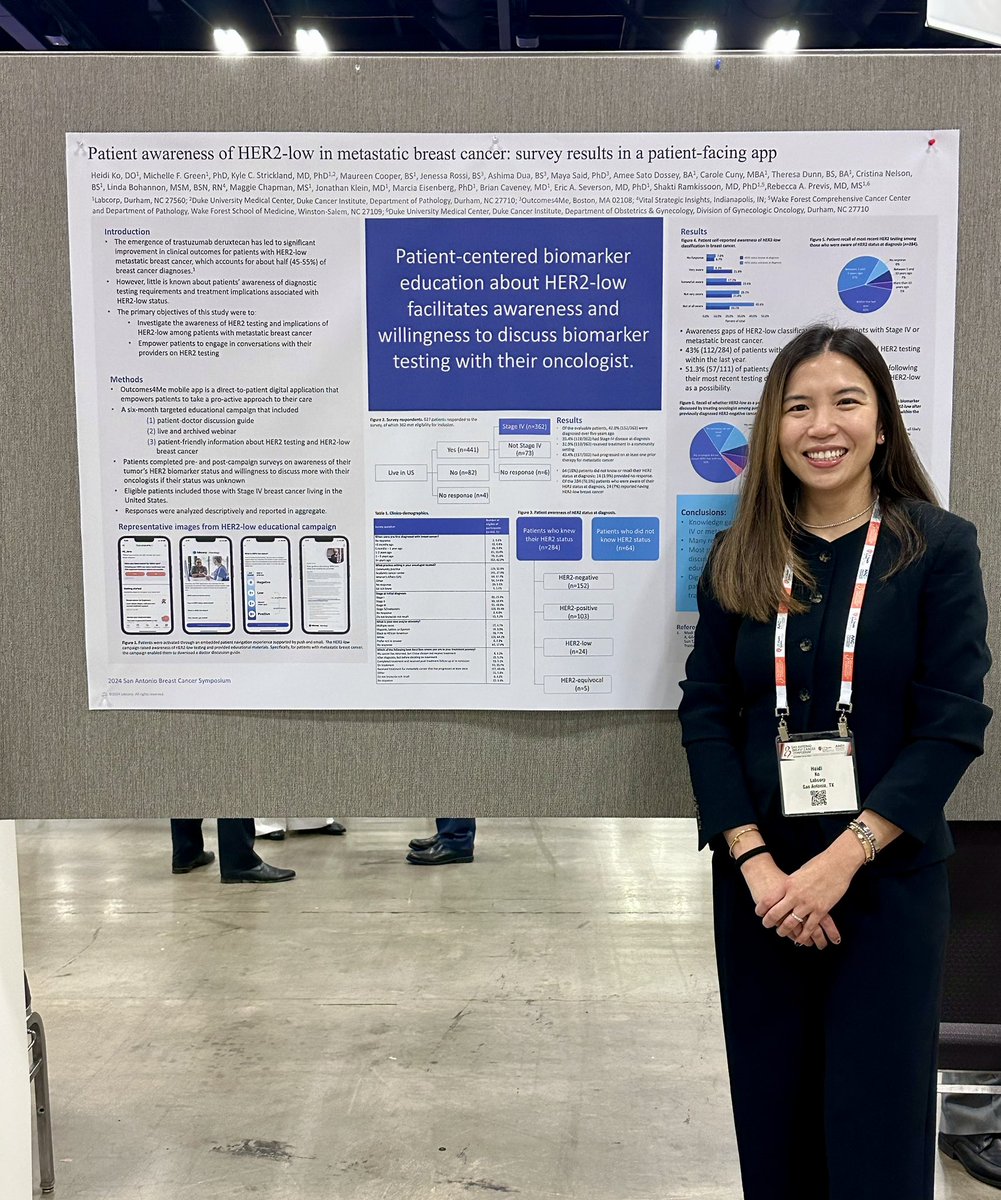
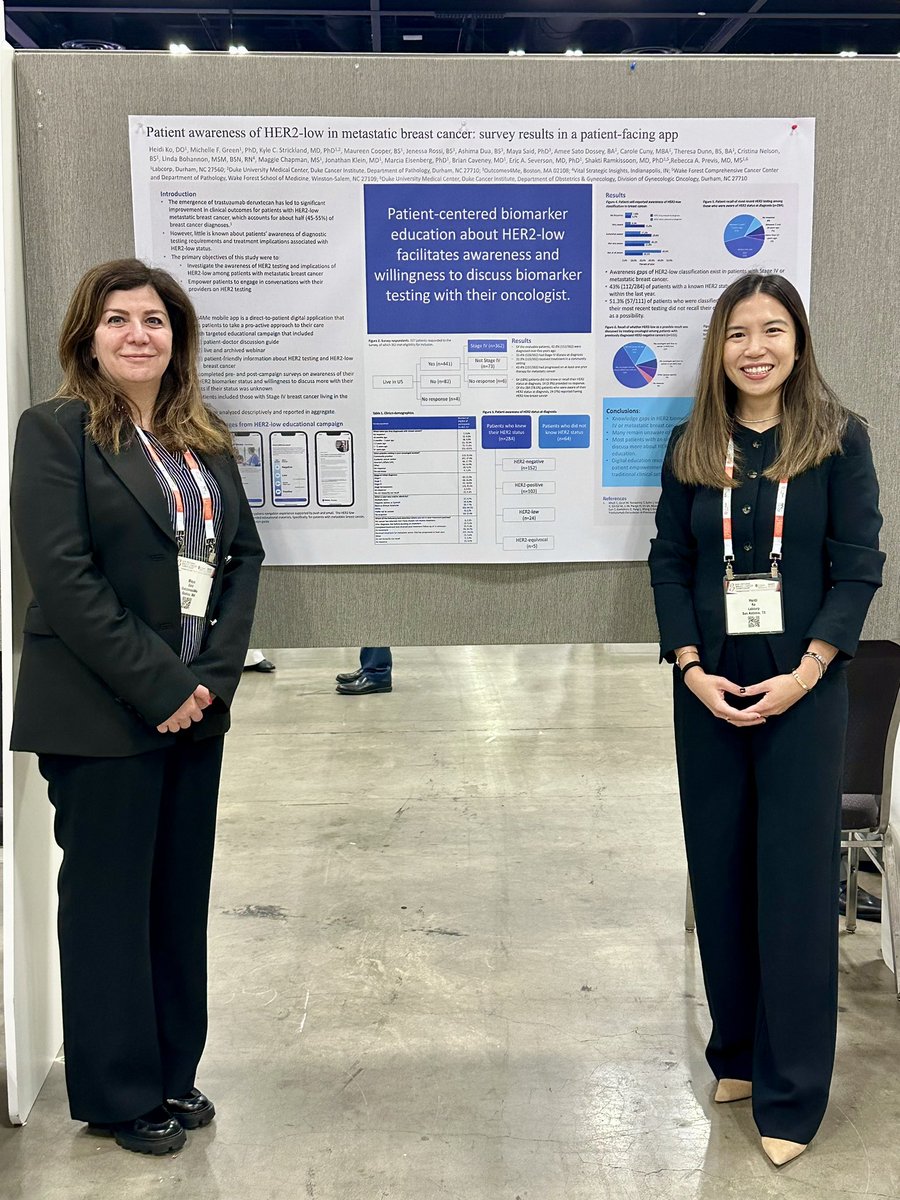
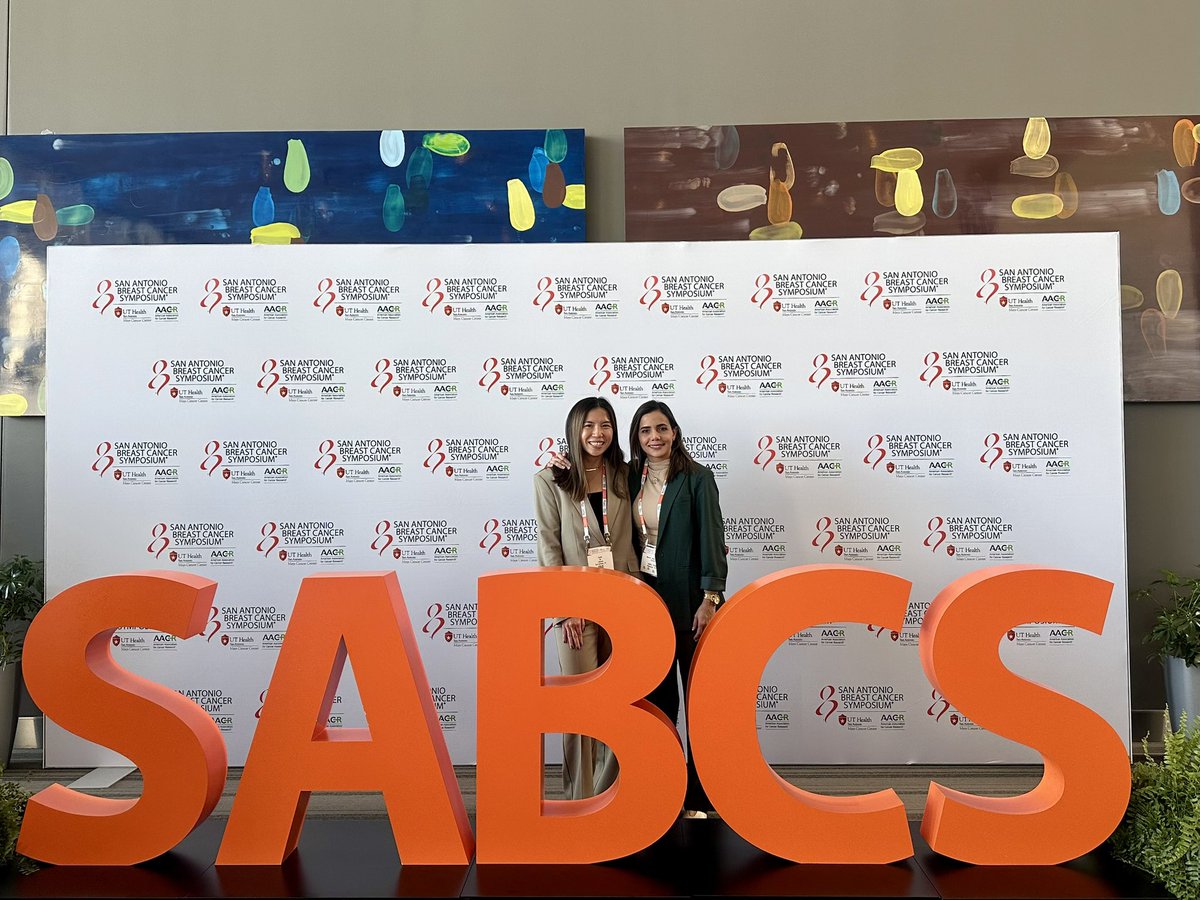
I’m so honored to present this important study on patient awareness of HER2-low breast cancer, led by amazing @BeccaPrevisMD @Labcorp @outcomes4me at #SABCS24 🌟
➡️ Patient awareness gaps exist and education increases biomarker awareness and empowers pt-doc discussion
English
Heidi Ko nag-retweet

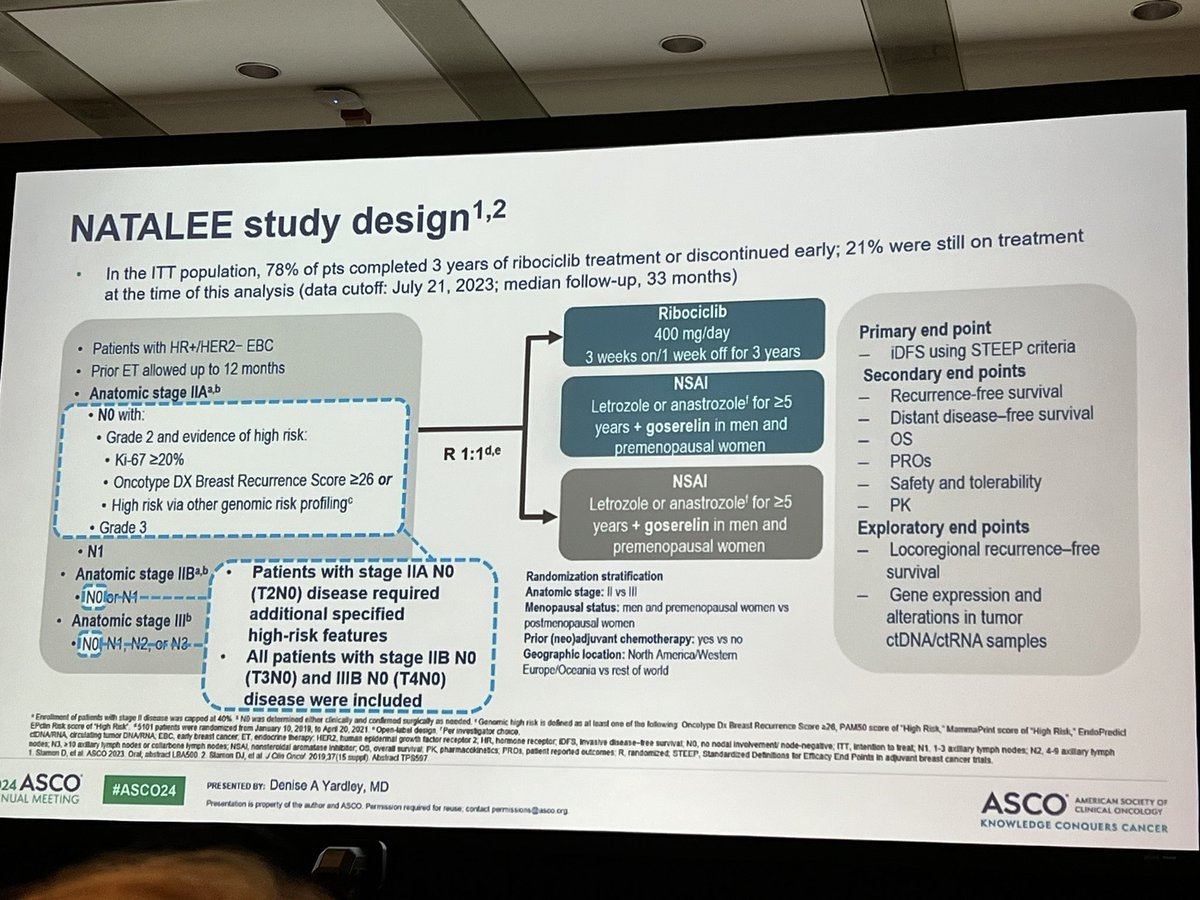
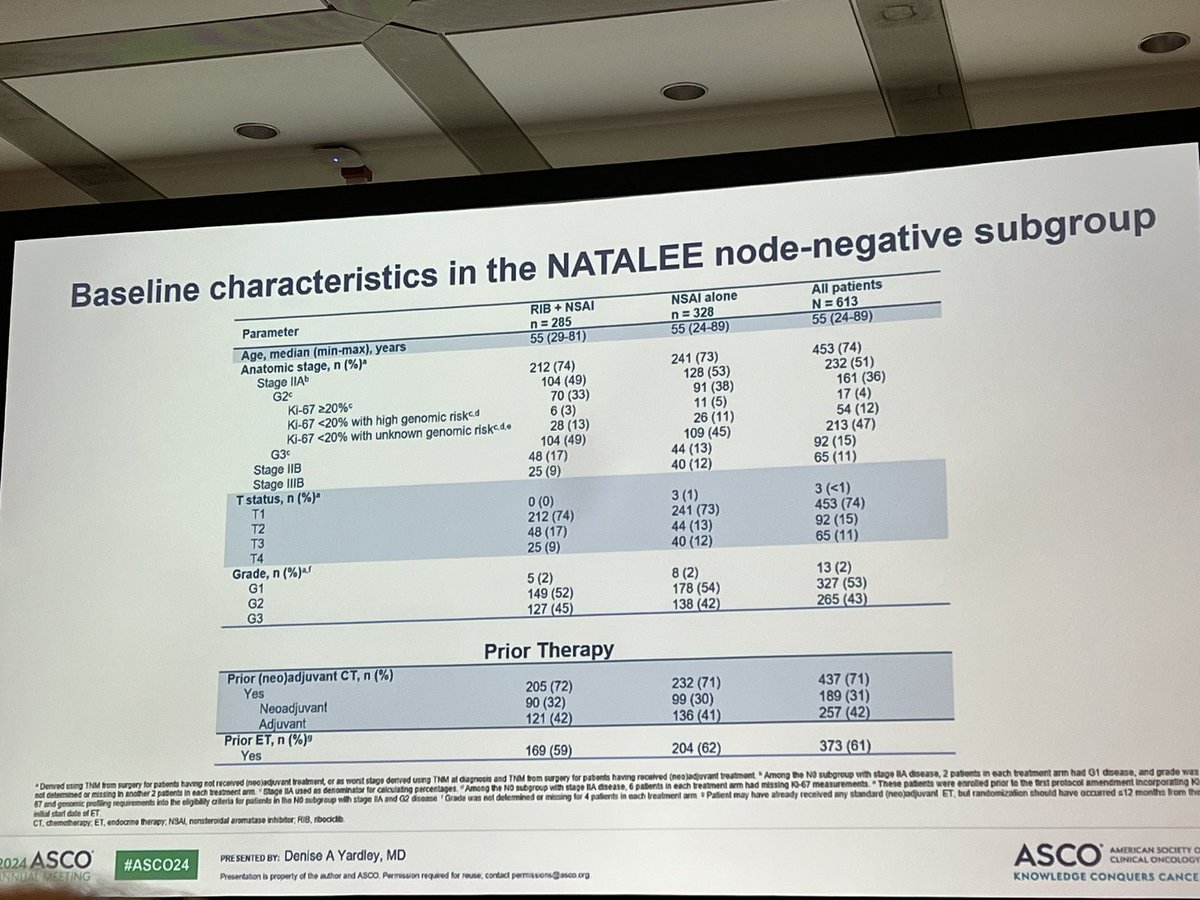
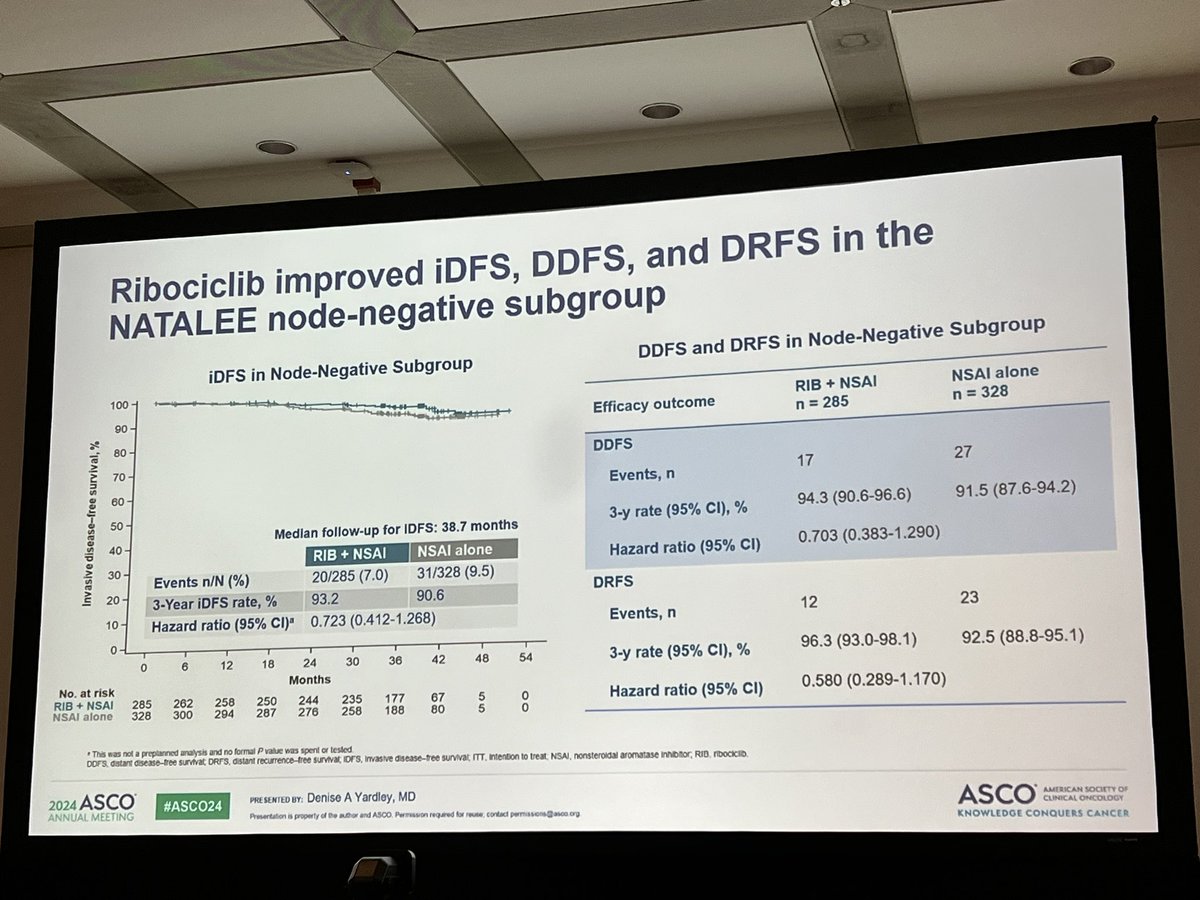
As I try to figure out INAVO120, I would like to point out that patients with PIK3CA mutations do very well on first line Abema/Fulv or Ribo/Fulv with median PFS beyond 16 months in registrational trials.
Palbo/Fulv as a control arm is questionable
Thanks @Larvol for dataset.

English
Heidi Ko nag-retweet
Heidi Ko nag-retweet
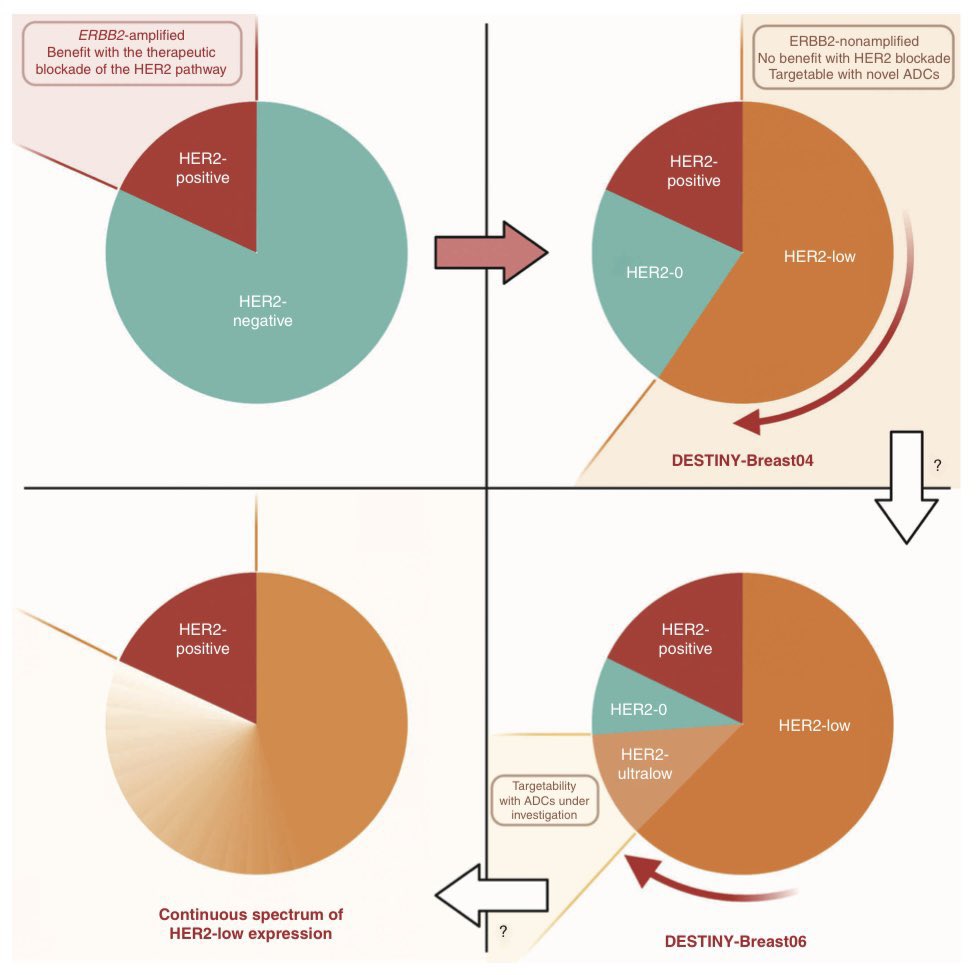
1. 1998: the FDA approves trastuzumab. HER2+ becomes clinically relevant.
2. 2022: T-DXd improves outcomes in HER2-low MBC. HER2-low becomes clinically relevant.
3. 2024: T-DXd improves outcomes in HER2-low + ultralow. HER2-ultralow becomes clinically relevant.
4. Stay tuned
Paolo Tarantino@PTarantinoMD
In 2020 we proposed to add a #HER2Low slice to the HER2 pie chart, an addition that has now entered practice. But further changes await us in the coming years. Excited to share our latest Cancer Discovery piece, outlining the present & future of HER2-low! aacrjournals.org/cancerdiscover…
English
Heidi Ko nag-retweet
The OncoAlert🚨NEWSLETTER OUT
Covering May 2-8, 2024
REGISTER at OncoAlert360.com OR oncoalert.m-pages.com/nhMpwe/oncoale…
✅ @TheLancet Commission on #ProstateCancer
✅DESTINY-PanTumor01
✅Osimertinib+Local tx for brain🧠mets in EGFRm #NSCLC 🫁
✅ASCENT in Triple Negative #BreastCancer 🧪
✅Bilateral Oophorectomy in BRCA1&2🧬
✅Racialized inequities in live birth after cancer🤰🏾
✅MITO END in Endometrial Cancer
✅Tx Patterns Advanced Urothelial Carcinoma🇺🇸
and more‼️
@maryam_lustberg @neerajaiims @matteolambe @kevinpunie @stolaney1 @JaniceTNBCmets @Silke_Gillessen @HenningWillers @FuenteApolo @DrYukselUrun @PhillipsLilly @vinay_onc @dradityabardia @aftimosp @Prof_Nick_James @EGFRResisters @genperisi @chadihc98 @ggebraelmd @WileyOnc_Hem @jillfeldman4 @UmbertoMalapel1 @hoperugo @crisbergerot @apolo_andrea @NicoleKuderer @jesusanampa @agz_eriksson @JournalCancer @itsnot_pink @E_de_Azambuja @Florez_Lab
#OncoAlertAF
@nataliagandur @acampsmalea @MartaPerachino @heinrich_kat @BiagioRicciutMD @DenizCanGuven1
@yekeduz_emre @HHorinouchi @FadiHaddad_MD
@Dr_Ivanoncologo @Abdallah81MD @FernandoOnco
@ElisaAgostinett @dr_yakupergun @to_be_elizabeth @anmwongNZ
COVERING
English
Heidi Ko nag-retweet

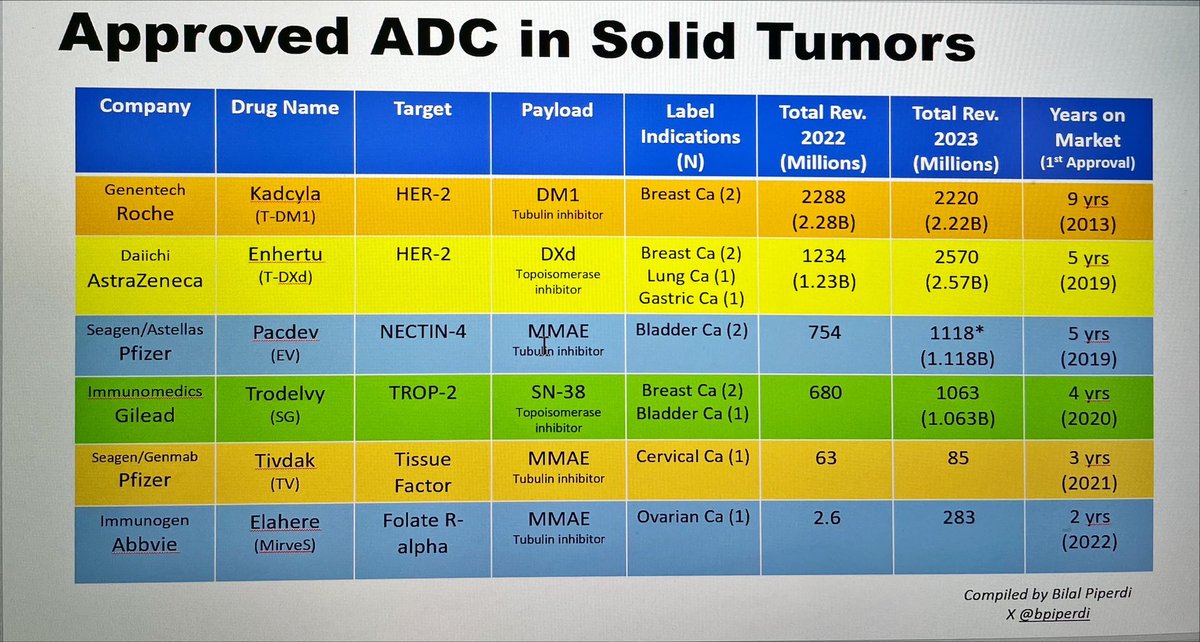
A lot of buzz with ADCs in oncology. The journey has not been easy. There’re only 5 approved ADCs in solid tumors in last 10 years. Here’s my summary…@OncoAlert #AACR #ASCO
English