TheFa(c)tHunter

4.3K posts

TheFa(c)tHunter banner
TheFa(c)tHunter

TheFa(c)tHunter

@DimitriRadoux

Adam\Alexander - Health first, Greatness Follows. — In the end, respiration and burning are equivalent; the slight delay in the middle is what we know as life.

Ghent, Belgium Sumali Nisan 2020
374 Sinusundan1.2K Mga Tagasunod
TheFa(c)tHunter nag-retweet
Dr Shawn Baker 🥩
Dr Shawn Baker 🥩@SBakerMD·
“Cardiovascular disease is all about cholesterol” Oh, wait, there’s now immensely profitable drugs for metabolic disease? “Cardiovascular disease is about metabolic health”
Pablo Corral MD@drpablocorral

👉 Metabolic Disorders and Cardiovascular Disease: Key Insights 👆 A recent ESC scientific statement highlights the central role of metabolic dysfunction in cardiovascular disease and the therapeutic implications of emerging cardiometabolic therapies. 👆 Key points: 📍 Cardiovascular disease is increasingly driven by metabolic dysfunction—obesity, type 2 diabetes, and dyslipidaemia act synergistically to accelerate atherosclerosis, heart failure, and arrhythmias. 📍 Metabolic disease disrupts myocardial energetics, promoting metabolic inflexibility, mitochondrial dysfunction, oxidative stress, and lipotoxicity. 📍 Modern cardiometabolic drugs provide benefits beyond glucose lowering. SGLT2 inhibitors and GLP-1–based therapies improve cardiovascular outcomes through pleiotropic mechanisms. 📍 Atherogenic risk extends beyond LDL-C, with triglyceride-rich lipoproteins and Lp(a) contributing to residual cardiovascular risk. 📍 Future progress will require a systems-biology approach, integrating multi-organ mechanisms, multi-omics data, and translational research. 👆 Bottom line: Cardiovascular disease should increasingly be understood as a systemic cardiometabolic disorder rather than an isolated vascular pathology. 🔗 Open Access academic.oup.com/eurheartj/adva… @society_eas @escardio

English
12
20
182
16.7K
TheFa(c)tHunter nag-retweet
Anthony Chaffee, MD
Anthony Chaffee, MD@anthony_chaffee·
Just amazing how corrupt the academic system is, even in so-called independent testing facilities such as Cleerly, who fraudulently unblinded the lean mass hyperresponders study data and then altered it, making it appear as if there was an increase in cardiovascular plaque when in fact there was an overall reduction in the entire cohort. Just amazing as they were being paid to do an objective job, but for some reason they decided to corrupt the data for their own purposes. These people should be sued into oblivion, and hopefully will be. So again to everybody who thinks that ketogenic and ketogenic carnivore diets with so-called elevated LDL and total cholesterol but high HDL, low triglycerides, and massive improvement in every other biomarker and physical marker are somehow at risk for developing cardiovascular disease, the evidence is in: ketogenic diets, like a carnivore diet, reduce arterial plaque, even with elevated LDL and ApoB. And in fact, both data sets, even the corrupted one, show that there is NO association whatsoever between plaque progression and LDL or ApoB. None. Zip. Zilch. Nada. Sorry cholesterol bros, you're wrong again!
Nick Norwitz MD PhD@nicknorwitz

I feel like I can breathe again! Get ready for a rant I've been waiting to let loose for a year. 🔥 First, here are the core facts about the Keto-CTA study to date: 🚨PART 1: THE FACTS 👉From its inception, Dave, Adrian, and I, being associated via the funding body (the Citizen Science Foundation), were blinded to certain elements of the data. The purpose was to protect the integrity of the project. 👉The profound irony is this also meant that, prior to publication, we couldn’t perform certain ‘checks’ and had to trust others to do so. Speaking for myself, it’s now painfully clear that was a mistake. 👉However, after the April 7th paper was published, "anomalies" (if I’m being polite) were noted with the Cleerly scans. 👉 Cleerly refused to redo the scans, despite multiple requests and being offered payment. 👉Importantly, and to my dismay, the original Cleerly reads were UNBLINDED, introducing a major source of bias. 👉At additional expensive, the scans were rerun through HeartFlow in a properly blinded analysis, and via the pre-specified QAngio methodology. 👉HeartFlow and QAngio agreed with each other and were discordant with the Cleerly analysis. 🚨PART 2: THE NEW NEWS What happened next was brilliant! And, truth be told, I only found out about it yesterday. For my own legal security – and at the recommendation of my friend and colleague who was taking the worst of it on the back end – there was a lot I didn’t know until this point. This is what happened… 👉Several participants independently submitted their scans to Cleerly as a workaround to obtain a truly blinded Cleerly analysis. 👉Those results were highly discordant with the original Cleerly analysis and aligned with the HeartFlow and QAngio analyses. The difference between the original Cleerly scans and the repeated blinded scans was massive! The original unblinded analysis reported a +20.9 mm³ mean increase in non-calcified plaque volume, while the blinded repeats showed a -5.1 mm³ mean decrease. I mean, MY GOODNESS!!! I basically did a backflip when I found out (@realDaveFeldman can release the footage of the meeting at his discretion) If you’ve been following the KETO-CTA story up to this point, the consistency of the findings across HeartFlow, QAngio, and now Cleerly itself (based on the blinded reads) should bring much-needed clarity. The converging results fundamentally reshape the narrative and directly refute the claim that the study demonstrates massive, unprecedented plaque progression in LMHR and near-LMHR And, after all that, the fact remains that every single analysis found no association between ApoB levels or LDL exposure and plaque progression. LET ME REPEAT: And, after all that, the fact remains that every single analysis found no association between ApoB levels or LDL exposure and plaque progression. 🚨 PART 3: NEXT STEPS In terms of next steps, I’ll quote my colleague Dave: “we have already taken steps regarding last year’s paper that contained the original Cleerly analysis.” I’ll leave it at that for now so I don’t overstep. But let me say, that’s the highly polished and diplomatic version. I certainly have stronger words about this process, but perhaps now is not the time. Where I will speak more plainly is in regard to the behavior of some detractors over the past several months. In a few cases, I’ve reached out privately to individuals who should know better, gently suggesting that, in light of the new evidence (Heartflow and QAngio), it might be time to reassess or lighten the abuse. For anyone sincerely paying attention—and for anyone with even modest insight into how scientific bureaucracy works—I hope it is now clear why we were not more forthcoming earlier in the process. 👉And trust me when I say, it’s never been harder to keep my mouth shut about anything in my life. I've accumulated more cortisol AUC in the last 11 months then in the entirety of my life to age 29. 🚨PART 4: SPEAKING FOR MYSELF Speaking for myself, I have been beyond frustrated and disappointed. At multiple stages, it has become painfully—and increasingly—clear to me that our scientific system, which presents itself as purely meritocratic, is far more political than most would imagine. These are difficult words for me to say as someone who comes from a family of doctors and scientists and who has spent his entire career in academic institutions—multiple Ivy League universities @Harvard @dartmouth, two doctorates, and top-ranked institutions in both England @UniofOxford and the United States. I was groomed in conventional academic medicine. If I have any bias, it’s to see the best in conventional medicine and modern scientific process. Most of my loved ones have made their living within this ecosystem. But when you pull back the curtain, the reality can be sobering. To those detractors who have verbally abused or personally attacked my colleagues and me—perhaps out of naivete or ignorance—I will say this plainly: it’s time to check yourselves. Too many people have spoken out of turn, seemingly to score points rather than to engage thoughtfully with an evolving scientific story—one that has been evolving for quite some time. When the HeartFlow and QAngio analyses were released, that alone should have prompted serious reflection. At minimum, it should have raised questions. The subsequent silence from some of the loudest critics, after they believed they had “won” a round, is telling. Science deserves better than scorekeeping. It deserves intellectual honesty and the humility to update one’s position when new evidence emerges. At times over the last year, the lack of curiosity, sincerity, and intellectual honesty from people who I tried to give the benefit of the doubt has made me want to vomit. And trust me when I say, this isn’t a victory lap. This is a promise. We are now over a hurdle that I have been waiting for almost a year. And frankly, I am ready to run headfirst through brick walls with my colleagues and friends by my side — those whom I trust to pursue the hard questions and the honest answers — and do so indefinitely using the tools and resources at our disposal, even when, and especially when, the scales are improperly tilted against us. Lucky for us, the intellectual environment is expanding — the black box of academia beginning to crack open. So someone hand me a crowbar, because I’m committing myself fully and completely, over the coming years and decades, to prying it wide open. Not gently. Not quietly. But decisively. My final words of this verbose dissertation? LFG

English
45
312
1.2K
70K
TheFa(c)tHunter nag-retweet
Tucker Goodrich
Tucker Goodrich@TuckerGoodrich·
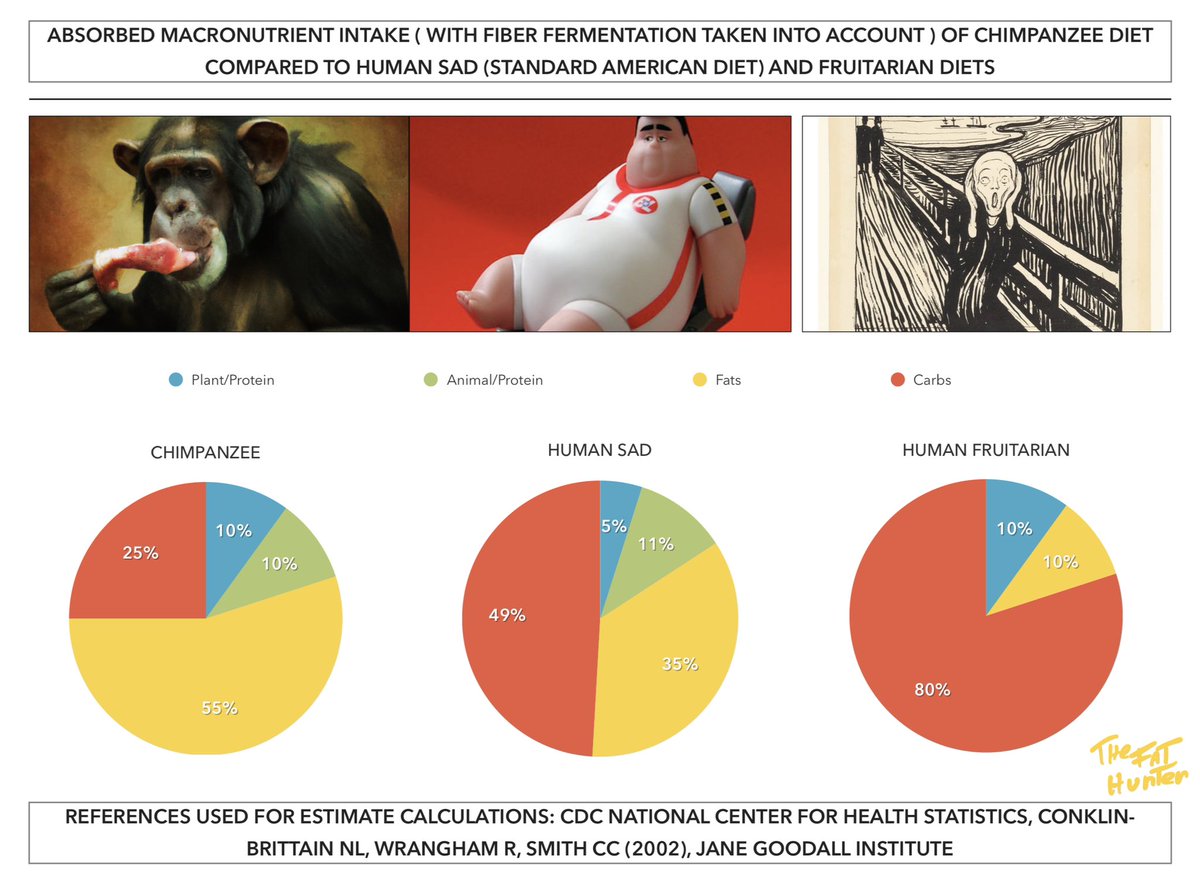
Humans are obligate carnivores. See the omega-3 and vitamin B12 items in that chart. Only animal foods have what we need. That doesn't mean we should eat nothing but meat, but it does mean we have to eat some meat (milk is a meat-substitute). The only natural populations we know of that appeared to eat a totally plant-based diet had to resort to cannibalism. @KetoCarnivore
Ty Beal@TyBealPhD

The paper behind this figure was just accepted for publication…after 2.5 years of review (again!) Meat, fish, eggs, and dairy contain more bioavailable nutrients like protein, omega-3, iron, zinc, calcium, and vitamins B5, B7, B12, and A than plant-based foods.

English
14
22
121
8.8K
TheFa(c)tHunter nag-retweet
Sama Hoole
Sama Hoole@SamaHoole·
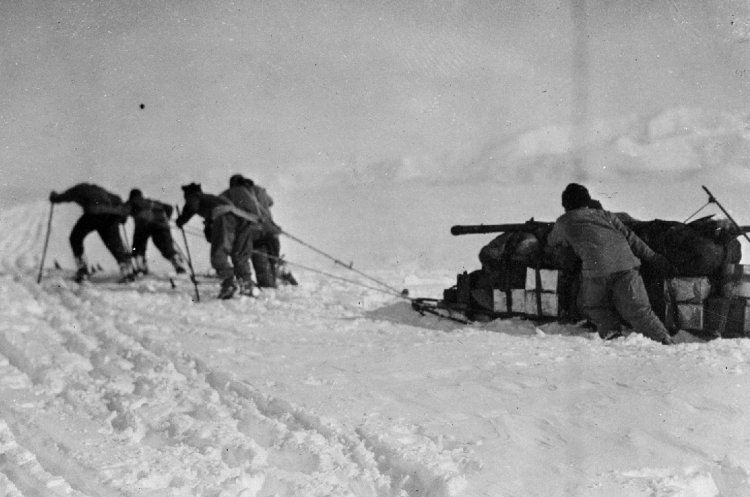
1911. Two expeditions race to be first to the South Pole. Robert Falcon Scott leading the British team. Roald Amundsen leading the Norwegian team. Same goal. Same destination. Completely different dietary approaches. Scott's provisions: British naval traditions. Pemmican, yes, but less than Amundsen. More biscuits (hardtack). More lean tinned meats. More carbohydrates. The "balanced" approach. Amundsen's provisions: High-fat focused. More pemmican - the fattiest mix they could make. Chocolate with added butter for extra fat. He'd learned from his previous Arctic expedition: fat is non-negotiable in extreme cold. November 1911: Both teams depart for the pole. December 14, 1911: Amundsen reaches the South Pole first. His men are in good health. They have food remaining. The dogs (which they'd also fed high-fat pemmican) are in decent condition. They return safely to base camp. January 17, 1912: Scott reaches the pole, 34 days after Amundsen. His men are already exhausted. They're rationing food despite being barely halfway through the journey. On the return, they begin deteriorating rapidly. The Scott expedition's journals document it: Constant hunger despite eating their rations. Extreme fatigue. Frostbite setting in more severely than expected. They're supposed to have enough food. They're eating regularly. But they're starving. March 1912: Scott and his remaining men die, just 11 miles from a supply depot. They had food left. One of his last journal entries mentions hunger and weakness despite eating. Why did Amundsen succeed where Scott failed? Nutrition researchers who've analyzed both expeditions' rations have calculated the macros: Scott's rations: About 4,500 calories daily, roughly 30-35% from fat. Amundsen's rations: About 4,500 calories daily, roughly 50-60% from fat. Same total calories. Massively different fat content. Massively different outcomes. In extreme cold doing hard physical labor, the body burns through glucose quickly. If you're relying on protein and carbs for energy, you're constantly depleted. If you're using fat as primary fuel, you're stable. Scott's men were eating enough calories but not enough fat. In Antarctic conditions, that caloric approach killed them. Amundsen knew: Fat is survival. Not just in the food, but in his body. His men returned with enough fat stores remaining that they could have sustained themselves longer if needed. Scott's men burned through their limited fat stores. Then burned through muscle. Then died. Same Antarctic conditions. Same human bodies. Different macronutrient ratios. The difference between life and death.
Sama Hoole tweet media
English
21
235
903
37.3K
TheFa(c)tHunter nag-retweet
Frédéric Leroy
Frédéric Leroy@fleroy1974·
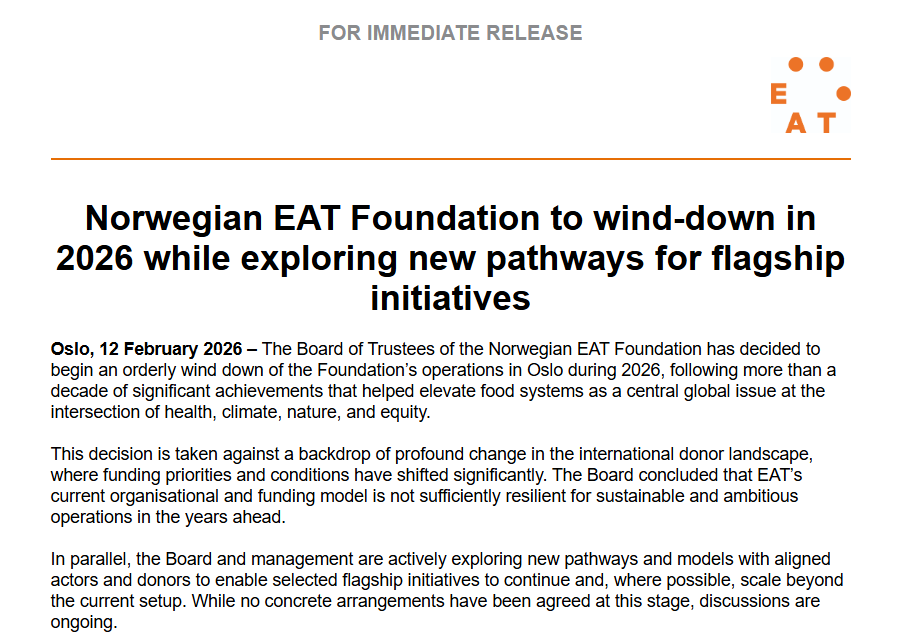
"This decision is taken against a backdrop of profound change in the international donor landscape, where funding priorities and conditions have shifted significantly." 👀
Frédéric Leroy tweet media
English
10
46
50
4.8K
TheFa(c)tHunter nag-retweet
Nina Teicholz, PhD
Nina Teicholz, PhD@bigfatsurprise·
The EAT Foundation is going bankrupt. This group tried to impose a quasi-vegan, nutritionally deficient diet on the world. An anti-human diet. Good riddance! eatforum.org/press_release/…
English
53
166
1.1K
35.6K
TheFa(c)tHunter nag-retweet
New Scientist
New Scientist@newscientist·
About 4600 years ago, the population of Britain was replaced by a people who brought Bell Beaker pottery with them. Now, ancient DNA has uncovered the murky story of where these people came from #Echobox=1770835799" target="_blank" rel="nofollow noopener">newscientist.com/article/251526…
English
12
68
222
25K
TheFa(c)tHunter nag-retweet
Nick Norwitz MD PhD
Nick Norwitz MD PhD@nicknorwitz·
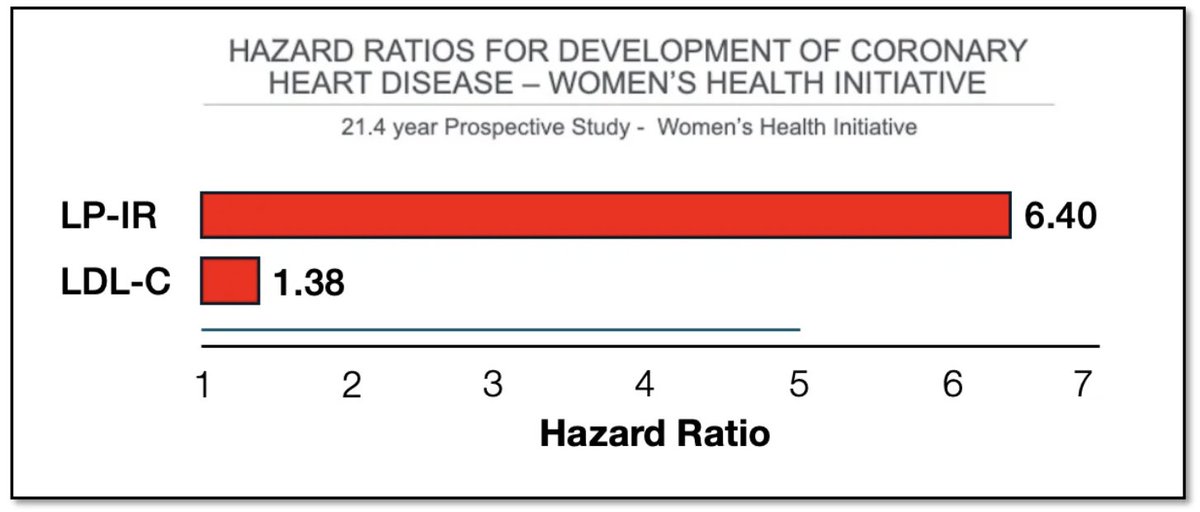
Cholesterol Debates in the Era of Medical Mistrust 1/4) This graph shows the hazard ratio for coronary heart disease associated with insulin resistance score (LP-IR) versus LDL cholesterol. It’s not even close. Insulin resistance dwarfs LDL—with a >14-fold difference in relative risk.
Nick Norwitz MD PhD tweet media
English
36
134
535
52K
TheFa(c)tHunter nag-retweet
New Scientist
New Scientist@newscientist·
A woolly rhino genome has been recovered from meat preserved in a frozen wolf pup’s stomach. The 14,400-year-old DNA is helping researchers understand why woolly rhinos went extinct. #Echobox=1769237670" target="_blank" rel="nofollow noopener">newscientist.com/article/251155…
English
1
7
44
7.4K
TheFa(c)tHunter nag-retweet
Metabolic Mind
Metabolic Mind@Metabolic_Mind·
Saturated fat is back in the headlines, and so is the confusion. The new Dietary Guidelines for Americans just dropped, and while there’s clear progress (more support for animal-based protein, low-carb options, and reduced sugar), they’ve kept the 10% cap on saturated fat. But does the science still support that limit, and does it make sense with the rest of the recommendations? In this episode, @bschermd breaks down the real story on saturated fat: where the guidelines get it right, where they fall short, and why context is everything when it comes to fat, food, and metabolic health.
English
3
13
67
3.4K
TheFa(c)tHunter nag-retweet
Dr Shawn Baker 🥩
Dr Shawn Baker 🥩@SBakerMD·
Whole ecosystems were wiped out to grow the proteins and sugars used to feed the cells, the reactors require far more energy- so this is all performative nonsense to pretend to save animals- the reality is you just kill a different group of animals
Killa 🌺@KillaKreww

MrBeast showed a $200M Lab where NO Chickens are harmed to make genetically grown chicken meat, a project that could potentially save billions of animals 😳🔥 Mr. Beast even ate real chicken vs the lab grown chicken and noticed NO DIFFERENCE 🐓👀

English
160
379
2.7K
69.8K
TheFa(c)tHunter nag-retweet
James DiNicolantonio
James DiNicolantonio@drjamesdinic·
Soft margarines: 21-28% trans fat Hard margarines: 22-36% trans fat (with most being in the 30-36% range). Were these "soft margarines" enriched in omega-6 PUFA? The ones used in the 1960s seed oil studies were enriched in omega-6 to specifically LOWER the trans fatty acid content, which is why many references suggest the Miracle Margine in SDHS to be about 15% TFAs. Regardless, it is very likely that the hard stick margarinse had around 30-36% TFAs, whereas the soft had 15-28% TFAs. Thus, the animal fat group in MCS/LA Veterans/SDHS likely consumed margarines/shortenings that contained more TFAs. In other words, the seed oil advocates need to stop saying the opposite was true and thus the "trans fat issue" nullifies the results of SDHS/MCS etc.
English
3
2
9
2.2K
TheFa(c)tHunter nag-retweet
Frédéric Leroy
Frédéric Leroy@fleroy1974·
"Many researchers believed that early humans only scavenged megafauna when circumstances allowed. Elephants were seen as too dangerous or too difficult to process for regular exploitation", but new findings challenge this view. earth.com/news/early-hum…
English
2
9
18
975
TheFa(c)tHunter nag-retweet
Julian Mellentin
Julian Mellentin@JulianMellentin·
The plant-based frenzy (2012-2022) is over. People are returning to a real human diet.
Julian Mellentin tweet media
English
111
357
3.1K
88.3K
TheFa(c)tHunter nag-retweet
Ken D Berry MD
Ken D Berry MD@KenDBerryMD·
Yeah, our ancestors just accidentally spent 2.5 million years hunting, butchering, and metabolizing animal foods because of a childhood habit. Or, it’s because B12, heme iron, DHA, creatine, taurine, and complete proteins are biological requirements.
David Ramms@itsdavidramms

Most people don’t eat meat because they need it. They eat it because they always have. It’s a habit from childhood, not a biological need. And when a habit costs someone their life, especially someone who wants to live, we should question it.

Tennessee, USA 🇺🇸 English
51
183
1.5K
42.8K
TheFa(c)tHunter nag-retweet
Elie Jarrouge, MD
Elie Jarrouge, MD@ElieJarrougeMD·
New patient. Total cholesterol: just 87! Sounds amazing, right? Let’s look closer: ⚠️ Triglycerides: 404 ⚠️ HDL: 23 ⚠️ LDL: < 20 🤔 I thought it was a lab error. Checked older labs—same thing. LDL as low as 16. His doctor? Never questioned it. Just kept him on max-dose statin. Patient followed instructions. Except… He’s obese. He’s diabetic. He has brain fog. He’s been on Ozempic + 2 other diabetes meds for years. This is what happens when you treat dietary diseases with medications… it doesn’t work. In a few months, this patient will be off all meds and the healthiest he’s ever been in years by simply following a common sense approach using an animal based whole food, high protein, very low carb diet.
English
81
144
1.3K
65.7K