Eddie Priymak

1K posts

Eddie Priymak

Eddie Priymak

@EdPriymak

Ukrainian-American | Researcher interested in religion and politics in Eastern Europe

Sumali Ağustos 2021
508 Sinusundan140 Mga Tagasunod
Eddie Priymak nag-retweet
EUvsDisinfo
EUvsDisinfo@EUvsDisinfo·
How Russia weaponizes the church in Ukraine One weapon in the hybrid arsenal Russia has deployed against Ukraine is the issue of religion. Russia has exploited the Orthodox Church to carry out various destructive actions on the ground, including through Foreign Information Manipulation and Interference (FIMI) campaigns. Religion in Ukraine Religion is a significant part of public life in Ukraine. According to the Kyiv International Institute of Sociology, about 70% of Ukrainians consider themselves Orthodox Christians. Two main Orthodox churches exist in the country. The Orthodox Church of Ukraine (OCU) was established in 2018 as an independent national church, uniting several previously separate Ukrainian Orthodox groups.The Ukrainian Orthodox Church (UOC), by contrast, has historical ties to the Russian Orthodox Church and has traditionally been subordinate to Moscow. The UOC rejects the legitimacy of the OCU, calling it schismatic. Since Russia’s full-scale invasion, many parishes have shifted their allegiance from the UOC to the OCU, accelerating a broader move towards religious independence from Moscow. In 2022, the UOC attempted to publicly distance itself from Russia. However, these attempts proved unconvincing for both the citizens and the government of Ukraine. In August 2025, the State Service of Ukraine for Ethnopolitics and Freedom of Conscience confirmed that the UOC still maintained ties with the Russian Orthodox Church, whose activities in Ukraine were banned by law in 2024. According to Ukrainian legislation, the UOC was told to sever ties with the Russian Orthodox Church – but refused to comply with the order. Hybrid actions on the ground The history of cooperation between UOC clergy and Russian intelligence services began long before February 24, 2022. It was already commonplace and well known during the Soviet era. The Russian Orthodox Church and subordinate clergy in Ukraine operated under the supervision of the KGB. The secret services controlled the seminaries, influenced how the church hierarchy was formed, and forced clergy to break the seal of confession. After the collapse of the USSR, Moscow used the church both as a political tool at home and as an influence instrument abroad. In 2014, Crimean hierarchs of the UOC openly supported the Russian occupation of the peninsula. In the occupied territories of Donetsk and Luhansk regions, there are records of sheltering militants, blessing Russian weapons, cooperation with occupation administrations, or participation in persecution of representatives of other denominations. In September 2022, at a ceremony in the Kremlin announcing the illegal annexation of four regions of Ukraine, three UOC hierarchs were present. In addition, a number of UOC figures fled to Russia and started openly cooperating with the Kremlin regime – they have all since been sanctionedby Ukraine. Altogether, from the beginning of the full-scale invasion in late February 2022 to November 2025, the Security Service of Ukraine has initiated 208 criminal proceedings against UOC representatives for anti-Ukrainian activities and other crimes. The church and FIMI Along with involvement in destructive kinetic actions in Russia's interests, the UOC and organisations affiliated with it are involved in Russian FIMI. According to datafrom the Center for Strategic Communications, there is a system of information resources associated with the UOC interfering in Ukraine's media space. These include both direct church resources and a system of formally independent ones, namely: - The Union of Orthodox Journalists (internet sites, channels and pages on Youtube, TikTok, Telegram, Viber, Facebook, X, Instagram); - Raskolam. net (internet sites, channels and pages on Telegram, Facebook); - Myriany (channels and pages on Telegram, Facebook, Youtube) - Pershyi Kozatskyi (channels and pages on Telegram, Facebook, Youtube, TikTok, X, Instagram); - Telegram channels of Orthodox bloggers, anonymous Telegram channels. The threat posed by these resources is obvious: they spread fakes and disinformation, provide manipulative interpretation of current events in Ukraine and the world, and promote propaganda masked as ‘religious’ narratives. The goal is to push a conspiratorial worldview in which a ‘church schism’ has occurred in Ukraine, and ‘Satanists controlled by the West’ in the Ukrainian government have began ‘religious persecution’ and unleashed a ‘fratricidal war’ against Russia. Accordingly, Russia is waging a ‘holy war’ to preserve true Christianity and to ‘reunify the triune Orthodox people,’meaning Russians, Belarusians and Ukrainians. Imposing such a paranoid worldview on the target audience fully corresponds with the Kremlin's military-political goals. In particular, it is aimed at destabilising the internal political situation in Ukraine and encouraging ideologically motivated collaboration with Russia. Changing the semantic field In addition to traditional FIMI efforts, the media resources mentioned above have implemented a malicious strategy aimed at changing Ukraine's semantic field, i.e. the related set of words grouped by meaning that refers to a specific subject (church and religion in this case). This is because they have ensured Russian terminology has infiltrated public discourse in Ukraine, with according Russian meanings. Information resources associated with the UOC have their own lexicon: stable, reproduced systematically and rooted in the corresponding narrative system and, deeper, in the concept of ‘Russkiy mir’ (‘the Russian world’). This ideology has long been used by Putin's regime to justify external aggression, including against Ukraine. An important component of this ideology is Russian Orthodox messianism. For example, as part of promoting the narrative about ‘church schism’ and ‘religious persecution,’ Russian FIMI calls parishioners and clergy of the OCU and other denominations ‘schismatics’ or ‘heretics’. This is clearly aimed at provoking religious conflict with Ukraine. Over 10,200 publications posted on 2,300 Telegram channels in Russian and Ukrainian between February 24, 2022 and November 1, 2025 have been identified, in which the term ‘schismatics’ was used regarding the OCU. The majority of the content (92%) was posted on Telegram channels that position themselves as Russian. The remaining 8% of the array were channels oriented toward a Ukrainian audience loyal to the UOC (Raskolam. net, Pershyi Kozatskyi, UOJ, Myriany, channels of ‘Orthodox bloggers’). This strategy is not only aimed at provoking internal conflicts in Ukraine, but also at dehumanising Ukrainians by using church terminology such as ‘demons,’ ‘demon-possessed,’ ‘Satanists,’ ‘antichrists,’ ‘godless,’ ‘sectarians’ in connection with the OCU. This vocabulary forms part of a component of the wider dehumanising/genocidal rhetoric targeting Ukraine and Ukrainians, used by Moscow. From 60% to over 90% of identified cases of the use of this vocabulary over the specified period appear in the Russian segment of Telegram, the rest in resources oriented toward supporters of the UOC. This data confirms that resources connected to the UOC not only retransmit destructive narratives, but have also attempted to infiltrate Ukraine's semantic field with hateful statements of Russian origin. The bigger picture The activities of the Russian Orthodox Church and organizations affiliated with it (both religious and secular) demand close attention. Ukraine is a kind of ‘testing ground’ where Russia has for years been exploring whether church structures could be used for hybrid interference, even in conditions of full-scale war. At the moment, Russia is not expanding conventional combat operations beyond Ukraine. But the extremely high intensity of FIMI interference in the EU information space together with violations of the airspace of EU and NATO countries by Russian strike drones and the increase in sabotage activities in Europe, are all extremely alarming signals that cannot be ignored. The church is a dangerous weapon in the hands of the Kremlin, as the issue of religious freedom is one of the fundamental values of the EU, protected by laws and customs. That is why it is vital not to allow Russia to exploit the church in its hybrid interference, to manipulate democratic values and principles. The authors: Serhii Zhukov Serhii Zhukov, Ph.D., is a Ukrainian journalist and expert in countering disinformation and strategic communications. Не is an analyst of Centre for Strategic Communication and Information Security. He has formerly held various positions in leading Ukrainian media. As an analyst of Centre for Strategic Communications he has done research on Russian genocidal rhetoric, spread of disinformation through Facebook ads, influence operations etc. Maksym Vikhrov Maksym Vikhrov is an Ukrainian journalist, writer and expert in countering disinformation and strategic communications. Не is the chief analyst of Centre for Strategic Communication and Information Security. He is former editor-in-chief in The Ukrainian Week magazine and the expert on history of Donbas. As an analyst of Centre for Strategic Communications he has done research on Russian propaganda narratives etc.
EUvsDisinfo tweet media
English
2
40
76
2.6K
Eddie Priymak nag-retweet
60 Minutes
60 Minutes@60Minutes·
For the first time, three of America's most influential cardinals and archbishops agreed to a joint interview, sharing their candid take on war in Iran, immigration, and the future of the Catholic Church. Sunday on 60 Minutes. 60Minutes.com
English
929
2.9K
16.2K
1.5M
Eddie Priymak nag-retweet
Christian Vision for Belarus
Under Greek Catholic Nuncio Ceffalia, all Belarusian Greek Catholic parishes in Brest region have been liquidated by the authorities. On 9 April 2026, the Supreme Court upheld the decision to liquidate the registration of Brest Greek Catholic Parish. @VaticanNews @HolySeePress
Christian Vision for Belarus tweet media
English
1
4
7
226
Eddie Priymak nag-retweet
Sergey Radchenko
Sergey Radchenko@DrRadchenko·
I have a long piece in the Guardian about... well, myself. As a writer and a historian, I generally tell other people's stories. So, this story was difficult to write. It took me about six months. It's about my understanding of my own identity: who, or what am I, really?
English
6
19
120
18.4K
Eddie Priymak nag-retweet
The Kyiv Independent
The Kyiv Independent@KyivIndependent·
In this interview with the Kyiv Independent, renowned Ukrainian historian Serhii Plokhy discusses why there’s no question that Russia has always been an empire, how the movement for an independent Ukrainian state in the 20th century began as a leftist project, why Russia is more fixated on destroying Ukraine than any other country, and more. kyivindependent.com/acclaimed-hist…
English
10
123
341
29.5K
Eddie Priymak nag-retweet
Illia Ponomarenko 🇺🇦
Illia Ponomarenko 🇺🇦@IAPonomarenko·
Just a thought: Ukraine’s President is Jewish. Our Defense Minister is a Muslim, a Crimean Tatar. The Commander-in-Chief of the Armed Forces is an ethnic Russian. Our top drone ace — recently awarded the title Hero of Ukraine — is an ethnic Hungarian. Over 70,000 women serve in the military now. Almost all of the most renowned combat medics are women. The revolution that changed this country forever began with a Facebook post by an ethnic Afghan Pashtun, a prominent Ukrainian journalist. And in our parliament, we have a Black MP — an Afro-Ukrainian and universally admired Olympic champion. All of this — in a country that is still, for the most part, Slavic. On the streets of Kyiv today, you’ll see halal restaurants for Muslim tourists standing peacefully next to Jewish eateries. Nearby are a museum and a monument to Sholem Aleichem, and a plaque bearing the face of Golda Meir, who once lived here. Among our main landmarks: 19th-century synagogues. Just a short walk away — a large mosque and Muslim cultural center. And above all, of course — the ancient Christian churches and monasteries that are the oldest and most significant in the East Slavic world. I still can’t get over the fact that Ukraine’s chief Muslim mufti (an ethnic Tatar from Donetsk) stepped down to serve as a frontline paramedic in the army. That our chief rabbi works tirelessly every day to help Ukraine across the globe — and that his adopted son died fighting for Ukraine, weapon in hand. For many years now, a giant glowing menorah has stood each Hanukkah in the heart of Kyiv’s main square. And on Independence Day, every religious denomination gathers in Saint Sophia Cathedral to offer prayers for Ukraine, each in their own rite. Just as they all come together for remembrance at Babyn Yar and the Holodomor monument. The more you look at the world, the more often you realize how much healthier Ukrainian society has become when it comes to coexistence between nationalities and faiths. We weren’t always like this. We are becoming this now — as the country is being radically transformed by revolution and by the defense against imperial Russia. We are shedding the weight of so many remnants of the past — really fast. Just recently in May, Ukraine held its WWII commemorations — with poppies and the slogan “Never again!” What a stark contrast to the satanic frenzy of Russia’s “Victory Day,” with its death cult, its “We can do it again!” bravado, and its glorification of dying for the Tsar. Against the backdrop of war, Ukraine is living through a real national and cultural renaissance. We are rediscovering the Ukrainian language, Ukrainian books, music, cinema — as something precious. And for how many decades were we taught to look down on everything Ukrainian — as “third-rate,” “peasant,” “inferior”?... I walk the streets of Kyiv on Christmas (December 25th, not January 7th as demanded by Moscow priests) and see bands of children in traditional embroidered clothes carrying colorful Bethlehem stars and singing carols. “Ukrainian Christmas” is returning to these lands as a vibrant cultural tradition. On Easter, crowds gather near Saint Sophia Cathedral for picnics and spring dances. In the old city above Podil, I often hear youth pounding out Cossack songs on drums. I always see many people at our nation’s sacred places — the Kyiv Pechersk Lavra, the cathedrals of Lviv, the Motherland Monument, the old castles. We haven’t suddenly become devout believers. We’ve simply come to take pride, like never before, in being Ukrainian — in treasuring our traditions, our culture, our history, and our way of life, in our own country. New traditions keep being born in wartime, against all odds. Today, we honor war veterans by inviting them to make the symbolic first kick at football matches — and then we give them a standing ovation from the stands, for their service. I could go on like this for hours. What I’m trying to say is — I love what Ukraine is becoming. This hope — breaking through unspeakable pain and hardship — feels like a light piercing the tunnel. Ukraine now, and Ukraine 12 years ago, are two completely different countries. The road ahead is brutally hard, but if only — if only our Ukraine can survive this war for its very existence.
English
643
5.9K
20.2K
850.7K
Eddie Priymak nag-retweet
Mattia Ferraresi
Mattia Ferraresi@mattiaferraresi·
The Trump administration summoned a Vatican diplomat to the Pentagon, and during the tense meeting a U.S. official invoked the Avignon Papacy. On July 4, the American pope will be in Lampedusa -- he didn't pick that date by accident. @TheFP thefp.com/p/why-the-vati…
English
324
1.4K
5.2K
3M
Eddie Priymak nag-retweet
Joni Askola
Joni Askola@joni_askola·
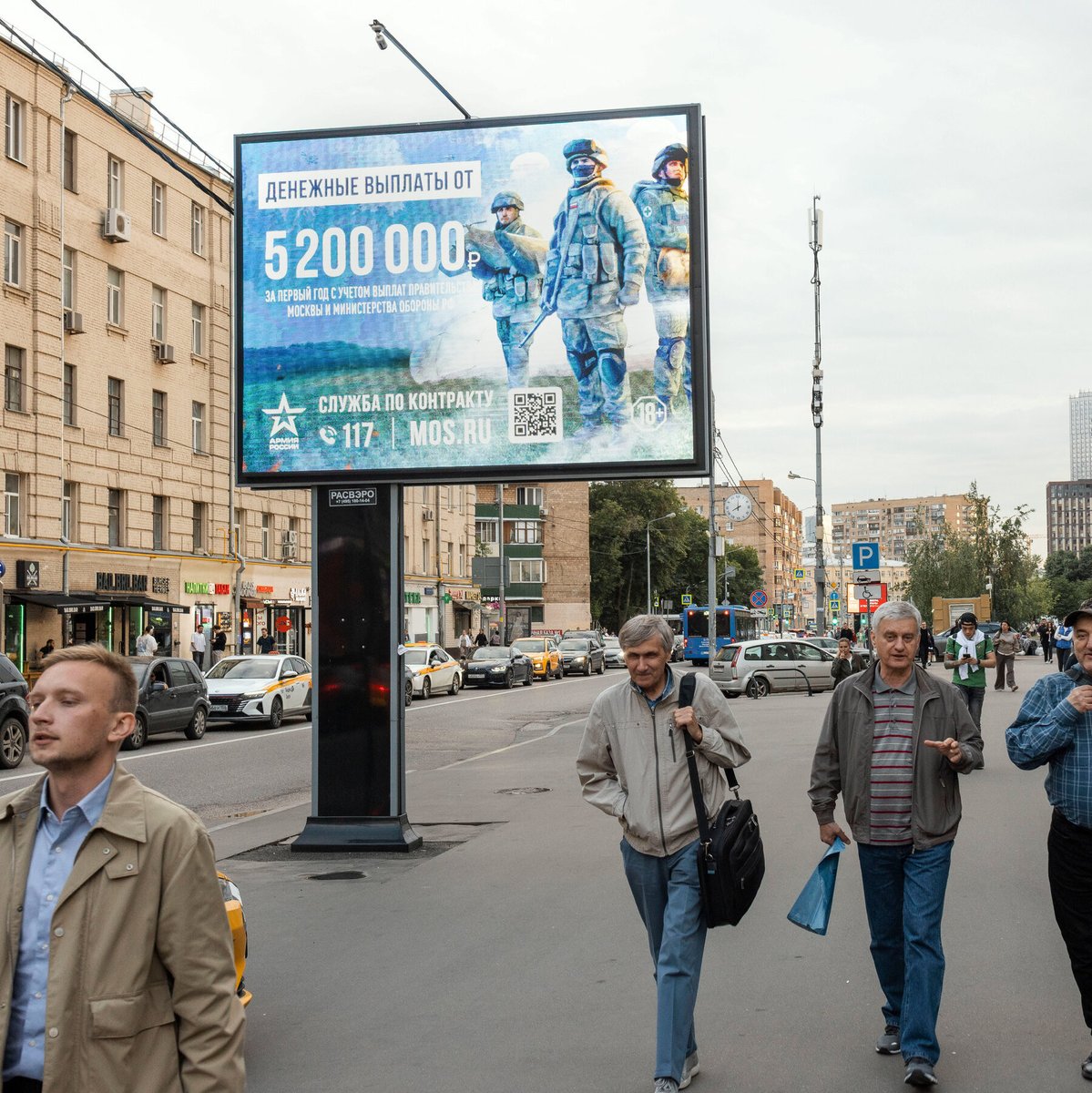
It is crucial for those not closely following the war in Ukraine to understand that most Russian soldiers joined voluntarily, largely motivated by pay. The genocide in Ukraine is largely carried out by ordinary Russians who volunteered for money
Joni Askola tweet media
English
132
928
3.1K
81.1K
Eddie Priymak nag-retweet
Vladimir Kara-Murza
Vladimir Kara-Murza@vkaramurza·
While members of the Russian Duma were hosted on Capitol Hill, their political master in the Kremlin was helping the Iranian regime more accurately strike U.S. targets. washingtonpost.com/opinions/2026/…
English
30
408
841
17.9K
Eddie Priymak nag-retweet
The Economist
The Economist@TheEconomist·
At the current pace, as many as half the world’s Catholics could be in Africa by 2066, a shift so seismic for the church that it has been compared to the upheaval of the Protestant Reformation economist.com/international/…
English
15
70
205
41.3K
Eddie Priymak nag-retweet
Branislav Slantchev
Branislav Slantchev@slantchev·
As a reminder, this is exactly the kind of pressure that broke the camel’s back with Ukraine. In 2013, then-President Yanukovych (who had wanted to play the traditional “both sides” game between the EU and Russia) was forced to make a decision: his government needed money, and Putin offered cash. The catch was that Ukraine had to reject the trade agreement with the EU, which had been painstakingly negotiated and which Yanukovych had promised to sign, in favor of joining Russia’s Customs Union. He did exactly that, which provoked Maidan. Yanukovych, with Kremlin prodding, tried to suppress the protests with violence. That backfired, sparking mass demonstrations across the country. It ended with his flight to Russia, Putin’s annexation of Crimea, and the beginning of the current war. Armenia is in a much tougher spot with this ultimatum. It is too small and vulnerable to stand firm the way Ukraine did. In its rough neighborhood with both Turkey and Azerbaijan eyeing parts of its territory, Russia has long been its traditional protector. It’s unclear to me how much real help the Europeans can offer (beyond using their influence with Turkey and Azerbaijan).
Tymofiy Mylovanov@Mylovanov

Russia declares ultimatum to Armenia. Putin [to Armenian PM]: You can’t trade with both EU and EEU. You have to choose. In the last few years, Armenia started exporting to EU 10 times more goods. We are fine with that. It’s your choice, who you will trade with. 1/
English
30
146
909
56K
Eddie Priymak nag-retweet
Christiane Amanpour
Christiane Amanpour@amanpour·
“Russia has zero incentive to make peace now,” says Ukraine’s former Foreign Minister @DmytroKuleba. “As long as there are no driving forces for peace on the Russian side and for the change of attitude on the American side, Ukraine’s tweets will be falling on deaf ears.”
English
31
182
893
41.6K
Eddie Priymak nag-retweet
SPRAVDI — Stratcom Centre
SPRAVDI — Stratcom Centre@StratcomCentre·
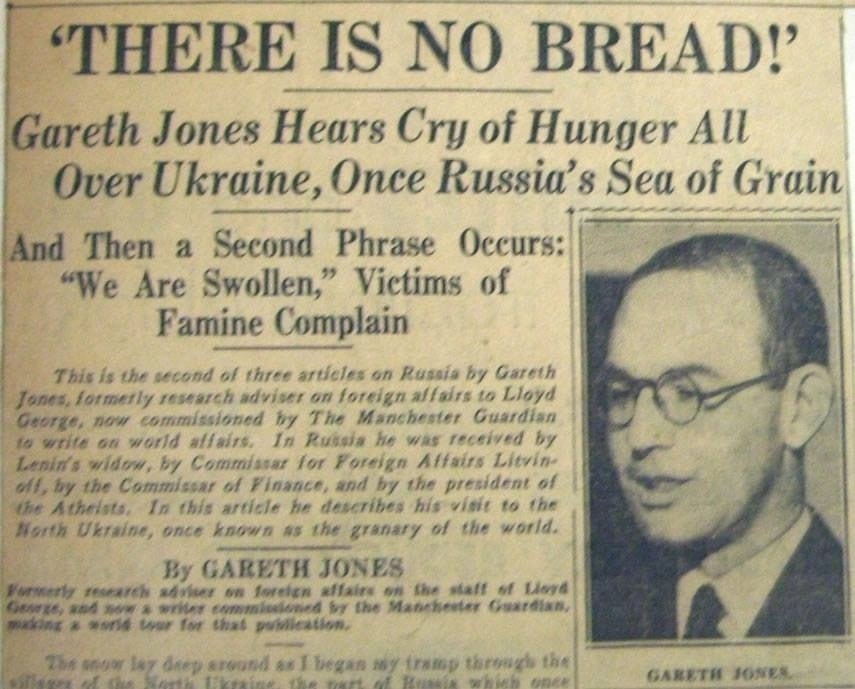
On this day in 1933, Welsh journalist Gareth Jones published a report revealing the existence of Moscow's intentional famine inflicted on the people of Ukraine in 1932–1933.
SPRAVDI — Stratcom Centre tweet media
English
58
1.4K
3K
149.9K
Eddie Priymak nag-retweet
New York Post
New York Post@nypost·
Russian drone strikes destroy Ukraine maternity hospital full of newborns: 'This was pure terror' trib.al/J4lZJbD
New York Post tweet media
English
593
2.1K
5.8K
646.2K
Eddie Priymak nag-retweet
Barak Ravid
Barak Ravid@BarakRavid·
נשיא אוקראינה זלנסקי מבקר ביומיים האחרונים בכל מדינות המפרץ כדי להדק את שיתוף הפעולה הביטחוני נגד איראן. המדינה היחידה שלא הזמינה אותו היא ישראל. נתניהו ביקש לדבר איתו בטלפון לפני שבועיים אבל לא התקשר ונעלם. באותו זמן פוטין ממשיך לסייע לאיראן צבאית נון-סטופ
עברית
256
365
3.4K
876.4K