Ghana has recorded its best World Press Freedom Index ranking in five years, rising to 39th globally and 4th in Africa, according to Reporters Without Borders.
#AbanPapaAba
Governor @DrJPAsiama and his team at the BoG incurred losses to stabilise the then ailing economy the useless Bawumia and his NPP bequeathed to us to bring economic relief to all of us. Don’t fall for any propaganda, the losses under this administration isn’t the same as their GHC 60 billion losses😂🫵🏽…#AbanPapaAba
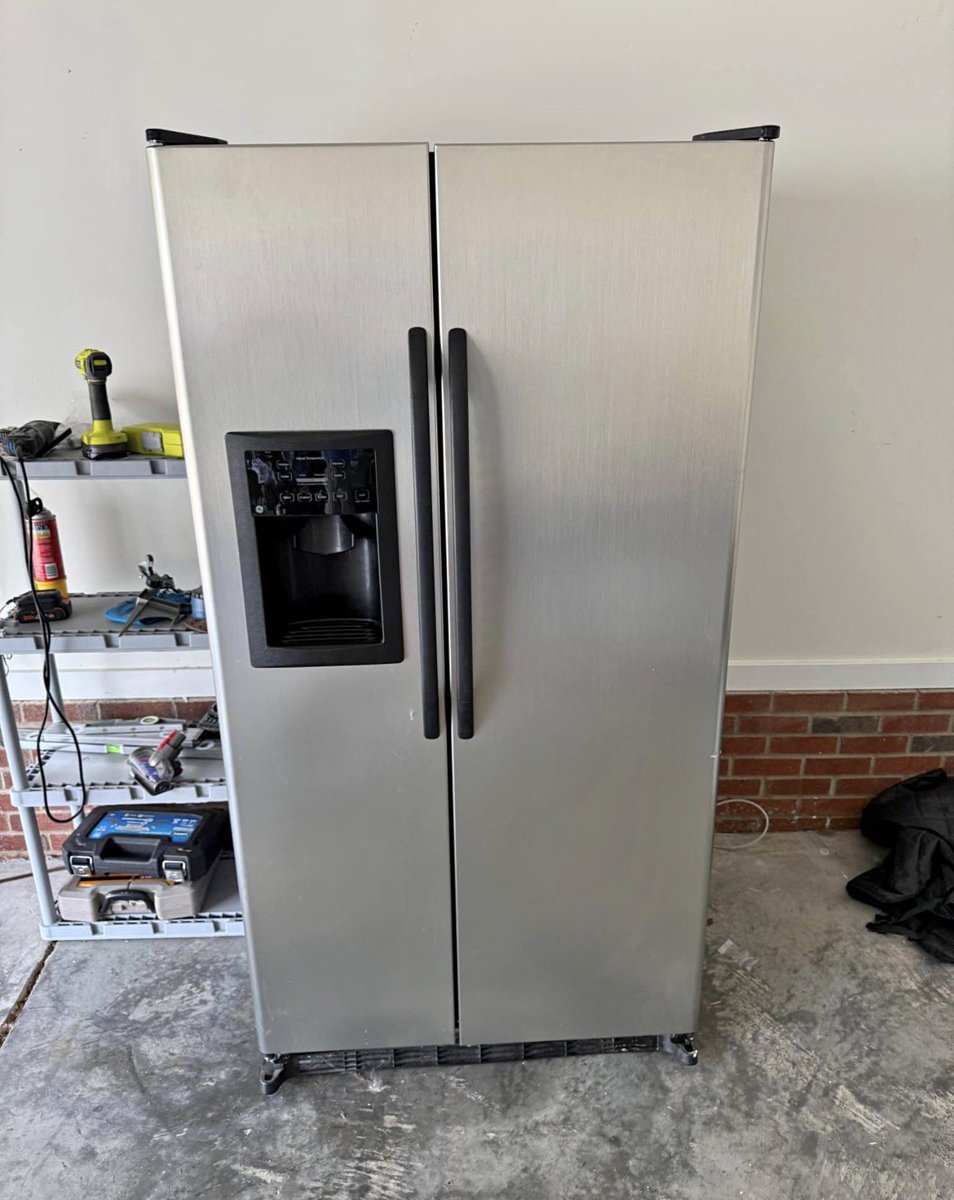
@tech_twi It will be seized at the port during inspection, pre owned fridges are not allowed in the country anymore. Be updated before you later come on X to blame the government for confiscating it . T for thank you.
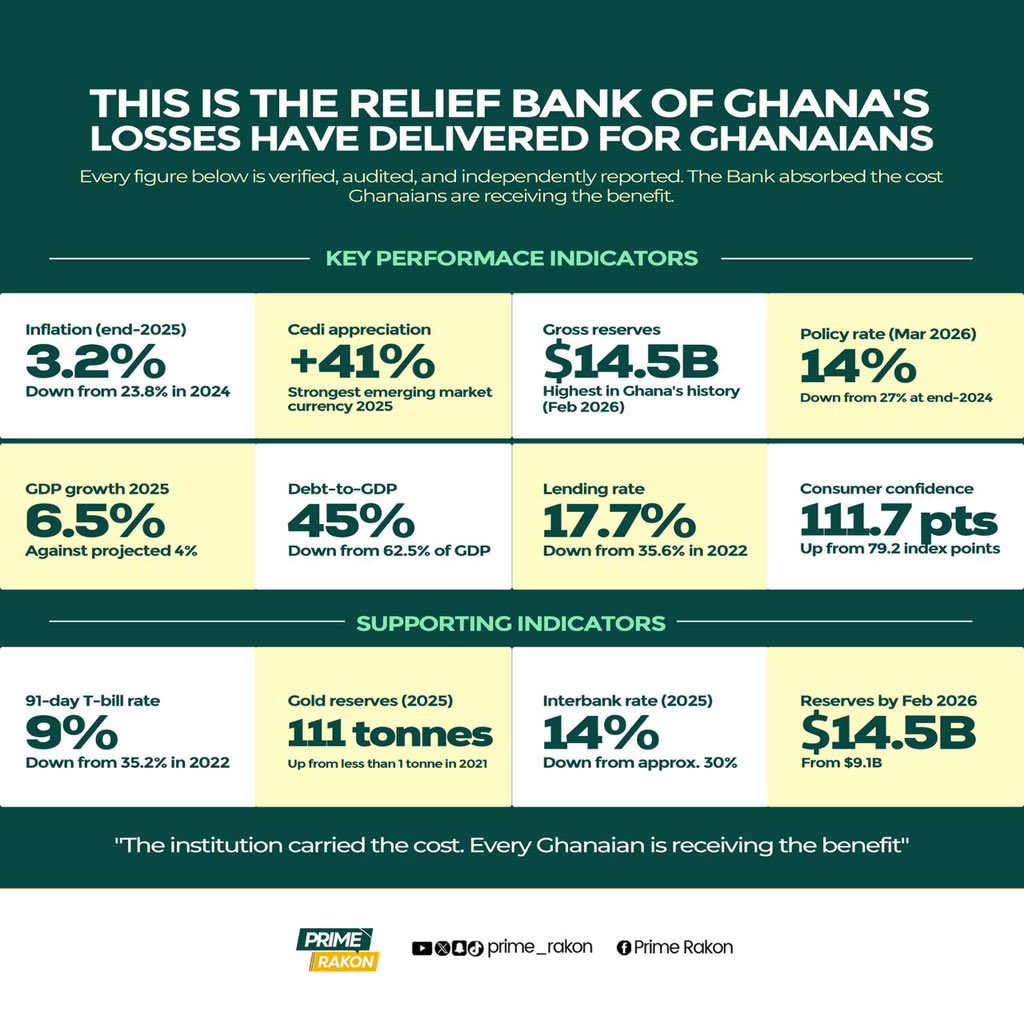
𝐁𝐨𝐆’𝐬 𝟐𝟎𝟐𝟓 𝐀𝐮𝐝𝐢𝐭𝐞𝐝 𝐅𝐢𝐧𝐚𝐧𝐜𝐢𝐚𝐥𝐬. 𝐆𝐇¢𝟏𝟓.𝟔𝐛𝐧 𝐨𝐩𝐞𝐫𝐚𝐭𝐢𝐧𝐠 𝐥𝐨𝐬𝐬 𝐚𝐛𝐬𝐨𝐫𝐛𝐞𝐝 𝐭𝐨 𝐝𝐫𝐢𝐯𝐞 𝐝𝐢𝐬𝐢𝐧𝐟𝐥𝐚𝐭𝐢𝐨𝐧, 𝐬𝐭𝐚𝐛𝐢𝐥𝐢𝐬𝐞 𝐭𝐡𝐞 𝐜𝐞𝐝𝐢, 𝐚𝐧𝐝 𝐫𝐞𝐬𝐭𝐨𝐫𝐞 𝐞𝐜𝐨𝐧𝐨𝐦𝐢𝐜 𝐜𝐨𝐧𝐟𝐢𝐝𝐞𝐧𝐜𝐞.
With the release of its 2025 audited accounts, the Bank of Ghana’s reported loss tells a deeper story, one centered not merely on expenditure, but on deliberate economic intervention designed to shield households and reposition the national economy.
From inflation dropping sharply, stronger foreign reserves, improved consumer confidence, lower lending rates, and a significantly strengthened cedi, the figures reinforce how monetary discipline and strategic policy choices can produce measurable national relief.
This accompanying indicators reflect the cost of stabilization, the weight of institutional responsibility, and the broader payoff of difficult but necessary decisions taken in the national interest.
As Ghana charts its path forward, the focus now turns to sustaining these gains through prudence, transparency, and inclusive growth that ensures macroeconomic recovery translates into real benefits for every Ghanaian.
#PrimeRakon
Prince Owusu-Ansah responds to @gboakogh
The GHS 34.95 Billion Claim: Why Adding OCI to BoG’s Loss Gets It Wrong
In a Facebook post made by Dr. Gideon Boako, a claim was made that has gained significant attention in both traditional media and social media. The claim made was that Bank of Ghana’s (BoG) actual loss is not the reported GHS 15.63 billion, but a much larger GHS 34.95 billion when Other Comprehensive Income (OCI) is added. It has caught public attention, and this is as a result of it striking nature (the figure looks striking and this is understandable).
But the conclusion behind it does not hold up when you look closely at how financial reporting works.
Not All Losses Mean the Same Thing
At the center of the argument is a simple assumption: that every negative number in the financial statements represents the same kind of loss. That assumption is incorrect.
Financial statements are structured to separate different types of outcomes. The figure reported as the “loss for the year” comes from profit or loss, which reflects the results of actual activities carried out during the period.
OCI sits outside that. It captures changes in value that are not part of day-to-day operations and, in many cases, have not been realised.
Adding OCI to profit or loss and calling the result the “true loss” ignores this distinction. This has been clearly catered for in IAS1 (Presentation of Financial Statements).
What OCI Really Represents
OCI includes items such as:
• Changes in exchange rates affecting foreign holdings
• Revaluation of financial assets
• Market-driven valuation adjustments
These are not losses in the usual sense. They are movements in value based on prevailing market conditions. Thus, accounting adjustments driven by market conditions. More importantly, they are often temporary. What appears as a loss in one year can reverse into a gain the next. Indeed, the same commentary pointing to a GHS 19.32 billion OCI loss in 2025 acknowledges a GHS 13.5 billion OCI gain in 2024. That volatility is precisely why OCI is reported separately.
Importantly, they do not necessarily involve any cash outflow. No money may have been lost in practical terms.
Why Adding OCI Creates a Distorted Picture
Combining OCI with the reported loss may seem like a way to uncover the “full story,” but it actually does the opposite.
First, OCI is often unrealised. A drop in value today does not mean a permanent loss. If conditions improve, that same position can recover.
Second, OCI is highly volatile. As already indicated above, the same discussion pointing to a large OCI loss this year also acknowledges that there was a gain in OCI in the previous year. That alone shows how unstable this measure can be.
Third, OCI does not reflect operational performance. It is influenced largely by external factors, such as market and exchange rate movements, rather than decisions made within the institution during the year.
Putting all of this into one number alongside operational results creates a figure that is neither a clear measure of performance nor a reliable indicator of financial health.
Why the Separation Exists
The separation between profit or loss and OCI is not accidental. It is designed to improve clarity.
If everything were lumped together, it would be difficult to tell:
• What came from actual operations
• What came from temporary market movements
• What is likely to persist and what may reverse
By presenting OCI separately, financial statements allow readers to make these distinctions.
A Simple Illustration
Consider an asset whose market value falls sharply at the end of the year. That decline may be recorded in OCI. But unless the asset is sold, the loss remains on paper.
If the value recovers next year, the earlier “loss” disappears.
Treating such a movement as part of the year’s definitive loss assumes it is permanent. That assumption is not always valid.
Clarity Matters in Public Debate…
A Market Day at Asesewa - a famous story in a Basic school text book remembered by many a Basic School pupil.
Market days in this renowned trading community are set to receive new impetus as President Mahama is enroute to cut sod for the construction of a modern market in Asesewa.
Let us talk about what the Bank of Ghana's 2025 results actually mean for you. Imagine in 2024 you bought a bag of rice for GH¢400. With inflation at around 20%, that same bag would have cost you GH¢480 by year end.
Now in 2025, with inflation at 3%, that bag costs GH¢412. You did not receive a cash transfer. The government did not subsidise rice. But you have made some savings of GH¢68 on one bag of rice due to BoG’s intervention (which is inflation being brought under control).
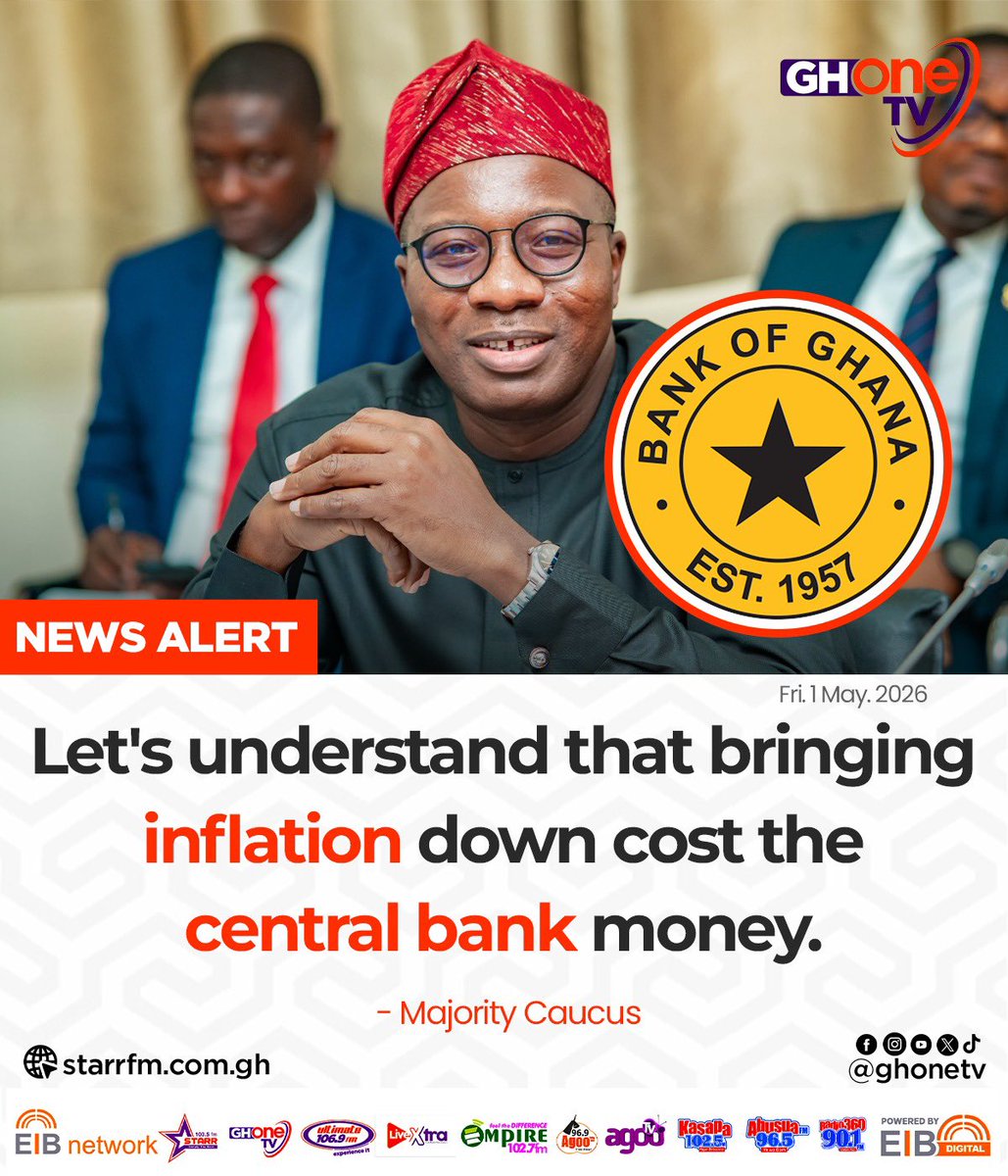
That saving came at a cost, the Bank of Ghana spent money absorbing excess cash from the banking system to bring inflation from 23.8% down to 3.2%. That cost has been accounted as part of their financial losses.
The Bank bore the cost we’re all benefiting from now. #AbanPapaAba
Someone posted this on his story. It is free, so if you have any container coming to Ghana, I can send you the address to pick it up. No fault, just need some cleaning. DM