

FPLBeno
334 posts

Looks like Pep get it wrong.
I hope the players stay fit. 🤞
English
This time next week I’ll have 3 chips left to play and others will have 0.
Every cloud

English
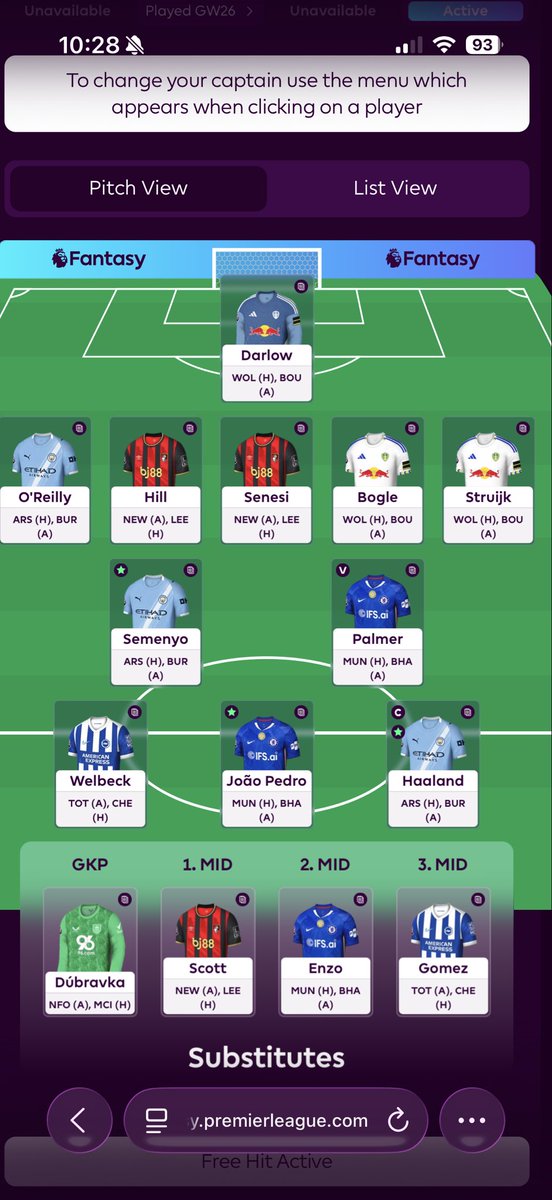


For the FHers: Tavernier v Scott.
Tav since coming back GW28-32
🍒3.2 pts per game
🍒0.58 NPxGI90
Season-long
🍒3.9 pts per game
🍒0.32 NPxGI90
Scott since solidifying position (90 mins every GW21-32)
🍒5.2 pts per game
🍒12.8 DefCon per game, 67% hit rate
🍒0.31 NPxGI90
English
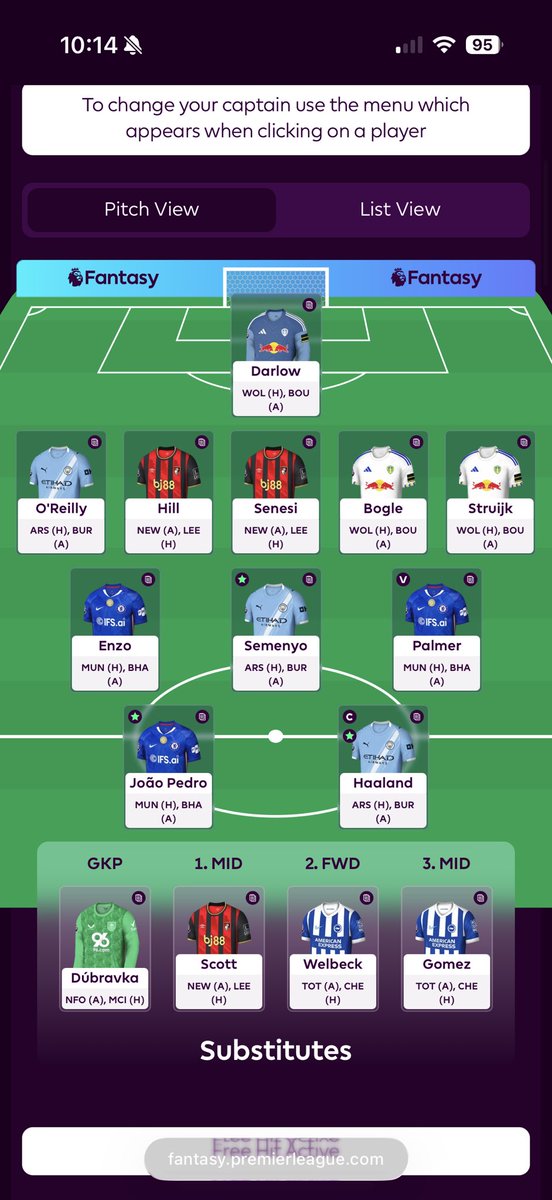


I am becoming tempted by the CoVar FH draft. Usually, I wouldn’t be, but at 700k after a horror season, maybe it’s just worth the punt.
Chelsea and City attack, Leeds and Bournemouth defence, hope for the best.
English

Love this
This draft makes the most sense right?
Petrovic in goal tho
Gareth@Geddyfpl
@KratosFpl Im quite settled on this now
English
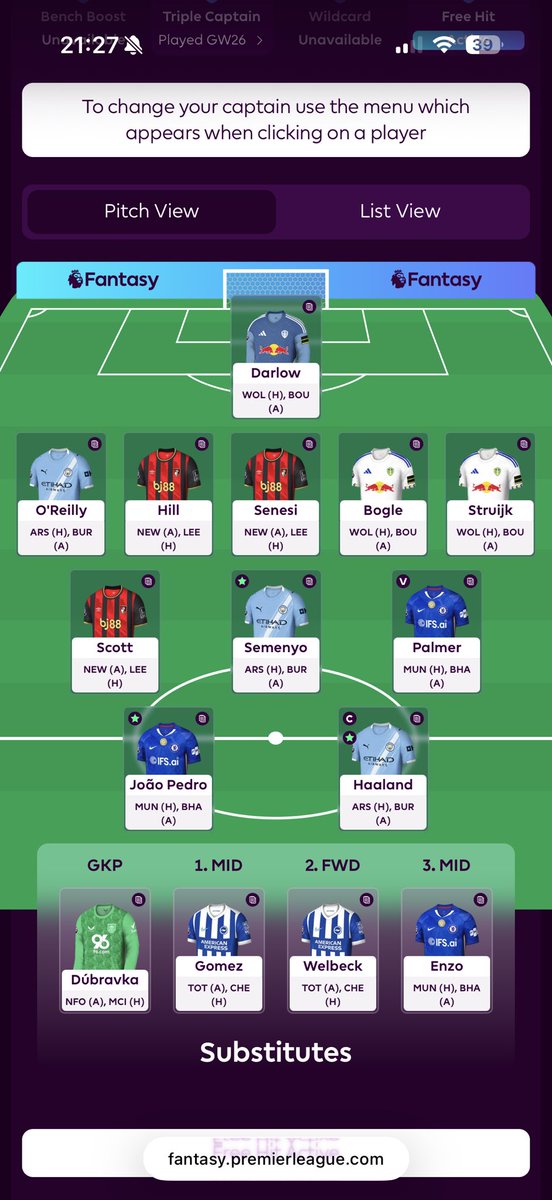
🔒
↔️ None
👨✈️ Haaland
🌍 119k OR
🍟 FH
We’ve landed on this. Nothing fancy. Gomez gets the fourth midfield spot. O’Reilly in because the upside is clear. If I can get a green arrow of any kind then I’m happy. Big week!
Good luck #FPLcommunity
English
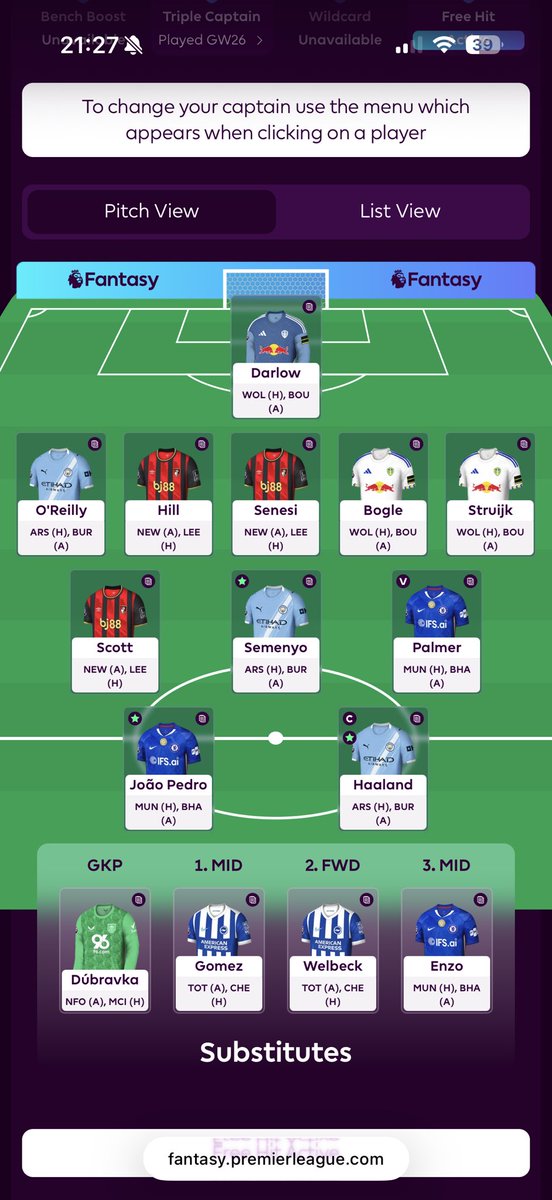
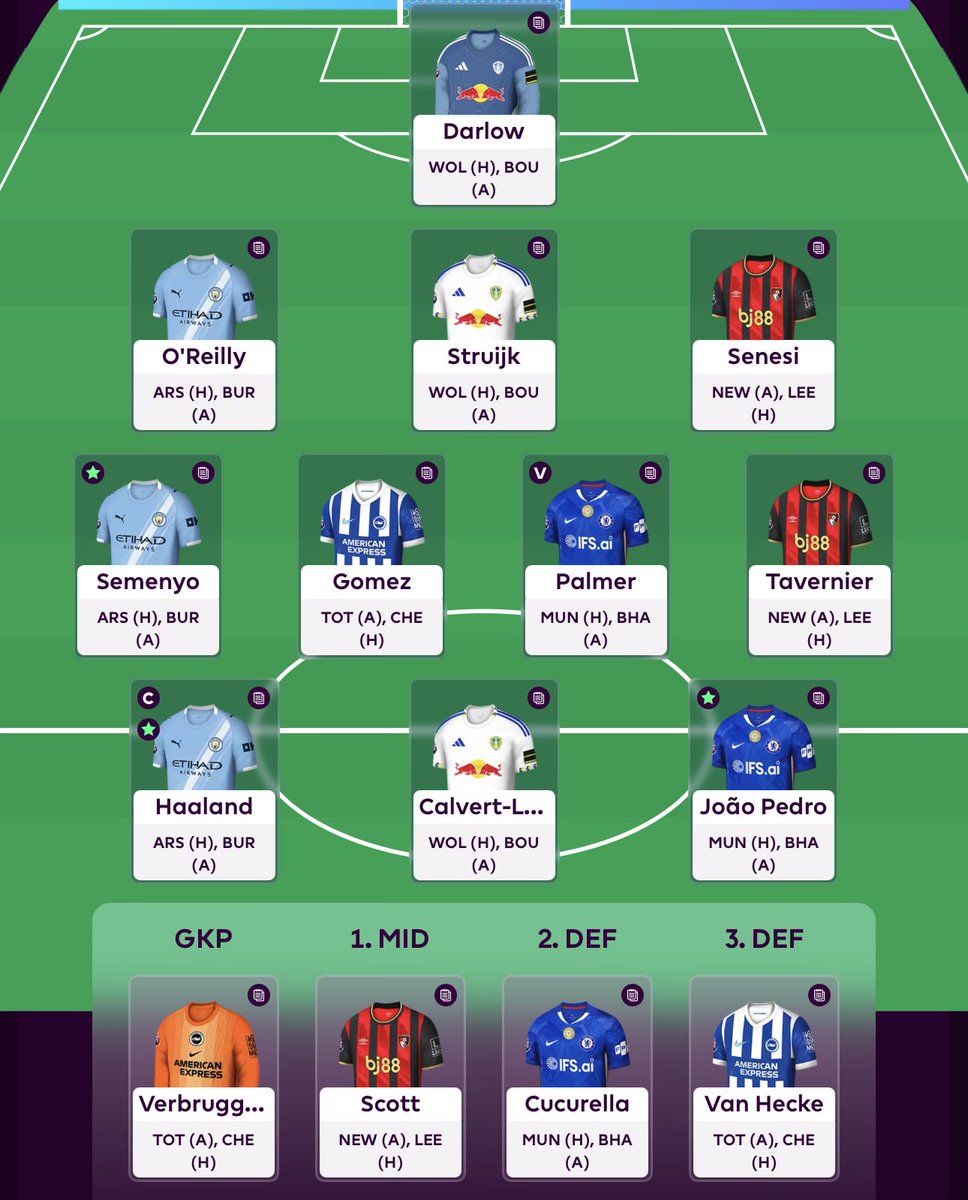
FREE HIT 33 SKELETON
ADD 3 PLAYERS
This skeleton of 8 players should be locked. These are your “shield picks” that protect your rank.
Now your job is to add 3 differentials.
Give me 3 names of the next best assets below.
English

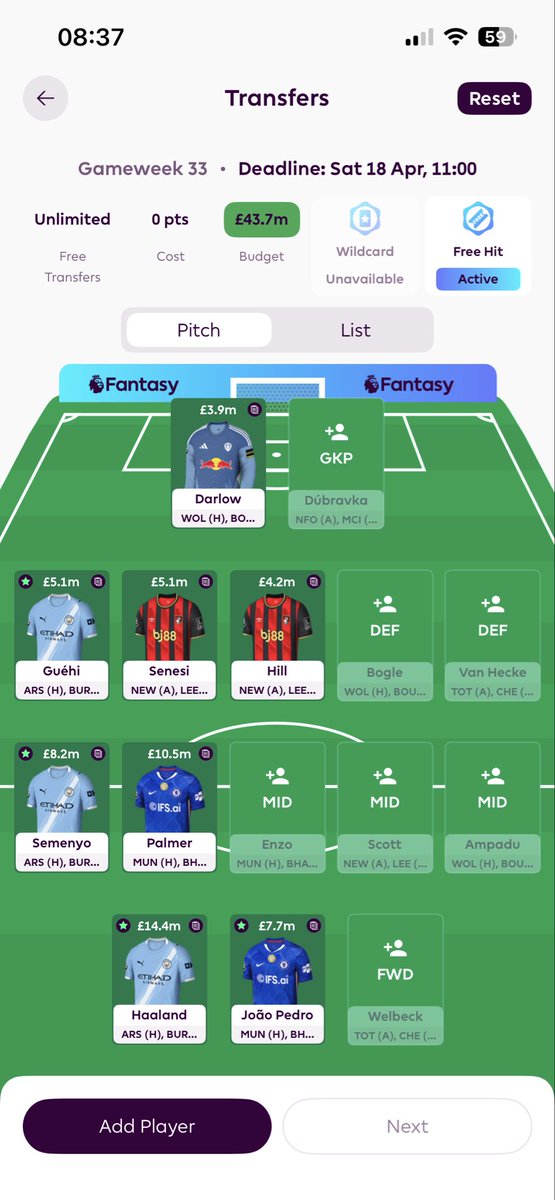
GW33 locked in: Bench boost active!
🌍24k
Transfers (2/4FT): Bowen, Mitoma 👉🏻 Joao Pedro, Gomez
Made the sideways move to Gomez because his minutes look better and he complements my future plans well!
Good luck everyone! How are we all looking?
#FPL
English
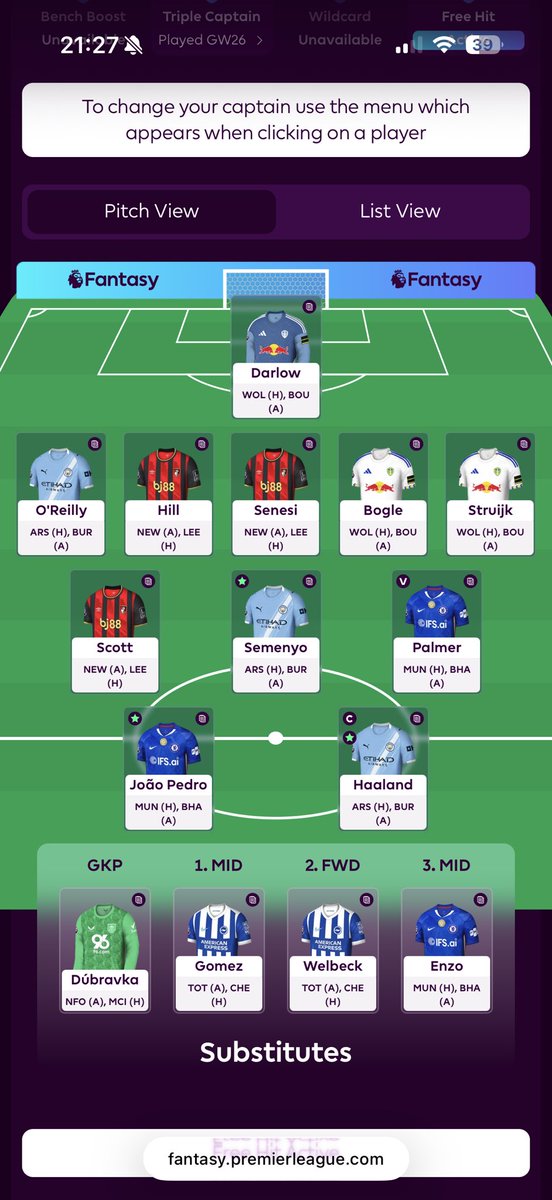

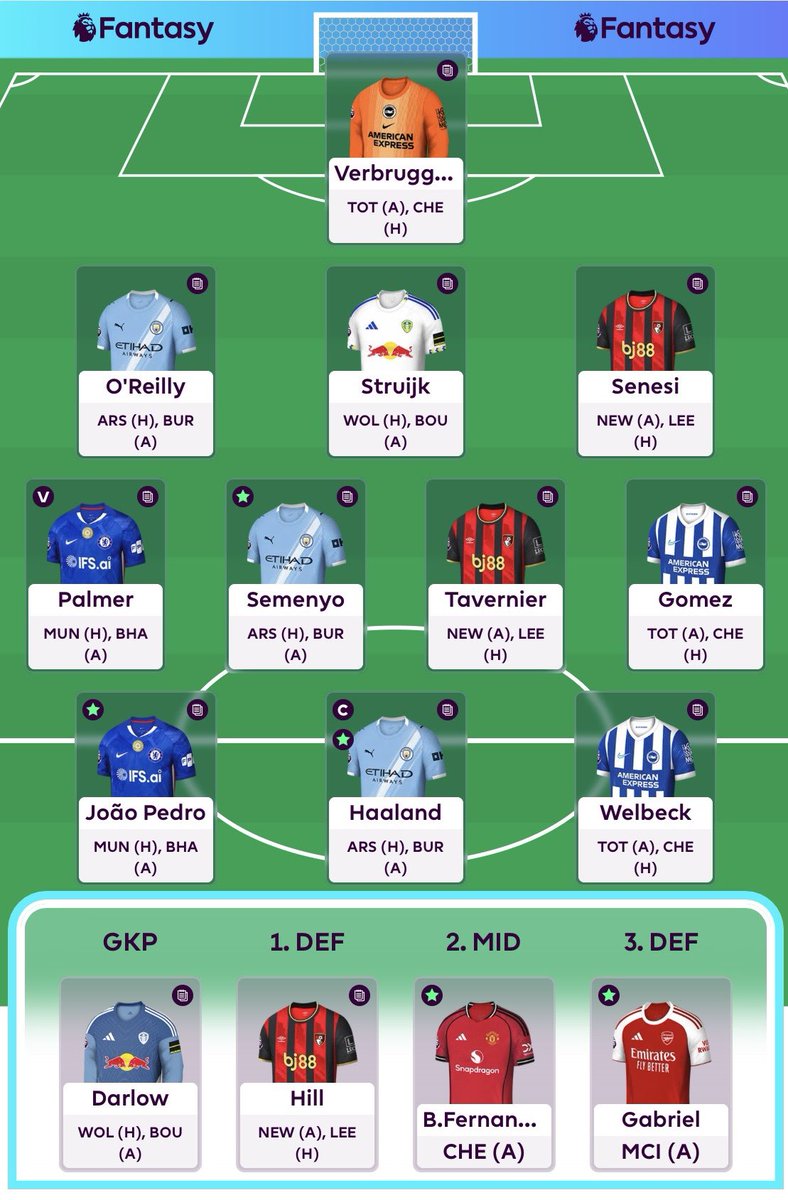
I think I settled on this for FH33. Will wait until tomorrow to lock in, but I can't see making major changes. Goodluck.
🌎 491
#fpl #fplcommunity

English
Post the name of one player on your FH33 and I’ll reply telling you why you shouldn’t pick them
English

@FplBeno @FPL_Marcello There is not one differential here pal
English
I think Free Hitters are making a big mistake trying to "differentiate" from the WC32 BB33 team...
Stop picking crappy assets!
Firm your guaranteed small red arrow.
Don't make it a huge red arrow.
English