
Michelle Trenkmann nag-retweet
Michelle Trenkmann
644 posts


Michelle Trenkmann
@MT_Genetics
Love science. Senior Editor @Nature, previously @NatureComms. If it's not science, I'll probably be in the gym or the kitchen (also science). All views my own.
Berlin, Germany Sumali Mayıs 2015
221 Sinusundan1.7K Mga Tagasunod





Michelle Trenkmann nag-retweet

Today, @nature and @NatureMedicine are proud to publish amazing new insights into lung cancer evolution from the #TRACERx consortium. Updated collection: nature.com/collections/ha… Great author threads👇
English
Michelle Trenkmann nag-retweet

Thanks also to Luke Evans and Pamela Romero-Villela for this concise, accessible summary of our findings! nature.com/articles/d4158…
English
Michelle Trenkmann nag-retweet

So excited to share our work on the genetic architecture of rare coding variation, now published in @Nature
nature.com/articles/s4158…
This work was led by superstar co-first authors @danweiner92 and @NadigAjay
English
@SafiaDanovi Why did I give this a Like? You can’t leave us!!!!!
English

Excited to see the glorious science that comes out of this lab.. Perhaps I’ll apply myself??
👇🏾❤️🧬🥼🩸
Jyoti Nangalia@jyoti_nangalia
Thank you @CRUKresearch. Very happy to start this fellowship and a group leader position @sangerinstitute - looking forwards to growing the team and exciting science! If you are interested in working on clonal trajectories in cancer - please get in touch!
English
Michelle Trenkmann nag-retweet

Interested in a career as an editor? we are hiring! Associate or Senior Editor, Nature Communications (Biochemistry, Molecular Biology or Genetics) g.co/kgs/6rqnTu
English
Michelle Trenkmann nag-retweet

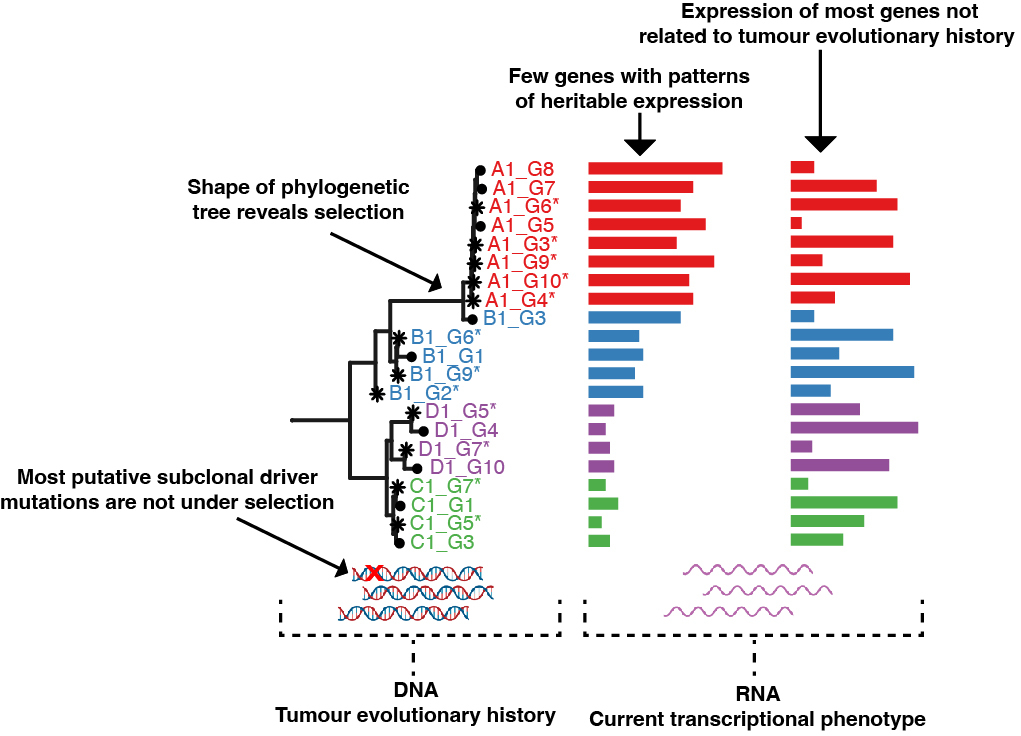
How do the #genome, #epigenome and #transcriptome co-evolve in colorectal #cancer? In the second of two papers in @nature, we find gene expr is not strongly heritable & evaluate "driverness" of muts directly in patient tumours nature.com/articles/s4158… @AndreaSottoriva #EPICC2 1/7
English
Michelle Trenkmann nag-retweet

How do the #genome, #epigenome & #transcriptome co-evolve in colorectal #cancer? In the 1st of 2 studies in @Nature we measure the contribution of #chromatin accessibility in #cancer #evolution. #genetics and #epigenetics interplay! #EPICC1 @trevoragraham
nature.com/articles/s4158…

English
Michelle Trenkmann nag-retweet

Out today in @nature : nature.com/articles/s4158… - some steps toward understanding cell-to-cell genomic variation in cancer. Joint work with @sajraparicio lab (now 15yr collab!). Work performed by @tylerfunnell @marcjwills_ @oflanach and teams from both labs.
English
Michelle Trenkmann nag-retweet
Today we publish 1st @HumanPangenome Reference Consortium primary research paper @Nature. Highlights: Near #T2T complete & error-free diploid human genome; phasing haplotypes in assembly graph is best; 50% of total genetic variation is in the centromeres
nature.com/articles/s4158…
English
Michelle Trenkmann nag-retweet

Most recent work from the lab just out @Nature. By combining ancient DNA work, population genomics, and in vitro infections we show that the Black Death shaped the evolution of immune genes. Kuddos to co-first authors @TaurVil and Jennifer Klunk. nature.com/articles/s4158…
English
English
The analysis of ancient DNA from individuals who lived before, during and after the Black Death pandemic gives clues to how exposure to pathogens may have shaped the make-up of immune genes
go.nature.com/3ySFM2A
English
We have some awesome genomics papers online @nature - a first step towards a more representative human reference genome, an ancient DNA study on the social organization of a Neanderthal community and an ancient DNA study on the evolution of immune genes during the Black Death
English
Michelle Trenkmann nag-retweet

Job alert for stem cell biologists!
Nature is looking for a locum editor to handle research manuscripts in stem cell and developmental biology.
This is how I started my editorial career many years ago, too!
Applications by 30th October.👇
bit.ly/3CWvQat
English
English
Today online @nature is this incredible GWAS for height, including 5.4 million individuals and identifying over 7,000 loci - the associations reach saturation in the European ancestries
go.nature.com/3eouEU5
English