Naka-pin na Tweet
MAK
158.8K posts


MAK
@MakiaVlo
Será la locura la forma más elevada de inteligencia ???
México Sumali Nisan 2012
563 Sinusundan4K Mga Tagasunod
@AparicioCadiz Muchos liquidando posiciones verdes, un ciclo ALCISTA largo en el que todos tomaron utilidades
Pero está excelente que baje tanto, es el hedge infalible, hoy tocó piso y mañana a comprar
Español

Los mercados no son sencillos. Cuando parece confirmarse un período de estanflación de libro, con presión inflacionaria exógena debido al petróleo y debilidades económicas estructurales, el oro baja.
El oro debería ser un protector frente a los tipos reales negativos (no se suben tipos aún viendo alta inflación porque la economía está KO)
Si la inflación > retorno del bono, el oro debe comportarse bien, pero recordemos que el oro ya ha subido mucho en un período más o menos corto. Tal vez lleva tiempo descontando un escenario parece al actual y ahora que se aprecia al borde de la esquina se venden las noticias.
The Kobeissi Letter@KobeissiLetter
BREAKING: Spot gold extends its selloff to -$400/oz on the day, now trading at $4,500/oz for the first time since February 2nd.
Algeciras, Spain 🇪🇸 Español
Si alguien va a comprar ORO, mañana haciendo el RETEST de suelo es COMPRA 🛍️🛒
Yo entro mañana si veo todo bien, les aviso
MAK@MakiaVlo
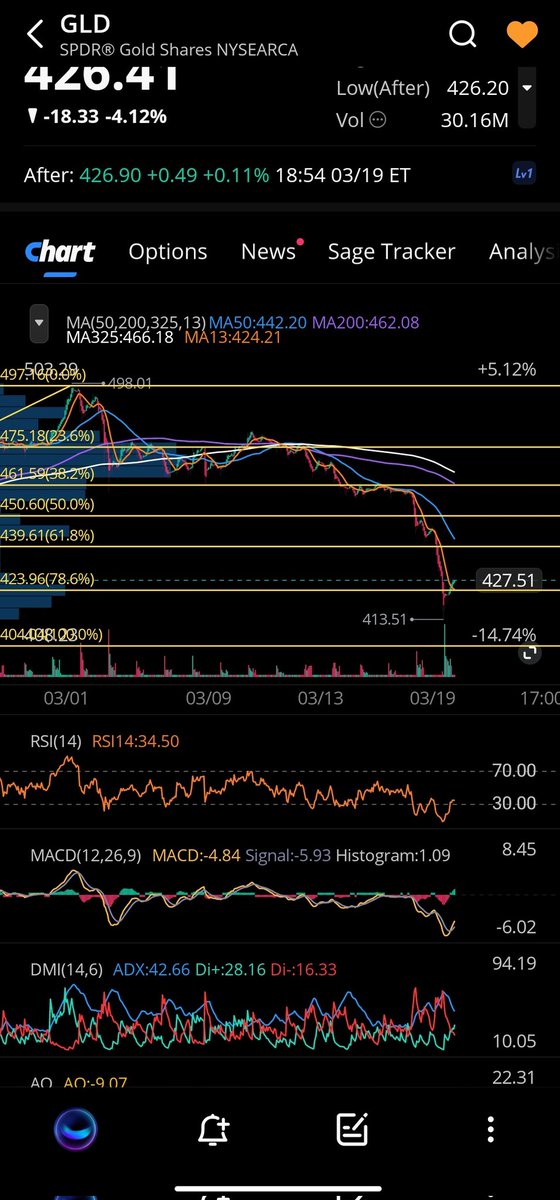
@TradingLogica @jluiscava Ahí tienen caballeros Mañana hace RETEST al inicio de sesión, eso confirma SUELO Después a COMPRAR ✅ La vela de volumen ✅ Retrocesos FIB ✅ RSI exhausto ✅ MACD a verde ✅ DMI cambiando tendencia
Español
@TradingLogica @jluiscava Ahí tienen caballeros
Mañana hace RETEST al inicio de sesión, eso confirma SUELO
Después a COMPRAR
✅ La vela de volumen
✅ Retrocesos FIB
✅ RSI exhausto
✅ MACD a verde
✅ DMI cambiando tendencia
Español
¿Hay que aprovechar el retroceso?
A pesar de la caída del ORO, tenemos que tener en cuenta que la degradación monetaria es imparable.
La deuda pública de EEUU en circulación ha superado ya los 39 billones $ y acabará 2026 por encima de 40.
👉 youtu.be/Lhwm4EOMJqQ?si…

YouTube

Español

La tesis macro es impecable, José Luis. Degradación monetaria + deuda sobre 39 billones es el piso estructural del oro de largo plazo. Eso no se discute.
La pregunta práctica es de timing: ¿estamos en C o todavía le falta recorrido?
El chart muestra la C en zona de interrogación cerca de 4600 — que curiosamente coincide con el retroceso 0.618 del impulso A→B y con la media de 200 días en diario. Dos confluencias en el mismo nivel no es casualidad.
Lo que yo estaría esperando para confirmar entrada: una vela diaria de reversión con volumen por encima del promedio en esa zona. Sin eso el retroceso puede ser aprovechable en teoría pero prematuro en la práctica.
El riesgo de comprar "porque cayó mucho" con deuda en 39 billones de argumento es que el mercado puede seguir bajando más tiempo del que uno puede mantenerse líquido. 📊
¿Estás viendo alguna señal de price action en diario que confirme el piso de C o todavía es anticipación?
Español
El mundo cambió nuevamente de la noche a la mañana, bueno en los últimos 15 días por una declaración de guerra a un país que no representaba imminent threat según servicios de inteligencia de EEUU, UK y otros países
Pasarán años en reconstruir la infraestructura y la producción
HealthRanger@HealthRanger
I believe we are standing on the precipice of the most profound, intentional collapse of human civilization in recorded history. The trigger isn’t a meteor, a supervolcano, or even a world war in the traditional sense. It’s the potential destruction of a single industrial facility: the Ras Laffan liquefied natural gas (LNG) complex in Qatar. Modern civilization doesn’t just run on energy; it is fundamentally architected on a steady, massive flow of natural gas, supercooled and shipped as LNG. This isn’t an abstraction. Our global food supply, our industrial chemical production, and the very stability of nations are tethered to this flow. That tether is frighteningly thin. Qatar's Ras Laffan is the heart of this system, a nexus of technology and geography that is effectively irreplaceable. Its 14 processing 'trains' and the critical Main Cryogenic Heat Exchangers (MCHEs) that chill gas to -260°F are marvels of engineering, but they represent a catastrophic single point of failure. As noted in energy literature, the specialized machinery for this process is made by only one or a handful of companies globally. This infrastructure isn't just important; it is singular. Its loss would not be a temporary market disruption. It would be a decade-long severing of the global energy artery. The recent, deliberate sabotage of critical infrastructure like the Nord Stream pipelines has shown us that such attacks are not theoretical. They are tools of geopolitical warfare. When you understand that over half the world's food depends on fertilizer made from natural gas, the picture becomes horrifyingly clear. We have built a world of astonishing abundance on a foundation of shocking fragility. One facility, in one volatile region, now holds the key to whether billions eat or starve. Two of QatarEnergy's 14 LNG trains have now been destroyed. The rebuild time is 3-5 years. If all 14 trains are destroyed, 25% - 50% of the world's current population will starve. Trump did this.
Español
I hate to be the bearer of bad news but if infrastructure like this 👇 gets blown up, as of this moment it will take at least a decade to recover from this war - and the truth is that the world's energy picture is probably changed forever.
This single facility 👇produced roughly 20% of global LNG supply (aljazeera.com/news/2026/3/18…) and, as of 2011, had taken $70 billion to build (energyintel.com/0000017b-a7be-…).
What makes this even worse is that Iran's strike on this was retaliation after Israel attacked their South Pars gas field which draws from the same natural gas reservoir, which is the world's largest by far (9,700 km² - about the size of Qatar itself).
Heck, on the list of the 25 largest natural gas fields (en.wikipedia.org/wiki/List_of_n…) this single reservoir holds roughly 40% of their combined recoverable reserves - and is nearly 6 times bigger than the 2nd biggest field in the world. And, unlike many of the others on the list, it's only at 10% depletion (meaning 90% of the gas is still there).
Which means that, probably for many years, a huge share of the gas from the world's largest reservoir simply won't be extractable, as infrastructure on both sides - Qatar's and Iran's - has now been blown up.
From a global energy supply perspective, we're deep into worst-case scenario territory.
QatarEnergy@qatarenergy
QatarEnergy Statement on Missile Attacks on Ras Laffan Industrial City QatarEnergy confirms that Ras Laffan Industrial City this evening has been the subject of missile attacks. Emergency response teams were deployed immediately to contain the resulting fires, as extensive damage has been caused. All personnel have been accounted for and no casualties have been reported at this time. QatarEnergy will continue to communicate the latest available information. #Qatar
English
@roberto_ruarte Es correcto, yo diría que ya cayó lo que tenía que caer
Con las presiones inflacionarias el refugio son las commodities, el oro es el principal
Viene otro rally masivo de ORO y comenzará en pocos días
GIF
Español

El oro y la plata acaban de borrar más de $1.000.000.000.000 en 3 HORAS🔥
¿Por qué justo hoy? Súper simple:
- Petróleo subió fuerte por la tensión en Ormuz → inflación más alta
- La Fed mantiene tasas altas para controlar esa inflación → dólar se fortaleció mucho
- Oro y plata se cotizan en dólares
→ dólar más fuerte = menos compradores
→ precio baja
Pero lo que realmente provocó el crash fue la venta en pánico colectivo:
El mercado venía eufórico, unos pocos grandes vendieron para tomar ganancias
→ Activó stops automáticos
→ Más ventas
→ Todos se volvieron locos y liquidaron en cadena.
Esto encaja con el patrón de triángulo que publiqué hace un rato: estamos en la parte bajista fuerte que anticipé (zona objetivo 4670-4600).
Es una corrección sana después de la subida parabólica.
Momento ideal para posicionarse antes del rebote y la gran subida del ciclo 2026-2028.
En palabras fáciles: el oro está haciendo una "pausa correctiva" en forma de triángulo.
Esta caída es la última parte fuerte hacia abajo del triángulo.
Cuando termine, rebota hacia arriba y viene la subida grande de verdad (hacia 8000-10.000 en el ciclo largo)
Estan avisados...
Crypto Rover@cryptorover
🩸CRASH: 1,000,000,000,000 has been wiped out from Gold and Silver in just 3 HOURS.
Español
México importa 🌽 de EEUU
Con los precios del fertilizante por la guerra del Golfo actual, no es costeable, piensan cambiar a soybeans
Pero todo lo que tenga qué ver con maíz 🌽🌽🌽 estará JODIDO por un año entero hasta que comience el ciclo de siembra
Tortillas a $50 el kilo
Shanaka Anslem Perera ⚡@shanaka86
Right now, in barns and equipment sheds across the American Midwest, farmers are making the most consequential decision of this war. Not generals. Not senators. Farmers. At $683 per ton urea, corn economics have collapsed. Nitrogen is the single largest input cost for corn production. At pre-war prices a farmer could justify 180 pounds per acre and expect a margin. At $683 the math breaks. Soybeans fix their own nitrogen from the atmosphere through root bacteria. They do not need the molecule trapped behind the Strait of Hormuz. The seed decision is being made this week across roughly 90 million acres of American cropland. Once the planter rolls into the field, the choice is irreversible. Corn seed in the ground stays corn. Soy seed stays soy. The acreage allocation locks in. USDA Prospective Plantings reports March 31. That report will tell the world how American agriculture responded to the Hormuz blockade. But the decisions it captures are being made now, in conversations between farmers and agronomists and seed dealers who are looking at nitrogen prices and making the rational economic choice: plant the crop that does not need the input you cannot afford. Every acre that shifts from corn to soybeans tightens the corn balance sheet for the rest of the year. Corn feeds livestock. Corn feeds ethanol. The Renewable Fuel Standard mandates 15 billion gallons of corn ethanol annually, consuming roughly 43 percent of the US corn crop regardless of price. That demand is inelastic. If acres shift and production falls while the mandate holds, corn prices spike. Feed costs spike. The protein cascade reverses. The US cattle herd sits at 86.2 million head, a 75-year low. Poultry and pork margins that were benefiting from cheap feed compress when corn crosses $5 per bushel. This is how a naval blockade 7,000 miles from Iowa reaches the American grocery shelf. Not through oil. Not through shipping. Through nitrogen. The farmer cannot afford the molecule. The molecule cannot transit the strait. The farmer plants soy instead. The corn supply tightens. The ethanol mandate consumes its fixed share. The remaining corn reprices. The feed reprices. The meat reprices. The grocery bill reprices. The decision is not political. It is arithmetic performed on a kitchen table by a person who needs to plant in three weeks and cannot wait for a ceasefire, an escort convoy, or an insurance normalisation that the Red Sea precedent says takes years. The deepest penetrator in the American arsenal cannot reach a sealed Iranian doctrinal packet. But the fertiliser price it failed to resolve is reaching every planting decision on 90 million acres of the most productive farmland on Earth. The war’s most irreversible consequence is not happening in a bunker. It is happening in a barn. And by the time USDA publishes the data on March 31, the seeds will already be in the ground. Full analysis in the link. open.substack.com/pub/shanakaans…
Español
@GhalebKrame Mientras no se deshagan del cártel que los arrastra a la guerra, a EEUU le irá mal
El momento en que se enfoquen en ellos mismos, AMERICA ONLY, nadie andará buscándoles pleito, just do business, y si hay pleito en algún lado que no se metan
Pero hay cárteles que no quieren paz
Español

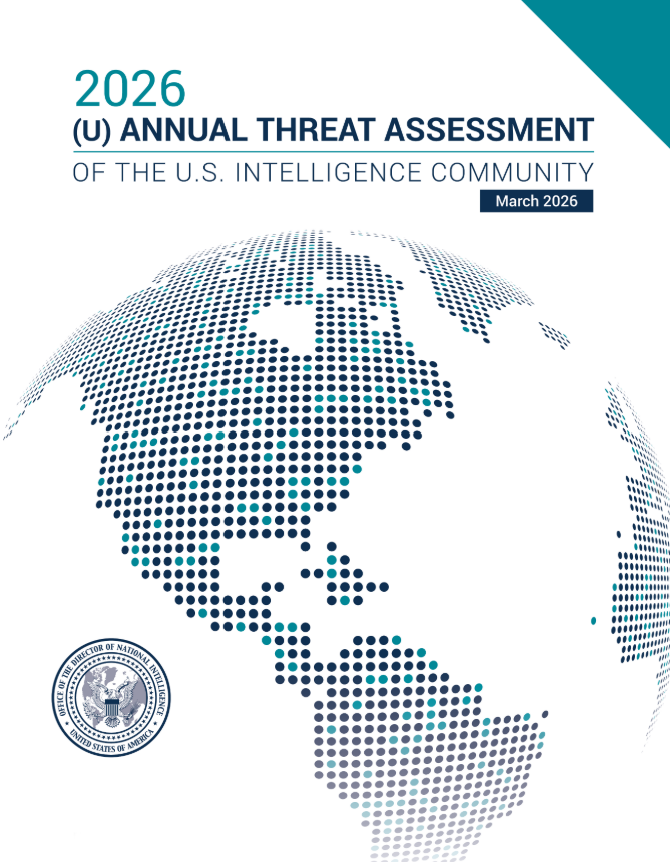
🚨 #ReporteKrame te resume la muy reciente Evaluación Anual de Amenazas 2026 (The 2026 Annual Threat Assessment) en 10 puntos:
1️⃣ El crimen organizado transnacional, especialmente cárteles, es una de las principales amenazas al Homeland
2️⃣ Los cárteles mexicanos dominan el tráfico de fentanilo y otras drogas hacia EE.UU.
3️⃣ El fentanilo sigue siendo el principal vector de mortalidad por sobredosis 💀
4️⃣ La migración irregular disminuye, pero sus causas estructurales persisten 🌎
5️⃣ El terrorismo evoluciona hacia actores individuales inspirados ideológicamente ⚠️
6️⃣ China, Rusia, Irán y Corea del Norte expanden capacidades para atacar EE.UU. 🚀
7️⃣ La competencia en IA y computación cuántica redefine el poder global 🤖⚛️
8️⃣ La guerra moderna combina tecnología avanzada con sistemas baratos y masivos 🛰️
9️⃣ El ciberespacio y el espacio exterior son ya dominios activos de confrontación 💻🛰️
🔟 La proliferación de armas de destrucción masiva se expande y diversifica ☢️
📌 Bottom line: el sistema es más volátil, interconectado y competitivo.
⚠️ Y sí, el punto clave: los cárteles no son “un problema más”.
Son la amenaza #1 señalada por la inteligencia estadounidense.
Watch out, México.
Español

Personas en condición de vivir sol@s y les da pereza cocinar, cuál es esa comida confort que ya saben que les va a saber rico, los llena y se hace en menos de 15 minutos cuando tienen mucha pereza de cocinar para ustedes solos.
Español

I’m 60 years old and resigned from BlackRock. My annual income is 2 million US dollars.
My March advice:
$LITE (Lumentum) — Strong Buy
$TSM (TSMC) — Buy
$MSFT (Microsoft) — Buy
$SOFI (SoFi Technologies) — Strong Buy
$MU (Micron) — Strong Buy
$BABA (Alibaba) — Buy
$AXTI (AXT Inc) — Strong Buy
$SNOW (Snowflake) — Don’t buy
$DIS (Disney) — Don’t buy
$MDB (MongoDB) — Don’t buy
People ask, “Why don’t you charge?”
I’ve made enough. Sharing is my passion — that’s why I post for free.
English
@RealJGBanks Worry about the next few months with this oil disruption, that portfolio will fall drastically
Reassess
English

STOCKS TO BUY ON DIPS
Stocks to buy for the next 10 years:
AI COMPUTE: $NVDA $AMD $AVGO
AI MEMORY: $MU $WDC $SNDK
AI INFRA: $NBIS $SMCI $VRT
NETWORKING: &MRVL: $ANET $ALAB
OPTICS: $LITE $COHR $CIEN
POWER / NUCLEAR: $CEG $OKLO $VST
ROBOTICS / AUTONOMY: $TSLA $SERV $MBLY
DRONES / DEFENSE: $ONDS $KTOS $AVAV
SATELLITES / SPACE: $ASTS $RKLB $LUNR
DIGITAL FINANCE: $COIN $CRCL $HOOD
English
@MLopezSanMartin Jajaja están JODIDOS
No hay manera de invadir Irán por tierra, revisen su OROGRAFÍA, es una fortaleza
Y para que vean que no miento pregunten a cualquier IA
Español
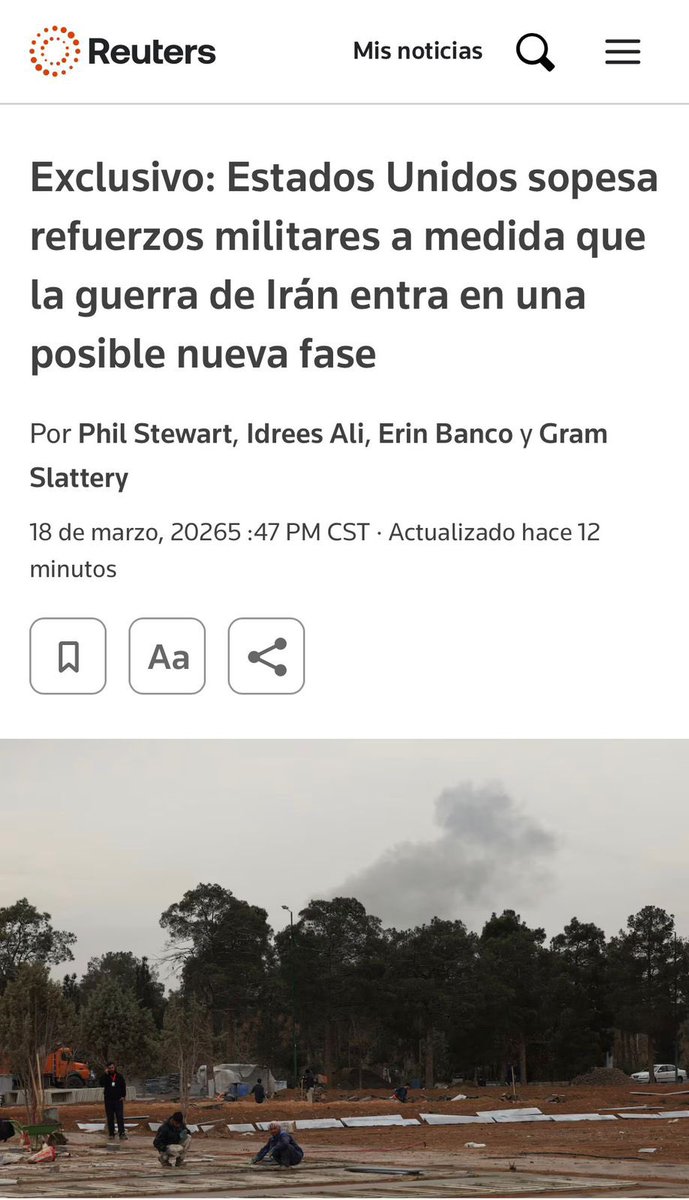
🇺🇸 Donald Trump planea desplegar miles de soldados adicionales en Medio Oriente mientras el Pentágono prepara escenarios para la posible próxima fase de la guerra contra Irán.
El despliegue militar ayudaría a asegurar el Estrecho de Ormuz, informa Reuters.
Español
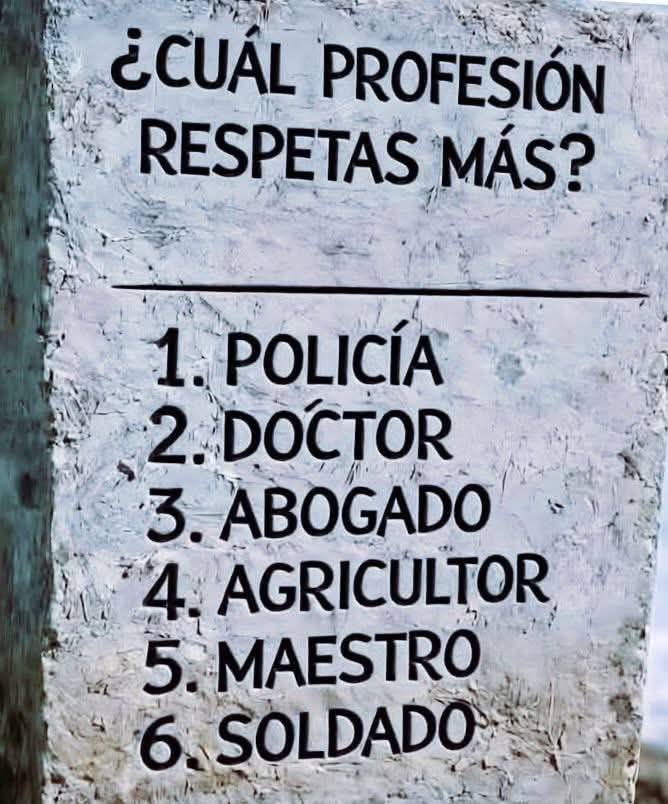
@Oscarrjavier95 Al primero que llegó...
No creo que lleguen los 4 al mismo tiempo y así no tuve qué pensar en decidir
Español


@DiegoRoyet29 Lo más preciado que tenemos es la VIDA
Y el SOLDADO 🪖 de buena formación la pone en riesgo diariamente luchando vs organizaciones muy poderosas
Español