Dr Anu

22.5K posts

Dr Anu banner
Dr Anu

Dr Anu

@NoteAnu_

Scribbler of stories. Seeker of possibilities💕 Embracing the chaos that builds resilience & ignites creativity. A Doting Mom😻 ❌No DMs, please❌

Bonn Germany Sumali Mart 2019
730 Sinusundan1.2K Mga Tagasunod
Naka-pin na Tweet
Dr Anu
Dr Anu@NoteAnu_·
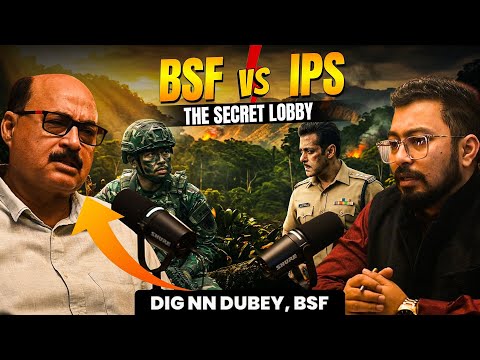
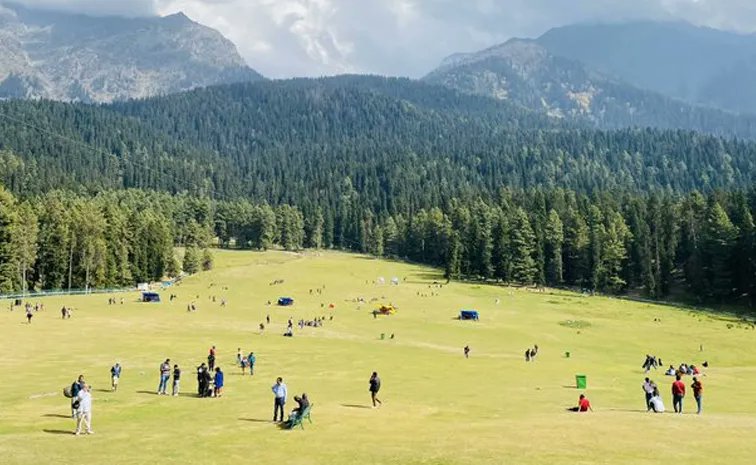
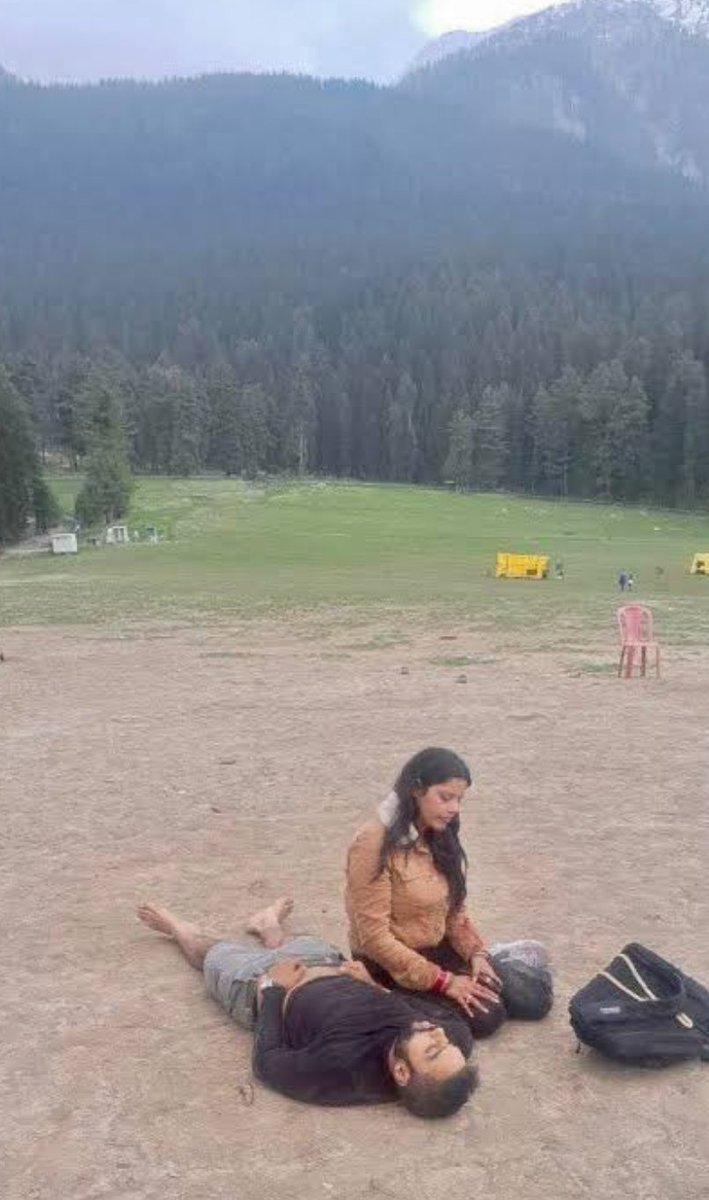
In internal security, tragedies rarely happen because technology fails. They happen when the human intelligence chain weakens. Pahalgam was a painful reminder of that reality. There is an important but often overlooked dimension to the debate around leadership in the Central Armed Police Forces (CAPFs), its impact on human intelligence, HUMINT and institutional continuity in internal security operations. In counter-insurgency environments, technology and surveillance tools certainly matter. But they rarely substitute the value of long-built human intelligence networks. HUMINT is not created overnight. It grows slowly… • through relationships with local communities, • familiarity with terrain, • social dynamics and • the credibility that officers earn over years of working in a particular region. The CAPFs have historically played a critical role in building and sustaining these networks in conflict-prone areas. Over time, officers develop a deep understanding of local realities, community linkages, emerging militant patterns, over-ground networks and subtle shifts in sentiment that often serve as early warning signals. This is where leadership continuity becomes important. When an organization develops its leadership internally, it preserves institutional memory and operational experience built over decades. That continuity helps sustain intelligence networks and ground-level trust, assets that cannot be recreated quickly. Frequent leadership transitions and short tenures most often disrupt these delicate ecosystems. Intelligence networks depend heavily on trust and familiarity and rebuilding them repeatedly can take years. This is why *strengthening cadre leadership structures within forces responsible for internal security, particularly in regions where the state police structure has weakened or collapsed, is not merely about career progression; it is about operational effectiveness.* At a time when security threats are becoming more decentralized, hybrid and locally embedded, the value of deep, sustained HUMINT networks only increases. Because in internal security, the strongest sensor is not a satellite or a drone. It is trust built quietly over years on the ground.
English
8
51
100
4K
Dr Anu nag-retweet
PAPA-II
PAPA-II@ItsPAPA2_·
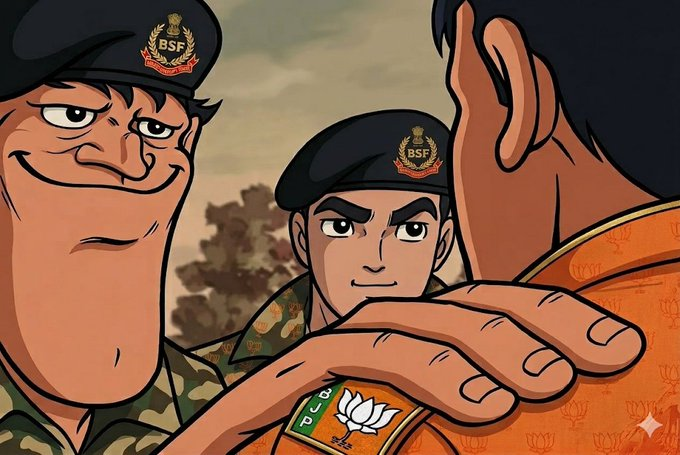
The BJP IT cell outcry is so funny. > Yes. IPS bad. > But IPS good. > Congress did nothing. > We are rationalizing CAPF structure. (Codeword for preserving IPS deputation) *Disclaimer: No SC judgment was hurt during the writing of this post.
PAPA-II tweet media
English
4
63
133
1.9K
Dr Anu nag-retweet
KAMAL KANT SHARMA
KAMAL KANT SHARMA@kamalkant1961·
Every time a reform is discussed, a familiar narrative emerges — credit is centralized, but sacrifice is forgotten. This debate on the Amendment Bill is not about politics or “masterstrokes.” It is about institutional justice
BhikuMhatre@MumbaichaDon

After Eliminating Naxals, now HM .@AmitShah Ji has set eyes on Urban Naxals & other disruptive forces inside Nation. @Modi Sarkar is bringing new Path-breaking Bill for admñ reforms in CAPF that will strengthen Bharat's Internal & Border Security. But naturally CONgress has already started opposing it even before it's put in Parliament citing Supreme Court directives. What's the bill about & why is it important! Read full details. The Central Armed Police Forces (General Administration) Bill, 2026 represents a forward-thinking, strategic masterstroke by Modi Sarkar & HM Amit Shah Ji to fortify Bharat's internal security architecture amid escalating hybrid threats—cross-border terrorism, persistent Left-Wing Extremism (LWE) pockets, border standoffs with China, and urban radicalisation risks. This Bill codifies a proven leadership model that has delivered transformative results while addressing cadre concerns through structured reforms. Core Provisions That Strengthen IPS Leadership for National Security Drafted under .@HMOIndia and cleared by the Union Cabinet on March 10, 2026, the Bill provides statutory backing to long-standing executive practices: • Reservation of senior posts for IPS deputation — It formalises 50% of Inspector General (IG)-level posts and 20% of Deputy Inspector General (DIG)-level posts in the five major CAPFs (CRPF, BSF, CISF, ITBP, SSB) exclusively for IPS officers on deputation. • Codification of recruitment rules, service conditions, disciplinary procedures, and operational autonomy — This ends reliance on ad-hoc executive orders, giving the forces a robust legal foundation for over 10 lakh personnel. • Restructuring of deputation posts and creation of additional leadership roles — This improves overall cadre management, ensures continuity, and balances promotions while retaining experienced strategic oversight at the apex. These clauses directly respond to the complex, multi-dimensional challenges Bharat faces today. Pure tactical or insular leadership cannot handle the interplay of kinetic operations, intelligence fusion, state coordination, legal compliance, and public trust—precisely the strengths IPS officers bring from their All India Service training and district-to-state experience. This is real gamechanger. How the Bill Tackles Rising National Security Issues Under IPS Leadership— • LWE on the brink of eradication — Violent incidents dropped 89% (from 1,936 in 2010 to 222 in 2025), deaths fell 91% (1,005 to 95), and “most-affected” districts shrank from 36 (2014) to just 3 (2025). Home Minister Amit Shah publicly declared India Maoist-free by March 31, 2026. IPS-led CRPF DGs have driven this through integrated strategies: forward operating bases (229 added since 2019), surrender policies, development linkage, and seamless MHA-state coordination—capabilities honed in state policing. • Border security amid heightened tensions — BSF and ITBP, under IPS strategic command, maintain vigil along Pakistan and China frontiers while upholding human rights standards that prevent escalation into full militarisation. • Critical infrastructure and disaster response — CISF’s zero major breaches at airports/ports and rapid deployment in floods/earthquakes reflect disciplined, citizen-centric policing ethos that IPS leaders instil. • Modernisation and welfare — The Govt extended Modernisation Plan-IV (₹1,523 crore, 2022–2026) for state-of-the-art weapons, IT upgrades, and equipment. Recent IPS leadership in CRPF achieved 100% timely PPO generation for retirees, boosting morale amid high-risk deployments. Bill ensures this winning formula continues. IPS officers provide “glue”—pan-India perspective, rule-of-law adherence & coordination with elected Govts—that prevents silos or over-militarisation. By retaining apex oversight, the Govt avoids risks of fragmented command in hybrid warfare scenarios. Don't you think this's sufficient for CONgress to oppose it? Think.

English
5
78
116
1.8K
Dr Anu nag-retweet
PAPA-II
PAPA-II@ItsPAPA2_·
#IPS and #CAPF may be in the same boat, but the power that moves it is CAPF. And those who carry the weight deserve the captain’s seat.
PAPA-II tweet media
English
15
226
1.4K
26.2K
Dr Anu
Dr Anu@NoteAnu_·
Nature weaves time and color seamlessly and one can’t help but admire the artistry. A pleasant breeze , winter nip gone, and #Chaitra begins Lovely weather today 💓
English
2
0
8
136
Dr Anu
Dr Anu@NoteAnu_·
@same2sane Exactly. Operational effectiveness is the need of the hour. Lives depend on it. Put the most competent in charge, nothing less.
English
0
1
4
21
Randeep
Randeep@same2sane·
Very genuine concerns Ma'am. It's not about ips vs CAPF. It's about national security, and honouring the constitutional right of equality.
Dr Anu@NoteAnu_

After Pahalgam, the Real Question Isn't CAPFs vs IPS It's Citizens' Safety vs Privilege Pahalgam was not an isolated incident. From Pulwama to insurgency-hit Jharkhand, a pattern has emerged: When internal security systems fail to align with ground realities, civilians pay the price. Yet, the national conversation has consistently focused on the wrong question: “What do CAPFs want?” The real, urgent question is simpler: “What do citizens need? ” In 2025, the Supreme Court recognized that Central Armed Police Forces are an Organized Group A Service (OGAS) in all respects, including cadre structure and career progression. The Court acknowledged that lateral entry had created structural imbalance, leading to stagnation, frustration and weakened morale. It affirmed that leadership in these forces should be built from within, not imported from outside. This ruling was not merely a service matter, it was a recognition that institutional design shapes outcomes. Yet, implementation remains contested, diluted and delayed. The consequences of inaction are not administrative, they are human. Every postponement of structural reform carries real costs: stagnation within forces, erosion of morale, fragmented accountability and ultimately, a weakened security response on the ground. And when systems fail, it is civilians, not institutions, who absorb the shock. Unarmed, untrained and unprepared, they become the first and worst victims. Albeit slowly, awareness is growing: the public is increasingly recognizing that CAPFs are neither police nor army. And that the CAPFs operate continuously in conflict zones, not in episodic law-and-order situations. They function in internal security theatres with sustained risk, bridging civil policing and military operations. Yet, for decades, they were treated like neither. This structural confusion shaped policy and stalled reform, but it is beginning to unravel. Leadership in conflict zones is not theoretical. It is forged in terrain familiarity, unit cohesion and institutional memory. Lateral deputation may look neat on paper, but on the ground it results in blocked careers, low morale and operational disconnect. Citizens, increasingly, are asking the unavoidable question: Where is the ground experience? Why should their security rest in entitlement rather than lived expertise? This debate is not about opposing any service. It is about fighting structural inertia. Citizens expect judicially settled reforms implemented, CAPFs to evolve into self-sustaining professional forces and leadership pipelines rooted in experience rather than entry pathways. Internal security is not the place for half-measures. Pahalgam is more than a memory, it is a question for India's leadership, do we continue with delay and dilution, or do we align structures with reality? The Supreme Court has spoken. The ground has spoken. Now, citizens are speaking. The message is unmistakable: reform the system to match the battlefield, or be prepared to relive its failures. @PMOIndia @HMOIndia

English
1
2
5
48
Randeep
Randeep@same2sane·
@NoteAnu_ @AbhilashaSmriti Very genuine concerns Ma'am. It's not about ips vs CAPF. It's about national security, and honouring the constitutional right of equality.
English
1
2
4
98
Dr Anu
Dr Anu@NoteAnu_·
After Pahalgam, the Real Question Isn't CAPFs vs IPS It's Citizens' Safety vs Privilege Pahalgam was not an isolated incident. From Pulwama to insurgency-hit Jharkhand, a pattern has emerged: When internal security systems fail to align with ground realities, civilians pay the price. Yet, the national conversation has consistently focused on the wrong question: “What do CAPFs want?” The real, urgent question is simpler: “What do citizens need? ” In 2025, the Supreme Court recognized that Central Armed Police Forces are an Organized Group A Service (OGAS) in all respects, including cadre structure and career progression. The Court acknowledged that lateral entry had created structural imbalance, leading to stagnation, frustration and weakened morale. It affirmed that leadership in these forces should be built from within, not imported from outside. This ruling was not merely a service matter, it was a recognition that institutional design shapes outcomes. Yet, implementation remains contested, diluted and delayed. The consequences of inaction are not administrative, they are human. Every postponement of structural reform carries real costs: stagnation within forces, erosion of morale, fragmented accountability and ultimately, a weakened security response on the ground. And when systems fail, it is civilians, not institutions, who absorb the shock. Unarmed, untrained and unprepared, they become the first and worst victims. Albeit slowly, awareness is growing: the public is increasingly recognizing that CAPFs are neither police nor army. And that the CAPFs operate continuously in conflict zones, not in episodic law-and-order situations. They function in internal security theatres with sustained risk, bridging civil policing and military operations. Yet, for decades, they were treated like neither. This structural confusion shaped policy and stalled reform, but it is beginning to unravel. Leadership in conflict zones is not theoretical. It is forged in terrain familiarity, unit cohesion and institutional memory. Lateral deputation may look neat on paper, but on the ground it results in blocked careers, low morale and operational disconnect. Citizens, increasingly, are asking the unavoidable question: Where is the ground experience? Why should their security rest in entitlement rather than lived expertise? This debate is not about opposing any service. It is about fighting structural inertia. Citizens expect judicially settled reforms implemented, CAPFs to evolve into self-sustaining professional forces and leadership pipelines rooted in experience rather than entry pathways. Internal security is not the place for half-measures. Pahalgam is more than a memory, it is a question for India's leadership, do we continue with delay and dilution, or do we align structures with reality? The Supreme Court has spoken. The ground has spoken. Now, citizens are speaking. The message is unmistakable: reform the system to match the battlefield, or be prepared to relive its failures. @PMOIndia @HMOIndia
Dr Anu tweet mediaDr Anu tweet media
Col NS Malhan@col_malhan

Induction of IPS to CAPF at higher level is aimed at choking growth of these forces. That too is being done for vested interests of IPS lobby. Individuals take priority over organisational interests. Indirectly saying, CAPF cadre is useless. @PMOIndia It is time to speak up.

English
2
45
79
1.8K
Dr Anu
Dr Anu@NoteAnu_·
@PJ_9327 🙏🏾 thank you! Heartiest wishes on this auspicious occasion to you all too 🙏🏾
English
0
0
1
14
Dr Anu
Dr Anu@NoteAnu_·
#चैत्र_नवरात्रि 🙏🏻🪴💫 Chaitra begins not just a month, but a moment: trees renew, air hums with possibility, and when every leaf and the breeze ✨ sparkles #पावनचैत्र 💛
Dr Anu tweet mediaDr Anu tweet mediaDr Anu tweet media
English
1
2
19
243
Dr Anu nag-retweet
Col NS Malhan
Col NS Malhan@col_malhan·
Induction of IPS to CAPF at higher level is aimed at choking growth of these forces. That too is being done for vested interests of IPS lobby. Individuals take priority over organisational interests. Indirectly saying, CAPF cadre is useless. @PMOIndia It is time to speak up.
English
25
93
179
4.4K
Dr Anu
Dr Anu@NoteAnu_·
@Pankysinghsingh Because colonialism isn't in the Act, it's the "glue" in the mindset, That entitled mindset stays stuck in 1861, even as we claim to be a 21st-century nation. And because that "glue" breeds entitlement. Entitlement concentrates power.
English
0
0
0
16
Pankaj Singh
Pankaj Singh@Pankysinghsingh·
@NoteAnu_ Why not police reform of 1861 first which we r carrying British legacy despite Modiji & Amit shah commitment???
English
1
0
1
53
Dr Anu
Dr Anu@NoteAnu_·
🤔 Curious takes doing the rounds, but they overlook concerns noted by the Supreme Court of India on CAPF cadre progression. And this "glue" premise, if it's so vital, why reserve it for the top and not build it from the ground up?
BhikuMhatre@MumbaichaDon

After Eliminating Naxals, now HM .@AmitShah Ji has set eyes on Urban Naxals & other disruptive forces inside Nation. @Modi Sarkar is bringing new Path-breaking Bill for admñ reforms in CAPF that will strengthen Bharat's Internal & Border Security. But naturally CONgress has already started opposing it even before it's put in Parliament citing Supreme Court directives. What's the bill about & why is it important! Read full details. The Central Armed Police Forces (General Administration) Bill, 2026 represents a forward-thinking, strategic masterstroke by Modi Sarkar & HM Amit Shah Ji to fortify Bharat's internal security architecture amid escalating hybrid threats—cross-border terrorism, persistent Left-Wing Extremism (LWE) pockets, border standoffs with China, and urban radicalisation risks. This Bill codifies a proven leadership model that has delivered transformative results while addressing cadre concerns through structured reforms. Core Provisions That Strengthen IPS Leadership for National Security Drafted under .@HMOIndia and cleared by the Union Cabinet on March 10, 2026, the Bill provides statutory backing to long-standing executive practices: • Reservation of senior posts for IPS deputation — It formalises 50% of Inspector General (IG)-level posts and 20% of Deputy Inspector General (DIG)-level posts in the five major CAPFs (CRPF, BSF, CISF, ITBP, SSB) exclusively for IPS officers on deputation. • Codification of recruitment rules, service conditions, disciplinary procedures, and operational autonomy — This ends reliance on ad-hoc executive orders, giving the forces a robust legal foundation for over 10 lakh personnel. • Restructuring of deputation posts and creation of additional leadership roles — This improves overall cadre management, ensures continuity, and balances promotions while retaining experienced strategic oversight at the apex. These clauses directly respond to the complex, multi-dimensional challenges Bharat faces today. Pure tactical or insular leadership cannot handle the interplay of kinetic operations, intelligence fusion, state coordination, legal compliance, and public trust—precisely the strengths IPS officers bring from their All India Service training and district-to-state experience. This is real gamechanger. How the Bill Tackles Rising National Security Issues Under IPS Leadership— • LWE on the brink of eradication — Violent incidents dropped 89% (from 1,936 in 2010 to 222 in 2025), deaths fell 91% (1,005 to 95), and “most-affected” districts shrank from 36 (2014) to just 3 (2025). Home Minister Amit Shah publicly declared India Maoist-free by March 31, 2026. IPS-led CRPF DGs have driven this through integrated strategies: forward operating bases (229 added since 2019), surrender policies, development linkage, and seamless MHA-state coordination—capabilities honed in state policing. • Border security amid heightened tensions — BSF and ITBP, under IPS strategic command, maintain vigil along Pakistan and China frontiers while upholding human rights standards that prevent escalation into full militarisation. • Critical infrastructure and disaster response — CISF’s zero major breaches at airports/ports and rapid deployment in floods/earthquakes reflect disciplined, citizen-centric policing ethos that IPS leaders instil. • Modernisation and welfare — The Govt extended Modernisation Plan-IV (₹1,523 crore, 2022–2026) for state-of-the-art weapons, IT upgrades, and equipment. Recent IPS leadership in CRPF achieved 100% timely PPO generation for retirees, boosting morale amid high-risk deployments. Bill ensures this winning formula continues. IPS officers provide “glue”—pan-India perspective, rule-of-law adherence & coordination with elected Govts—that prevents silos or over-militarisation. By retaining apex oversight, the Govt avoids risks of fragmented command in hybrid warfare scenarios. Don't you think this's sufficient for CONgress to oppose it? Think.

English
2
35
48
5K
Dr Anu
Dr Anu@NoteAnu_·
Dhurandhar 3 storyline is getting seriously interesting 👀 #StopCrushingParamilitary #Dhurandhar2 fultu entertainment🍿🔥 #IndianCinema Opening: Zoya is on alert. The fallout of past events, orchestrated by a shadowy, influential figure, has left behind a trail of chaos and distrust. Always principled, Zoya now finds herself increasingly undermined by the very system she serves, forced into the gray...where right and wrong blur under pressure. Inciting Conflict: Zoya sees a disturbing pattern, attacks and retaliations that aren't organic, but carefully engineered. At the center lies a hidden hand, shaping events to consolidate power, curry favor and control the narrative. The deeper she digs, the clearer it becomes: this isn't coincidence. It's design. A manipulative network, deeply embedded within the system. The Struggle: At first, she stands alone. Bureaucracy stalls her. Politics isolates her. Public perception clouds the truth. Every move she makes is shadowed by Hamza Haqmaar's influence. Skilled, disciplined and morally anchored, yet constantly second-guessing, she knows one thing: the adversary is always one step ahead. Rising Tension: Hamza Haqmaar strikes back. Operatives are deployed. Narratives are distorted. Opportunists swarm in, each chasing personal gain, each willing to bend the truth for a price. Narratives are distorted. Minor players like Meeku Bahattare ☹️chase small gains, amplifying a much larger lie. Zoya is pushed to the edge. Sabotage. Misinformation. Targeted threats closing in from all sides. This is no longer just an investigation. It is a fight, for truth, for institutional integrity and for the trust of the people. Allies and Limitations: She reaches out, cautiously, to those in positions of power. Support comes, but with conditions. Delays. Compromises. Even allies are bound by the system's limitations. Zoya understands the hard truth: a good actor rarely has full control. She must rely not on power, but on instinct, courage and moral clarity. Climactic Showdown: No explosions. No spectacle. Just precision. Zoya executes a calculated, irreversible move, exposing the entire manipulation network in the public domain. Layer by layer, the truth unravels. Hamza Haqmaar is cornered, but unrepentant. Because the real battle isn't just defeating one man… it's confronting a system that allowed him to thrive. Resolution: Zoya wins, but not completely. The system trembles. Reforms begin. Faces change. But she knows better. The fight for accountability doesn't end, it evolves. Final Shot: Zoya stands still amidst a moving world, calm, resolute and watchful. Because being the "good actor" was never about winning once… it was about choosing to stand, again and again.
Dr Anu@NoteAnu_

🤔 Curious takes doing the rounds, but they overlook concerns noted by the Supreme Court of India on CAPF cadre progression. And this "glue" premise, if it's so vital, why reserve it for the top and not build it from the ground up?

English
0
10
21
3.2K
Dr Anu nag-retweet
Warriors Without Boundary
#StopCrushingParamilitary Wake up government. Stand with your soldiers or the nation will remember you as a govt which couldn’t stand with it’s own soldiers under babu pressure
Dr Anu@NoteAnu_

529 martyrs in 5 years. And yes, as is rightly pointed by @g12finch, this only of one force, the Crpf. The full picture across the Central Armed Police Forces is far larger. But numbers, however large, still don't tell you what it feels like to watch a life vanish in a second. I once heard an account from a hypersensitive border, told with remarkable calm, and impossible to forget. I haven't seen numbers the same way since. Two men were standing, talking. A shell came from nowhere. One was gone instantly. The other survived, but the silence he carried said more than words ever could. And with CAPF personnel, it is never just one story or one person's experience, there are many, and they all seem to carry something of the same silence. This is what sits behind the numbers. We speak of interconnected lives, of shared existence, but some realities are still borne by a few, for all. And therefore, this pain is not distant. It is collective. Which brings us to an uncomfortable question: Are some meant only to endure the harshest realities, while others shape decisions far removed from them? The least we can do is listen. And in times when nationalism is invoked so often, if we do not listen to those who bear the burden of our security now, when will we?

English
1
9
9
110
Dr Anu nag-retweet
ɢʀɛɛռ ɢօɖ
ɢʀɛɛռ ɢօɖ@iGreenGod·
Energy doesn’t lie—it reveals truth through vibes, effort, and results.
English
4
84
168
4K
Dr Anu nag-retweet
Kashmiri Hindu
Kashmiri Hindu@RohitInExile·
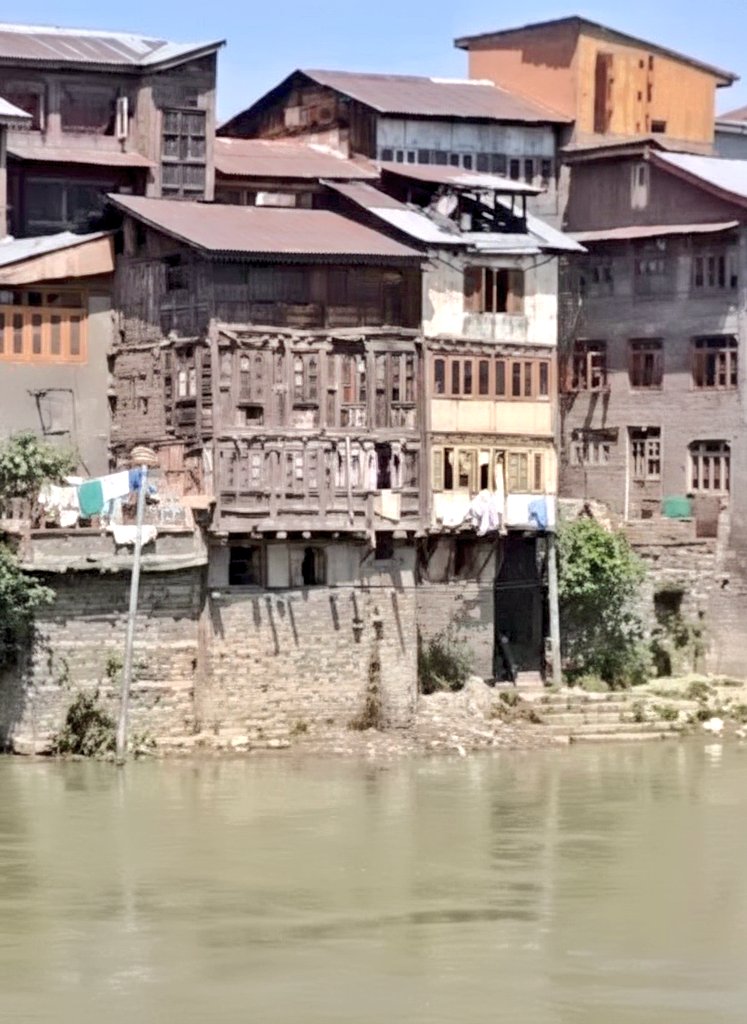
This is my home in Kashmir right on the banks of River Jhelum. The place I took my first steps, spoke my first words. Gone since the 1990 Genocide. A Muslim family lives there illegally. I have tried for 2.5 years, submitted all papers to the Govt but every time, local officials say 'No home at that address'. My mother still clutches the old key. Please help. Share and amplify my plea. Maybe, one day, justice will return our world to us. 🙏🏼🕉️🚩
Kashmiri Hindu tweet media
English
984
14K
30.5K
880.7K
Dr Anu nag-retweet
Leonardo
Leonardo@CAPF_Ghost·
Nationalism is a powerful shared fiction, but it loses its magic when the state’s actions contradict its rhetoric. You cannot claim to worship the soldier while simultaneously legislating away their fundamental right to administrative parity. #पैरामिलिट्री_माँगे_अधिकार
Leonardo tweet media
English
3
68
88
566