Solana at Quicknode

370 posts

Solana at Quicknode banner
Solana at Quicknode

Solana at Quicknode

@QuicknodeSolana

All Solana, all the time from @Quicknode.
Onchain Sumali Kasım 2025
322 Sinusundan700 Mga Tagasunod
Naka-pin na Tweet
Solana at Quicknode
Solana at Quicknode@QuicknodeSolana·
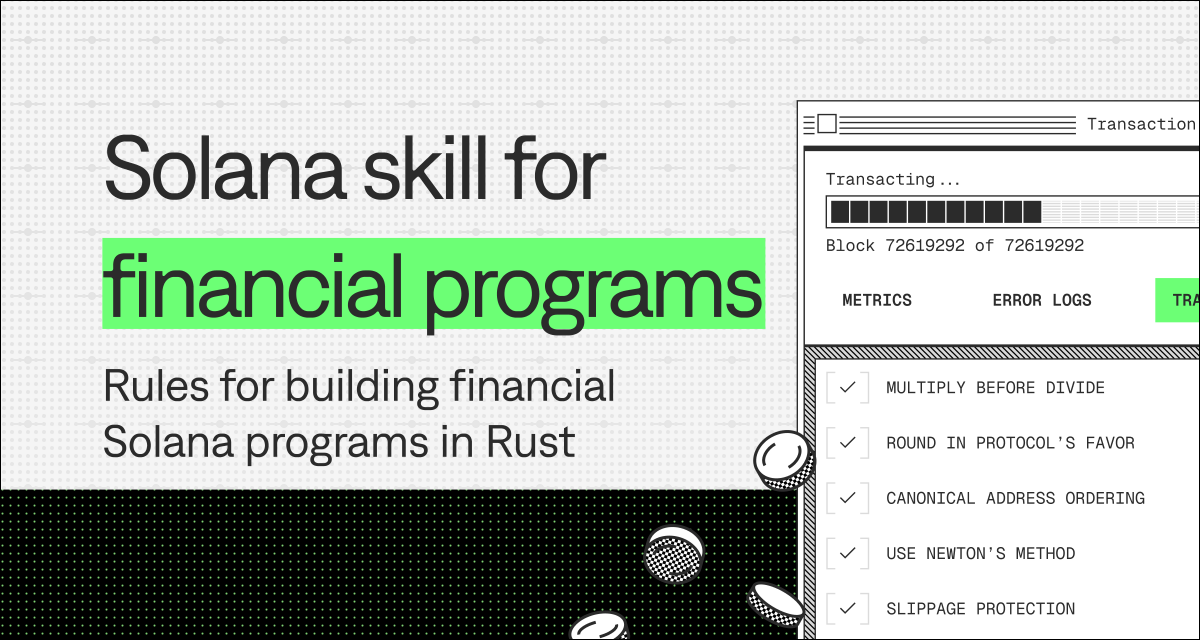
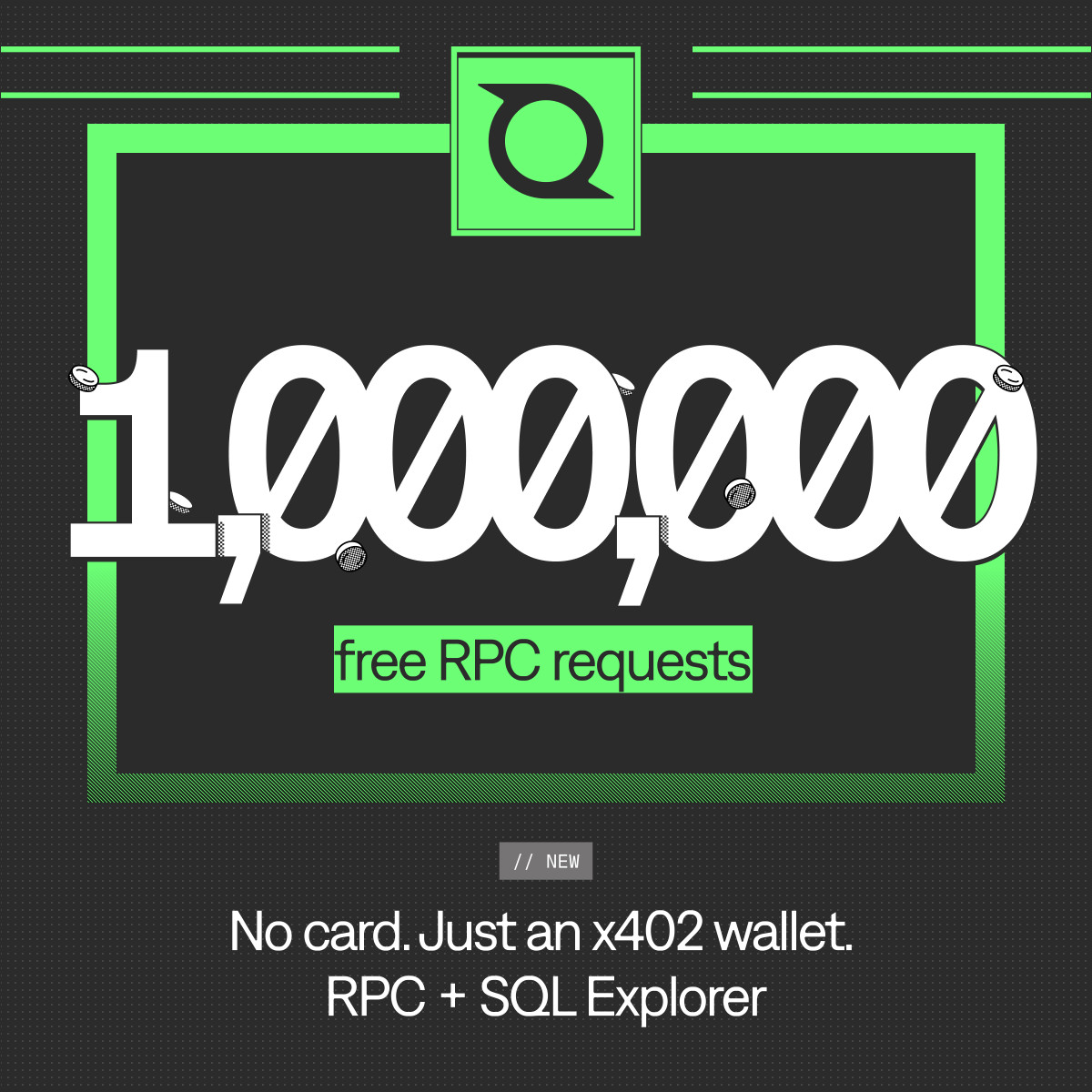
@X402 moves fast. We've released a new package, @quicknode/x402-solana that allows you and your agents to ✨connect using Solana Kit in a single function call✨ All you need is an id.json and some USDC in the account. npm install @quicknode/x402-solana
Solana at Quicknode tweet media
English
1
7
21
1.4K
Solana at Quicknode nag-retweet
Rachit.sol
Rachit.sol@Rachit_twts·
so built a lot of stuff this week > solref.fun : learn about Solana's data flow, system architecture, MEV, consensus, validators; it's all in one place > transaction-score.vercel.app : paste any tx signature → instantly see if you overpaid, underpaid, or nailed your priority fee > pumpterms.fun : paste any fresh pump.fun mint → instantly get full launch alpha > dec-clust.vercel.app : real-time @solana bundle cluster detector > solana-explorer-ten.vercel.app : explorer with wallet integration, real-time data, and multi-network support. next setting up stuff for intelleum.in, waiting for @SuperteamIN grants renewal to fix compute resource thank u so much to @DIMIDJ for @Quicknode credits. btw @Quicknode's solana stack is fire people seeing this if you're hiring (dev / devrel), i’m open. dms open. happy to ship something specific, thinking of starting videos from tomorrow - breaking down solana infra
Rachit.sol tweet media
English
5
3
14
558
Solana at Quicknode nag-retweet
Noah 🎈
Noah 🎈@redacted_noah·
It's been about a year, so I think it'd be fun to look back and see which of these complaints has been solved. 1. IDL infrastructure is even more of a mess now. There's now two sources of truth, the original PDA and now a metadata program. Unfortunately, the metadata program was built without first class support for IDL versioning. So, next time IDLs change major versions, expect more pain. 2. Parsing historical programs given the lack of IDL versioning/history is still a problem now, and with the added metadata program it's now slightly worse. 3. The read layer has improved substantially. Most rpc providers heavily index gPA, so it's not as bad (still bad). Indexers have gotten unbelievably reliable now, such that I trust running an entire UI off of indexed data. It's heavier, you have devops costs, but at least it works and you can customize to your heart's content. 4. Running an API powered by indexers is still somewhat pricey 5. Transaction sending and landing is more or less solved. I haven't had to think about this in months. Smooth as butter. 6. Anchor has gotten faster and they've fixed a lot of the issues that blow out memory. There's still a lot of improvements to be made here, and new frameworks/anchor v2 are coming. 7. CPI depth limit is set to be increased. So this will not be an issue for much longer. 8. TX size limits are set to be increased. So this will not be an issue for much longer. 9. Rent costs have gone down because SOL price shit the bed. Yay? They are also going to actually cut rent costs soon™ 10. All of the cNFT issues described still exist. These have mostly been solved by just not using cNFTs. Use core or token metadata nfts instead. 11. Errors have, for the most part, gotten better. There are still quite a few useless errors, though. 12. All of the top wallets are still closed source. No progress made there, and seems like no one cares. 13. Rust anchor client still sucks. 14. Explorers still have issues, but thanks to claude I built my own that solves most of the issues (explorer.chewing.glass) 15. The base RPC spec still sucks, but if you're okay with vendor lock-in, Helius has a ton of useful APIs. Transaction history. Ability to only fetch accounts that have changed since a given slot. Etc. 16. I actually haven't had a dependency hell issue in a few months, I also haven't upgraded anything. Maybe it's getting better? 17. I haven't had issues with preflight disabled transactions in a while. Not sure if they fixed these issues, or I just started simulating more often. 18. Running programs on a cron is largely fixed. I wrote tuktuk for this, and it's been running reliably for almost a year. Largely things seem to be getting better. I've noticed that a lot of the pain goes away if you shove all of your solana-related stuff into an API, and use that API from your various clients web2 style. You can leverage indexers for complex queries. You can change your program and IDLs without breaking all clients. You can record your own transaction history. Etc. I always had a dream that blockchain dev was a way to avoid devops costs and burden by running everything on decentralized infrastructure. We seem to have moved far from this ideal, web3 is just web2 with another kind of database. Doesn't look great for protocols outliving their parent companies, but as we've seen that almost never happens anyway.
Noah 🎈@redacted_noah

As requested, all my current complaints in no particular order: 1. Uploaded IDL on-chain management is a mess. It has no versioning history, and when IDLs have breaking changes (like anchor 0.30+) all old clients currently looking at the on-chain IDL break. Why can't I lock a client to an IDL major version? Why is every IDL producer slightly different? Anchor, shank, etc should all produce the same thing. Published IDLs are wonderful in that I can add an account that's referenced by a has_one or PDA without breaking existing TS clients. But they need proper versioning. 2. Related to 1, since there's no IDL history, parsing historic transactions on Solana is impossible. Contract endpoints change, IDLs change, there's no history of it. 3. Read layer. The read layer sucks. You can do a lot to structure your program code to optimize for point-queries using PDAs as a kind of index. Like a crappy redis. But the second you need to do list queries ("get me all governance proposals with this tag") you're hosed. gPA is a terrible thing to use. That means you need an indexer! 4. Indexers. I have spent literal years wrestling with indexing on Solana, trying to get it so you catch every anchor record and insert it into postgres. *Finally* I have a solution that works, thanks to @streamingfastio. But even one stream is ~$500/month. Not really accessible to a dev trying things out in their spare time. Fine for Helium. 5. Transaction sending and landing. This is arguably the ONE thing a blockchain should be good at. Why am I talking to like 5-10 different people to find the optimum way to restructure my tx builder+sender every 3 weeks? Prio fees, stake weight QoS, compute limits, jito, lookup tables, transaction vs VersionedTransaction (the most ugly interface ever in both ts and rust). There's just so much to unpack here. Wrap it all up and throw it in a black box I don't ever have to look at again. Please. 6. Anchor performance. Anchor hogs a bunch of memory, newest versions init_if_needed almost always causes it to blow the heap. It also uses a bunch of CUs. It's the most used framework for smart contracts, let's pour all the resources we have into making it better. Native solana code is seriously so ugly to read it's a security hazard. There's no reason anchor, which is all pretty macros, can't be made to be just as fast. 7. CPI call depth limit. It's arbitrary, and low. Sometimes for composability you need more. CPIs are also super expensive. @blockiosaurus has some nice posts on why composability is a lie. 8. Tx size limits. This is actually the least of my problems, I can almost always find a way to work around this. 9. Rent is TOO DAMN HIGH. Sol is mooning, so rent is getting crazy high. I work for a company with funding, so it's not an issue for me. But if I were trying to do Solana in my spare time, $3000 to deploy a smart contract is ridiculous. 10. cNFTs continue to cause issues. If you need to mint a cNFT, then do something with that cNFT, you need to wait for the cNFT to be indexed so you can get its proof so you can construct the subsequent transaction _doing_ something with that cNFT. Huge headache. I wish Core NFTs had existed when we migrated helium, I would have used those instead. 11. Errors. Solana errors are notoriously unhelpful. #L277" target="_blank" rel="nofollow noopener">github.com/anza-xyz/agave…. This entire list should tell you which account the error came from. This is actively being worked on by Solana devrel. 12. Wallets. Of the top 3 wallets (Phantom, Solflare, Backpack) none of them are open source. One is source available, but usually pretty out of date. Wtf. 13. Rust clients suck. Using things like anchor from typescript are a breeze, because there's dynamic account resolution of has_one's and PDAs. Every time I have to use rust, it's like going back to the stone age. 14. Explorers suck. Why am I still using explorer.solana.com? Because it's the only one that consistently doesn't have broken IDL parsing, and has all the information that I need, and works with localnet devnet and mainnet. But it's notably missing things like seeing all txs on a program and filtering by instruction type. 15. The base RPC spec is missing tons of functionality. For one, it sucks at priority fees. Second, it's missing read level functionality enterprise web apps usually make use of, like incremental updates. I shouldn't need to waste data refetching accounts if they haven't changed. But there's no way to say "getMultipleAccounts that have changed past block x" 16. Dependency hell. ALWAYS with the dependency hell. Semver is never followed, especially on rust clients. So upgrading dependencies is always a nightmare. 17. Error handling when you turn off preflight checks is horrendous. Often times, if you've messed up the tx (too large, don't have enough sol, etc) it'll just hang forever. Hanging forever has to be the least desirable outcome for anything. 18. No ability to easily run txs at a specified time/on a schedule without deploying your own workers/crons. RIP clockwork (dw, I'm building a solution to this) I'm sure there's more, but my build finished to it's back to work. This is just top of mind.

English
8
9
80
20.6K
Solana at Quicknode nag-retweet
Exo ⓧ
Exo ⓧ@exo_tech_·
Everyone on the street in front of you has a @Solana address. PayPal. Venmo. Those are Solana wallets with 0% off-ramp fees. Most people don't know. @mikemaccana thinks that's the real distribution gap in crypto right now. Watch him and @dirty_digs drive that home.
English
1
3
6
491
Solana at Quicknode nag-retweet
beeman 🐝
beeman 🐝@beeman_nl·
@joaomendoncaaaa @trentdotsol I'd love to keep working on this and make it awesome, get it in the hands of people. We gave a few shots at getting funding for @SamuiBuild but didn't succeed. It seems like something that would make sense. @vibhu if you're interested, I'd be more than happy to chat. 🫡
English
2
2
15
282
Solana at Quicknode nag-retweet
trent.sol
trent.sol@trentdotsol·
if foundation wants to vibe code shitty copypasta of things that already exist to use their "distribution" to "benefit" the ecosystem, right here > 12. All of the top wallets are still closed source. No progress made there, and seems like no one cares.
Noah 🎈@redacted_noah

It's been about a year, so I think it'd be fun to look back and see which of these complaints has been solved. 1. IDL infrastructure is even more of a mess now. There's now two sources of truth, the original PDA and now a metadata program. Unfortunately, the metadata program was built without first class support for IDL versioning. So, next time IDLs change major versions, expect more pain. 2. Parsing historical programs given the lack of IDL versioning/history is still a problem now, and with the added metadata program it's now slightly worse. 3. The read layer has improved substantially. Most rpc providers heavily index gPA, so it's not as bad (still bad). Indexers have gotten unbelievably reliable now, such that I trust running an entire UI off of indexed data. It's heavier, you have devops costs, but at least it works and you can customize to your heart's content. 4. Running an API powered by indexers is still somewhat pricey 5. Transaction sending and landing is more or less solved. I haven't had to think about this in months. Smooth as butter. 6. Anchor has gotten faster and they've fixed a lot of the issues that blow out memory. There's still a lot of improvements to be made here, and new frameworks/anchor v2 are coming. 7. CPI depth limit is set to be increased. So this will not be an issue for much longer. 8. TX size limits are set to be increased. So this will not be an issue for much longer. 9. Rent costs have gone down because SOL price shit the bed. Yay? They are also going to actually cut rent costs soon™ 10. All of the cNFT issues described still exist. These have mostly been solved by just not using cNFTs. Use core or token metadata nfts instead. 11. Errors have, for the most part, gotten better. There are still quite a few useless errors, though. 12. All of the top wallets are still closed source. No progress made there, and seems like no one cares. 13. Rust anchor client still sucks. 14. Explorers still have issues, but thanks to claude I built my own that solves most of the issues (explorer.chewing.glass) 15. The base RPC spec still sucks, but if you're okay with vendor lock-in, Helius has a ton of useful APIs. Transaction history. Ability to only fetch accounts that have changed since a given slot. Etc. 16. I actually haven't had a dependency hell issue in a few months, I also haven't upgraded anything. Maybe it's getting better? 17. I haven't had issues with preflight disabled transactions in a while. Not sure if they fixed these issues, or I just started simulating more often. 18. Running programs on a cron is largely fixed. I wrote tuktuk for this, and it's been running reliably for almost a year. Largely things seem to be getting better. I've noticed that a lot of the pain goes away if you shove all of your solana-related stuff into an API, and use that API from your various clients web2 style. You can leverage indexers for complex queries. You can change your program and IDLs without breaking all clients. You can record your own transaction history. Etc. I always had a dream that blockchain dev was a way to avoid devops costs and burden by running everything on decentralized infrastructure. We seem to have moved far from this ideal, web3 is just web2 with another kind of database. Doesn't look great for protocols outliving their parent companies, but as we've seen that almost never happens anyway.

English
10
2
54
5.7K
Solana at Quicknode nag-retweet
Solflare - The Solana Wallet
BREAKING ‼️ Over $3.2M has already been sent using Private Send in Solflare. Now it’s your turn. Private Send breaks the link between sender and recipient wallets, shielding your activity on demand. Simple. Optional. Built right into your Solflare ↓
Solflare - The Solana Wallet tweet media
English
70
22
181
6.1K
Solana at Quicknode
Solana at Quicknode@QuicknodeSolana·
🤖AI agents can spend USDC anywhere that takes Visa! 🔥
MPCVault | crypto banking for institutions@mpcvault

Introducing the MPCVault Agent Card! AI agents can now spend USDC autonomously anywhere Visa is accepted. x402-native. Policy-controlled. Partnering with @BlockRunAI (@bc1beat) ClawRouter to secure the agentic payments stack. Your agents route, pay, and transact. MPCVault keeps the keys safe. Set spend limits. Whitelist merchants. Require approvals. Autonomous spending, with guardrails your team controls.

English
0
0
0
61
Solana at Quicknode nag-retweet
chase
chase@therealchaseeb·
The time has come. Dropping next week.
chase tweet media
English
13
3
53
4.6K
Solana at Quicknode nag-retweet
Arcium ☂️
Arcium ☂️@Arcium·
In case you did not know: - Arcium unlocks an entirely new design space for applications - Arcium enables encrypted shared state, not just private transactions - Blockchains are transparent by default. Arcium makes them usable for real-world business - Cerberus is the first ever practical dishonest majority protocol - Arcis is the fastest way to build privacy applications on Solana - C-SPL makes any token confidential and usable in onchain programs - Arcium is live on Mainnet Alpha. Builders can deploy to Solana Mainnet today Privacy for Anything.
English
90
52
241
8.1K
Solana at Quicknode nag-retweet
Stepan | squads.xyz
Stepan | squads.xyz@SimkinStepan·
Cypherpunk blog posts can only get you so far. Instead you can build something customers want and help them move off traditional banking to stablecoin rails. Our mission is to get to end to end stablecoin settlement across all businesses using Altitude because this is how pure velocity and efficiency of money movement is reached. But we have a lot more work to do before we get there. The reality is that most businesses today do require to settle via traditional rails for at least some of their payment volume and we are giving them that option, while they are holding 100% of their balance in stablecoins on the platform. A stablecoin account that connects you to local and onchain rails is how you bridge the gap and fulfill the mission. If you can’t see why this is the way to go, feel free to DM.
Stacy Muur@stacy_muur

Crypto projects are now bragging about rolling out SWIFT transfers for stablecoins. If you can’t see what’s wrong with that, I can’t help you.

English
9
12
76
5.8K
Solana at Quicknode nag-retweet
Anna | Perena
Anna | Perena@gizmothegizzer·
We brought tranching onchain. What would've taken legacy finance 6 figures in legal bill and months of work, now available on Solana to any yielding asset.
Anna | Perena tweet media
English
24
11
197
44K
Solana at Quicknode nag-retweet
Altitude
Altitude@altitude·
SWIFT transfers are live. Pay any bank account, anywhere in the world. Directly from your Altitude account. 200 countries. 11,000 banks. 1 balance.
English
47
56
453
127K
Solana at Quicknode nag-retweet
RYAN SΞAN ADAMS - rsa.eth 🦄
THEY DID IT. The SEC and CFTC just dropped a landmark document that officially classifies crypto assets. They're actually telling us which crypto assets are securities and which ones aren't - by name! THIS IS SOMETHING GENSLER REFUSED TO DO (he focused on prosecuting crypto out of existence) This rule doc gives crypto many of the benefits of the clarity bill - it lifts us out of the gray market - it gives every asset a path. It's almost like the Clarity act just passed by way of regulator. (of course, the actual clarity act will harden all this into legislation and make it irreversible in the event we get another Gensler, we still want it) This rule says there's 5 categories for crypto assets: 1) Digital Commodities - assets tied to a functional, decentralized crypto system (e.g., BTC, ETH, SOL, XRP, ADA, DOGE). Not securities. (yes, they name them on page 14) 2) Digital Collectibles - NFTs, meme coins, artwork tokens, in-game items. Not securities (fractionalized collectibles may be an exception). 3) Digital Tools - membership tokens, credentials, domain names (e.g., ENS). Not securities. 4) Stablecoins - payment stablecoins under the GENIUS Act are not securities. Other stablecoins, it depends. 5) Digital Securities - tokenized versions of traditional securities. Like tokenized stocks. Always securities. Amazing! This makes so much sense I can't believe it's coming from a regulator. No more enforcement threats to Ethereum developers and crypto exchanges. How about the Howey test? More common sense! If an issuer makes specific promises of managerial efforts from which buyers expect profits, the offering is a security until those promises are fulfilled. Then it's a commodity. The asset itself was never the security, the deal around it was. (E.g. XRP was a security pre launch, became a commodity after). How about stuff like staking and mining? Mining? Not a securities transaction. Staking? Also not a securities transaction, that includes custodial and liquid staking even with LSTs! How about wrapping BTC? Not a securities transaction. Airdrops? NOT SECURITIES. NO MORE GEO BANS PROTECTING AMERICANS from free airdrops. Remember this is a joint doc from the SEC and CFTC, They're actually cooperating on this, no internal strife, this is binding to both. SEC regulates $80-100 trillion assets CFTC regulates $5-10 trillion assets Both of the world's largest capital markets are showing us that crypto assets are here to stay and they're welcome alongside traditional assets. Every country will follow. This is the biggest move toward legitimacy I've seen in all my time in crypto. Maybe bigger than the genius act since is covers all crypto assets. Well done @MichaelSelig and @SECPaulSAtkins. And especially well done to the indefatigable @HesterPeirce. Her fingerprints are all over this, couldn't have happened without her eight years of principles-based curiosity.
RYAN SΞAN ADAMS - rsa.eth 🦄 tweet mediaRYAN SΞAN ADAMS - rsa.eth 🦄 tweet media
English
200
832
4.3K
375K
Solana at Quicknode nag-retweet
Justin | SEI
Justin | SEI@JustinBarlow·
Stripe paid $1.1B for Bridge. Now Mastercard is paying $1.8B for BVNK Two of the largest payment companies on earth racing to acquire stablecoin infrastructure. Make of this what you will
Justin | SEI tweet mediaJustin | SEI tweet media
English
4
4
38
2.1K