

.
667 posts


The real question no one wants to talk about is this: How did so many illegal aliens get a CDL to begin with in Pennsylvania?
All the while honest Pennsylvanians had to bring like 106 forms of ID and get meticulously checked up and down to get a REAL ID? cbsnews.com/pittsburgh/new…
English
. nag-retweet


What are some practical ways parents can prepare their kids to face controversial issues in school?
English


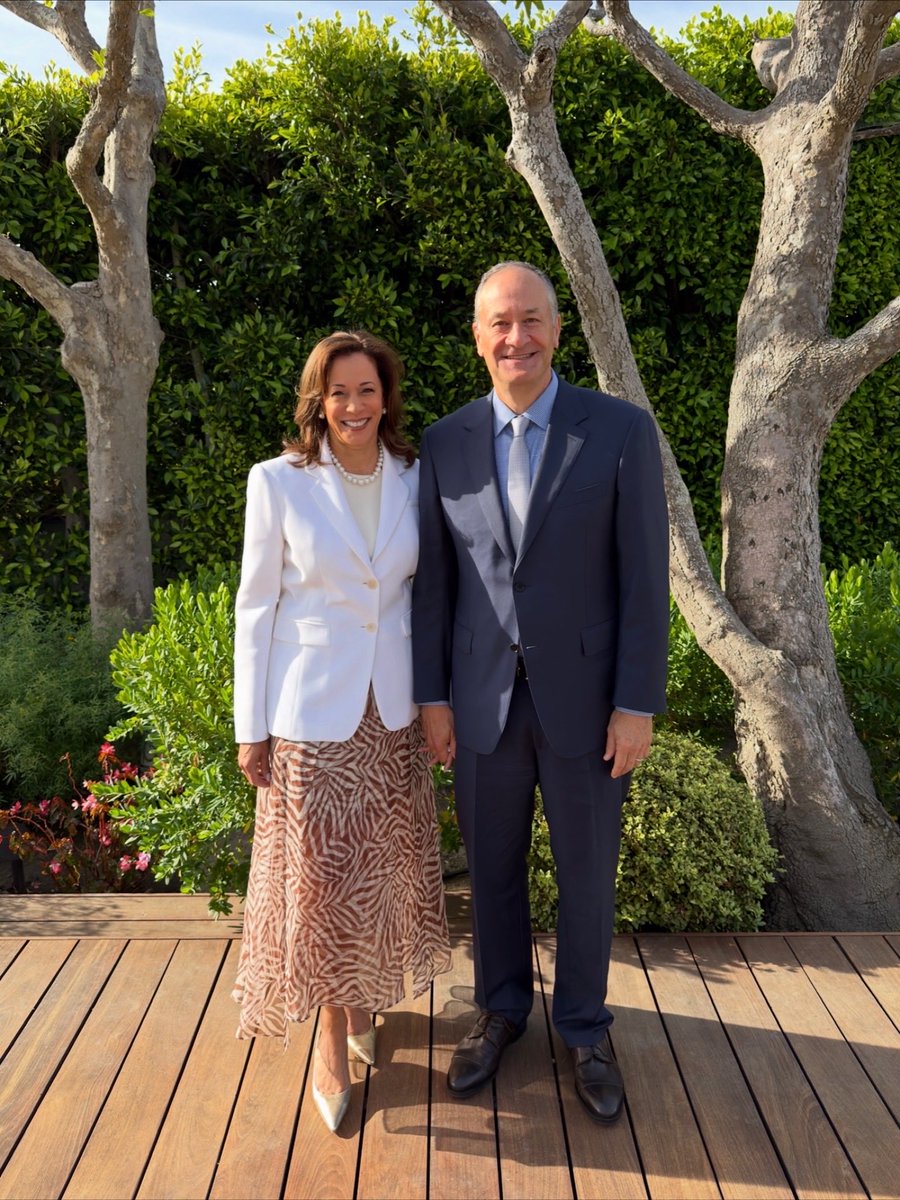
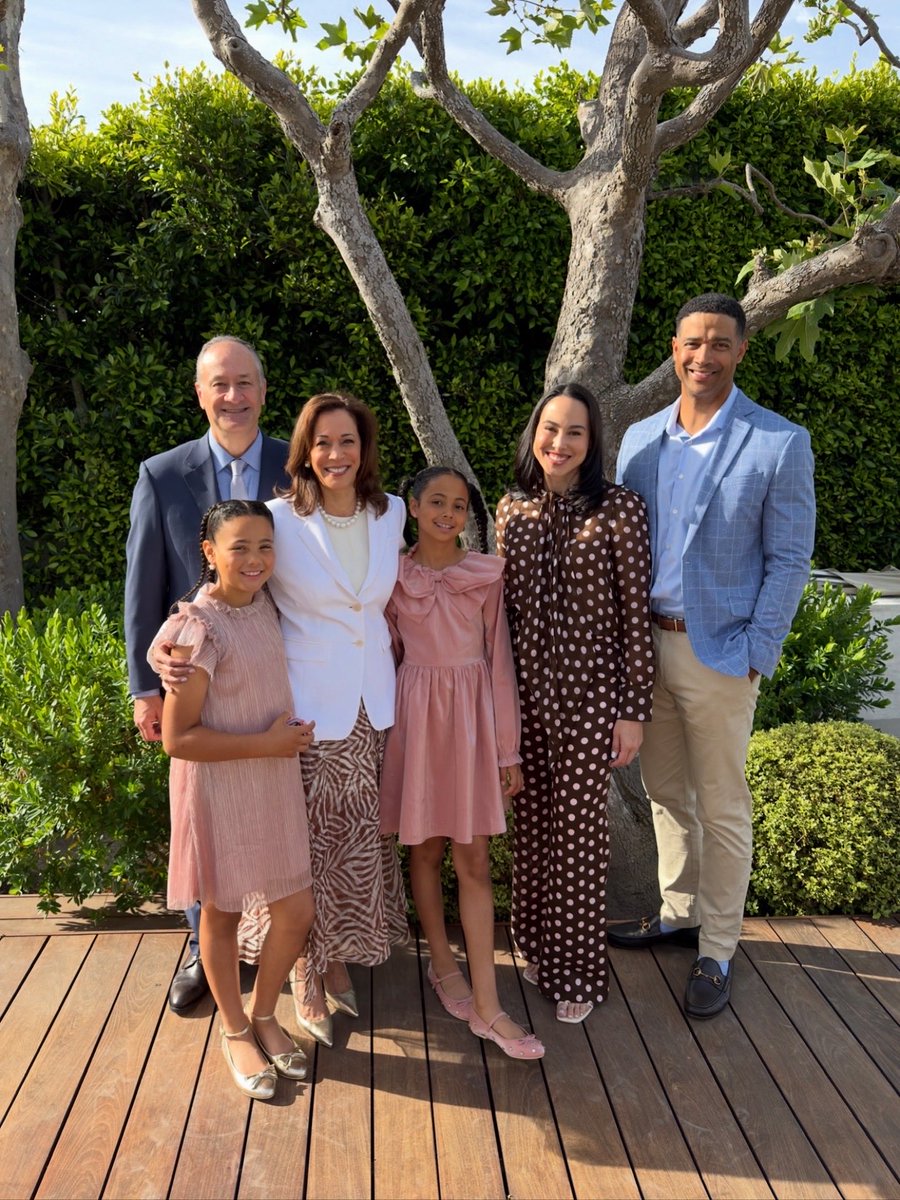
Happy Resurrection Sunday to all those celebrating. May this Easter remind us all of the promise of renewal, the power of faith, and the enduring hope that carries us through even the most challenging moments. Wishing you and your loved ones peace, joy, and quality time together.

English

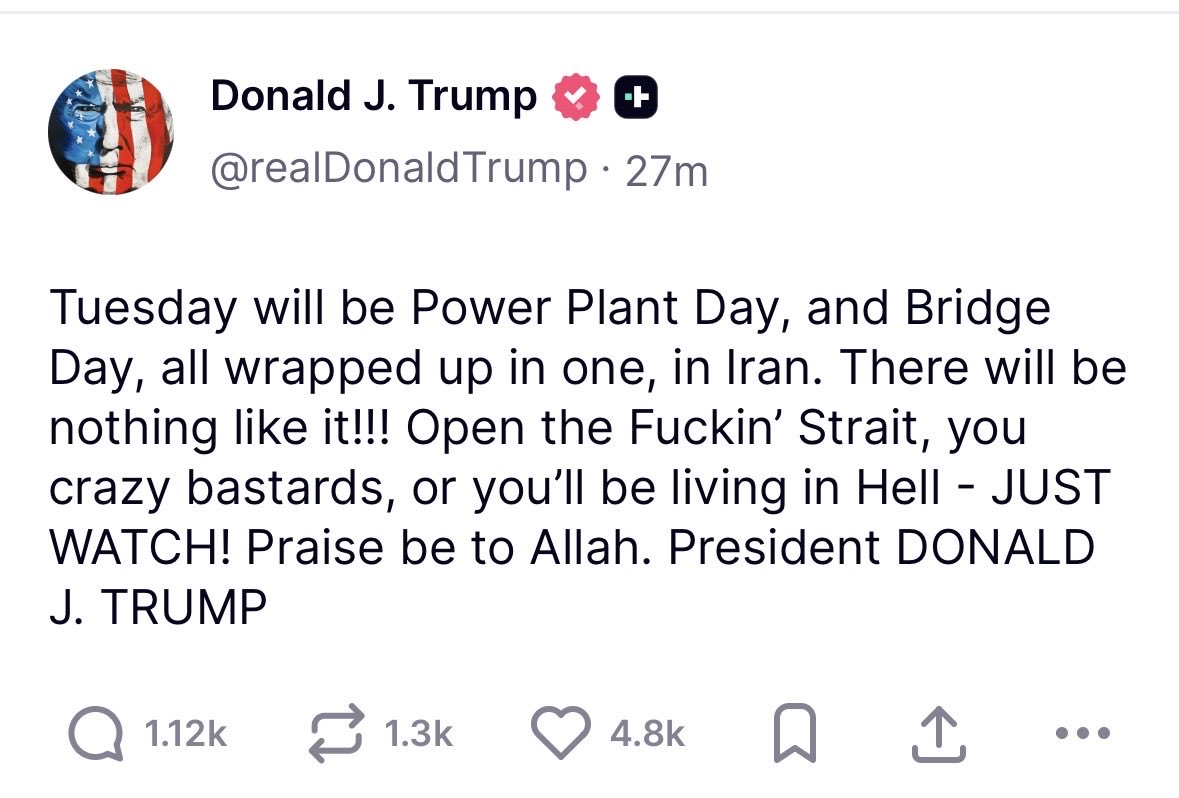
Every pastor who supports this president should have to read this from the pulpit to their congregation. This is the man Paula White compared to Jesus and said he’s the greatest champion of the Christian faith we’ve ever had in the White House. So read his words aloud.
English


🚨 BREAKING: US oil prices surge above $114/barrel as US market futures officially reopen after the 3-day weekend.
VIA: @KobeissiLetter

English
@Breaking911 @KobeissiLetter I voted for Trump. I’m 100 percent sick of him.
English



@RealPius91 @Pirates "For 'everyone who calls on the name of the Lord will be saved"
English

@howertonjosh @jason_howerton My pastor preached like this this morning. I told him after service how much that sermon was needed because there were so many people there who needed to hear it straight.
English
. nag-retweet

To my fellow pastors:
When we are old men and no longer able to preach, it will be days like this that we'd give anything to be able to come back one more time and charge the field with fire in our eyes, love in our hearts, and a Bible in our hands.
In the words a pastor friend of mine texted this morning, "Preach like they're all dangling over hell and the only hope they've got is what they hear this morning."
All gas, no brakes to the glory of God...
English
. nag-retweet

He is Risen!
We know how the battle ends.
We win.

English
@DavidLimbaugh @TaraLeighCobble talks about this in the Bible Recap. I’ve done this plan 3 times now. Working through it again.
English
I asked the AI study guide in Logos Bible Software about the term angel of the Lord in the Old Testament and why evangelical scholars interpreted that to mean a pre-incarnate version of Christ. I further asked it about the Jewish interpretation. I think the answer is interesting as it always is.
Angel of the Lord
> Many evangelical scholars believe that the term angel of the Lord in the Old Testament describes pre-incarnate appearances of the son of God. Why did they come to believe that God is not an angel his son is not an angel so how did Bible scholars come up with the theory that the term angel of the Lord was in fact a pre-incarnate Christ? Also, how did the Jews interpret that phrase and how was that phrase? translated in the Hebrew scriptures.
Evangelical scholars arrived at the preincarnate Christ interpretation through careful textual analysis rather than theological assumption. The angel of the Lord identifies himself as Yahweh in accounts like Abraham and Jacob’s encounters, speaking both for and as God, while others identify him as God—as seen in Hagar’s and Joseph’s stories.[1] Although Scripture teaches that only God deserves worship, the Angel of the Lord accepts reverence and worship.[1] These characteristics—combined with the angel’s divine knowledge and actions—suggested a figure distinct from ordinary messengers yet possessing divine attributes.
A crucial observation strengthened this interpretation: theologians noticed the phrase “the angel of the Lord” never appears after Jesus arrives in the New Testament, suggesting that once the incarnation occurred, this unique heavenly representative became obsolete because Jesus became God’s earthly, visible representative.[2] Unlike other angelic beings who refused worship because they were creatures, the angel of the Lord accepted it without rebuke, and unlike other angels who emphatically declared their creatureliness when people sought to worship them, the angel of the Lord did not.[3]
Regarding Jewish interpretation, the evidence is complex. Jewish theologians prior to the New Testament era, observing texts featuring the Angel and other “dual Yahweh” language, developed a theology of two powers in heaven—a teaching Jewish authorities declared heresy after the second century AD.[4] In the Septuagint (Greek translation), only 33 of 56 occurrences carry the definite article, making it difficult to determine conclusively whether Alexandrian Jewish translators understood this “Angel” as having unique identity or as simply one of God’s heavenly hosts.[5] The Aramaic Targums, however, rendered Genesis 4:1 as “I have gotten a man, the angel of Jehovah” or “the angel of the Lord,” suggesting rabbis recognized something supernatural in the text.[6]
[1] David J. MacLeod, “The Trinity and Scripture,” Emmaus Journal (2002), 11:2:195.
[2] René A. López, “Identifying the ‘Angel of the Lord’ in the Book of Judges: A Model for Reconsidering the Referent in Other Old Testament Loci,” Bulletin for Biblical Research (2010), 14.
[3] Douglas McCready, He Came down from Heaven: The Preexistence of Christ and the Christian Faith (Downers Grove, IL; Leicester, England: InterVarsity Press; Apollos, 2005), 180–181.
[4] Michael S. Heiser, The Bible Unfiltered: Approaching Scripture on Its Own Terms (Bellingham, WA: Lexham Press, 2017), 67.
[5] John M. Jr. Baze, “The Angel of the Lord in the Old Testament—Part II,” Conservative Theological Journal (1998), 2:4:66.
[6] Arnold G. Fruchtenbaum, Ariel’s Bible Commentary: The Book of Genesis (San Antonio, TX: Ariel Ministries, 2008), 115–116.
English
Kevin Hasset: "These higher [oil] prices are a temporary phenomenon, and it's going to end very soon."
English

Bryan Reynolds on a dramatic 3-2 win and Nick Yorke’s heroics in the ninth inning against the Orioles. — From José Negron in Pittsburgh
English

Pope Leo XIV celebrates first Easter vigil, calls for harmony and peace in a world torn by war dlvr.it/TRt2j5
English

Hoist the Cone!! Pirates Nick Yorke RBI double beat Baltimore. 3-2
English

Saturday mornings with kids…
be honest 👇
How much coffee are you running on?
English