

Solitude
94 posts

@Solitzde What do you think about boosting my algorithm instead of killing it
x.com/i/status/20350…
زهير الأندلسي@AndaluciMaliki1
@BoycottXok اللهم اعفُ عن زلات المسلمين واغفر عثراتهم وتجاوز عن تقصيرهم وهفواتهم
English
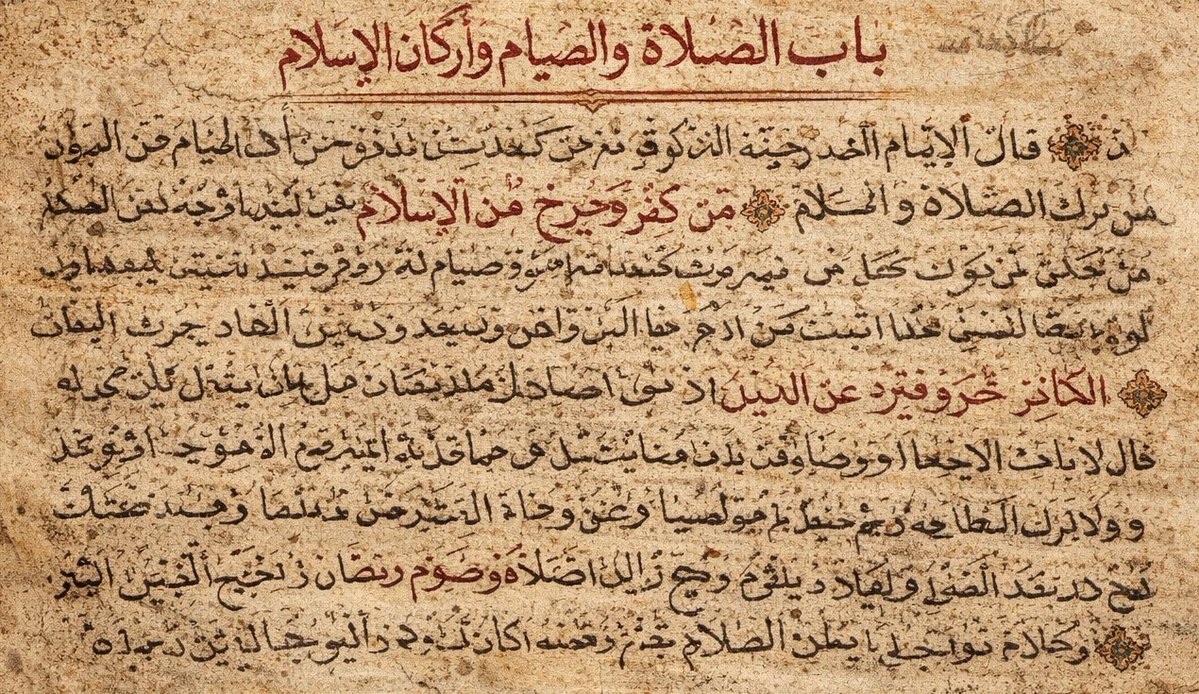
Imam Ahmad: It is wrong to claim that a Muslim doesn't become an infidel by sinning, rather neglecting any of the actionable pillars may makes a Muslim an infidel.
English

@Solitzde If someone today insults ‘Ali he would be a vile and sinful man.
English
The Intercession of Sayyiduna Hasan and Sayyiduna Husayn for Sayyiduna Marwan b. Al-Hakam
After the Battle of Jamal, Sayyiduna ‘Ali رضي الله عنه announced:
“Whoever locks his door is safe, and whoever lays down his weapon is safe.
Marwan said, "I entered so-and-so's house, then I sent word to Hasan and Husayn, the sons of Ali, and to Abdullah ibn Abbas, Ubaydullah ibn Abbas, and Abdullah ibn Ja'far. They spoke to him, and he said, 'He is safe.'"
Shi’i historians also record this event:
و تكلم الحسن و الحسين في مروان فآمنه و آمن الوليد بن عقبة
“Hassan and Hussain spoke on behalf of Marwan, and he gave him amnesty as well as Walid ibn ‘Uqbah.”
[Muruj al Dhahab, pg. 378]

English
@hashimiyy_ What if an ancestor of the Ummayads did this today ? Would he considered be an Innovater (Nasibi) or just a fasiq?
English
@Solitzde What really occurred was priding themselves on victory, not some religious cursing.
Plenty of these things happened from both sides, it’s called the fitnah for a good reason
English
@hashimiyy_ Didnt the Ummayds curse Ali on the Mimbar at the start of a Khutbah?
English
@hashimiyy_ Cursing someone during battle is different than cursing someone as some sort of ritual after he passed away , no ?
English
@Solitzde At most there seems to be the criticism that occurred from both sides.
English
@hashimiyy_ What about the claims that he cursed Ali (May Allah be pleased with him) on the minbar?
English
[The Natural Disposition of Human Beings disproves the possibility of Zarasuthra’s religion being divine.]
It is related in al-Imtāʿ wa-l-Muʾānasa by Abū Ḥayyān al-Tawḥīdī:
Sean W. Anthony@shahanSean
@DrPhilipWood The Muslims are similarly hostile to the idea of Zoroaster being included among the canon of prophets. I wonder if any one was sympathetic too him besides Mani.
Română
@AndaluciMaliki1 Do you know if there are scholars that believe in DCT but exclude Kufr and Shirk from it.
Meaning they say Kufr and Shirk is intrinsically evil and impossible for Allah to allow.
As for the rest we need scripture.
English
@Solitzde Legislation didn't exist then, and we don't know for a fact but it's the most plausible option.
English
@AndaluciMaliki1 How would you respond if someone said "In Adam Aleyhisselam's Shariah siblings could marry each other."
English
@Solitzde But my intention wasn't to present it as an argument but to collaborate with Sean's comment as it's completely true. Muslims especially should accept the arguments because they already accept that God never ordained specific things so they can't accept Zoroaster as a prophet.
English
@hashimiyy_ Is there a difference between DS of the Ismaelis and DS of the Muatazila?
English
Different Models of Divine Simplicity — and the Sunni Evaluation.
There are several formulations of divine simplicity that appeared in kalām. They are not all the same, and Sunnis judged them differently.
1) Abū al-Ḥusayn al-Baṣrī’s model
He held that the attributes are conceptually distinct, but identical in existence with the divine essence.
This is not the view of the jumhūr, yet some Sunni theologians, such as al-Rāzī and al-Ījī, considered it acceptable and affirmed it.
2) Early Muʿtazilah
They denied real attributes altogether, claiming that God is only one essence described in multiple ways.
This was the dominant view before al-Jubbāʾī.
3) Al-Jubbāʾī’s formulation
He and many who followed him affirmed the attributes as aḥwāl, “states” neither fully existent nor nonexistent.
4) The Apophatic Model
Some Muʿtazilīs reduced the attributes to simple denials:
•Power = not weak
•Knowledge = not ignorant
Ahl al-Sunnah regard all of these models as innovation except the first view attributed to Abū al-Ḥusayn al-Baṣrī, which some scholars tolerated or accepted.
This ruling becomes clearer when we consider how far some later Muʿtazilīs went. For example, some claimed that Allah has will, yet it is not eternal, does not persist, and is created.
keep Itreal@KItreal512
@redbridegroom I guess we need to distinguish between full on Mutazili DS and the version of DS that some Sunni scholars leaned towards.
English
@hashimiyy_ @abudaooud Can you show some quotes of Shafi'i and Hanbali scholars that hold the view?
English
Not necessarily, there's ikhtilaf between Sunni madhahib whether insulting the Prophet ﷺ (unrestricted) is apostasy or not, some insults are definitely are though. Shafi'is and Hanbalis are more lenient in this regard than Malikis and Hanafis.
If someone intentional and explicitly insults him (ﷺ) excusing it would be kufr.
English
A brief explanation of excusing an individual who holds blasphemous beliefs:
Anyone who holds a belief of shirk is a mushrik. This is necessarily known from the first testimony of faith.
Whoever excuses this individual receives the same ruling as one who excuses the followers of other religions like Christianity.
Anyone who holds a belief of kufr in a matter known in the religion by necessity is a disbeliever.
If one excuses them, believing that their view is valid, they also share the ruling of being a disbeliever.
If they excuse this individual, arguing they fell into innovation, but not disbelief, the scholars like Al-Subki mention we consider them as innovators due to this category error.
Allāh ﷻ knows best.
English
The defense of Imām al-Rāzī in favor of the imāms of Ahl al-Ḥadīth
—
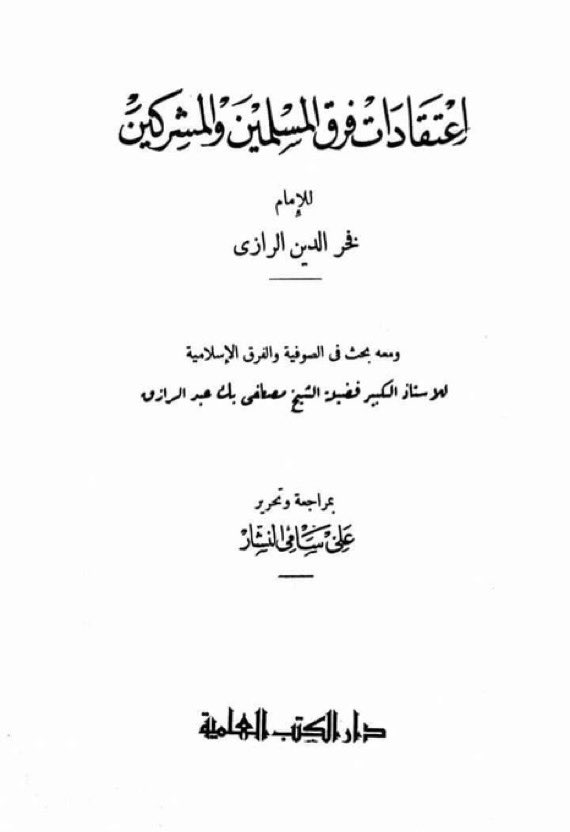
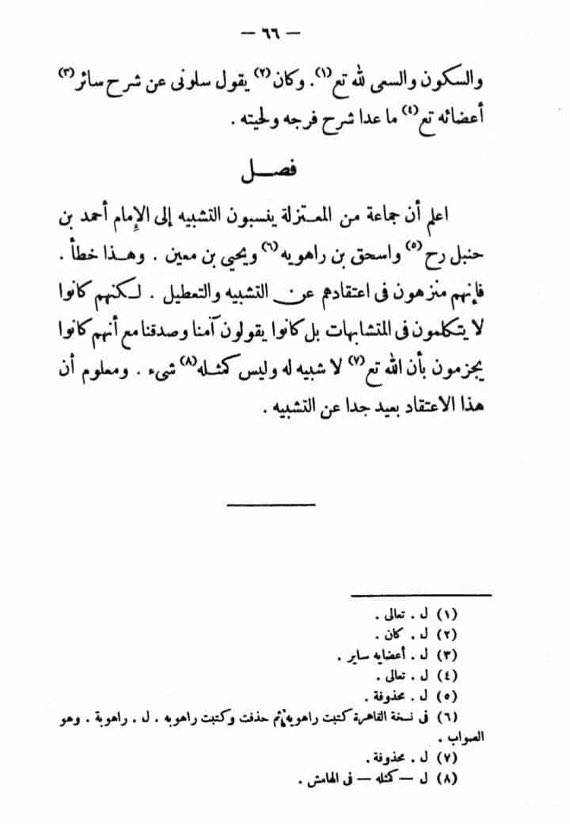
Imām Fakhr al-Dīn al-Rāzī stated in his work I‘tiqādāt firaq al-muslimīn wa al-mushrikīn the following:
“Know that a group among the Muʿtazilites attribute anthropomorphism to Imām Aḥmad ibn Ḥanbal, to Isḥāq ibn Rāhawayh, and to Yaḥyā ibn Maʿīn.
Yet this is an error. Indeed, they are innocent in their creed of every form of anthropomorphism (tashbīh) and of negation of the divine attributes (taʿṭīl).
However, they did not speak concerning the ambiguous verses (mutashābihāt), but were content to say: ‘We believe in them and hold them to be true’, while affirming with certainty that Allah, glorified is He, has no equal and that nothing resembles Him. And it is obvious that this belief is far removed from every form of anthropomorphism.”
—
It should be noted that Fakhr al-Dīn al-Rāzī was an Arab Qurashī, from the tribe of Banū Taym, a descendant of Abū Bakr al-Ṣiddīq , may Allah ﷻ be pleased with him.
عدن@Eden_Jahad
La défense de l’Imām al-Rāzī en faveur des imāms des Ahl al-Ḥadīth. L’Imām Fakhr al-dīn al-Rāzī a déclaré dans son ouvrage « I‘tiqādāt firaq al-muslimīn wa al-mushrikīn » ce qui suit : « Sache qu’un groupe de mu‘tazilites attribuent l’anthropomorphisme à l’Imām Aḥmad ibn Ḥanbal, à Isḥāq ibn Rāhawayh et à Yaḥyā ibn Ma‘īn. Or, cela est une erreur. En effet, ils sont innocents, dans leur credo, de toute forme d’anthropomorphisme (tashbīh) et de négation des attributs divins (ta‘ṭīl). Cependant, ils ne s’exprimaient pas au sujet des versets ambigus (mutashābihāt), mais se contentaient de dire : “Nous y croyons et nous tenons cela pour véridique”, tout en affirmant avec certitude que Dieu, glorifié soit-Il, n’a nul semblable, et que rien ne Lui est comparable. Or, il est évident que cette croyance est très éloignée de toute forme d’anthropomorphisme. » Fin de citation. Il convient de noter que Fakhr al-dīn al-Rāzī était un Arabe Qurayšite, issu de la tribu des Banū Taym, descendant d’Abū Bakr aṣ-Ṣiddīq — que Dieu l’agrée.
Română
Shaykh al-Tahir then moved to critique the main reports that are concerned in this issue:
“Many reports have been narrated about the Mahdi, indicating that he will come at the end of times, filling the earth with justice after it had been filled with oppression.
زهير الأندلسي@AndaluciMaliki1
He then investigated how the doctrine of al-Mahdi appeared in the Muslim Ummah, he says: “The story of the Mahdi sprouted from the remnants of the story of the awaited Imam among the Shi’a. The origin of this is that the Shi’a of the Hashimites,
English
Note: The Malikis do not consider trimming as impermissible, so long as it’s still considered a beard per local customs.
Clarifying Light@ClarifyingLight
English
Guide to facing the qiblah in the Maliki school

English