Naka-pin na Tweet

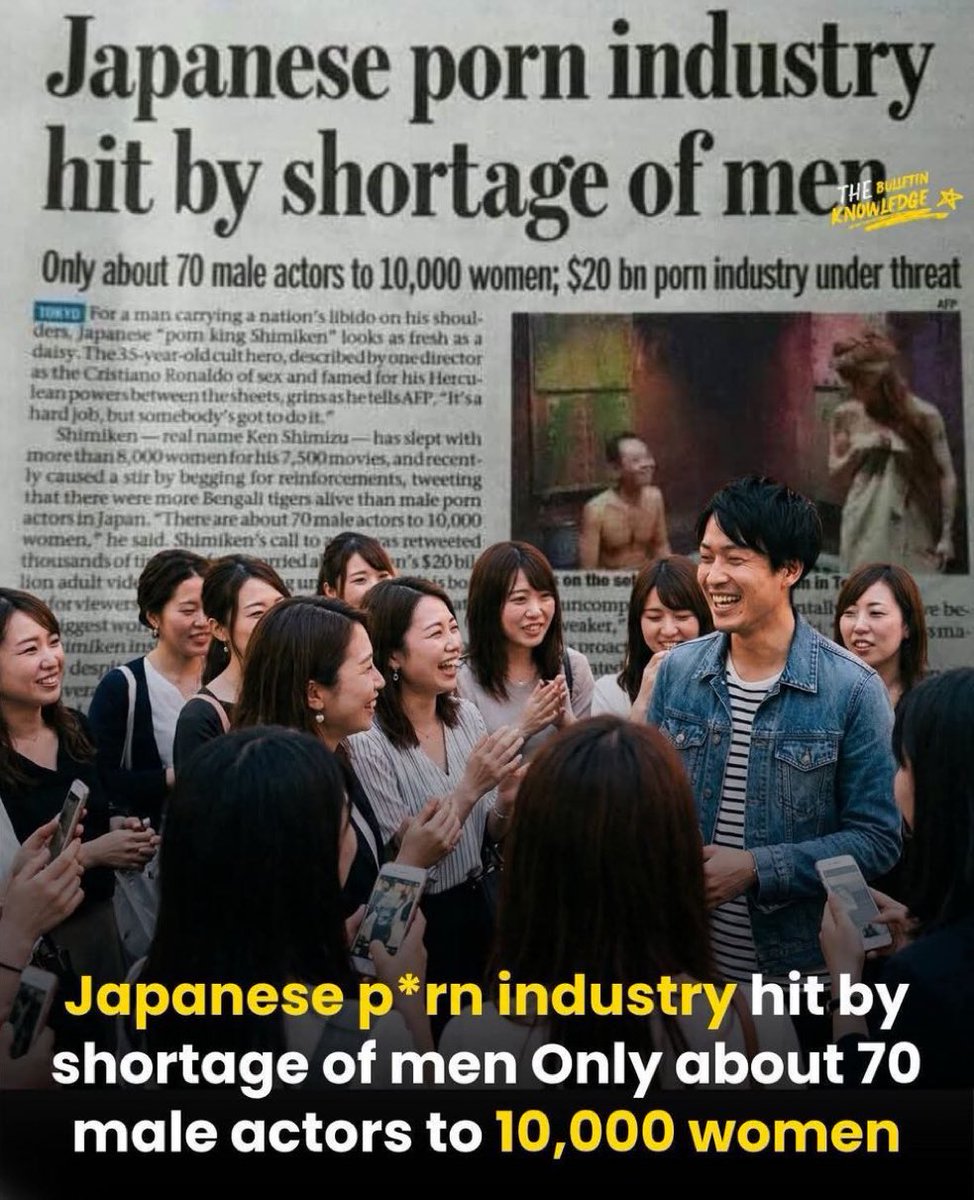
After World War 2, the Allied occupation authorities imposed strict censorship on explicit material, and Japan maintained an almost complete ban on pornographic images and films until the late nineteen eighties. During this era the total fertility rate fell from about 4.5 children per woman during the baby boom of 1947 to 1949 to roughly 2 children by the late nineteen fifties, yet it stayed close to replacement level until the early nineteen seventies. The decisive break came after censorship loosened. As uncensored videos and magazines flooded the market, male sexual interest began to shift towards solitary consumption, eroding the social expectation that adult intimacy would culminate in marriage and parenthood.
The legalisation of porn coincided with a rapid fall in births. In 1974, the total fertility rate slipped below replacement for the first time and never recovered, drifting to about one point two today. As fertility slid, the share of people over sixty-five rose from 7% in nineteen seventy to fourteen per cent in nineteen ninety four, and by nineteen ninety seven the elderly already outnumbered children. The population peaked in two thousand and eight, and now, almost a third of citizens are elderly, giving the country the most top-heavy age pyramid in the developed world.
Porn on its own did not cause the crisis, but it amplified other pressures. Long working hours, rising housing costs, and employment insecurity made family life look expensive and exhausting, while porn offered an immediate, low-cost substitute for partnership. Surveys show that many young men now report less interest in dating, and many young women see fewer reliable partners. In contrast, societies such as the United States and South Korea tightened regulation or kept explicit content marginal until after they had already entered below-replacement fertility, suggesting the timing of deregulation matters. In Japan, the availability of porn arrived precisely when a generation was deciding whether to form families. It nudged millions towards delay or outright avoidance, setting off a demographic chain reaction that produced today’s super aged society.
Tiffany Fong@TiffanyFong
Japan needs you.
English