Anton Gerashchenko@Gerashchenko_en
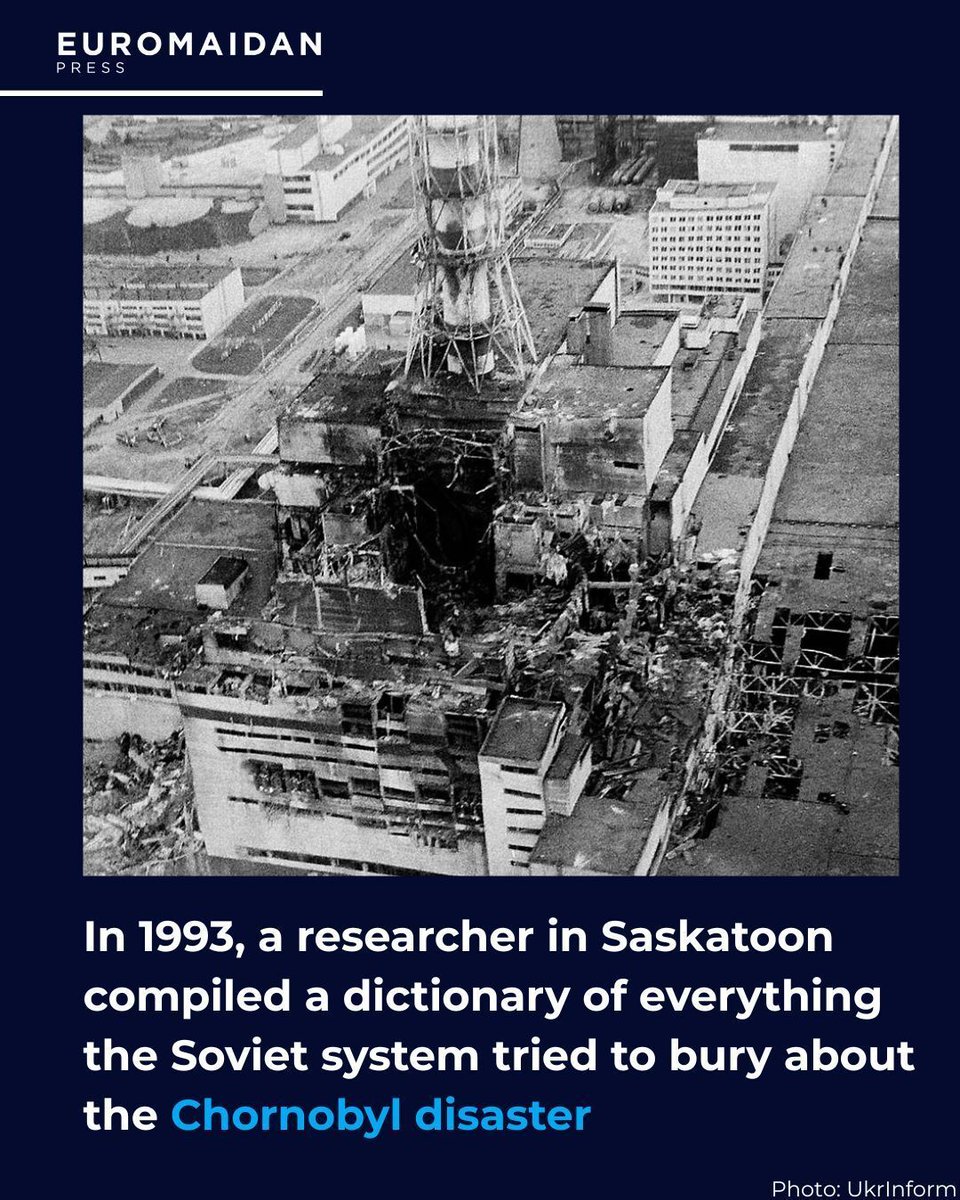
Today is the 40th anniversary of the greatest technological disaster of the 20th century - the explosion at Chornobyl Nuclear Power Plant.
This catastrophe could have had still much more disastrous global impact had it not been a sacrifice of the first responders.
At 1:23 a.m., in 1986, two explosions destroyed the fourth power unit of the station. The reactor was left exposed, and flames, smoke, and radioactive materials were released into the atmosphere. At that moment, no one yet understood the full scale of the tragedy.
Within minutes, the first firefighting crews from Prypyat and Chornobyl arrived at the plant, led by Lieutenants Vladimir Pravik and Viktor Kibenok. Later, the chief of the unit, Leonid Telyatnikov, joined the firefighting efforts.
They faced a task the significance of which would only become clear later: to prevent the fire from spreading to the adjacent third power unit. Had the fire spread further, the consequences for Ukraine and the whole of Europe could have been incomparably worse.
The firefighters had no special radiation suits and no accurate data on radiation levels among the scorching fragments of graphite and metal. All they had were canvas uniforms, helmets, and water hoses.
The firefighters worked almost blindly. They climbed external ladders to the roof, laid out hoses, sprayed water, and extinguished dozens of fire hotspots.
These hours would later be called a feat of heroism. For them, however, it was simply a job that had to be done at any cost. They did not know they were already receiving lethal doses of radiation.
By morning, the fire was contained. Those few hours were decisive. They provided the opportunity to begin the further cleanup of the accident and to prevent a much more catastrophic scenario.
In the first hours after the accident, 28 firefighters fought the reactor that night. Six of them: Pravik, Kibenok, Ignatenko, Vashchuk, Tishura, and Titenok - received doses incompatible with life. They were buried in sealed zinc coffins under concrete slabs.
Following them, thousands of liquidators arrived in Chornobyl - engineers, military personnel, medics, and miners. They cleared the contaminated territory, dropped sand and boron from helicopters, and built a sarcophagus over the destroyed reactor. But it was those very first hours that determined whether the world would have time for that struggle.
On the 10th anniversary of the tragedy, a monument titled "To Those Who Saved the World" was installed in Chornobyl in honor of the accident's liquidators. This is no exaggeration. Were it not for their heroism, the radioactive cloud that spread to the west and northwest could have been thousands of times denser.
The consequences were felt even in the United States, but a catastrophe of planetary scale was avoided only thanks to the self-sacrifice of those first liquidators.
Forty years later, Chornobyl remains a reminder of the price of technological errors and human responsibility - but also a reminder of the people who were the first to face the fire at the nuclear plant and who did everything in their power to ensure the disaster did not become even worse.