Naka-pin na Tweet
Garrick Sapp
14.3K posts

Garrick Sapp
@ricksapp
Writer. American. Veteran. "To call it a rebellion is to speak ignorantly; to call it treason is to add viciousness to stupidity." -Edwin Alderman-
Mississippi, USA Sumali Nisan 2009
355 Sinusundan2.8K Mga Tagasunod

@Bunkerdome @WolfeGlenda As soon as a State seceded they were never going to take a slave into an American territory or get assistance with getting runways back. To your point, there are many questions and facts that make "the war was about slavery", nonsense.
English

The win condition is the policy the war is fought over.
If the South seceded but gave up slavery would the North have won? If slavery continued but the South failed to secede would they have won?
This question destroys the north’s narrative. I have seen academics to life long history buffs short circuit and lose their temper over it.
English

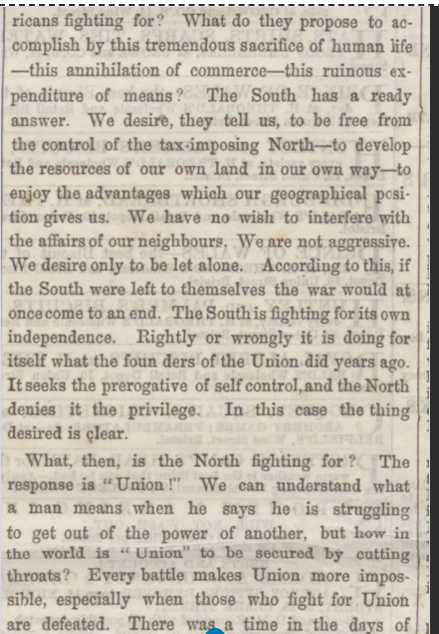
The American Civil War was fought over slavery. Don't make me laugh. English papers in 1861 did not have the cartoonish views of today.
Why is the South fighting?
"We desire to be free from the control of the tax-imposing North--to develop the resources of our own land in our own way to enjoy the advantages which our geographical position gives us. We have no wish to interfere with the affairs of our neighbours, We are not aggressive. We desire only to be let alone."
The North?
"The response is 'Union !' We can understand what a man means when he says he is struggling to get out of the power of another, but how in the world is 'Union' to be secured by cutting throats?"
The Western Daily Press, England, August 27, 1861

English

@Whisky_Patriot So there was a conspiracy to lie about the reason for fighting. They didn't want to offend anyone?
English

@ricksapp England depended on the slave labor cotton from the south, and trade agreements with the South where they sold all of the gin & farm machinery needed on the plantations - and thousands of Enfield rifles during the war. Of course British press was sympathetic at the time.
English

@ricksapp Can we see the beginning of this document? Or is that the part that destroys your argument?
English

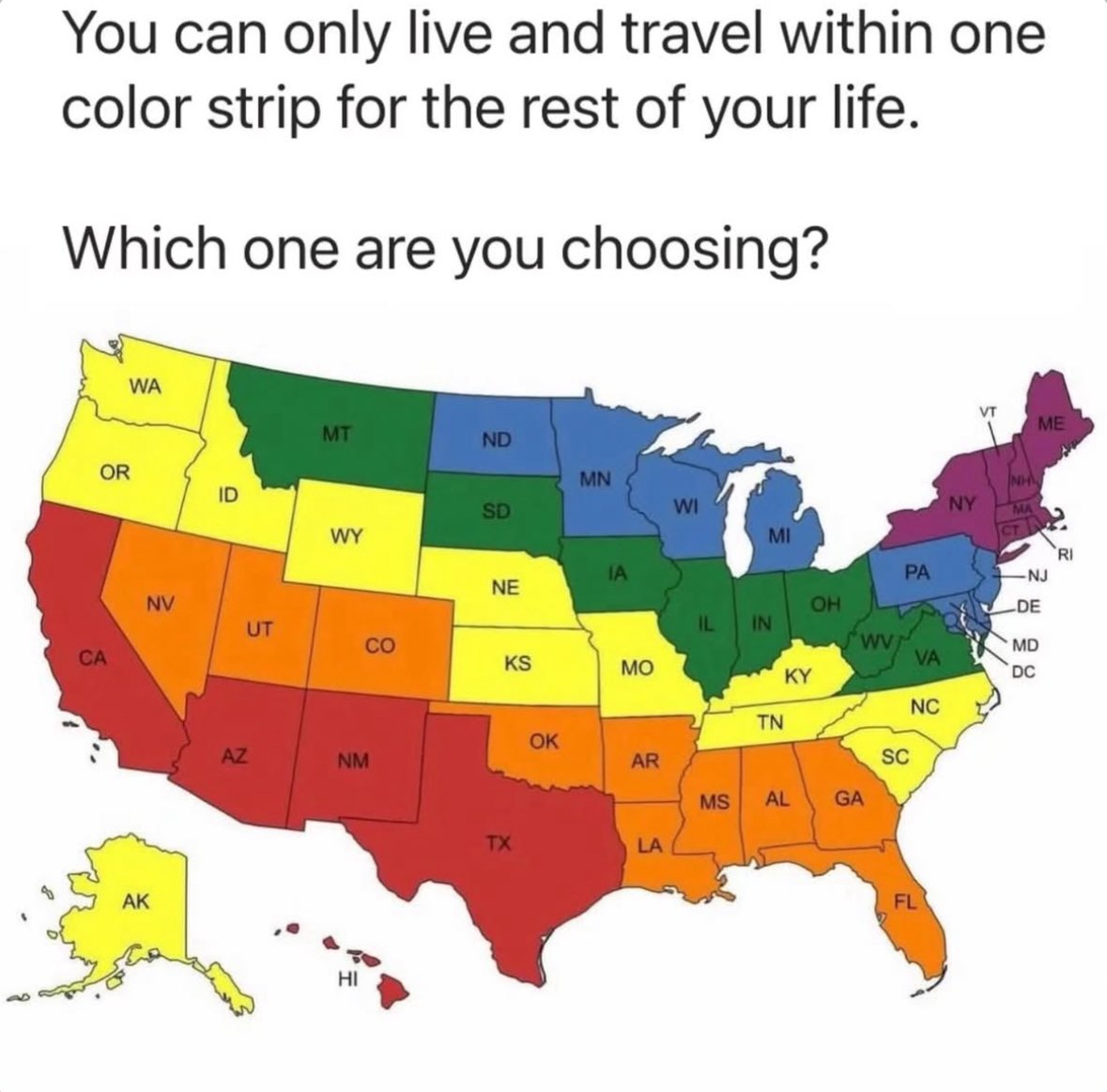
What do you down east people have against Arkansas? Arkansas is easily more Southern than VA
General Will@GamecockWill69
Black Line: The South Red Line: The Deep South NUFD

English

Trump Hasn’t Lost His Voters Over Iran
MAGA voters turn out not to agree with the noisy podcasters who oppose the war.
by Karl Rove
wsj.com/opinion/trump-…
English

@AsTG08 @Cernovich This boomer is not happy for the same reasons you are not.
English

@Cernovich Voted for him 3 times. Couldn’t have been a more staunch supporter. He’s made it clear that his priorities are Israel & keeping boomers happy. No deep state arrests, reneged on Epstein files, called affordability a hoax and no mass deportations . I wouldn’t vote for Trump again.
English

@Cernovich They are the same MAGA idiots bad mouthing the South whenever they get the chance. I'm done.
English

@Lorelei1861 @GovernorVA When was the first black elected in New Jersey? Not the 19th century!!!
English

@GovernorVA Blacks weren’t elected during Reconstruction they were installed by military force. You’re a filthy carpetbagger who has no business in Virginia.
English

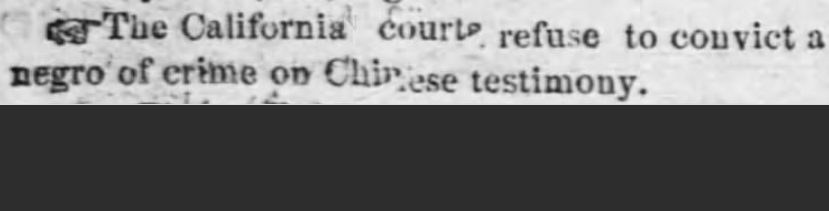
It is incredible to me how little @VDHanson knows about California history. He likes to bad mouth the South, but does he know that white supremacy was a priority in California?
Ashtabula Weekly Telegraph, Ohio, Dec 21, 1867

English

@patsdaur40904 Exactly. I actually feel a little ashamed that I didn't figure it out sooner. I was too focused on career and wasn't paying attention.
English

My reaction to posts like this today is nothing like it would have been 25 years ago. Then I would have said, "well, we have come a long way". Now, I think about how effective communists are, what a mess we have today, and how correct the "racists" were in the 1950/60s.
AFRICAN & BLACK HISTORY@AfricanArchives
Dorothy Counts being jeered and taunted by her white peers. She was one of 4 Black students to integrate Charlotte, NC schools in 1957. Due to violence from white students, she left the school 4 days later.

English

@2ndMississippi Brilliant, Mr. Brasher. I have said it before. I wish you would stray into culture and politics more often.
English

The Allure and Burden of the "Lost Cause"
[A note before we begin: I come from deep Confederate Southern roots, and I know the phrase "Lost Cause" carries freight it was never meant to bear. I don't mean here the postwar mythology that whitewashed history or excused what cannot be excused. I mean something older and larger — the thing that Margaret Mitchell and Robert Heinlein and C. Vann Woodward and Shelby Foote and William Faulkner all circled around in their different ways: the strange enduring human pull of causes carried forward even in defeat. I don't normally stray far outside strictly military history, but while I study and write about Atlanta's fall and recall how 'Gone with the Wind' fixed it in memory.... all this makes me occasionally take time and pause to think through what the South's memory of loss did to its literature, its music, its voice.]
There is a curious power in a lost cause. Not the kind of power that wins battles or changes governments — the other kind, the kind that outlasts victory, that gets under the skin of a people and won't let go.
History knows this. Literature knows it. Even science fiction has grappled with it. Defeat leaves a mark that triumph somehow doesn't. Victories get celebrated, then filed away and half-forgotten. Losses endure. They become identities.
Margaret Mitchell understood. When she put words in Rhett Butler's mouth — her roguish, half-cynical hero who had seen through the Confederacy from the start — she gave him the line that would echo longer than anything else in 'Gone with the Wind':
"I'm going to join the army. … I've always had a weakness for lost causes once they're really lost."
Clark Gable delivered it in the 1939 film almost word for word, and it landed just the way Mitchell meant it: half-romantic, half-rueful, a recognition that there's something noble, even seductive, about throwing your lot in with a cause that cannot win. Not nobility in the cause itself, mind you. Nobility in the gesture — in the going forward when the end is already written.
Three decades later, Robert A. Heinlein circled the same truth from a different angle. In 'The Moon Is a Harsh Mistress,' his philosopher-revolutionary Bernardo de la Paz — guiding a Lunar rebellion against Earth that had no business succeeding — put it this way:
"Revolution is an art that I pursue rather than a goal I expect to achieve. Nor is this a source of dismay; a lost cause can be as spiritually satisfying as a victory."
Where Rhett saw romance, the Professor saw dignity. Principle mattered even when it lost. Maybe especially when it lost. In both cases, defeat became not just an end but a kind of transcendence.
These are fictional voices, but they resonate because they're rooted in something real. The South knew it before Mitchell or Heinlein ever set pen to paper. William Faulkner, who carried the South's ghosts in his bones, wrote it plainest in 'Requiem for a Nun':
"The past is never dead. It's not even past."
For Faulkner, defeat wasn't abstract. It was woven into the fabric of the present — individuals and families and whole communities laboring in webs spun long before their time, bound by consequence and memory they didn't choose but couldn't escape. The Confederacy's loss wasn't a closed chapter. It was a living ghost.
C. Vann Woodward gave this sensibility its scholarly form in 'The Irony of Southern History.' He argued that the South bore a burden the rest of the United States did not — couldn't, really, because the rest of the country had never known total defeat. While the nation at large celebrated triumphs and expansion and exceptionalism, the South carried humiliation, poverty, racial crisis, and the plain fact of having been conquered. Woodward put it this way:
"Southern history, unlike American, includes large components of frustration, failure and defeat. It includes not only an overwhelming military defeat but long decades of defeat in the provinces of economic, social, and political life."
That's not sentiment. That's fact. The South lost the war, then lost the peace, then spent generations losing arguments about what it all meant. Defeat piled on defeat until defeat itself became the defining experience.
Shelby Foote — novelist turned historian, Southerner to the marrow — said it even simpler in Ken Burns' 'The Civil War':
"As a Southerner I would have to say that one of the main importances of the War is that Southerners have a sense of defeat which none of the rest of the country has."
Where Woodward dissected irony, Foote described feeling. That sense of defeat became a cultural inheritance, passed down not in history books alone but in songs, in humor, in manners, in the way people talked about time itself.
Taken together — Rhett Butler's gallantry, Heinlein's philosophy, Faulkner's haunted prose, Woodward's historical irony, Foote's cultural lament — these voices converge on a single truth: defeat carries its own kind of permanence. Victories can be celebrated and then forgotten. Losses endure. They become identities. They inspire literature and music, color politics and culture, shape how people see themselves in the stream of history.
For the American South, that defeat was the Civil War.
The Midwest remembers sacrifice and Union preserved. The West folded the war into its larger frontier myth. The North celebrated vindication. But the South? The South lives with memory of catastrophe. Its cause wasn't merely lost — it was woven into identity itself, inseparable from the question of what it meant to be Southern at all.
That's why the South produced so much of the nation's most powerful literature, music, cultural expression. Because it carried the burden of memory. The blues, with its mournful beauty. Country ballads of loss. Faulkner's haunted Yoknapatawpha County, where every field held a ghost and every family carried a curse. All threads in that web.
The past is not past.
And in the South, defeat proved as enduring — perhaps even more spiritually satisfying — than victory.
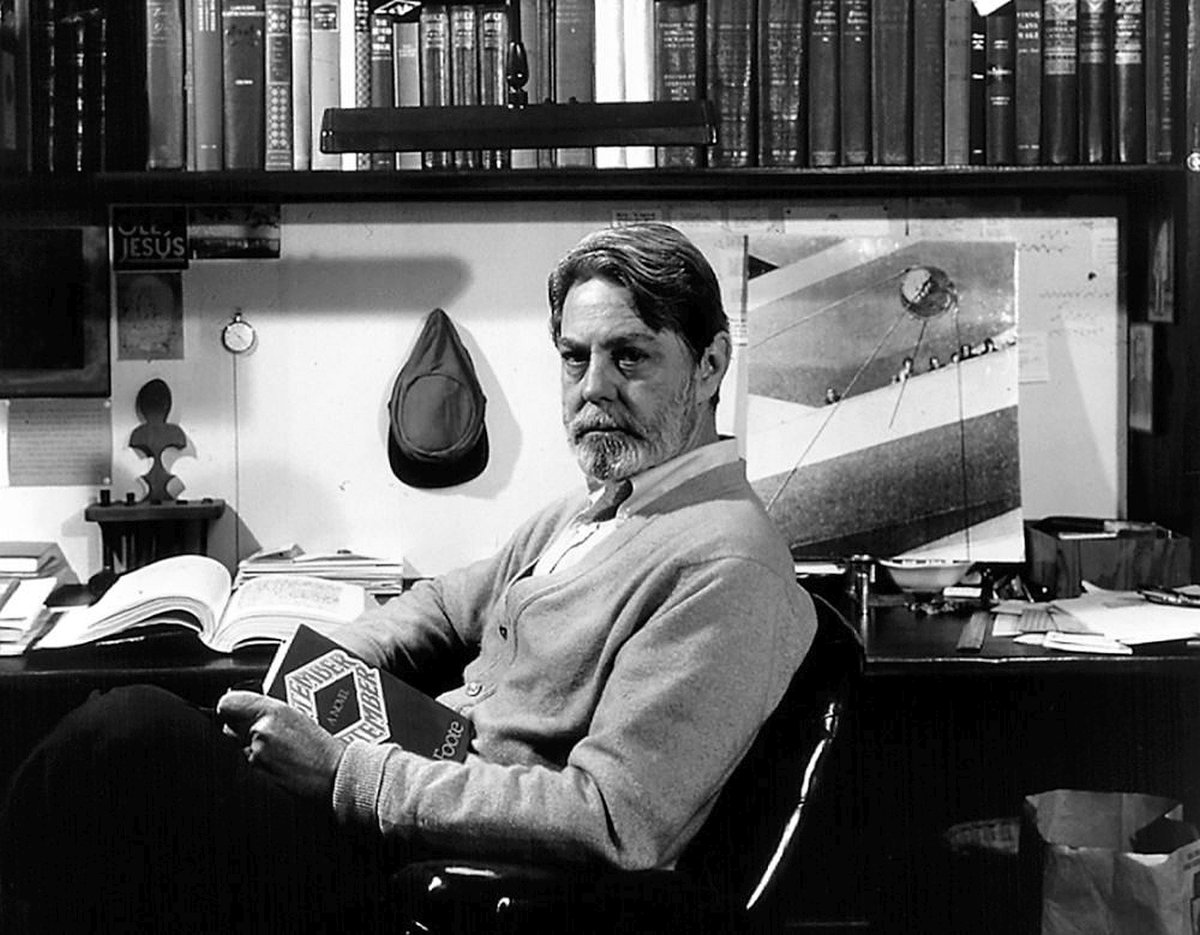
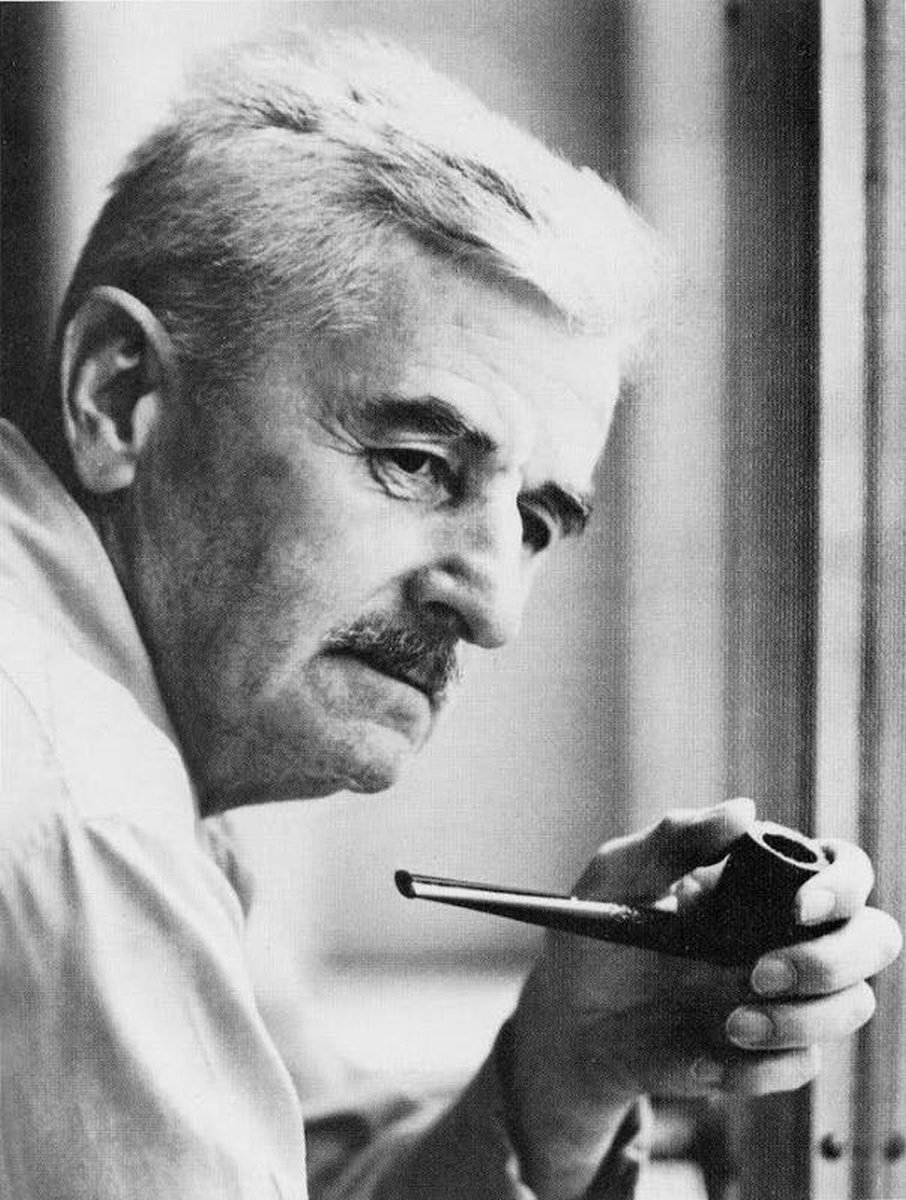
Shelby Foote and William Faulkner


English

@2ndMississippi Mike can this be saved I don't see the icon. Cheers
English

@nypost Don't believe it. Wouldn't matter if I did. Trump is wrong this time. He should have stuck to his anti-war instincts.
English

Republicans overwhelmingly back Trump over Tucker Carlson, Megyn Kelly on Iran war, poll finds trib.al/EE9887D

English

@elonmusk Grok might get to the truth if you know enough about the topic to force it there. Otherwise, you get the same slop all the other LLMs give you. The loudest, most prevalent voices which of course are the Marxists.
English

Based just means knowing and saying the truth
The Rabbit Hole@TheRabbitHole
@elonmusk So far Grok is the most based AI tool
English