
Naka-pin na Tweet
S◎L HUFF
1.9K posts


S◎L HUFF
@sol_huff
Market structure & liquidity BTC • ETH • SOL Thinking in cycles, not candles
Sumali Mart 2022
23 Sinusundan1.9K Mga Tagasunod
@CoinMarketCap Gold is fully owned. Bitcoin is barely allocated. That gap is the story.
English

LATEST: 📈 Pantera Capital CEO Dan Morehead says Bitcoin will massively outperform gold over the next decade, as institutional exposure to BTC remains minimal, with median holdings at "literally 0.0."

English
@Cointelegraph Money isn’t leaving crypto, it’s rotating. That distinction matters more than the headline.
English

🇺🇸 ETF FLOWS: ETH, SOL and XRP spot ETFs saw net inflows on Feb. 3, while BTC spot ETFs saw net outflows.
BTC: - $272.02M
ETH: $14.06M
SOL: $1.24M
XRP: $19.46M

English
@anndylian Markets reward numbers short term, but communities win long term.
English
@coinbureau That’s not panic buying, that’s conviction buying. Paper losses only matter if the thesis breaks.
English

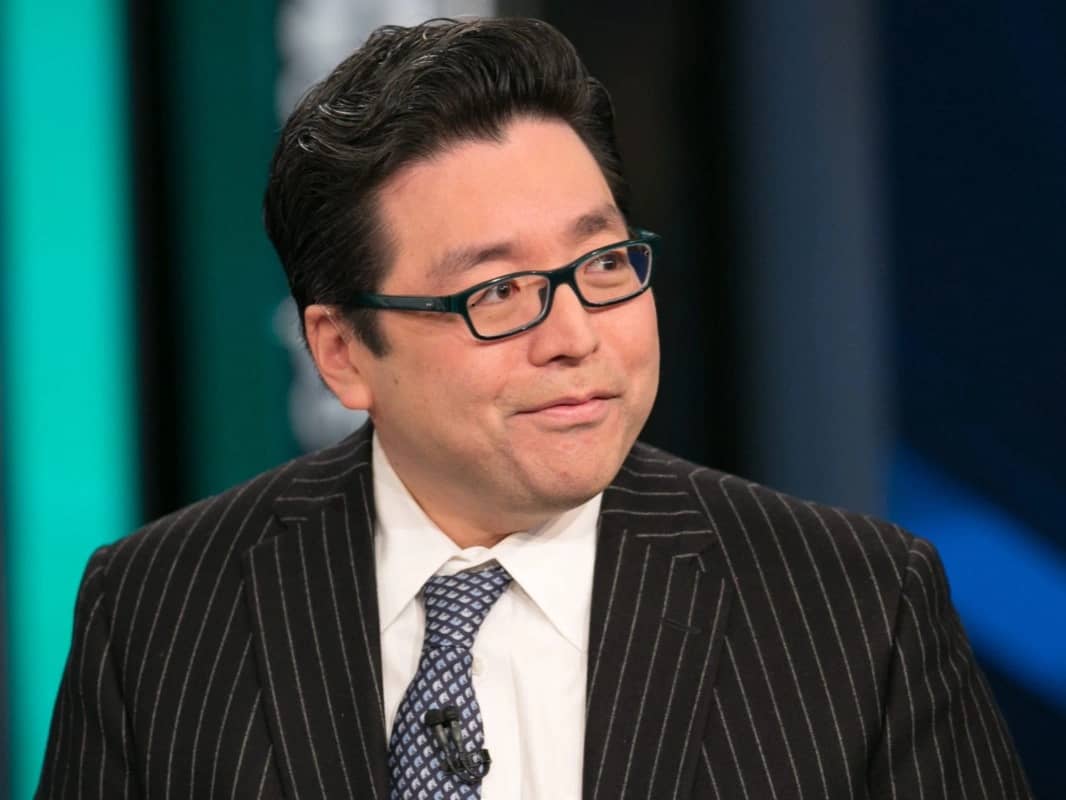
🚨BITMINE BUYS $40M OF ETH DESPITE $6.5BILLION LOSS
Tom Lee’s Bitmine is sitting on $6.5B paper losses after buying ETH at an average price around $3,650, YET just added another $46Million in ETH.
English
@VitalikButerin This is the clearest admission yet that “L2 = scaling” was oversimplified. L1 scaling changes the game. L2s now need real differentiation, not just branding.
English

There have recently been some discussions on the ongoing role of L2s in the Ethereum ecosystem, especially in the face of two facts:
* L2s' progress to stage 2 (and, secondarily, on interop) has been far slower and more difficult than originally expected
* L1 itself is scaling, fees are very low, and gaslimits are projected to increase greatly in 2026
Both of these facts, for their own separate reasons, mean that the original vision of L2s and their role in Ethereum no longer makes sense, and we need a new path.
First, let us recap the original vision. Ethereum needs to scale. The definition of "Ethereum scaling" is the existence of large quantities of block space that is backed by the full faith and credit of Ethereum - that is, block space where, if you do things (including with ETH) inside that block space, your activities are guaranteed to be valid, uncensored, unreverted, untouched, as long as Ethereum itself functions. If you create a 10000 TPS EVM where its connection to L1 is mediated by a multisig bridge, then you are not scaling Ethereum.
This vision no longer makes sense. L1 does not need L2s to be "branded shards", because L1 is itself scaling. And L2s are not able or willing to satisfy the properties that a true "branded shard" would require. I've even seen at least one explicitly saying that they may never want to go beyond stage 1, not just for technical reasons around ZK-EVM safety, but also because their customers' regulatory needs require them to have ultimate control. This may be doing the right thing for your customers. But it should be obvious that if you are doing this, then you are not "scaling Ethereum" in the sense meant by the rollup-centric roadmap. But that's fine! it's fine because Ethereum itself is now scaling directly on L1, with large planned increases to its gas limit this year and the years ahead.
We should stop thinking about L2s as literally being "branded shards" of Ethereum, with the social status and responsibilities that this entails. Instead, we can think of L2s as being a full spectrum, which includes both chains backed by the full faith and credit of Ethereum with various unique properties (eg. not just EVM), as well as a whole array of options at different levels of connection to Ethereum, that each person (or bot) is free to care about or not care about depending on their needs.
What would I do today if I were an L2?
* Identify a value add other than "scaling". Examples: (i) non-EVM specialized features/VMs around privacy, (ii) efficiency specialized around a particular application, (iii) truly extreme levels of scaling that even a greatly expanded L1 will not do, (iv) a totally different design for non-financial applications, eg. social, identity, AI, (v) ultra-low-latency and other sequencing properties, (vi) maybe built-in oracles or decentralized dispute resolution or other "non-computationally-verifiable" features
* Be stage 1 at the minimum (otherwise you really are just a separate L1 with a bridge, and you should just call yourself that) if you're doing things with ETH or other ethereum-issued assets
* Support maximum interoperability with Ethereum, though this will differ for each one (eg. what if you're not EVM, or even not financial?)
From Ethereum's side, over the past few months I've become more convinced of the value of the native rollup precompile, particuarly once we have enshrined ZK-EVM proofs that we need anyway to scale L1. This is a precompile that verifies a ZK-EVM proof, and it's "part of Ethereum", so (i) it auto-upgrades along with Ethereum, and (ii) if the precompile has a bug, Ethereum will hard-fork to fix the bug.
The native rollup precompile would make full, security-council-free, EVM verification accessible. We should spend much more time working out how to design it in such a way that if your L2 is "EVM plus other stuff", then the native rollup precompile would verify the EVM, and you only have to bring your own prover for the "other stuff" (eg. Stylus). This might involve a canonical way of exposing a lookup table between contract call inputs and outputs, and letting you provide your own values to the lookup table (that you would prove separately).
This would make it easy to have safe, strong, trustless interoperability with Ethereum. It also enables synchronous composability (see: ethresear.ch/t/combining-pr… and ethresear.ch/t/synchronous-… ). And from there, it's each L2's choice exactly what they want to build. Don't just "extend L1", figure out something new to add.
This of course means that some will add things that are trust-dependent, or backdoored, or otherwise insecure; this is unavoidable in a permissionless ecosystem where developers have freedom. Our job should make to make it clear to users what guarantees they have, and to build up the strongest Ethereum that we can.
English
@BullTheoryio Crypto overreacts. It goes up with risk and down with fear. This volatility isn't a sign that something's broken, it's just part of the ride.
English

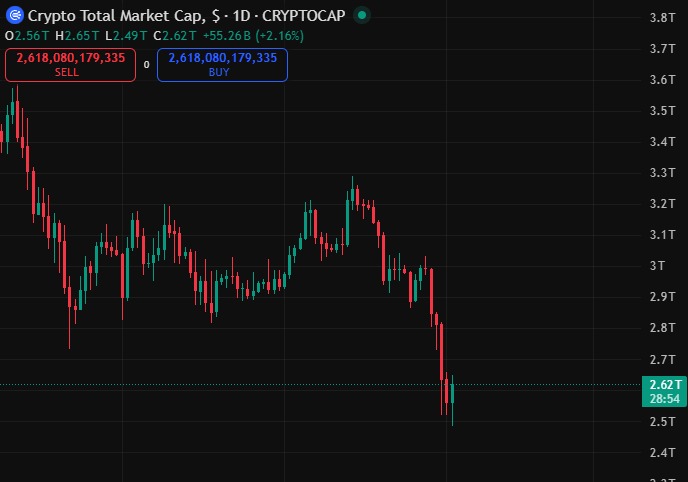
🚨BITCOIN HAS NOW CRASHED OVER $53,000 IN THE LAST 120 days.
From its peak of $126k in October 2025, Bitcoin has dropped to a new yearly low of $73,200
BTC has erased over $1.1 Trillion from its market cap and is down -42% from its all time high.
While the S&P500 and the other U.S. stock market indexes are still near All time high, Bitcoin and crypto remains trapped in a brutal bear market.
S&P 500: -1.50% from ATH
Nasdaq: -3.60% from ATH
Russell: -4.20% from ATH
Bitcoin: down -42% from ATH
ETH : down -56% from ATH
Either this is an insane level of manipulation or something huge has broken behind the scenes in crypto.

English
@valueandtime Too much hype is often the death of a coin. If you know, you know.
English

Remember when everyone said penguin was the next peanut then they nuked it to zero
English
@AltcoinDaily Flushes hurt, but they separate builders from tourists. BTC, ETH, and the few that keep building on the low.
English

Unpopular opinion: Crypto needed this flush out. Too many meme coins, too much garbage with high valuations.
Take the next year to find the quality. Crypto is not going away.
Bitcoin, Ethereum, and what else?
English


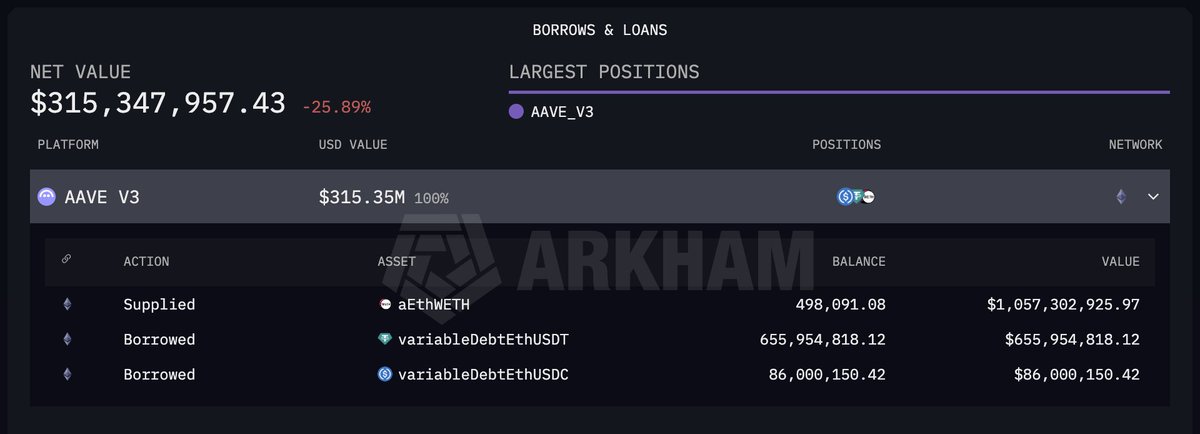
HE’S DOWN $500M .. BUT STILL LONG $1B OF ETH
Jack Yi’s Trend Research is long over $1 Billion of ETH through levered AAVE positions - and as of today they are down $562M on-chain.
Trend Research has deposited $367.8M of ETH into Binance since the start of the month, to try and wind down their positions. Their vault liquidations are estimated to begin at ~$1800 ETH.



English
@Cointelegraph Lol people forget Vitalik is a person, not a price oracle.
English
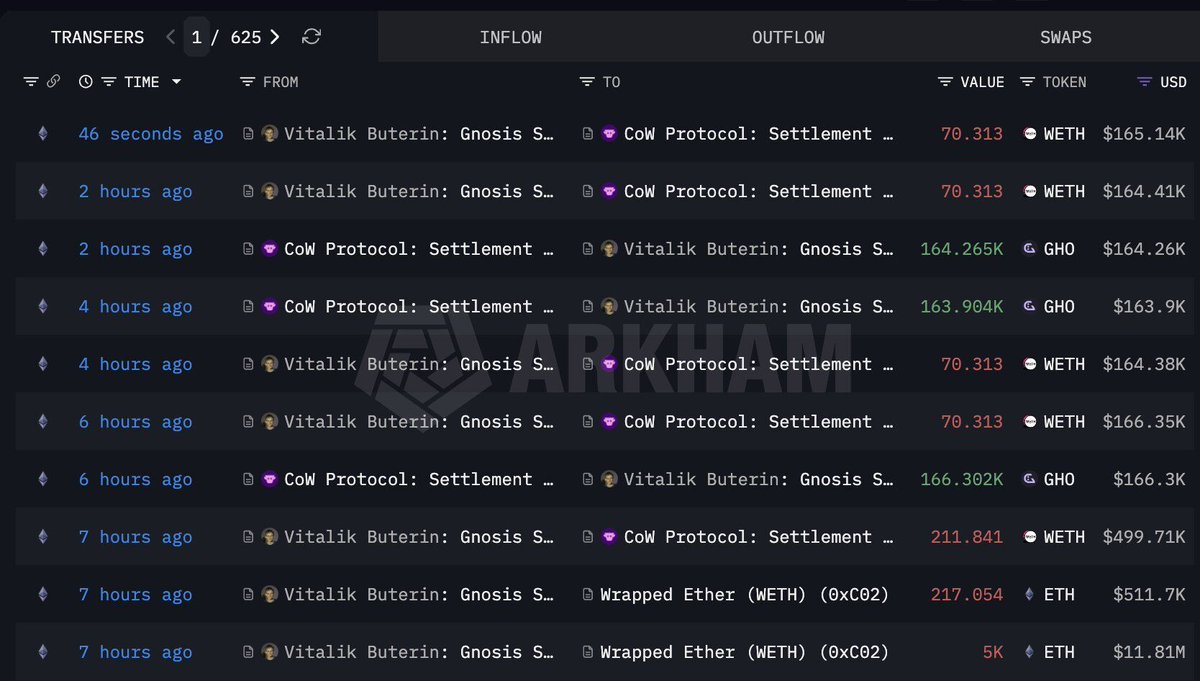
🚨 UPDATE: Vitalik Buterin has sold 493 $ETH worth $1.16M over the past 8 hours.
English
So many complained and fudded but none left the industry.
This is the beauty of #crypto.
English

Crypto funds recorded $1.7B in outflows last week, pushing 2026 year-to-date flows into the red at –$1B.
English

@CryptoKaleo Policy shifts usually come before price. Markets take time to price that in.
English

For the first time in history, America has a president who supports the crypto industry and wants to see it grow.
It's only a matter of time before price catches up to principle.
NOBODY IS BULLISH ENOUGH.
Kalshi Traders@KalshiTrade
JUST IN: Trump says "I'm also working to ensure America remains the crypto capital of the world"
English
@virtualbacon Makes sense. Capital rotates first, Btc usually follows once risk appetite comes back.
English

Gold and silver are taking the spotlight, attracting capital that typically avoids risk.
#Bitcoin doesn’t need to lead every phase, it tends to follow once liquidity rotates.
English
@WhaleInsider That’s the cost of chasing direction instead of managing risk. Liquidity always gets paid first. Rip
English

JUST IN: Over $679,000,000 in long positions liquidated from the crypto market in the past 24 hours.
English