
Naka-pin na Tweet
Elena L.
412 posts



Most home service websites convert at <1%.
Our clients average a 5% conversion rate.
This playbook covers everything I’ve learned about conversion rate optimization after auditing and building HUNDREDS of service business websites.
It contains my 13-step CRO checklist on:
> How to design a hero sections that prints leads
> How to instantly gain a user’s trust with authority signals
> EXACTLY how to optimize for mobile (75%+ of users)
> How to leverage a VSL to attract higher-ticket buyers
> How to close more jobs once the you get the lead
> The most common CRO mistakes I see (and how to avoid them)
Want access to the document?
Like & Comment “CRO” and I’ll DM you the link.
(Must be following to get my DM)
GIF
English
It’s my 34th birthday!! 🥳
if any of my writing or videos etc has ever helped you with anything, I would love love love to hear about it!! 🤓🙏🏾
English
@britton Makes sense, if one can die from a broken heart then one could be restored by a full one. Also, some of the most vibrant and youthful people I’ve met were a couple of Zen teachers in their mid sixties. They had this ageless quality that’s hard to put into words.
English

We increasingly live in a longevity obsessed culture.
What if the best thing we could do for our longevity was less about what we put into our body or subjecting it to extreme temperatures, and more about how we feel towards ourselves and others?
Recently, I had a conversation with Dr. David Hamilton that tells a very different story than what most of the internet would have me believe.
During his time working as a biologist in the pharma industry, David started to notice how the mind seemed to be having a huge impact on health outcomes.
He left the industry and began dedicating his life to researching the mind-body connection.
During our chat he shared the profound body of research that indicates how primary the mind is on our physical functioning.
We talked about the placebo effect, visualization, expectation, and how our thoughts influence the creation of our own endogenous pharmacology.
One place I hadn't heard much about was the impact of kindness on our functioning.
Current research suggests that kindness actually supports longevity in a more powerful way than many of the conventional biohacks you probably read about on the interwebs.
In a recent 6 week study, they found that when people regularly performed loving-kindness meditation, their telomeres stopped declining completely.
This was a far enhanced outcome relative to normal mindfulness practice or the control group.
Research also suggests kindness also lowers blood pressure, stimulates our anti-inflammatory response, and positively impacts hormones in a way that nuetralizes free radicals in the skin.
TLDR Kindness may be better than botox.
Though the research speaks for itself, we can find anecdotes in that "radiant glow" many loving beings seemingly possess.
I wondered what would happen all the time spent in cold tubs, saunas, and sunning ourselves in red light was redirected towards learning to love ourselves and others?
Obviously, you can do both which seems most supportive.
Here's a clip of David talking about one of the studies on kindness and longevity.
English

@the_wilderless Interesting, care to expand a bit? I was under the impression that Tao at its core is minimalist but its expressions aren’t.
English


@strangestloop Yep, I noticed a huge shift in energy & outcomes when I started seeing my problems as inquiries rather than troubles. Playing with semantics and frames is really an underrated form of inner work.
English
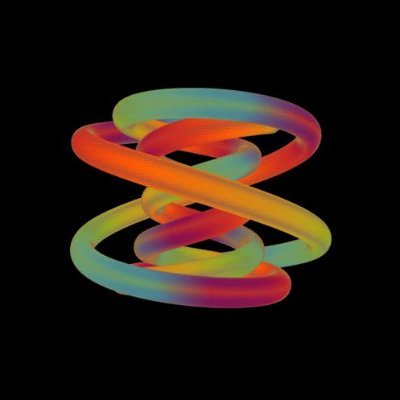
Love your problems. When you give your problems care and attention without needing them to be any different, they might reveal something new or interesting to you. When you need your problems to go away immediately, that resistance strengthens and calcifies them, and they persist
English
@KyKow I’m definitely with you on that children would benefit immensely from learning to explore their inner selves early on. And I also think figuring ourselves out in our 30s makes sense because this sort if thing can’t only be intellectually arrived at, you also need experience &
English

@Prakash70553520 @KyKow the present. And I noticed that while in a certain state I strongly identify with, I tend to remember those things that are in tune with it more than others. Eg: in a state of meaningfulness, I tend to remember things that I used to enjoy or found meaning in.
English
@Prakash70553520 @KyKow Sure. Basically, I see states as psychological conditions or moods that “color” our experience, both in terms of fleeting moments and life stages. So at any given time, we’re in a state (state of happiness, sadness, peace, fulfillment etc) through which we perceive and experience
English
@playbookwork Exactly. And this brings us back to the first point: the default path is broken since it’s largely based on survival. And I think we’re beginning to shift to a more sustainable alternative.
English

@thisiselenal Making money and survival often causes people to make compromises on the work they choose to do. The work is defined by the goals of the company which many times does not align with peoples individual goals.
English
@JasonShen […] means you become open to the truth of it wholly and in a non-discriminating way.
What you do next is up to you. You can sit there and let it be. Or you can move forward and let it go.
English
@JasonShen I think it all comes down to how one sees acceptance, as a passive or as an active state.
This was often discussed in the Zen school I was a part of since there’s this idea that radical acceptance and embracing “what is” equals non-action.
Point is, accepting something just
English
I feel like there’s an inherent conflict between “accept the world as it is” and “all progress depends on the unreasonable man”
The former is the way of mindfulness, of letting go & embracing reality.
The latter is the way of Gandhi, MLK/Malcolm & the civil rights movement.
English
@playbookwork Are they though? Because work (doing) is an aspect of life (being). It’s an expression of who we are. So how do they end up separate or misaligned?
English
@thisiselenal I think it's very hard to align work/life in practice. The goals of each are quite different.
English
@JasonShen If you look deeper though, you’ll see it’s mostly a surface level conflict as they aren’t mutually exclusive. Imo, they are interdependent and they build on each other. Acceptance doesn’t necessarily mean resignation; often, seeing things for what they are & letting go
English