Ryan McLaughlin

53 posts

Ryan McLaughlin banner
Ryan McLaughlin

Ryan McLaughlin

@trystuffco

Divorce mediator by day. AI builder by night. 250+ five-star reviews. Now automating what I learned. Watching conflict and code collide in real time.


Minneapolis, MN Sumali Ekim 2024
110 Sinusundan11 Mga Tagasunod
Jimo
Jimo@JimothySchrude·
Thanks man. My wife owns a cleaning business and has great relationships with the STR and property managers here . The vertical I chose has multiple vantage points and makes sense for alot of reasons around here, but especially to get a warm start. I’m stealing some of your stuff too 😁
English
1
0
1
35
Ryan McLaughlin
Ryan McLaughlin@trystuffco·
I copied @coreyganim’s AI Concierge offer stack. Two strategy calls. Voxer. Notion workspace. Hands-on builds. Built donkeydesk.com in 24 hours. No clients. No revenue. Just live. Can’t just clone though. Already building on top of it. Day 1.
English
2
1
11
1.3K
Jimo
Jimo@JimothySchrude·
@trystuffco @coreyganim My guys! I also got to work last week after finding @coreyganim. Your setup looks awesome Ryan , I took some notes 😎 I have my first pilot customer scheduled for discovery, and then two after that confidentcai.com
English
1
0
2
42
Ryan Doser
Ryan Doser@ryan_doser13·
The biggest AI mistake in 2026 isn't picking the wrong tool. It's marrying one ecosystem before the race is decided. Anthropic is tripling down on coding. Gemini on research. OpenAI needs a market dent. Stay tool agnostic until it settles.
English
2
0
2
97
Ryan McLaughlin
Ryan McLaughlin@trystuffco·
@coreyganim I think the sauce here is less a,b,c agent and more x,y,z distribution strategy to sell the sauce
English
0
0
0
41
Corey Ganim
Corey Ganim@coreyganim·
This is sauce. One thing I’d add: The first agent you build will RARELY be the money maker. We built 4-5 different niche agents before landing on the one the market was willing to pay for (speed to lead agents). But the lessons learned from those first agent builds are what turn the 5th, 10th, 20th agents into a 7 (or 8) figure business.
GREG ISENBERG@gregisenberg

How to build a vertical AI agent cash-flowing startup: find painful workflow in a boring industry → talk to 10 people who do that workflow every day → map every step, every tool, every spreadsheet, every phone call → do the workflow manually first → be the agent before you build the agent → find the edge cases that break everything → document them in obsidian as structured markdown → set up your agent stack → hermes for the harness → obsidian vault as the knowledge base → composio for authentication across apps → build your first 1-3 skills that solve the core pain → use claude code or codex to build the product → use agents to set up other agents → use perplexity MCP and context7 for up-to-date docs → let the agent handle the scaffolding while you focus on the workflow logic → ship the agent to your first 5 customers for free → watch what they actually use it for → they will surprise you → the thing you built for isn't always the thing they need most → build content around the niche → not "building in public" content → useful content → the tips, the shortcuts, the pain points that only someone who does this workflow would know → become the person for that niche → charge per outcome not per seat → per lease renewed, per claim processed, per candidate sourced → the ROI conversation takes 10 seconds when it's tied to a result → set up watchdogs and alerts → your agent emails you when a cron job breaks or a skill fails → the customer should never have to tell you something is broken → connect to open router → see exact costs per model per task → use GPT 5.5 for tool calls → use open source for lightweight tasks → route the right model to the right job → watch your margins double → let hermes write to its own memory after every task → the agent compounds → the longer it runs the better it gets → that accumulated memory becomes your moat → a competitor can clone your product but they can't clone 6 months of context → expand the workflow → you started with one step → add the next → then the next → now you own the entire workflow end to end → you went from a tool to the operating system for that vertical → stack the agents → one agent is a side project → five agents across five customers is a business → each one runs in its own environment → you check in once a day → raise only if you need capital not credibility → most agent businesses should never raise → the margins are too good to give away equity → stay lean → stay profitable → repeat i'm rooting for you


English
5
4
81
11.3K
GREG ISENBERG
GREG ISENBERG@gregisenberg·
how to use Google's NEW open source Design.md + AI Skills to make your startup look like a $100 million company in 1 hour: 1. Design.md is an open source file from Google that captures the soul of a design. Typography, colors, spacing, all in one markdown file. You attach it to your prompt and your agent builds beautiful things every time. 2. Think of it this way. The HTML is the finished dish. The design.md is the recipe. The skills are the ingredients. Put them together and everything you build looks consistent and professional. 3. Don't create a design system from scratch. Find a brand you love. Linear, Stripe, Vercel, whatever resonates. Study it. Use ChatGPT or Claude to help you extract the design language into your own design.md file. 4. Build skills on top of your design.md. A landing page skill. A mobile app skill. A motion design skill. A slide deck skill. Each one references the same design.md so everything looks like it came from the same designer. 5. The biggest mistake people make: they nail one screen and then everything else looks generic. Design.md solves this. One file keeps every page, every format, every medium consistent. 6. Use it across everything. Your landing page. Your app. Your pitch deck. Your promo videos. Same DNA. Same taste. Same system. That's what separates a startup that looks real from one that looks vibe-coded. 7. Build a second brain for design inspiration. When you see something beautiful in the real world or online, capture it. Save it. When you're building something new, reference it. Taste is developed, not downloaded. 8. It's obvious but the difference between a product people trust and a product people bounce from is how it looks and feels. Design.md gives you that edge. you can watch below youtu.be/oLu32YpiIJw?si… shoutout to @mengto for coming on @startupideaspod and walking through his full workflow. if you want to use AI to actually build gorgeous designs, you'll want to use see this. watch
YouTube video
YouTube
English
141
327
3.5K
487.6K
GREG ISENBERG
GREG ISENBERG@gregisenberg·
agreed that the the modern computer probably has to be reinvented 12 "tiny" startup ideas that ride that wave: 1. a "where did I put that" app. you describe what you're looking for in plain english and it searches across every app, folder, email, and slack message you've ever used. no more remembering where things live. 2. a "did this actually work" tracker for AI agent outputs. every time an agent does something for you, you thumbs up or thumbs down it. over time it builds a quality score per agent per task. right now nobody knows which of their agents are actually good and which ones are quietly wasting money. 3. a screen recorder that watches you work and builds SOPs automatically. you do the task once. it writes the playbook. now an agent can do it forever. 4. an AI-native contacts app. it remembers every interaction, every context, every promise made across email, slack, texts, and calls. you say "what did I tell jake last week" and it knows. 5. a "daily briefing" app that reads your calendar, email, slack, and docs overnight and texts you a 60 second summary of what matters today before you open anything. 6. an intent-based screenshot tool. you screenshot anything on the internet and tell it what you want done with it. "order this." "remember this." "send this to my designer." one screenshot, one sentence. basically cleanshotx for mac but actually does the work not just captures the moment (i love this idea who wants to build it?) note: i used @ideabrowser to validate some of these ideas 7. a permissions manager for your AI agents. which agents can access which accounts, what's the spending limit, what requires your approval. nobody is building this and everyone is going to need it. 8. a "rewind for work" that logs every tab, doc, and conversation from your workday and lets you search it like memory. "what was that article I read tuesday about pricing?" found. 9. a dead simple app that sits between you and all your AI agents and tracks what they're spending. token costs, API calls, subscriptions. one dashboard. your AI budget is about to become a real line item. 10. a personal API for yourself. one endpoint that any agent or app can query to know your preferences, schedule, current projects, and communication style. instead of configuring every AI tool separately, they all just call you. 11. an approval feed for agents. every time any AI agent in your stack wants to do something risky, it pings one feed. one place to say yes or no. like a notification center but for agent decisions. 12. an AI-native voicemail. instead of leaving a message, the caller talks to your AI. it asks followup questions, figures out urgency, books the meeting or handles the request. you never listen to a voicemail again. you read a summary with the action already taken. goal: get your creative juices flowing it's time to build i believe in you
signüll@signulll

the craziest part now is that the modern computer probably has to be entirely reinvented, from scratch. pretty much like how jobs & co brought apple ii to market. like not improved. not given a chatbot sidebar or something but really from the ground up like the iphone redefined what it meant to be a pocket computer. the current paradigm for computers was built around a human staring at a screen, moving a cursor, opening apps, managing windows, naming files, remembering where things live, & manually translating intent into interface actions. that made sense when the human was the runtime. but in an ai native world, it starts to look kinda ridiculous. you can see this ridiculousness when you use computer use agents… they are useful sure, but they’re also obviously transitional. they’re teaching ai to operate machines designed for humans, which is clever, but also kind of absurd. it’s like making a robot hand so it can use a doorknob instead of asking why the door needs a knob at all. yes i know humans also need to use a door knob, but maybe in the future humans don’t need to use a computer, or at least what we think of a computer today at all. this all leads to some interesting questions: - what is a file when the system understands context? - what is an app when intent can route itself? - what is a desktop when work can be decomposed, executed, monitored, & summarized by agents? - what is a browser when the agent can retrieve, compare, transact, & remember? - what is an operating system when the primary user is no longer just a person, but a person plus a swarm of delegated intelligences? or no person at all. the old computer assumed navigation. the new computer has to assume a new kind of intention. the old computer organized information. the new computer has to try to organize agency. we’re still in the hacky middle stage at the moment with sidebars, copilots, agents clicking through legacy ui, & automation layers sitting on top of 40 year old metaphors. the new computer is likely one where memory, context, identity, permissions, tools, agents, & interfaces are native primitives. this means desktop, mobile, browser, apps, files, folders deserves another first principles look.

English
80
43
675
99.2K
Ryan McLaughlin
Ryan McLaughlin@trystuffco·
On my podcast, I asked Claude Al what separates average mediators from the legends-from couples blowouts to high-stakes business fights. It revealed the exact mindsets and skills that win every conflict. If your fights never end, this will change everything. Mind. Blown.
Ryan McLaughlin tweet media
English
1
0
0
31
Michael Showalter
Michael Showalter@MikeJShowalter·
@horsewater Started off with default chat then moved to Cowork when it was released. For my litigation practice I have a whole set of skills/plugins in Cowork that the model helped me put together. Have never touched Code (or any code for that matter)
English
1
0
2
487
Noah Igler
Noah Igler@noahiglerSEO·
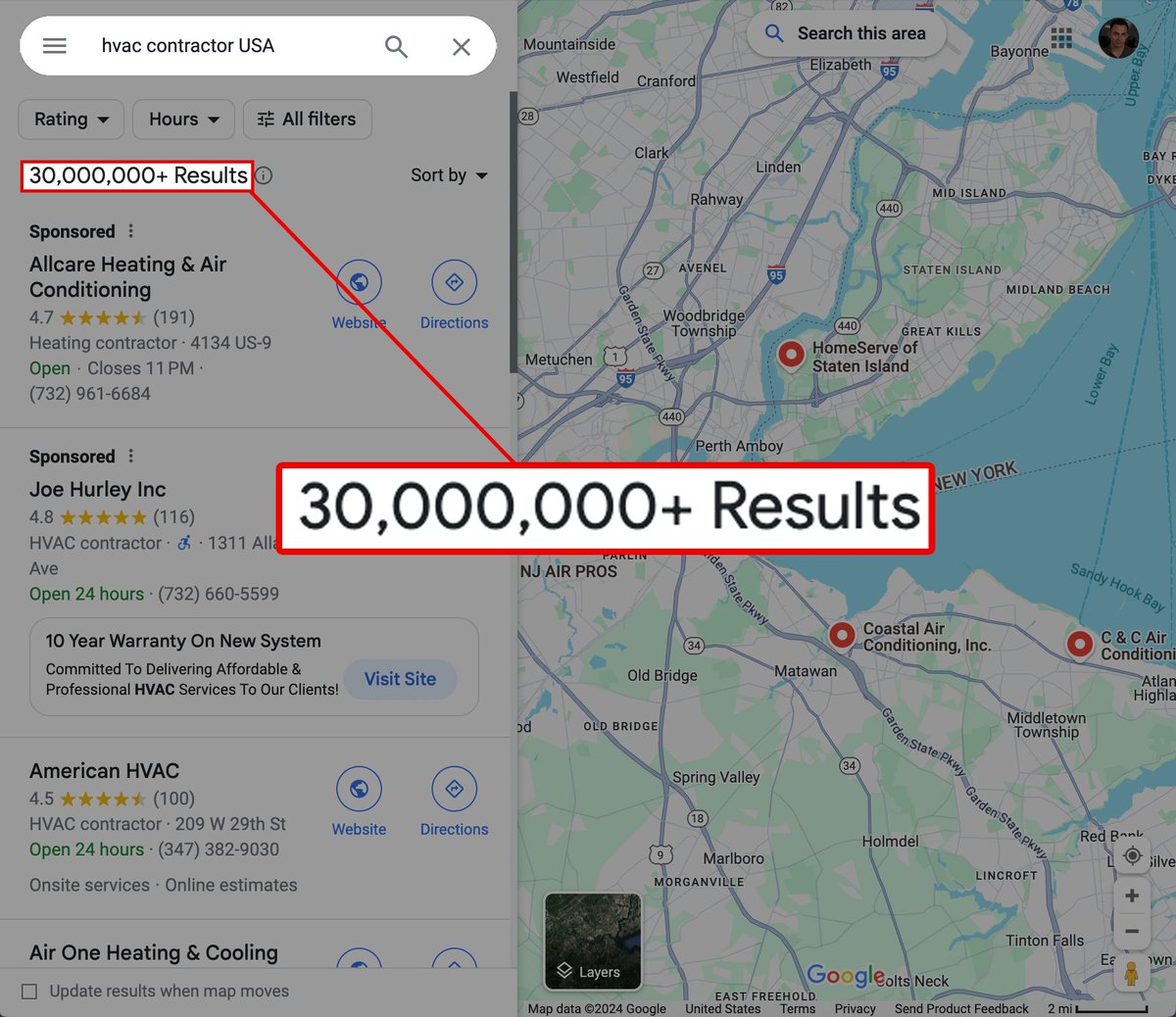
I've helped dozens of home service companies rank top 3 in cities under 200k population. This playbook outlines my ENTIRE ranking strategy we use to dominate small markets where the competition is weaker and nobody else is trying. It covers: > The 3-minute competitive analysis that tells you if your market is easy, medium, or hard > How to legally put keywords in your business name (and outrank guys with 3x your reviews) > The review system that brings in 15-20 reviews per month without begging > Website structure that actually ranks for multiple cities > Citation building done right (quality over quantity) > Month-by-month timeline so you know exactly what to expect > The common mistakes that kill results before they start If you're a own a plumbing, electrical, HVAC, roofing, restoration, remodeling, or similar business, this playbook is for you. Like + Comment "200k" and I'll DM you the link. (Must be following to receive my DM)
GIF
English
258
11
269
15.6K
Setu
Setu@setu_ai_expert·
I MIGHT GET SUED FOR THIS, BUT YOLO: I just found a way to scrape over 200 million local businesses.. You can use this for cold email, cold calling or even door knocking.. And craziest part — IT'S COMPLETELY FREE. Comment "G" and I'll send it to you. (24h only) (DONT SHARE)
Setu tweet media
English
2.1K
179
1.5K
239.9K
Miko
Miko@Mho_23·
i just trained an AI on every alex hormozi book, playbook, blackbook, and podcast episode... he charges $5000 for his AI assistant and people pay it, i'm giving you the same thing for free this isn't some shitty GPT with 3 pages of info that hallucinates answers, NotebookLM is the best AI for consuming and recalling information right now, i fed it EVERYTHING: - $100M offers, leads, money models - the black books (given to people who donated 200 books) - all the playbooks and lost chapters - his best podcast breakdowns and frameworks the information inside is worth thousands it can answer ANY business problem using hormozi's exact frameworks it pulls from the exact books and gives you page-specific answers... no generic advice, no made-up bullshit i should NEVER be sharing this for free, that's why i'll delete this in 24hrs reply 'HORMOZI' + RT and i'll give you access for free (must follow me so i can dm)
English
2.8K
1.7K
3.5K
520.2K
Alex Dees
Alex Dees@alexmdees·
1. FREE AI Visibility Scanner To celebrate our launch, we built the first free LLM visibility scanner. Type in your domain. We’ll show you exactly how (and if) you’re being recommended by ChatGPT, Perplexity, Gemini. RT + Comment "AI" on the launch vid and i'll send it to you.
English
87
47
135
30.3K
Alex Dees
Alex Dees@alexmdees·
Introducing Meridian. 50% of searches are now powered by AI (Think ChatGPT and Gemini) Meridian is the FIRST Visibility Engine to get you ranked #1 by AI. Bold claim? Here's how 👇
English
1.2K
773
3.5K
5.3M
Mohit Mishra
Mohit Mishra@mohitmishr93531·
Get Paid $3,598/Week by Copying & Pasting Text. You just need: Internet Mobile 1 hour a day I'll show you how. Grab my free guide now! Like & Retweet Comment "Need" Ensure to Follow me So that I can DM you FREE
Mohit Mishra tweet media
English
125
68
139
13.1K