Pink Bourbon@pinkbourbon8898
The Cheapest Market No One Wants to Touch.
A note on JCI, the rupiah, and the silence from Senayan
On a pure valuation basis, the Indonesian equity market right now is one of the most asymmetric setups I have seen in this region in over a decade. A 40% drawdown from peak. Multiples that would make a value investor weep with joy. Banks trading at fractions of book. Commodity names priced like the cycle is permanently over. If you put this data in front of any analyst at a different house with no context at all, they’d be banging the table to go long.
And yet here they are. Not buying.
Why Cheap Is Not Enough
Valuation is a mirror. It tells you what the market thinks today. What it cannot tell you is when the story changes. And right now in Indonesia, I cannot point to a single credible signal that the policy environment is improving. Not one. That is the problem.
This is a market that has been repriced by a structural question that nobody in Jakarta seems to want to answer clearly: what is the actual development model this government is running, and who does it serve?
We have watched regulatory uncertainty pile up quarter after quarter. We have watched export policy shift in ways that punish the very sectors that attract foreign capital. We have watched governance at the state enterprise level deteriorate in ways that used to be the kind of thing emerging market investors quietly accepted, until they didn't.
"Cheap markets stay cheap for a long time when the catalyst for re-rating is political. And politics in Indonesia right now is giving me nothing to work with."
The Rupiah and the Silence From Senayan
USD/IDR at 18,050. SGD/IDR at 14,080. These are not numbers you explain away with a Fed rate cycle or global risk-off sentiment alone. The rupiah has been systematically losing credibility because the fiscal and policy signals coming out of Jakarta are, at best, ambiguous. At worst, they are alarming.
What concerns me most is not the exchange rate itself. Currency weakness is manageable. What concerns me is the institutional non-response. The DPR Indonesia's parliament has been conspicuously, almost aggressively, silent. And that silence is doing real damage.
When a currency depreciates this sharply, the population has a right to expect its elected representatives to either explain what is happening, hold the executive accountable, or at minimum ask the hard questions publicly. That is what a functioning legislature does. What we are seeing instead looks like an institution that has either lost the will to check executive power, or has made a quiet political calculation that silence is the safer play.
Neither interpretation is good for country risk. Foreign institutional investors price political risk in ways that go beyond spreadsheets. When we see a legislature go quiet during a macro stress event of this magnitude, the question we ask is: who is actually governing this country, and through what accountability structure? Right now, that question does not have a clean answer.
What Would Change My View
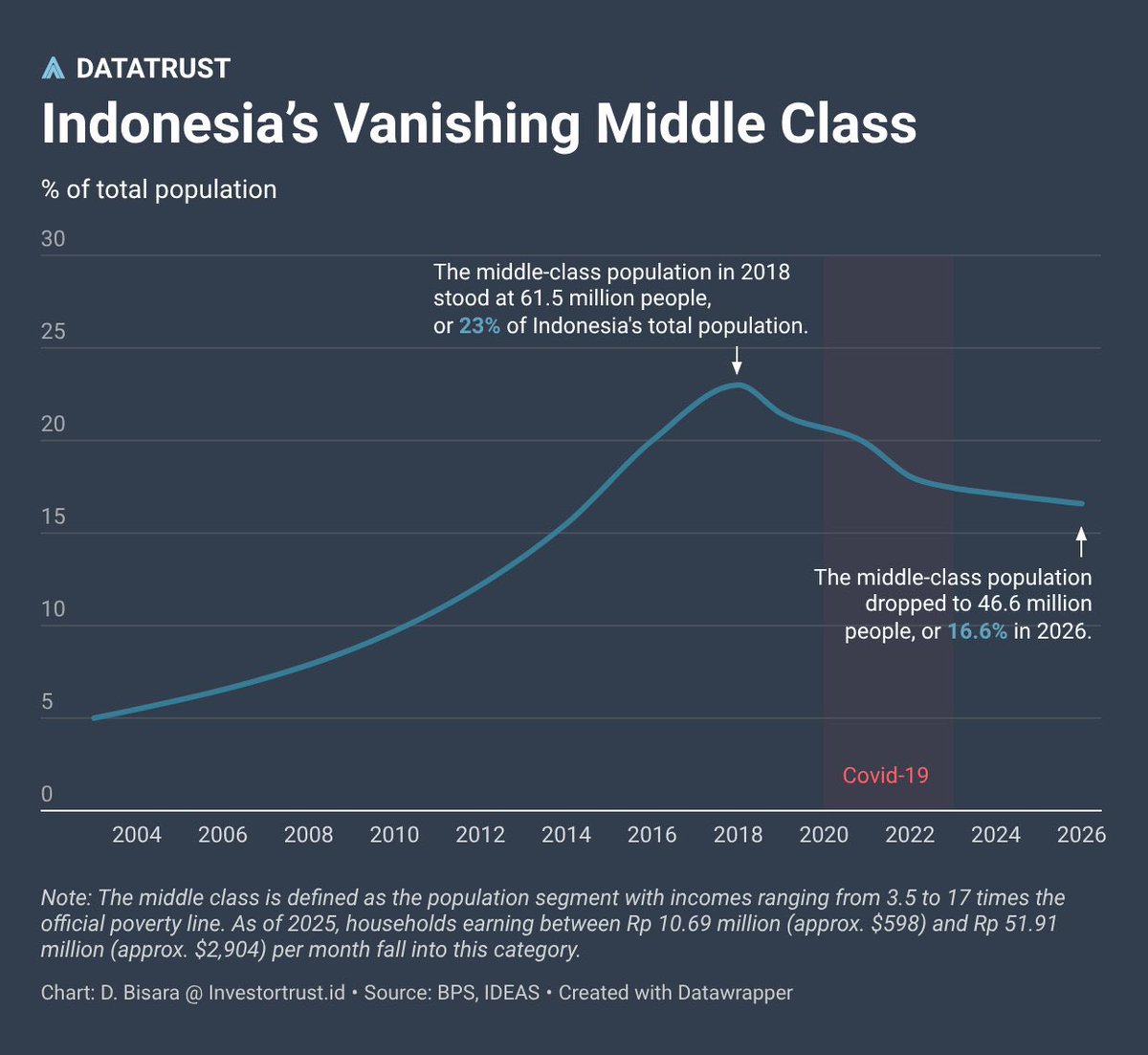
I want to be clear: I am not structurally bearish on Indonesia. The demographic tailwind is real. The commodity endowment is real. The middle class consumption story, however delayed, is real.
What I need to ser is actual evidence that policy is correcting. A credible signal from the executive that investor protection will be respected. A legislature that wakes up and starts performing its oversight function. A Bank Indonesia that is given the operational space to defend monetary credibility without being pulled into political theater. Any one of those three things, if done with conviction, could be the catalyst that re-rates this market fast. Very fast. Because when value this deep meets a credible narrative change, the move will be violent to the upside.
“Bull or bear we all want the same thing.
Indonesia deserves better than this, and I believe it is capable of it.”
God Bless Indonesia