Hassan AU

1.2K posts

Hassan AU banner
Hassan AU

Hassan AU

@Ajeegah

|🇳🇬| |@FULafiaOfficial Alum| |Economics graduate| |SDG-4 Advocate| |Alago| |GGMU|

Lafia, Nigeria شامل ہوئے Eylül 2025
780 فالونگ583 فالوورز
پن کیا گیا ٹویٹ
Hassan AU
Hassan AU@Ajeegah·
When you refuse to respond to lies against you, it'll sooner or later be the truth about you!
English
0
3
17
655
Hassan AU ری ٹویٹ کیا
Duchess of Bourdillon!
Duchess of Bourdillon!@duchessmabboud·
About 80 minutes into yesterday’s final, several Muslims at the lounge I watched it, Arsenal fans and neutrals alike, got up and went to the mosque to pray. Knowing they could miss the end of the match, they still went. That level of discipline is remarkable.👏
English
35
556
4K
76.7K
Hassan AU
Hassan AU@Ajeegah·
Last thing I am reading before bed. Very instructive. As young people, we must understand that the burden of this nation rests with our decisions. If you see yourself living the next 35-45 years, this call is for you!
Chief 🇵🇸 智人@NWali_X

From Critics to Builders: A Message To My Generation. There comes a point in every generation's journey when excuses begin to lose their power. For millennials, that point is now. Most of us are no longer in our twenties trying to find our place in the world. We are in our mid-thirties. We are raising families, building careers, running businesses, serving in public institutions, and increasingly occupying positions of influence. Whether we realize it or not, we are becoming the custodians of our communities and our society. Yet many of us still think and speak as though responsibility belongs primarily to others. We often discuss the failures of previous generations. We criticize poor leadership, weak institutions, corruption, and short sighted decision making. Much of that criticism is valid. But a more important question now confronts us: at what point do we stop focusing on what we inherited and start focusing on what we will leave behind? This is not simply a political question. It is a deeply personal one. Every society reflects the character of its people. The habits we condemn in public life often have smaller versions within ourselves: the tendency to seek comfort over effort, to postpone difficult decisions, to pursue immediate rewards at the expense of long term benefits, or to expect others to solve problems that concern us all. Maturity begins when we stop asking, "Who is responsible?" and start asking, "What is my responsibility?" The challenge facing millennials is not a lack of intelligence. Ours is one of the most educated and connected generations in history. We have access to vast amounts of information. We understand the problems. We discuss them endlessly. But societies are not transformed by awareness alone. Knowledge without action changes little. Talent without discipline achieves little. Vision without responsibility remains only a dream. The truth is that every generation eventually reaches an age where it can no longer describe itself as the future. It becomes the present. For millennials, that transition is already underway. Across Nigeria and much of Africa, enormous challenges remain. We need better governance, stronger institutions, more productive economies, better schools, and safer communities. But these things do not emerge from speeches alone. They are built by ordinary people who consistently choose responsibility over convenience and service over self interest. The real question is whether our generation is prepared to do that work. Will we build businesses that create opportunities for others? Will we strengthen institutions rather than weaken them for personal gain? Will we mentor younger people and prepare them for leadership? Will we think beyond the next election cycle, the next contract, or the next paycheck? Will we be willing to plant trees whose shade we may never enjoy? The temptation of our age is cynicism. Many people have become convinced that nothing can change, that every effort is futile, and that every ideal will eventually be corrupted. Cynicism can sound intelligent, but it rarely builds anything. It often becomes an excuse for inaction. Progress has never been driven by spectators. It has always been driven by people who accepted responsibility for their corner of the world and worked to improve it. That is the challenge before millennials today. Not to be the loudest generation. Not to be the most critical generation. But to be the generation that builds. The future is slowly passing into our hands whether we feel ready or not. The years of preparation are giving way to the years of stewardship. History will not judge us primarily by the problems we inherited. It will judge us by what we did with them.

English
0
1
0
33
Shaun
Shaun@LfcShaunjudge·
Only a sick person will laugh at this...
Shaun tweet media
English
2K
273
4.7K
167.8K
Hassan AU ری ٹویٹ کیا
Kalshingin | Sarkin Dogarai
When people ask you for money, check your budget first. Don’t give what you didn’t plan for.
English

0
1
0
11
Yusuf Dauran
Yusuf Dauran@Usouph·
It’s honestly not fair, that Arsenal were not given a penalty on Madueke in a Champions League Final. And also, the ref blowing the whistle as Arsenal were wasting time getting in formation before taking a corner, totally not fair, despite seeing how Arsenal were struggling with just 2 shots against PSG’s 16 in the whole 120mins of the game, with a possession of 25/75. Arsenal were really robbed 🥲 But you know what? THAT IS EXACTLY WHAT IAM EXCITED ABOUT 😂😂😩😩😩😩😭😭😭🤣🤣
English
11
5
15
2.2K
Hassan AU ری ٹویٹ کیا
Kalshingin | Sarkin Dogarai
Early days of finanical plan building require brutal consistency and doggedness until it becomes second nature
English
0
1
0
12
Hassan AU ری ٹویٹ کیا
Kalshingin | Sarkin Dogarai
If you think your Salary isn’t enough but expenses keep rising. You have forgotten that Income is just one lever. Expenses are the other. Start tracking both instead of complaining about one
English
0
1
0
20
Hassan AU
Hassan AU@Ajeegah·
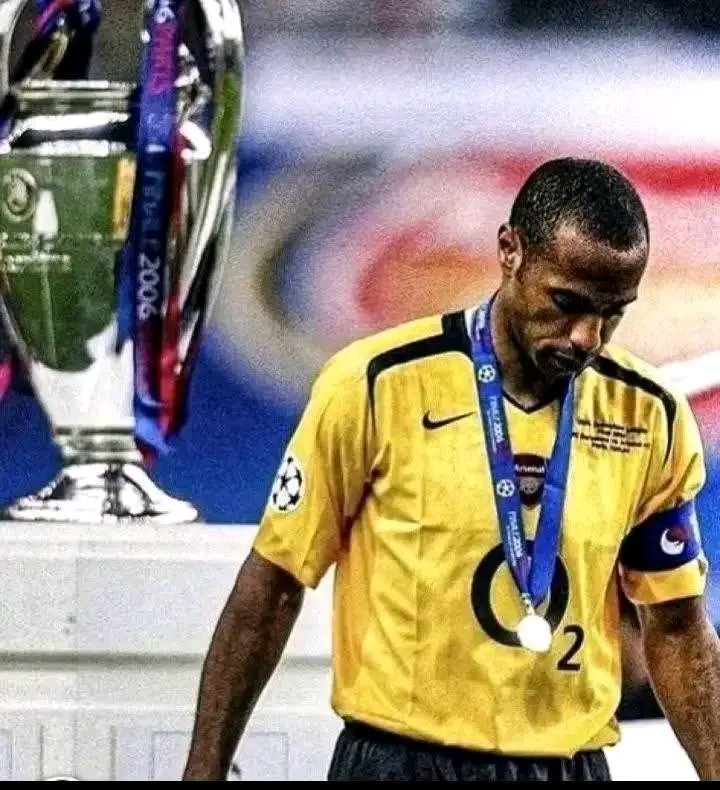
Arsenal had the repeat of the last time they were here.
Hassan AU tweet media
English
0
0
0
21
Hassan AU
Hassan AU@Ajeegah·
Goaalllll
Nederlands
0
0
0
4
Hassan AU
Hassan AU@Ajeegah·
Why didn't PSG players protest to get that penalty?
English
0
0
0
44
Hassan AU
Hassan AU@Ajeegah·
The damage that insecurity has done to our psyche will take us long to get out of it if it ever ends. A report of hundreds of people getting killed or kidnapped no longer move us. There was a time some of us couldn't sleep due to report of insecurity. Be it in Zamfara or Borno.
English
0
0
0
4
BELLO
BELLO@starbossZamani·
Kaduna to Kano has the best road in the North.
BELLO tweet media
English
6
2
10
1.5K
UNCLE DEJI™️
UNCLE DEJI™️@DejiAdesogan·
𝗚𝗼𝘃𝘀 𝗰𝗼𝗻𝘀𝗶𝗱𝗲𝗿𝗶𝗻𝗴 𝗡100,000 𝗻𝗲𝘄 𝗻𝗮𝘁𝗶𝗼𝗻𝗮𝗹 𝗺𝗶𝗻𝗶𝗺𝘂𝗺 𝘄𝗮𝗴𝗲
English
54
72
433
37.4K
Hassan AU
Hassan AU@Ajeegah·
This is quite the case.
Gimba Kakanda@gimbakakanda

What Non-Law Students Miss About Law Modules We can dismantle the superiority complex of any profession without trivialising its qualifying process. Those of you citing your A grades in law modules taken as electives, or in law-related modules taken from another faculty, to prove that Law is an easier discipline are probably doing so out of blissful ignorance. The law modules taken as electives, or as service courses outside the Faculty of Law, are watered-down versions of what is taught to Law students. I know this because I have experienced both. When I applied to study Law as a direct-entry student, I tendered a transcript containing modules such as Nigerian Legal System, which are mandatory for the study of Law, and sought waivers because I had A grades in all the law modules I had taken as a Political Science student. That application was rejected. The reason given was that the content of the law modules I took in my non-law degree was an intentionally diluted version, and that I could not have been assessed as I would have been if I were a Law student. It took me just one semester to understand the difference. The same modules I had taken were not of similar academic demand, even though, for instance, my Nigerian Legal System lecturer was a retired High Court judge who had recently served as Attorney-General and Commissioner for Justice. He was uncompromisingly strict, to the point of boasting that none of us would secure an A grade in his module. I think only two of us in a class of over 60 achieved it. Yes, he was strict in teaching non-law students, but the requirement to master specific cases, statutes and various legal principles in a non-law degree was not of the same measure as what I would later experience in the Faculty of Law. It then made sense that the Law Faculty had rejected my application. If I had not gone back for an LL.B. programme, I would probably have subscribed to the mindset that, having secured A grades in law modules as a Political Science student, I possessed the same mastery of those modules as Law students. So, these Commercial Law, Taxation Law, Company Law, and Law of Contract modules you took as non-law students, and now cite as proof that law modules were easy, are not of the same intensity as what is taught in the Faculty of Law. The academic demands are not similar either, and I say this with experiential authority. Law is demanding, academically and professionally. But I also think it is ridiculous to persist in bragging that a particular discipline is tougher than others when you have not functioned in that other discipline. No degree should be measured by the scale of suffering it took to achieve it. Most of the comparisons trending on social media are projections of professional bias and arrogance, and they are largely baseless. If you judge a devoted medical doctor by his knowledge of astronomy, you are going to be disappointed, just as you would be if you judge an economist by his understanding of applied law. Every discipline is relevant in its own way, and outside it, its practitioners are bound to falter or stutter. A lawyer may develop expertise in health law, but that does not confer deeper knowledge of medical procedures than a medical doctor possesses. By the same token, accountants cannot claim greater mastery of taxation law, with its attendant cases, statutes, and interlocking principles, than lawyers, who bring a broader, more nuanced, and more rigorously tested understanding of law and its overlapping doctrines, extending well beyond any single sub-field.

English
0
0
0
17
Hassan AU
Hassan AU@Ajeegah·
Accountants VS Lawyers Interesting 😁😀😀
English
0
0
0
6