@AlanHop22@TonyBellew@TaylorMadeTour You heard it from the big lad himself! Limbs pal, you won't be walking of the 1st green let alone putting on it ⛳️🏌♂️
Who wants to win one of these beauties! Like this and Tag a mate in a comment below and make sure you're following myself and @TaylorMadeTour! TaylorMade will pick a winner on Monday. Good luck
💙🏌️♂️💛
A gymnast performing and giving her 100%, while her parents witnessing from the stands, making strength and nerves on edge. Support of parents is eternal throughout the life.
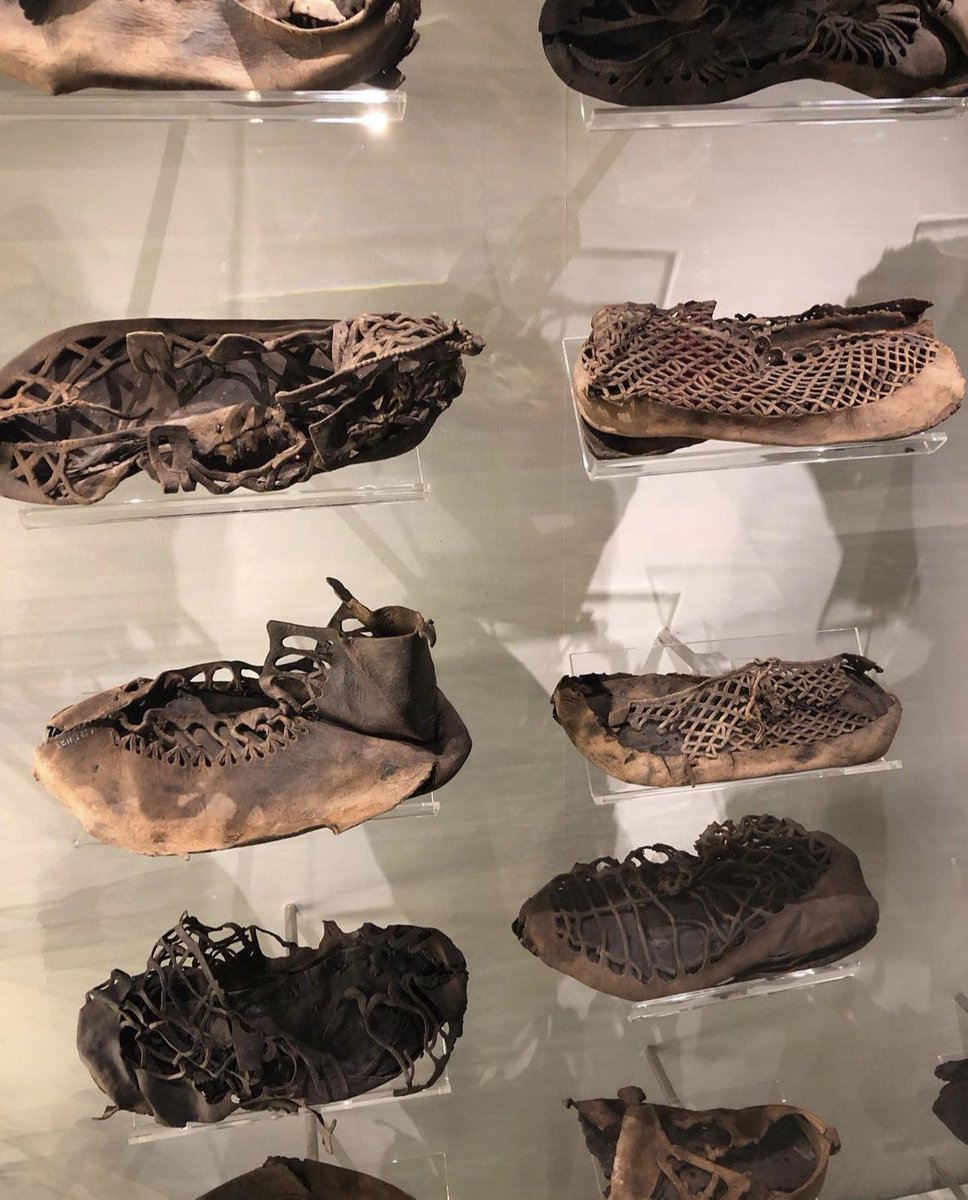
Ancient Roman Footwear on Exhibition at Vindolanda Fort in Northumberland, England
On display at Vindolanda fort in Northumberland, England, visitors can marvel at a remarkable pair of footwear that dates back 1,800 years to the Roman era. These remarkable artifacts, known as caligae, were heavy-duty openwork boots with robust soles adorned with hobnails. Caligae were primarily worn by the lower-ranking Roman cavalrymen, foot soldiers, and possibly even some centurions.
The association between caligae and the common soldiers is evident in their description as caligati, meaning the "booted ones." Expertly crafted, the caligae featured a midsole and an openwork upper, both skillfully cut from a single piece of high-quality cow or ox-hide. The midsole was then firmly attached to an outsole using sturdy clinching hobnails, typically made of iron but occasionally fashioned from bronze. To provide additional comfort, an insole was employed to cover the turned-back ends of the clinching nails. Like most Roman footwear, the caligae had a flat sole and were secured by lacing them up the center of the foot and onto the top of the ankle.
However, as the 1st century neared its end, the Roman army gradually shifted to an enclosed boot known as calcei. These new boots offered superior protection and warmth compared to the caligae. Soon, calcei became a staple not only in the Roman military but also in civilian attire.
Regarding Vindolanda fort itself, it served as a Roman auxiliary fort, or castrum, located just south of Hadrian's Wall in northern England. Remarkably, the fort pre-dated Hadrian's Wall. Archaeological excavations conducted at the site have revealed evidence of Roman occupation spanning approximately from 85 AD to 370 AD.