

Susan Aragaki
1.6K posts
Susan Aragaki
@AlohaUbuntuSue
Free good people with me & bring about a better world where we live in love, peace and harmony. UBI advocate. On advisory board for nonprofits.
Maui, Hawai’i شامل ہوئے Nisan 2023
378 فالونگ230 فالوورز

In her final semester at Harvard, Amanda Nguyen was raped. She did everything survivors are told to do. Then she discovered that the physical evidence collected from her own body would be destroyed in 6 months — unless she filed paperwork to stop it. And then filed it again. Every 6 months. Forever. She was 22 years old. She decided to change federal law instead. 🌟
Amanda had interned at NASA. She had big plans. The kind of future that takes years of hard work to build was finally within reach.
Then everything shattered.
She went to the hospital. She reported the assault to police. She endured the forensic exam. She made the careful decision to file her rape kit anonymously — worried that an open case could affect security clearance applications for her dream careers.
That's when the system revealed how broken it truly was.
Because she was anonymous, Massachusetts law gave her only 6 months before her rape kit — physical evidence collected from her own body — would be permanently destroyed.
Not the 15 years the state allowed for pressing charges.
Six months.
No official process to extend it. No clear instructions. No one to guide her. She had to figure it out herself, every 6 months, forcing herself to relive the worst experience of her life just to preserve her right to eventually seek justice.
She started researching rape kit laws in all 50 states.
What she found was staggering.
Some states kept kits for years. Others destroyed them in as little as 30 days. Some states charged survivors for the cost of their own kit collection. Others never notified survivors what happened to their evidence. No consistency. No standard.
*"Justice should not depend on geography,"* she said.
But it did.
In November 2014, Amanda founded Rise — a nonprofit dedicated to changing that reality. Everyone who worked with Rise was a volunteer. They fundraised through crowdfunding.
Their goal was rewriting federal law.
She met with lawmakers across Washington. Staffers told her it wasn't a priority. Some questioned her story. She kept going. She learned that the most powerful thing she could do was stop being abstract — to walk into a room, look a senator in the eyes, and say: *this happened to me. I am sitting in front of you.*
Together with Senator Jeanne Shaheen, she drafted the Sexual Assault Survivors' Rights Act — proposing that survivors should never be charged for their rape kit collection, should receive testing results, and must be notified at least 60 days before their evidence was scheduled for destruction.
In February 2016, the bill was introduced.
It passed the Senate unanimously.
It passed the House unanimously.
Not a single vote against.
On October 7, 2016, President Obama signed the Sexual Assault Survivors' Rights Act into federal law.
Amanda Nguyen was 24 years old.
Rise continued working state by state. To date, Rise has helped pass 33 laws across the United States, covering protections for over 84 million rape survivors.
A movement started in spare time, with no budget and only volunteers, became one of the most effective civil rights campaigns of its generation.
And Amanda never stopped reaching for the stars — literally.
In 2024, Blue Origin announced she would be the first Vietnamese woman to fly to space. The young woman who had once feared that fighting for justice would cost her a future in space proved the two didn't have to be a choice.
She was nominated for the Nobel Peace Prize. Named a Time Woman of the Year. She wrote a memoir called *Saving Five.*
But perhaps the most remarkable thing about Amanda Nguyen's story is not any single achievement.
It is the fact that she turned the most painful moment of her life into something that made the world more just for millions of people who will never know her name.
She was a college student who needed the system to work.
When it didn't, she rebuilt it herself.
**At 24 years old.

English
@davidasinclair I’m praying you succeed in healing us from suffering and extending quality of life! That is a noble cause!!!!
English

“We can never just say: aging is a catastrophe, it kills more people than anything else on earth, and we should be working as hard as possible to stop it. Instead, we must carefully manage every word. Soften every ambition. Wrap every honest statement in enough qualifications that it no longer sounds alarming, which also means it no longer sounds urgent. And when someone does say the thing plainly, the response is exactly what you'd expect: they get called radical…”
Peter Ottsjö@peterottsjo
English
Susan Aragaki ری ٹویٹ کیا

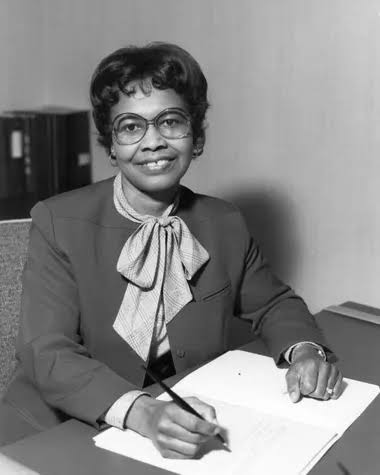
In 1930, rural Virginia, a Black girl born into sharecropping poverty wasn't supposed to leave the tobacco fields.
But Gladys Mae Brown had other plans....
Her hands picked crops. Her mind solved equations no one asked her to solve. Her parents, despite barely scraping by, made a choice that defied every expectation placed on them. They kept her in school.
She became valedictorian at a segregated high school with torn textbooks and broken windows. She earned a scholarship to Virginia State College in an era when being Black, female, and intellectually brilliant meant the world tried to crush you three different ways.
In 1956, she walked through the doors of the Naval Proving Ground in Dahlgren as the second Black woman they'd ever hired. Four Black employees. Hundreds of white men. Most didn't think she'd survive the week.
They were catastrophically wrong.
Gladys calculated weapons trajectories by hand. Complex differential equations that consumed hours of meticulous work. Her accuracy became legendary. When computers arrived, she didn't resist the future. She learned Fortran. She mastered programming languages. She transformed weeks of calculations into hours.
Then came Seasat in the 1970s. The first satellite studying Earth's oceans from orbit. She became project manager. But her true contribution remained hidden in the mathematics.
For GPS to function, you need Earth's exact shape. Not close. Exact. Earth isn't a smooth sphere. It's an asymmetrical, gravity-distorted, irregular mass of mountains and ocean trenches.
Gladys spent years constructing mathematical models describing every deviation, every curve, every gravitational anomaly of our planet's true form. She analyzed satellite data. She built geoid models. Tedious, invisible, revolutionary work.
That mathematics became the foundation of GPS.
Every navigation app. Every emergency rescue. Every autonomous vehicle. Every precision farming system. Her equations make it possible.
Forty-two years at Dahlgren. Retirement in 1998. GPS fully operational worldwide. Billions of users. Almost nobody knew her name.
She raised three children. Earned her PhD at seventy after surviving a stroke. Lived quietly.
Until 2018, when someone at a sorority event read her biography aloud. The room went silent. The story exploded.
At eighty-eight, Gladys West was inducted into the Air Force Space and Missile Pioneers Hall of Fame. The world finally learned her name.
She mapped the entire planet. Then everyone forgot. Until they remembered.
Gladys West worked alongside her husband Ira West, who was also a mathematician at the Naval Proving Ground. They met at Dahlgren and built both a family and parallel careers in an environment that actively discriminated against them. After retirement, she didn't stop. She earned her PhD from Virginia Tech at age 70, proving that intellectual curiosity doesn't have an expiration date.
The GPS system relies on something called the geoid, a mathematical model of Earth's shape that accounts for gravitational variations. Gladys West's calculations helped create these models by analyzing millions of data points from satellite altimetry. Without accurate geoid models, GPS coordinates would be off by hundreds of meters, making the technology essentially useless.
Her story remained hidden partly because classified military work doesn't generate headlines. Many pioneers of satellite and navigation technology worked in obscurity for national security reasons. The sorority member who recognized her contribution was reading through Alpha Kappa Alpha biographies when she noticed the GPS connection and brought it to public attention.
© Women Stories
#drthehistories
English
Susan Aragaki ری ٹویٹ کیا

Montana — yes, deep red Montana — has a plan to effectively neuter Citizens United.
No Supreme Court ruling or constitutional amendment needed.
Here's how it works.
English
Susan Aragaki ری ٹویٹ کیا

@PeterDiamandis @PageLyndon I’m grateful we have a visionary think tank of creative problem solvers with ai. Pilot successful UBI programs exist already. Create stage operational visionary villages that demonstrate this freedom. Fill it with people who are optimistic and ready. Build it and they will come!
English

There's a single gut microbe that influences your mood, your sleep, your skin, and even your muscle mass.
96% of people have lost it.
Scientists just discovered it triggers your body to produce the "Love Hormone" oxytocin.
Not in your brain, but in your gut.
The microbe is called Lactobacillus reuteri (L. reuteri).
It used to live in nearly every human gut on Earth.
Today -
Antibiotics, processed food, and modern living have wiped it out of almost everyone.
If you've taken even one round of antibiotics in your life,
Yours is probably gone.
Researchers at Baylor College of Medicine made a stunning discovery.
They found that oxytocin -
The hormone linked to mood, bonding, stress relief, and healing - is produced in your small intestine.
Not just your brain.
Your gut.
And L. reuteri is what can trigger its release.
How does it work?
L. reuteri stimulates special cells in your intestinal lining to release a hormone called secretin.
Secretin then signals nearby cells called enterocytes to produce and secrete oxytocin.
Your gut is literally manufacturing one of the most powerful hormones in your body.
And -
It's published science.
The Baylor team confirmed it using human intestinal tissue, gene expression data, and lab-grown intestinal cultures.
The highest concentration of oxytocin-producing cells?
The small intestine.
Dr. William Davis - the physician who wrote "Wheat Belly" and "Super Gut"
... figured out how to grow L. reuteri at home using a simple fermentation process.
Not a pill
Not a supplement
A highly concentrated probiotic food you make yourself.
Here's what people are reporting after restoring L. reuteri:
- Deep, uninterrupted sleep
- Reduced anxiety and improved mood
- Thicker hair and younger-looking skin
- Increased muscle mass (even without heavy exercise)
- A 50% rise in testosterone in men over 50
- Faster wound healing
- Restored libido
MIT researchers tested it in mice.
The ones given L. reuteri stayed lean, kept their fur, mated, and aged gracefully.
The control group (same diet, no L. reuteri) -
Got fat, lost their hair, stopped mating, and died early.
Same crappy diet.
Completely different outcome.
Why?
Because L. reuteri does something most probiotics can't.
It colonizes your entire small intestine -
ALL 24 feet of it.
It produces natural antibiotics called bacteriocins that kill harmful bacteria.
And it prevents the toxic migration of fecal microbes into your upper gut.
When those bad microbes invade the small intestine, they release toxins into your bloodstream.
That's called endotoxemia.
It drives weight gain, brain fog, type 2 diabetes, cognitive decline -
And is now being linked to multiple forms of the Big C.
L. reuteri helps stop that at the source.
The key?
Dr. Davis found that fermenting L. reuteri at 99°F for 36 hours produces roughly 300 billion microbes per serving.
More than 30X a typical supplement.
A half cup a day is the protocol.
I've been saying for 30 years: your mood, your anxiety, your energy -
It starts in the gut.
When I healed my gut, my crippling anxiety disappeared.
Not from medication.
From fixing the actual cause.
Now science is catching up.
And L. reuteri is one of the biggest reasons why.
Comment GUIDE and I'll send you a FREE guide on how to make unlimited probiotics at home.

English
Susan Aragaki ری ٹویٹ کیا

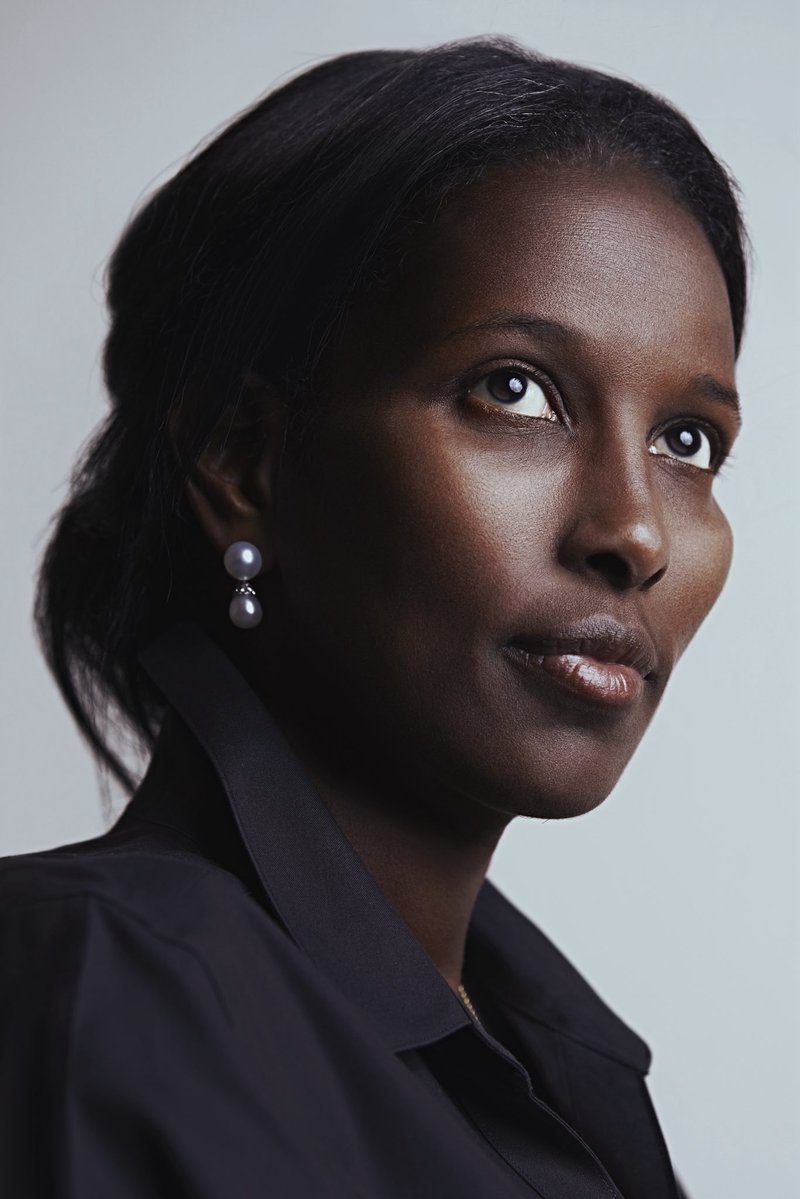
Ayaan Hirsi Ali - let’s talk a bit about her.
She is one of the most courageous voices of our time.
She was born in 1969 in Mogadishu, Somalia, into a strict Muslim family. As a young girl, she was subjected to female genital mutilation. She grew up between Saudi Arabia, Ethiopia, and Kenya under a strict Islamic upbringing.
In 1992, she fled to the Netherlands to escape an arranged marriage - she jumped off a train in Europe and applied for asylum.
There, she learned Dutch, earned a degree in political science, and began working with integration.
She lost her faith in Islam. She became an atheist, and later converted to Christianity in 2023.
She saw clearly how Islam oppresses women - forced marriages, honor killings, female genital mutilation, polygamy, and the total lack of freedom.
In 2004, she made the short film Submission together with Theo van Gogh. The film showed violence against women in Islam.
Shortly after, Theo van Gogh was murdered in broad daylight in Amsterdam by a radical Muslim. A threat against Ayaan was left pinned to his chest: she was next.
She received death threats for years. She had to live under police protection.
She was elected to the Dutch parliament for the Liberal Party, where she fought for Muslim women’s rights and against the illusions of multiculturalism.
She has written books such as Infidel, Nomad, and Heretic, where she directly criticizes the core of Islam - not just “extremism,” but the ideology itself.
Today, she lives in the United States, married to historian Niall Ferguson, and continues her work, among other things through her foundation (AHA Foundation).
She warns the West about mass immigration from Muslim countries, parallel societies, and the self-deception that claims Islam can be reformed without confronting its texts and history.
Like Salman Rushdie, Ayaan Hirsi Ali has paid a high price for speaking the truth. Rushdie was hunted for a book. She was hunted for showing the reality of her own life and the lives of millions of Muslim women.
She is not “Islamophobic.” She is a former Muslim who has seen the system from the inside and refuses to stay silent. She points to the uncomfortable truth: that Western values such as freedom of speech, gender equality, and individual liberty are incompatible with classical sharia Islam.
Ayaan Hirsi Ali is a living example of why the Enlightenment is still worth defending.
She risked her life to say what most people don’t dare: that the problem is not only “extremists,” but a religion that, at its core, oppresses women and rejects criticism.
She deserves respect from all of us - not because she is “controversial,” but because she refuses to lie in order to be politically correct. In a time where many bow to threats, she continues to speak the truth.
These are the kind of people who keep the soul of the West alive. Thank you Ayaan.❤️🔥🪽✝️
English
@mcuban In the age of AI I would think knowing their costs and auditing is much simpler. Local agents could work wonders. Assign audit agent uniform system across the board designed for this purpose set up by an ai geek. No excuses.
English
Single payer COULD cut cost and improve care but there are 2 fundamental issues.
1. All plans proposed have placed the Sec of HHS in charge of the program. You can't have a political appointee in that position and it's hard to de-politiicize HC in this country
2. They assume that they can get providers and specialists to accept whatever rates they set.
You are talking about organizations that in most cases, don't even know their costs. Why ? They don't want to know their costs. For lots of reasons to long to dig into here
Proponents of M4A have to first get hospitals to the point where they can define all their costs and do a Bill of Materials for procedures.
You can't negotiate a price for all Americans if you don't know what your costs are
It's Shark Tank 101.
So we get a stalemate. Politicians don't do the work needed. Hospitals and providers avoid the work needed
Other countries started on their path to universal care decades and decades ago. When healthcare was much simpler technically and fiscally.
If senators won't support the Break Up Big Medicine Bill or anything comparable , there is no chance of getting to single payer.
Our politicians don't have the backbone to do what is needed. You can call out all but Hawley and warren. No one else has uttered a syllable in support
Berniebabe2016☮️🟧@berniebabe2016
@mcuban @IngGuthrie #MedicareForAll would resolve that issue. Healthcare should not be connected to employment.
English
@gabbytech01 @HumanityChad His money doing good right with his soul. Why judge what goodness is worthy? Geez 🙄
English

Respect the dedication, but selling everything to house 40 aggressive biting dogs (and planning for 300) while people in Japan struggle with loneliness, aging population, and mental health crises feels backwards.
Dogs are great, but humans should come first. How many human lives could that Ferrari money + business have helped instead of funding 'unadoptable' biters that most shelters euthanize for safety reasons?
English

This Japanese man gave up his Ferrari and Company to fund a dog shelter after his pet saved him from taking his own life 🥹
A 54-year-old man named Hirotaka Saito shut down his company and sold his luxury car to open a shelter for dogs. It happened after his own pet saved his life.
Saito sold his Ferrari to buy land and build Wansfree, a shelter where dogs are free from chains. It now houses 40 dogs and eight cats. He hopes to raise funds and expand the shelter to 300 dogs by 2028.
Years ago, during a financial crisis, Saito tried to end his life. His large dog blocked the door and stopped him from leaving. He realized the dog understood and was stopping him.
This changed his mind, and he chose to live for others. He began rescuing aggressive dogs in Japan. Despite being bitten often, Saito patiently showed them love, never giving up on any of them.
He started the Wansfree rescue center in Yaizu. It cares for dogs that bite or act out due to past abuse. The shelter is free and supports dogs that most people find too difficult to handle.
English
Susan Aragaki ری ٹویٹ کیا

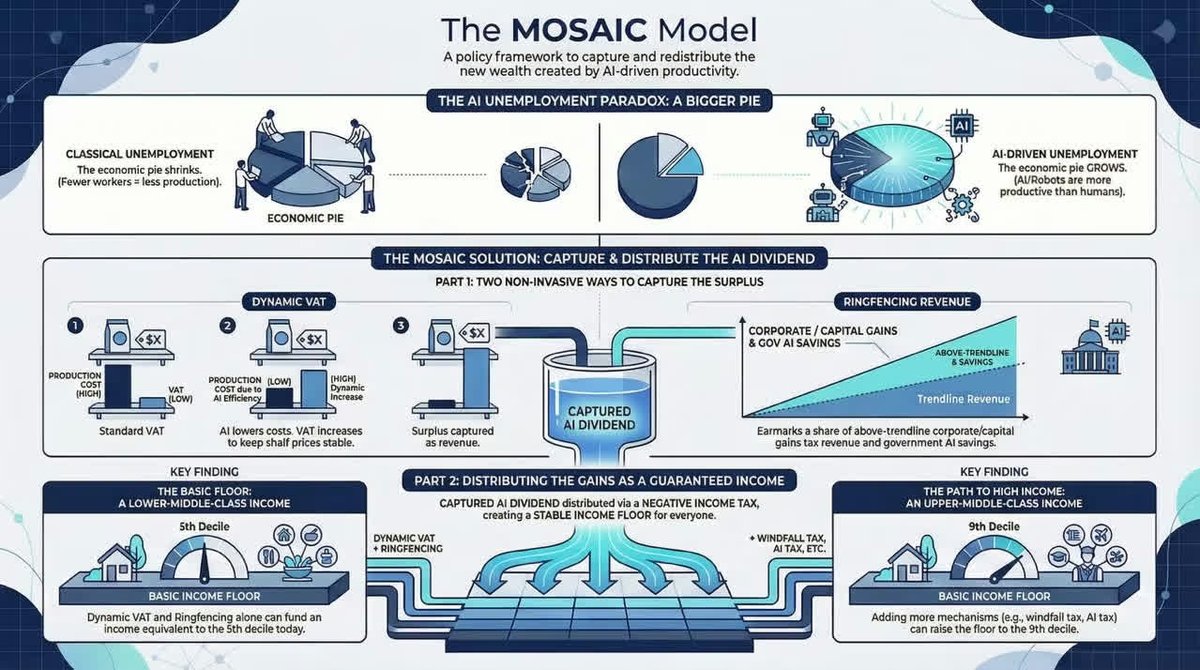
Revisiting XPRIZE Chairman Peter Diamandis, M.D.'s Universal High Income plan, The MOSAIC Model, to capture AI-driven surplus and distribute it as dividends, raising the income floor substantially.
"When AI Takes Our Jobs, It Should Also Pay Our Wages."

English
Having Wealthy Parents Basic Income.
Scott Santens@scottsantens
We already have a system of non-universal basic income. It’s called "having wealthy parents." UBI just democratizes that privilege so everyone has the same base-level security to pursue their potential. It's no coincidence that entrepreneurs tend to come from wealthy families.
English
@Janetlight325 @Suzierizzo1 It discriminates against women who married and changed their names. More women vote dem. It’s suppression.
English

@Suzierizzo1 If that’s true, then why are the Democrats fighting so hard against it lol
English

The Republicans are finally reading the Save Act and finding out that the Red States are the ones where the Save Act will end up hurting the most since they have the lowest Passport ownership!
English
Susan Aragaki ری ٹویٹ کیا
UniversaI Basic Income is meant to ensure nobody falls below a non-zero floor, and to distribute a dividend from an economy we all help create. The floor is the point. The dividend is the justice.
In the simplest terms—UBI IS A FOUNDATION. Everything else exists on top of it.

English
@NiallHarbison Sending love and light your way. Your courage to share does indeed help so many. Ahhh…”the dark inner voice” that you, the observer, can send love to. Forgiveness and awareness not to believe the lies. So many are holding your hand to steer you towards the light of truth. Love.
English

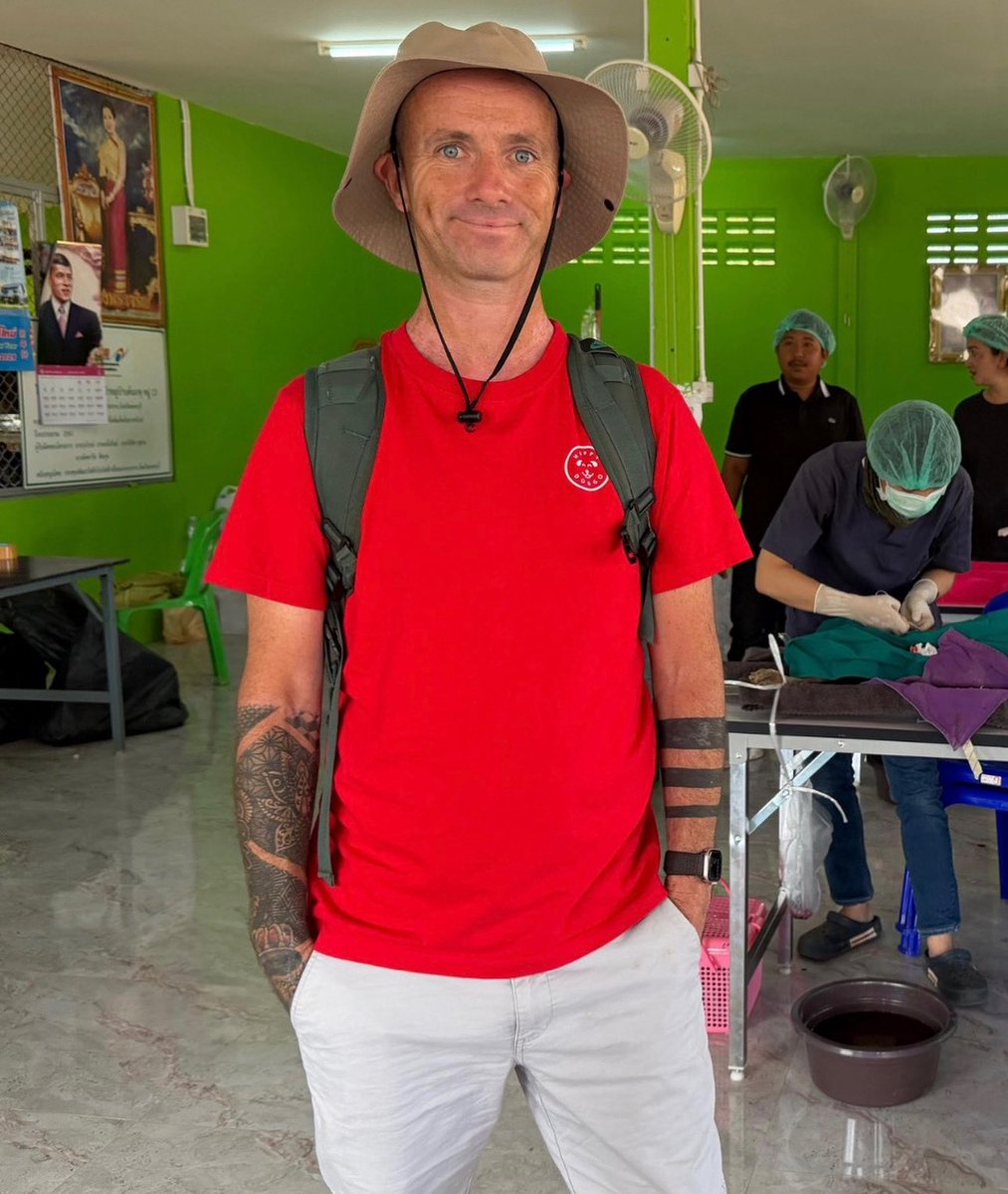
My confidence and self worth haven’t been great lately and I just wanted to say thats ok so other people who suffer with depression or anxiety know that it’s ok to feel like that.
I’m CEO of Happy Doggo and most people in positions like mine have to hide stuff like this. Most people in all positions In life do actually. It’s really hard to admit you don’t feel the best about yourself. That’s why I just write it down as I feel because maybe it’ll help someone.
Between our team, partners and everything wrapped up in what I do there are probably 100+ people who rely on me. Add in social media, donors and everything else and that’s a massive happy facade to keep up.
I’ve learnt though that it’s ok to say you are not ok. At the moment I’m going through the motions. Still working hard and trying my best but I feel a bit worthless. No self worth at all. I also have imposter syndrome. I know I can jus read the comments here or look at the dogs saved and I should be happy but it doesn’t bring me anything. I look in the mirror at the moment and can’t even really look at myself. No particular reason or spark for this. As people who suffer know it just comes in a dark wave like a fog.
I could easily share some happy dog photos and smile and pretend I felt amazing. But I’d rather be honest and try to help others. I have untold amounts of support and good luck that many of you dont. So if you're feeling down or a little rough right now, that's okay because so am I, and it's absolutely fine to say that.
Have a lovely weekend and be kind to each other ❤️
English
Susan Aragaki ری ٹویٹ کیا

She literally compressed 5 years of neuro-psychology in 2 mins ‼️‼️
English