Blockstart Ventures

1.3K posts

Blockstart Ventures banner
Blockstart Ventures

Blockstart Ventures

@BVmacro

Blockstart Ventures is multi-strategy investment firm delivering unparalleled market insights, time-proven strategies, using a dynamic global network.

Global شامل ہوئے Mayıs 2018
293 فالونگ1.9K فالوورز
Blockstart Ventures
Blockstart Ventures@BVmacro·
@PauloMacro Someone had chatGPT access from future when they defined this term. Great language skills.. 😂
English
0
0
0
352
Paulo Macro
Paulo Macro@PauloMacro·
I did not know until $ORCL today what RPO actually was. I always thought RPO was short for Revenue Probably Overstated or Really Pretend Orders. Maybe even Random Promises Only. But I fully concede that $455bln in Remaining Performance Obligations sounds much better.
English
66
60
679
74.3K
Blockstart Ventures
Blockstart Ventures@BVmacro·
@Nithin0dha We have been talking about this issue that number of contracts does not mean biggest Options market. In US, there are rules to not allow margin or advanced options for retail without experience. Indian banks should be regulated for enabling margin loans to unsophisticated users
English
0
0
0
80
Nithin Kamath
Nithin Kamath@Nithin0dha·
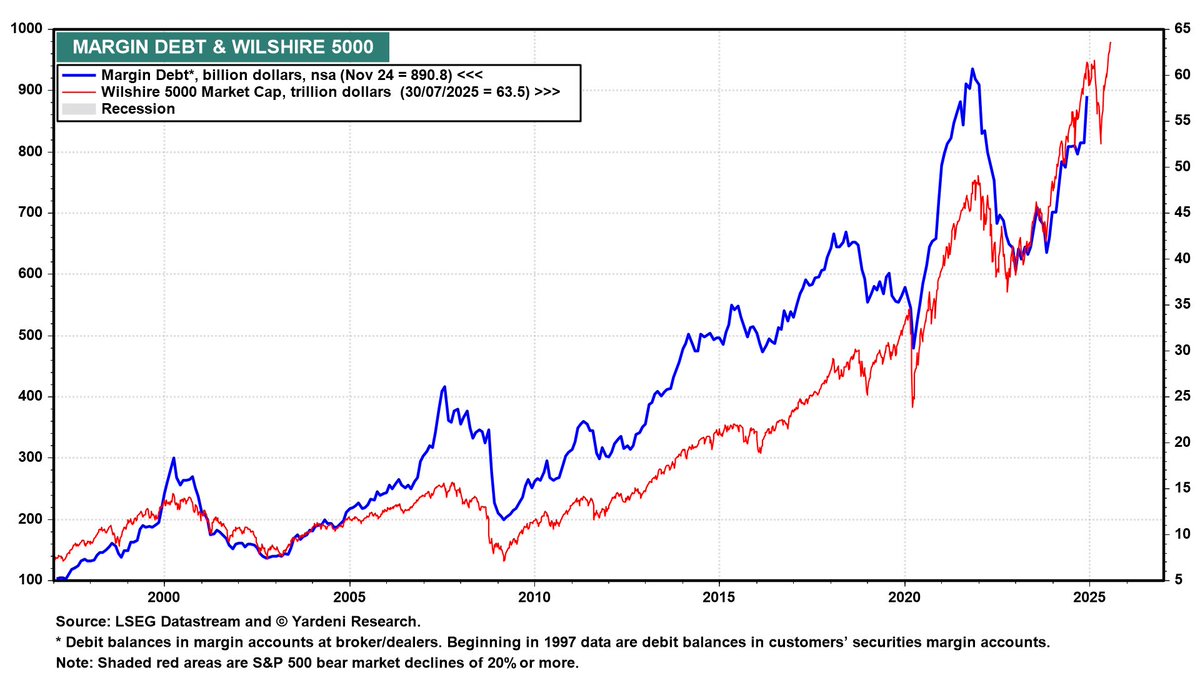
It’s ridiculous to see people comparing options trading volumes in India and the US and claiming that we’re overleveraged. For starters, the comparison itself is flawed. People often look at the number of contracts traded, not the premiums or the actual value involved. If anything, India is significantly less leveraged than the US, even taking into account the fact that our markets are 15–20 years behind theirs. Consider this: in the US, the margin funding market (the equivalent of MTF in India) recently crossed $1 trillion. In India, it’s still under $10 billion—just 1% of that. Similarly, US stocks shorted are estimated to be another $1 trillion, while in India, the stock lending and borrowing market remains practically insignificant. Calling the US a gambling society wouldn’t be unfair. Just recently, there were bets totaling $210 million on whether Zelensky would wear a suit at the NATO summit. 🙂 If you compare our leverage as a country to that of the US, we’re a mere drop in the ocean. Gambling runs deep in American culture. From the stock market to sports, casinos, events, lotteries, prediction markets, and crypto, you can bet on anything So this constant narrative that we’re somehow dangerously overleveraged, just because of the number of options contracts traded, feels… well, misguided.
Nithin Kamath tweet media
English
99
285
1.5K
187K
Blockstart Ventures ری ٹویٹ کیا
Manu Rishi Guptha
Manu Rishi Guptha@manurishiguptha·
Jane Street – Why it deserves Our Gratitude: Exposing the Fragile Underbelly of India's Markets I’ve been watching the markets for years - managing wealth, building portfolios, witnessing booms, crashes, scams, reform cycles, and regulatory knee-jerks. But nothing baffles me more than the convenient outrage we summon when someone wins “too much” within a system we ourselves designed. As everyone celebrates SEBI's order barring Jane Street from trading and clawing back thousands of crores in what it calls unlawful gains, the powers that be might have put a firm nail in the coffin of progress and learning. @Nithin0dha of @zerodha pointed out how trading volumes have dropped sharply after this. But here's a different view: Jane Street didn't damage the market; they just used the rules we made and won big. This exposes how our markets lack depth. Instead of gloating in their momentary misery, we should use this to push for better regulations that build strength, not block smart players. Grudging Jane Street's luck, strategy, and its deft execution and exploitation of India's shallow markets is like watching a cunning fox raid a poorly guarded henhouse, seizing every chance while others scramble, unaware of the fierce spirit of resilience and reform needed to level the playing field. Remember… – during demonetisation – People died in ATM queues, but they found solace in the idea that someone richer was potentially losing more. That's the essence of what we witnessed with SEBI vs. Jane Street. Schadenfreude dressed as patriotism. Our Markets Can't Handle Even Small Flows The mutual fund industry has grown to `₹75 lakh crore in assets as of June 2025, thanks to campaigns like "Mutual Fund Sahi Hai" that pushed 20% of household savings into stocks at absurd, unsustainable valuations. Our total stock market value is around ₹454 lakh crore. That sounds big, but it's not deep enough. In the US, founders like Jeff Bezos or Jensen Huang sell billions in Amazon or Nvidia shares, and the prices barely move. Liquidity is strong there, with lesser counterparty risks. There is NO counterparty existing in India in case of panic. In India, even a 2% redemption from mutual funds - about ₹1.5 lakh crore - could cause a tectonic fall. Based on daily trading volumes of ₹1-2 lakh crore and how thin our market is, this could push Nifty down by 5-10% in a few days. Bank Nifty, where five banks make up 80%, might fall 10-20%. Consider this: even a few thousand crores or sometimes just a few hundred crores of trades in the cash market can swing the indices dramatically by 1-2%, exposing the shallow liquidity in underlying stocks. Yet, the real game unfolds in options, where notional turnover towers over cash by 10 times or more, blindsiding gullible, unaware retail players with sudden volatility and massive losses they never see coming. We've seen this before: small outflows in 2020 amplified drops by 10-15%. With so much “rainy-day” money moving to stocks in the last 5-7 years, one small event could start a chain reaction. It's ironic - we talk about our economy in the global pecking order, but our markets shake from minor shifts. Should they be this fragile? Should a small amount of capital really shake one of the most traded indices in what we claim is one of the most resilient economies? Rules That Limit Growth, Not Protect It SEBI wants to safeguard investors, but some rules do the opposite. Circuit filters stop trading at 10%, 15%, or 20% moves, to prevent panic. But they just delay problems and make volatility worse when trading restarts. This happens only in India - why not let prices move freely like in the developed markets? Bans on stocks when open interest rises too much? That's another odd rule that traps money and scares away big players. Options trading shows the gap clearly. In evolved markets, anyone can write options or act as a market maker, even for long-term contracts up to 5 years. Liquidity exists for far-out strikes, and even Indian ADRs like Infosys, Wipro, ICICI, and HDFC Bank have more depth in the options market there. I logged into a friend's account and tried to place an order for Jan ‘26 and Jan ‘27 (in ICICI and HDFC options and it was smooth as a hot knife on butter. In India, I keep calling my broker struggling to place an order (for the same month expiry) and waiting for some big market maker to create an OI of 3 lots and traded volume of 2 – What a joke, really. There is no counterparty for many-many simple trades in India, and liquidity vanishes beyond the current month. Jane Street made profits legally in this setup – We shouldn’t be fining them. We should be worshipping and thanking them in the Gurupurnima week for giving us the biggest lesson in recent stock market history. Our system invited them to play, and now we are complaining that they scored too much. Dostoevsky rightly said - "The surest way to be happy is to find a fault in someone else". The true measure of integrity lies in fixing our own flaws before we start indicting others for playing by the very rules we set. Indian Markets: Over-Regulated and Under-Innovative? SEBI's decision to bar Jane Street from trading, for me, sadly reinforces the idea that we're still a long way from being a truly free market, like the US. It paints a picture of an environment where free thinking and innovation struggle to genuinely thrive. Just look at the S&P 500 – new-age businesses, the real wealth creators, make up about 30% of it. Compare that to our Indian main indices, where a whopping 45% are comprised of financial companies, essentially the oldest form of business: lending and borrowing. Bank Nifty, where just five banks make up 80% of the index - in my opinion, almost opens the gates for anyone with deep pockets to develop strategies and gain disproportionately by trading these indices and stocks separately. The Real Issue: Envy Over Reform Thomas Sowell said, "Envy was once considered to be one of the seven deadly sins before it became one of the most admired virtues under its new name, 'social justice'. We're happy about Jane Street's troubles, but it's our market that's hurting - volumes down, less innovation. Remember George Soros and the Bank of England in 1992? It hurt short term but led to growth. Jane Street could do the same for us: Force Changes. We shouldn't treat long-term FDI better than short-term FII money. All capital helps if we let it flow freely. Free markets create some inequality at first, but they build wealth. Over-regulating keeps us stuck with old businesses like banking dominating our indices, not new ones like in the S&P 500 or NASDAQ. Collaborate with Jane Street and its ilk – Don’t deride them. We should collaborate with Jane Street and find ways to use their intelligence, making them part of our system. After all, they've earned billions from us - why not turn that into a partnership for deeper markets? Top policymakers should gain hands-on experience: give them real money to trade options and futures themselves. Let them see the system's problems, weak points, and lack of depth and breadth firsthand. They should be allowed, through their organizations, to open brokerage accounts with reasonable capital. Each one should have an account at E*TRADE, Charles Schwab, or Fidelity. They should be asked to spend a few hours on real-time trading, do some actual trades, experience how those markets operate, and feel the ease of doing business. Then, draft policies based on that real-world insight. This would build a robust learning curve, turning regulators into informed players instead of distant rule-makers. Jane Street's temporary exit isn't a win. 10 more will emerge under a different name. - It's a reminder that we need to evolve. A moat around mediocrity is the fortress of the fearful, where innovation drowns in the stagnant waters of complacency, shielding the average from any form of greatness.
English
64
101
466
84.9K
Blockstart Ventures
Blockstart Ventures@BVmacro·
@willywoo Stupid for taking a few chips of the table after making 1000x returns? Well i guess we got to be patient as supply runs dry. Bitcoin is owned by those who deserve. And we should not call someone who bought 10 years ago stupid.
English
1
0
3
84
Willy Woo
Willy Woo@willywoo·
"Who are the idiots who are selling when institutions and sovereigns are racing to buy billions in BTC?" This chart sheds light. The big whales >10k BTC have been selling since 2017. "They're stupid!" Most of those coins were bought between $0-$700 and held 8-16 years.
Willy Woo tweet media
English
443
465
4.5K
440K
Blockstart Ventures
Blockstart Ventures@BVmacro·
@LeylaKuni Gold has negative yield to carry in your vault but you buy it. It's called speculation.
English
0
0
0
13
Leyla
Leyla@LeylaKuni·
$4,200 - monthly rent $12,000 - mortgage on the same house Why would any rational person buy? Yet multiple offers on the house within days. Make this make sense.
English
803
109
3.3K
1.2M
Blockstart Ventures
Blockstart Ventures@BVmacro·
Stock market is wondering about sustainability of the bull run which is purely driven by AI trade in last 2 years. But openAI raised $40B, Google's Isomorphic raised $600m, Anthropic raised $3.5B in the current market
English
0
0
0
71
Blockstart Ventures
Blockstart Ventures@BVmacro·
@lukeburgis @Airbnb Had same experience at a stay in Switzerland last summer. But after spending hours with Airbnb support, they only reduced three amount by 50% with logic of splitting between landlord and us. It it's frustrating that owners can do this and it is happening to more people
English
0
0
0
113
Luke Burgis
Luke Burgis@lukeburgis·
My wife, daughter, and I stayed at an @Airbnb in NYC in November. Perfectly normal stay. Nothing happened. When we left, the owner said there was a small stain on the hardwood floor he couldn't clean and said it took him $7500 to fix, including literally replacing floorboards. We know nothing about this, saw nothing, looks totally unfamiliar. Feels like insurance fraud, or something? AirBNB took his side because we couldn't provide a picture of the floor at the exact minute we walked out the door. Are you kidding me? Has anyone else had an experience with AirBNB like this? Any attorneys who know how to deal with this sort of absurd claim?
English
7.7K
9K
98.3K
25.5M
Blockstart Ventures
Blockstart Ventures@BVmacro·
After a wild year for Bitcoin and with the Trump administration incoming, the denial about what’s imminent is astonishing. Bitcoin is digital gold, and we’re not going back. Yes, it’s volatile—just like gold was 50 years ago. Long term? UP only. 🚀 #Bitcoin #DigitalGold
English
0
0
0
71
Philip Klinck
Philip Klinck@CreateNotesOnRE·
We just borrowed $200,000 cash at $500 a month for 15 years and a $160,000 balloon payment. Why would we ever go use a bank?
English
69
7
663
489.5K
Blockstart Ventures ری ٹویٹ کیا
Aaron Levie
Aaron Levie@levie·
High skilled immigration has been central to America leading the world in tech. The biggest misunderstand about high skill immigration stems from people thinking that the market opportunities in tech, and tech-adjacent fields, are zero sum. This essentially imagines innovation is finite and we’re all fighting over the same job or opportunity pool. This may be true of a few very legacy, slow growth industries, but it’s categorically not true for any important industry in the past 50 years or the next 100. Biotech, AI, advanced manufacturing, software, EVs, new energy sources, and dozens of other fields of the future are our high growth industries. And there’s no inherently fixed volume of companies or talent that the market needs. Tesla being started or not started in America is the difference between 100,000’s of jobs here - and leading in EVs globally - and not. Apple being started here is the difference between potentially millions of jobs being here - and leading consumer electronics globally - and not. You could go through this list all day long. Tech is not zero sum. More startups, pursuing more ideas, ultimately create more innovation and ultimately more jobs and prosperity. And that means you need the right talent to both work at these companies, and start the next ones. High skilled immigration has directly made America dominant technically and thus economically, and create far more jobs in America for others than are supposedly displaced. Even briefly imagining the alternative scenario, it’s obvious how disastrous this would be. The demand from tech companies for this top talent will remain, yet America won’t benefit directly from their hiring. That talent will go to another company that competes with the US and makes our dominance harder to maintain. You’re just increasing the odds you have more competition in the future. And even in the “best case” scenario (for our competitiveness) where a larger company like Google hires the same people internationally that would have otherwise moved here, when that person leaves Google to start their next company, it will be in their country of origin, not America. This is how you lose the tech war within one or two generations. There’s simply no good game theory in anything that reduces our talent access. Yes, we absolutely have and need to continue to educate and train incredible talent that grows up in the US, but equally having access to the world’s smartest talent has always been a huge advantage for America.
English
520
600
4.6K
1.4M
Blockstart Ventures ری ٹویٹ کیا
Naval
Naval@naval·
Tulips are not durable, not scarce, not programmable, not fungible, not verifiable, not divisible, and hard to transfer. But tell me more about your analogy...
English
323
3.1K
11.7K
0
Blockstart Ventures
Blockstart Ventures@BVmacro·
@garyblack00 Love your work on things you understand like Tesla. But you are valuing an innovative financial engineering company with standard software company metrics. Ask yourself - which company can raise $3B for 5 years at 0% coupon with 55% premium to already "inflated" stock price
English
0
0
2
70
Gary Black
Gary Black@garyblack00·
$MSTR ‘s stock price makes no sense to me. MicroStrategy owned 331,200 bitcoins at last count, worth $31.2 billion at #BTC =$100K, and has about $4.2 billion of net debt, which equates to $27B equity value. By comparison, MSTR’s stock market value is $106 billion using the company's most recent share count. The software business isn’t worth much. I estimate $MSTR shares should be worth about $105/share, or about 75% lower than where they are trading this morning. Unless MSTR’s bitcoins are worth 4x what everyone else’s bitcoins are worth.
English
1.1K
405
3.6K
1M
Flowseidon
Flowseidon@kiantrades·
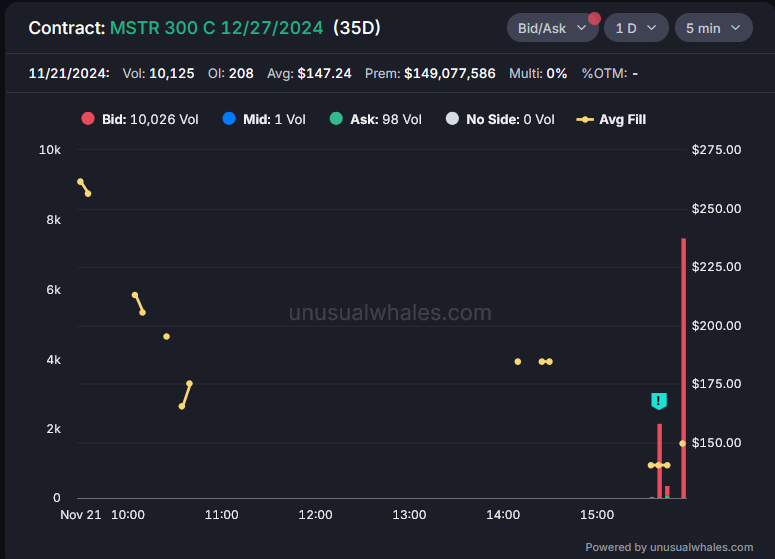
Ok wait what the fuck. This $MSTR whale sold to open a 300 call strike for 12/27exp for over $149M!!!!! This is a trade that was opened today. They think that it will be below 300 by end of year Keep note This may be the craziest order I have ever seen on @unusual_whales
Flowseidon tweet media
English
141
141
1.6K
602.7K
Blockstart Ventures
Blockstart Ventures@BVmacro·
@porterstansb US treasury soaks up world's liquidity. USD is far from over in short term. Isn't it too extreme to predict "no bid"? US real estate usin high demand worldwide, it is worth more than US debt. US is net exporter of oil. US is biggest market for almost every1. I can go on...
English
0
0
1
46
Porter Stansberry
Porter Stansberry@porterstansb·
Imagine a day when the U.S. Treasury goes “no bid.” No buyers for our bonds. No more illusions. Everything you thought you knew about America? Gone. It's coming.
English
234
157
1.3K
195.7K
Blockstart Ventures
Blockstart Ventures@BVmacro·
@chrismilas But China sales have improves irrespective of this chart. So doesn't that tell that web traffic may not be correlated to sales as tightly as you are expecting?
English
3
0
0
39
Chris Milas 🐂
Chris Milas 🐂@chrismilas·
I don’t think $TSLA will hit estimated Q3 deliveries of 462k based on web traffic. Q2 they delivered 443,956 cars globally and had roughly 85 million website visits. Based on that ratio, and considering Tesla’s received all of its orders via their website and receiving roughly 75-80 million visits on Q3, it’s looking more like 417k-420k car deliveries for Q3. Could be slightly higher in the 425k range, but not seeing much higher. Let’s see how accurate I am. Thoughts? Not investment advice.
Chris Milas 🐂 tweet media
English
7
0
13
3.8K
Blockstart Ventures
Blockstart Ventures@BVmacro·
@KobeissiLetter Because Saudi is done controlling production, US has too much oil to get them $100 price anytime in future.. and they are ready to flood the market and take market share back. You should follow what Saudi is doing if you are trading oil.
English
0
0
0
93
The Kobeissi Letter
The Kobeissi Letter@KobeissiLetter·
Something doesn't add up here: Oil prices are now falling toward their lowest levels in 14 months. This comes even as the Fed cuts rates, wars have broken out, and markets think we have a "soft landing." So why are oil prices falling like we're in a recession? (a thread)
English
300
503
3.8K
765.6K
Blockstart Ventures
Blockstart Ventures@BVmacro·
@werkman So lot more liquidity floods into equity market on each of these triggers. Specifically 2027 and 2030 notes and thus other higher trigger will be difficult to achieve
English
0
0
0
81
Ben Werkman
Ben Werkman@Werkman·
Here are the share price values that trigger the 130% rule for the $MSTR convertible notes: 2027 Notes: $186.22 2028 Notes: $238.14 2030 Notes: $194.70 2031 Notes: $302.54 2032 Notes: $265.63 Some of them are not far off and have real potential for Q1 2025 conversion.
English
19
22
250
23.1K