Bartolini Lab

1.1K posts

Bartolini Lab banner
Bartolini Lab

Bartolini Lab

@BartoliniLab

A lab run by a microtubule biologist in love with NYC and its "duende"! Tweets are Francesca's

New York, USA شامل ہوئے Kasım 2019
423 فالونگ594 فالوورز
Bartolini Lab ری ٹویٹ کیا
Oded Rechavi
Oded Rechavi@OdedRechavi·
A new mechanism for “RNA memory”! 😱 Thrilled to share another crazy paper from the lab (can’t believe we posted 2 in 2 days!), summarizing >10 years of research: Work on transgenerational inheritance of small RNAs in the powerful model organism C. elegans changed how we think about what’s possible in inheritance and evolution, because it allows the most heretical thing: inheritance of parental responses to the environment! However, it’s still unclear whether RNAs are inherited across generations in other animals, largely because the RNA-dependent RNA polymerases that amplify heritable small RNAs and prevent their dilution in C. elegans are not conserved in mammals. In this new work, an amazing collaboration with the Rink and Wurtzel labs, we show that planarians establish long-lasting and heritable small RNA–based gene regulatory states despite lacking canonical RNA-dependent RNA polymerases and nuclear RNAi machinery (that are required in C. elegans). You might say “they are both worms…” BUT planarians are evolutionarily very distant from C. elegans (flatworms vs. roundworms, diverged more than 500 million years ago), making this particularly surprising. These are totally different animals. We find that ingestion of double-stranded RNA induces sequence-specific silencing that persists for months and survives repeated cycles of whole-body regeneration. Even more strikingly, RNAi can be transferred between animals, echoing James V. McConnell’s controversial “RNA memory” experiments from the 1970s (his lab was targeted by the Unabomber terrorist Ted Kaczynski, who sent McConnell a bomb. This and other controversies ended this line of experiments…) Mechanistically, we find that the response transitions from a transient systemic dsRNA-triggered phase to a stable, cell-autonomous post-transcriptional “memory phase” maintained by antisense small RNAs. Using a new luminescence reporter (transgenesis is currently impossible in planarians), we show that silencing spreads along the targeted gene and identify a weird type of planarian small RNAs with untemplated polyA tails. RNAi inheritance without canonical RdRPs establishes planarians as a powerful system for studying RNA-based regulatory inheritance beyond C. elegans and raises the possibility that RNA-mediated inheritance may be more broadly conserved in animals, potentially even in mammals. Here’s a video of a planarian that is treated by RNAi against β-catenin and develops multiple heads instead of just one. This is one of the phenotypes that is inherited. Another phenotype is “loss of eyes” (which we show is not only inherited across multiple regeneration cycles, but can also be transmitted between animals in transplantation experiments). Amazing work led by first authors Prakash Cherian and Idit Aviram (co-supervised by Omri and me). Please read the preprint, the link is in the next tweet, and share!
English
55
337
1.4K
186.3K
Bartolini Lab ری ٹویٹ کیا
HHMI
HHMI@hhmi_science·
No-cost workshop opportunities for grad students, postdocs, & trainees! Our Janelia Research Campus is accepting apps for 3 specialized, intensive workshops w/ presentation & networking opportunities. Accommodations, meals, & travel expenses covered: bit.ly/4roghP6.
HHMI tweet media
English
0
21
74
12.4K
Bartolini Lab ری ٹویٹ کیا
Bo Wang
Bo Wang@BoWang87·
New @CellCellPress paper from Bergles lab at Johns Hopkins just built the most comprehensive map of brain myelin ever made — every oligodendrocyte, across the entire mouse brain, across the lifespan. The scale: >10 million cells per brain, terabyte-scale 3D lightsheet volumes, registered to the Allen Brain Atlas across 417 regions from 2 months to 2+ years of age. The technical stack: Custom tissue clearing (CUBIC-L + SHIELD + uRIMS with 40% urea) to preserve endogenous fluorescence. 3D Mask R-CNN for instance segmentation — not just semantic, instance — so it can distinguish individual cells within dense clusters at scale via overlapping sliding windows. Vision Transformer to classify newly-formed vs. mature oligodendrocytes using soma morphology. All cross-referenced against Allen ISH transcriptomics and MICrONS serial EM. What they found: Oligodendrocyte density varies 10,000-fold across brain regions. Left-right hemispheres: r=0.99. Sex: no significant difference. Strain: matters. The brain never stops myelinating. New oligodendrocytes are still being generated in 2-year-old mice. Prefrontal cortex L6 shows the fastest rates of new myelination into old age — the circuits for executive function keep rewiring throughout life. After demyelination, L4 sensory cortex is the most resilient — oligodendrocytes survive at higher rates. The hippocampus loses nearly everything and barely recovers. Degree of injury doesn't predict rate of recovery. These are independent axes. The Alzheimer's result is the most surprising: Dense-core plaques dominate in cortex and hippocampus. Diffuse/small-core plaques dominate in white matter fiber tracts. Old assumption: diffuse plaques are "less toxic." The data says the opposite — small plaques in fiber tracts cause more myelin loss per plaque than dense-core plaques in gray matter. Plaque load and oligodendrocyte loss are essentially uncorrelated (ρ=0.22). The damage is plaque-type and location specific, not load-dependent. For MS and AD research: you can't read off white matter injury from gray matter plaque burden. The pathology in fiber tracts is running on different rules. Data: bossdb.org/project/xu2024 Paper: cell.com/cell/fulltext/…
English
3
77
262
24.1K
Massimo
Massimo@Rainmaker1973·
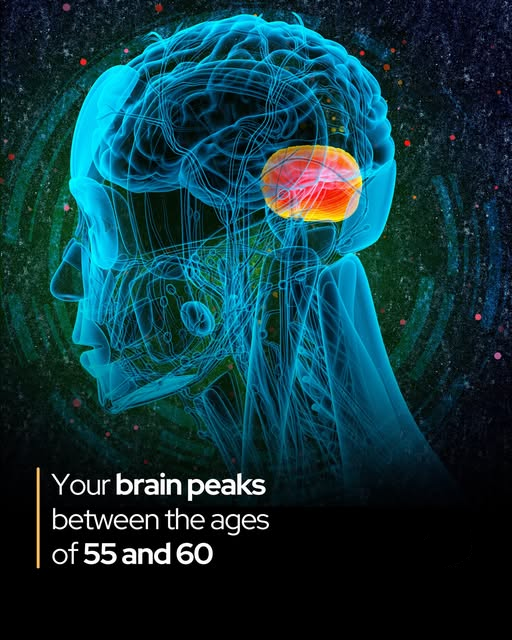
The smartest age in life may be 55 to 60 – not in your 20s. Raw cognitive abilities, such as processing speed and memory, often peak early in life. Athletes typically hit their prime before 30, mathematicians make major breakthroughs by their mid-30s, and chess champions rarely stay dominant past 40. However, a new research reveals that overall psychological functioning—including personality traits, judgment, and emotional intelligence—peaks much later, between ages 55 and 60. A study analyzing 16 key traits across the lifespan found that conscientiousness peaks around 65, emotional stability reaches its height near 75, moral reasoning deepens in older age, and the ability to avoid cognitive biases may improve into the 70s or 80s. When combined into a single index, these traits suggest the mind is most balanced in the late 50s, blending experience, emotional steadiness, and sound judgment. This may explain why many top leaders and thinkers achieve their greatest impact in midlife. ["Worried about turning 60? Science says that’s when many of us actually peak." The Conversation, 14 Oct 2025]
Massimo tweet media
English
160
816
3.3K
222.8K
Bartolini Lab ری ٹویٹ کیا
Denis Wirtz
Denis Wirtz@deniswirtz·
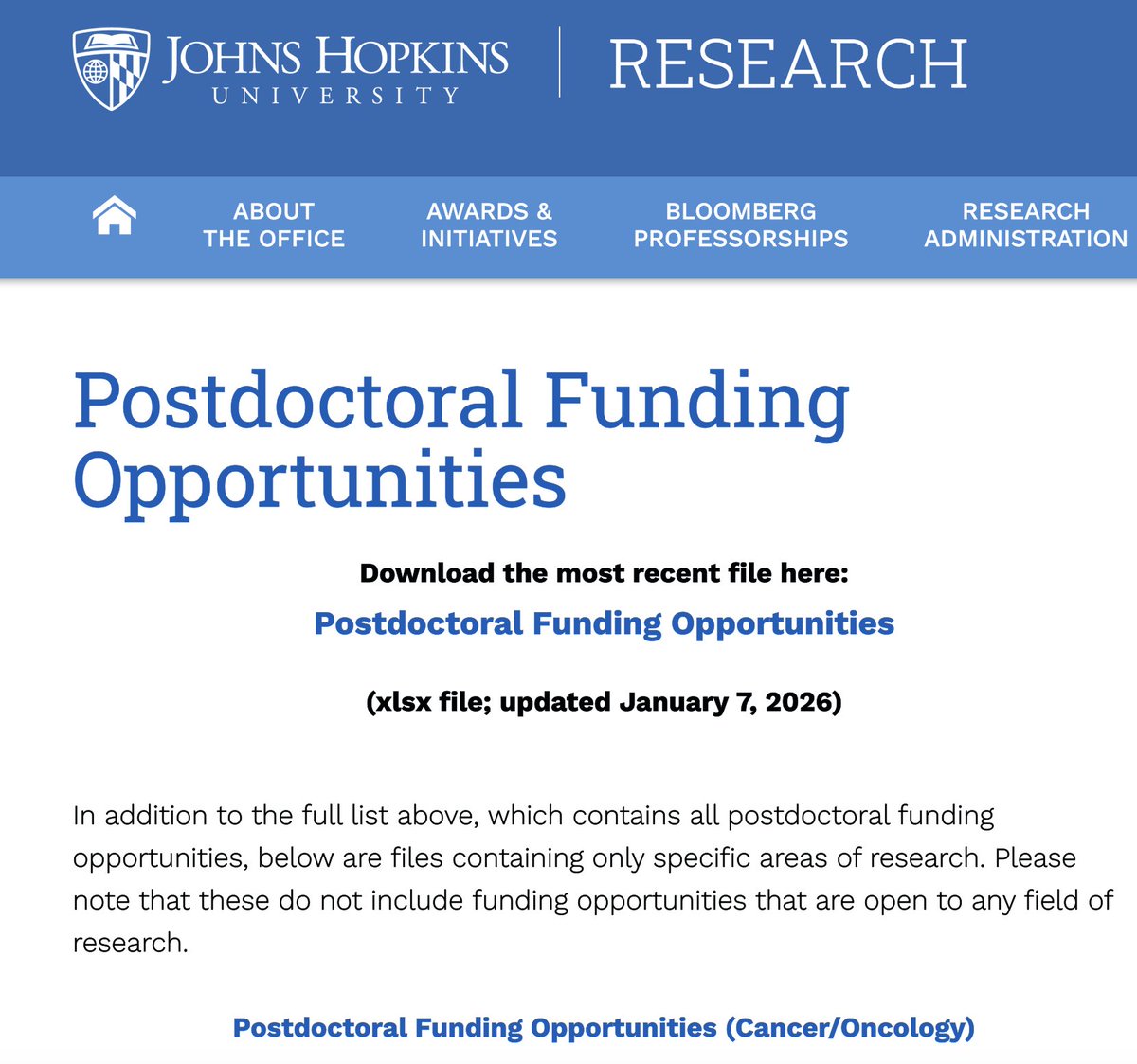
279 postdoctoral fellowships! Download freely our database of postdoctoral fellowships and grants. For each entry, we provide eligibility criteria, $ amount, deadline, etc. We also provide separate databases for oncology and neuroX. Good luck! Here: research.jhu.edu/rdt/funding-op…
Denis Wirtz tweet media
English
7
316
1.2K
164.1K
Bartolini Lab ری ٹویٹ کیا
Allen Institute
Allen Institute@AllenInstitute·
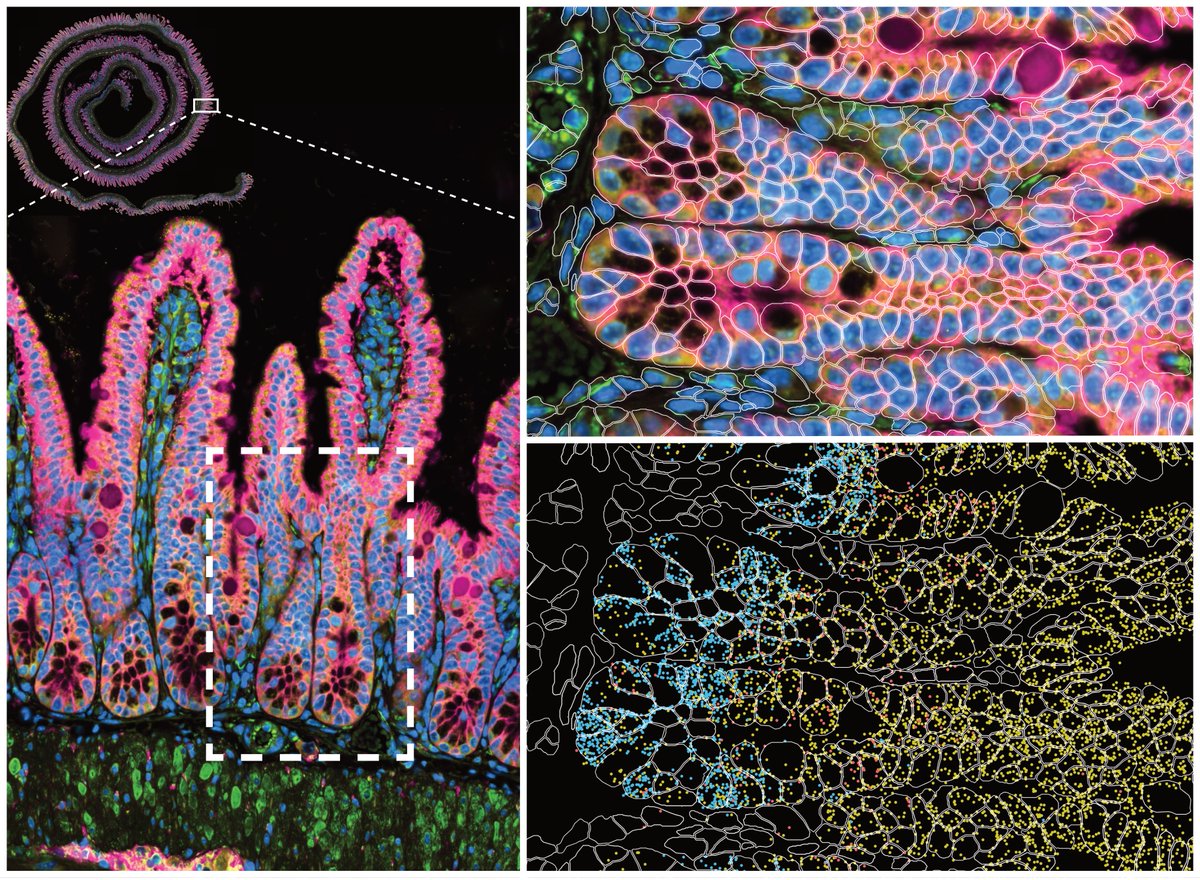
Pain-sensing neurons in the intestines play an important role in defending the body from threats. New study led by the Artis Lab at @WeillCornell shows TRPV1+ nociceptors in the gut activate tuft cells, leading to expulsion of parasites. 🔗 nature.com/articles/s4158…
Allen Institute tweet media
English
1
33
121
9.3K
Christophe Leterrier
Christophe Leterrier@christlet·
🚨The Neurocyto lab is branching out in our latest preprint! We used tubulin microinjection to visualize microtubule turnover in developing neurons, demonstrating the presence of in-lattice repair and stabilization in the nascent axon. Check below 🧵1/9 biorxiv.org/content/10.648…
English
4
8
25
4.2K
Bartolini Lab ری ٹویٹ کیا
David R. Liu
David R. Liu@davidrliu·
Today in @Nature we report a new prime editing strategy that can rescue a common cause of many genetic diseases in a disease-agnostic manner. This approach converts a redundant endogenous tRNA into an optimized suppressor tRNA, enabling a single prime edit to rescue premature stop codons across different diseases. (1/15) drive.google.com/file/d/1bSvkJW…
David R. Liu tweet media
English
41
402
1.4K
248.9K
Oded Rechavi
Oded Rechavi@OdedRechavi·
BIG ANNOUNCEMENT📣: I haven’t been this excited to be part of something new in 15 years… Thrilled to reveal the passion project I’ve been working on for the past year and a half!🙀🥳 It started from my frustration with the depressing effect that the current publishing system has on the well-being of myself, my team, and pretty much every scientist I know (maybe you’ve noticed from my stupid jokes… :) I was exhausted of dealing with the huge delays, reviewers that can be abusive, and how arbitrary it all is. Unfortunately, the most important factors are often WHO your reviewers are and who YOU are... It’s clear we need alternatives or at least ways to improve the situation. So, together with a really special and talented team we worked to develop this idea into “qed” a platform where you can get CONSTRUCTIVE feedback on your own work or CRITICALLY assess other people’s papers. It can be a real difference maker if many of you join us (thousands have tried it already, but today we release a NEW and much stronger version ;) Let’s harness qed to put the power back in the scientists’ hands, to do, to read & to publish science on our own terms. I’m dying for you to TRY IT, and it’s very simple - just drop a paper (the link to the website is in the replies👇) - it’s completely secure, private, and free, and you get results fast. Please show your support, SHARE, tell your friends, and let’s be the revolution 🫵!
Oded Rechavi tweet media
English
109
492
1.9K
540.1K
Subhojit Roy, MD, PhD
Subhojit Roy, MD, PhD@Roy_Lab_Thinks·
Scientists are obsessed with intelligence. But you don't need an astronomical IQ to design a simple experiment that will slash through the darkness. In fact high IQ people often lack the simple-minded clarity needed for designing good experiments.
English
2
0
7
484
Bartolini Lab
Bartolini Lab@BartoliniLab·
💊✨ Exciting new collaboration with Laurence Lafanechère’s team (Grenoble)! Our new study introduces Carba1, a bifunctional carbazole compound that protects against chemotherapy-induced peripheral neuropathy (CIPN) — a major unmet need in cancer therapy. science.org/doi/10.1126/sc…
English
0
2
5
335
Bartolini Lab
Bartolini Lab@BartoliniLab·
let's give this a try!
Oded Rechavi@OdedRechavi

BIG ANNOUNCEMENT📣: I haven’t been this excited to be part of something new in 15 years… Thrilled to reveal the passion project I’ve been working on for the past year and a half!🙀🥳 It started from my frustration with the depressing effect that the current publishing system has on the well-being of myself, my team, and pretty much every scientist I know (maybe you’ve noticed from my stupid jokes… :) I was exhausted of dealing with the huge delays, reviewers that can be abusive, and how arbitrary it all is. Unfortunately, the most important factors are often WHO your reviewers are and who YOU are... It’s clear we need alternatives or at least ways to improve the situation. So, together with a really special and talented team we worked to develop this idea into “qed” a platform where you can get CONSTRUCTIVE feedback on your own work or CRITICALLY assess other people’s papers. It can be a real difference maker if many of you join us (thousands have tried it already, but today we release a NEW and much stronger version ;) Let’s harness qed to put the power back in the scientists’ hands, to do, to read & to publish science on our own terms. I’m dying for you to TRY IT, and it’s very simple - just drop a paper (the link to the website is in the replies👇) - it’s completely secure, private, and free, and you get results fast. Please show your support, SHARE, tell your friends, and let’s be the revolution 🫵!

English
0
0
2
561