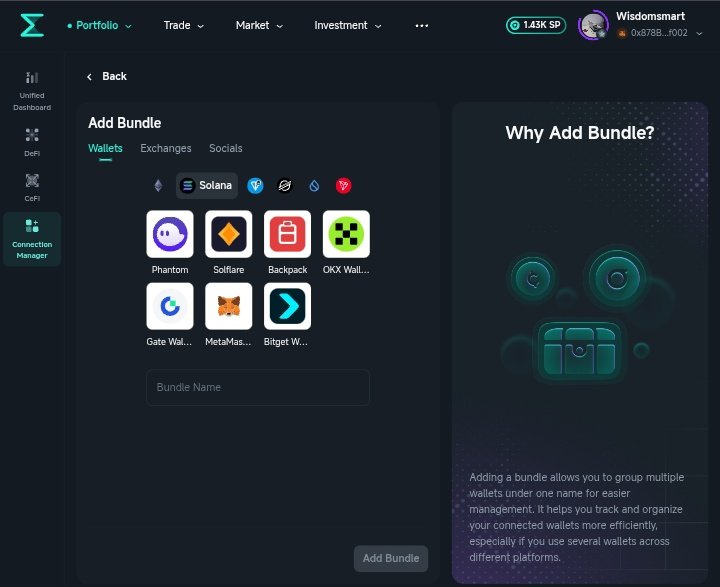
$100 sent to @EnatorD01 ill keep sending $100 rewards to most active peeps daily, just remember to add your wallet address in the app so Jarvis can send it to you directly dont add base names, just evm & sol adi link ↓
Dr.Onchain
7.2K posts


$100 sent to @EnatorD01 ill keep sending $100 rewards to most active peeps daily, just remember to add your wallet address in the app so Jarvis can send it to you directly dont add base names, just evm & sol adi link ↓


#Sponsored / #LedgerSponsor I built a Ledger-gated Solana treasury agent for the @Ledger Agent Stack bounty. An AI agent can understand intent. An app can construct a transaction, but neither should automatically get the final say over moving value. So I built a small treasury agent where the user can type “send 0.2 SOL to
”, then the app parses that into a structured action, builds a Solana devnet transfer, and routes the signing step through Ledger’s signing flow using Speculos, Ledger’s open-source device emulator. The flow: User command -> AI intent parser -> Solana transaction builder -> Ledger Solana app through Speculos -> manual review on the device screen -> user approves “Sign transaction” -> signed transaction broadcasts to devnet Repo: github.com/SamuelOluwayom… Why I think this matters: Most agent demos still treat private keys like normal app secrets. Put the key in an .env file. Let the backend sign. Trust the model, prompt, server, dependencies, and runtime. That is fine for toy demos. It gets uncomfortable when the agent can touch real assets. .env secrets are copyable. API keys leak. Servers get compromised. Prompt injections happen. Dependencies break trust assumptions. Lately we've been hearing about hackers adding malware to popular libraries, users install and then they access important data. I myself was a victim of something similar, my wallet seed phrase was gotten unbeknownst to me and all my crypto was drained. The architecture I wanted to test was different: The agent is a participant, not a custodian. It can propose an action. It can build a transaction. It can explain what it wants to do. But the signing boundary sits outside the agent runtime. In my build, the private key never enters the Node server, the Groq call, the React app, or the prompt context. The final approval happens on the Ledger-style review screen in Speculos. That is the interesting part of Ledger’s Agent Stack to me. Not “hardware wallet, but for agents.” More like: Agent infrastructure needs a physical policy boundary. Software is great at generating intent. Hardware is better at enforcing final consent. The critical take: This does not magically make agents safe. A Ledger-gated flow does not fix bad transaction construction, malicious frontends, confusing UX, weak policy design, or users approving things they do not understand. If the review screen is vague, the guardrail is weaker. If the app hides intent, the user can still make a bad approval. If the agent builds the wrong transaction, the hardware layer only helps if the user can actually inspect what matters. So the hard problem is not just “add signing.” The hard problem is making the transaction review legible enough that a human can make a real decision at the boundary. That said, this architecture feels like the right direction. Agents are getting better at action. That means we need better limits around action. Ledger’s Agent Stack gives builders open primitives for that: DMK Skills: app/device integration for agent-readable signing flows Wallet CLI: agent-friendly transaction flow from terminal to device approval Enterprise CLI: policy-backed enterprise flows Multisig CLI: treasury and scheduled workflow patterns where signing still ends at a Ledger device For this project I focused on DMK-style integration with Speculos because I wanted the signing flow inside my own app, not just a standalone CLI demo. Speculos was especially useful because I do not need a physical Ledger device to prove the architecture. It reproduces the screen and signing flow, so the demo still shows the important thing: the agent cannot complete the transaction until the device flow returns a signature. That is the layer I think agentic crypto apps are missing. Not more autonomy by default. More explicit boundaries around autonomy. Docs: developers.ledger.com/docs/ai-tools/… GitHub: github.com/LedgerHQ/agent… github.com/LedgerHQ/specu… T&C: shop.ledger.com/pages/build-sh…


Introducing Claude for Parenting. Just text or WhatsApp Anna and she’ll manage all your family admin. The most powerful autonomous AI agent working 24/7 across your email, calendar, school WhatsApp groups and automates admin that both parents forgot.


Your footage has the color of a hospital hallway. Don't export it to another app. The color adjustments tab will handle the rest.


$MPP: The first U.S. payments token to receive SEC No-Action Relief. 🇺🇸 Crypto was built to be used—not just sit in a wallet. Here's how $MPP is bringing real-world utility to crypto: • Pay with crypto to any ACH-enabled U.S. bank account • Lightning-fast, low-fee P2P transfers • Earn up to $800/month back on rent and mortgage payments by spending—not staking • Use crypto for everyday bills and purchases And this is just the beginning. More spending rewards, features, and supported tokens are on the way. 🚀 🇺🇸 U.S. users: Buy $MPP in the MegPrime Pay app. Deposit $25 and receive $50 in MPP. 🌍 Global users: Buy $MPP through Uniswap DEX or Coinbase wallet. Follow for more updates.


@EthraShip is one of the few RWA projects I’ve come across that seems to be approaching tokenization from the opposite direction. Instead of creating a token and figuring out the business later, they built an operating shipping business first, then introduced the blockchain layer. Their dry bulk vessels have been generating charter revenue since 2021, giving the project a foundation in real-world operations. The bigger conversation around RWAs shouldn’t just be about tokenization. It should be about what actually backs the asset. As the space matures, I think the projects that stand out will have four things in common: • Tangible, productive assets • Consistent cash flow • Experienced operators with industry expertise • Transparent legal and regulatory structures I also like how the ecosystem is designed: → $SHIP is used for staking, governance, and ecosystem participation. → Vessel investments are structured through regulated SPVs with KYC/AML compliance, keeping asset ownership separate from token utility. Tokenization isn’t the value. It’s the bridge that connects established, revenue-generating businesses with the opportunities of Web3. Learn more about $SHIP: t.co/SqsLrNXjSX

25 days until the rebirth of the trenches. Our waitlist is closing soon: ⬇️


Important updates: News on physical discs for new games - play.st/4v86Wg3 News on PlayStation Store on PS3 and PS Vita - play.st/4vEN9FX