

Fil
111 posts

@gervaisclips “It can’t be your mate Jeff” WE ALL KNOW WHO Ricky is talking about 😭
English

@WeTheBrandon Brandon, you gotta stop using the word “Pakis” as it’s a derogatory bigoted racist term used heavily in the UK. Thank you brother, great to see you on @BreakingPointsN btw!
English
Understand this about the Saudi military:
1) It is overwhelmingly staffed by foreigners (mostly Pakis),
2) It has FAILED to achieve its strategic aims in Yemen after a decade of blasting the place apart.
3) It is primarily meant for a) limited counterterrorism and b) internal policing mission sets.
AND LET US NOT EVEN TALK ABOUT THE OVERWHELMING UNWILLINGNESS OF SAUDIS TO GO TO WAR/STRUGGLE AGAINST THE ODDS THEY ARE FACING WITH IRAN.
In other words, if Trump is expecting the Saudi military to have his back, he's even more delusional than I believed.
English

BREAKING: Qatar’s Prime Minister stood at a podium today and delivered one sentence that will fracture Gulf alliance architecture for a generation: “Everyone knows who the main beneficiary of this war is.”
He did not name the country. He did not need to. The Arab diplomatic vocabulary has a grammar for this. When a Gulf leader says “everyone knows” without naming, the audience fills the blank. The X discourse filled it within minutes. The interpretation was dominant and immediate across Arabic-language accounts, with Gulf analysts and Arab media converging on the same reading.
Sheikh Mohammed bin Abdulrahman Al Thani, who also serves as Foreign Minister, called for an immediate halt. His full statement: “This war needs to stop immediately. The aggression needs to stop immediately. Because everyone knows who the main beneficiary of this war is, and dragging the whole region into this conflict is dangerous.” He described Iranian strikes on Qatar as a “dangerous miscalculation” and “betrayal.” He urged restraint from all sides.
Consider the position this man occupies. Qatar hosts Al Udeid Air Base, CENTCOM’s forward headquarters, the nerve centre of Operation Epic Fury. American bombers launched from Qatari soil. Iran retaliated against the LNG facility down the road. The same government that provided the runway for the war is now absorbing the economic consequences. QatarEnergy declared force majeure. Ras Laffan sustained extensive damage. Seventeen percent of Qatar’s 77 million tonne capacity is structurally impaired. CEO Saad al-Kaabi told Reuters repairs could take three to five years. Twenty billion dollars in annual revenue is offline.
The Prime Minister of a country that enabled the operation is publicly questioning who benefits from it while his national energy company faces half a decade of impaired production.
That is not ambiguity. That is a fracture.
The fracture runs through the entire Gulf alliance system. Saudi Arabia hosts Prince Sultan Air Base and absorbed Iranian missiles on Riyadh. The UAE hosts Al Dhafra and lost Shah and Habshan to zero. Bahrain hosts the Fifth Fleet and declared partial force majeure. Kuwait hosts Camp Arifjan and is watching two refineries burn. Every host provided the military infrastructure. Every host is absorbing economic retaliation. And the most outspoken just asked, on camera, whether the country benefiting from degrading Iran at zero direct cost is the same country whose allies are paying the full price.
The market implications are immediate. If Qatar’s political establishment is signalling frustration with the cost-benefit distribution of this war, the assumption that Gulf states will indefinitely absorb strikes while providing bases becomes fragile. A frustrated host is a conditional host. Conditional basing changes the calculus for every military planner who assumed Al Udeid was permanent.
The LNG implications are structural. A multi-year force majeure on contracts to Italy, Belgium, South Korea, and China is not a delivery delay. It is a repricing of the global gas map. JERA’s CEO said there is no spare bridge capacity. Asian spot LNG doubled to $24 to $25 per MMBtu. European TTF surged 68 to 85 percent. BASF and Yara are cutting fertiliser output. The facility that feeds them may not fully recover until 2029 or later.
The diplomatic signal and the infrastructure damage are now the same story. Qatar’s PM is not merely commenting on the war. He is repricing Qatar’s willingness to absorb its consequences. The country that houses the command centre and the country that exports 20 percent of the world’s LNG are the same country. And its leader just told the world, in one sentence, that the arrangement may no longer be worth the cost.
Full analysis:
open.substack.com/pub/shanakaans…

Shanaka Anslem Perera ⚡@shanaka86
BREAKING: The world thought Hormuz was an oil story. Then it became an LNG story. If the damage assessment holds, it becomes a civilisation-input story that lasts half a decade. There is a difference between a shipping shock and a capacity shock that the market has not yet priced. A shipping shock traps molecules. The oil exists, the gas exists, the tankers are anchored, and when the strait reopens the molecules flow again. A capacity shock destroys molecules. The liquefaction trains that convert gas into LNG are physically damaged. The molecules cannot be produced even if every ship in the world is available to carry them. QatarEnergy’s CEO Saad al-Kaabi told Reuters that damage to Ras Laffan is severe. Repairs to impaired liquefaction capacity could take three to five years. Force majeure was declared on March 4 and has since escalated as the damage assessment worsened through March 18 and 19. Long-term contract buyers including Italy, Belgium, South Korea, and China face multi-year delivery disruptions. Shell declared force majeure on cargoes it resells from QatarEnergy. The market must now confront a possibility it has refused to model: that roughly 17 percent of Qatar’s 77 million tonne per annum capacity is not delayed but structurally impaired. JERA’s CEO stated that the global LNG market does not have the spare capacity to bridge the gap if Hormuz-linked supply is meaningfully lost. That single sentence reprices everything. If the replacement molecules do not exist in sufficient volume, the adjustment mechanism is not alternative supply. It is fuel switching, demand destruction, and rationing by balance-sheet strength. Rich buyers can pay more. Poor buyers cannot. The poor buyers are already breaking. Vietnam’s diesel is up 40 to 59 percent. Australia’s petrol is up 70 cents per litre. Sri Lanka is rationing fuel with QR codes at 15 litres per car per week, a four-day workweek, and Wednesday school closures. India raised LPG prices while importing 85 percent of its crude through a strait that is 90 percent shut. Gulf air cargo collapsed 79 percent. Jet fuel surged 58 percent. IndiGo and Akasa imposed surcharges. Vietnam Airlines warned of shortages from April. Ninety-five countries have reported petrol price increases since February 28. Ras Laffan is not just LNG. It is helium, urea, methanol, polyethylene, and sulfur. The downstream cascade from a multi-year Qatari impairment runs through semiconductor fabrication, pharmaceutical synthesis, phosphate fertiliser production, food packaging, and desalination. The facility that is damaged produces the molecules that four billion people depend on for chips, medicine, fertiliser, plastic, and drinking water. Europe’s post-2022 gas security was built on Qatari LNG replacing Russian pipelines. A structural impairment does not merely make gas expensive. It makes gas unavailable to industry. That is how an LNG shock becomes a deindustrialisation shock. BASF and Yara are already cutting fertiliser output. Russian LNG fills the gap at 18 to 22 percent of European imports. The country Europe sanctioned is the country Europe now depends on because the country Europe trusted was struck in a war Europe refused to join. Anyone arguing this resolves quickly now carries the burden of proof. They must explain where the replacement molecules come from when the world’s largest LNG hub is physically impaired, the strait is commercially closed, and the CEO of Asia’s biggest power buyer says there is no bridge. The market priced a shipping delay. The evidence demands a capacity repricing. The difference between those two words is measured in years, in trillions of dollars, and in whether the lights stay on. Full analysis: open.substack.com/pub/shanakaans…
English
Fil ری ٹویٹ کیا

I’ve been telling you this was coming. For months.
Now it’s here.
I don’t tell you what makes you feel good. I tell you what’s actually happening. I tell you the truth.
That’s why 1.4M of you are here.
Pay attention to what I post in the next few days/weeks. Notifications on.
English


@yu_sung_chul @DanTalks1 Why should we host minorities lol we gave our own land to them- pakistan and bangaldesh are Indian lands
English
@FilFilled @DanTalks1 India hell on earth for minorities. Israeli slaves.
English
@TansuYegen Pakistan = US wh0re, jihad, pedophilia of Mohammed, filth, backwardness, corruption.
English
Unique way to clean the Petrol tank of a motorcycle - Pakistan
English

Just landed in beautiful Colombo, Sri Lanka. Looking forward to meeting with President @anuradisanayake and senior leaders to reaffirm the U.S.-Sri Lanka partnership. 🇺🇸🇱🇰
English
@Rudrabhishekk @ZahackTanvir Not religious war but chemotherapy against the cancer of Islam
English

@ZahackTanvir So there's religious war going on long with geopolitics?
English

According to Iran’s Twelver Shia beliefs, the real Al-Aqsa is in the heavens, and the one in Palestine holds no value. Shia Imam Al-Kulayni reiterated this belief. Holy places are: Karbala, Najaf, Kufa, not Jerusalem.
But why does the Mullah regime “fight” for Palestine? To gain legitimacy, acquire more Arab lands, and avenge the Arab conquest of Persia during Caliph Umar’s time.
You can see the same pattern today: a high number of missiles used by Iran are directed at Gulf nations, not Israel.
English
@BrahmchAri @ZahackTanvir It provides access to tight půṣsies of 9 year olds like Aisha - the one 53 year old pedophile prophet Mohammed loved r@ping
English
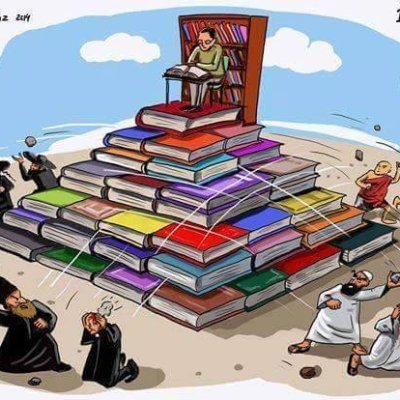
@ZahackTanvir What religious importance does the Iranian city of Quom holds?
English
@Shabeeb_Ashfaq @ZahackTanvir Well because Islam is cancer and Prophet Mohammed was a pedophile
English

@ZahackTanvir Why is an Indian (apparently) Muslim sharing these farcical sectarian fueled concocted stories
English
JUST IN: “You are not graveyard of empires, you are playground of empires. Pakistan Army’s DG ISPR to Afghan Taliban
English
@MaxNordau Jihadis cant stop their jihad anywhere. Their dick is non stop hard for 72 virgins.
Fuck islam.
And their Pedo prophet Mohammed.
English
Fil ری ٹویٹ کیا

@DerekJGrossman Pakistan 🇵🇰 is a cancer on humanity.
Their islamic jihadi cockroaches will soon unleash terror on the whole world.
English

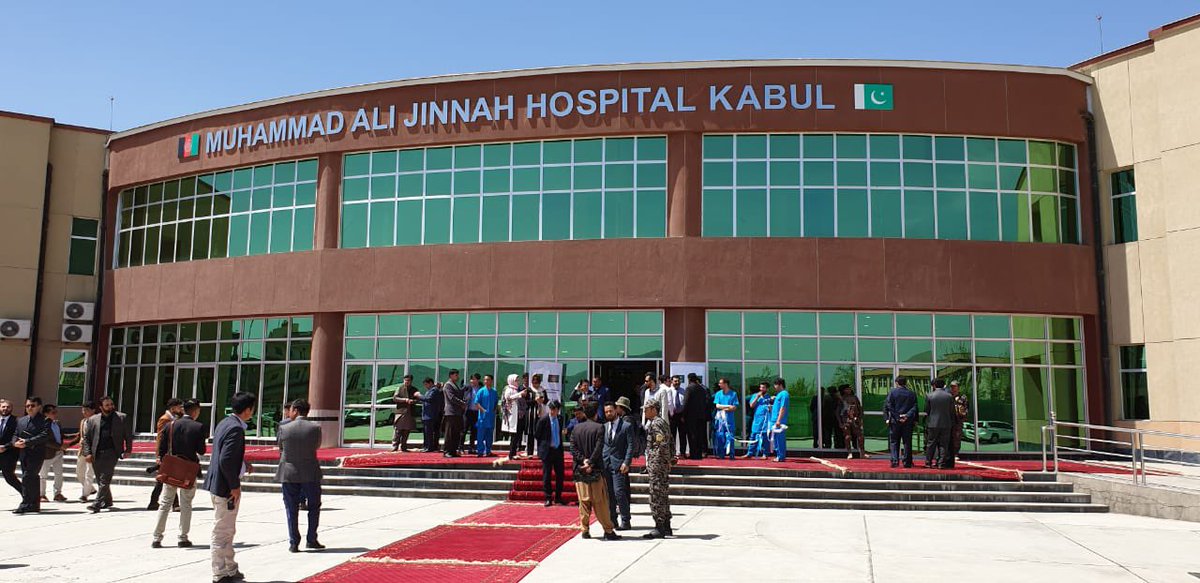
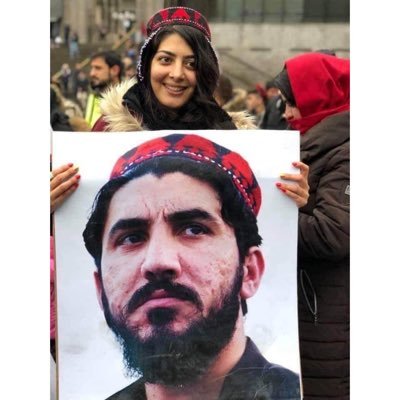
The difference between Indians and Pakistani is visible.
धनञ्जय Dhananjay Tripathi@dhananjayjnu
India should assist Afghanistan in rebuilding Omid Hospital.
English
@Asad30391661 @Aisshwarya14474 @sayinshallah Pussy ? You mean like 9 year old Aisha's pussy that 53 year old cockroach prophet Mohammed r@prd ?
English

English

Saudi and UAE should have been investing their money into themselves to birth geniuses like the guy from Pakistan who developed their nuclear weapons or the Iranians
Instead they just order ig hoes to poop on for their kids 16th birthday and smoke hookah all day
jawz@sayinshallah
It still amazes me how no Arab country has their own military and was highly dependent on the US and their US bases Really just shows that Arabs were just lucky to find oil and are actually idiots
English
English
@FilFilled @Aisshwarya14474 @sayinshallah Pakistan might be nuked you are right
And
We might nuke someone as well.
So nothing to be afraid off
English