

Jeff Woodard
16.5K posts

Jeff Woodard
@Financialguide
Retirement income financial coach. Protecting professionals and executives from losing their hard-earned money.
South Carolina, USA شامل ہوئے Ocak 2008
3.4K فالونگ3.1K فالوورز

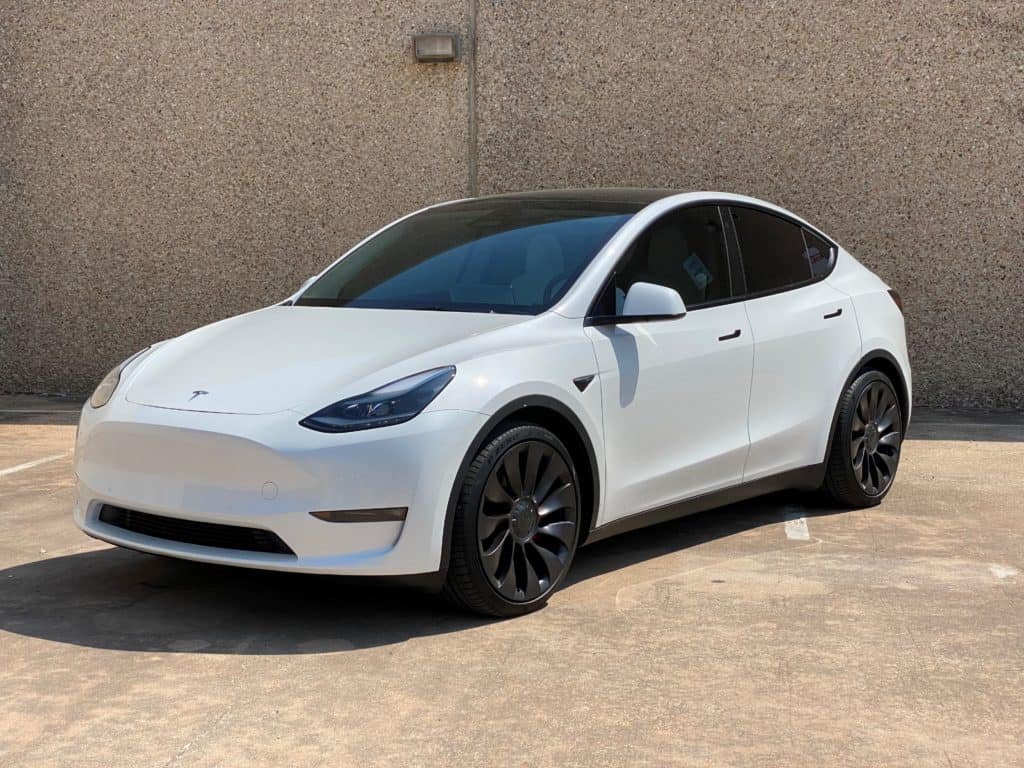
When you bought the $50,000 Tesla Model Y to save on gas & maintenance.
Then you learned:
- It loses 20-35% of its value by year 3
- It loses 55-58% of its value by year 5
So by year 5 you lost $35,000+ of value?
....Congrats on saving ~$1,000/yr on gas.
English
@JakeDSBD24 @theficouple agree. These folks are clueless often
English

@pfinanceblogs @theficouple batteries are warranted to 120,000 miles and there are many out there with 300,000 or more
English

@theficouple The battery replacement is a killer. That has kept us out of the EV game so far.
English
@FranWalsh73 Classic. Pick the absolute worst tools with the poorest designs and extrapolate that to the whole universe.
You’re actually doing a DISservice with this type of post.
English

How to protect yourself:
Ask every advisor:
- How are you compensated on this?
- What is the total cost - upfront and ongoing?
- What's the low-cost alternative?
- Are you a fiduciary?
English
A financial rep can legally earn $50,000+ in commissions selling you products that may cost you hundreds of thousands in long-term wealth.
Most people never find out.
Here are 5 products routinely sold to people who may not need them - and what the math can look like ↓
English

Waterworld (1995) is over-hated. Strip away the budget jokes and what’s left is a huge, strange, ambitious adventure packed with real stunts and a fully built world. It’s messy, but there’s way more movie there than people remember.
cinesthetic.@TheCinesthetic
What is the most unfairly hated movie that you will defend every time
English
@FranWalsh73 And just HOW would you have any clue what I read????🤨😏🤔
English
@Financialguide Lol, 0 chance you read the thread as usual.
Just wait til you see the thread later this week on Whole Life and Annuities I'm sure you'll love that one!
English
Your mortgage rate is the key variable in this decision.
Below ~5%: investing the difference may win on paper.
Above ~6%: paying it off starts to compete.
Above ~7%: the math often favors paying it off.
Here's the full framework ↓
English
@GuntherEagleman @JessicaTarlov If you are genuinely too stupid to figure out how to get an ID, should you REALLY be voting anyway?
Food for thought
English


Republicans are lying to the American people when they say the SAVE Act is a voter ID law—it’s a proof-of-citizenship requirement that would make voting harder, if not impossible, for a lot of people.
Passports are expensive, documents don’t always match, and the process can be a mess (been there). We should be making voting easier, not adding more hurdles.
Democrats can own this by proposing their own bill that accepts a range of IDs, and includes automatic voter registration and Election Day as a national holiday for starters.
English
Jeff Woodard ری ٹویٹ کیا



𝗧𝗵𝗲 𝗝𝗲𝘃𝗼𝗻𝘀 𝗣𝗮𝗿𝗮𝗱𝗼𝘅 𝗘𝘅𝗽𝗹𝗮𝗶𝗻𝘀 𝗪𝗵𝘆 𝗡𝗲𝘁 𝗭𝗲𝗿𝗼 𝗶𝘀 𝗮𝗻 𝗘𝘅𝗲𝗿𝗰𝗶𝘀𝗲 𝗶𝗻 𝗙𝘂𝘁𝗶𝗹𝗶𝘁𝘆
Net Zero is a total bust, and the Jevons Paradox proves it: make energy more efficient, and people just use way more of it. Think LEDs—10 times better than old bulbs—yet we're lighting up everything, jacking up demand. Same with EVs, AI, and renewables; they're adding fuel to the fire, not replacing it. Mind-boggling how this kills the green fantasy. Dive into the details and see why we're doomed to keep burning fossil fuels.
Read the full article:
wattsupwiththat.com/2026/03/17/the…

English
Jeff Woodard ری ٹویٹ کیا

In 1976, Friedrich Hayek published "The Denationalization of Money" — a radical proposal that governments should lose their monopoly on currency. His colleagues thought he'd lost his mind. After all, who would trust private money over the almighty dollar?
Hayek argued that competing currencies would drive out bad money through market forces, not government decree. He envisioned a world where people could choose their medium of exchange based on stability and reliability rather than political whim.
But here's the kicker: Hayek specifically predicted that technology would eventually make his vision possible. He wrote about how advances in computing and telecommunications could enable new forms of private money that governments couldn't control.
Thirty-two years later, Satoshi Nakamoto released the Bitcoin whitepaper. The Austrian economist had essentially blueprinted cryptocurrency three decades before anyone knew what blockchain meant. Sometimes the best predictions come from understanding human nature, not crystal balls.
English
I've been noticing a that simply isn't based in reality.
There are way too many credentialed advisors especially CFPs for some reason who are saying if you are ever recommended permanent life insurance run.
This advice tends to be given because they have a focus on the compensation of an advisor more than they have for the reality of most of their clientele.
So here's a stat from CMS 50% of adults develope a chronic condition in their 50s and 29% of them develope multiple chronic diseases. This can lead to a near 30% rate of declines in coverage.
Why is this important? Chronic conditions change the ability to invest to reach this point of "self -insuring" which is technically self-funding.
So, if someone is telling you to never purchase permanent insurance this is not a data driven recommendation. If your advisor doesn't recommend a convertible term to at least preserve your insurability it is clear they are not working in your best interest and you should run.
English

Need life insurance?
It’s hard to make a case for any life insurance that isn’t term life insurance.
Generally, run screaming from anything not term life insurance.
You (probably) only want term life insurance.
English
@KerosSotirios @JonLuskin You should have stopped after “I’ve never thought.”
English

@JonLuskin Wow it's so funny (sad) how many replies criticize you. I've been doing permanent life vs term analyses for 20 years, and during that time the use case for perm is smaller and smaller. In 20 years and for 1000+ clients, I've never thought, hmm, perm life would have been better.
English

This is how it feels arguing with a Democrat.
English
@JonLuskin You just spout the same old tired rhetoric. If you are charging for this noise it’s borderline malpractice
English
“I have a cash cushion so I don’t have to sell stocks when they’re down.”
Well, to be a nerd about it, I'm not sure if that's necessary. A cash reserve might even hinder long-term results, on average.
Cash underperforms bonds and stocks. So, if you hold cash instead of the above, that means less money, less spending in retirement.
Can a cash cushion help manage risk when spending from a portfolio in retirement? Yes, but so does a sustainable spending rate (4%, etc.) and a moderate stock/bond mix in your portfolio (60/40, etc.). Moreover, those latter strategies help manage risk without the underperformance of cash.
Moreover, any cash cushion strategy gets really complicated, really quickly – more so than practically most realize.
-What defines when stocks are “down?” Is it a portfolio balance? A CAPE valuation?
-What happens if you deplete your cash cushion? What then?
-Are you replenishing your cash cushion if you spend it? What metric tells you it’s time to do so?
-Do you increase your cash cushion over time? If so, by how much?
As already mentioned, spending moderately from a portfolio (4%, etc.) and rebalancing if appropriate are much simpler solutions. Moreover, moderate spending has been shown in countless academic studies to manage risk. (I can’t say the same for cash cushion strategies.) Lastly, simply rebalancing effectively helps you spend less from stocks when they’re down.
🤓
English
@JonLuskin Clearly you don’t understand cash value life insurance
English

@YourFriendAndy Feel like it would take a year to see your $300 back
English

This is officially one of THE coolest Bitcoin home miners I’ve looked at.
This is the Bitaxe Touch from @SoloSatoshi
2.15TH extremely quiet miner + touch screen.
I can mine BTC at my desk AND see the current price. Pretty rad ⚡️
English